Commercial LED Lighting Solutions
- Fixture options for offices, warehouses, parking, and outdoor areas
- Selectable wattage and color temperature available on select models
- Application support for mounting, voltage, controls, and specifications


Get Your Custom Lighting Plan With Product Recommendations
- Layout designed around mounting heights, beam distribution, and spacing for offices, warehouses, or outdoor areas
- Fixture selection matched to application with appropriate lumen output, optics, voltage, and control options
- LED fixtures can reduce energy use and extend maintenance intervals compared with legacy lighting


Our LED Commercial Lighting includes high bays, panels, shop lights, linear fixtures, parking lot lights, wall packs, flood lights, canopy lights, and vapor tight fixtures. Available models vary by wattage, lumen output, voltage, color temperature, dimming, sensors, photocells, emergency backup options, and mounting configuration.
These fixtures are commonly used in offices, schools, warehouses, workshops, retail spaces, gyms, service bays, parking areas, building entrances, loading docks, pole barns, and security perimeters.
Commercial LED Lighting for Business, Facility, and Property Applications
Commercial LED lighting is used to illuminate offices, warehouses, schools, workshops, retail spaces, parking areas, gyms, service bays, pole barns, security areas, and other business environments. The right fixture depends on how the space is used, where the fixture is mounted, how much light is needed, what electrical system is available, and whether the project is indoors, outdoors, or both.
Commercial fixtures are different from most residential lighting because they are designed for higher output, longer operating hours, larger spaces, and more demanding installation conditions. Depending on the model, commercial LED fixtures may include selectable wattage, selectable color temperature, dimming, motion sensors, photocells, emergency backup options, wet-location ratings, impact ratings, and higher-voltage driver options.
A good commercial lighting selection starts with the application. An office usually needs a different fixture than a warehouse, parking lot, gym, storefront, loading area, or security perimeter. Choosing by wattage alone can lead to poor results. Fixture type, lumen output, mounting height, beam spread, controls, voltage, environment, and certifications all matter.
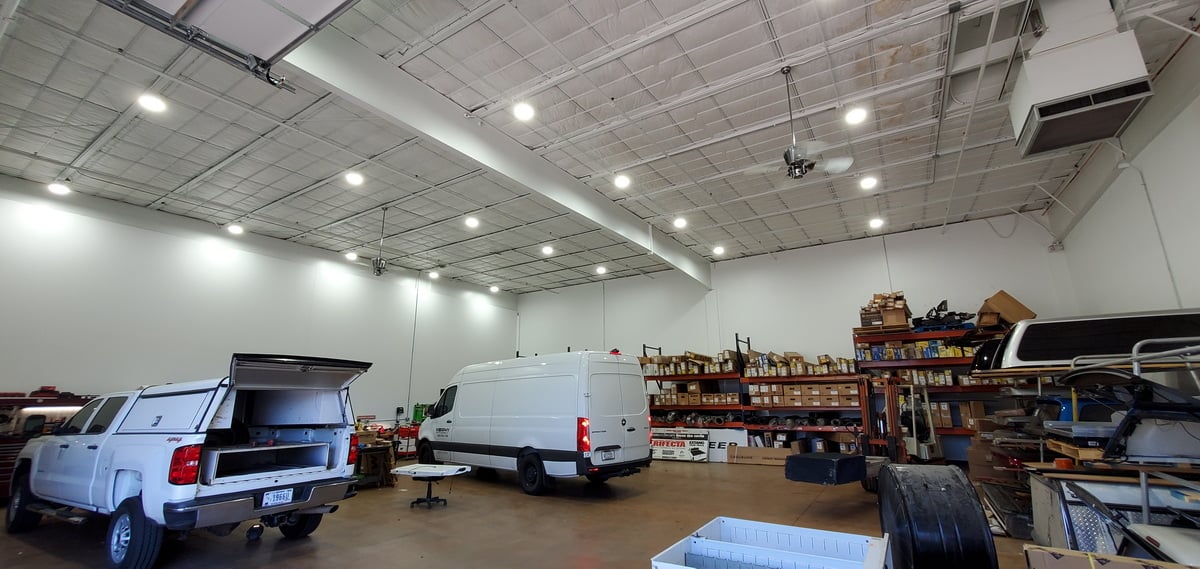
Case Study: Installation of new LED Lighting for a Yamaha Dealership
|
After: 120 Watt High Output UFO High Bay | 18000 Lumens | 4000K |
 |
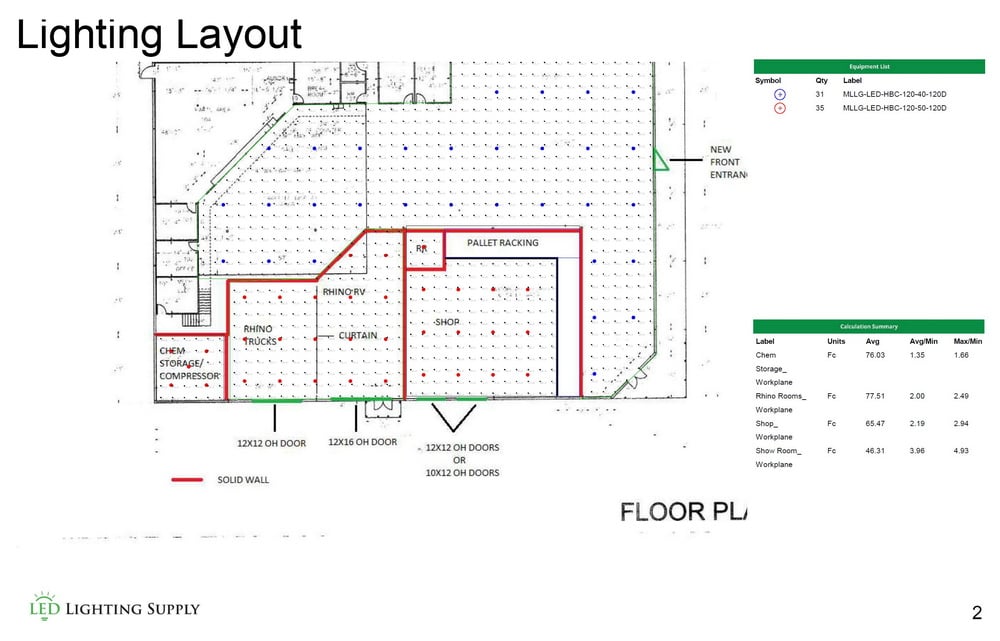
Lighting Plan We Created for the Customer
|
Lighting Plan |
Heat Map |
 |
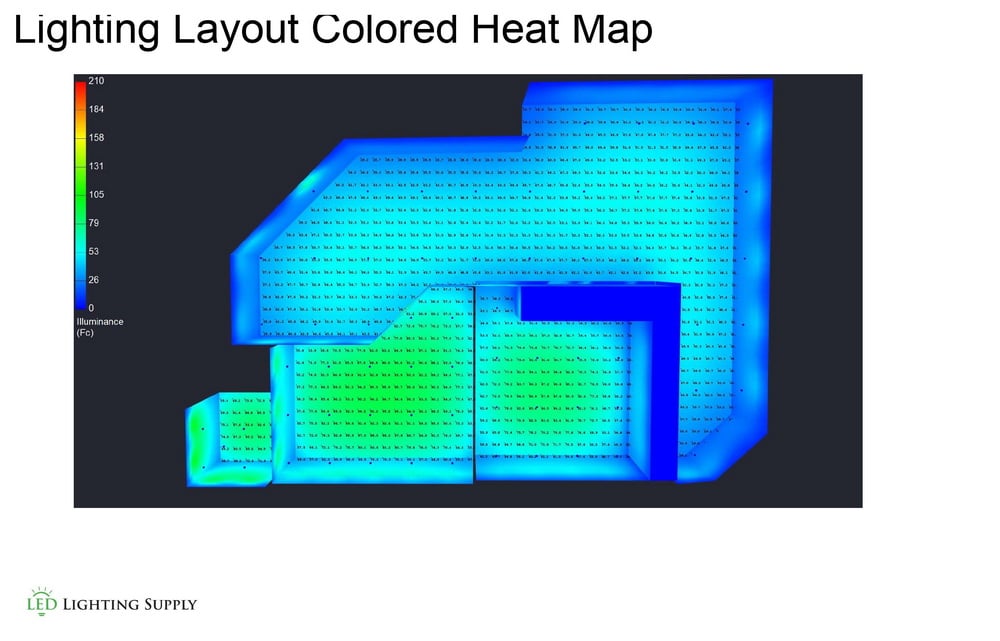 |
Yamaha Dealership Lighting Installation Plan Metrics
- Mounting height: 21 ft
- Fixture Used: MLLG-LED-HBC-200-4-120: 100 / 120 / 150 / 200 Watt Adjustable LED UFO High Bay | 15000 to 30000 Lumens
- FC achieved: 65.47 FC average
- Uniformity (Avg/Min): 2.00
Selection and Installation Note: Product specifications, wattage, lumen output, selectable settings, color temperature, voltage, mounting hardware, controls, dimming, certifications, environmental ratings, and warranty coverage vary by model. Confirm the selected product specification before ordering. For commercial buildings, electrical upgrades, emergency lighting, exterior lighting, code-sensitive applications, or safety-critical spaces, verify requirements with your local inspector or a licensed electrical professional.
Start with the Type of Commercial Space
Commercial lighting is easier to choose when the space is grouped by use. Indoor work areas, high-ceiling spaces, outdoor site lighting, customer-facing areas, and specialty-rated environments all have different fixture needs.
| Commercial Area | Common Fixture Choices |
|---|---|
| Offices, classrooms, and healthcare spaces | LED panels, troffers, linear fixtures, and selectable-CCT fixtures for clean, even general lighting in drop ceilings and finished interiors. |
| Warehouses and distribution centers | UFO high bays, linear high bays, and high-output fixtures for taller ceilings, open floor areas, aisles, and storage zones. |
| Workshops, service bays, and utility spaces | Shop lights, high bays, task lighting, and CCT options selected for detailed work, repairs, tools, and equipment areas. |
| Retail, showroom, and customer-facing areas | Panels, downlights, track lighting, linear fixtures, and display lighting depending on layout, ceiling type, glare control, and appearance goals. |
| Gyms and recreation spaces | High bays, linear fixtures, guarded fixtures, or impact-resistant options depending on activity, ceiling height, and ball-strike exposure. |
| Parking lots and exterior pole lighting | LED parking lot lights, area lights, cobra head fixtures, and flood lights for drive aisles, parking rows, exterior circulation, and site visibility. |
| Building exteriors, entrances, and loading areas | Wall packs, canopy lights, flood lights, and security lights for doors, loading docks, walkways, façades, and perimeter walls. |
| Security and perimeter lighting | Wall packs, flood lights, area lights, motion-sensor fixtures, and camera-supportive lighting for access points, yards, gates, and fence lines. |
| Pole barns and outbuildings | Linear high bays, UFO high bays, shop lights, or suspended fixtures depending on ceiling structure, mounting height, dust, and work activity. |
| Damp, wet, or utility areas | Vapor tight fixtures, wet-location fixtures, and properly rated linear fixtures for parking garages, covered walkways, coolers, utility rooms, and damp areas. |
| Specialty commercial environments | NSF-rated, hazardous-location, high-temperature, corrosion-resistant, emergency, or harsh-environment fixtures where the application requires model-specific ratings. |
Indoor Commercial LED Lighting
Indoor commercial lighting should match the activity performed in the space. Offices, schools, workshops, warehouses, gyms, and retail areas all require different fixture styles and lighting levels. The best fixture is usually determined by ceiling height, room size, mounting method, visual comfort, work type, and controls.
- High bay lights are used in warehouses, gyms, manufacturing spaces, shops, pole barns, and other high-ceiling areas.
- Panel lights are commonly used in offices, schools, healthcare spaces, conference rooms, corridors, and drop ceilings.
- Shop lights are used in workshops, service areas, garages, utility spaces, and work bays.
- Linear fixtures can be useful where long rows, aisles, or continuous light distribution are preferred.
- Vapor tight fixtures may be used in damp, wet, covered, dusty, or utility areas when the selected model is rated for the environment.
For indoor spaces, confirm mounting height, fixture spacing, voltage, dimming, color temperature, glare, and whether the fixture will be exposed to dust, moisture, vibration, or impact. Standard indoor fixtures should not be used in wet, washdown, hazardous-location, high-temperature, or harsh-environment areas unless the selected model is rated for that use.

Outdoor Commercial LED Lighting
Outdoor commercial lighting supports visibility, access, security, parking, building perimeter lighting, and pedestrian movement. Outdoor fixtures should be selected by application, mounting height, beam distribution, voltage, controls, environmental rating, and the surrounding property.
- Parking lot lights are used for parking areas, drive aisles, and larger exterior lots.
- Wall packs are used on building exteriors, entrances, loading areas, and perimeter walls.
- Flood lights are used where directional light is needed for signs, yards, equipment areas, or security coverage.
- Perimeter security lights are used for building perimeters, access points, camera-supportive areas, and motion-activated lighting.
- Canopy lights may be used under covered entries, gas station canopies, drive-throughs, loading covers, or covered exterior work areas.
- Cobra head and roadway-style fixtures may be used for private roads, drive aisles, site roads, or areas where a street-light style fixture is preferred.
Outdoor projects should confirm wet-location suitability, IP rating where applicable, surge protection, controls, fixture aiming, glare, and neighboring properties. An IP rating addresses protection against solids and water ingress; it does not by itself establish corrosion resistance, chemical resistance, or hazardous-location suitability. Photocells and motion sensors may be useful depending on operating schedule, safety needs, and whether the area requires dusk-to-dawn lighting or occupancy-based control.

How to Choose Commercial LED Lighting
Start by identifying the application and fixture type, then use mounting height, lumen output, beam distribution, and spacing to determine coverage. Confirm voltage, controls, color temperature, environmental ratings, and required certifications before ordering. Many projects replace fluorescent, metal halide, high-pressure sodium, or older LED fixtures, but a one-for-one replacement is not always the best approach if the existing lighting was too dim, too harsh, poorly spaced, or expensive to maintain.
| Selection Factor | What to Confirm |
|---|---|
| Application | Confirm whether the fixture is for office work, storage, production, retail, parking, security, recreation, or task lighting. |
| Fixture type | Select the fixture family that fits the space, such as panels, high bays, shop lights, wall packs, flood lights, parking lot lights, vapor tight fixtures, or specialty-rated fixtures. |
| Mounting height | Ceiling height or pole height affects lumen output, beam angle, fixture spacing, glare, and coverage. |
| Lumen output | Compare actual lumen output and fixture distribution instead of relying only on wattage equivalency. |
| Color temperature | 3000K, 4000K, and 5000K options may be available depending on model. CCT describes the warm or cool appearance of white light; choose it based on the space and appearance goals. |
| Controls | Review dimming, occupancy sensors, motion sensors, photocells, timers, emergency backup, and building control compatibility. |
| Voltage | Confirm whether the site requires 120V, 208V, 240V, 277V, 347V, 480V, or another electrical configuration. |
| Environment | Check whether the fixture needs to be rated for wet locations, dust, impact, washdown, high temperature, corrosive environments, or hazardous locations. |
| Certifications | Confirm applicable electrical safety certification, DLC qualification, NSF listing, emergency-lighting listing, or other required ratings on the selected product specification. DLC is an efficiency and performance program, not an electrical safety certification. |
Color Temperature and Adjustable Fixtures
Color temperature affects the appearance of a commercial space. Many commercial projects use 4000K for neutral white light in offices, schools, and general work areas. 5000K is often selected for warehouses, shops, parking areas, and task-focused spaces where a cooler, crisper appearance is preferred. 3000K may be used where a warmer appearance is desired. Color temperature does not determine lumen output or delivered light levels.
Some fixtures include selectable color temperature or selectable wattage. These options can be useful when a facility wants flexibility after installation, but they should still be selected carefully. Adjustable fixtures are not a substitute for confirming mounting height, lumen output, beam distribution, voltage, controls, and environmental suitability.
Controls for Commercial LED Lighting
Controls can improve energy performance and make lighting easier to manage. The right controls depend on how the space is used and whether lights need to run continuously, by schedule, by daylight, or by occupancy.
- Occupancy sensors are useful in storage rooms, offices, restrooms, workshops, warehouses, and intermittently used areas.
- Motion sensors are common for security lighting, exterior fixtures, parking areas, and lower-traffic spaces.
- Photocells are commonly used for dusk-to-dawn exterior lighting.
- Dimming may be useful in offices, classrooms, gyms, retail spaces, and areas with changing lighting needs.
- Emergency backup may be needed in code-sensitive spaces depending on the application and local requirements.
Confirm control compatibility before ordering. Not every fixture supports every sensor, dimming method, emergency option, or building control system.
Commercial LED Lighting Project Examples
Commercial lighting projects vary by building type, ceiling height, fixture style, controls, and operating schedule. The examples below show how different fixture types can support different applications.
Case Study: Conversion of (72) T5 6 tube fixtures to LED Lighting Supply 200 Watt LED UFO Fixtures (one-for-one replacement) in Williston, ND
|
Before: T5 54W HO Fluorescent Fixtures |
After: 200 W LED UFO Fixtures |
 |
 |
Lighting Plan We Created for the Customer
|
Lighting Plan |
Heat Map |
 |
 |
LED High Bays Warehouse Installation Lighting Plan Metrics
- Mounting height: 20 ft
- Fixture Used: MLLG-LED-HBC-200-5-120: 100 / 120 / 150 / 200 Watt Adjustable LED UFO High Bay | 15000 to 30000 Lumens | 5000K | 100-277V | White Housing
- FC achieved: 60.33 FC average
- Uniformity (Avg/Min): 1.42
Case Study: Replacement of 1500 Watt Metal Halide Lighting with 480 Watt LED UFO High Bays in Lagos, Nigeria
| After: 480 Watt LED UFO High Bay Light | 76800 Lumens |
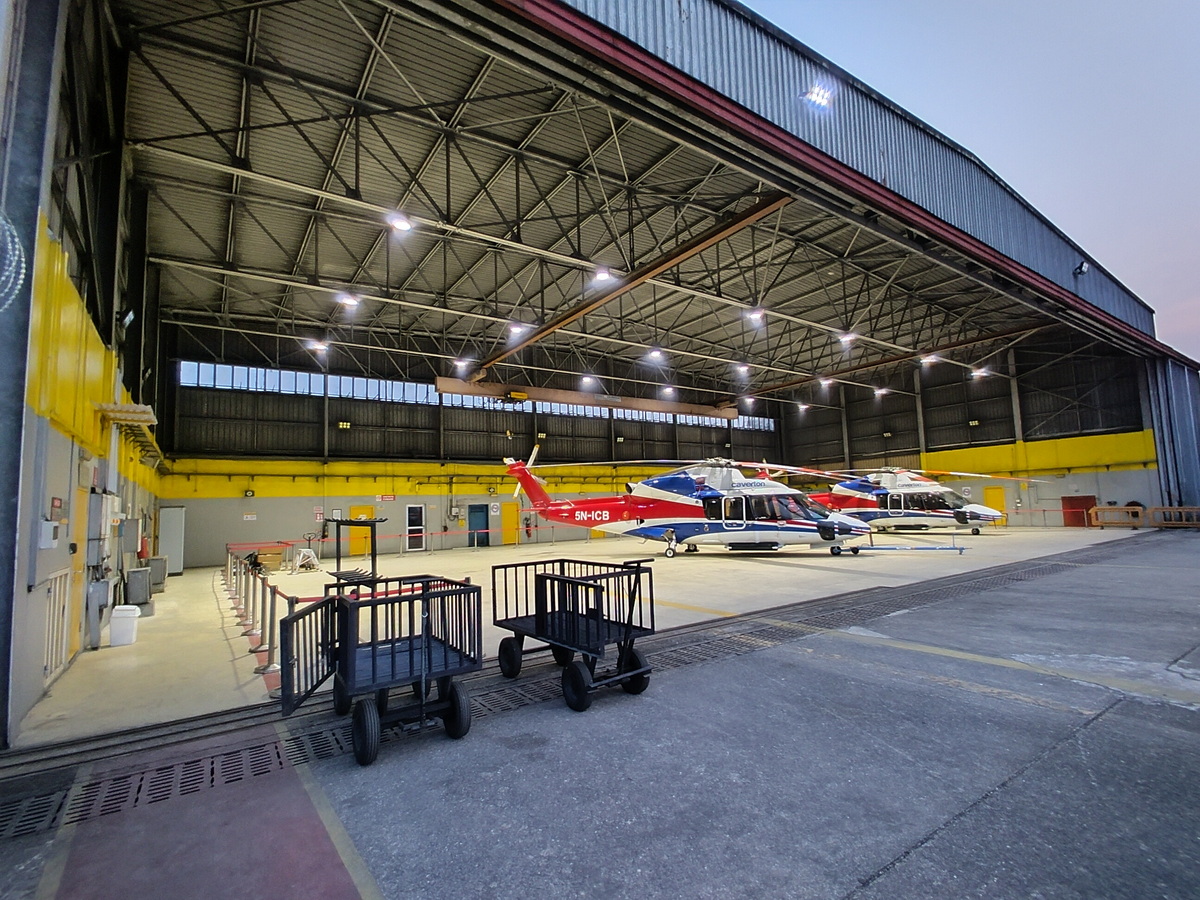 |
Lighting Plan We Created for the Customer
|
Lighting Plan |
Heat Map |
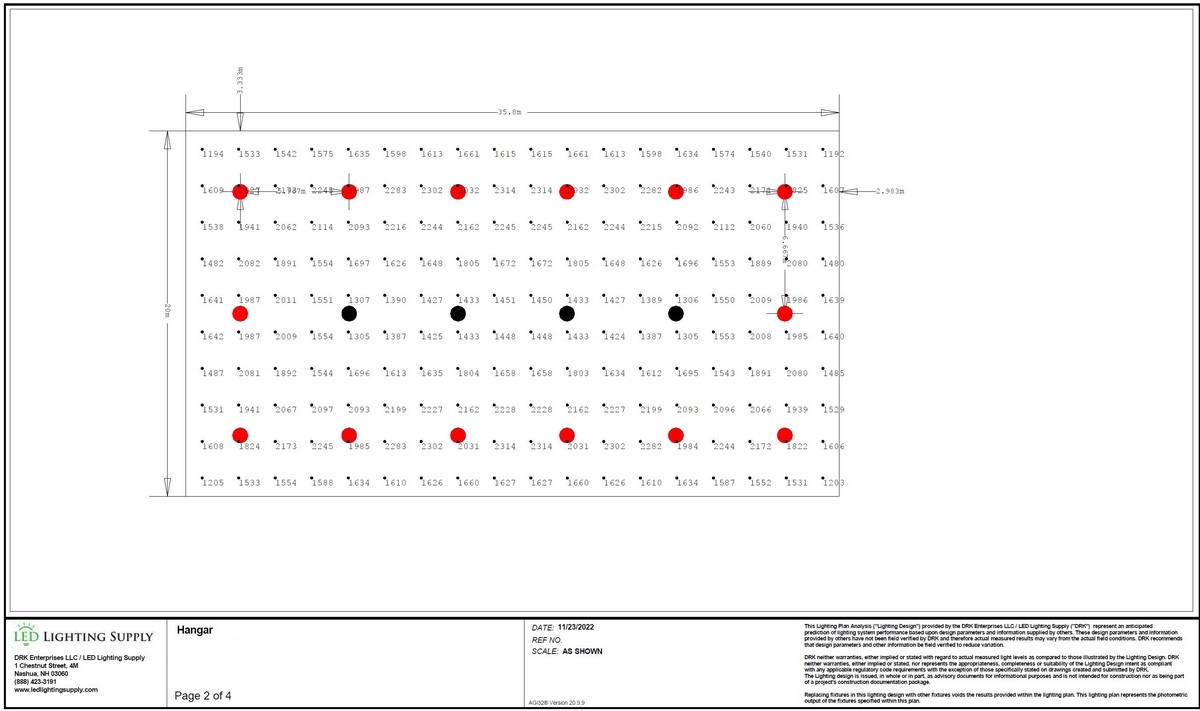 |
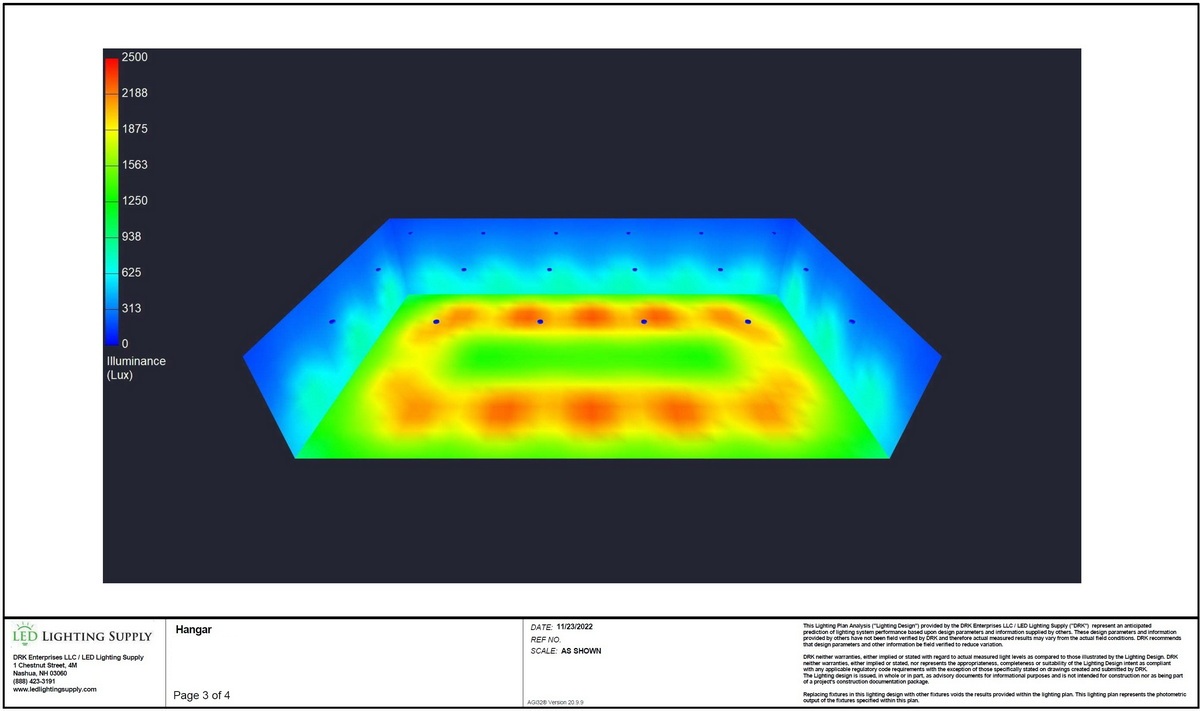 |
Aircraft Hangar Lighting Installation Plan Metrics
- Mounting height: 35 ft ft
- Fixtures Used: MLLG-LED-HB5-480-5-60: 480 Watt LED UFO High Bay | 76800 Lumens | 5000K | 100-277V
- FC achieved: 167 FC average
- Uniformity (Avg/Min): 1.51
LED Conversions Warehouse High Bay Lighting Upgrade Case Study
The Backstory:
LED Lighting Supply was approached by LED Conversions, the contractor for this warehouse project, to support with a warehouse lighting upgrade. The existing lights in the facility included antiquated 400-watt metal-halide fixtures, which prevented achieving proper warehouse lighting levels, negatively impacted working conditions, and increased operational costs.
The Customer's Challenge:
Operating with outdated metal halide fixtures in place created several challenges for the warehouse:
- High energy consumption, leading to increased utility costs
- Uneven light distribution, resulting in poor visibility across aisles and work areas
- Frequent maintenance and lamp replacements, increasing downtime and labor costs
- Inconsistent light quality, contributing to eye strain and reduced worker productivity
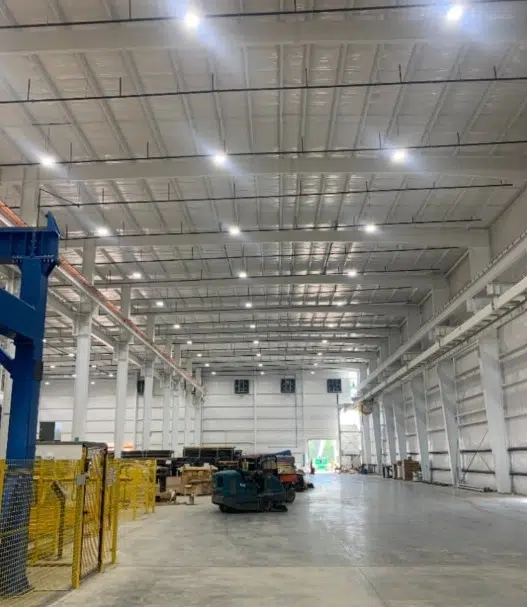
Lighting Plan We Created for the Customer
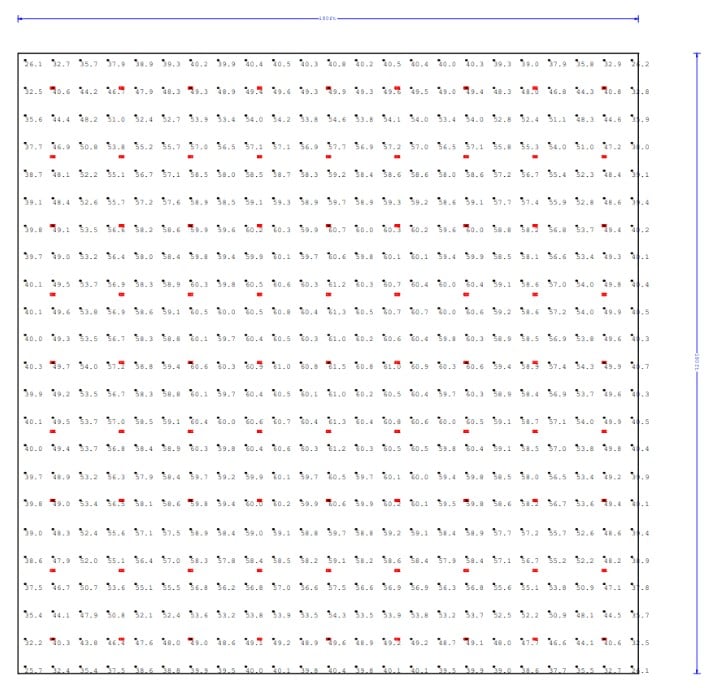
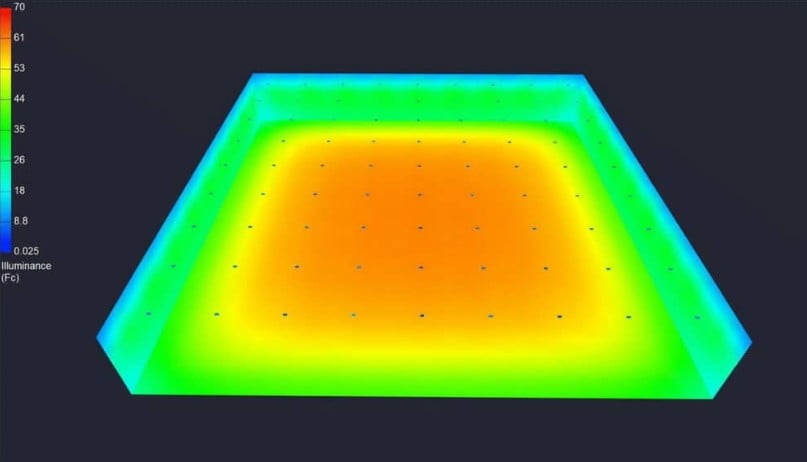
Lighting Plan Metrics:
- Foot Candles Achieved: 55 FC
- Product(s) Used: MLLG-LED-HBC-200-5-120
Tatsumi Intermodal U.S.A. Inc.’s Linear High Bay Warehouse Lighting Case Study
The Backstory
Tatsumi Intermodal U.S.A. Inc. faced challenges with consistent and effective lighting throughout its warehouse areas. They were operating with a legacy fluorescent lighting system that consumed excess energy while producing minimal brightness. Tatsumi approached LED Lighting Supply to provide a custom-tailored lighting solution that aligns with OSHA (Occupational Safety and Health Administration) requirements.
The Customer's Challenge
The facility consists of three separate warehouse spaces with 300 fluorescent fixtures. Each section required a lighting solution that would increase overall brightness levels to meet OSHA illumination standards while preserving the existing wiring system. The fluorescent lights were only producing about 20 foot candles (fc) across each warehouse floor section. Proper lighting levels for a warehouse environment typically fall between 40 and 60 fc, depending on the space dimensions.
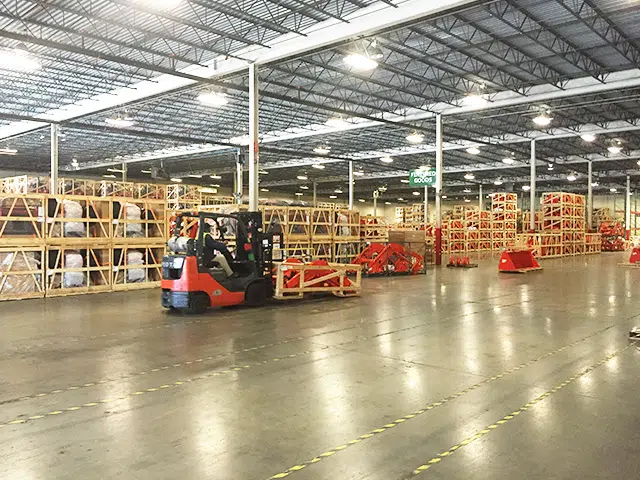
Lighting plan metrics:
- Product(s) Used: MLLG-X-LED-HBLIN6-(240/270/310)-CC-[V]
Commercial Lighting Certifications, Rebates, and Warranty Support
Selected LED commercial lighting fixtures from LED Lighting Supply carry an electrical safety certification or listing from a recognized organization, such as UL, ETL, or CSA, depending on the product and application. Many models are DLC or DLC Premium qualified for utility rebate programs where available. Rebate requirements vary by utility, region, project, and product listing, so confirm eligibility on the selected product specification before ordering.
Warranty terms vary by fixture and are stated in the selected product documentation. Many commercial fixtures include a 5-year warranty, while other warranty periods may apply. Before purchase, review the selected product specification to confirm certifications, DLC status, voltage, controls compatibility, mounting method, environmental ratings, warranty coverage, and whether the fixture is right for the project.
Information to Prepare for a Commercial Lighting Quote
Providing complete project information helps identify suitable fixtures and supports a more useful lighting recommendation. For projects where uniformity, glare, illumination levels, or coverage matter, fixture-specific photometric analysis using actual IES data is more reliable than a universal fixture-count or spacing rule.
- Photos and dimensions: Share images of the space, existing fixtures, ceiling or pole heights, and key dimensions.
- Existing fixture details: Note fixture type, quantity, mounting method, lamp type, wattage, and any known lighting concerns.
- Electrical information: Confirm available voltage, wiring conditions, control wiring, and whether dimming or sensors are required.
- Operating needs: Identify operating hours, occupancy patterns, security requirements, task areas, and desired control functions.
- Environmental exposure: Describe moisture, washdown, dust, vibration, heat, chemicals, corrosion, or impact exposure. These conditions may require model-specific materials and ratings.
- Site and exterior details: For outdoor work, provide pole information, mounting locations, fixture orientation, nearby property considerations, and applicable site requirements.
- Special requirements: Identify any established emergency-lighting, food-processing, hazardous-location, rebate, or specification requirements. Hazardous-area classification must be established by the qualified authority for the site; fixtures must match the documented classification.
Contact us about your commercial LED lighting project, and our Product Specialists can help review fixture type, mounting height, lumen output, voltage, controls, color temperature, published certifications, environmental requirements, product specifications, and available photometric information.
Commercial LED Lighting Solutions FAQs
How Should I Choose Commercial LED Lighting Beyond Wattage?
Choose commercial LED lighting by application, fixture type, lumen output, mounting height, beam distribution, controls, voltage, environment, and required certifications rather than wattage alone. Wattage does not indicate fixture output, coverage, beam distribution, or visual comfort.
Is A One-For-One Replacement Always The Best Commercial Lighting Approach?
No, a one-for-one replacement is not always the best approach when existing lighting is too dim, too harsh, poorly spaced, or expensive to maintain. Compare actual lumen output and fixture distribution instead of relying only on replacement wattage equivalency.
How Do I Match Fixture Type To A Commercial Space?
Match the fixture family to the space and activity, such as panels for offices and drop ceilings, high bays for high-ceiling areas, shop lights for work bays, wall packs for building exteriors, and parking lot lights for exterior lots. Ceiling height, mounting method, work type, visual comfort, layout, and environmental conditions also affect selection.
What Should I Confirm Before Selecting Indoor Commercial LED Fixtures?
Confirm mounting height, fixture spacing, voltage, dimming, color temperature, glare, and exposure to dust, moisture, vibration, or impact before selecting indoor commercial LED fixtures. Standard indoor fixtures should not be used in wet, washdown, hazardous-location, high-temperature, or harsh-environment areas unless the selected model is rated for that use.
What Factors Matter When Selecting Outdoor Commercial LED Lighting?
Select outdoor commercial LED lighting by application, mounting height, beam distribution, voltage, controls, environmental rating, and the surrounding property. Outdoor projects should also confirm wet-location suitability, IP rating, surge protection, fixture aiming, glare, and neighboring properties.
How Should I Choose Color Temperature For A Commercial Space?
Choose color temperature based on the appearance, comfort, visibility, and use of the commercial space. Many projects use 4000K for neutral white light in offices, schools, and general work areas, while 5000K is often selected for warehouses, shops, parking areas, and task-focused spaces; 3000K may be used where a warmer appearance is desired.
How Do I Verify Controls And Electrical Compatibility Before Ordering?
Confirm site voltage and control compatibility before ordering commercial LED fixtures. Not every fixture supports every sensor, dimming method, emergency option, or building control system, and voltage, controls, and selectable settings vary by model.
Can Commercial LED Fixtures Qualify For Utility Rebates?
Many commercial LED lighting models are DLC or DLC Premium listed for utility rebate support where available. Rebate eligibility varies by utility, region, and product listing, so confirm eligibility on the selected product specification before ordering.