LED Exit Signs and Emergency Lighting
- Exit signs and emergency lights with battery backup options available
- Red, green, single-face, double-face, and combo units offered
- USA-based support for fixture selection and specifications


Our Commercial Exit Signs and Emergency Exit Lights include LED exit signs, emergency light fixtures, combination units, remote-head lights, and specialized models for commercial facilities. Available options include red or green lettering, single-face and double-face configurations, edge-lit styles, adjustable heads, battery backup, self-testing, and wall, ceiling, end, recessed, or surface mounting. These products are commonly used in offices, warehouses, schools, healthcare buildings, retail stores, industrial facilities, stairwells, corridors, mechanical rooms, utility areas, and exit paths.
-
 Starting At $29.06
-
Starting At $30.20
-
Starting At $36.00
-
Starting At $1,224.00

-
Starting At $1,867.40





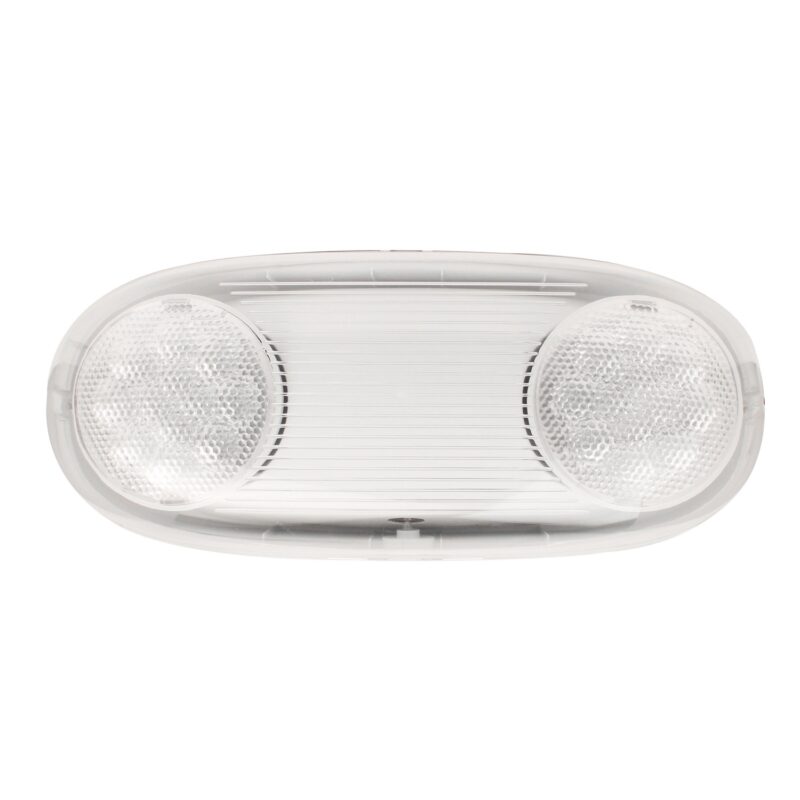
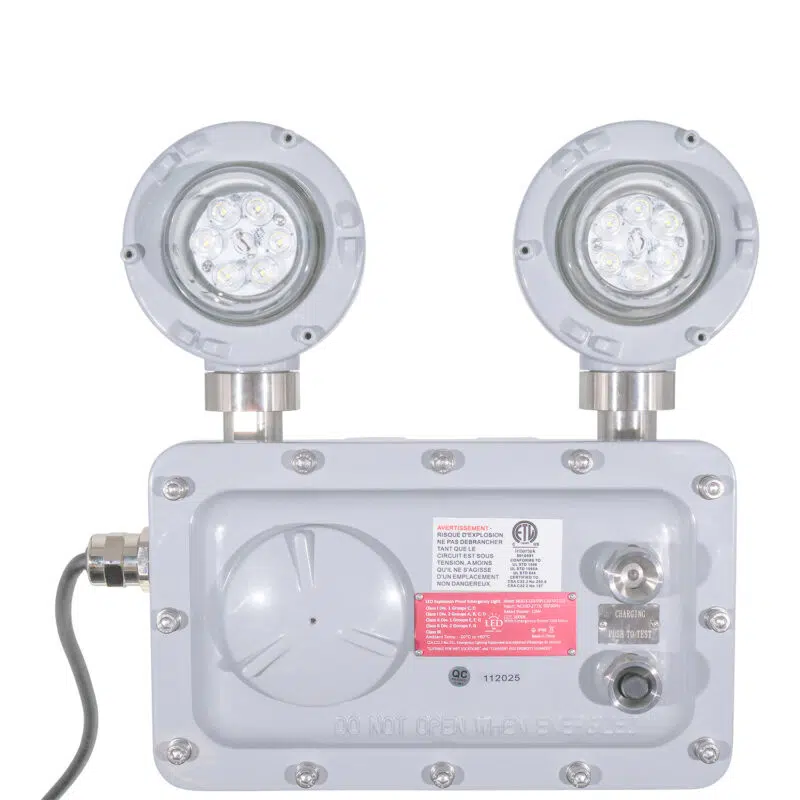


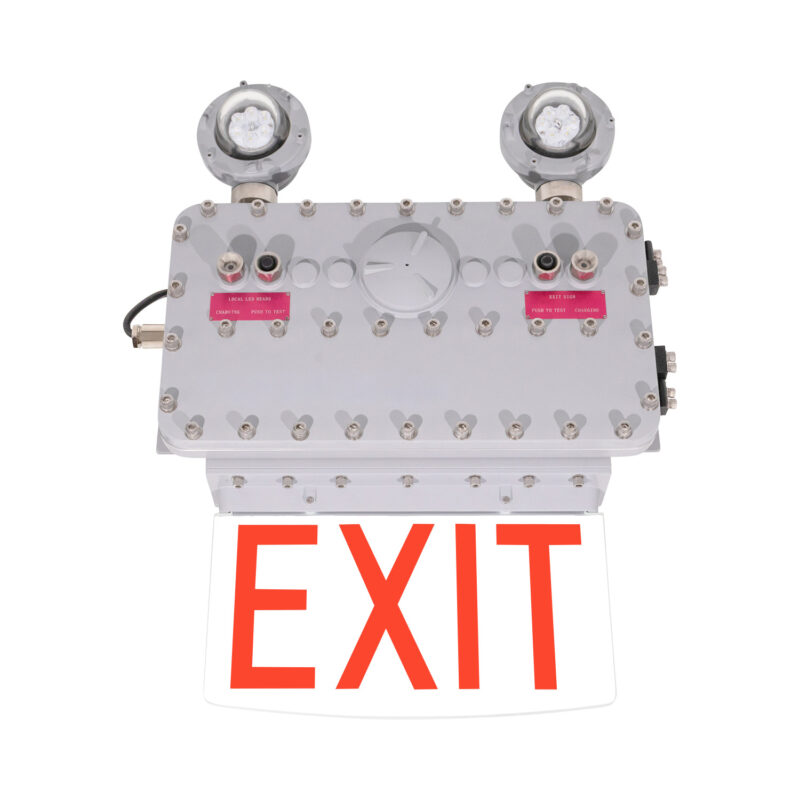


LED Exit Signs and Emergency Lighting for Commercial Facilities
LED exit signs and emergency lights help identify exit paths and provide visibility during a power outage, emergency, or evacuation. They are used in offices, warehouses, schools, healthcare buildings, retail stores, industrial facilities, stairwells, corridors, mechanical rooms, and other commercial spaces where marked exits and backup illumination are required. Start by determining whether the location needs an exit sign, emergency illumination, or a combination unit. For exit signs, confirm the required face configuration, mounting location, visibility, directional chevrons, and letter color. For emergency lights, evaluate mounting height, head direction, room layout, obstructions, and required egress visibility. Then confirm battery backup, voltage, damp-location needs, self-testing requirements, environmental suitability, and local life-safety requirements.
Selection and Installation Note: Product specifications, voltage, battery type, backup runtime, mounting method, face style, letter color, housing material, damp-location rating, hazardous-location rating, self-test capability, certifications, and warranty coverage vary by model. Confirm the selected product specification before ordering. For exit signs, emergency lighting, egress lighting, electrical upgrades, code-sensitive applications, or life-safety equipment, verify requirements with your local inspector, facility team, project specifier, fire safety professional, or a licensed electrical professional.
What Are LED Exit Signs?
LED exit signs provide illuminated directional guidance to help occupants identify exit routes. Many commercial exit signs use low-wattage LED technology and include battery backup so the sign remains visible during a power loss. Common features may include red or green lettering, single-face or double-face configurations, universal mounting brackets, field-selectable directional chevrons, damp-location ratings, self-testing options, and 90-minute battery backup, depending on model.
What Are LED Emergency Lights?
LED emergency lights provide backup illumination when normal power is interrupted. They are commonly installed along exit paths, corridors, stairwells, utility areas, warehouse paths, and other locations where temporary visibility is needed during an outage. Many emergency light fixtures include adjustable LED heads, battery backup, charge indicators, test buttons, and optional self-testing features. Combination units are also available with an exit sign and emergency light heads in one fixture.
Common Types of Exit Signs and Emergency Lights
| Fixture Type | Best Used For |
|---|---|
| Red LED exit signs | Common commercial exit sign applications where red lettering is required or preferred. |
| Green LED exit signs | Facilities where green lettering is required, preferred, or selected for building standards. |
| Single-face exit signs | Wall-mounted locations where the sign needs to be viewed from one direction. |
| Double-face exit signs | Ceiling-mounted or end-mounted locations where the sign needs to be visible from two directions. |
| Edge-lit exit signs | Architectural spaces, lobbies, corridors, offices, and retail areas where a cleaner appearance is desired. |
| Exit sign and emergency light combo units | Locations where exit identification and emergency illumination are needed from one installed unit. |
| Remote-head emergency lights | Applications where light heads need to be positioned away from the battery unit or exit sign housing. |
| Hazardous-location exit signs | Classified areas where the fixture must be selected for the documented hazardous-location classification. |
| High-temperature emergency lights | Boiler rooms, mechanical spaces, industrial areas, or other locations where elevated ambient temperatures may be present. |

Exit Sign Mounting Options
Exit signs are commonly mounted on walls, ceilings, or above doorways depending on the building layout and visibility requirements. Many models include universal mounting hardware, but the selected fixture should still be checked against the installation location before ordering.
| Mounting Type | Application Notes |
|---|---|
| Wall mount | Used above doors, along corridors, and in areas where the sign is viewed from one direction. |
| Ceiling mount | Used where ceiling placement improves visibility or where wall space is limited. |
| End mount | Used at corridor intersections, turns, and locations where the sign must be visible from two directions. |
| Recessed mount | Used in finished interiors where a cleaner, lower-profile appearance is preferred. Confirm ceiling compatibility and installation requirements. |
| Surface mount | Used in warehouses, stairwells, commercial buildings, and utility spaces where direct mounting is practical. |
Battery Backup and Runtime
Exit signs and emergency lights commonly include battery backup so the fixture remains operational during a power outage. Many commercial models are designed for 90-minute emergency operation, but runtime, battery chemistry, recharge time, testing method, and replacement requirements vary by model. Before ordering, confirm battery backup duration, input voltage, charging indicators, manual test function, self-test capability, and replacement battery availability. For facilities with formal maintenance programs, self-testing models may help simplify routine inspection and documentation.
Emergency Light Heads and Coverage
Emergency light heads are used to direct backup illumination toward exit paths, stairs, corridors, equipment areas, and other critical movement routes. Adjustable dual-head fixtures are common, but fixture output, beam spread, head adjustability, and spacing should be verified for the project. Emergency lighting should not be selected only by lumen output. Mounting height, head direction, room layout, obstructions, ceiling height, corridor length, and required egress illumination all affect the final layout.
Red vs. Green Exit Signs
Exit signs are commonly available with red or green lettering. The correct choice depends on local requirements, building standards, project specifications, and visibility needs. Some facilities standardize on one color throughout the building for consistency. Before ordering, confirm the required letter color, face count, directional arrows, mounting method, housing finish, voltage, and any facility-specific standard.
Damp, Wet, High-Temperature, and Hazardous Locations
Not every exit sign or emergency light is suitable for every environment. Stairwells, loading docks, utility rooms, wash-down areas, mechanical spaces, industrial areas, and classified locations may require specialized fixtures. For damp or wet locations, confirm the fixture's location rating and environmental suitability. An IP rating addresses protection against solid-object and water ingress; it does not by itself establish corrosion resistance, chemical resistance, sanitation suitability, or hazardous-location approval. For high-temperature areas, confirm the rated operating temperature at the installed location and review applicable high-temperature LED lighting options. For classified hazardous locations, review applicable explosion-proof lighting requirements and confirm the documented Class/Division or Zone classification, applicable group, temperature code, ambient-temperature rating, and project requirements before ordering. A damp-, wet-, or IP-rated fixture is not automatically approved for a hazardous location.
Code-Sensitive Selection and Maintenance
Exit signs and emergency lights are life-safety products. Building requirements can vary by jurisdiction, occupancy type, facility use, and project scope. Fixture selection, placement, testing, and maintenance should be verified before installation. Confirm applicable requirements for exit marking, emergency illumination, battery backup, testing intervals, inspection records, circuiting, mounting location, and replacement products with your local inspector, facility safety team, project specifier, or licensed electrical professional. 
How to Choose the Right Exit Sign or Emergency Light
- Choose an exit sign when the primary need is identifying an exit door, exit access, or direction of travel.
- Choose an emergency light when the primary need is backup illumination along an egress route, stairwell, corridor, utility area, or other path of travel.
- Choose a combination unit when both an illuminated exit sign and emergency light heads are needed at the same location.
- Choose a single-face or double-face sign based on the directions from which occupants must see the exit marking.
- Choose the mounting configuration based on the installation surface, viewing direction, ceiling conditions, and the fixture's approved mounting options.
- Choose environmental features based on the actual location, such as damp or wet exposure, elevated ambient temperature, wash-down conditions, or a documented hazardous classification.
- Choose self-testing capability where the facility's maintenance process can benefit from automated functional testing and status indication.
- Confirm the complete fixture specification before ordering, including voltage, battery runtime, face style, directional chevrons, mounting hardware, environmental rating, and safety listing.
Certifications, Rebates, and Warranty Support
Selected LED exit signs and emergency lights from LED Lighting Supply may carry safety listings from nationally recognized testing laboratories, such as UL or ETL, depending on the model and application. Selected models may be rated for damp or wet locations or include self-testing capabilities. Warranty terms vary by product; many products may include a 5-year warranty, while other models have different coverage. Before ordering, confirm the selected product's safety listing, voltage, battery backup duration, mounting method, environmental rating, hazardous-location suitability, warranty terms, and compatibility with the building layout and local requirements.
Need Help Choosing Exit Signs or Emergency Lights?
Contact us about LED exit signs and emergency lighting, and our Product Specialists can help review fixture type, face count, red or green lettering, mounting method, battery backup, voltage, damp-location needs, hazardous-location requirements, self-testing options, and product specifications.
LED Exit Signs and Emergency Lighting FAQs
Should I Choose An Exit Sign, Emergency Light, Or Combination Unit?
Choose an exit sign for exit identification or direction of travel, an emergency light for backup illumination along a path of travel, and a combination unit when both are needed at the same location.
How Do I Choose Between A Single-Face And Double-Face Exit Sign?
Choose the face configuration based on the directions from which occupants must see the exit marking. Single-face signs are used where viewing is needed from one direction, while double-face signs are used where visibility is needed from two directions.
What Should I Consider When Planning Emergency Light Coverage?
Emergency light layout should account for mounting height, head direction, room layout, obstructions, ceiling height, corridor length, and required egress illumination. Fixture output, beam spread, head adjustability, and spacing should also be verified for the project.
How Should I Select An Exit Sign Mounting Configuration?
Select the mounting configuration based on the installation surface, viewing direction, ceiling conditions, and the fixture's approved mounting options. Exit signs are commonly mounted on walls, ceilings, or above doorways depending on building layout and visibility requirements.
What Should I Confirm About Battery Backup Before Ordering?
Confirm battery backup duration, input voltage, charging indicators, manual test function, self-test capability, and replacement battery availability before ordering. Many commercial models are designed for 90-minute emergency operation, but runtime, battery chemistry, recharge time, testing method, and replacement requirements vary by model.
How Do I Choose Red Or Green Exit Sign Lettering?
The correct letter color depends on local requirements, building standards, project specifications, and visibility needs. Before ordering, also confirm face count, directional arrows, mounting method, housing finish, voltage, and any facility-specific standard.
What Should I Verify For Damp, Wet, High-Temperature, Or Hazardous Locations?
Confirm the fixture's location rating and environmental suitability for the installed location. For hazardous locations, confirm the documented Class/Division or Zone classification, applicable group, temperature code, ambient-temperature rating, and project requirements; a damp-, wet-, or IP-rated fixture is not automatically approved for a hazardous location.
When Can Self-Testing Exit Signs Or Emergency Lights Be Useful?
Self-testing capability can be selected where the facility's maintenance process can benefit from automated functional testing and status indication. For facilities with formal maintenance programs, self-testing models may help simplify routine inspection and documentation.