Commercial LED Street Lighting
- Cobra head and roadway-style fixtures with optic options available
- Photometric plans help evaluate coverage, uniformity, and placement
- DLC-listed options available for utility rebate eligibility


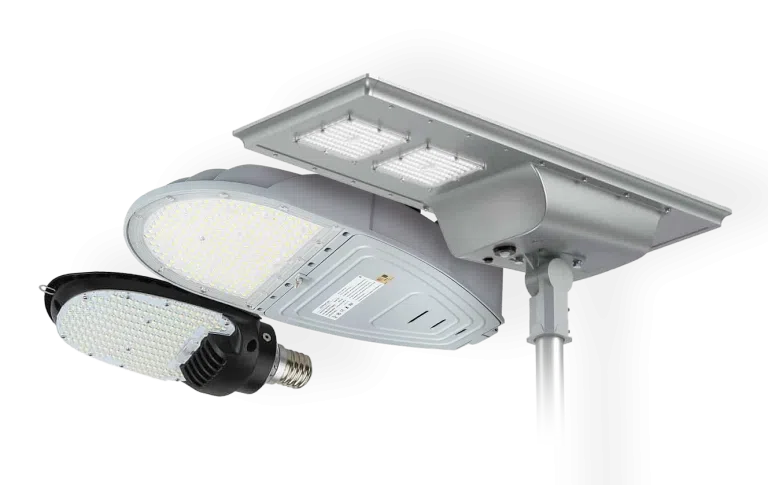
Our Commercial LED Street Lights include cobra head and roadway-style fixtures for pole-mounted outdoor lighting. Available models vary by optic distribution, voltage, color temperature, controls, and mounting configurations, including slip-fitter, direct-arm, adjustable-arm, and pole-top options. These fixtures are commonly used on residential streets, municipal roads, collector roads, private site roads, sidewalks, intersections, parking lot entrances, commercial access routes, drive aisles, and industrial site roads.
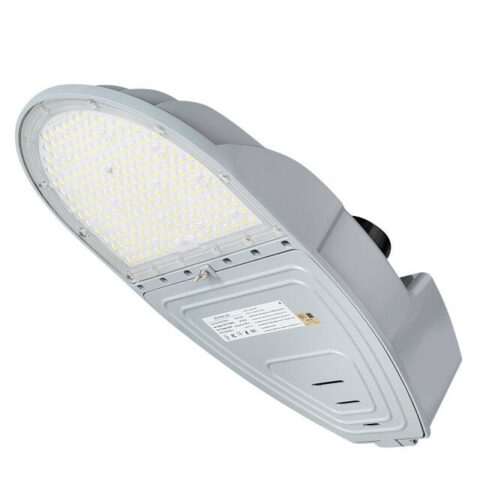


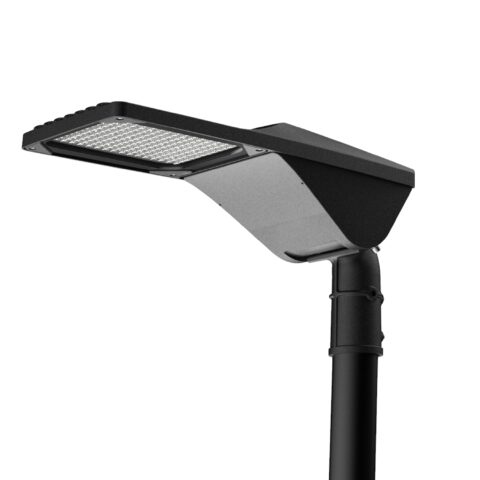

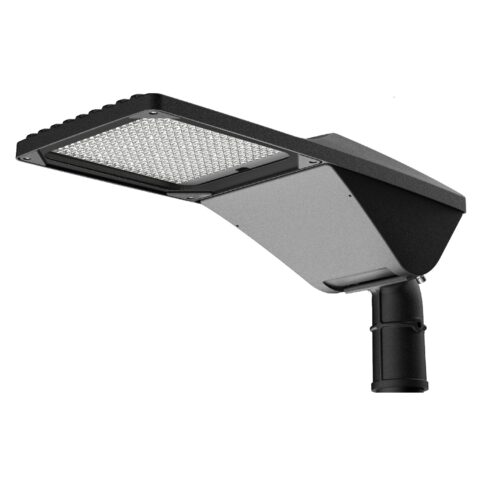
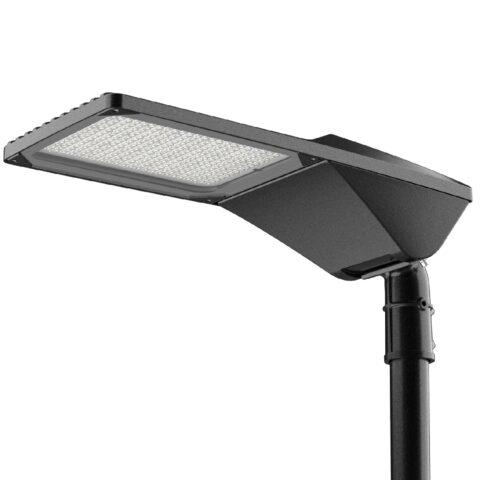
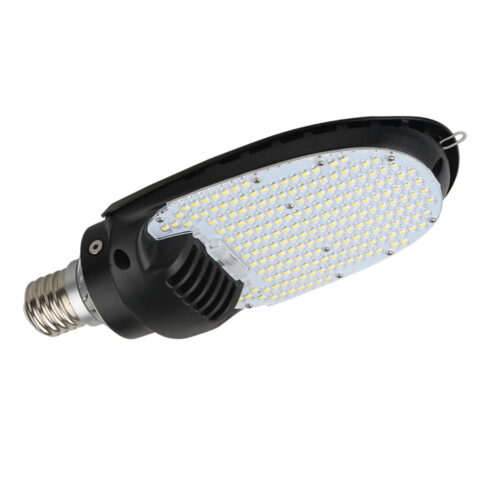

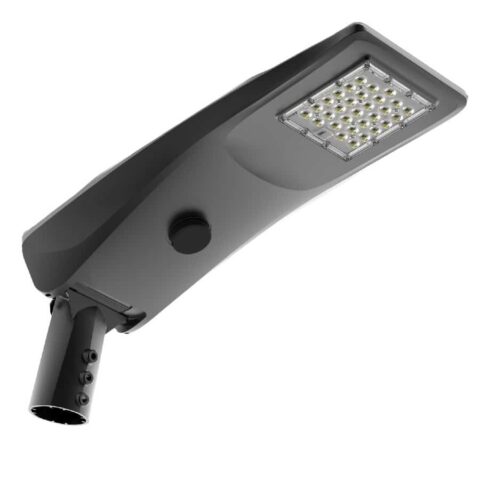
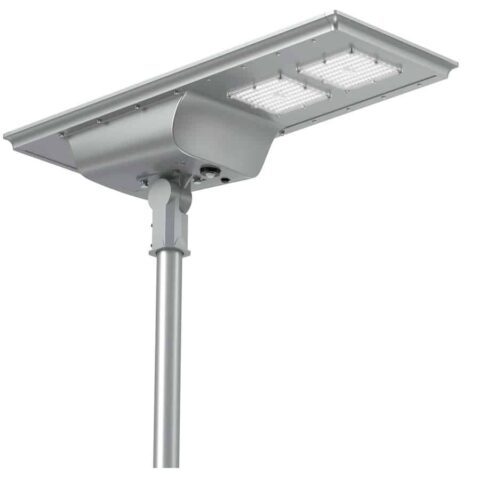
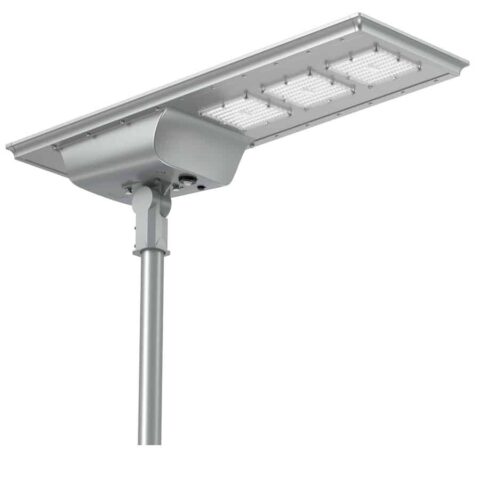
LED Street Lights for Roads, Sidewalks, Parking Entrances, and Site Roads
LED street lights are pole-mounted outdoor fixtures used to illuminate roadways, residential streets, municipal roads, private site roads, sidewalks, intersections, parking lot entrances, and commercial access routes. The right street light depends on roadway width, pole height, pole spacing, fixture style, mounting arm, optic type, voltage, color temperature, glare control, and local requirements. Cobra head street lights are one common style of LED street light, especially for municipal roads and traditional roadway applications.
Other roadway and area-style fixtures may also be used depending on the site layout, fixture appearance, mounting method, and lighting goals. Street lights should not be selected by wattage alone. A properly selected fixture uses the right lumen output, optic distribution, mounting height, and pole spacing to provide usable visibility without excessive glare or wasted light. For roads and pedestrian areas, uniformity and light placement are often just as important as brightness.
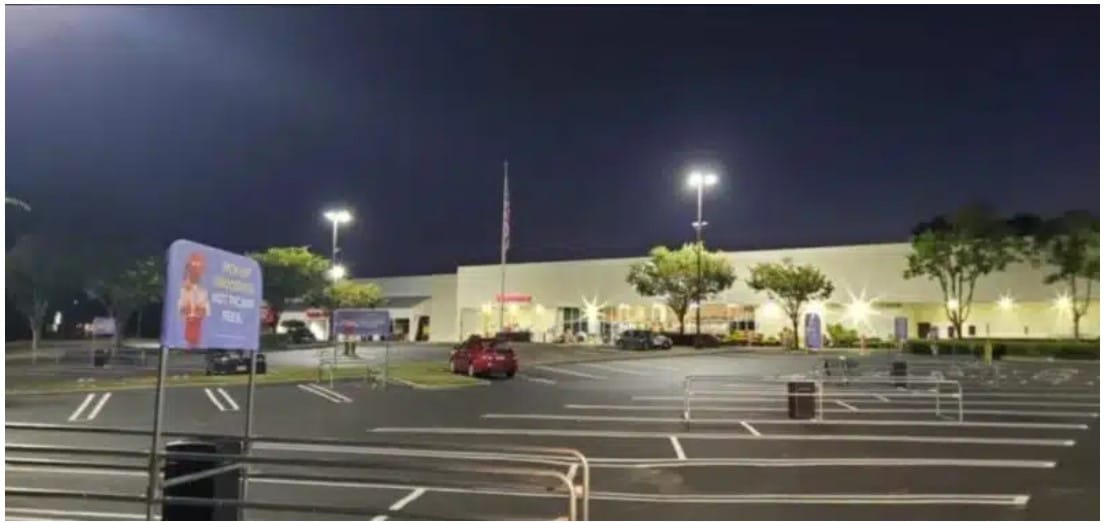
Selection and Installation Note: Product specifications, fixture wattage, lumen output, optic type, mounting hardware, slip fitter size, voltage, controls, dimming, photocell compatibility, surge protection, certifications, IP rating, IK rating, and warranty coverage vary by model. Confirm the selected product specification before ordering. For public roads, municipal streets, private roads, parking lot entrances, electrical upgrades, pole-mounted lighting, code-sensitive applications, or safety-critical projects, verify requirements with your local inspector or a licensed electrical professional.
How to Choose LED Street Lights
Start by identifying the roadway or site use, then match the fixture style and optic distribution to the pole layout, roadway width, mounting height, and spacing. Confirm the required voltage and mounting compatibility before ordering, then review color temperature, surge protection, and controls based on local requirements and operating needs. Replacing an older metal halide, mercury vapor, or high-pressure sodium fixture with LED can improve efficiency and visibility, but a one-for-one replacement is not always the best choice if the existing pole spacing, mounting height, or optic pattern was not ideal.
| Selection Factor | What to Confirm |
|---|---|
| Roadway or site use | Confirm whether the fixture is for a residential street, collector road, intersection, site road, drive aisle, or pedestrian route. |
| Fixture style | Choose cobra head, roadway-style, or area-light style fixtures based on the pole, mounting arm, appearance, and distribution needs. |
| Optic distribution | Type III is often used for roadways and drive aisles. Type V may fit intersections or open areas. Confirm with a lighting layout. |
| Pole height and spacing | Mounting height and spacing affect lumen output, uniformity, glare, fixture count, and dark spots between poles. |
| Arm length and mounting | Confirm arm length, tenon size, slip fitter dimensions, pole-top mounting, or direct-arm compatibility before ordering. |
| Voltage | Confirm whether the site requires 120-277V, 277-480V, or another electrical configuration. |
| Color temperature | 3000K may be preferred near homes or pedestrian areas. 4000K is common for many municipal or commercial sites. 5000K may be used where a cooler appearance is desired, depending on local requirements. |
| Surge protection | Outdoor pole-mounted street lighting should be reviewed for surge protection, especially near overhead power lines or in storm-prone areas. |
| Controls | Review photocells, dimming, timers, motion sensors, and smart control compatibility if the project requires automated operation. |
Start with the Street or Roadway Type
Street lighting should match how the road or site area is used. A residential street, collector road, intersection, sidewalk, private site road, and perimeter route do not need the same fixture layout or light level. Traffic speed, pedestrian activity, pole spacing, roadway width, and nearby properties all affect fixture selection.
| Street Lighting Area | What to Review Before Selecting Fixtures |
|---|---|
| Residential and local streets | Road width, pole spacing, color temperature, spill light toward homes, sidewalk activity, and local requirements. |
| Collector roads and municipal streets | Lane width, traffic volume, pedestrian activity, pole layout, Type III distribution, glare, and uniformity. |
| Major roads and arterials | Traffic speed, lane count, pole height, arm length, fixture output, distribution pattern, and electrical service. |
| Intersections and crosswalks | Pedestrian activity, turning movements, conflict zones, sight distance, fixture placement, and optic selection. |
| Sidewalks and pedestrian routes | Pedestrian safety, nearby roads, pathway width, glare, egress needs where applicable, and pole placement. |
| Parking lot entrances and drive aisles | Vehicle movement, pedestrian routes, pole spacing, fixture style, and whether street lights or parking lot lights are the better fit. |
| Commercial and industrial site roads | Truck movement, loading access, security visibility, electrical service, pole layout, surge protection, and controls. |
| Perimeter and security routes | Fence lines, camera visibility, shadow control, neighboring properties, motion sensors, and lighting schedule. |
Recommended Foot-Candles for LED Street Lighting
Street lighting levels vary by road type, traffic activity, pedestrian use, and local requirements. Residential streets typically need lower light levels than intersections, collector roads, or higher-traffic commercial site roads. Pedestrian areas, crosswalks, and conflict zones may require special review because visibility and safety expectations are different from basic roadway circulation. Use the foot-candle guide below as a starting point. Final fixture selection should be confirmed with a photometric plan that accounts for pole height, pole spacing, arm length, roadway width, optic type, uniformity, glare, spill light, voltage, color temperature, and mounting compatibility.
Street Light Fixture Styles and Optics
LED street lighting includes several fixture styles. Cobra head fixtures are common for roadway applications, but they are not the only option. The best fixture style depends on appearance, mounting hardware, distribution pattern, roadway width, and whether the area functions more like a road, parking drive aisle, sidewalk, or open site area.
| Fixture or Optic Choice | How It Is Commonly Used |
|---|---|
| Cobra head street lights | Common for municipal roads, residential streets, collector roads, and traditional roadway-style pole arms. |
| Roadway-style LED fixtures | Used where the project needs roadway optics, controlled distribution, and compatibility with street light poles or arms. |
| LED area lights | May be a better fit for parking lot drive aisles, entrances, site roads, or open commercial areas. |
| Type III distribution | Often used for roads, drive aisles, and applications where light needs to project forward and outward from the pole line. |
| Type V distribution | May be used for intersections, open areas, or symmetric coverage where light is needed around the pole. |
| Photocell-ready fixtures | Useful for dusk-to-dawn street lighting where automatic operation is preferred. |

Color Temperature for LED Street Lights
Color temperature should be selected carefully for street lighting. Many municipalities and residential areas prefer warmer 3000K lighting to reduce harsh appearance and improve nighttime comfort. Commercial roads, parking entrances, and site roads may use 4000K where a neutral white appearance is preferred. Cooler color temperatures may not be appropriate in every neighborhood or municipal setting. When replacing high-pressure sodium street lights, the shift from orange light to white LED light can be noticeable. Confirm local preferences, neighborhood expectations, and any municipal requirements before selecting color temperature.
Mounting and Installation Considerations
Street lights may use slip-fitter mounting, direct-arm mounting, adjustable arms, pole-top adapters, or roadway-style mounting hardware, depending on the fixture and pole. Existing arms and poles should be checked before ordering replacement fixtures. Confirm pole height, arm length, tenon size, fixture weight, wind exposure, voltage, photocell receptacle, surge protection, and maintenance access. Existing street light poles and arms should be reviewed before adding fixtures or changing fixture orientation. Fixture weight alone does not confirm that an existing pole, arm, or foundation is structurally suitable; review applicable manufacturer loading information and engineering requirements where needed.

What a Street Lighting Plan Should Confirm
A street lighting plan helps verify whether the selected fixtures will provide the required coverage before installation. This is especially important when replacing HID fixtures, changing color temperature, changing optic type, reusing existing poles, or lighting roads with uneven pole spacing.
| Planning Detail | Why It Matters |
|---|---|
| Fixture placement | Shows whether existing pole locations can provide acceptable roadway, sidewalk, or site-road coverage. |
| Expected foot-candles | Confirms expected light levels for the road, intersection, sidewalk, drive aisle, or pedestrian route. |
| Uniformity | Helps reduce bright spots under poles and dark gaps between poles. |
| Optic selection | Helps confirm whether Type III, Type V, or another distribution is appropriate for the layout. |
| Glare and spill light | Reviews light directed toward drivers, pedestrians, homes, neighboring properties, or road edges. |
| Mounting compatibility | Confirms pole height, arm length, tenon size, slip fitter compatibility, and fixture orientation assumptions. |
Request an outdoor street lighting plan to confirm fixture count, pole layout, optic type, foot-candle levels, uniformity, glare, spill light, voltage, and product specifications before ordering.
Street Lighting Certifications, Rebates, and Warranty Support
Selected LED street light models from LED Lighting Supply carry a safety certification or listing from a recognized testing organization, such as UL, ETL, or CSA, depending on the product. Selected models may also be DLC or DLC Premium listed and may qualify for utility rebates where available. DLC qualification is a performance and efficiency program, not an electrical safety certification. Rebate requirements vary by utility, region, installation, and product listing, so confirm eligibility for the exact selected product before ordering. Warranty coverage varies by product, with many models offering a 5-year warranty. Confirm the exact warranty, voltage, controls compatibility, mounting method, wet-location or environmental rating, surge protection, and product suitability for the roadway layout, pole spacing, mounting height, and local lighting requirements before purchase.
Before Ordering LED Street Lights
A final pre-order review can prevent delays during installation, especially when replacing fixtures on existing utility-style arms or poles. Provide the information below to your product specialist, installer, or lighting designer so the selected fixture and accessories can be checked against the project conditions.
- Document the existing mount: Provide photos and measurements of the arm, tenon, slip fitter, mounting bracket, and photocell receptacle. Confirm whether the fixture mounts horizontally, vertically, or at an adjustable angle.
- Confirm electrical information at the pole: Verify available voltage, wiring condition, branch-circuit protection, control wiring, and whether a photocell, networked control, or other control device is required.
- Check the exact optic and configuration: The same fixture family may be available with different distributions, outputs, CCTs, voltages, controls, and surge-protection options. Review the selected SKU and specification sheet rather than assuming all versions are alike.
- Review existing pole and arm loading: A new fixture, adapter, or changed mounting position can affect projected area and loading. Confirm suitability using pole manufacturer information and qualified engineering review when required.
- Plan access and maintenance: Identify bucket-truck access, traffic control needs, lift clearance, installation height, and how photocells, drivers, or controls will be serviced in the future.
- Verify utility and municipal requirements early: Public-road projects may have approved-product lists, lighting ordinances, utility ownership requirements, CCT limits, control requirements, or submittal procedures that affect product selection.
- Keep product records: Save the fixture specification sheet, photometric file, warranty information, installation instructions, selected options, and purchase documentation for future maintenance or rebate verification.
Request an outdoor street lighting plan, and our Product Specialists can help review application information, pole spacing, mounting height, optic type, arm compatibility, voltage, target foot-candles, glare control, spill light, color temperature, and published product specifications for your LED street lighting project.
Commercial LED Street Lighting FAQs
How Should I Choose Commercial LED Street Lighting?
Choose commercial LED street lighting by matching the fixture style and optic distribution to the roadway or site use, pole layout, roadway width, mounting height, and pole spacing. Confirm voltage and mounting compatibility before ordering, then review color temperature, surge protection, and controls based on local requirements and operating needs.
Can Existing Street Light Poles And Arms Be Reused For LED Fixtures?
Existing street light poles and arms may be reused, but the arm, tenon, slip fitter, mounting bracket, photocell receptacle, pole height, and voltage should be checked before ordering. Fixture weight alone does not confirm that an existing pole, arm, or foundation is structurally suitable.
Should LED Street Lights Be Selected By Wattage Alone?
No, LED street lights should not be selected by wattage alone. Proper selection uses the right lumen output, optic distribution, mounting height, and pole spacing to provide usable visibility without excessive glare or wasted light.
When Should I Use Type III Or Type V Street Light Distribution?
Type III distribution is often used for roads and drive aisles where light needs to project forward and outward from the pole line. Type V distribution may be used for intersections, open areas, or symmetric coverage where light is needed around the pole.
Can LED Street Lights Replace Older HID Fixtures One For One?
A one-for-one LED replacement is not always the best choice when existing pole spacing, mounting height, or optic pattern was not ideal. A street lighting plan is especially important when replacing HID fixtures, changing color temperature or optic type, reusing existing poles, or lighting roads with uneven pole spacing.
What Should A Street Lighting Plan Confirm Before Ordering?
A street lighting plan should confirm fixture count, pole layout, optic type, expected foot-candle levels, uniformity, glare, spill light, voltage, mounting compatibility, and product specifications. It also helps verify whether existing pole locations can provide acceptable roadway, sidewalk, or site-road coverage.
How Should I Choose Color Temperature For LED Street Lights?
Choose color temperature based on the site, neighborhood expectations, and local requirements. Many municipalities and residential areas prefer warmer 3000K lighting, while commercial roads, parking entrances, and site roads may use 4000K where a neutral white appearance is preferred.
What Product Details Should Be Confirmed Before Purchasing LED Street Lights?
Confirm the exact selected product specification because wattage, lumen output, optic type, mounting hardware, voltage, controls, dimming, photocell compatibility, surge protection, certifications, ratings, and warranty coverage vary by model. Review the selected SKU and specification sheet rather than assuming all versions in a fixture family are alike.