


70 Foot Light and Utility Poles
- Available in steel, fiberglass, and wood options
- Anchor-base and direct-burial configurations depending on model
- Selection support for fixture compatibility and mounting configurations



Our 70 Foot Light and Utility Poles include wood, steel, and fiberglass poles in selected round and tapered shaft configurations. Available models may feature anchor-base or direct-burial mounting, along with tenons, crossarms, mounting brackets, and other pole-top options for outdoor lighting installations.
These poles are used for utility lines, commercial parking lots, roadways, sports facilities, outdoor lighting projects, and high-power flood light or stadium light installations.
-
 Starting At $3,709.09

-
Starting At $3,492.73
-
Starting At $3,263.64

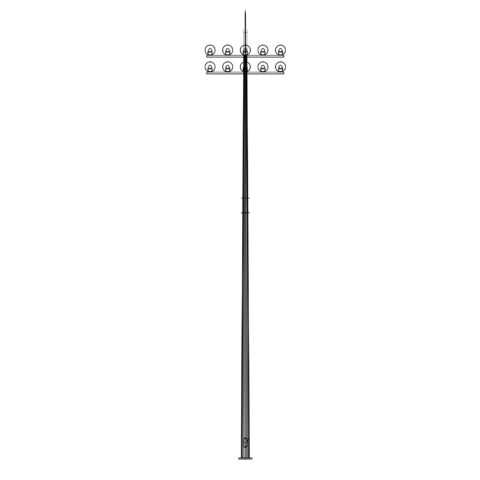

What Are LED Lighting Supply's Poles Made Of?
When selecting a 70 foot light or utility pole, begin with the pole material, mounting type, intended lighting, and applicable wind-load requirements. Material and mounting type determine the pole construction and installation approach, while intended lighting, fixture EPA, and project wind criteria help determine the appropriate pole size, strength, and number of lights. LED Lighting Supply's full line of light and utility poles is made of wood, steel, and fiberglass in various pole shaft shapes.
Wood poles provide a durable solution for high-voltage electricity cables, lower-voltage power lines, lighting, and other utility applications. Wood poles are commonly selected for their relatively economical upfront cost, but service life can be affected by moisture, insects, decay, soil conditions, treatment, and maintenance requirements.
Steel poles are commonly used for parking lot lighting projects, roadway lighting, and sports-field pole installations. Corrosion protection depends on the pole specification and may include galvanizing, powder coating, protective paint systems, or combinations of these finishes. Steel poles provide high structural strength and are available in configurations designed for demanding wind and fixture-loading requirements. Foundation, anchor-bolt, embedment, and mounting requirements vary by pole design and application. Let's break down our steel pole offering, including our 70 foot utility pole options:
- Tapered Steel Poles
- Round Steel Poles
- Square Steel Poles
Fiberglass poles, also known as FRP poles, provide an alternative to wood, steel, and aluminum poles in applications where resistance to corrosion, moisture, and many environmental conditions is important. Fiberglass poles do not rust or rot like conventional steel or untreated wood, although product ratings, fire performance, UV resistance, loading capacity, and installation requirements should be confirmed for the specific model and application. We offer standard and custom colors for many fiberglass pole options. Fiberglass poles are also generally lighter than comparable steel poles, which may simplify transportation, handling, and installation.
- Round Tapered Fiberglass Poles
- Round Fiberglass Poles
- Square Fiberglass Poles
What Are the Shapes and Colors of Our 70+ Foot Poles
Our 70+ foot light poles are available in selected round and tapered shaft configurations, depending on pole material, structural requirements, and application. Smaller pole heights may also be available in square steel, round steel, tapered steel, fiberglass, and wood configurations. Available finishes can include dark bronze powder coat and other standard or custom colors depending on the pole model and manufacturer. Here is a breakdown of common light pole shaft options, including our 70 foot light pole models.
- Square Steel Poles
- Round Steel Poles
- Tapered Steel Poles
- Fiberglass Round Poles
- Fiberglass Square Poles
- Fiberglass Tapered Poles
- Wood Round Poles
What Are LED Lighting Supply's Pole Mounting Types
70-foot and taller poles may be available in anchor-base or direct-burial configurations, depending on the pole material, height, loading requirements, and application. These mounting methods use different foundation approaches, so the correct option should be established as part of the pole and foundation design rather than selected by mounting preference alone.
Anchor-base poles use a base plate at the bottom of the pole that is secured to anchor bolts embedded in a concrete foundation. The foundation and anchor-bolt assembly must be designed for the specific pole, including pole height, fixture quantity, fixture EPA, wind speed, pole weight, bolt circle, anchor-bolt requirements, and site soil conditions. A base cover may be used to conceal the anchor bolts and hardware, but the base cover itself is not a structural component of the foundation.
Direct-burial poles extend below grade and are installed to a specified embedment depth rather than being bolted to an above-grade anchor-base foundation. Direct burial does not eliminate foundation considerations. Required embedment depth and installation method can depend on pole height, pole loading, wind conditions, soil characteristics, groundwater conditions, and the manufacturer's engineering requirements. Depending on the pole and site, installation may require specified backfill, concrete, or other engineered stabilization around the embedded portion of the pole.
Direct-burial construction is commonly associated with wood and fiberglass poles and is also available with certain steel or aluminum pole designs. Anchor-base construction is common for commercial parking lots, sports facilities, roadways, and other applications where a concrete foundation and bolted pole connection are preferred. The appropriate mounting method should be confirmed using the pole manufacturer's specifications and, where required, a qualified structural or geotechnical professional.
Our commercial and industrial poles can also be configured with tenons, crossarms, mounting brackets, and other pole-top options for outdoor lighting projects. Pole-top configuration should be included in the EPA and structural review because the number, size, mounting position, and projected area of the fixtures affect the load applied to the pole.
What Lighting Options Are Suitable For LED Lighting Supply's 70-Foot Poles?
Depending on the pole design and mounting configuration, our 70+ foot light poles can accommodate a range of lighting solutions, including high-power flood lights and stadium lights. Having supplied LED outdoor lighting to commercial and industrial customers since 2008, matching fixtures to poles is one of our core specialties. Fixture selection should be coordinated with the pole's allowable EPA, applicable wind criteria, mounting configuration, electrical requirements, and intended lighting performance.
What Are the Effective Projected Area (EPA) Considerations of LED Lighting Supply's Poles?
Effective Projected Area (EPA) is a published wind-loading value for a fixture, bracket, crossarm, or other attachment. The EPA of a specific product does not change by region; however, the pole manufacturer's allowable EPA can change based on the applicable design wind speed, exposure conditions, mounting height, pole configuration, and other project criteria. Our Lighting Experts can review the project wind requirements and attachment EPA to help identify an appropriate pole size, strength, and allowable lighting load for your 70+ foot pole. The combined EPA of fixtures, brackets, crossarms, and other attachments should remain within the pole manufacturer's allowable EPA for the applicable project conditions. For an initial estimate, you can also use LED Lighting Supply's free pole wind load calculator. Final pole and foundation requirements should be verified for the project location before installation.
Where Are You Located?
Wind requirements across the United States vary by location. A pole installed in Memphis, for example, may have different design requirements than one installed in Miami. Wind speed, exposure category, pole height, fixture EPA, mounting configuration, local code requirements, and other structural factors can affect the required pole design and the amount of equipment that can be mounted on it. We can help review these requirements before you purchase. In areas with demanding wind conditions, a high-wind-rated light pole may be appropriate for the application. 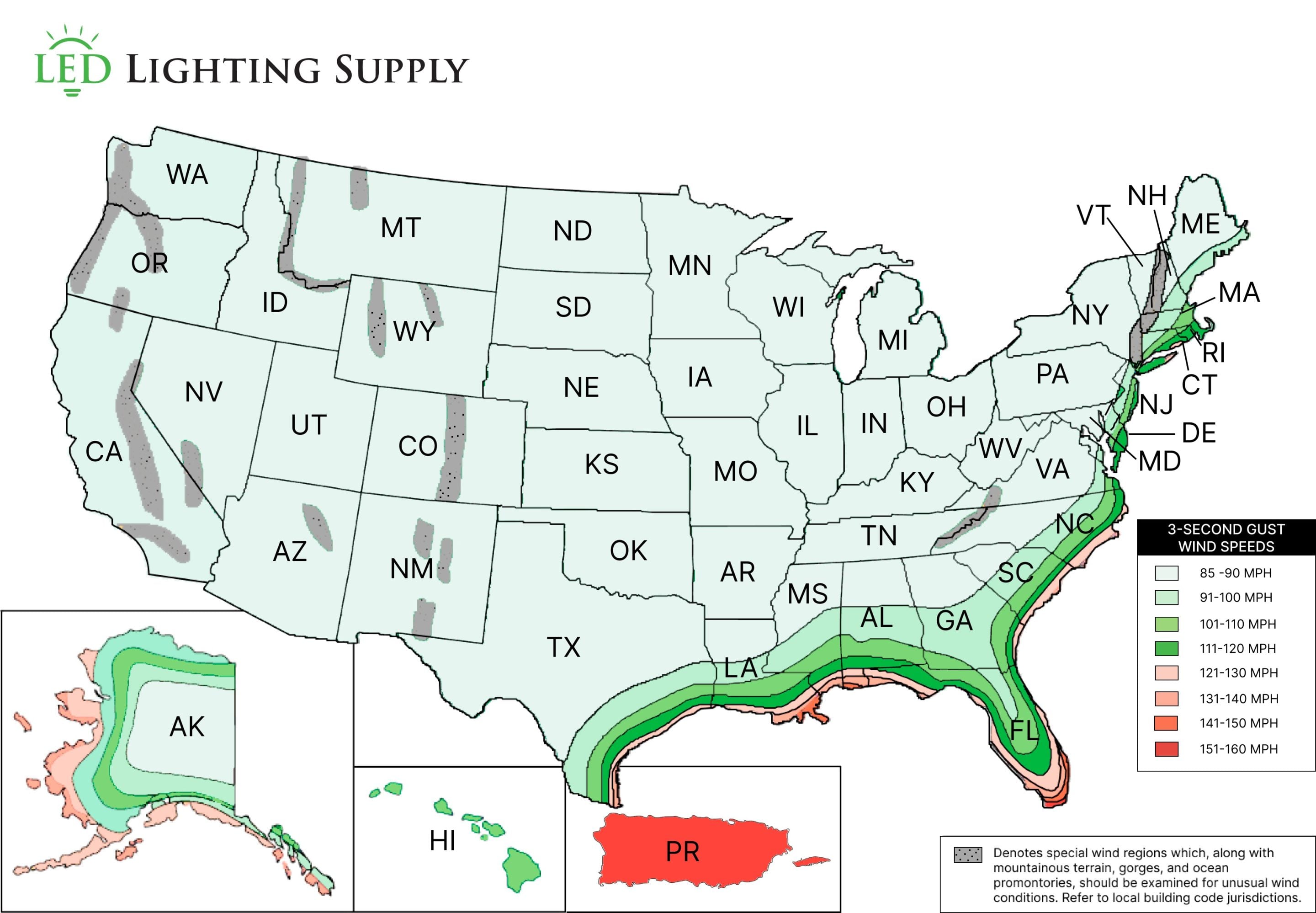
What is the Lead Time for These Poles?
Many light poles are built or configured for the requirements of a specific project. Typical lead times may range from approximately 4 to 12 weeks depending on pole height, material, finish, mounting configuration, engineering requirements, manufacturer availability, and project specifications. We also offer quick-ship light pole alternatives for some applications. Freight scheduling and truck delivery requirements can also affect the final delivery timeframe.
I Have an Outdoor Lighting Project. Do You Offer LED Light Fixtures That I Can Mount on These Poles?
Yes. LED Lighting Supply has supplied commercial and industrial LED lighting since 2008 and can help match fixtures, mounting hardware, and pole configurations for your outdoor lighting project. We can also provide photometric lighting plans to help determine fixture wattage, optics, mounting height, fixture quantity, spacing, and expected foot-candle levels before equipment is ordered. Product data sheets and specification sheets are available for the selected fixtures and poles.
Looking for Other Pole Sizes
- 10 to 15 Foot Light Poles
- 20 to 25 Foot Light Poles
- 30 to 35 Foot Light Poles
- 40 to 45 Foot Light Poles
- 50 to 55 Foot Light Poles
- 60 to 65 Foot Light Poles
70 Foot Light and Utility Poles FAQs
What Should I Consider When Selecting A 70 Foot Light Or Utility Pole?
Begin with the pole material, mounting type, intended lighting, and local wind-load and EPA requirements. These factors help determine the appropriate pole construction, installation approach, size, strength, and number of lights.
How Do Wood, Steel, And Fiberglass Pole Options Differ?
Wood poles are used for electricity cables, power lines, lighting, and other utility applications, while steel poles are commonly used for parking lots, roadways, and sports-field installations. Fiberglass poles provide an alternative where resistance to corrosion, moisture, and many environmental conditions is important, and they are generally lighter than comparable steel poles.
How Should I Choose Between Anchor-Base And Direct-Burial Mounting?
The mounting method should be established through the pole and foundation design based on pole material, height, loading requirements, and application. Anchor-base poles are secured to anchor bolts in a concrete foundation, while direct-burial poles extend below grade to a specified embedment depth.
What Factors Affect The Foundation Requirements For A 70 Foot Pole?
Foundation requirements can depend on pole height, fixture quantity, fixture EPA, wind speed, pole weight, soil conditions, mounting method, and manufacturer engineering requirements. Final pole and foundation requirements should be verified for the project location before installation.
Can 70 Foot Poles Support Flood Lights Or Stadium Lights?
Depending on the pole design and mounting configuration, 70+ foot light poles can accommodate high-power flood lights and stadium lights. Fixture selection should be coordinated with the pole's EPA capacity, wind rating, mounting configuration, electrical requirements, and intended lighting performance.
How Does EPA Affect Pole And Fixture Selection?
The combined EPA of fixtures, brackets, crossarms, and other attachments should remain within the pole manufacturer's allowable EPA for the applicable wind speed and exposure conditions. Wind requirements, fixture projected area, pole height, and mounting configuration can affect the required pole design and allowable lighting load.
Can LED Lighting Supply Help Plan Lighting For A 70 Foot Pole Project?
LED Lighting Supply can provide photometric lighting plans to help determine fixture wattage, optics, mounting height, fixture quantity, spacing, and expected foot-candle levels before equipment is ordered. Product data sheets and specification sheets are available for selected fixtures and poles.
What Is The Typical Lead Time For A 70 Foot Light Pole?
Typical lead times may range from approximately 4 to 12 weeks depending on pole height, material, finish, mounting configuration, engineering requirements, manufacturer availability, and project specifications. Freight scheduling and truck delivery requirements can also affect the final delivery timeframe.
