LED Lighting for Refineries
- Hazardous-location fixture options for classified refinery areas
- Application support for process, tank farm, and loading areas
- Photometric plans available to evaluate placement and coverage


Get Your Custom Lighting Plan With Product Recommendations
- Tell us about the oil refinery process areas you're lighting, and a product specialist can help you decide which fixtures to use, how many you need, and where to place them.


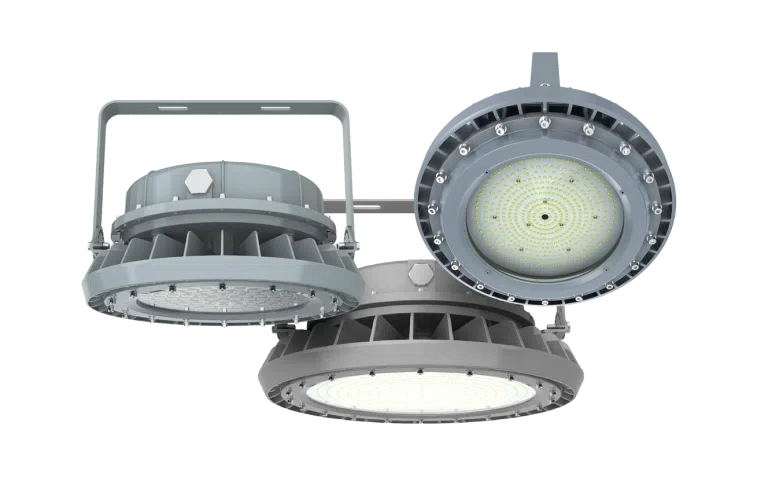
Our LED Oil Refinery Lighting for Hazardous Process Areas includes explosion-proof linear fixtures, flood lights, high bays, and canopy lights for classified refinery and petrochemical locations. Available models vary by fixture style, voltage, controls, emergency options, and mounting configurations including pendant, surface, wall, bracket, pole, structural, platform, and high mast mounting. These fixtures are commonly used in process units, pipe racks, elevated platforms, pump and compressor areas, tank farms, loading racks, product-transfer equipment areas, process buildings, and classified maintenance spaces.
LED Refinery and Petrochemical Lighting Fixtures
LED refinery and petrochemical lighting fixtures are used throughout process units, tank farms, loading racks, pipe racks, pump and compressor areas, utility systems, maintenance spaces, control rooms, roadways, and other areas within petroleum refining and chemical plant lighting facilities. Many refinery areas require explosion proof or hazardous-location lighting because flammable gases, vapors, liquids, or other hazardous materials may be present.
Other areas may use standard industrial fixtures, corrosion-resistant lighting, high-temperature fixtures, high mast lights, wall packs, area lights, or interior commercial lighting depending on the documented area classification and operating environment. Start fixture selection with the exact refinery area and its documented hazardous-location classification.
Then review required light levels, mounting height, ambient temperature, corrosion or chemical exposure, vibration, voltage, controls, emergency power, maintenance access, and fixture photometrics. A process unit, tank farm, loading rack, pump area, control room, maintenance shop, wastewater area, and parking lot should not be treated as the same lighting application.

Selection and Installation Note: Product specifications, hazardous-location ratings, temperature ratings, voltage, controls, certifications, corrosion resistance, chemical compatibility, mounting hardware, emergency options, and warranty coverage vary by model. Confirm the selected product specification before ordering. For refinery, petrochemical, tank farm, loading rack, fuel-transfer, chemical-processing, emergency, or safety-critical applications, confirm the documented area classification and installation requirements with the facility engineering team, project specifier, qualified electrical professional, or authority having jurisdiction.
Choose Refinery Lighting by Facility Area
Refineries contain many different operating environments. Fixture selection should be based on the requirements of the specific area rather than applying one hazardous-location rating or fixture type across the entire facility.
| Refinery Area | Fixture Selection Starting Point |
|---|---|
| Process Units | Hazardous-location linear fixtures, flood lights, high bays, or other properly rated luminaires may be required around process vessels, piping, valves, heat exchangers, pumps, and equipment where flammable gases or vapors may be present. |
| Pipe Racks and Elevated Platforms | Linear or directional hazardous-location fixtures can provide visibility along elevated structures, access platforms, stairs, valves, instrumentation, and maintenance routes. Fixture placement should account for shadows created by piping and structural steel. |
| Pump and Compressor Areas | Hazardous-location fixtures may be required depending on the documented classification. Also review vibration, ambient temperature, equipment access, and maintenance requirements. |
| Tank Farms and Storage Areas | Hazardous-location flood lights, area lights, or high mast lighting may be used depending on tank layout, classified boundaries, inspection routes, perimeter visibility, and maintenance requirements. |
| Loading Racks and Product Transfer Areas | Hazardous-location canopy lights, flood lights, and linear fixtures may be used around truck or rail loading, hose connections, metering points, and product-transfer equipment. Confirm the exact classified boundaries before selecting equipment. |
| Utilities and Mechanical Areas | Boiler areas, utility buildings, cooling systems, mechanical rooms, and supporting equipment may require industrial, high-temperature, vapor-tight, or hazardous-location fixtures depending on the environment and classification. |
| Wastewater and Treatment Areas | Moisture, corrosive gases, chemicals, and hazardous classifications may affect fixture selection. Confirm ingress protection, corrosion resistance, chemical compatibility, and hazardous-location requirements separately. |
| Control Rooms and MCC Rooms | LED panels, troffers, linear fixtures, or industrial interior lights may be appropriate where the room is not classified as hazardous. Confirm room classification, emergency-lighting needs, glare, and controls. |
| Maintenance Shops and Warehouses | LED high bays, linear high bays, vapor-tight fixtures, or other industrial lights may be used depending on ceiling height, task requirements, environmental exposure, and area classification. |
| Roadways, Parking, Security, and Perimeter Areas | Area lights, flood lights, high mast lights, wall packs, and security lighting may be used where hazardous-location ratings are not required. Review glare, spill light, camera visibility, pole placement, and nearby process areas. |
Recommended Foot-Candles for Refinery and Petrochemical Lighting
Lighting levels vary by task and area. A process platform, valve station, tank farm, loading rack, pump area, control room, maintenance shop, roadway, and emergency route can all have different lighting requirements. Foot-candle guidance helps estimate light levels, but it does not determine hazardous-location classification, fixture certification, corrosion resistance, chemical compatibility, vibration requirements, emergency-lighting requirements, or final installation compliance. For refinery and petrochemical projects, a photometric plan is recommended where fixture count, mounting height, beam spread, uniformity, glare, vertical illumination, or equipment shadowing are important.
Refinery Lighting Planning Checklist
Refinery lighting selection should start with the facility's documented classification and the requirements of the exact installation area. Fixture wattage alone is not enough to determine the correct product.
| Planning Factor | What to Confirm |
|---|---|
| Refinery area | Identify whether the fixture is for a process unit, pipe rack, pump area, compressor area, tank farm, loading rack, utility area, wastewater area, control room, shop, roadway, or perimeter location. |
| Hazardous-location classification | Confirm the documented Class, Division or Zone, Group, and applicable temperature requirements for the exact fixture location. Standard industrial fixtures are not substitutes for properly rated hazardous-location equipment. |
| Material present | Confirm the specific gas, vapor, liquid, dust, or other hazardous material associated with the classified area rather than selecting a fixture from the industry name alone. |
| Temperature requirements | Confirm fixture temperature code or maximum surface temperature requirements, along with the fixture's rated ambient-temperature range. |
| Foot-candle target | Confirm required light levels for process access, maintenance, gauge reading, inspection, loading, sampling, stairs, walkways, emergency egress, and security coverage. |
| Chemical and corrosion exposure | Review corrosive vapors, process chemicals, wastewater gases, cleaning agents, coatings, housing materials, lenses, gaskets, fasteners, and manufacturer compatibility information. |
| Ambient temperature | Confirm operating temperatures near heaters, process vessels, furnaces, boilers, hot piping, enclosed equipment, and outdoor process areas. |
| Vibration and shock | Pumps, compressors, rotating equipment, structural platforms, and machinery can introduce vibration. Confirm fixture, mounting, and wiring suitability where vibration is significant. |
| Ingress protection | Confirm rain, dust, washdown, water jets, standing moisture, and other ingress exposure. IP ratings address solids and water ingress and should not be used as evidence of chemical or corrosion resistance. |
| Mounting method | Confirm pendant, surface, wall, bracket, pole, structural, platform, high mast, or other mounting requirements along with service access. |
| Voltage and power | Confirm facility voltage, including 120-277V or 347-480V where applicable, along with emergency circuits, generator power, surge protection, controls, and wiring requirements. Review available 480-volt explosion-proof LED lights when both the voltage and hazardous-location rating are appropriate. |
| Controls | Review photocells, timers, dimming, occupancy controls, remote monitoring, and emergency override. Any controls located within classified areas must also be suitable for the location. |
| Emergency lighting | Confirm stairs, exits, platforms, evacuation routes, emergency circuits, backup requirements, and whether emergency fixtures must also carry hazardous-location ratings. |
| Photometric plan | Review fixture placement, mounting height, beam spread, foot-candles, uniformity, glare, vertical illumination, and shadows created by pipes, vessels, tanks, structural steel, and process equipment. |
Class I Division 1 vs Class I Division 2 in Refineries
Class I Division 1 and Class I Division 2 describe different hazardous-location conditions involving flammable gases or vapors. The required classification depends on the material present, normal and abnormal operating conditions, release sources, ventilation, equipment configuration, and the exact location of the fixture.
| Classification | General Meaning |
|---|---|
| Class I Division 1 | Applies where ignitable concentrations of flammable gases or vapors may exist under normal operating conditions or may frequently exist because of repair, maintenance, leakage, or process conditions. Equipment must be approved for the required classification. |
| Class I Division 2 | Applies where flammable gases or vapors are not normally present in ignitable concentrations but may become present under abnormal conditions such as equipment failure, rupture, leakage, or ventilation failure. Equipment must match the documented classification. |
Do not choose C1D1 or C1D2 lighting based solely on the fact that the facility is a refinery. Different parts of the same refinery can have different classifications, and some areas may be unclassified. Confirm the classification at the exact fixture location before ordering.
Fixture Types Used in Refineries and Petrochemical Plants
A refinery commonly uses multiple fixture types. Hazardous process areas may require explosion-proof or other hazardous-location fixtures, while support buildings and unclassified exterior areas may use standard industrial lighting.
| Fixture Type | Typical Refinery Use |
|---|---|
| Explosion Proof LED Lights | Classified refinery and petrochemical areas where the fixture's marked hazardous-location rating matches the documented area classification. |
| Explosion Proof Linear Fixtures | Process platforms, walkways, pipe racks, pump rooms, access corridors, equipment areas, and lower-mounting-height classified locations. |
| Explosion Proof Flood Lights | Loading racks, tank farms, process structures, equipment yards, and other classified areas requiring directional illumination. |
| Explosion Proof High Bays | High-ceiling classified maintenance spaces, process buildings, compressor buildings, and industrial support areas where that fixture style and classification are appropriate. |
| High Temperature LED Lights | Areas with elevated ambient temperatures where standard fixture temperature ratings are insufficient. Confirm both environmental temperature rating and hazardous-location suitability when both requirements apply. |
| LED High Mast Lights | Tank farms, large yards, parking areas, perimeter zones, and other broad exterior areas where the exact fixture location is outside classified boundaries or properly rated equipment is used. |
| LED Area Lights | Roadways, parking lots, support buildings, and unclassified circulation areas where standard outdoor lighting is permitted. |
| Vapor-Tight and Harsh-Environment Fixtures | Utility spaces, wastewater areas, maintenance locations, or other environments requiring moisture and dust protection. Confirm chemical and corrosion resistance separately from IP rating. |
| LED Panels, Troffers, and Interior Fixtures | Control rooms, offices, MCC rooms, laboratories, administrative areas, and other interior spaces where hazardous-location ratings are not required. |

Corrosion and Chemical Exposure in Refinery Lighting
Refinery lighting can be exposed to corrosive atmospheres, process chemicals, wastewater gases, cleaning agents, moisture, and airborne contaminants. Ingress protection, chemical compatibility, and corrosion resistance are separate requirements.
- IP rating: Addresses protection against specified solids and water ingress.
- Chemical compatibility: Depends on housing, lens, gasket, seal, coating, fastener, cable-entry, and other materials exposed to the chemical environment.
- Corrosion resistance: Depends on coatings, substrate materials, hardware, atmospheric exposure, contaminants, and manufacturer testing or environmental classification.
- Hazardous-location rating: Addresses ignition hazards in classified locations and does not automatically establish resistance to chemicals or corrosion.
Where chemicals or corrosive atmospheres are significant, confirm manufacturer compatibility information for the exact fixture and anticipated exposure rather than relying on a general “industrial,” “IP65,” or “explosion proof” description.
Temperature and T-Code Considerations
Refineries can contain both hazardous classified areas and locations with elevated ambient temperatures. These requirements should be reviewed separately. For classified gas or vapor locations, confirm that the fixture's temperature code or marked maximum surface temperature is suitable for the hazardous material identified in the project classification. Also confirm that the fixture's listed ambient-temperature range covers the expected installation conditions. A fixture can have the correct Class and Division but still be unsuitable if its temperature marking, ambient rating, mounting limitations, or other listing conditions do not match the project.
Lighting Around Valves, Gauges, and Process Equipment
General area lighting alone may not provide adequate visibility for every maintenance or operating task. Pipe racks, vessels, tanks, structural steel, pumps, and other process equipment can create shadows and block light. Lighting plans should consider visibility for:
- Valves and handwheels
- Pressure and temperature gauges
- Instrumentation
- Sampling points
- Hose and loading connections
- Pump and equipment maintenance
- Platforms and stairs
- Access ladders
- Emergency equipment
- Inspection routes
Directional or supplemental lighting may be useful where process equipment blocks general illumination.
Emergency and Egress Lighting in Refineries
Emergency lighting should be coordinated with the facility's egress, emergency-power, and hazardous-location requirements. Stairs, exits, platforms, walkways, evacuation routes, muster access, and other emergency paths may require continued illumination following loss of normal power. If emergency fixtures, battery systems, controls, or other electrical components are located within a classified area, confirm that they are suitable for that specific classification and installation environment. Review explosion-proof emergency exit lights where appropriately rated emergency signage is required.
Refinery Lighting Project Examples
Refinery lighting projects vary by process area, classification, environmental exposure, mounting height, structural layout, and maintenance access. A photometric plan can help determine fixture type, quantity, placement, mounting height, beam distribution, foot-candle levels, uniformity, and shadowing before fixtures are ordered. 

Certifications, Listings, and Warranty Support
LED refinery and petrochemical lighting fixtures from LED Lighting Supply may carry safety listings or certifications from organizations such as UL, ETL, or CSA, depending on the product. Selected hazardous-location fixtures may be evaluated to standards such as UL 844 and marked for applicable Class, Division, Group, Zone, or temperature requirements. UL 844 is a product standard, not itself a certification mark. Confirm the exact listing and hazardous-location markings on the selected fixture. Other product characteristics may include IP ratings, IK impact ratings, high-temperature capability, corrosion-resistant construction, or chemical-resistant materials. These characteristics address different hazards and should be verified individually rather than treated as interchangeable. DLC or DLC Premium qualification may apply to selected LED products and may support eligibility for participating utility rebate programs. Refinery lighting selection should begin with safety, hazardous-location classification, environmental exposure, and lighting performance rather than rebate eligibility. Warranty coverage varies by product, with many fixtures offering a 5-year warranty unless otherwise specified. USA-based warranty support may be available. Confirm the selected product's warranty, hazardous-location rating, temperature marking, ambient range, voltage, controls compatibility, surge protection, corrosion resistance, chemical compatibility, mounting method, and application restrictions before ordering.
Common Refinery and Petrochemical Lighting Mistakes
Refinery lighting problems often occur when fixtures are selected before the area classification, environmental conditions, and lighting requirements are understood.
- Assuming the entire refinery has one hazardous classification: Different process areas can have different Class, Division or Zone requirements, and some locations may be unclassified.
- Using C1D2 fixtures where C1D1 is required: Confirm the documented classification and exact fixture location before selecting equipment.
- Using standard industrial fixtures in classified areas: Standard high bays, floods, area lights, or panels do not substitute for properly rated hazardous-location fixtures.
- Ignoring material Group and temperature requirements: Class and Division alone do not establish complete fixture suitability.
- Confusing IP rating with corrosion or chemical resistance: IP ratings address solids and water ingress. Chemical compatibility and corrosion resistance must be evaluated separately.
- Overlooking ambient temperature: Fixtures near hot process equipment, enclosed spaces, or high-temperature operating areas must remain within their listed ambient range.
- Ignoring vibration: Pumps, compressors, rotating machinery, and structural platforms may require vibration-resistant mounting, fixtures, and wiring methods.
- Choosing fixtures by wattage alone: Lumens, optics, mounting height, beam distribution, classification, voltage, and photometric results matter more than wattage alone.
- Creating shadows around process equipment: Pipe racks, tanks, vessels, structural steel, and machinery can block light and reduce visibility at valves, gauges, stairs, and maintenance points.
- Not coordinating emergency lighting: Egress routes, stairs, platforms, exits, and emergency access areas may require backup lighting appropriate for the environment and classification.
- Ignoring maintenance access: Fixture placement should consider platforms, lifts, shutdown windows, lens cleaning, inspections, and safe replacement access.
- Skipping a photometric plan: Complex process structures can create shadows and uneven illumination when fixture placement is based on guesswork.
Need Help Choosing Refinery Lighting?
Request a refinery lighting plan, and our Product Specialists can help review documented classification requirements, fixture type, mounting height, light levels, temperature requirements, corrosion exposure, chemical exposure, vibration, voltage, controls, hazardous-location ratings, and product specifications. LED Lighting Supply can help match fixture options to an established project classification and operating environment. Hazardous-area classification, classified boundaries, electrical design, and final installation requirements should be established or verified by the facility engineering team, project engineer, qualified electrical professional, or authority having jurisdiction.
LED Lighting for Refineries FAQs
How Should I Select LED Lighting For A Refinery Area?
Select refinery lighting based on the application area, hazardous-location classification, mounting height, corrosion exposure, temperature, vibration, wind, voltage, controls, emergency power, required light levels, and maintenance access. Process units, tank farms, loading racks, control rooms, and parking areas should not be treated as the same lighting project.
Why Is Fixture Wattage Alone Not Enough To Choose Refinery Lighting?
Fixture wattage alone is not enough because lumens, optics, mounting height, classification, voltage, beam distribution, and photometric results also matter. Lighting selection should start with classification and application review.
How Do I Determine Whether Class 1 Division 1 Or Class 1 Division 2 Lighting Is Required?
The required classification depends on the facility classification, flammable material present, frequency of ignitable concentrations, ventilation, equipment layout, and exact fixture location. Confirm the site classification, temperature code, installation requirements, and inspection requirements before ordering.
Can Standard Industrial Fixtures Be Used In Classified Refinery Areas?
Standard industrial fixtures are not substitutes for certified hazardous-location fixtures where hazardous-location ratings are required. Many oil and gas facilities require explosion proof lighting or other properly rated hazardous-location fixtures because flammable gases, vapors, liquids, dusts, or chemical materials may be present.
What Should Be Considered For Refinery Lighting In Corrosive Or Marine Environments?
Confirm salt spray, offshore exposure, coastal air, chemical exposure, wastewater, coatings, stainless hardware, gasket materials, and lens compatibility when corrosion or marine exposure is present. Marine-grade lighting or corrosion-resistant fixtures may be required depending on the exact location and classification.
Why Is A Photometric Plan Recommended For Refinery Lighting Projects?
A photometric plan can help confirm fixture placement, mounting height, beam spread, light levels, uniformity, glare, vertical illumination, and shadowing before ordering. Pipes, vessels, platforms, tanks, and structures can block light and create shadows if fixture placement is guessed.
What Should I Confirm Before Ordering LED Refinery Lighting Fixtures?
Confirm the selected product specification for hazardous-location ratings, temperature ratings, voltage, controls, certifications, corrosion resistance, marine suitability, mounting hardware, emergency options, and warranty coverage. These specifications and options vary by model.
How Should Emergency Lighting Be Planned For Refinery Facilities?
Confirm egress paths, stairs, muster routes, evacuation areas, emergency battery backup, emergency circuits, and hazardous-location requirements. Emergency lighting may need to be suitable for the environment.