LED Warehouse Lighting
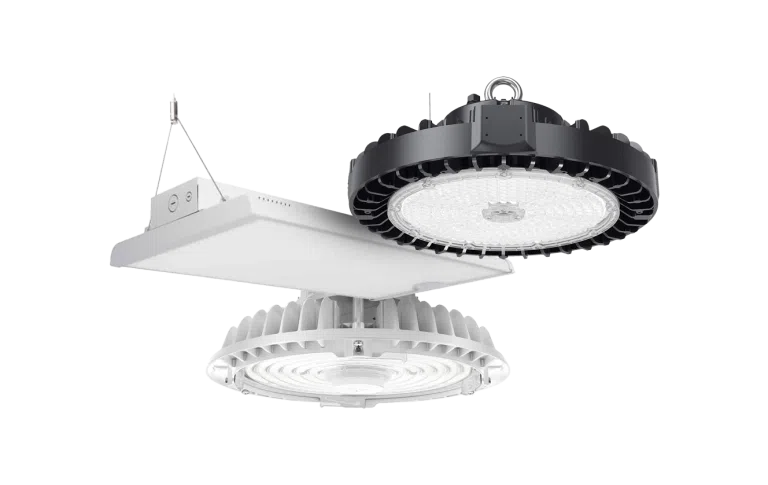
- UFO and linear options for various ceiling heights and layouts
- Motion sensor, dimming, and emergency backup options available
- Free lighting plans help evaluate fixture spacing and placement


Get Your Custom Lighting Plan With Product Recommendations
- Layout planned around ceiling height, aisle spacing, rack orientation, and target foot-candle levels
- Fixture type, output, and beam angle matched to open areas, aisles, or racking zones
- LED options can reduce energy use and maintenance compared with older HID or fluorescent systems


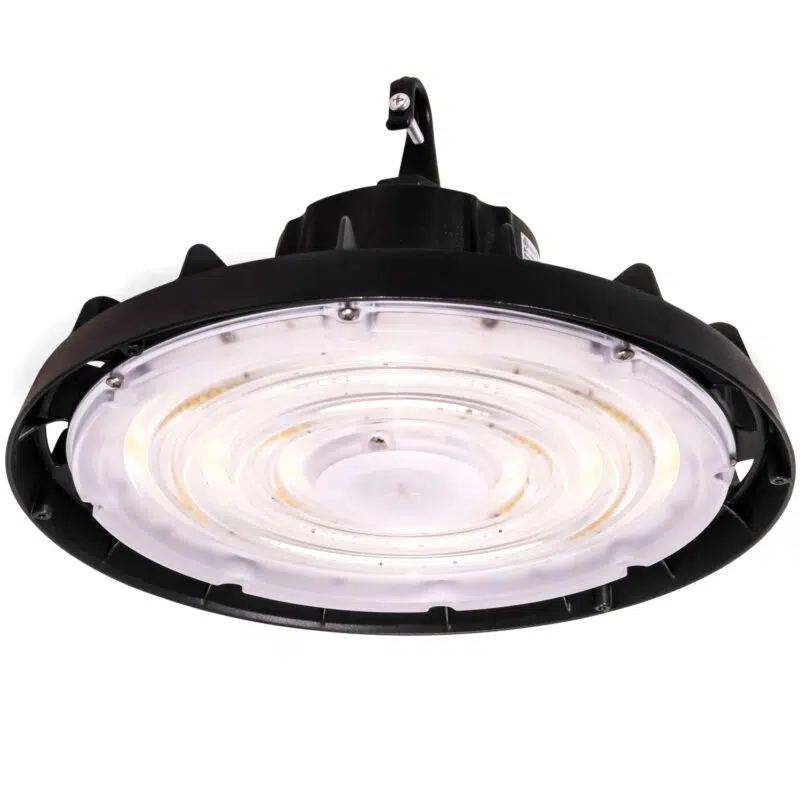
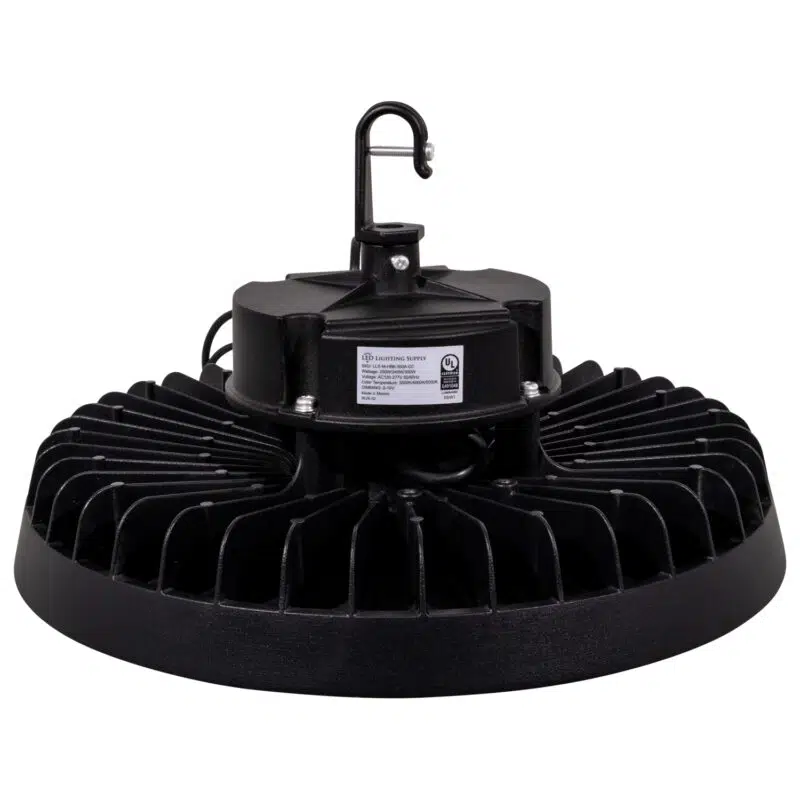
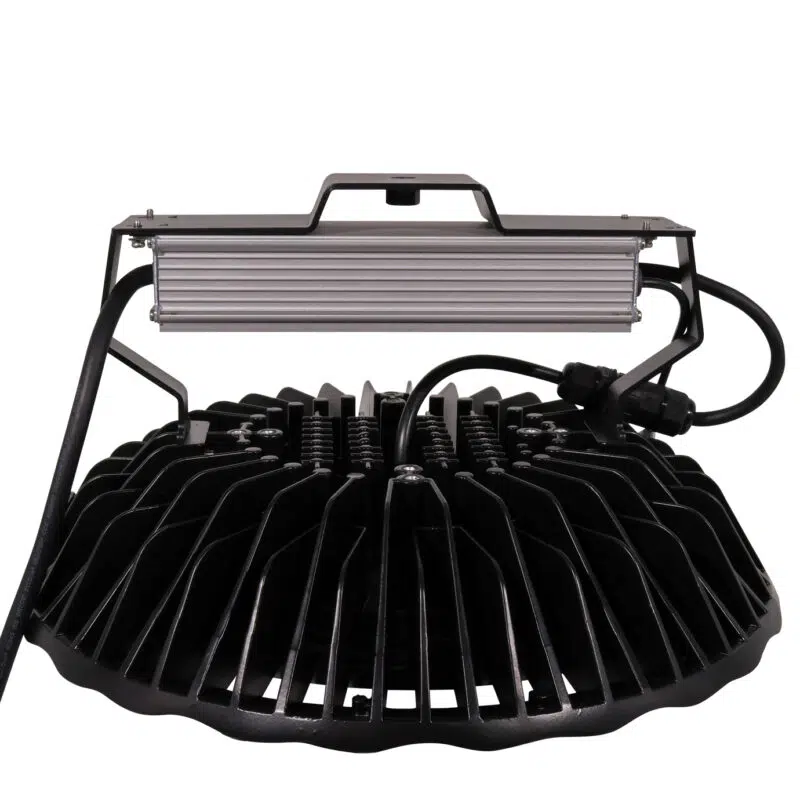
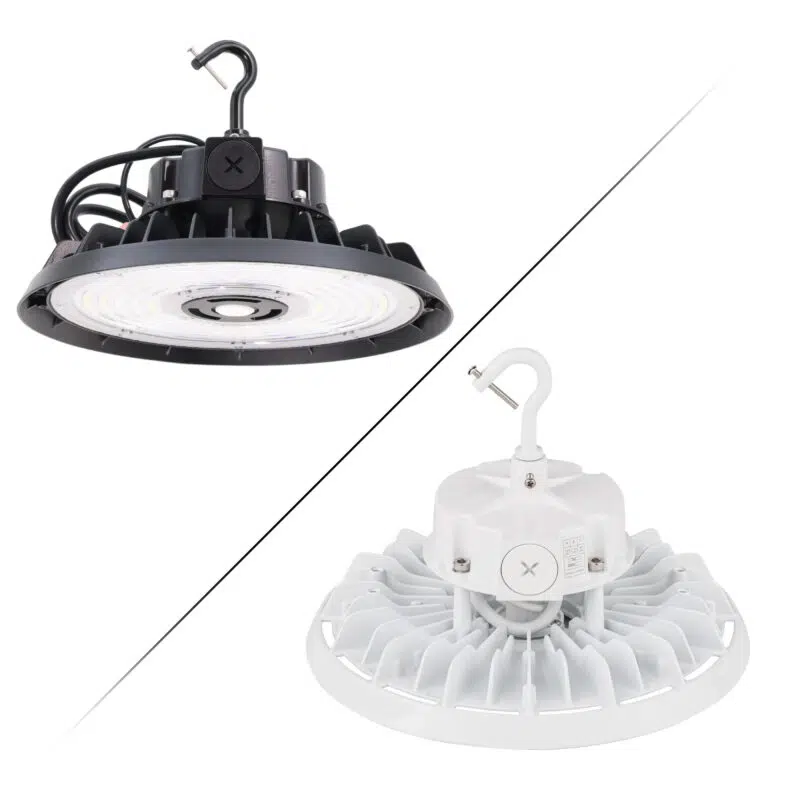
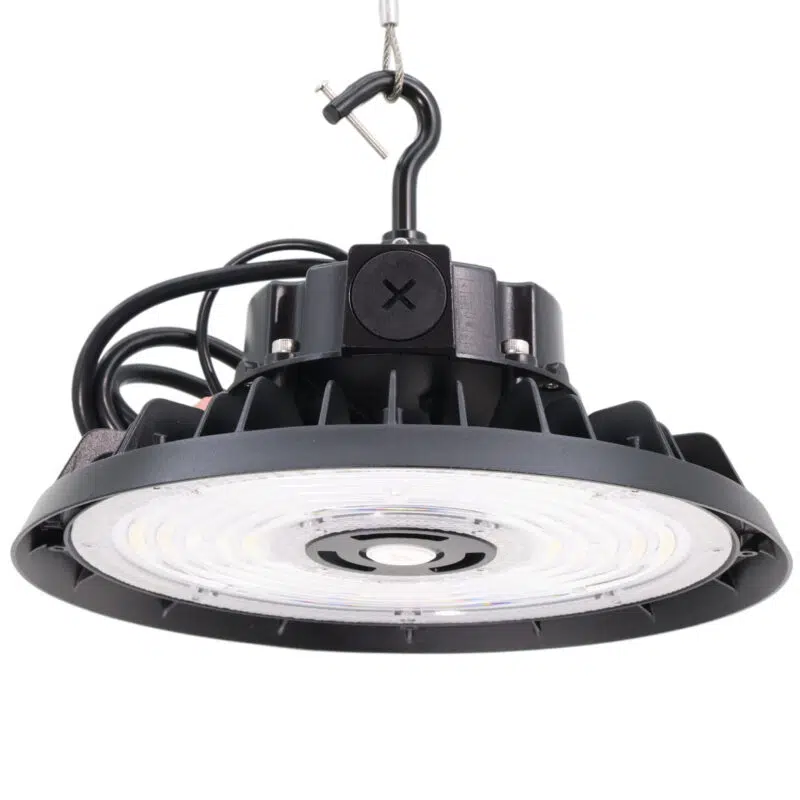
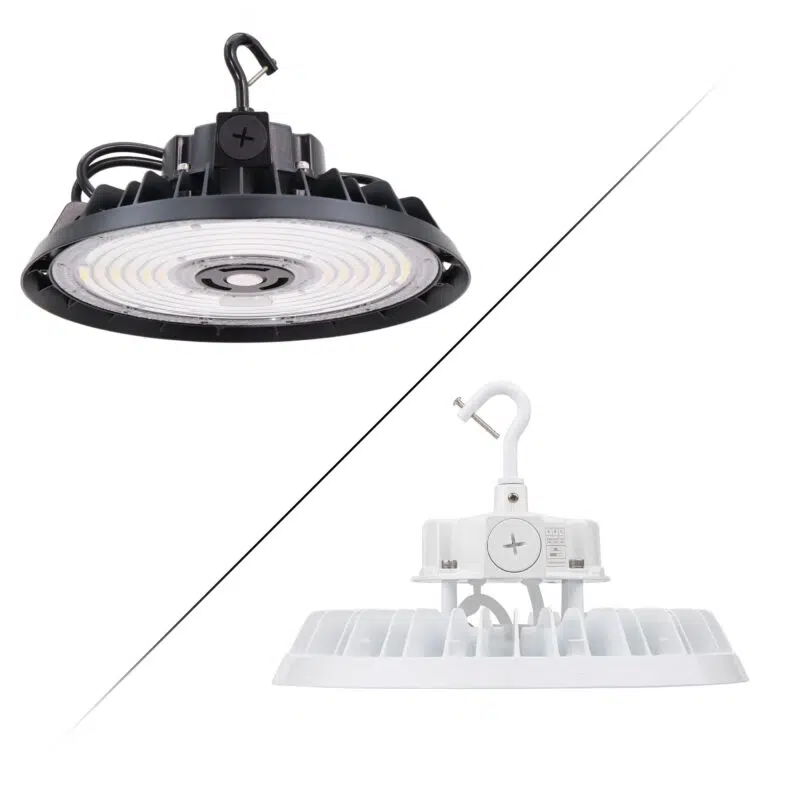
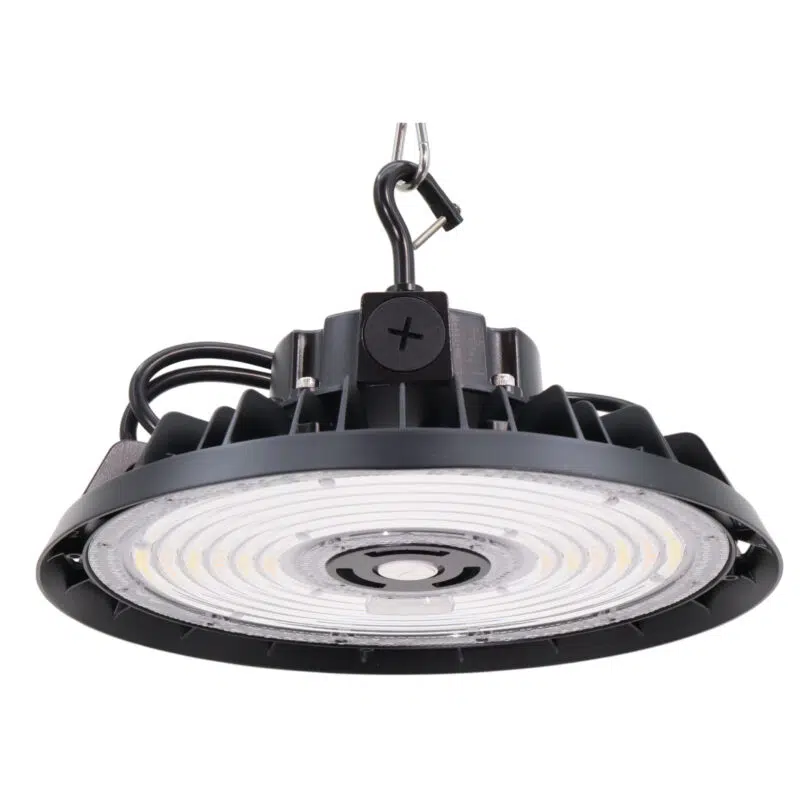
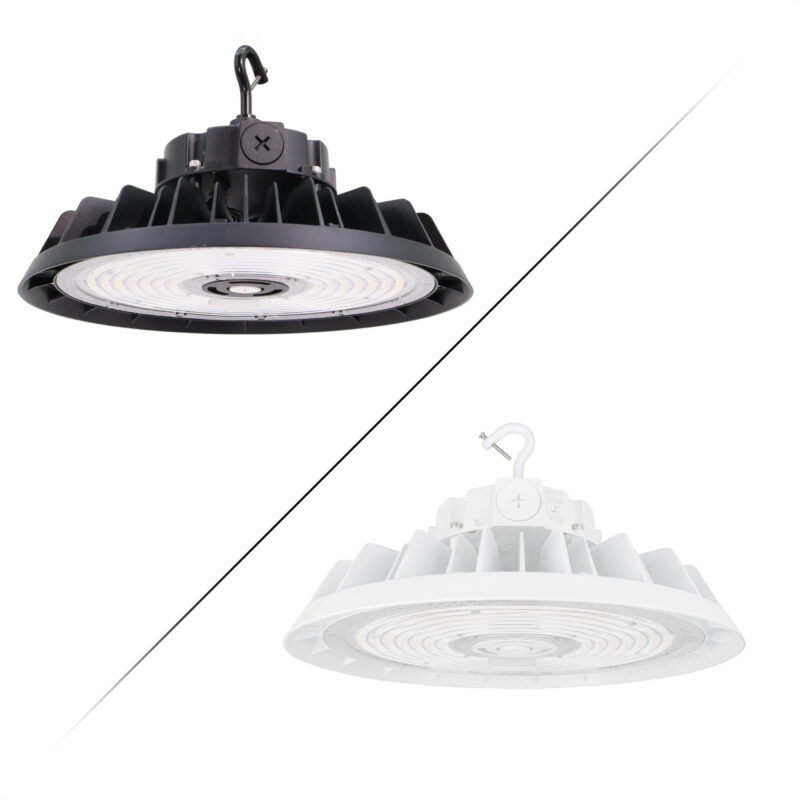
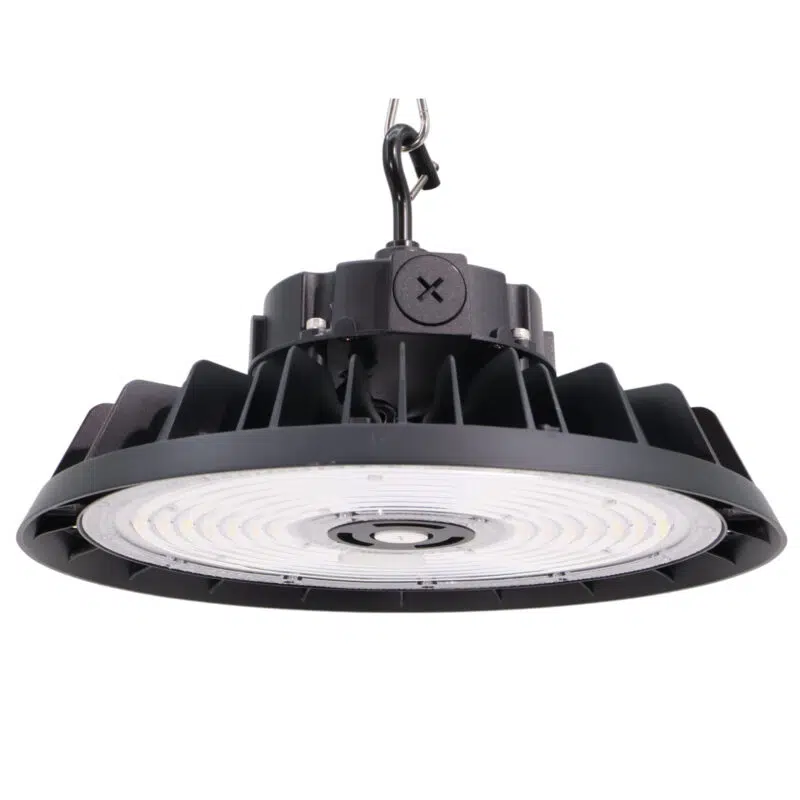
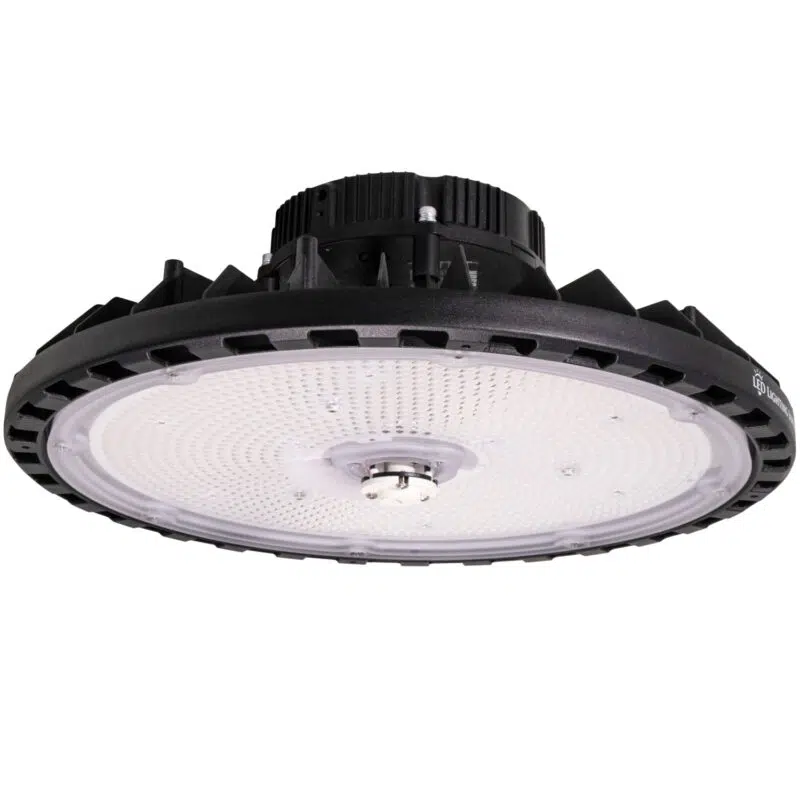
Our LED Warehouse Lights include UFO high bays, linear high bays, aisle lighting, and 400W and 1000W metal halide replacement fixtures. Available models vary by voltage, selectable wattage and CCT, beam angle, dimming, motion sensors, emergency backup, and hook, pendant, chain, cable, or surface mounting.
These fixtures are commonly used in open warehouse areas, pallet racking, storage aisles, warehouse rows, retail warehouse spaces, manufacturing plants, tall-ceiling facilities, dock-adjacent areas, forklift routes, and inspection zones.







What Is LED Warehouse Lighting?
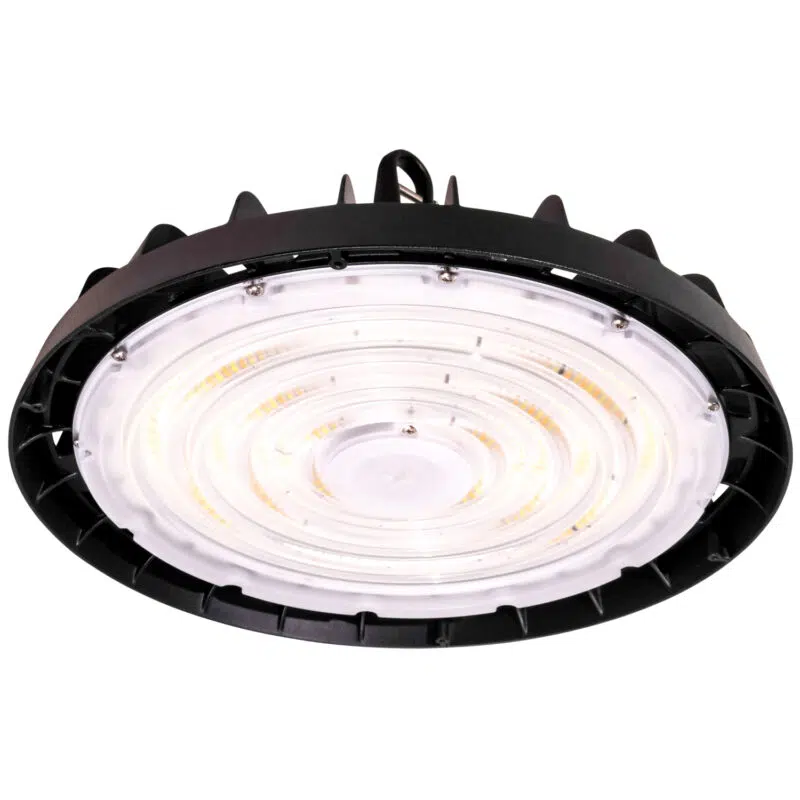
LED warehouse lighting includes high bay fixtures, aisle lighting, controls, emergency lighting, and exterior lighting used to illuminate warehouse spaces. Most indoor warehouse projects use LED high bay lights because they can provide efficient illumination from higher mounting heights.
Start by matching the fixture type to the warehouse layout: UFO high bays for open areas, linear high bays or aisle lighting for racking and rows, and lower-output or low bay options for lower ceilings. Then confirm target foot-candle levels, mounting height, aisle spacing, voltage, controls, mounting method, and environmental conditions.
With over 15 years of commercial and industrial lighting experience, LED Lighting Supply's Product Specialists help facility managers match warehouse lighting to ceiling height, rack layout, aisle spacing, target foot-candle levels, voltage, controls, mounting method, and environmental conditions. A properly selected LED warehouse lighting system can improve visibility, reduce maintenance, support safer movement, and lower energy consumption compared with older HID or fluorescent systems.
The U.S. Department of Energy reports that LED lighting can significantly reduce energy consumption compared with traditional lighting. Actual savings vary by existing fixture wattage, ballast draw, operating hours, utility rate, controls, fixture count, and site conditions.
Selection and Installation Note: Product specifications, ratings, controls, certifications, and warranty coverage vary by model. Confirm the selected product specification before ordering. For code-sensitive, electrical, emergency, hazardous-location, washdown, high-temperature, exterior, or safety-critical applications, verify requirements with your local inspector or a licensed electrical professional.
When LED Warehouse Lighting Is the Right Fit
LED warehouse lights are usually the best starting point when a facility needs to replace older metal halide, HPS, or fluorescent fixtures, improve visibility, reduce maintenance, or add controls such as dimming and motion sensors. The right fixture type depends on the layout, mounting height, target light level, and operating environment.
| Use LED Warehouse Lights When | Consider Another Solution When |
|---|---|
| You are replacing metal halide, HPS, or fluorescent warehouse fixtures and want instant-on performance, lower maintenance, and improved efficiency. | The ceiling height is low and high bay fixtures could create glare or over-lighting. Low bay fixtures or other lower-output fixtures may be a better fit. |
| The facility has higher ceilings, open areas, aisles, or racking where fixture spacing and beam distribution need to be planned. | The area is classified as hazardous unless the selected fixture is specifically certified for the documented hazardous-location classification. |
| The warehouse needs different light levels by zone, such as storage areas, rack aisles, open floor areas, dock-adjacent areas, inspection areas, and forklift routes. | The environment has extreme heat, washdown, corrosion, or cold-storage requirements without confirming the selected fixture's environmental, ingress-protection, material, and operating-temperature ratings. |
| The project includes controls, such as motion sensors, dimming, daylight harvesting, or emergency backup. | Precision color work is required and the selected fixture's CRI, color temperature, and light quality have not been confirmed. |
Common Warehouse Fixture Types
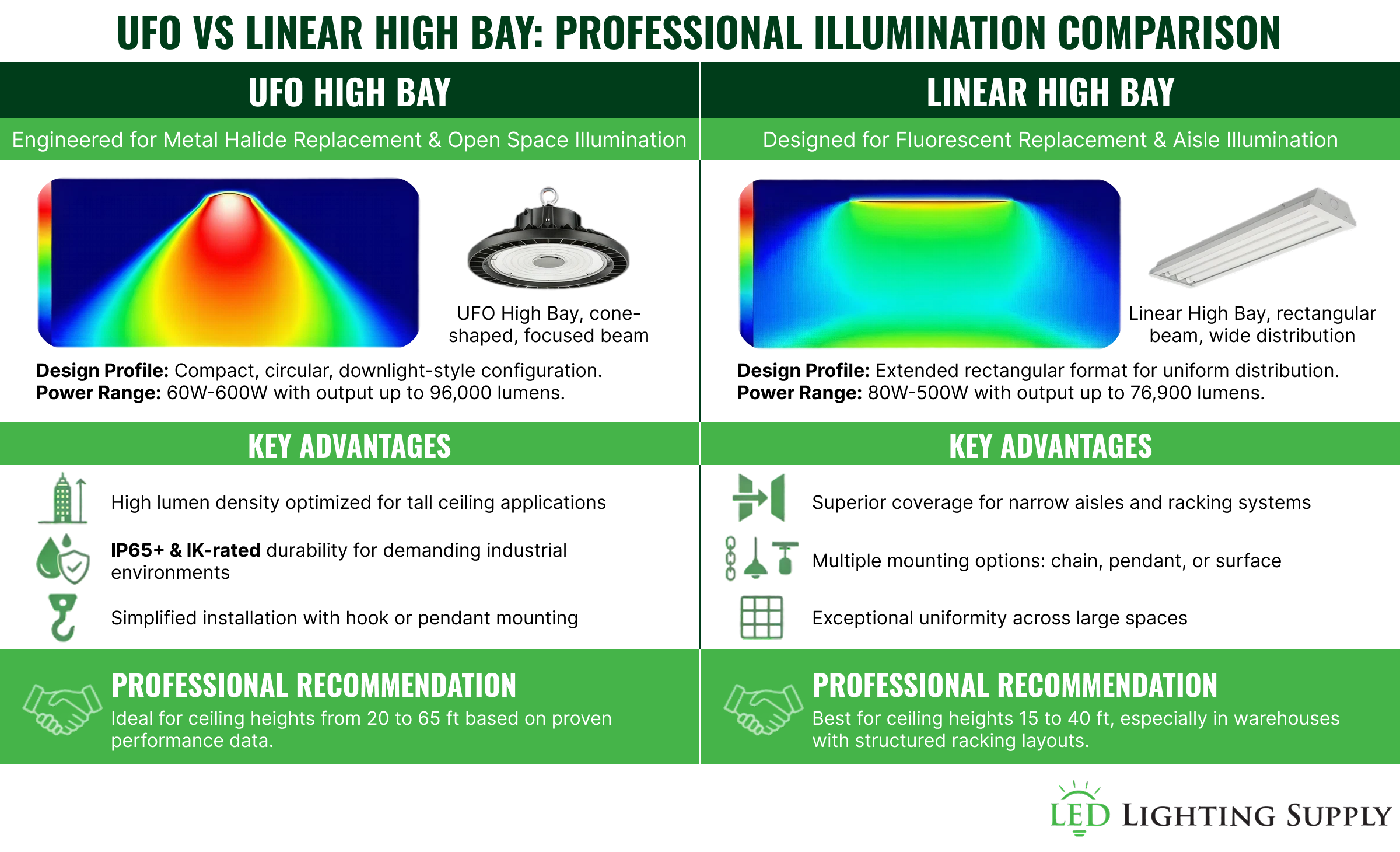
Warehouse lighting projects often require different fixture types depending on ceiling height, rack layout, open floor space, aisle spacing, replacement wattage, voltage, and target light levels. The most common LED warehouse lighting options include UFO high bays, linear high bays, metal halide replacement fixtures, and aisle lighting.
| Fixture Type | Common Applications |
|---|---|
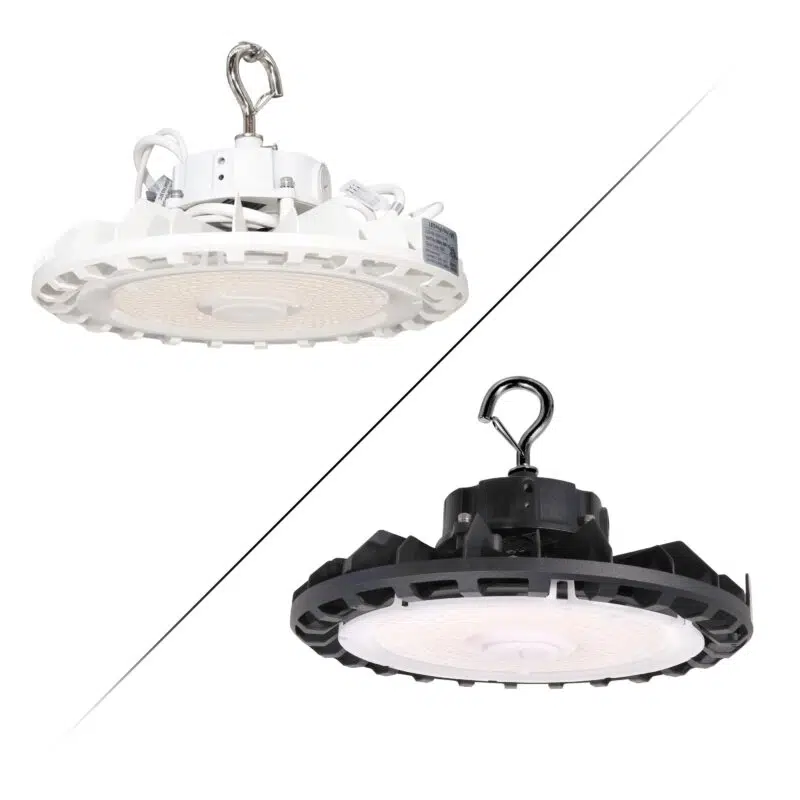
| UFO LED Warehouse Lights | Compact round high bay fixtures used for open warehouse areas, manufacturing spaces, tall ceilings, and metal halide replacement projects where high lumen output and durable construction are required. |
| Linear LED Warehouse Lights | Rectangular high bay fixtures used over aisles, racking systems, warehouse rows, retail warehouse spaces, and areas where long, even light distribution is needed. |
| 400W Warehouse LED Replacements | Common LED replacements for older 400 watt metal halide warehouse fixtures. Final selection should be based on delivered lumens, ceiling height, fixture spacing, optics, and target foot-candle levels rather than wattage alone. |
| 1000W Warehouse LED Replacements | High-output LED replacements for older 1000 watt metal halide warehouse fixtures used in tall-ceiling applications, large open areas, manufacturing plants, and high-bay industrial spaces. |
| Warehouse Aisle LED Lighting | Lighting designed for pallet racking, storage aisles, warehouse rows, and narrow pathways where fixture placement, beam spread, and uniformity are critical for visibility and safe movement. |
Choosing Warehouse Lights by Layout, Ceiling Height, and Environment
Warehouse lighting selection starts with the layout and operating environment. Open storage areas, pallet racking, storage aisles, dock-adjacent areas, forklift routes, inspection zones, cold storage areas, and washdown spaces may require different fixture types, light levels, optics, controls, and ratings.
- Open warehouse areas: UFO high bays are often a strong fit when broad, downward illumination is needed across open floor space.
- Aisles and pallet racking: Linear high bays or dedicated aisle lighting may provide better coverage along long rows, storage aisles, and rack aisles.
- Low or mid-height ceilings: Lower mounting heights may require lower-output fixtures, wider distribution, or low bay options to reduce glare and over-lighting.
- High ceilings: Taller warehouses may require higher-output fixtures, tighter beam angles, or a photometric plan to confirm uniformity and fixture count.
- Dry or damp locations: Select fixtures with location ratings and operating-temperature ranges appropriate for the actual environment.
- Dust or moisture exposure: wet-location high bay fixtures or other appropriately rated fixtures may be needed where moisture or water exposure is present. IP ratings address enclosure protection against dust and water ingress; verify the exact rating and exposure conditions.
- Washdown or food storage areas: Food storage, washdown, or sanitary warehouse areas may require sealed fixtures and application-specific construction or certifications, such as NSF-rated or food-grade fixtures, depending on the application. Confirm material, seal, chemical-exposure, and sanitation requirements separately.
- High-impact or vibration-prone areas: IK impact ratings may be important where fixtures could experience mechanical contact or impact. IK ratings do not establish vibration suitability; for vibration exposure, verify the fixture and mounting system using applicable manufacturer vibration-testing documentation.
- Cold storage or high temperature: Verify the fixture operating temperature range before using warehouse lights in cold storage warehouses or elevated-temperature environments.
- Hazardous locations: Standard warehouse lights are not a substitute for a fixture certified for the documented Class, Division or Zone, Group, temperature rating, ambient temperature, and other applicable hazardous-location requirements. Explosionproof construction is one protection method and is not required for every classified location.
Tip: Do not choose warehouse lights by wattage alone. A 400W metal halide replacement, a 6-tube fluorescent replacement, and a new high-bay layout may all require different LED outputs depending on mounting height, spacing, beam angle, target foot-candle levels, and environmental conditions.
Recommended Foot-Candles for Warehouse Lighting
Use the tool below to find general starting foot-candle ranges for warehouse areas such as storage areas, open floor areas, rack aisles, dock-adjacent areas, forklift routes, and inspection zones. Final fixture count, spacing, beam angle, and uniformity should be verified with a photometric plan.
Step 1: Find your foot candle levels
Step 2: Estimate your fixture count and space
LED High Bay Lighting Layout Estimator
Use this estimator to calculate approximate fixture count, spacing, and average foot-candles for warehouses, shops, gyms, industrial spaces, and commercial interiors using LED high bay fixtures. Enter your room dimensions, mounting height, target foot-candles, light loss factor, and room/layout condition to generate a preliminary lighting layout. When IES photometry is available, workplane height and room reflectance controls are shown.
Project Inputs
Estimated Results
Estimated average foot-candles are preliminary and should be verified with a lighting plan for project-critical applications.
Room / Layout Condition: This field is used only when usable IES photometry is not available. In fallback mode, it acts as a simplified room utilization factor for reflectance, fixture distribution, racking, obstructions, and how much fixture light reaches the work area. Open / light-colored spaces use 0.90, typical warehouses or shops use 0.75, racked or obstructed spaces use 0.60, and dark or complex spaces use 0.45. When IES photometry is active, this field is hidden and the estimator uses the selected workplane height, LLF, and simplified reflectance adjustment instead.
Photometry / Simulation Note: When usable IES photometry is available for the selected fixture, this estimator uses the fixture’s IES candela data, selected workplane height, light loss factor, and simplified reflectance adjustment to estimate fixture count, average foot-candles, and visual light distribution. The reflectance adjustment is a conservative approximation and is not a full zonal-cavity, radiosity, or professional photometric room calculation. When IES photometry is not available, the estimator uses a simulated beam model based on lumens, mounting height, room/layout condition, light loss factor, and beam angle.
Preliminary Estimate Only: This estimator is intended for simple square or rectangular spaces and should be used as a planning aid, not a final photometric lighting plan. Actual light levels may vary based on fixture optics, selected IES file, mounting conditions, workplane height, ceiling height, surface reflectance, obstructions, controls, voltage, installation conditions, and site-specific requirements. Project-critical applications should be verified with a formal lighting plan.
This estimate is a starting point. Warehouses, industrial facilities, hazardous locations, sports areas, schools, healthcare spaces, public areas, and code-sensitive projects may require a reviewed lighting layout before purchase or installation.
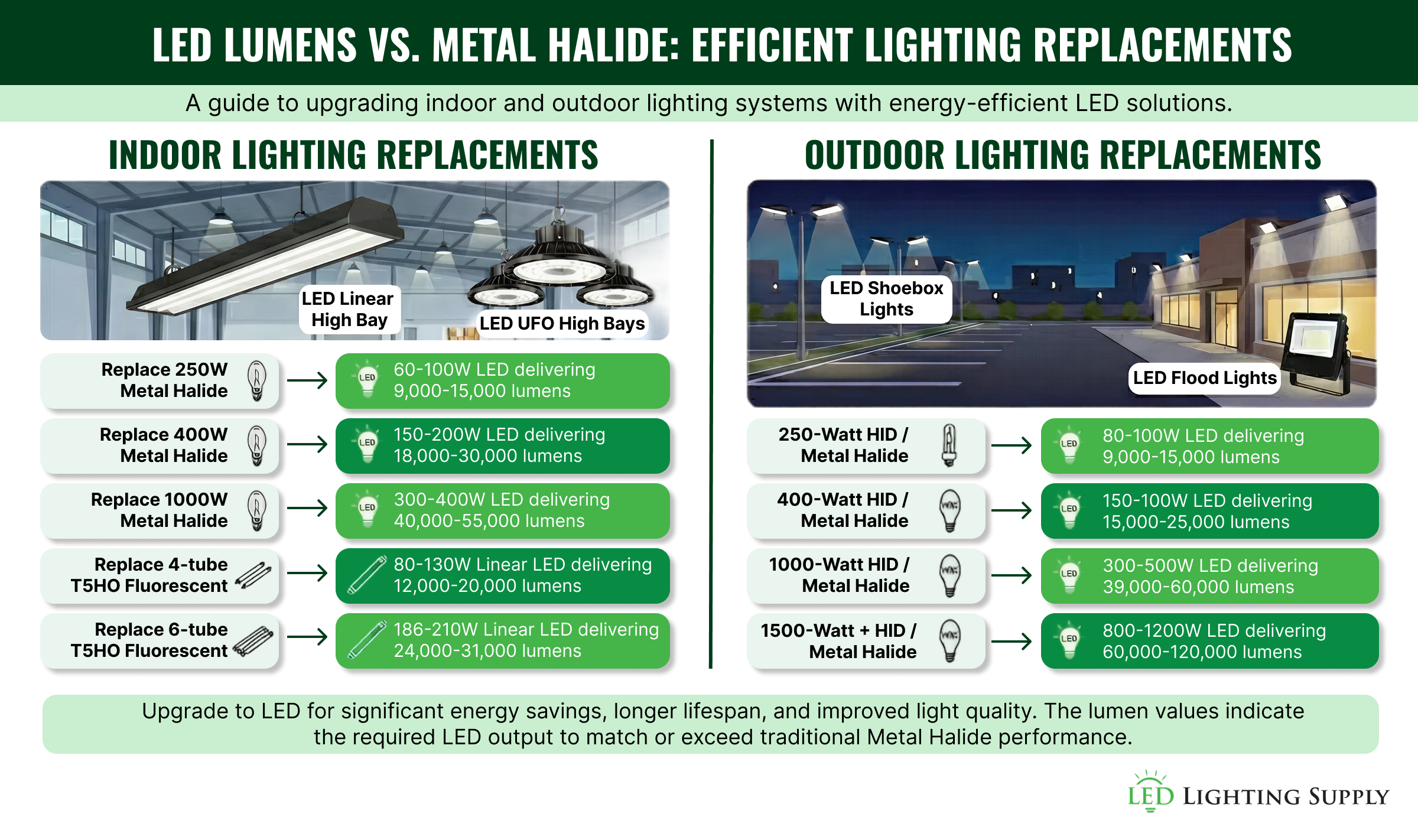
Replacing Metal Halide or Fluorescent Warehouse Lights with LED
Many warehouse lighting projects start with replacing older metal halide, HPS, or fluorescent fixtures. The existing fixture type often helps determine the best LED starting point. UFO high bays are commonly used for open-area metal halide replacement, while linear high bays are often used for fluorescent high bay replacement, aisles, racking, storage rows, and rectangular layouts.
| Existing System or Layout | Common LED Starting Point |
|---|---|
| Metal halide or HPS high bays | UFO LED warehouse lights are often a strong replacement path for open warehouse areas, tall ceilings, and broad general illumination. |
| Fluorescent high bays | Linear LED warehouse lights are often a strong replacement path for multi-tube fluorescent fixtures, rows, aisles, and rectangular layouts. |
| Pallet racking and storage aisles | Warehouse aisle lighting or linear high bays may provide better coverage along long rows, storage aisles, and narrow pathways. |
| 400W metal halide fixtures | 400W warehouse LED replacements should be selected by delivered lumens, ceiling height, spacing, optics, and target light levels. |
| 1000W metal halide fixtures | 1000W warehouse LED replacements may be needed for tall ceilings, large open areas, or high-output industrial applications. |
LED warehouse lights provide instant-on operation, reduced maintenance, improved control compatibility, and more consistent light output over time. Actual results vary by existing fixture type, operating hours, controls, fixture count, utility rate, and site conditions.
- Metal halide replacement: LED fixtures eliminate warm-up time and can reduce lamp and ballast maintenance associated with older HID systems.
- Fluorescent replacement: LED linear high bays can replace multi-tube fluorescent high bay systems while eliminating lamp and ballast service.
- Control compatibility: Many LED warehouse fixtures support dimming, motion sensors, and other control strategies that may be difficult or inefficient with older technologies.
- Light quality: LED upgrades can improve visibility, color consistency, startup performance, and uniformity when properly selected.
- Energy use: LED replacements can reduce energy consumption compared with HID or fluorescent systems when properly specified and installed.
Warehouse Lighting Controls, Voltage, Mounting, and Adjustable Features
Warehouse lighting performance depends on more than fixture output. Voltage, controls, mounting method, environmental ratings, and field-adjustable features should be confirmed before ordering because available options vary by model.
- Voltage options: Many warehouse fixtures support 120-277V operation, while industrial facilities may require 277-480V high bay fixtures.
- Wattage selectable models: Field-adjustable wattage can help fine-tune light output after installation when the model and installation instructions allow adjustment.
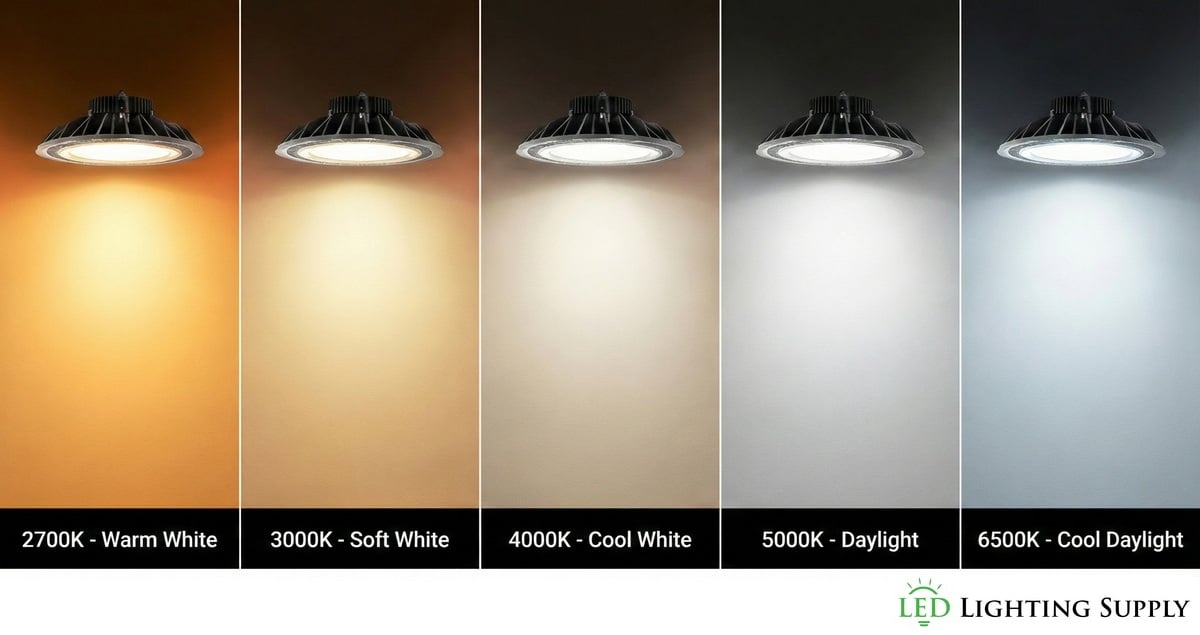
- CCT selectable models: Selectable 3000K, 4000K, and 5000K options can help standardize color temperature across a warehouse. CCT describes the apparent warm or cool appearance of white light, not brightness or color-rendering performance.
- Beam angle options: Some UFO high bays offer 60 degree, 90 degree, or 120 degree optics to match ceiling height and spacing.
- Dimming: Dimmable LED high bays with 0-10V or 1-10V dimming may be available for task-specific lighting levels and energy control.
- Motion sensors: High bays with motion sensors may use PIR or microwave technology depending on fixture type, mounting height, detection pattern, and warehouse activity.
- Emergency backup: High bays with emergency battery backup may contribute to an emergency-lighting design when properly specified and installed. Confirm required emergency illumination, runtime, circuiting, testing, and fixture locations with the applicable code requirements and local authority.
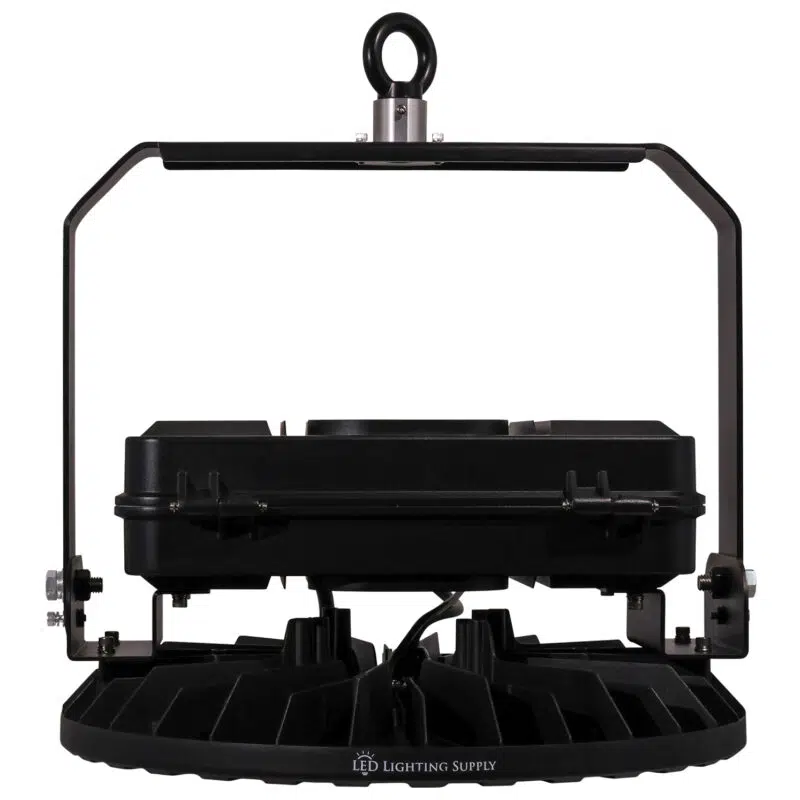
- Mounting options: UFO fixtures commonly use hook or pendant mounts, while linear fixtures often use chain, cable, pendant, or surface mounting depending on fixture design.
Warehouse Lighting Case Studies
Real warehouse lighting projects help show how fixture choice, mounting height, layout, and photometric planning affect final results. Review the case studies below for examples of high bay upgrades, warehouse retail lighting, cold storage lighting, and other warehouse applications.
Case Study: Conversion of (72) T5 6 tube fixtures to LED Lighting Supply 200 Watt LED UFO Fixtures (one-for-one replacement) in Williston, ND
|
Before: T5 54W HO Fluorescent Fixtures |
After: 200 W LED UFO Fixtures |
 |
 |
Lighting Plan We Created for the Customer
|
Lighting Plan |
Heat Map |
 |
 |
LED High Bays Warehouse Installation Lighting Plan Metrics
- Mounting height: 20 ft
- Fixture Used: MLLG-LED-HBC-200-5-120: 100 / 120 / 150 / 200 Watt Adjustable LED UFO High Bay | 15000 to 30000 Lumens | 5000K | 100-277V | White Housing
- FC achieved: 60.33 FC average
- Uniformity (Avg/Min): 1.42
Case Study: Installation of new LED Lighting for Stone Basyx in Charlotte, NC
|
After: 150 Watt High Output UFO High Bay | 24000 Lumens |
 |
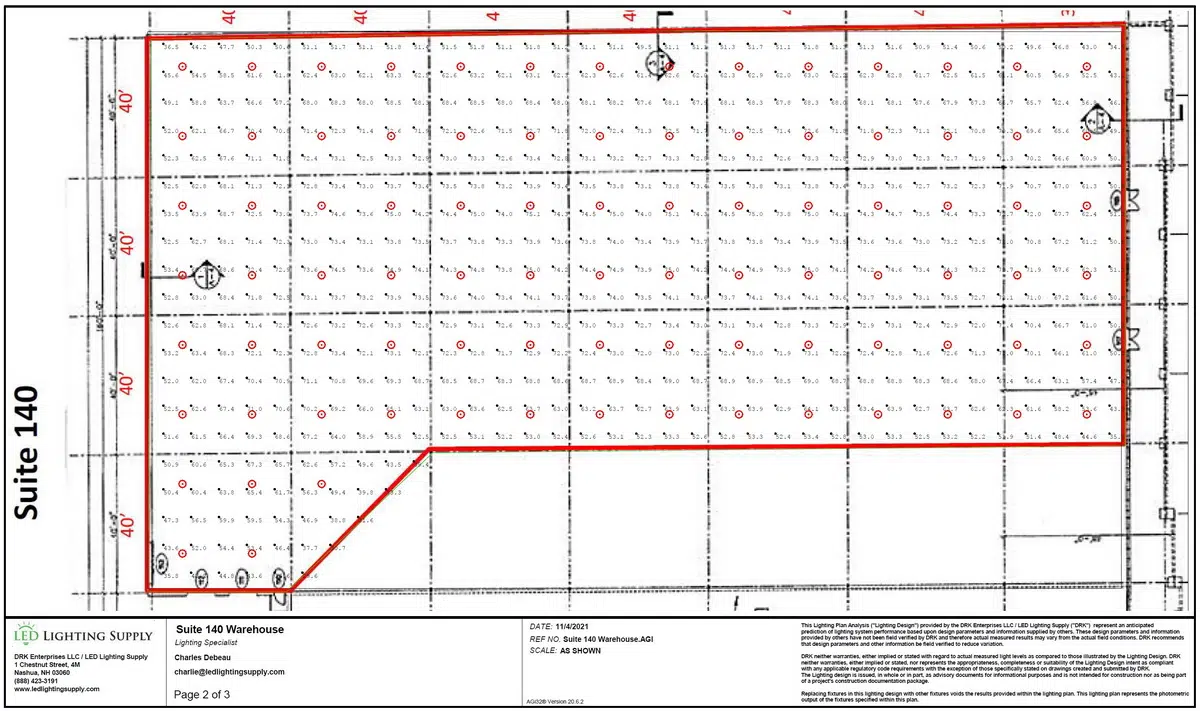
Lighting Plan We Created for the Customer
|
Lighting Plan |
Heat Map |
 |
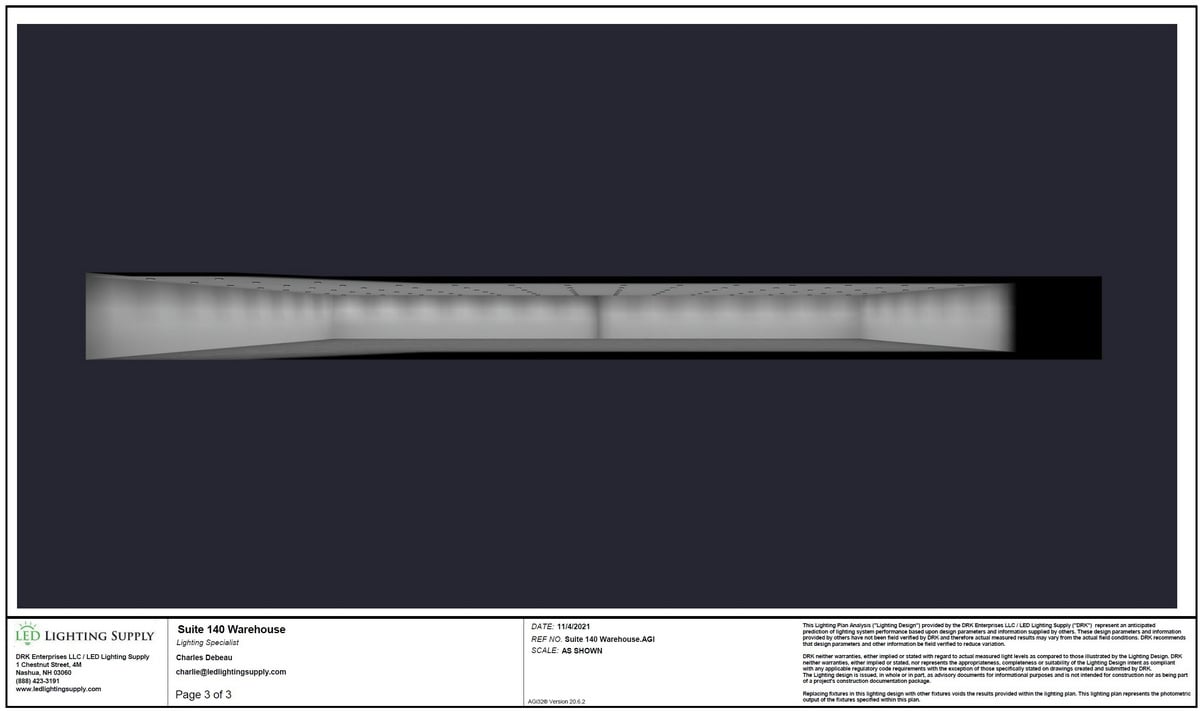 |
Warehouse / Retail Lighting Installation Plan Metrics
- Mounting height: 23 ft
- Fixture Used: MLLG-LED-HBHO-150-5-120: 80 / 100 / 120 / 150 Watt Adjustable UFO High Bay | 16000 to 30000 Lumens | 5000K | 100-277V | High Performance
- FC achieved: 65.36 FC average
- Uniformity (Avg/Min): 2.21
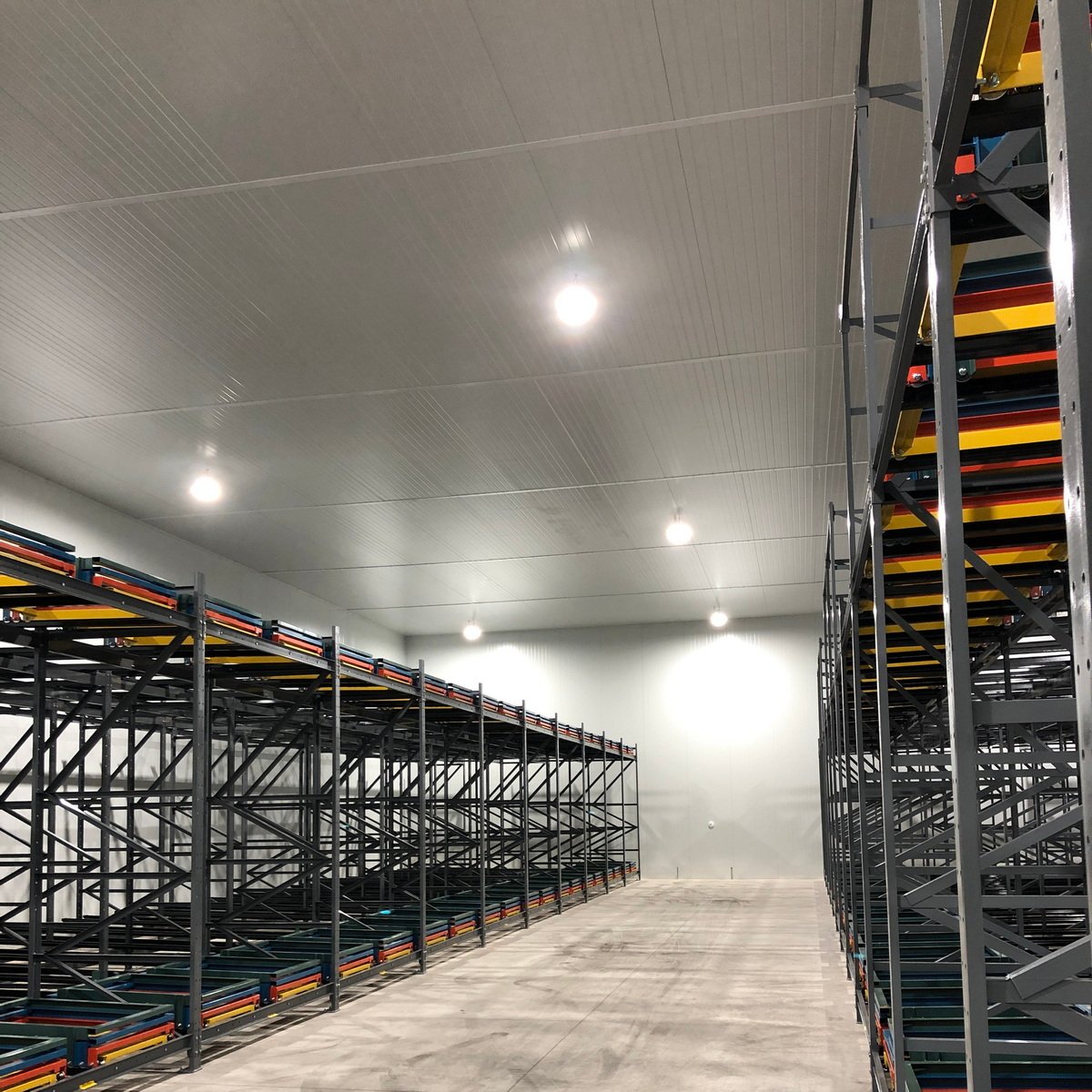
Case Study: Installation of new LED Lighting for Old Souls Farm in Saint Paris, OH
|
After: 150 Watt High Output UFO High Bay | 22500 Lumens |
 |
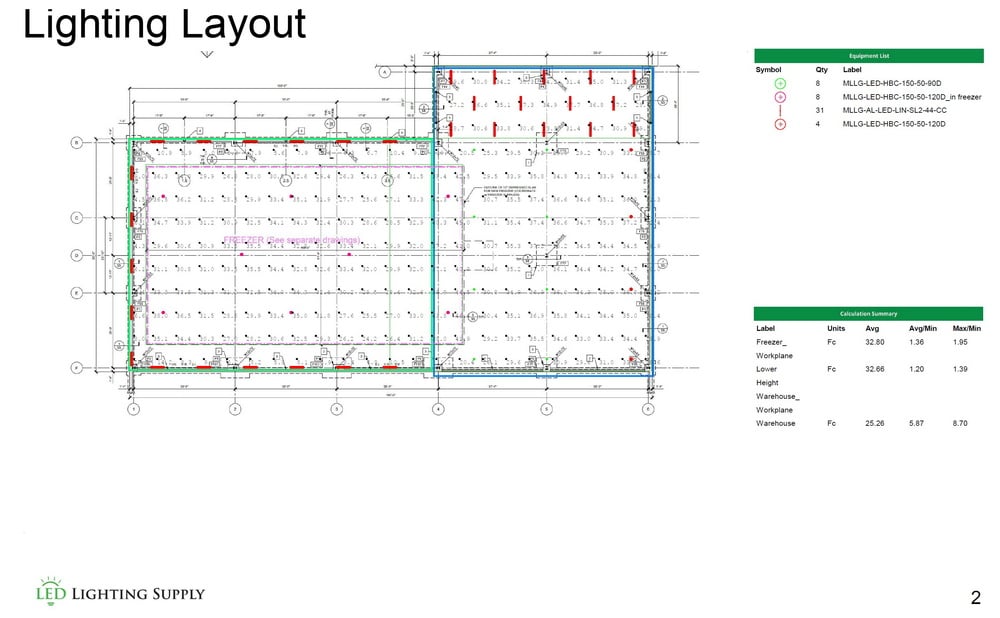
Lighting Plan We Created for the Customer
|
Lighting Plan |
Heat Map |
 |
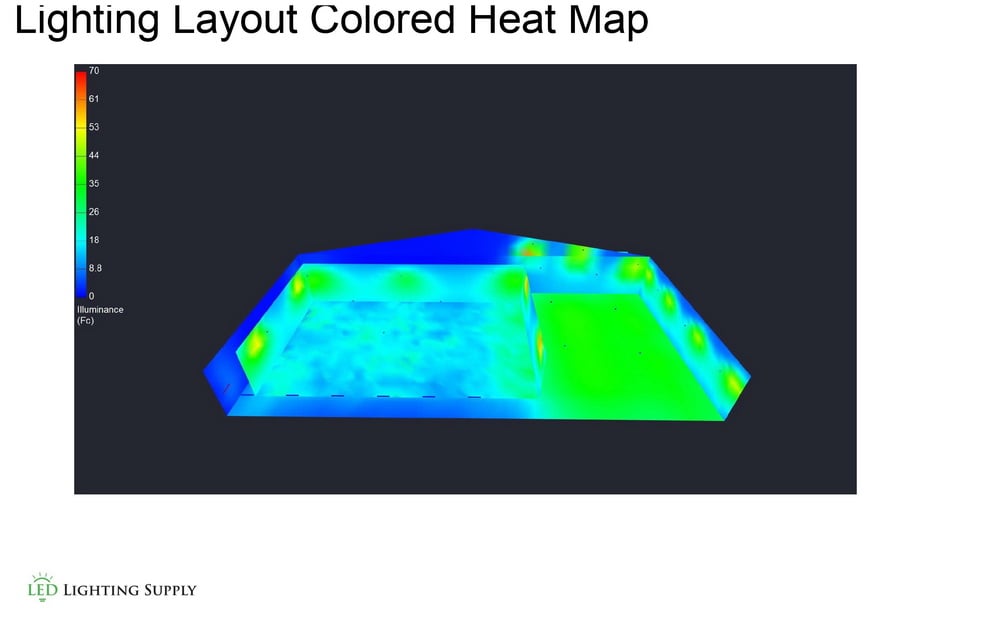 |
Warehouse / Cold Storage Lighting Installation Plan Metrics
- Mounting height: 23 to 32 ft
- Fixture Used: MLLG-LED-HBC-200-5-120: 100 / 120 / 150 / 200 Watt Adjustable LED UFO High Bay | 15000 to 30000 Lumens
- FC achieved: 25.26 FC average
- Uniformity (Avg/Min): 1.36
Tatsumi Intermodal U.S.A. Inc.’s Linear High Bay Warehouse Lighting Case Study
The Backstory
Tatsumi Intermodal U.S.A. Inc. faced challenges with consistent and effective lighting throughout its warehouse areas. They were operating with a legacy fluorescent lighting system that consumed excess energy while producing minimal brightness. Tatsumi approached LED Lighting Supply to provide a custom-tailored lighting solution that aligns with OSHA (Occupational Safety and Health Administration) requirements.
The Customer's Challenge
The facility consists of three separate warehouse spaces with 300 fluorescent fixtures. Each section required a lighting solution that would increase overall brightness levels to meet OSHA illumination standards while preserving the existing wiring system. The fluorescent lights were only producing about 20 foot candles (fc) across each warehouse floor section. Proper lighting levels for a warehouse environment typically fall between 40 and 60 fc, depending on the space dimensions.
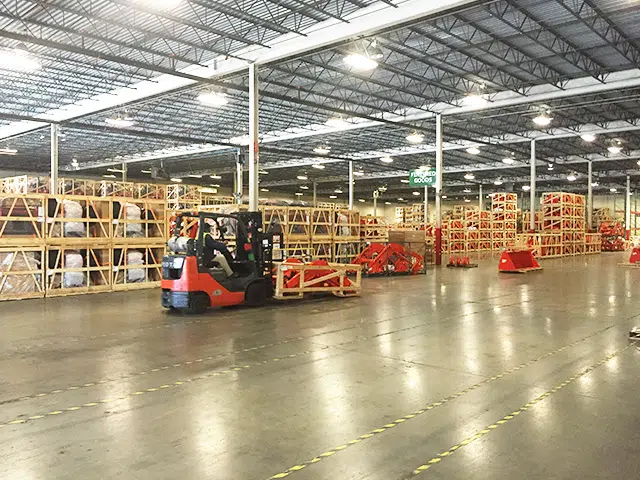
Lighting plan metrics:
- Product(s) Used: MLLG-X-LED-HBLIN6-(240/270/310)-CC-[V]
CBRE Enhances Siemens Energy’s Warehouse With High Bay Lighting Case Study
The Backstory:
Our longstanding customer, CBRE Global Workplace Solutions Group, partnered with Siemens Energy to address poor light levels in one of its facilities. CBRE recognized there was an opportunity to enhance working conditions while reducing energy costs. CBRE approached LED Lighting Supply as its lighting partner to support the warehouse lighting upgrade.
The Customer's Challenge:
The objective was to improve the illumination for their workers and achieve significant energy savings by leveraging our commercial-grade lighting solutions. The project aimed to replace traditional high-output 54-watt tube lights with energy-efficient alternatives.
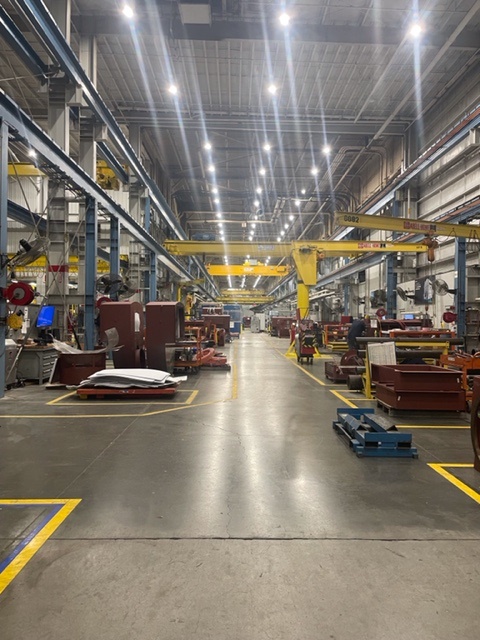
Lighting Plan We Created for the Customer
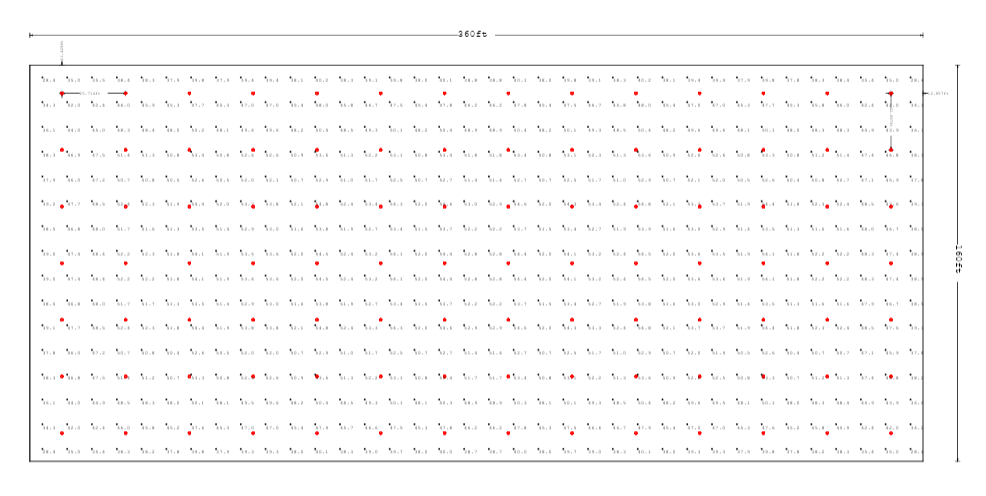
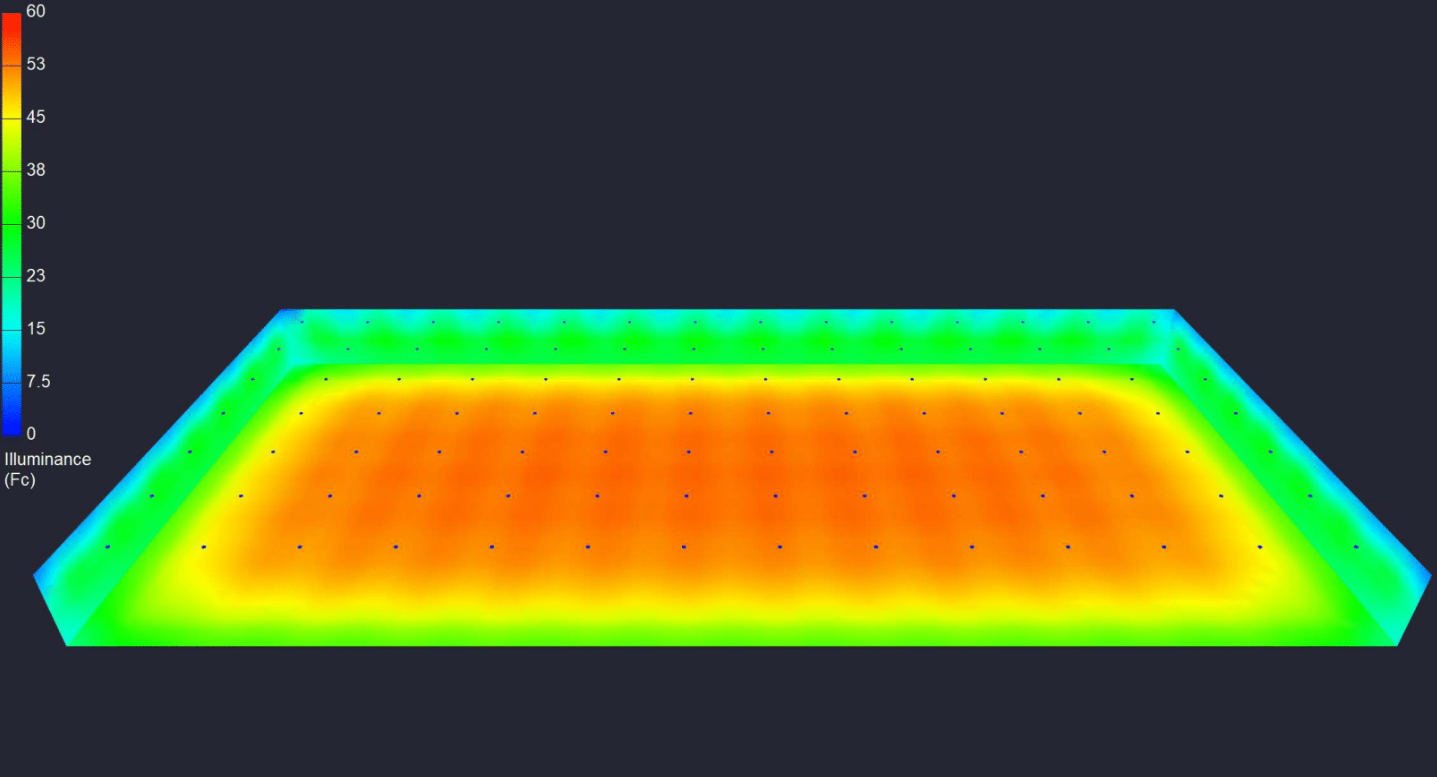
Lighting Plan Metrics:
- Mounting Height: 25 ft
- Foot Candles Achieved: 50 FC average
- Uniformity (Avg/Min): 3.1 FC
- Product(s) Used: LLS-HB-200A-CC-[C]
Warehouse Lighting Certifications, Rebates, and Warranty Support
Selected LED warehouse lights from LED Lighting Supply carry a safety listing such as UL, ETL, or CSA, depending on the product. UL, ETL, and CSA listings are product-specific safety certifications; verify the selected fixture's exact listing and intended use. Many models are DLC or DLC Premium listed for utility rebate support where available. DLC qualification is an efficiency and performance program, not an electrical safety certification. Rebate requirements vary by utility, region, installation, and product listing, so confirm eligibility on the selected product specification before ordering.
Warranty terms vary by product, with many warehouse-lighting models offering a 5-year warranty unless otherwise specified. Before purchase, review the selected product specification to confirm warranty coverage, certifications, DLC status, voltage, controls compatibility, mounting method, environmental ratings, and whether the fixture is appropriate for the warehouse layout.
Warehouse Lighting Pre-Order Checklist
Before placing a warehouse lighting order, collect the information below. Having these details available helps avoid delays, confirms that compatible accessories and controls are selected, and makes a photometric lighting plan more accurate.
| Information to Confirm | Why It Matters |
|---|---|
| Mounting height and ceiling construction | Mounting height affects output, optics, glare, uniformity, mounting hardware, and the final fixture count. |
| Warehouse dimensions and rack layout | Length, width, aisle direction, rack height, obstructions, and work areas help determine fixture placement and whether open-area or aisle-focused optics are appropriate. |
| Existing fixture quantity, wattage, and locations | This provides a useful starting point for retrofit planning, but existing locations should be reviewed rather than automatically reused. |
| Available voltage and wiring method | Verify the branch-circuit voltage, dimming wiring, controls wiring, and connector requirements before selecting a fixture. |
| Target light levels by work zone | Storage, picking, inspection, forklift travel, dock areas, and offices may require different illuminance targets. Foot-candles should be evaluated at the applicable work plane or floor area. |
| Controls and operating schedule | Occupancy sensors, dimming, daylight response, scheduling, and networked controls must be compatible with the fixture and appropriate for the space activity. |
| Environmental exposure | Confirm moisture, dust, washdown, temperature, corrosion, impact, and chemical exposure. An IP rating alone does not establish chemical resistance, corrosion resistance, sanitation suitability, or hazardous-location approval. |
| Emergency and code requirements | Emergency lighting, egress, hazardous-location, and installation requirements should be established by the qualified project authority, electrical professional, or AHJ before equipment is selected. |
Request a free warehouse lighting plan, and our Product Specialists can help review fixture specifications, layout information, IES photometric data, output, spacing, beam angle, voltage, and control options for your application.
LED Warehouse Lighting FAQs
How Do I Choose Between UFO And Linear Warehouse Lights?
Choose UFO high bays for open warehouse areas and broad general illumination, while linear high bays are often a stronger fit for aisles, racking, storage rows, and rectangular layouts. Final selection should also consider ceiling height, spacing, target light levels, and the operating environment.
How Should I Plan Fixture Count And Spacing For A Warehouse?
Verify final fixture count, spacing, beam angle, and uniformity with a photometric plan. Mounting height, rack layout, aisle spacing, target foot-candle levels, optics, and obstructions can affect the lighting layout.
Can LED Warehouse Lights Replace Metal Halide Or Fluorescent Fixtures?
LED warehouse lights are commonly used to replace older metal halide, HPS, and fluorescent fixtures. UFO high bays are often used for open-area metal halide replacement, while linear high bays are often used for fluorescent high bay replacement, aisles, racking, and rectangular layouts.
Should Warehouse Lights Be Selected By Wattage Alone?
No, warehouse lights should be selected by delivered lumens, mounting height, fixture spacing, beam angle, target foot-candle levels, layout, and environmental conditions rather than wattage alone. A replacement project and a new high-bay layout may require different LED outputs.
What Should Be Confirmed For Dust, Moisture, Washdown, Or Temperature Extremes?
Confirm the selected fixture's environmental ratings and operating temperature range before use in dust, moisture, hose-down, washdown, cold-storage, or elevated-temperature environments. Standard warehouse lights are not a substitute for properly rated explosion-proof or hazardous-location fixtures.
What Voltage Should I Confirm Before Ordering Warehouse Lights?
Confirm the facility voltage and the selected fixture's voltage compatibility before ordering. Many warehouse fixtures support 120-277V operation, while industrial facilities may require 277-480V high bay fixtures.
Which Controls May Be Available For Warehouse Lighting?
Available warehouse lighting controls may include dimming, motion sensors, daylight harvesting, and emergency backup, depending on the model. Dimmable high bays with 0-10V or 1-10V dimming may be available, and motion sensors may use PIR or microwave technology depending on fixture type, mounting height, detection pattern, and warehouse activity.
How Can I Confirm Rebate Eligibility And Warranty Coverage?
Confirm rebate eligibility and warranty coverage on the selected product specification before ordering. Many models are DLC or DLC Premium listed for utility rebate support where available, and most LED warehouse lights include a 5-year warranty unless otherwise specified.