Football Field Light Poles
- Wood, steel, and composite fiberglass pole options available
- Selection support for mounting height and fixture arrangement
- Direct-burial and anchor-base installation methods offered


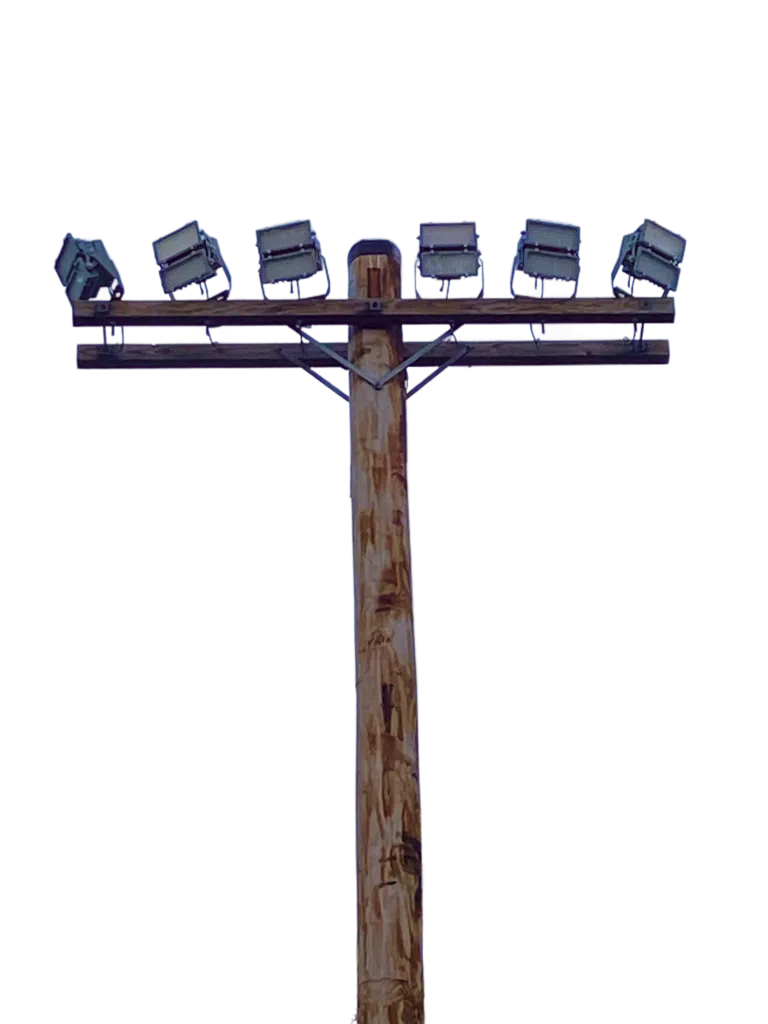

Our Football Field Light Poles include wood, steel, and composite fiberglass poles for sports lighting installations. Available configurations include direct-burial and anchor-base models, with options for crossarms and multi-fixture mounting assemblies.
These poles are used at recreational fields, school stadiums, community athletic facilities, organized competition venues, and larger football fields.
-
 Starting At $1,127.27
-
Starting At $990.91
-
Starting At $1,363.64
-
Starting At $1,200.00
-
Starting At $1,800.00
-
Starting At $1,681.82
-
Starting At $8,391.11
-
Starting At $9,717.39
-
Starting At $1,945.45
-
Starting At $1,681.82
-
Starting At $2,354.55
-
Starting At $2,045.45
-
Starting At $10,506.38
-
Starting At $12,378.26



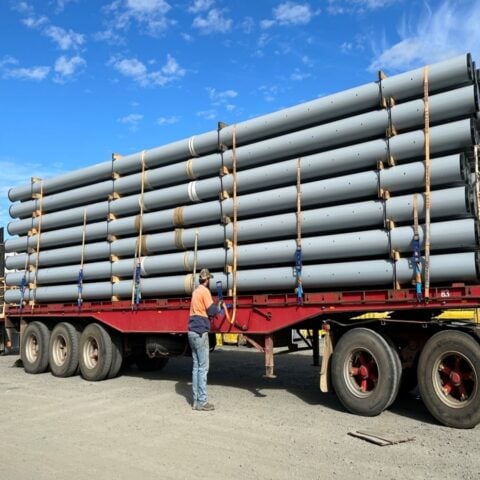


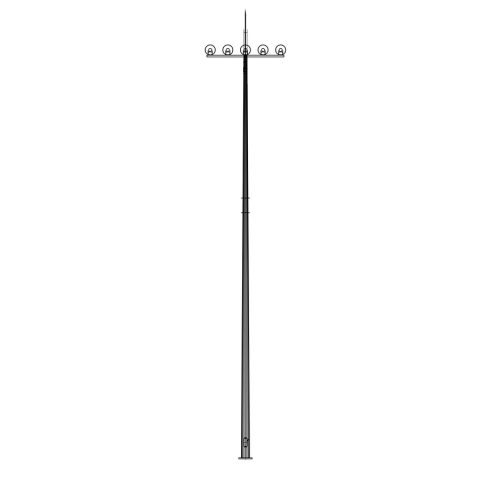

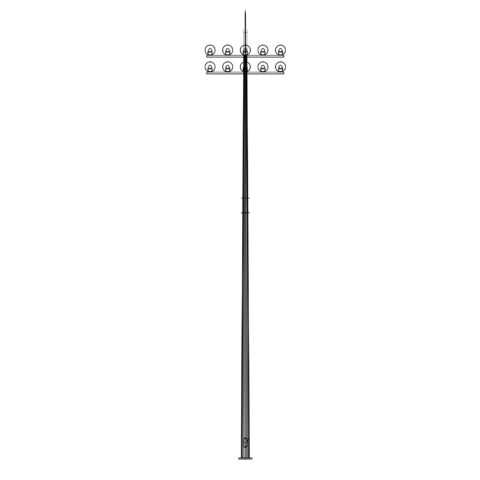
Football field light poles support the fixtures, crossarms, and mounting assemblies and provide a pathway for the wiring used to illuminate recreational fields, school stadiums, community athletic facilities, and larger competition venues. The correct pole system depends on field dimensions, pole setbacks, mounting height, fixture quantity, allowable EPA, wind requirements, soil conditions, installation method, surrounding structures, and the lighting plan.
Available options may include wood light poles, steel light poles, and composite fiberglass light poles. Each material has different structural, installation, corrosion, treatment, maintenance, and mounting considerations.
For fixture output, optics, light levels, uniformity, controls, and detailed field-lighting guidance, visit our football field lights page.
Selection Note: Start with the field layout, pole locations, setbacks, mounting height, fixture quantity, crossarm configuration, and fixture aiming. Then select a pole material, installation method, and exact pole capacity that support the allowable EPA, applicable wind criteria, foundation or embedment, site conditions, and lighting plan. Do not select football field poles using height, material, or competition level alone.
Football Field Light Pole Material Options
| Pole Material | General Selection Considerations |
|---|---|
| Wood Football Field Light Poles | Wood poles are commonly direct buried and may suit school, municipal, community, and utility-style athletic facilities. Confirm the wood species, pole class, preservative treatment, total length, embedment, drilling, crossarm attachment, fixture load, and project wind requirements. |
| Steel Football Field Light Poles | Steel provides structural stiffness and broad compatibility with crossarms and multi-fixture mounting systems. Review the exact pole height, wall construction, finish, allowable EPA, corrosion exposure, foundation or embedment, and base configuration. |
| Composite Fiberglass Football Field Light Poles | Composite fiberglass pole material does not rust and may be useful where irrigation, persistent moisture, fertilizers, salt, or other site conditions increase corrosion concerns. Confirm deflection, approved crossarm and fixture attachments, ultraviolet exposure, base or embedment design, and published structural data. |
Material alone does not determine whether a pole is suitable. Compare the exact pole model or class, above-grade height, fixture quantity, total mounted weight, allowable EPA, wind criteria, mounting configuration, installation details, and maintenance requirements.
How to Select Football Field Light Poles
| Selection Factor | What to Confirm |
|---|---|
| Field dimensions | Provide the playing-field dimensions, end zones, sidelines, safety zones, track, bleachers, buildings, fencing, scoreboards, walkways, and surrounding property limits. |
| Facility use | Identify whether the field is used for recreation, youth football, flag football, school athletics, organized competition, tournaments, or a multi-sport program. Confirm any required criteria with the facility owner, school, league, municipality, or other governing organization. |
| Project location | Provide the installation address and available site information so pole options can be reviewed against applicable wind criteria, terrain, frost conditions, soil, moisture, and other project details. Confirm governing requirements with the appropriate local or project authority. |
| Pole locations | Confirm proposed or existing pole positions, setbacks from the field, player and spectator clearances, bleachers, track lanes, access routes, underground utilities, buildings, and neighboring properties. |
| Mounting height | Select the above-grade mounting height using field dimensions, pole setbacks, fixture output, optics, aiming, glare goals, maintenance access, and photometric results. For direct-burial poles, distinguish the total pole length from the resulting above-grade height. |
| Fixture arrangement | Confirm fixture quantity per pole, crossarm dimensions, mounting positions, brackets, aiming range, wiring requirements, and whether additional fixtures may be installed later. |
| Weight and EPA | Include all fixtures, crossarms, brackets, adapters, and other approved mounted components in the total weight and wind-load evaluation. |
| Installation method | Determine whether the project requires direct-burial poles, anchor-base poles, or another manufacturer-approved structural configuration. |
| Foundation or embedment | Confirm soil conditions, drainage, frost depth, groundwater, foundation design, anchor-bolt pattern, embedment, backfill, compaction, and access for installation equipment. |
| Maintenance access | Consider how fixtures, drivers, crossarms, wiring, and mounting hardware will be reached for inspection, aiming, repair, or replacement. |
Football Field Pole Height and Placement
There is no single mounting height, pole count, or placement pattern that works for every football field. The final arrangement depends on the field dimensions, pole setbacks, fixture output, optics, required lighting criteria, glare concerns, bleachers, track configuration, surrounding properties, and existing infrastructure.
Lower mounting heights may reduce installation complexity but can increase glare, shadows, brightness near the sidelines, and the number of fixtures or poles needed. Taller poles may improve aiming geometry and coverage across longer distances, but they require appropriate structural capacity, foundations or embedment, lifting equipment, and fixture output.
Pole locations should be coordinated with player safety zones, spectator areas, tracks, walkways, emergency access, underground utilities, scoreboards, buildings, and field-maintenance routes.
Four-, Six-, and Eight-Pole Football Field Layouts
Four-, six-, and eight-pole arrangements are common starting concepts for football field planning, but pole count alone does not establish light levels, uniformity, glare control, or suitability for a particular level of play.
Layout Note: The following diagrams illustrate possible pole arrangements only. They are not universal placement plans and do not guarantee specific light levels, uniformity, camera performance, or suitability for any recreational, school, college, professional, broadcast, or streaming application. Final pole quantity, location, setback, mounting height, fixture arrangement, and aiming should be based on the actual field, surrounding site, required lighting criteria, and photometric results.
A four-pole concept generally uses two poles on each side of the field. It may be evaluated where site conditions, lighting goals, fixture performance, and pole setbacks allow the field to be covered from fewer mounting locations.

A six-pole concept adds mounting locations that may improve aiming flexibility and reduce the distance each fixture must cover. Whether it performs better depends on the actual pole positions, setbacks, fixtures, optics, and aiming.

An eight-pole concept provides additional mounting locations and may offer more control over fixture aiming and coverage. It also increases the number of poles, foundations or embedded sections, electrical feeds, fixtures, and mounting components that must be coordinated.

Existing Football Field Pole Assessment
Existing poles may sometimes be reused during an LED lighting upgrade, but they should not be assumed suitable based on appearance or prior fixture use. Replacement fixtures may have different weights, EPA values, mounting patterns, aiming requirements, and crossarm loads than the equipment they replace.
An existing-pole review should consider:
- Pole material, species or model, class if applicable, age, height, location, and original design
- Wood decay, splitting, checking, insect damage, treatment condition, or deterioration near the ground line
- Steel corrosion, coating damage, cracking, or deterioration near the base
- Composite cracking, surface damage, deflection, or attachment damage
- Leaning, movement, impact damage, or other visible changes
- Crossarm condition and fixture-mounting compatibility
- Base plate, anchor bolts, foundation, or embedded section
- Existing and proposed fixture weight, EPA, and mounting configuration
- Wiring, conduit, grounding, bonding, and electrical capacity
- Access for installation and future maintenance
Reusing suitable poles can reduce excavation and site disruption, but structural compatibility and condition should be verified by the appropriate qualified professional before fixtures, crossarms, or mounting hardware are replaced. A one-for-one fixture conversion may improve efficiency without correcting poor pole placement, glare, shadows, spill light, or uneven coverage.
Fixture Crossarms and Allowable EPA
Football field poles frequently support multiple fixtures on crossarms or other mounting assemblies. The poles, crossarms, brackets, fasteners, fixtures, foundations, anchor bolts, and embedded sections must be compatible as one structural system.
Effective Projected Area, or EPA, is a manufacturer-published value used to represent the wind-loading effect of fixtures and mounting components. The complete fixture and mounting arrangement must remain within the allowable capacity published for the exact pole under the applicable wind criteria and installation conditions.
Fixture count alone does not determine pole capacity. Fixtures with different dimensions, shapes, weights, mounting positions, and distances from the pole can create different structural loads. Adding fixtures or replacing a crossarm later may increase demand on the pole, foundation, anchor bolts, or embedded section.
Compatible equipment may include pole crossarms, steel light pole bullhorns, wood light pole bullhorns, and other light pole accessories. Confirm compatibility with the exact pole and fixture arrangement before ordering.
Direct-Burial Versus Anchor-Base Football Field Poles
| Installation Method | Football Field Considerations |
|---|---|
| Direct Burial | A portion of the pole is embedded below grade. This method is common for wood poles and is also available for selected steel and composite fiberglass poles. Embedment, backfill, drainage, soil, ground-line exposure, alignment, and manufacturer requirements must be reviewed for the exact pole and site. |
| Anchor Base | The pole mounts to a concrete foundation using a base plate and anchor bolts. This method is common with steel and selected composite poles and may simplify future pole replacement when the foundation and anchor-bolt system remain suitable. |
Neither installation method is automatically stronger, faster, less expensive, or better for high-wind locations. Selection depends on the pole material, loading, soil, drainage, construction access, foundation requirements, installation sequencing, and future replacement plans.
Foundation, Embedment, and Soil Conditions
Football field poles can carry several fixtures at elevated mounting heights, making foundation or embedment requirements an important part of the project. Generic details should not be applied without reviewing the exact pole, loading, soil, drainage, frost depth, groundwater, and manufacturer requirements.
Site planning should account for:
- Soil type and bearing conditions
- Drainage and standing water
- Frost depth and groundwater
- Anchor-bolt pattern and projection
- Foundation dimensions and reinforcement when applicable
- Embedment depth, backfill, and compaction when applicable
- Underground utilities and electrical conduit
- Crane, auger, and concrete-truck access
- Alignment of crossarms and fixtures with the field
Final foundation or embedment requirements should be confirmed by the appropriate qualified professionals for the project.
Coordinating Poles with the Football Field Lighting Plan
A photometric plan helps coordinate pole locations, mounting heights, fixture quantities, optics, crossarm positions, and aiming before poles and fixtures are ordered. It can also identify insufficient coverage, excessive contrast, glare, spill light, and visibility concerns for players, officials, and spectators.
For fixture selection, light levels, uniformity, optics, color temperature, controls, and detailed lighting guidance, visit our football field lighting page.
A football field lighting plan may evaluate:
- Illumination across the playing surface and end zones
- Uniformity and transitions between brighter and darker areas
- Vertical visibility and ball tracking
- Player, official, spectator, and nearby-driver sight lines
- Fixture aiming and direct-glare concerns
- Spill light toward homes, roads, parking areas, and adjacent fields
- Pole setbacks, mounting heights, and structural locations
- Fixture quantity, output, optics, and crossarm arrangement
- Controls, scheduling, dimming, and practice modes when supported
Fixture wattage, beam angle, pole spacing, pole count, and mounting height should be selected from the complete plan rather than applied as fixed rules.
Wind, Weather, and Field Conditions
Football field poles are commonly installed in open areas where wind exposure can be significant. Pole suitability depends on the exact material, model or class, height, shape, pole dimensions, fixture arrangement, crossarms, mounting hardware, foundation or embedment, and project wind criteria.
For open-terrain, hurricane-prone, or other severe-wind locations, review our high-wind rated light poles and verify the complete pole, fixture, crossarm, foundation or embedment, and site configuration.
Irrigation, standing water, fertilizers, deicing products, salt, soil chemistry, damaged coatings, preservative-treatment requirements, and moisture around the base or ground line can affect long-term pole condition. Material, treatment, and finish should be selected for the actual field environment.
For an initial review of fixture EPA and wind exposure, use our pole wind load calculator. Calculator results are preliminary and do not replace manufacturer structural data, applicable pole-class information, or project-specific engineering when required.
Need Help Selecting Football Field Light Poles?
LED Lighting Supply can help narrow wood, steel, and composite fiberglass pole options and coordinate the pole system with the proposed football field lighting layout. Useful project information includes field dimensions, installation address, facility use, existing or proposed pole locations, mounting heights, fixture quantity, crossarm arrangement, existing electrical service, track and bleacher locations, and surrounding site conditions.
Contact us about football field light poles and include a field drawing, site plan, aerial image, fixture information, or existing pole details when available. Final structural, foundation, embedment, electrical, installation, and code requirements should be confirmed by the appropriate qualified professionals for the project.
Football Field Light Poles FAQs
How Should I Select Football Field Light Poles?
Select football field light poles by evaluating field dimensions, pole setbacks, mounting height, fixture quantity, crossarm configuration, allowable EPA, wind requirements, soil conditions, installation method, surrounding structures, and the lighting plan together. Pole height, material, or competition level alone should not determine the pole system.
How Do I Choose Between Wood, Steel, And Composite Fiberglass Poles?
Choose among wood, steel, and composite fiberglass poles by comparing the exact pole model or class, above-grade height, fixture loading, allowable EPA, wind criteria, mounting configuration, installation details, maintenance requirements, and field environment. Wood poles are commonly direct buried, steel provides structural stiffness and broad compatibility with crossarms and multi-fixture mounting systems, and composite fiberglass does not rust.
How Are Football Field Pole Height And Placement Determined?
Football field pole height and placement should be determined from field dimensions, pole setbacks, fixture output, optics, aiming, lighting criteria, glare concerns, bleachers, track configuration, surrounding properties, existing infrastructure, and photometric results. Pole locations should also be coordinated with player safety zones, spectator areas, walkways, emergency access, underground utilities, scoreboards, buildings, and field-maintenance routes.
Should I Use A Four-, Six-, Or Eight-Pole Football Field Layout?
Four-, six-, and eight-pole layouts are starting concepts, not universal placement plans or guaranteed lighting solutions. Final pole quantity, location, setbacks, mounting height, fixture arrangement, and aiming should be based on the actual field, surrounding site, required lighting criteria, and photometric results.
Can Existing Football Field Poles Be Reused For An LED Upgrade?
Existing football field poles may sometimes be reused, but their suitability should be verified before fixtures, crossarms, or mounting hardware are replaced. Replacement fixtures may have different weights, EPA values, mounting patterns, aiming requirements, and crossarm loads, while pole condition, foundations or embedment, wiring, and maintenance access should also be reviewed.
What Must Be Included When Checking Pole EPA And Structural Capacity?
Include all fixtures, crossarms, brackets, adapters, and other approved mounted components when checking total weight and wind-exposed area. The complete fixture and mounting arrangement must remain within the allowable capacity of the exact pole at the required wind speed.
How Do Direct-Burial And Anchor-Base Football Field Poles Differ?
Direct-burial poles have a portion embedded below grade, while anchor-base poles mount to an engineered concrete foundation using a base plate and anchor bolts. Neither method is automatically stronger, faster, less expensive, or better for high-wind locations because selection depends on pole material, loading, soil, drainage, construction access, foundation requirements, installation sequencing, and future replacement plans.
Why Is A Photometric Plan Important Before Ordering Football Field Poles?
A photometric plan helps coordinate pole locations, mounting heights, fixture quantities, optics, crossarm positions, and aiming before poles and fixtures are ordered. It can also identify insufficient coverage, excessive contrast, glare, spill light, and visibility concerns for players, officials, and spectators.