60 Foot to 65 Foot Light and Utility Poles
- Wood, steel, and fiberglass pole options available
- Anchor base and direct burial mounting configurations
- Selection support for fixture and pole compatibility



Our 60 Foot to 65 Foot Light and Utility Poles include wood, steel, and fiberglass pole options with anchor base and direct burial configurations. Available models may support lighting fixtures, sports lighting mounts, cameras, banners, signs, and utility attachments.
These poles are used for distribution centers, logistics yards, truck courts, trailer parking areas, industrial yards, storage areas, large parking lots, roadway areas, athletic fields, municipal sites, and large open spaces.
-
 Starting At $2,354.55

-
Starting At $2,045.45
-
Starting At $1,774.55
-
Starting At $1,725.45
-
 Starting At $10,506.38
-
Starting At $12,378.26
-
Starting At $3,181.82
-
Starting At $2,472.73
-
Starting At $2,245.45



60+ Foot Light and Utility Poles
60+ foot light poles are used for large outdoor lighting projects that need tall mounting heights, long-distance coverage, wider fixture spacing, and fewer pole locations than lower-height pole layouts can typically provide. This height range is common for large industrial sites, distribution centers, logistics yards, truck courts, trailer parking areas, major parking lots, roadway areas, athletic fields, municipal sites, utility-style applications, and large open spaces where 50 to 55 foot poles may not provide enough coverage.
Start by confirming that a 60+ foot mounting height is needed for the site coverage, spacing, and fixture package. Then select the fixture type and quantity, bracket style, and pole material and mounting method based on the required EPA rating, wind exposure, soil conditions, and foundation or embedment requirements. Because this height range often supports larger fixture packages, sports lighting mounts, cameras, banners, utility attachments, or multiple fixtures per pole, wind load, foundation design, local requirements, and photometric performance should be reviewed carefully before ordering.
Where 60+ Foot Poles Work Best
This height range is often selected when a project needs more mounting height and broader coverage than 50 to 55 foot poles can provide. Compared to shorter poles, 60+ foot poles can often support longer-distance visibility, wider spacing, and larger mounting packages across very large paved areas, open industrial sites, sports fields, and truck circulation zones.
| Application | Why This Height Works |
|---|---|
| Distribution Centers and Logistics Yards | Works well for truck routes, trailer parking, loading zones, large paved areas, and circulation lanes where lower poles may require too many locations. |
| Industrial Yards and Storage Areas | Useful for open storage, equipment yards, service yards, and larger outdoor work zones where broad lighting coverage is required. |
| Large Parking Lots and Roadway Areas | Provides higher fixture placement for wider spacing, broader coverage, and improved visibility across large paved areas and access routes. |
| Athletic Fields and Sports Facilities | May be used for larger recreational fields, school sports areas, practice fields, and athletic facilities when fixture aiming, spill control, and photometric results are reviewed. |
| Utility-Style Applications | May support utility lighting, cameras, signs, communication components, or other attachments when the pole class, EPA rating, wind exposure, and mounting details are confirmed. |
When 60+ Foot Poles May Not Be the Right Fit
60+ foot poles are best suited for large sites, but they may be more height than smaller properties need. They can also increase foundation requirements, shipping considerations, installation complexity, and wind-load review compared to shorter poles.
- Walkways and entrances: Pedestrian-scale areas are usually better served by 10 to 15 foot poles.
- Small to mid-size parking lots: A 20 to 25 foot, 30 to 35 foot, or 40 to 45 foot pole may provide enough coverage with a more proportional site appearance.
- Large but moderate-scale sites: A 50 to 55 foot pole may be enough when the site does not require maximum mounting height or wider spacing.
- Tight sites or restricted properties: Height limits, setbacks, overhead utilities, soil conditions, or permitting requirements may make a shorter pole more practical.
- Specialized high-mast projects: Some roadway, port, airport, or very large industrial applications may require a dedicated high-mast lighting layout instead of a standard 60+ foot pole configuration.
Wood, Steel, and Fiberglass Pole Options
60+ foot poles are often specified as wood utility poles, but material availability depends on the project, pole height, fixture load, EPA rating, wind exposure, mounting method, and manufacturer requirements. Material selection should be reviewed with the full fixture, bracket, accessory, foundation, and site package.
| Pole Material | Best Fit |
|---|---|
| Wood Utility Poles | Common for utility-style lighting, sports complexes, rural sites, industrial yards, and direct burial applications where wood pole construction is specified. |
| Steel Light Poles | May be used for large commercial, roadway, industrial, or anchor base applications where the pole design, foundation, fixture package, and wind requirements support steel construction. |
| Fiberglass Light Poles | May be considered for corrosion-sensitive environments or shorter tall-pole applications where the available pole model, EPA rating, and mounting requirements match the project. |
Fixture Selection at 60+ Feet
At 60+ feet, fixture selection should be based on the application, target light levels, pole spacing, optics, fixture weight, EPA, mounting configuration, glare control, and spill light requirements. Small changes in fixture output, beam angle, aiming, or pole placement can have a larger impact at this mounting height, so a photometric plan is strongly recommended.
| Fixture Type | Typical Use |
|---|---|
| LED Area Lights | Used for large parking lots, distribution centers, logistics yards, industrial sites, roadways, campuses, and large outdoor areas where wider spacing is needed. |
| Flood Lights | May be used for industrial yards, equipment areas, storage zones, security areas, signs, or focused site coverage when fixture aiming and glare control are reviewed. |
| Sports Lighting Fixtures | Used for athletic fields, school sports areas, recreational facilities, and practice fields when light levels, uniformity, aiming, spill, and glare are evaluated with a lighting plan. |
| Cameras, Banners, or Utility Attachments | Can be added only when the pole class, accessory load, EPA impact, wind exposure, and mounting details are confirmed. |
EPA, Wind Rating, and Fixture Load
EPA, or effective projected area, helps determine whether a pole can support the fixture, bracket, and mounting configuration under local wind conditions. For 60+ foot poles, EPA review is especially important because wind load increases with height and because these poles may carry larger fixtures, multiple heads, sports lighting mounts, cameras, signs, banners, or utility attachments.
Wind requirements vary by location. A 60 or 65 foot pole installed in a protected inland site may have different requirements than the same pole installed in a coastal area, open lot, exposed campus, high-wind region, roadway, large paved property, or industrial yard. Before ordering, confirm the fixture EPA, pole EPA rating, fixture quantity, bracket type, mounting height, local wind requirements, and soil or foundation conditions.
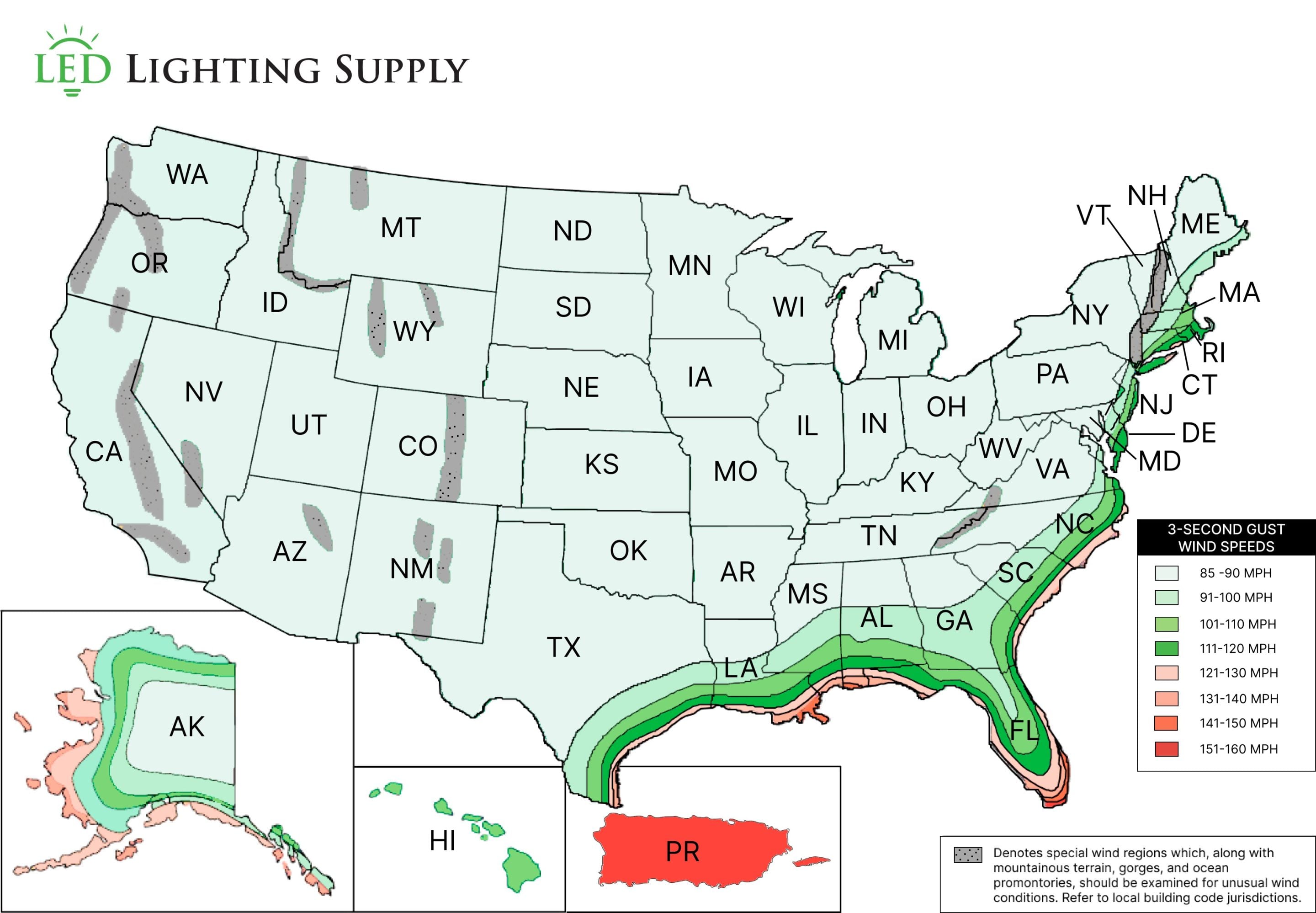
For projects with multiple fixtures, larger brackets, cameras, banners, sports lighting mounts, exposed site conditions, or high wind requirements, an EPA review should be completed before final pole selection. This helps confirm that the pole, fixture, bracket, accessory load, and local wind conditions are properly matched.
Anchor Base vs Direct Burial Poles
60+ foot poles may be available in anchor base or direct burial configurations, depending on the pole type and project requirements. The correct mounting method depends on the pole material, soil conditions, serviceability needs, footing requirements, embedment depth, drainage, site layout, and local installation requirements.
| Mounting Type | Best Fit |
|---|---|
| Anchor Base Poles | Mounted to a concrete foundation using anchor bolts and a base plate. Used when the pole design, fixture load, foundation requirements, and serviceability needs support an anchor base installation. |
| Direct Burial Poles | Installed below grade without an exposed anchor base. Common for wood utility poles where direct burial, embedment depth, soil conditions, and project requirements support this method. |
60+ Foot Poles for Sports Lighting
60+ foot poles may be used for athletic fields, school sports areas, recreational facilities, practice fields, and larger outdoor sports lighting projects where higher mounting heights are appropriate. Sports lighting should be reviewed with a photometric plan because fixture aiming, light levels, uniformity, glare control, spill light, and pole placement all affect the final result. Competitive fields, larger facilities, or tighter spill and glare requirements may require a dedicated sports lighting layout.
What to Confirm Before Ordering
- Mounting height: Confirm that 60+ feet provides the right balance of coverage, spacing, glare control, and site scale.
- Fixture type: Match fixture output, optics, distribution pattern, shielding, wattage, and EPA to the pole height and application.
- Pole spacing: Review spacing with a photometric plan for parking, roadway, sports, security, distribution center, logistics, or industrial projects.
- Fixture and bracket package: Review multiple heads, bullhorn brackets, sports lighting mounts, cameras, signs, banners, communication components, and accessories before final pole selection.
- EPA rating: Confirm pole rating, fixture EPA, bracket load, accessory load, and local wind requirements.
- Pole material: Choose wood, steel, fiberglass, or another approved material based on fixture load, corrosion exposure, wind conditions, appearance, and installation method.
- Mounting method: Confirm anchor base or direct burial requirements, footing size, embedment depth, soil conditions, drainage, and serviceability needs.
- Site layout: Check truck routes, trailer parking areas, drive lanes, roadways, parking spaces, sidewalks, doors, landscaping, underground utilities, overhead wires, cameras, signs, and nearby property lines.
- Permits and local requirements: Review height limits, wind requirements, local authority requirements, and any project-specific engineering requirements before ordering.
- Lighting plan: For parking, roadway, sports, perimeter, logistics, distribution center, or industrial projects, use a photometric plan to confirm light levels, spacing, glare control, spill light, and uniformity.
Get Help Choosing 60+ Foot Light and Utility Poles
The right 60+ foot pole should match the fixture, mounting height, pole spacing, EPA load, wind exposure, pole material, mounting method, foundation or embedment requirements, glare control needs, truck circulation areas, trailer parking areas, and site conditions. LED Lighting Supply can help review fixture selection, pole spacing, EPA requirements, wind exposure, mounting type, pole material, sports lighting needs, and project requirements before you order.
60 Foot to 65 Foot Light and Utility Poles FAQs
How Do I Determine Whether A 60+ Foot Pole Is Right For My Site?
60+ foot poles are suited to large outdoor projects that need tall mounting heights, long-distance coverage, wider fixture spacing, and fewer pole locations than lower-height layouts can typically provide. They are commonly used for large industrial sites, distribution centers, logistics yards, truck courts, trailer parking areas, major parking lots, roadway areas, athletic fields, municipal sites, utility-style applications, and large open spaces.
When Might A Shorter Pole Be More Practical?
A shorter pole may be more practical for pedestrian-scale walkways and entrances, small to mid-size parking lots, large but moderate-scale sites, and properties with height limits, setbacks, overhead utilities, soil conditions, or permitting requirements. Some very large roadway, port, airport, or industrial projects may instead require a dedicated high-mast lighting layout.
What Factors Should Be Reviewed When Selecting Fixtures For A 60+ Foot Pole?
Fixture selection should be based on the application, target light levels, pole spacing, optics, fixture weight, EPA, mounting configuration, glare control, and spill light requirements. Because changes in fixture output, beam angle, aiming, or pole placement can have a larger impact at this mounting height, a photometric plan is strongly recommended.
Why Is EPA And Wind Review Important For 60 And 65 Foot Poles?
EPA helps determine whether a pole can support the fixture, bracket, and mounting configuration under local wind conditions. Review is especially important for 60+ foot poles because wind load increases with height and the poles may carry larger fixtures, multiple heads, sports lighting mounts, cameras, signs, banners, or utility attachments.
What Should Be Confirmed Before Adding Multiple Fixtures Or Attachments?
Multiple fixtures, larger brackets, cameras, banners, sports lighting mounts, signs, and utility attachments should be confirmed against the pole class, accessory load, EPA impact, wind exposure, and mounting details before final pole selection. For projects with multiple fixtures, larger brackets, exposed site conditions, or high wind requirements, an EPA review should be completed before final pole selection.
How Do Anchor Base And Direct Burial Pole Configurations Differ?
Anchor base poles are mounted to a concrete foundation using anchor bolts and a base plate, while direct burial poles are installed below grade without an exposed anchor base. The correct method depends on pole material, soil conditions, serviceability needs, footing requirements, embedment depth, drainage, site layout, and local installation requirements.
Which Pole Materials May Be Considered For A 60+ Foot Project?
Wood utility poles are common for utility-style lighting, sports complexes, rural sites, industrial yards, and direct burial applications where wood construction is specified. Steel may be used for large commercial, roadway, industrial, or anchor base applications, while fiberglass may be considered for corrosion-sensitive environments or shorter tall-pole applications when the available model, EPA rating, and mounting requirements match the project.
What Should Be Included In A Photometric Plan For A 60+ Foot Pole Layout?
A photometric plan should be used to confirm light levels, spacing, glare control, spill light, and uniformity for parking, roadway, sports, perimeter, logistics, distribution center, and industrial projects. Fixture aiming, light levels, uniformity, glare control, spill light, and pole placement all affect the final result for sports lighting projects.