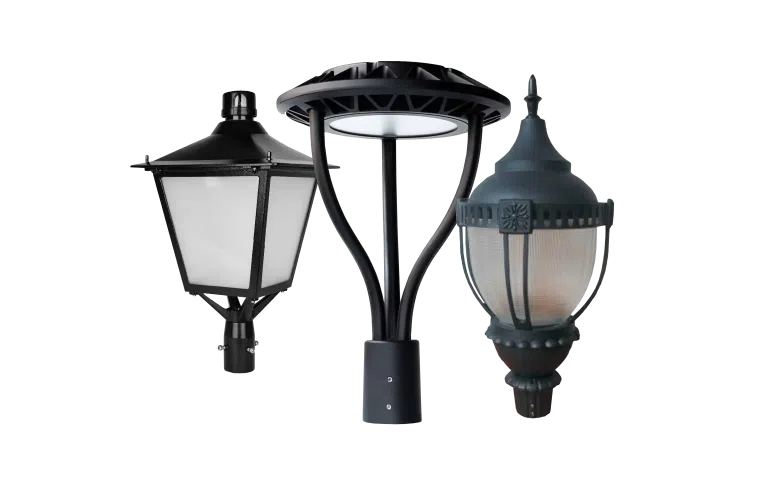
LED Post Top Lights
- Designed for pathways, parks, campuses, and pedestrian-scale areas
- Wattage and color-adjustable options available on select models
- Application support for mounting, output, and fixture selection


Get Your Custom Lighting Plan With Product Recommendations
- Layout designed around pole height, spacing, and distribution for even pathway and pedestrian-area coverage
- Fixture selection matched to lumen output, color temperature, tenon size, and photocell or dimming needs
- LED post top fixtures can reduce energy use and relamping compared with older HID systems


Our LED Pole Top Lighting includes standard and decorative LED post top fixtures for pedestrian-scale outdoor lighting. Available models include wattage-adjustable and color-adjustable options, photocell-compatible fixtures, 1-10V dimming models, multiple mounting configurations, and LED post top retrofit bulbs for certain existing fixtures.
These fixtures are commonly used along pathways, parks, campuses, HOA common areas, commercial courtyards, small parking areas, plazas, playgrounds, decorative streetscapes, and outdoor building corridors.




What Are LED Post Top Lights?
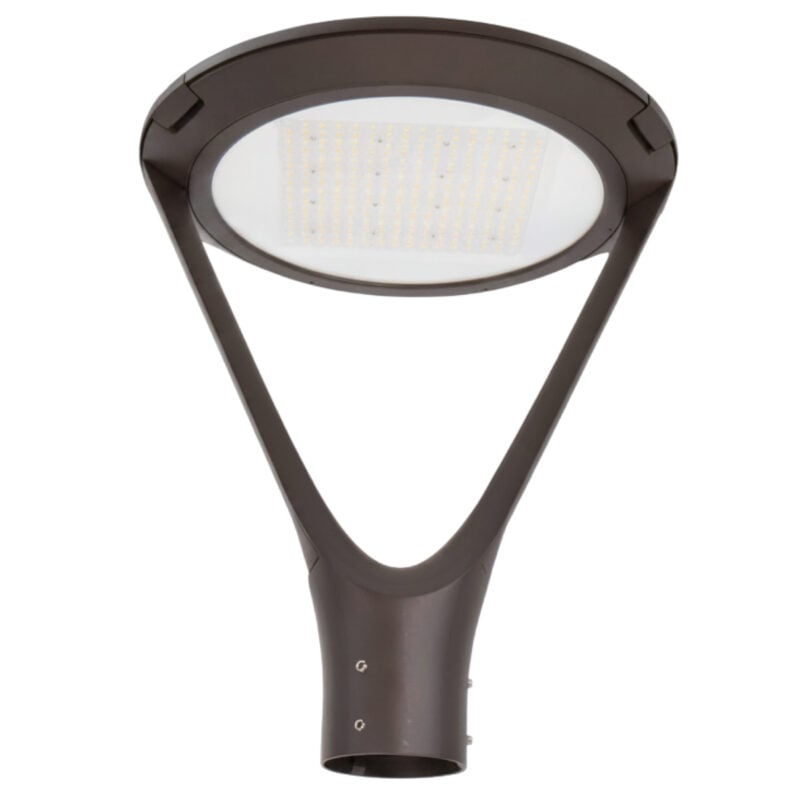
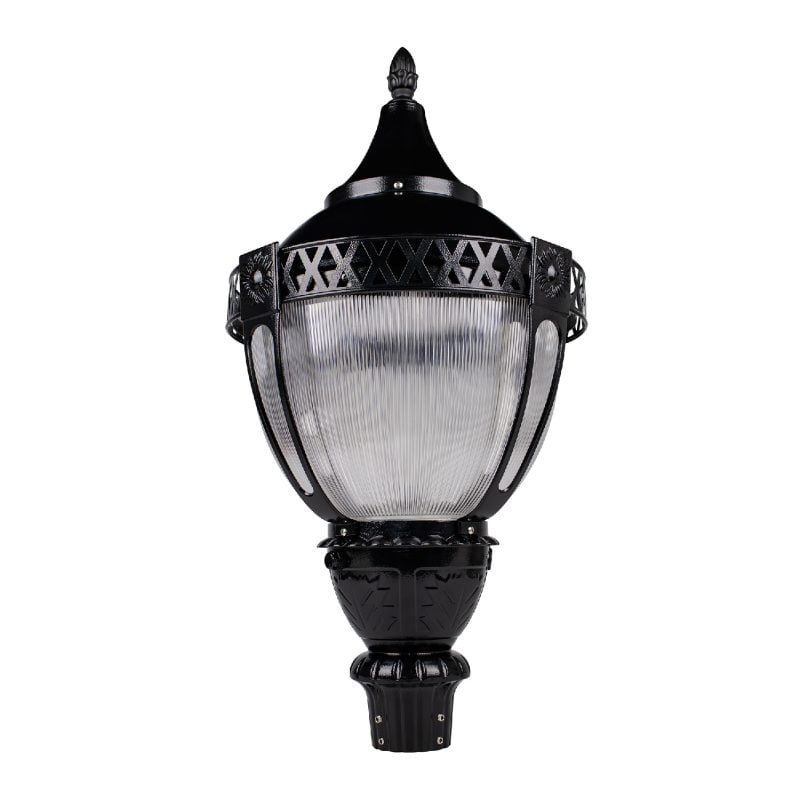
LED post top lights are pole-mounted outdoor fixtures used for pedestrian-scale and lower-pole lighting. They are commonly installed along pathways, parks, campuses, HOA common areas, commercial courtyards, small parking areas, decorative streetscapes, playgrounds, and outdoor building corridors where appearance, comfort, visibility, and reduced maintenance matter.
Post top fixtures are commonly used on lower poles, often below 20 feet, although appropriate mounting height depends on the fixture’s photometric distribution, spacing, site layout, and required light levels. They provide broad outdoor illumination from the top of a pole and are often selected when a decorative or architectural appearance is preferred over a standard shoebox-style area light. Many projects involve replacing metal halide or high-pressure sodium fixtures with LED post top lights for improved energy efficiency, instant-on operation, and reduced lamp and ballast maintenance.
Available options may include photocells for dusk-to-dawn operation, color-adjustable CCT, wattage-selectable output, 1-10V dimming, different CRI options, IP-rated housings, and multiple mounting configurations depending on the model. Fixture selection should be based on pole height, pole spacing, tenon size, voltage, controls, desired lumen output, light distribution, color temperature, and the purpose of the area being illuminated.

This customer upgraded pathway lighting with an adjustable LED post top fixture providing 10,400 to 19,500 lumens.
Selection and Installation Note: Product specifications, mounting options, controls, certifications, IP ratings, voltage, dimming capability, photocell options, and warranty coverage vary by model. Confirm the selected product specification before ordering. For code-sensitive, electrical, public-area, egress, security, dark-sky, or safety-critical applications, verify requirements with your local inspector, AHJ, or a licensed electrical professional.
Choose LED Post Top Lights by Fixture Style, Controls, or Retrofit Need
Start by confirming whether the project needs a standard or decorative fixture, adjustable output or color temperature, photocell or dimming controls, or a new fixture versus an HID or bulb retrofit. Then verify pole height, existing tenon, light output, voltage, wind exposure, and mounting compatibility before selecting a model.
| Post Top Lighting Option | Best Used For |
|---|---|
| Standard LED Post Top Lights | Pathways, campuses, parks, HOA common areas, commercial courtyards, small parking areas, and pedestrian-scale outdoor lighting on lower poles. |
| Decorative LED Post Top Lights | Parks, plazas, streetscapes, HOA entrances, community spaces, and locations where fixture appearance is part of the outdoor design. |
| Wattage Adjustable Post Top Lights | Retrofit projects where field-adjustable lumen output helps fine-tune light levels after installation or where existing light levels are uncertain. |
| Color Adjustable Post Top Lights | Projects where 3000K, 4000K, or 5000K color temperature selection may need to be finalized after installation or matched to nearby lighting. |
| Photocell-Compatible Post Top Lights | Dusk-to-dawn operation for pathways, parks, campuses, commercial properties, and common areas where automatic nighttime operation is preferred. |
| Dimmable Post Top Lights | Applications where compatible 1-10V dimming or lighting controls are needed for reduced output, after-hours operation, or energy management. |
| LED Post Top Retrofit Applications | Replacing metal halide or high-pressure sodium post top fixtures where the existing pole height, tenon, voltage, and fixture style can support the new LED fixture. |
| LED Post Top Light Bulb Retrofits | Selective upgrades inside certain existing fixtures where optics, heat management, socket condition, wiring method, and fixture condition are appropriate for a lamp retrofit. |
When LED Post Top Lights Are the Right Fit
LED post top lights are often a strong choice for pedestrian-scale outdoor lighting where appearance, comfort, energy savings, and even coverage matter. They may not be the best fixture for tall poles, large parking lots, high-security sites, or targeted lighting applications where shoebox lights, area lights, bollard lights, or flood lights may be better suited.
| Use LED Post Top Lights When | Consider Another Lighting Type When |
|---|---|
| Pedestrian-scale lighting is needed for pathways, parks, campuses, HOAs, and common areas, typically on lower poles. | The project uses taller poles or requires wide parking-lot coverage from higher mounting heights. Shoebox or area lights may be more appropriate. |
| Fixture appearance matters and the project needs a decorative or architectural pole-mounted fixture. | Highly directional or high-output lighting is required for security zones, building facades, equipment yards, or other targeted areas. |
| Older metal halide or high-pressure sodium fixtures are being replaced and the goal is lower energy use, improved light quality, and reduced maintenance. | The existing pole may not support the new fixture assembly due to pole condition, fixture weight, EPA, mounting geometry, wind criteria, or other structural factors. |
| Photocell or control operation is planned and the selected fixture supports the required control method. | The intended photocell location may receive fixture output or other reflected light that could cause false cycling. |
| Moderate, comfortable outdoor illumination is needed for pedestrian movement, visibility, and general area lighting. | Long circuit runs have not been evaluated and voltage drop could affect fixture operation or controls. |
Choosing LED Post Top Lights by Pole Height, Mounting, Distribution, Lumens, Color Temperature, and Controls
Post top lights should not be selected by wattage alone. The right fixture depends on pole height, pole spacing, tenon size, lumen output, distribution pattern, color temperature, CRI, voltage, controls, photocell placement, wind exposure, and whether the project needs a decorative appearance or higher-output area coverage.
A photometric plan is recommended for campuses, parks, HOAs, commercial properties, small parking areas, streetscapes, outdoor corridors, and security-sensitive pedestrian areas where fixture spacing, light levels, uniformity, glare, light trespass, or dark-sky requirements must be reviewed before ordering.
Planning Checklist
| Planning Factor | What to Confirm |
|---|---|
| Pole height | Post top lights are commonly used on lower poles, often below 20 feet. 10-foot to 15-foot light poles may suit many pedestrian-scale applications. Taller poles or large-area layouts may require shoebox or area lights instead. |
| Pole spacing | Confirm spacing between poles before selecting wattage, lumen output, distribution, and fixture quantity. Wide spacing may require a different fixture type or higher-output model. |
| Tenon and mounting compatibility | Measure the existing pole tenon diameter before ordering. Confirm whether the fixture fits a 2 3/8 inch pole, 3 inch pole, slip fitter, or another mounting configuration. Where sizes differ, verify whether an appropriate tenon adapter is available and suitable. |
| Lumen output | Compare actual LED lumen output, fixture distribution, pole height, and spacing instead of matching HID wattage directly. |
| Distribution pattern | Match the distribution to the application. Pathways, plazas, small parking areas, and open common spaces may require different optics or coverage patterns. |
| Color temperature | 3000K is often used for warmer parks, HOAs, and decorative areas. 4000K is common for general commercial visibility. 5000K may be selected where a cooler white appearance is preferred. CCT describes the appearance of white light, not fixture brightness. |
| CRI | Available CRI ratings vary by model and may include 70+, 75+, or 80+ options. Confirm CRI requirements before ordering. |
| Photocell operation | Confirm whether the fixture includes, accepts, or excludes a photocell. Place photocells where they will not detect the fixture's own output and cause false cycling. |
| Dimming and controls | Some models support 1-10V dimming while others are non-dimmable. Confirm controls, wiring, and driver compatibility before ordering. |
| Voltage and circuit length | Confirm site voltage and evaluate long circuit runs for voltage drop, especially on remote poles or large outdoor properties. |
| Wind load and pole condition | Review existing pole condition, fixture weight, EPA, mounting geometry, site wind criteria, and available manufacturer data before replacing older HID fixtures with larger or differently shaped LED housings. A qualified engineer or project authority should determine structural suitability where required. |
| Light trespass and glare | Review nearby residences, roads, windows, pedestrian comfort, dark-sky needs, and local ordinances before selecting output and optics. |
Recommended Foot-Candles for LED Post Top Lighting
Use the tool below for general starting foot-candle ranges by post top lighting application. It includes pedestrian pathways, parks, HOA common areas, campus walkways, commercial common areas, small parking lots, outdoor building corridors, playgrounds, decorative streetscapes, and security-sensitive pedestrian areas.
Foot-candle guidance helps with light-level planning, but it does not determine fixture count, fixture spacing, pole height, mounting compatibility, structural suitability, voltage drop, photocell placement, glare, light trespass, or local code requirements. For larger or visibility-sensitive outdoor projects, request a lighting plan before ordering.
LED Post Top Lights Compared with Shoebox Lights, Flood Lights, Bollards, and HID Fixtures
LED post top lights, shoebox lights, flood lights, bollard lights, and HID fixtures all serve different outdoor lighting needs. Choosing the wrong fixture type can create poor coverage, glare, excessive brightness, or unnecessary cost.
| Lighting Type | Best Used For |
|---|---|
| LED Post Top Light | Pedestrian-scale outdoor lighting for pathways, parks, campuses, HOAs, small parking areas, plazas, and decorative commercial spaces on lower poles. |
| LED Shoebox or Area Light | Larger parking lots, roadways, commercial sites, and taller pole applications where wider coverage and higher-output commercial area lighting are needed. |
| LED Flood Light | Targeted illumination for signs, building facades, equipment yards, loading areas, security zones, and surfaces that need directional light. |
| LED Bollard Light | Low-level pedestrian lighting for paths, entrances, landscapes, and areas where very low mounting height and visual comfort are preferred. |
| Metal Halide or High Pressure Sodium Post Top | Older lighting technology that typically has higher maintenance needs, lamp and ballast replacement, warm-up time, lumen depreciation, and limited controls compatibility. |
| LED Post Top Retrofit Bulb | Selective retrofit projects where the existing fixture housing, socket, thermal condition, optics, and wiring requirements are appropriate for a lamp-only upgrade. |
Post Top Lighting Project Example
Post top lighting projects depend on pole height, spacing, fixture output, mounting compatibility, color temperature, and the desired appearance of the outdoor space. The example below shows a pathway lighting upgrade using adjustable LED post top fixtures.

Adjustable LED post top fixtures can help replace older HID fixtures while giving property owners more control over wattage, lumen output, and color temperature.
Outdoor Lighting Certifications, Rebates, and Warranty Support
Selected LED post top lights from LED Lighting Supply carry a safety listing or certification, such as UL, ETL, or CSA, depending on the product and intended application. Many models may be DLC or DLC Premium listed for utility rebate support where available. DLC qualification is an efficiency and performance program, not an electrical safety certification. Rebate requirements vary by utility, region, and product listing, so confirm eligibility on the selected product specification before ordering.
Warranty terms vary by product. Confirm the exact warranty, voltage, controls compatibility, mounting method, wind exposure, photocell compatibility, environmental exposure, and suitability for the site layout and surrounding conditions before purchase.
Installation, Commissioning, and Maintenance Considerations
After a fixture has been selected, proper installation and commissioning help the system perform as intended. These steps add value beyond product selection by helping installers and property managers verify operation, maintain consistent appearance, and identify issues early.
- Document fixture settings before energizing: For wattage- or CCT-selectable models, record the selected settings for each location. This helps maintain consistency across the site and simplifies future replacement or troubleshooting.
- Verify control operation at night: Test photocells, timers, dimming schedules, and occupancy controls after dark or under appropriate test conditions. Confirm that the fixture responds correctly and does not cycle unexpectedly.
- Confirm aiming and orientation where applicable: Some post top fixtures and mounting assemblies have orientation requirements. Install them according to manufacturer instructions so the intended distribution, shielding, and drainage are maintained.
- Inspect gaskets, wiring entries, and hardware: During installation and periodic maintenance, check that gaskets are seated, wiring entries are properly sealed, and mounting hardware is tightened to the manufacturer’s specified torque.
- Keep optical surfaces clean: Dirt, pollen, salt, and other buildup can reduce delivered light and alter the fixture’s appearance. Use cleaning methods approved by the fixture manufacturer.
- Review the site after installation: Observe the completed installation for dark areas, excessive glare, unwanted light at property lines, and inconsistent color appearance. Adjustments should follow the fixture instructions and applicable site requirements.
- Maintain records for future service: Keep product model numbers, settings, installation dates, control information, and warranty documentation for each fixture location.
Request a post top lighting plan and our Product Specialists can help review application information, pole height, pole spacing, mounting compatibility, lumen output, color temperature, controls, light levels, and published product specifications for your LED post top lighting project.
LED Post Top Lights FAQs
How Do I Choose The Right LED Post Top Light?
Choose an LED post top light based on pole height, pole spacing, tenon size, lumen output, distribution pattern, color temperature, CRI, voltage, controls, photocell placement, wind exposure, and the purpose of the illuminated area. Confirm mounting compatibility and whether the project needs a decorative appearance or higher-output area coverage before selecting a model.
When Are LED Post Top Lights A Good Fit?
LED post top lights are often a strong choice for pedestrian-scale outdoor lighting where appearance, comfort, energy savings, and even coverage matter. They are commonly used for pathways, parks, campuses, HOA common areas, commercial courtyards, small parking areas, decorative streetscapes, playgrounds, and outdoor building corridors.
When Should I Consider Shoebox, Flood, Or Bollard Lights Instead?
Consider shoebox or area lights for taller poles, larger parking lots, roadways, commercial sites, or layouts requiring wider coverage and higher output. Flood lights are used for targeted illumination, while bollard lights are used for low-level pedestrian lighting where very low mounting height and visual comfort are preferred.
What Should Be Verified Before Replacing HID Post Top Fixtures With LED?
Before replacing metal halide or high-pressure sodium fixtures, verify pole height, existing tenon, voltage, fixture style, mounting compatibility, wind exposure, pole condition, fixture weight, EPA, mounting geometry, and site wind criteria. Compare actual LED lumen output, distribution, pole height, and spacing instead of directly matching HID wattage.
Do I Need A Photometric Plan For LED Post Top Lighting?
A photometric plan is recommended when fixture spacing, light levels, uniformity, glare, light trespass, or dark-sky requirements need review before ordering. This includes campuses, parks, HOAs, commercial properties, small parking areas, streetscapes, outdoor corridors, and security-sensitive pedestrian areas.
Can LED Post Top Lights Use Photocells Or Dimming Controls?
Available options may include photocells for dusk-to-dawn operation and 1-10V dimming, depending on the model. Confirm whether the fixture includes, accepts, or excludes a photocell, and confirm controls, wiring, and driver compatibility before ordering.
Can Wattage And Color Temperature Be Adjusted After Installation?
Wattage-adjustable post top lights can help fine-tune light levels after installation where existing light levels are uncertain. Color-adjustable models may allow 3000K, 4000K, or 5000K selection after installation or matching to nearby lighting.
What Should I Confirm Before Ordering An LED Post Top Light?
Confirm the selected product specification for mounting options, controls, certifications, IP ratings, voltage, dimming capability, photocell options, and warranty coverage because these vary by model. Measure the existing pole tenon diameter and verify that the selected fixture and any needed adapter are suitable for the mounting configuration.