LED Race Track Lighting
- Photometric plans help evaluate coverage, aiming, and driver visibility
- Options for ovals, road courses, karting, and motocross tracks
- USA-based support for fixture selection and beam control


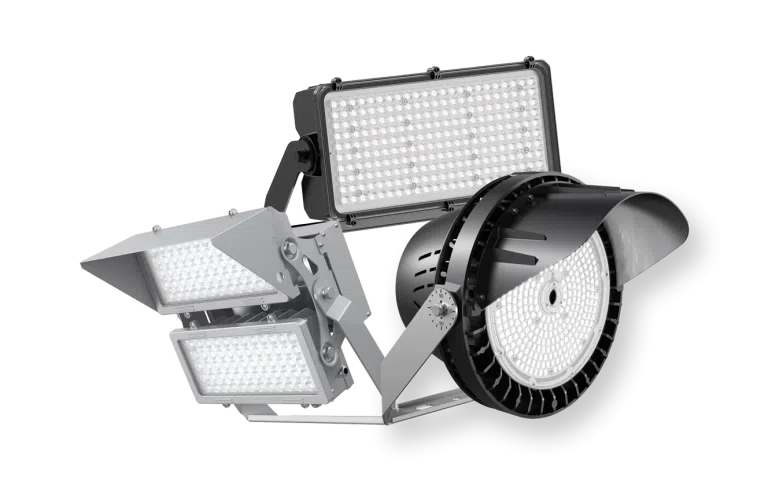

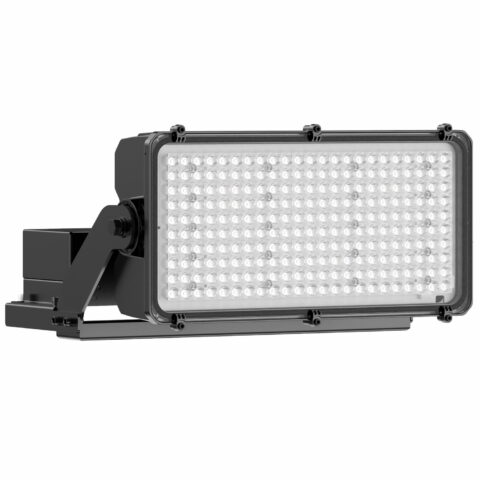
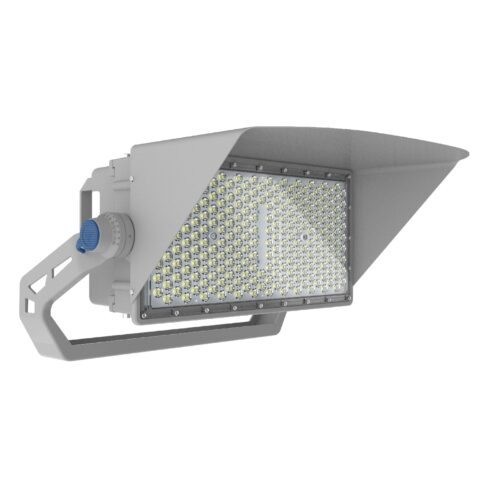
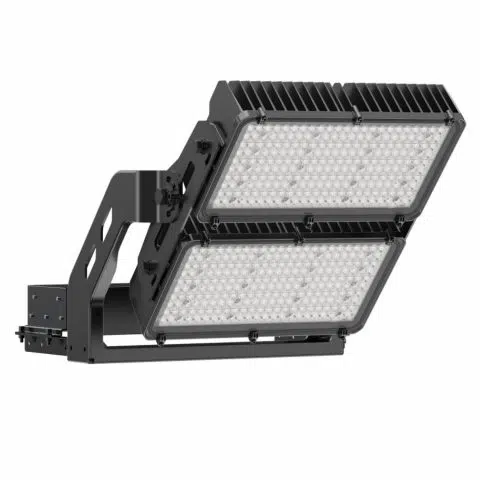
Our LED Race Track Lights include pole-mounted LED stadium lights, sports field lights, and high-output flood lights for motorsports facilities. Available models include 200W to 1200W options, with beam angles, voltage configurations, dimming, and controls varying by fixture.
These fixtures are commonly used for dirt and paved ovals, road courses, karting tracks, BMX tracks, motocross tracks, pit areas, staging areas, spectator zones, parking areas, and track entries.
-
 Starting At $697.50






Race Track Lighting Is a Driver Visibility and Safety System
Start by defining the track type, geometry, and lighting zones, then review pole locations and mounting height, electrical infrastructure, beam control, and the type of racing hosted at the facility. A dirt oval, paved oval, road course, karting track, BMX track, motocross track, and pit area all require different lighting decisions. Fixture wattage, lumen output, beam angle, fixture count, and aiming should be confirmed with a photometric plan before ordering.
The goal is not simply to make the track bright. The lighting system must help drivers see the racing line, turns, hazards, flagging areas, other vehicles, barriers, pit entry, and track edges without creating glare or harsh contrast. Poorly aimed fixtures can create dark zones, hot spots, light spill, or driver glare, even when the fixture output looks strong on paper.
Most racetrack lighting projects use pole-mounted LED stadium lights, LED sports field lights, or high-output LED flood lights, depending on track size, pole height, pole setback, beam control, and required light levels.

Selection and Installation Note: Product specifications, fixture wattage, lumen output, beam angle, mounting hardware, voltage, controls, dimming, surge protection, certifications, IP rating, IK rating, and warranty coverage vary by model. Confirm the selected product specification before ordering. For racetracks, motorsports facilities, pole-mounted lighting, pit areas, spectator areas, electrical upgrades, structural pole review, code-sensitive applications, or safety-critical projects, verify requirements with your local inspector, sanctioning organization, where applicable, structural professional, or licensed electrical professional.
Racetrack Lighting Should Be Planned by Zone
A racetrack should not be treated as one uniform lighting area. Straightaways, turns, pit areas, staging areas, spectator zones, parking areas, and support spaces have different visibility needs. Turns and corners often require more careful beam control because driver sightlines change quickly, and glare can be more noticeable.
| Track Zone | What to Review |
|---|---|
| Straightaways | Uniform coverage, pole spacing, vehicle speed, beam direction, and visibility of track edges. |
| Turns and corners | Banking, curve radius, driver sightlines, glare, dark zones, and aiming from pole to track surface. |
| Pit areas | Task visibility, pedestrian movement, vehicle movement, service areas, staging, and glare control. |
| Motocross, BMX, and karting sections | Jumps, elevation changes, compact turns, technical sections, barriers, and dust visibility. |
| Spectator areas | Bleachers, stairs, walkways, exits, viewing comfort, and glare back toward the track. |
| Parking and entries | Vehicle movement, pedestrian safety, wayfinding, controls, and light spill near neighboring property. |
Recommended Foot-Candles for Race Track Lighting
Race track lighting levels vary by track type, competition level, speed, surface, and facility layout. A regional dirt track may not need the same light levels as a semi-professional or professional course. Pit areas may require higher task visibility than spectator areas, while turns may need stronger lighting than straightaways because of changing driver sightlines.
Use the foot-candle guide below as a starting point for race track lighting levels by track zone and application. Final fixture selection should be confirmed with a photometric plan that accounts for track geometry, pole height, pole setback, fixture aiming, beam angles, uniformity, glare, dust, spill light, and electrical infrastructure.
What a Race Track Lighting Plan Needs to Prove
A racetrack lighting plan should show more than average brightness. It should verify whether the design provides usable visibility for drivers, track workers, pit crews, and spectators without creating unsafe glare or uneven coverage.
| Planning Detail | Why It Matters for Racetracks |
|---|---|
| Track geometry | Oval tracks, road courses, karting tracks, motocross tracks, and BMX tracks have different lighting challenges. |
| Track zones | Straightaways, turns, pit areas, spectator zones, and support areas should be reviewed separately. |
| Driver sightlines | Fixture placement and aiming should reduce glare and help drivers see the racing surface, track edges, vehicles, and hazards. |
| Turns and corners | Turns often need careful aiming because vehicles change direction, banking affects visibility, and glare can become more noticeable. |
| Pole height and setback | Mounting height and pole location affect beam angle, uniformity, glare, spill light, and fixture count. |
| Beam angles and optics | Narrow or controlled beam patterns may be needed to place light on the racing surface without wasting light off-site. |
| Dust and surface conditions | Dirt tracks, motocross tracks, and high-dust environments may need extra attention to glare, contrast, and visibility. |
| Spill light | Nearby homes, roads, businesses, fields, or parking areas may require tighter beam control, shielding, or aiming restrictions. |
| Existing pole structure | Existing poles should be reviewed for fixture weight, wind load, mounting hardware, condition, and suitability. |
| Electrical service | Confirm voltage, circuit capacity, conductor sizing, long pole runs, controls, and surge protection before selecting fixtures. |
Request a race track lighting plan to confirm fixture count, pole layout, track coverage, beam angles, aiming, target foot-candles, glare control, spill light, voltage, and product specifications before ordering.
Choosing LED Race Track Lights
Race track lighting should not be selected by wattage alone. A 600W fixture and a 1000W fixture can perform very differently depending on pole height, optic package, beam angle, mounting location, aiming, and track geometry. The right fixture depends on the racing surface, track width, pole spacing, required light levels, and whether the project is a retrofit or new lighting system.
| Selection Factor | What to Confirm |
|---|---|
| Fixture wattage | Common race track lighting options may include 200W, 400W, 600W, 800W, 1000W, or 1200W models depending on track size, pole height, and target light levels. |
| Beam angle | Beam angle should match pole spacing, pole height, track width, corners, and spill-light goals. Narrower optics may require long-throw LED flood lights for longer throws. |
| Mounting height | Higher mounting heights can improve coverage and reduce glare, but fixture output and optics must still match the layout. |
| Voltage | Confirm whether the site requires 100-277V, 277-480V, or another electrical configuration before ordering fixtures. |
| Controls | Confirm switching zones, dimming, timers, event modes, practice modes, pit-area controls, and parking-area controls. |
| Surge protection | Outdoor pole-mounted lighting should be reviewed for surge protection, especially at open motorsports facilities. |
| Environmental ratings | Confirm wet-location suitability, IP rating, impact rating, dust exposure, fixture housing, lens material, and warranty conditions. |
Retrofitting Metal Halide Race Track Lights
Many racetrack lighting projects start as metal halide replacements. LED fixtures and metal halide to LED conversion kits can reduce warm-up time, improve control options, and reduce maintenance compared to older lamp and ballast systems, but the retrofit should still be reviewed carefully. Existing poles, brackets, wiring, voltage, controls, fixture spacing, and aiming may not be suitable for a simple one-for-one replacement.
Before replacing existing fixtures, document the current fixture wattage, pole height, pole location, mounting method, voltage, circuiting, and known problem areas. If the current system has dark corners, driver glare, spill-light complaints, or poor pit-area visibility, replacing fixtures without redesigning the layout may carry those problems forward.

Race Track Lighting Project Examples
Race track lighting projects vary by track size, racing type, surface, pole height, existing infrastructure, surrounding property, and electrical service. A photometric plan helps determine whether LED stadium lights, sports field lights, flood lights, area lights, or support-area fixtures are the right fit.
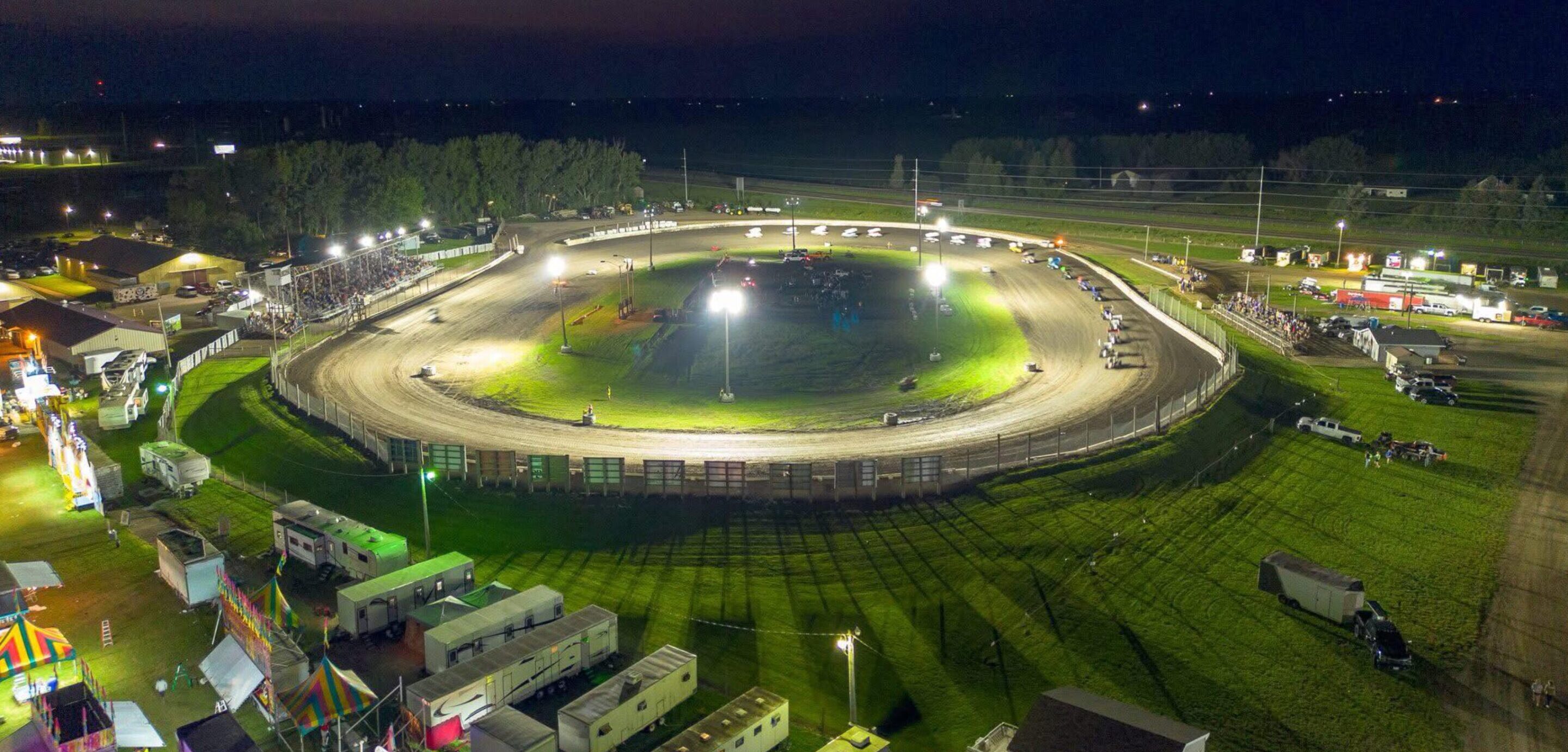
Worthington Speedway’s Racetrack Flood Light Upgrade Case Study
The Backstory:
Worthington Speedway hosts weekly high-speed action racing events. The racetrack lighting system was running on traditional 1500W metal halide fixtures. LED Lighting Supply worked with TAM Enterprises LLC to provide expert support on replacing their customer's existing lighting with LED technology.
The Customer's Challenge:
The track incurred high energy costs due to excess energy consumption, frequent repairs, and performance inefficiencies from the outdated system. The aging lights were unable to meet high-intensity lighting demands for racers
Lighting plan metrics:
- Product(s) Used: MLLG-AG-LED-IMF-600-5-[Optic]-TR-[V]
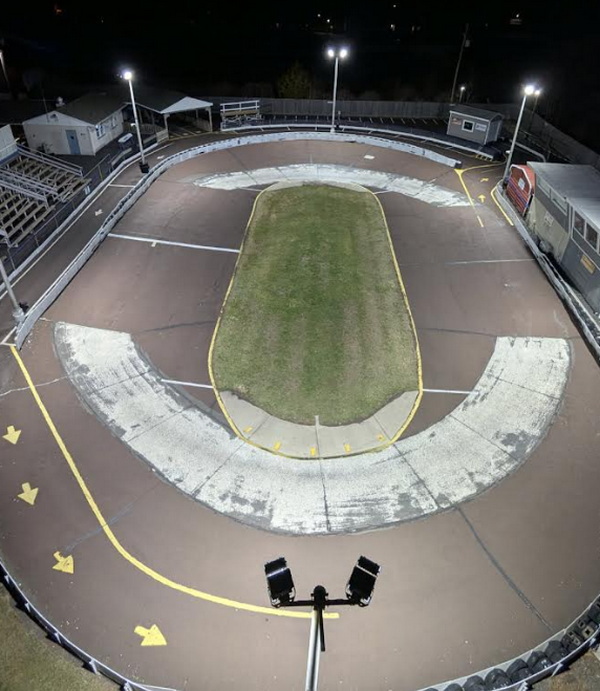
Case Study: Lighting up Oaklane Quarter Midget Racing with LED Lighting Supply 600 Watt LED Sports Lights in Quakertown, PA
|
After: 600 Watt LED Area Sports Flood Light | 84000 Lumens |
After: 600 Watt LED Area Sports Flood Light | 84000 Lumens |
 |
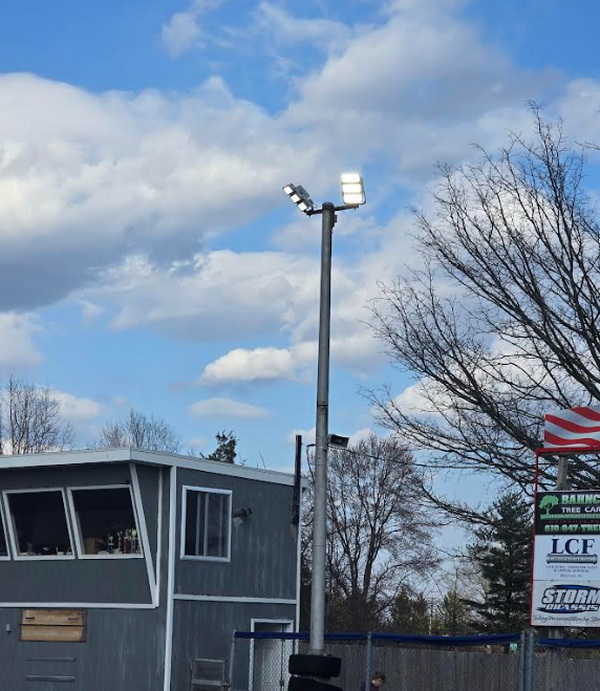 |
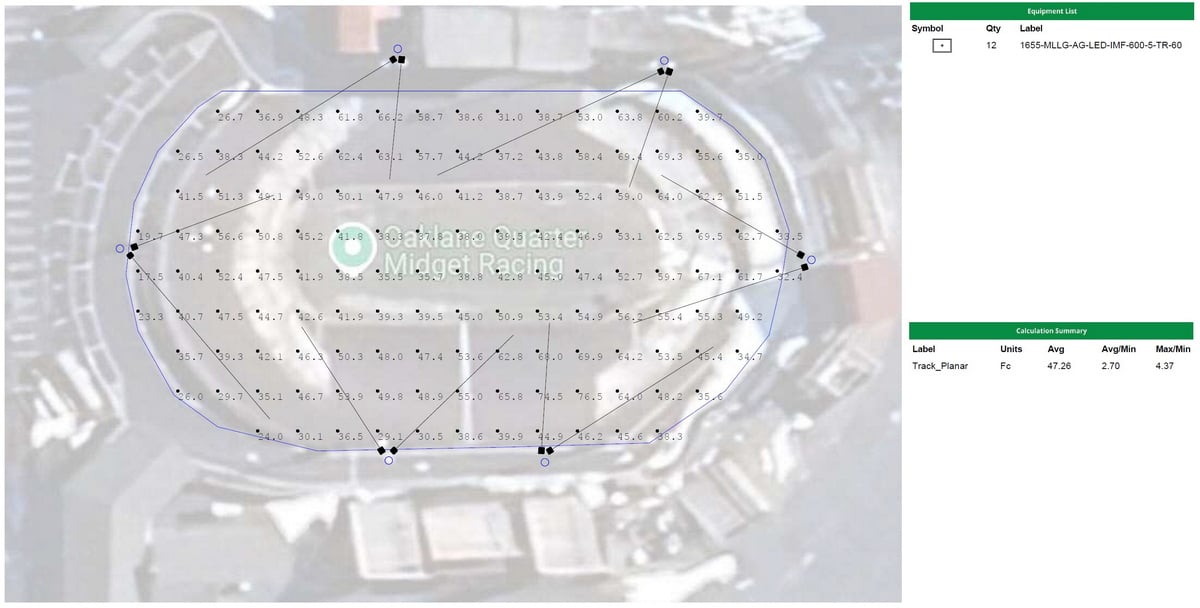
Lighting Plan We Created for the Customer
|
Lighting Plan |
Heat Map |
 |
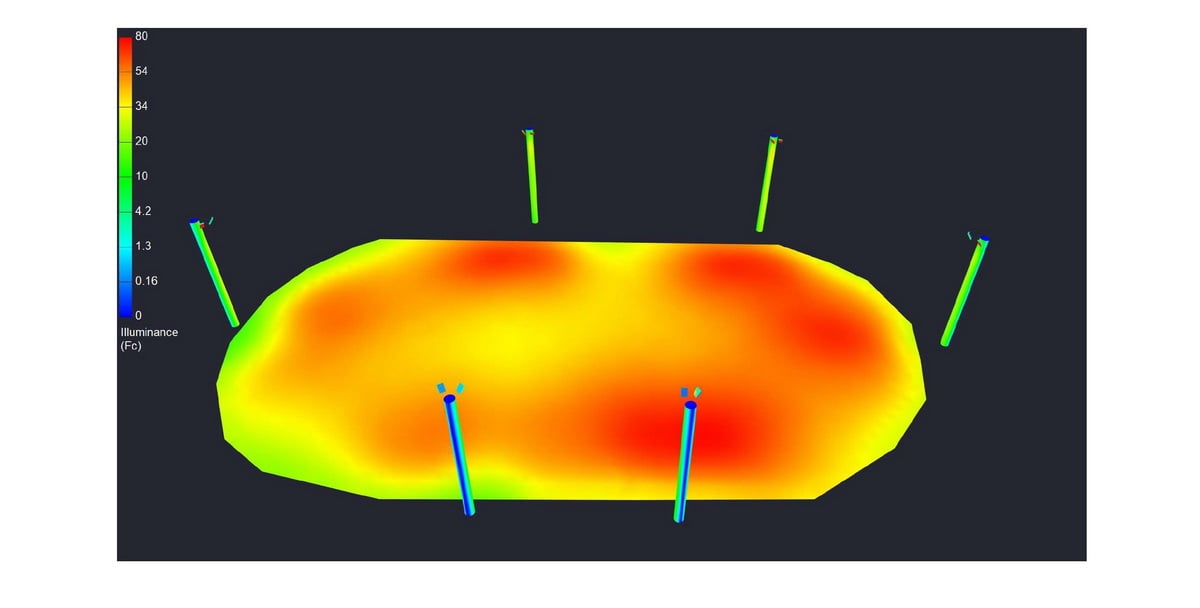 |
Oaklane Quarter Racetrack Lighting Installation Plan Metrics
- Mounting height: 30 ft
- Fixture Used: MLLG-AG-LED-IMF-600-5-[Optic]-TR-[V]: 600 Watt LED Flood Light | 84000 Lumens | 5000K | 100V-277V or 277V-480V
- FC achieved: 47.26 fc average
- Uniformity (Avg/Min): 2.70
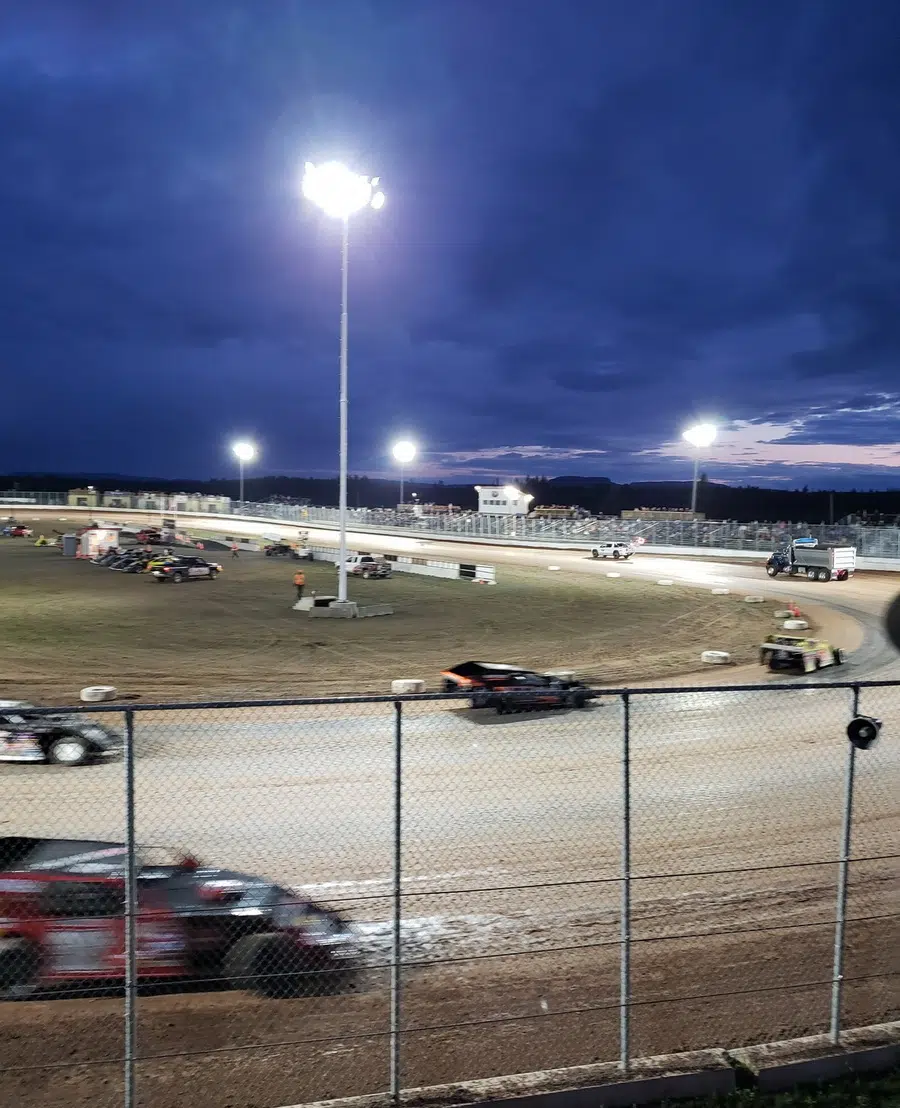
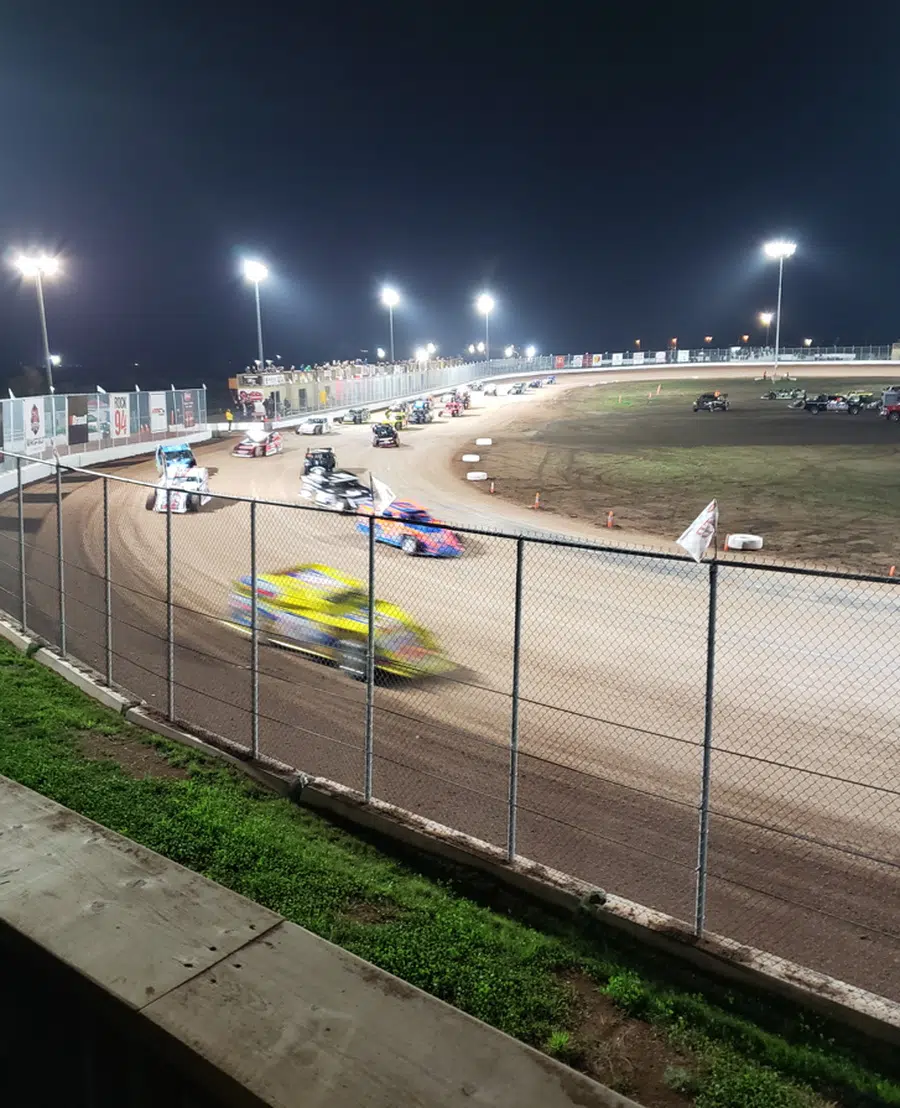
Case Study: Lighting up Thunder City Raceway with LED Lighting Supply 600 Watt LED Sports Lights in Thunder Bay, Ontario, Canada
|
After: 600 Watt LED Area Sports Flood Light | 84000 Lumens |
After: 600 Watt LED Area Sports Flood Light | 84000 Lumens |
 |
 |
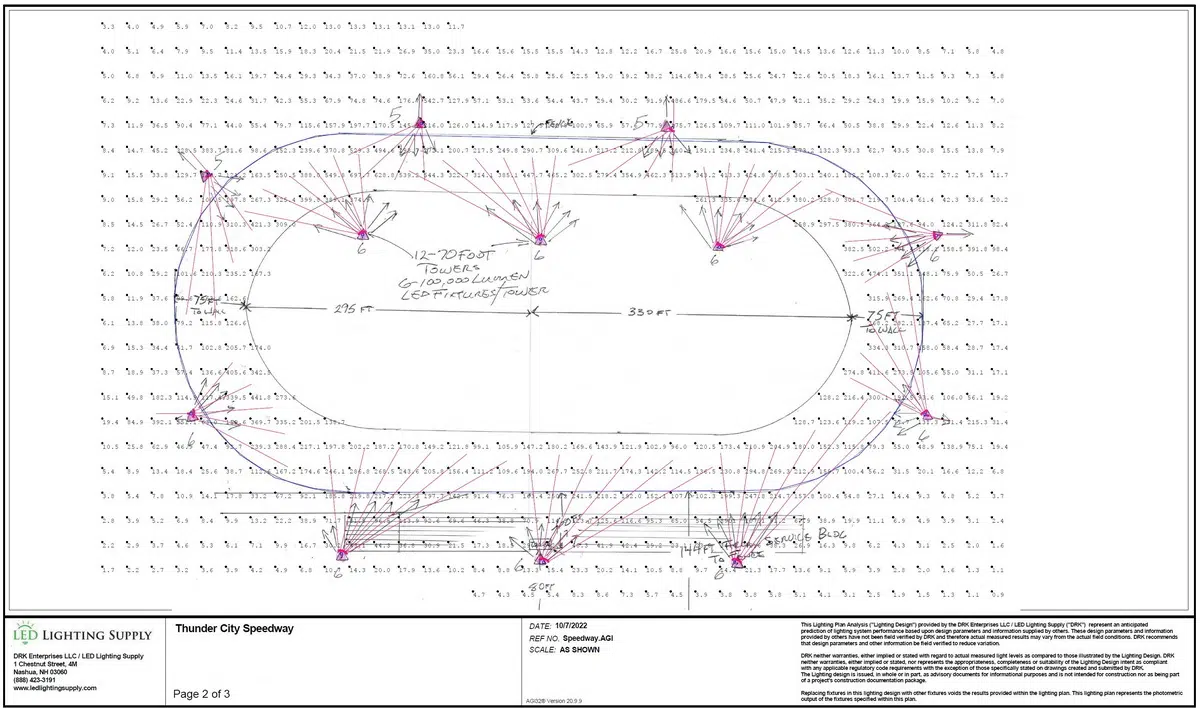
Lighting Plan We Created for the Customer
|
Lighting Plan |
Heat Map |
 |
 |
Racetrack Lighting Installation Plan Metrics
- Mounting height: 70 ft
- Fixture Used: 600 Watt LED Flood Light | 84000 Lumens | 5000K | 100V-277V or 277V-480V
- FC achieved: 10.00 fc average
Race Track Lighting Certifications and Warranty Support
LED race track lights from LED Lighting Supply carry a safety listing such as UL, ETL, or CSA, depending on product. Many models are DLC or DLC Premium listed for utility rebate support where available. Rebate requirements vary by utility, region, and product listing, so confirm eligibility on the selected product specification before ordering.
Most LED race track lights include a 5-year warranty unless otherwise specified, with USA-based warranty support. Before purchase, confirm certifications, DLC status, voltage, controls compatibility, mounting method, environmental ratings, surge protection, and whether the fixture is right for the track layout and surrounding conditions.
Common Race Track Lighting Mistakes
Race track lighting problems usually come from poor fixture placement, incorrect beam angles, low mounting height, uncontrolled glare, or skipping the photometric plan. Motorsports lighting should be reviewed from the driver’s perspective, not just from the pole line.
- Using generic sports lighting assumptions: Race tracks need beam control, driver sightline review, turn visibility, and zone-by-zone planning.
- Guessing fixture count: Guessing can create dark zones, hot spots, glare, and uneven track coverage.
- Under-lighting turns: Turns and corners often need more careful aiming than straightaways because driver direction and sightlines change quickly.
- Mounting fixtures too low: Low mounting heights can increase driver glare and reduce uniformity across the racing surface.
- Choosing fixtures by wattage alone: Lumens, optics, pole height, beam angle, aiming, voltage, and photometric results matter more than wattage.
- Ignoring dust and surface conditions: Dirt, dust, elevation changes, and surface texture can affect visibility and glare.
- Skipping pole review: Existing light poles should be checked for fixture weight, wind load, bracket condition, and mounting suitability.
- Forgetting pit and staging areas: Pit areas, staging lanes, inspection zones, and service areas may need higher task visibility than general spectator areas.
- Ignoring spill light: Poorly aimed fixtures can send light into nearby homes, roads, businesses, parking areas, or neighboring properties.
- Not confirming sanctioning requirements: Some events or organizations may have lighting expectations that should be reviewed before fixture selection.
Request a race track lighting plan, and our Product Specialists can help review track geometry, pole layout, target foot-candle levels, beam angles, voltage, fixture selection, aiming, driver glare, spill light, and product specifications for your race track lighting project.
LED Race Track Lighting FAQs
How Should LED Race Track Lighting Be Planned?
LED race track lighting should be planned around driver visibility, track geometry, pole locations, mounting height, beam angle, glare control, spill light, dust, track surface, electrical infrastructure, and the type of racing hosted. Fixture wattage, lumen output, beam angle, fixture count, and aiming should be confirmed with a photometric plan before ordering.
Why Should Racetrack Lighting Be Planned By Zone?
Racetrack lighting should be planned by zone because straightaways, turns, pit areas, staging areas, spectator zones, parking areas, and support spaces have different visibility needs. Turns and corners often require more careful beam control because driver sightlines change quickly and glare can be more noticeable.
What Should A Race Track Lighting Plan Verify?
A race track lighting plan should verify usable visibility for drivers, track workers, pit crews, and spectators without creating unsafe glare or uneven coverage. It should account for track geometry, pole height and setback, beam angles, aiming, target foot-candles, uniformity, dust, spill light, and electrical infrastructure.
How Should I Choose Between LED Stadium Lights, Sports Field Lights, And Flood Lights?
Most racetrack projects use pole-mounted LED stadium lights, LED sports field lights, or high-output LED flood lights depending on track size, pole height, pole setback, beam control, and required light levels. A photometric plan can help determine whether those fixture types, area lights, or support-area fixtures are the right fit.
Should Race Track Lights Be Selected By Wattage Alone?
Race track lights should not be selected by wattage alone because fixtures with different wattages can perform differently based on pole height, optic package, beam angle, mounting location, aiming, and track geometry. Racing surface, track width, pole spacing, required light levels, and whether the project is a retrofit or new system also affect selection.
What Should Be Reviewed Before Retrofitting Metal Halide Race Track Lights?
Before retrofitting metal halide race track lights, document the current fixture wattage, pole height, pole location, mounting method, voltage, circuiting, and known problem areas. Existing poles, brackets, wiring, voltage, controls, fixture spacing, and aiming may not be suitable for a simple one-for-one replacement.
How Can A Racetrack Reduce Driver Glare And Spill Light?
Driver glare and spill light should be addressed through fixture placement, aiming, beam control, pole height, and pole location. Narrow or controlled beam patterns may be needed to place light on the racing surface without wasting light off-site, while nearby properties may require tighter beam control, shielding, or aiming restrictions.
What Product Details Should Be Confirmed Before Ordering Race Track Lights?
Confirm the selected product specification before ordering because wattage, lumen output, beam angle, mounting hardware, voltage, controls, dimming, surge protection, certifications, IP rating, IK rating, and warranty coverage vary by model. Confirm certifications, DLC status, voltage, controls compatibility, mounting method, environmental ratings, surge protection, and track-layout fit before purchase.