


Emergency Lighting LED Drivers
- Battery-backed power for LED fixtures during outages
- Options for integrated or remote-mounted installation
- Factory-installed emergency fixtures available for simplified compatibility



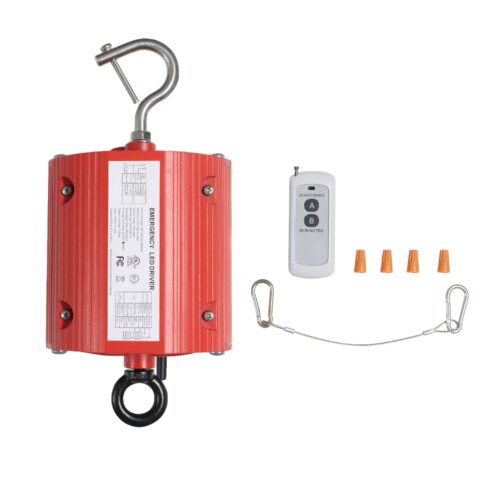
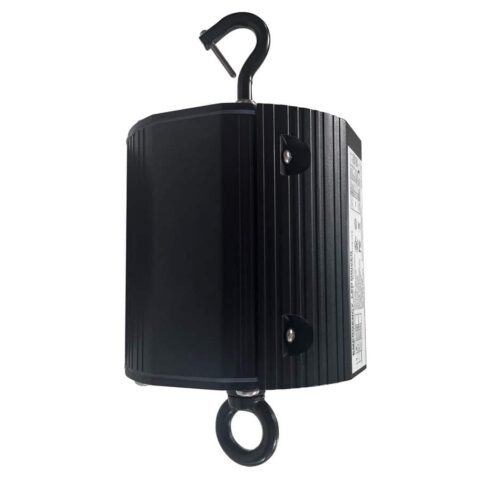
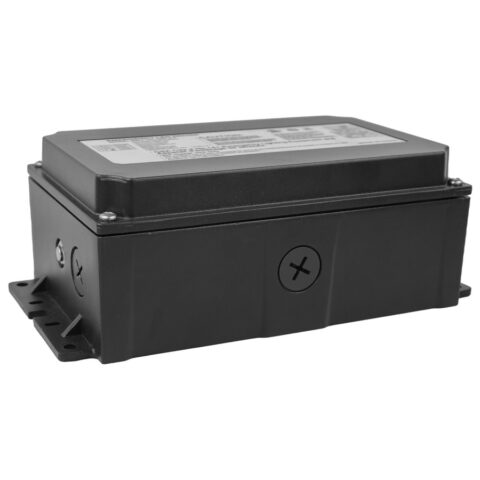
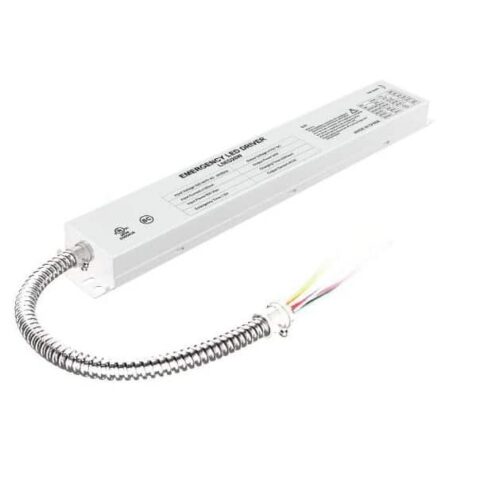
Our Emergency Lighting LED Drivers include integrated and external battery backup units for compatible LED fixtures. Available models support 100-277 VAC input voltage, with specialized 347 VAC options for Canadian installations. Products are designed for single-fixture operation and work with compatible 0-10V or 1-10V dimmable drivers.
These emergency drivers are used in commercial buildings, warehouses, offices, retail spaces, exit routes, stairwells, and work zones.
-
 Starting At $203.46
-
Starting At $208.00
-
Starting At $117.27


What Is an LED Emergency Driver?
An LED emergency driver is a battery-backed power system designed to operate compatible LED lighting when normal AC power is lost. Depending on the product and fixture, it may be installed inside the luminaire, within a fixture channel or wireway, or in an approved remote location. During normal operation, the unit charges its battery and monitors normal power. When normal power is interrupted, it supplies emergency power to the connected LED load according to the driver's listed operating conditions.
Emergency drivers can be an important part of an emergency-lighting system, but the driver alone does not establish code compliance. The complete installation must use compatible equipment and provide the required emergency illumination, duration, placement, wiring, and controls for the specific building and jurisdiction.
When Does It Make Sense to Use an LED Emergency Driver?
Emergency drivers are commonly used in commercial buildings, warehouses, offices, retail facilities, schools, healthcare buildings, and other occupancies where designated luminaires need to remain illuminated during loss of normal power.
They may be used as part of the emergency-lighting system for exit access routes, corridors, stairwells, and other required egress areas. Whether an emergency driver is required, where it must be installed, and how much illumination it must provide depend on the applicable building, fire, electrical, and life-safety requirements for the project.
Is an LED Emergency Driver and an LED Emergency Backup the Same Thing?
The terms are often used interchangeably in commercial lighting, but product terminology can vary by manufacturer. An emergency LED driver generally refers to a battery, charger, switching circuitry, and power-conversion system that operates a compatible LED load when normal power is lost. Always verify the exact product function and listing rather than relying on the product name alone.
What Types of LED Fixtures Can You Use an Emergency Driver With?
Emergency-driver compatibility depends on the specific luminaire, LED load, normal driver, emergency driver, output voltage and current requirements, wiring configuration, available installation space, temperature limits, and product listing. A fixture does not become compatible simply because its normal driver uses 0-10V or 1-10V dimming.
Some emergency LED drivers are designed to operate a broad range of LED loads, while others have specific output-voltage, wattage, current, driver, or fixture requirements. The emergency driver must be able to operate the connected LED array within its listed output range, and the complete wiring arrangement must follow the manufacturer's instructions.
0-10V dimming may affect how a particular emergency system is wired or controlled, but it is a separate consideration from basic emergency-driver compatibility. Before ordering, verify the exact emergency driver against the luminaire and LED load using the emergency-driver manufacturer's compatibility information, installation instructions, and fixture documentation.
Can I Add Emergency Drivers to Only a Portion of the Units?
Yes, many projects use emergency capability on only selected luminaires. The number and placement of emergency-equipped fixtures should be determined from the required emergency egress illumination and the building layout rather than by a fixed percentage of the normal fixtures.
Our lighting plans can help model expected illumination from selected emergency fixtures where sufficient emergency-mode photometric information is available. A lighting plan can assist with fixture placement and expected light levels, but it does not replace project-specific life-safety or code review. Confirm emergency-lighting requirements with the appropriate qualified professional and authority having jurisdiction.
How Long Will an Emergency Battery Backup LED Driver Last?
Battery service life varies by product, battery chemistry, ambient temperature, charge conditions, testing frequency, discharge depth, and maintenance. Do not select an emergency driver based on an assumed number of charge-discharge cycles unless that value is published for the exact product.
Emergency batteries should be inspected, tested, and replaced according to the manufacturer's instructions and applicable maintenance requirements. Battery capacity can decline with age even when power outages are infrequent.
Under What Conditions Will the Emergency Driver Start Delivering Power?
An emergency driver is designed to enter emergency operation when its control or sensing circuit detects loss of the required normal AC supply. The exact switching behavior and transfer time are product-specific and should be verified from the manufacturer's documentation.
When normal power returns, the system typically transfers the LED load back to normal operation and begins recharging the battery. Wiring must follow the emergency-driver instructions, including any required unswitched normal-power connection used for sensing or charging.
Will an Emergency Backup Driver Work with 277-480V Fixtures?
Emergency-driver input-voltage ranges vary by model. Many commercial emergency drivers support common 120V through 277V systems, while other products are available for 347V or higher-voltage applications. Do not assume that the emergency driver must have the same input rating as the normal LED driver without reviewing the actual wiring design and product specifications.
For Canadian installations, selected products may support 347 VAC systems. Fixtures operating from 347V, 480V, or other higher-voltage systems may require a specifically rated emergency solution or different emergency-power arrangement. Verify input voltage, LED output range, wiring, and fixture compatibility on the exact product specification before ordering.
Do You Have an Integrated Version or Does It Mount Externally?
Emergency drivers are available in different physical configurations. Integrated units may install inside a compatible fixture housing, channel, or wireway when sufficient space and suitable operating conditions are available. External or remote-mounted models may be used when the fixture does not have suitable internal space or when the product is specifically approved for remote installation.
Mounting location must follow the emergency-driver listing and manufacturer instructions. Space, temperature, lead length, wiring method, access for testing, and battery service requirements can all affect whether an internal or external installation is appropriate.
How Long Does an Emergency Backup Last Without Power?
Many listed emergency-lighting products are designed to provide at least 90 minutes of emergency operation, but runtime should be verified for the exact emergency driver and installation. A 90-minute battery rating does not by itself establish that the building's emergency-lighting requirements are satisfied.
The emergency system must also provide the required illumination throughout the applicable emergency period. Emergency-mode light output is typically lower than the fixture's normal output, so the emergency wattage and resulting lumens should be considered when determining fixture quantity and placement.
Can I Wire Multiple Fixtures to One Emergency Backup Driver?
Whether one emergency driver can serve more than one LED load depends entirely on the product's listing, output capability, wiring instructions, and intended application. Many emergency LED drivers are intended to operate one luminaire or one LED load, but that should not be treated as a universal rule for every emergency-lighting product.
Do not connect multiple fixtures or LED loads to an emergency driver unless the manufacturer specifically permits that configuration. Follow the listed wiring diagram and verify that the connected load remains within the emergency driver's permitted voltage, current, and wattage range.
How Do You Install an LED Emergency Driver?
Many fixtures are available with factory-installed emergency drivers as a standard or optional configuration, including LED high bay lights with battery backup and LED panel lights with emergency battery backup. Factory-installed configurations can simplify compatibility because the luminaire manufacturer has selected and integrated the emergency components for that fixture.
Aftermarket emergency-driver installation requires additional compatibility review. Verify the luminaire, LED load, normal driver, emergency-driver output range, wiring method, available space, temperature limits, and listing requirements before installation. The emergency equipment should be installed by a qualified electrician in accordance with the manufacturer's instructions, applicable codes, and local requirements.
Field modification of a listed luminaire can affect the conditions under which the luminaire was evaluated. When adding an emergency driver to an existing fixture, confirm that the proposed combination and installation method are permitted by the fixture and emergency-driver manufacturers and applicable listing requirements.
LED Lighting Supply can help review available emergency-driver options and product specifications, but final electrical, emergency-lighting, life-safety, and code requirements should be verified for the project by the appropriate qualified professional and authority having jurisdiction.

Emergency Driver Certifications and Listings
Emergency LED drivers should carry the safety and emergency-lighting certifications or listings required for their intended use. Depending on the model, this may include evaluation to applicable UL emergency-lighting requirements such as UL 924. Product markings and listings are model-specific, so review the exact emergency driver rather than assuming every battery-backup product has the same approvals.
The listing of an emergency driver does not mean it can be installed in every LED fixture. UL-listed emergency drivers may still require a suitability assessment using the manufacturer's instructions to confirm the LED load, output voltage, wiring, installation conditions, and expected emergency light output for the luminaire.
DLC qualification is primarily associated with energy-efficiency requirements for qualifying lighting products and should not be presented as an emergency-life-safety certification. If rebate eligibility matters, verify whether the specific luminaire appears on the applicable DLC Qualified Products List and whether the local utility program accepts that configuration.
Emergency Lighting Design Considerations
Emergency-driver wattage is not the same as the fixture's normal operating wattage. For example, a fixture that normally operates at a much higher wattage may operate at only the emergency driver's rated output during a power failure. This means emergency-mode lumen output can be substantially lower than normal-mode output.
When emergency lighting is required, review the emergency driver's rated output power, compatible LED voltage range, expected emergency lumens, mounting height, fixture optics, spacing, egress geometry, and required illumination levels. These factors determine whether selected emergency-equipped fixtures can contribute adequately to the emergency-lighting design.
For schools, healthcare facilities, public buildings, high-occupancy spaces, industrial facilities, or other life-safety-sensitive applications, emergency-lighting design and equipment selection should be reviewed by qualified professionals and the applicable authority having jurisdiction.
Warranty and Product Support
Warranty coverage varies by emergency-driver manufacturer and model. Many products include multi-year warranties, but battery coverage, operating-temperature limits, testing requirements, installation conditions, and other exclusions can differ. Review the warranty for the exact emergency driver before ordering.
LED Lighting Supply can help review emergency-driver input voltage, emergency wattage, LED output range, physical size, mounting options, fixture compatibility information, and available factory-installed emergency fixtures. Final suitability should be confirmed from the exact product documentation and installation requirements.
