LED Football Field Lights
- Lighting plans help evaluate fixture count, aiming, and coverage
- Options for practice fields, school games, and recreation leagues
- USA-based support for fixture selection and project planning
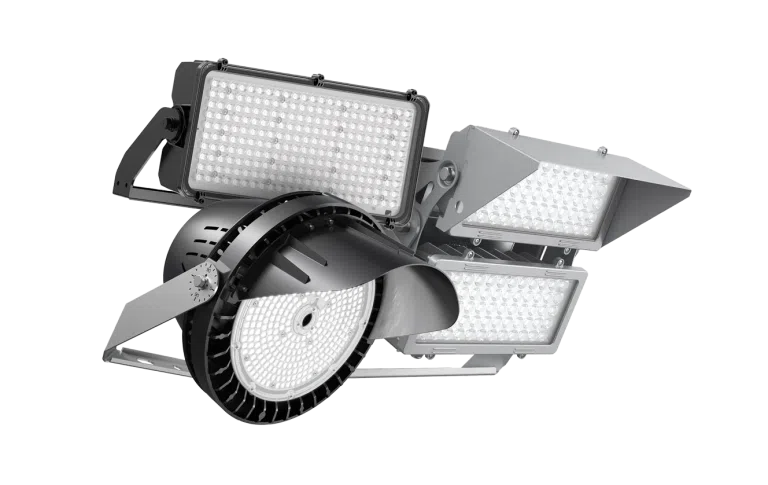



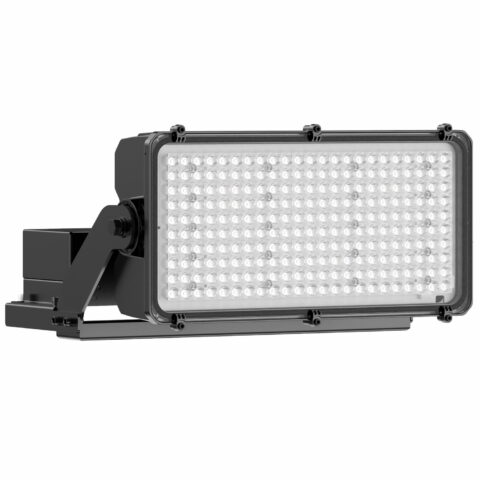
Our LED Football Field Lights for Schools, Parks & Flag Football include high-output LED sports lights in 400W to 1200W models for pole-mounted field lighting. Available fixtures include 4000K and 5000K options, 120-277V and 277-480V configurations, and controls such as timers, zones, dimming, remote control, scheduling, game mode, and practice mode.
These fixtures are used for school football fields, youth tackle and flag football fields, park district fields, recreation league facilities, municipal sports complexes, multipurpose athletic fields, practices, games, track, soccer, lacrosse, marching band, and community events.






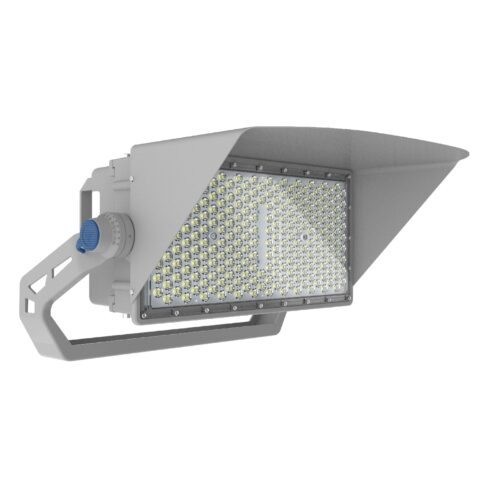
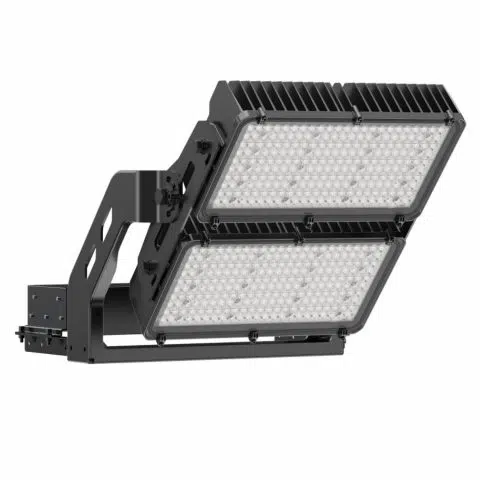
LED Football Field Lighting for Schools, Parks, and Recreation Fields
LED football field lighting should be planned around the type of field, level of play, pole layout, mounting height, target foot-candle levels, fixture aiming, glare control, spill light, and existing electrical infrastructure. Most football lighting projects are not NFL or professional stadium projects. They are school fields, youth tackle and flag football fields, park district fields, rec league facilities, municipal sports complexes, and multipurpose athletic fields used for games, practices, band, track, soccer, lacrosse, or community events.
The right system depends on how the field is used. A practice field may only need basic safe visibility. A middle school or small high school field may need stronger game lighting. A larger high school stadium may need better uniformity, spectator visibility, and spill-light control. A flag football or multipurpose field may use a smaller playing area or different field markings, so the lighting design should match the actual dimensions and activities without over-lighting the site.
Most football field projects use LED stadium lights or LED sports field lights mounted on existing or new poles. Fixture wattage, beam angle, fixture count, pole height, and aiming should be confirmed through a lighting plan rather than chosen from wattage alone.
Selection and Installation Note: Product specifications, fixture wattage, lumen output, beam angle, mounting hardware, voltage, controls, surge protection, certifications, and warranty coverage vary by model. Confirm the selected product specification before ordering. For football fields, pole-mounted lighting, school facilities, public parks, electrical upgrades, structural pole review, code-sensitive applications, or safety-critical projects, verify requirements with your local inspector, structural professional, or licensed electrical professional.
St. Francis Borgia High School Sports Field Flood Light Upgrade Case Study
The Backstory of Our Relationship with St. Francis Borgia High School
LED Lighting Supply was approached by Travis Stockhorst, Maintenance Director at St. Francis Borgia High School in Washington, Missouri.
Referred to us by one of our sports field lighting customers, Travis was seeking professional support for the school’s football and soccer field lighting upgrade. At the time of his inquiry, the field operated on aging 1500-watt metal halide lights, creating inadequate light levels.
The Challenge of Lighting St. Francis Borgia High School’s Football and Soccer Field
The legacy lighting in place produced glare and shadows on the field, impacting player performance while increasing safety risks. Due to tight budgets, the field required an updated lighting system that would adhere to the four existing 60-foot poles.
The project required confirmation of local football and soccer field lighting requirements before our team could create a photometric lighting plan and a custom light fixture recommendation.
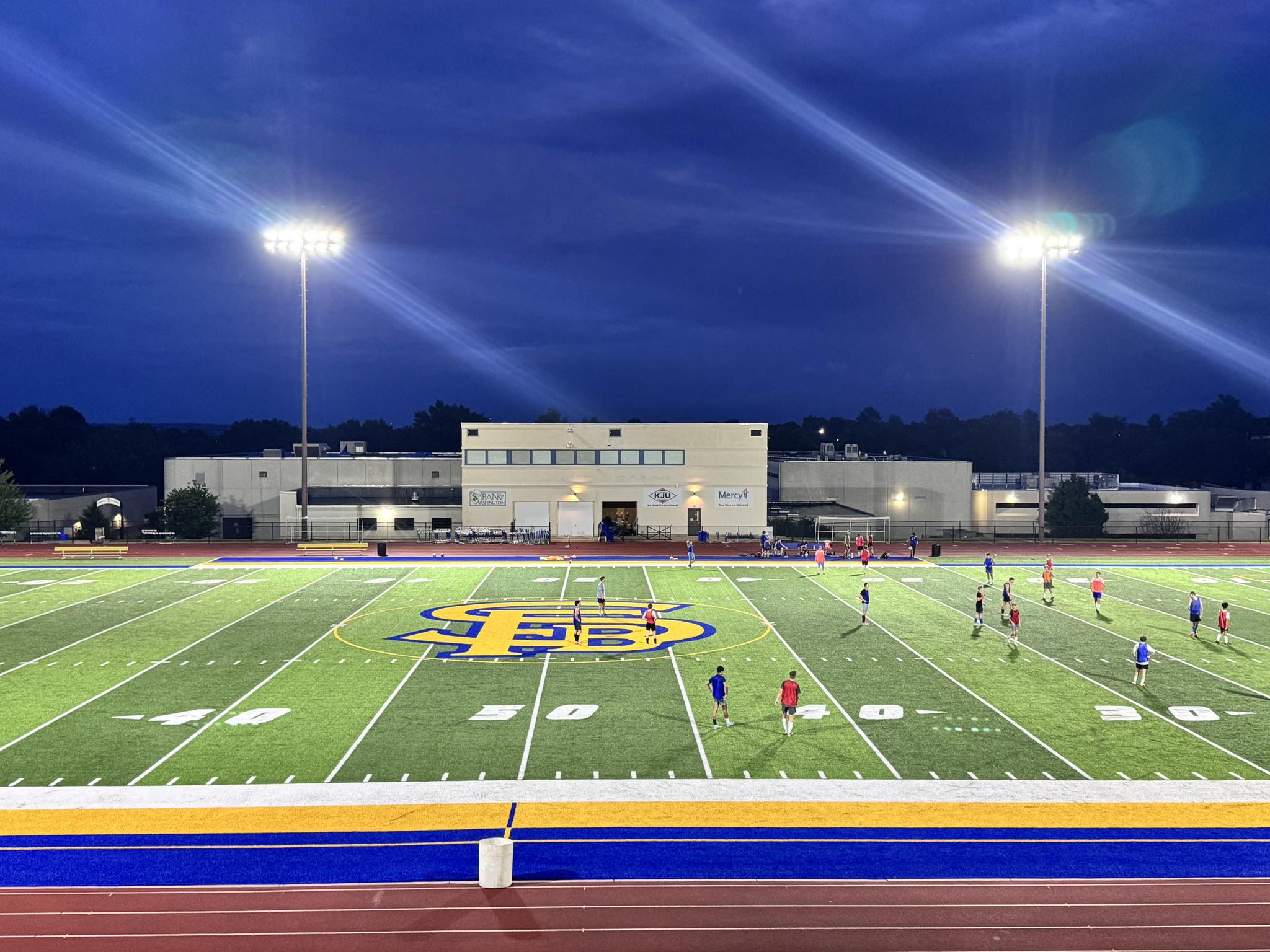
St. Francis Borgia High School Football and Soccer Field With Our LED Lighting Solution Installed
Featured Lighting Plan for St. Francis Borgia High School
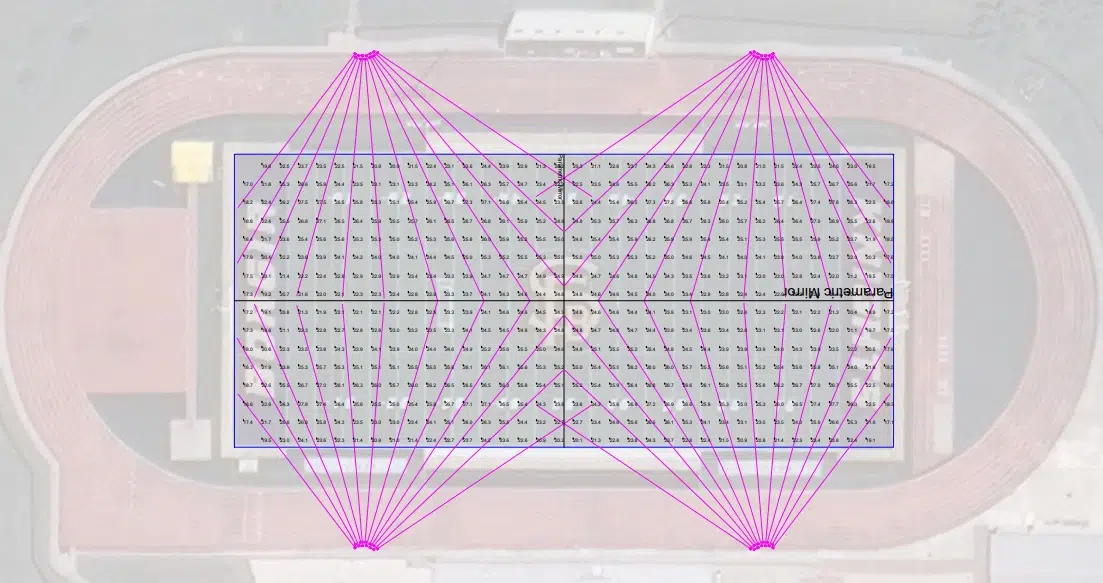
Lighting Plan Metrics
- Mounting Height (Feet): 60 ft
- Average Foot Candles (fc) Achieved: 34 fc
- Uniformity (Max/Min): 1.61
- Product(s) Used: MLLG-LED-HPSL-600-57-60-[V]
Football Field Foot-Candle Requirements
Football field lighting targets vary by level of play and field use. Practice fields and recreational fields typically require lower light levels than school game fields. Larger high school fields, collegiate fields, and televised fields may require higher levels, stronger uniformity, better glare control, and more detailed photometric planning.
For most school and recreation projects, the goal is not to overbuild the field. The goal is to provide safe, even, usable light for players, coaches, spectators, and facility staff while controlling glare, spill light, and project cost.
Use the foot-candle guide below to compare recommended football field lighting levels by application. These recommendations are a starting point only. Final fixture selection should be confirmed with a photometric plan that accounts for field dimensions, pole layout, mounting height, beam angles, fixture aiming, uniformity, glare, spill light, and existing electrical infrastructure.
Flag Football Field Lighting
Flag football is often played on school, park, recreation, and multipurpose fields that are smaller than a regulation tackle football field. Youth leagues may use shortened fields, narrower widths, or several side-by-side fields within one larger athletic area. The lighting plan should use the actual field dimensions rather than assuming a full-size football layout.
Recommended light levels depend on the age group and level of play. Youth and recreational flag football commonly starts around 15 to 25 foot-candles. School and community league fields often target 20 to 30 foot-candles, while organized league or local tournament play may use approximately 30 to 50 foot-candles. Practice-only fields may be planned around 10 to 20 foot-candles. Final targets should follow the league, school, municipality, or project requirements.
| Flag Football Consideration | What to Review |
|---|---|
| Field dimensions | Confirm the actual length, width, end zones, sidelines, and whether one full field or several smaller fields will be used. |
| Passing visibility | Players need clear visibility of the ball through short and deep passing routes without excessive glare from the direction of play. |
| Pole height | Existing football poles may work well. Smaller standalone flag football fields often use poles around 30 to 60 feet, depending on setbacks, field size, optics, and nearby properties. |
| Shared-field use | Confirm whether the site also supports tackle football, soccer, lacrosse, practices, or several flag football fields at once. |
| Controls | Separate zones or dimming can support youth play, practices, partial-field use, and full-field league games without running every fixture at full output. |
When flag football is played on an existing football field, the main lighting system may already provide suitable coverage. A photometric review should still confirm the smaller field boundaries, end zones, sidelines, and any side-by-side field arrangement before relying on the existing layout.
What a Football Field Lighting Plan Should Verify
A football field lighting plan helps turn the target light levels into a practical fixture layout. This is especially important when reusing existing poles, upgrading from metal halide, trying to reduce spill light, or lighting a field used by schools and rec leagues with limited budgets.
| Planning Detail | Why It Matters for Schools and Rec Fields |
|---|---|
| Field use | Confirm whether the field is used for practice, youth tackle football, flag football, middle school, high school, recreation leagues, or multiple sports. |
| Target foot-candles | Different levels of play require different light levels. A practice field should not be designed the same way as a large high school game field. |
| Existing pole layout | Existing pole locations may limit aiming, uniformity, and spill control. A plan helps determine whether existing poles can be reused. |
| Pole height | Mounting height affects coverage, fixture count, glare, and beam angle selection. Lower poles may require different optics than taller poles. |
| Fixture aiming | Correct aiming helps reduce hot spots, dark corners, player glare, and light spill beyond the field. |
| Uniformity | A field should not only be bright enough. It should be evenly lit enough for safe play across the field. |
| Spill light | Schools and parks are often near homes, roads, parking lots, or other fields. Spill light should be reviewed before ordering fixtures. |
| Voltage and electrical service | Confirm supply voltage, circuit capacity, conductor sizing, long pole runs, controls, and surge protection before selecting fixtures. |
| Pole structure | Existing poles should be reviewed for fixture weight, wind load, bracket condition, mounting hardware, and overall suitability. |
| Controls and scheduling | Confirm whether the field needs timers, zones, dimming, remote controls, practice mode, game mode, or separate control for support areas. |
Existing Poles vs New Football Field Lighting Poles
Many school and rec football field projects are retrofits. Reusing existing poles can help control project cost, but only if the poles are structurally suitable, tall enough, positioned well, and compatible with the selected LED fixtures. Fixture weight, wind load, pole condition, brackets, wiring, and aiming angles should be reviewed before assuming existing poles can be reused.
New poles may be needed when the current layout cannot achieve proper coverage, when poles are too low, when pole locations create glare or spill-light problems, when poles are damaged, or when a field is being upgraded to a higher level of play.
| Reuse Existing Poles | Consider New Poles |
|---|---|
| Often best when the poles are structurally sound, correctly positioned, tall enough, and compatible with the selected LED fixtures. | Often best when the field is being upgraded, existing poles are too short, pole locations create glare, or the current layout cannot meet target light levels. |
| Can help reduce project cost and simplify installation when electrical service and mounting conditions are suitable. | Can improve uniformity, spill-light control, aiming, field coverage, and long-term flexibility. |
| Common for school, park, and rec league lighting upgrades. | More likely for major renovations, new fields, large school stadiums, or facilities with poor existing pole placement. |
Choose Football Field Lights by Field Layout and Pole Height
After confirming the target foot-candle levels, use the fixture selector below to narrow options based on field characteristics such as pole height, desired light level, and field layout. This helps connect the football field lighting requirements to practical fixture selection.
LED Lighting Supply Football (American) Selector
The fixture selector is a starting point for choosing football field lights based on field characteristics. Final fixture quantities, wattages, optics, aiming, and pole suitability should still be confirmed with a photometric plan.
Choosing LED Football Field Lights
Most school and recreation football field projects use high-output LED sports lights in the 400W to 1200W range, depending on field size, pole height, target light levels, optic package, and whether the project is a practice field, rec field, school game field, or larger stadium-style field. Many projects use 400W or 600W fixtures, but wattage should not be selected without reviewing pole height, field dimensions, optics, and photometric results.
| Selection Factor | What to Confirm |
|---|---|
| Fixture wattage | Common football field fixture options may include 400W, 600W, 800W, 1000W, or 1200W models depending on field size, pole height, and target light levels. |
| Beam angle and optics | Optics should match pole height, pole location, field width, end zones, sidelines, and spill-light goals. |
| Color temperature | Many football fields use 5000K for a crisp sports-lighting appearance. Some schools or parks may prefer 4000K depending on local preference and surrounding conditions. |
| Voltage | Confirm whether the site requires 120-277V, 277-480V, or another electrical configuration before ordering fixtures. |
| Surge protection | Outdoor pole-mounted sports lighting should be reviewed for surge protection, especially on open fields or lightning-prone sites. |
| Controls | Confirm timers, switches, zones, dimming, remote control, scheduling, game mode, and practice mode before selecting controls. |
| Glare and spill control | Review fixture aiming, shielding, optics, pole placement, and mounting height to reduce glare for players, spectators, drivers, and neighbors. |
What You Receive with a Football Field Lighting Plan
A football lighting plan helps translate project goals into fixture quantities, pole locations, aiming instructions, and expected light levels. It is especially useful when replacing metal halide, reusing existing poles, lighting a multipurpose field, reducing spill light, or working within a school or municipal budget.
| Lighting Plan Detail | How It Helps |
|---|---|
| Fixture count and wattage | Shows the recommended number of fixtures and fixture type for the field layout. |
| Expected field light levels | Shows expected foot-candle levels across the playing surface instead of relying on fixture count estimates. |
| Aiming and beam spread | Helps reduce hot spots, dark areas, glare, and unwanted light spill. |
| Mounting height assumptions | Shows how fixture performance depends on pole height and fixture position. |
| Uniformity review | Helps confirm that the field is not only bright enough, but evenly lit enough for the intended use. |
| Fixture specification support | Provides product details that can help with planning, purchasing, installation coordination, and review by project stakeholders. |
Request a football field lighting plan to confirm fixture count, field coverage, pole layout, target light levels, glare control, spill light, voltage, and product specifications before ordering.
Football Field Lighting for Multipurpose School and Rec Facilities
Many football fields are not used for football only. Schools and parks may also use the field for flag football, soccer, lacrosse, track, marching band, physical education, practices, camps, or community events. If the field serves multiple activities, the lighting plan should account for the full use case instead of focusing only on football games.
Multipurpose fields may need separate lighting modes, different control zones, broader sideline coverage, or stronger uniformity across shared play areas. If the field includes a track, bleachers, walkways, concessions, or parking areas, those support areas may require separate lighting from the main sports lighting system.
Lighting for Other Sports Fields
Football field lighting often overlaps with other school and park sports lighting needs. If your facility includes multiple fields, it may be useful to review lighting targets and fixture layouts across the entire site.
- Baseball field lighting focuses on infield and outfield light levels, pole placement, glare control, and ball tracking.
- Softball field lighting supports smaller field layouts with different infield, outfield, and recreational-use requirements.
- Soccer field lighting focuses on uniform coverage across a wide rectangular playing surface.
For a broader overview of outdoor athletic lighting systems, visit our LED sports field lighting page.
Football Field Lighting Certifications and Warranty Support
LED football field lights from LED Lighting Supply carry a UL, ETL, or CSA safety listing, depending on the product. Many models are DLC or DLC Premium listed for utility rebate support where available. Rebate requirements vary by utility, region, and product listing, so confirm eligibility on the selected product specification before ordering.
Most LED football field lights include a 5-year warranty unless otherwise specified, with USA-based warranty support. Before purchase, confirm the selected fixture’s certifications, DLC status, voltage, controls compatibility, mounting method, pole condition, environmental exposure, and whether the fixture is right for the field layout and surrounding conditions.
Common Football Field Lighting Mistakes
Football field lighting problems usually come from poor planning rather than poor fixture output. A field can have powerful fixtures and still perform badly if pole placement, optics, aiming, uniformity, or the electrical system are wrong.
- Designing the field like a pro stadium: Most schools and rec leagues need practical, safe, code-conscious lighting, not an overbuilt professional broadcast system.
- Reusing poles without structural review: Existing poles should be checked for fixture weight, wind load, bracket condition, and mounting suitability.
- Choosing fixtures by wattage alone: Lumens, optics, pole height, field size, voltage, aiming, and photometric results matter more than wattage.
- Creating glare for players or spectators: Fixture aiming and pole location should be reviewed from a player, coach, spectator, and driver sightlines.
- Ignoring spill light: Poorly aimed fixtures can send light into nearby homes, roads, parking areas, or neighboring fields.
- Under-lighting sidelines and end zones: Main field lighting should be reviewed for sideline, end-zone, and bench-area visibility.
- Forgetting voltage drop: Long runs to field poles should be reviewed for conductor sizing and voltage drop.
- Skipping surge protection: Pole-mounted outdoor fixtures can be exposed to lightning and electrical events.
- Mixing color temperatures: Inconsistent color temperature across poles can make the field look uneven.
- Skipping a photometric plan: Guessing fixture count or aiming can create dark spots, hot spots, glare, spill light, and expensive rework.
Request a football field lighting plan, and our Product Specialists can help review field dimensions, pole layout, target foot-candle levels, voltage, fixture selection, aiming, glare control, spill light, and product specifications for your football field lighting project.
This Content on Football field lighting guidance, sports lighting design, foot-candle levels, uniformity, fixture selection, optics and aiming, glare and spill-light control, pole layout and mounting height, and photometric planning Was Professionally Reviewed By:

Jamie Popp, Professional Electrical Engineer (PE)
Multi-State Licensed Professional Engineer
Master of Science in Engineering
Master of Science in Project Management
Jamie has spent over 15 years working directly with industrial energy systems and facility operations. In his engineering design work, he focuses on comprehensive lighting designs, complex power distribution engineering, technical hazardous area classifications, and design-level construction support.
He applies these specialized design skills across demanding environments, including petrochemical, nuclear, mining, pulp and paper, and manufacturing facilities.
This content was reviewed for technical accuracy, engineering relevance, real-world application, and clarity for the stated lighting topic.
LED Football Field Lights FAQs
How Should I Choose Football Field Lights?
Choose football field lights based on field size, pole height, target light levels, optics, field layout, and photometric results rather than wattage alone. Most school and recreation projects use high-output LED sports lights in the 400W to 1200W range, depending on those project factors.
Why Is A Photometric Plan Important For Football Field Lighting?
A photometric plan confirms fixture quantities, pole locations, aiming instructions, and expected light levels for the field. It also helps review uniformity, glare, spill light, mounting-height assumptions, voltage, and product specifications before ordering.
Can Existing Football Field Poles Be Reused For LED Lighting?
Existing poles can often be reused when they are structurally sound, correctly positioned, tall enough, and compatible with the selected LED fixtures. Fixture weight, wind load, pole condition, brackets, wiring, and aiming angles should be reviewed before assuming the poles can be reused.
When Might New Football Field Lighting Poles Be Needed?
New poles may be needed when the current layout cannot achieve proper coverage, poles are too low, pole locations create glare or spill-light problems, poles are damaged, or the field is being upgraded to a higher level of play. New poles can improve uniformity, spill-light control, aiming, field coverage, and long-term flexibility.
What Light Levels Are Used For Flag Football Fields?
Youth and recreational flag football commonly starts around 15 to 25 foot-candles, while school and community league fields often target 20 to 30 foot-candles. Organized league or local tournament play may use approximately 30 to 50 foot-candles, and practice-only fields may be planned around 10 to 20 foot-candles.
What Should Be Reviewed For A Multipurpose Football Field?
A multipurpose football field lighting plan should account for all planned activities, such as flag football, soccer, lacrosse, track, marching band, physical education, practices, camps, or community events. The field may need separate lighting modes, control zones, broader sideline coverage, stronger uniformity across shared areas, or separate lighting for support areas.
What Electrical Details Should Be Confirmed Before Ordering Football Field Lights?
Confirm supply voltage, circuit capacity, conductor sizing, long pole runs, controls, and surge protection before selecting fixtures. The selected product specification should also be confirmed because voltage, controls, surge protection, mounting hardware, and other specifications vary by model.
What Certifications And Warranty Coverage Are Available For Football Field Lights?
LED football field lights from LED Lighting Supply carry a safety listing such as UL, ETL, or CSA, depending on product. Many models are DLC or DLC Premium listed for utility rebate support where available, and most LED football field lights include a 5-year warranty unless otherwise specified.