High Bay Lighting Layout & Design
Get Your Custom Lighting Plan With Product Recommendations
 Includes up to 8% off the price of our recommended lighting products
What to expect when Requesting a lighting plan?

 A Lighting Expert Reviews Your Request

 We Follow Up to Gather Project Details
 Custom Lighting Plan With Product Recommendations is Created
 Review and Approve Your Lighting Design
 Purchase the Recommended Products
Dedicated Sales Support

Every lighting plan comes with a dedicated product specialist, providing personalized service and expert advice for your project needs.
How long does it take to get a plan?

1-2 for indoor and 2-3 days for outdoor projects
Our Customers


 CBRE needed high quality lighting for their customer, with stock available for ongoing projects.
 Customer had an urgent need for high temperature lights. We had them in stock & shipped out next day.
 Poor lighting caused parking lot safety issues for spectators. Our lighting plan & new lights resulted in an improved experience.
 Customer needed to source large quantities of specialty fixtures for use in their manufactured products.
 Tracy Electric was seeking a reliable source for ongoing lighting projects.
 Distributors partner with us to provide customers a high quality product at a reasonable price.
 Repeat lighting supplier for an electrical contractor working in manufacturing facilities.
 Permanent tent lighting for large acrobatics facility. Our lighting plan & recommendations resulted in ideal performer & spectator safety.
A high bay lighting plan is essential for achieving the right light levels, fixture placement, and energy efficiency in large commercial or industrial spaces with high ceilings. A professional plan eliminates guesswork by providing precise fixture counts, spacing, and layout to ensure uniform illumination and minimize shadows or dark spots. This helps you select the best LED high bay fixtures for your application, optimize installation costs, and meet your facility’s lighting requirements with confidence.
Frequently Asked Questions
What Is the Ideal High Bay Lighting Layout?
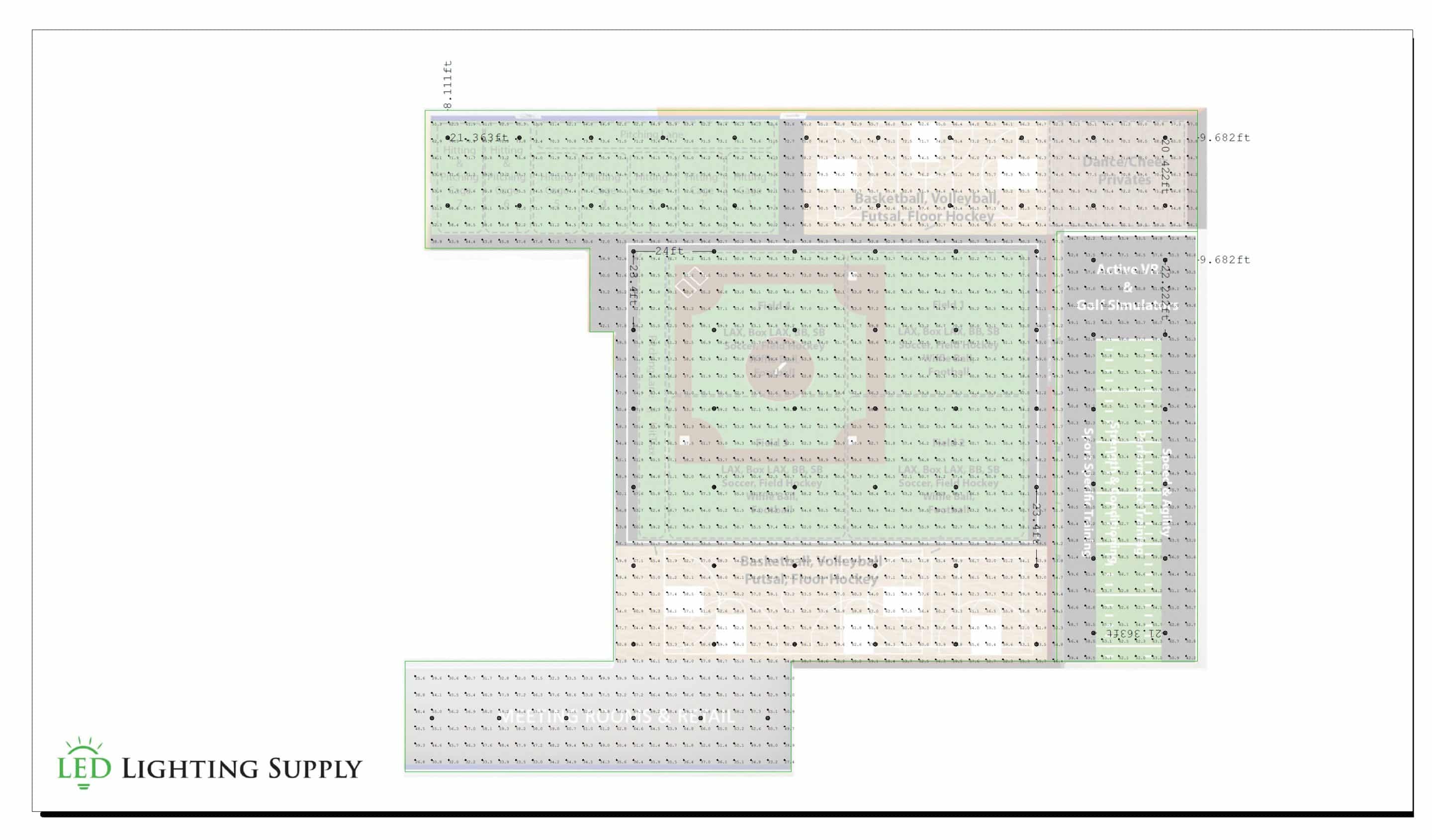
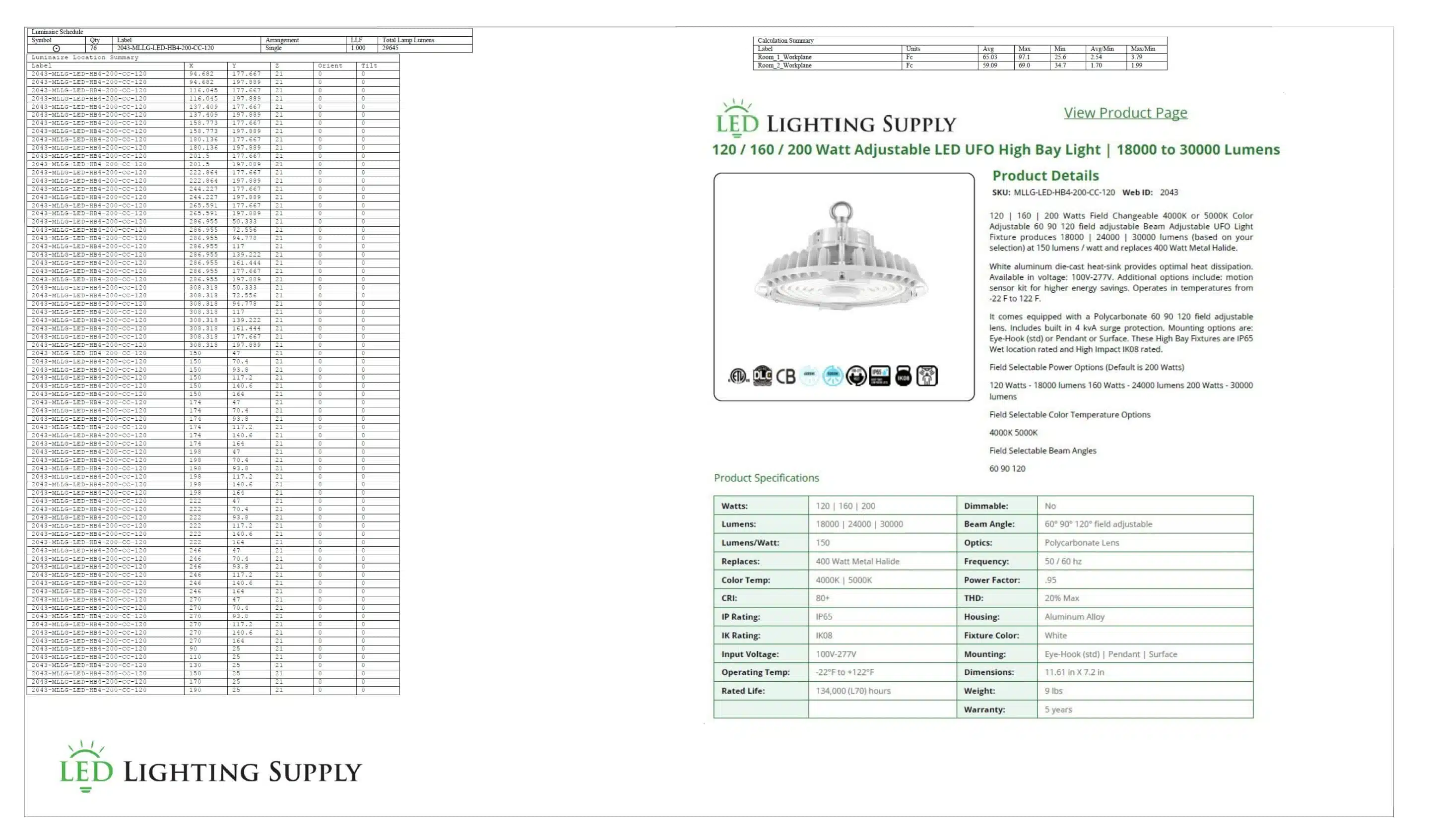
The ideal layout provides high bay fixture locations, light levels, and uniformity ratios across your space through a professional lighting plan. A lighting plan shows fixture types, foot-candle measurements, and balanced light distribution to eliminate guesswork for lighting upgrades and new installations.

How Do You Calculate High Bay Lighting Spacing?
Spacing depends on mounting height and desired light levels. For example, use 15-18 feet of spacing at 20 feet high, and 20-25 feet of spacing at 30 feet high. We create detailed lighting plans using photometric data and your space specifications (length, width, height) to determine optimal fixture spacing and achieve your target foot-candle requirements.
How Many High Bay Fixtures Do I Need?
The exact number depends on your space dimensions, mounting height, and target light levels measured in foot-candles. We provide free lighting plans that calculate precise fixture quantities and placement locations, showing average, maximum, and minimum light measurements plus uniformity ratios across your facility.

Can You Create Lighting Designs for Any Size Facility?
Yes, facility size does not limit our design capabilities. We have created lighting plans for single fixture workshops up to 1000+ fixture warehouses using professional photometric software and proven design practices for all commercial and industrial applications.
What Are the Risks of Using Only a High Bay Lighting Calculator?
Calculators provide rough fixture counts but lack photometric accuracy, spacing guidance, or uniformity analysis. Without proper light distribution data, you risk inadequate coverage, dark spots, or over-lighting that wastes energy and creates glare issues in your facility.
When Should You Get a Professional Lighting Design?
Before any LED conversion or new installation to ensure optimal performance and avoid costly mistakes. We provide free lighting plans to commercial and industrial end users, electricians, and contractors considering LED upgrades. This helps ensure your project meets required light levels, energy efficiency, and safety standards.

What Mounting Height Qualifies as High Bay Lighting?
High bay lighting is typically used in spaces with ceiling heights ranging from 15 to 40 feet. Below 15 feet requires low bay fixtures, while applications above 40 feet may need specialized very high bay or sports lighting solutions with enhanced optical control.
How Do Beam Angles Affect High Bay Performance?
Narrow beam angles (60-90 degrees) work best for higher ceilings above 25 feet, while wide beam angles (120 degrees or more) suit lower mounting heights around 15-20 feet. Proper beam angle selection prevents over-spacing fixtures and ensures adequate light uniformity across your work area.

What Light Levels Do Different Industrial Applications Require?
General warehouse areas need 20-30 foot-candles, while detailed assembly work requires 50-100 foot-candles or higher. Manufacturing facilities typically target 30-50 foot-candles, depending on task requirements, with uniformity ratios maintained between 3:1 and 4:1 maximum.
How Much Can You Save Converting to LED High Bays?
Most facilities achieve 60-75 percent energy savings when replacing metal halide or fluorescent high bays with LED fixtures. Combined with reduced maintenance costs from 50,000+ hour lifespans, total operational savings typically provide 2-4 year payback periods depending on usage hours.
When Do You Need to Consider a High Bay Lighting Design Before Purchasing High Bays?
A lighting plan is essential when updating or adding fixtures to a new or existing facility. This service removes guesswork from fixture selection and placement, ensuring you achieve your desired foot-candle levels and proper high bay light spacing. It is much easier and more cost-effective to adjust a plan than to change installed fixtures. We provide this service free for commercial and industrial end users, electricians, ESCOs, and lighting contractors, considering our LED lighting solutions.
What Type of Fixtures Are Best for High Bay Applications?
LED high bay fixtures are recommended for most commercial and industrial spaces due to their high efficiency, long lifespan, and low maintenance. Choose between UFO-style and linear high bays based on your ceiling height, layout, and application needs. Proper fixture selection ensures optimal light distribution and energy savings.
How Do I Reduce Shadows or Dark Spots in My Facility?
To minimize shadows and dark spots, use a professional lighting plan that considers fixture placement, beam angle, and uniformity ratios. Avoid over-spacing fixtures and select the correct beam angle for your ceiling height. Uniform light distribution is key to a safe and productive environment.
Sample High Bay Lighting Plan