Warehouse Ceiling Fans
- HVLS and commercial fan options for various ceiling heights
- Selection support for rack layouts and occupied work zones
- Wall-mounted and portable fan options also available
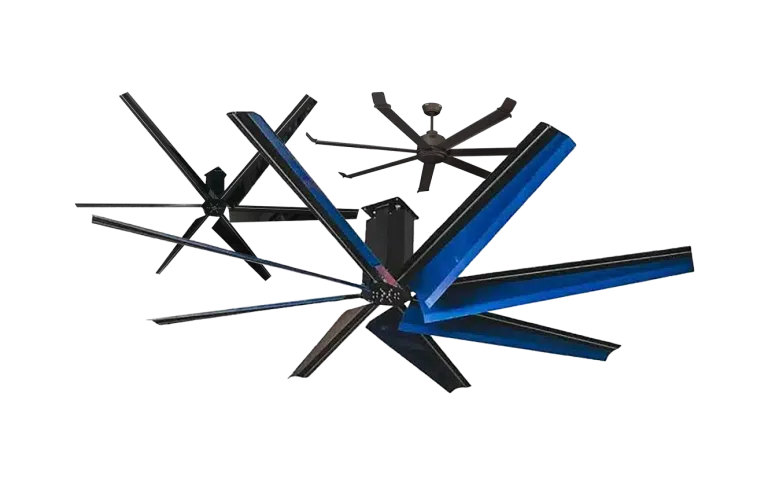



Our Warehouse Ceiling Fans include HVLS fans and commercial ceiling fans for warehouse air movement. Available models vary by motor and drive configuration, voltage, speed control, and controls, including wall controls, remote controls, scheduling, temperature-based control, occupancy input, and building-management integration.
These fans are commonly used in storage areas, packing stations, production zones, loading areas, distribution centers, bulk-storage areas, workshops, mezzanine rooms, offices, and other warehouse support spaces.
-
 Starting At $4,777.63
-
Starting At $5,085.97
-
Starting At $6,831.67
-
Starting At $7,165.00
-
Starting At $7,498.33


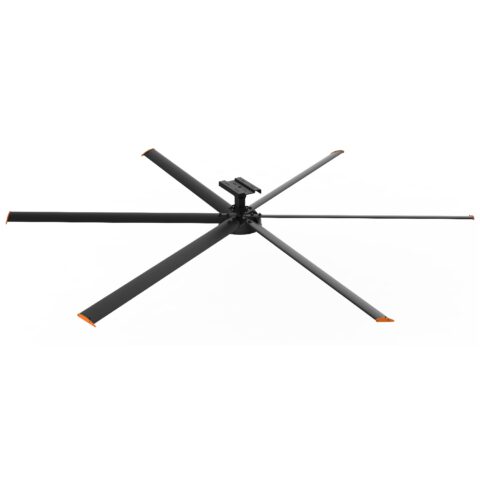


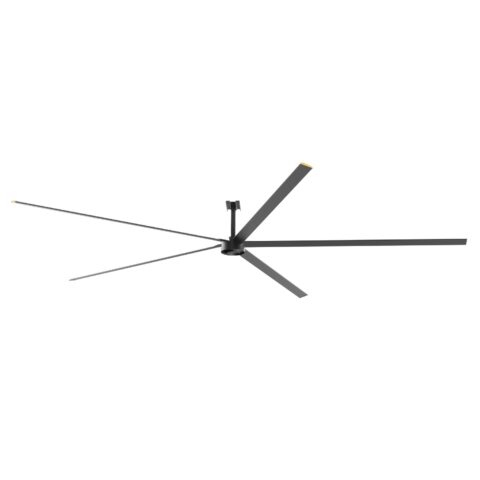
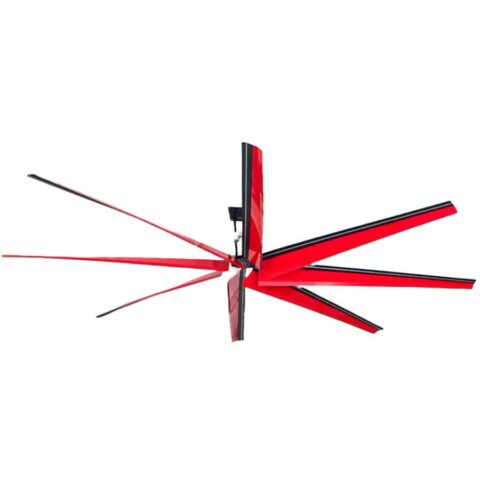


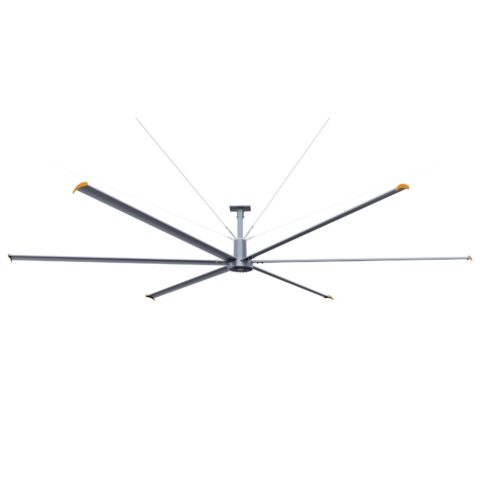
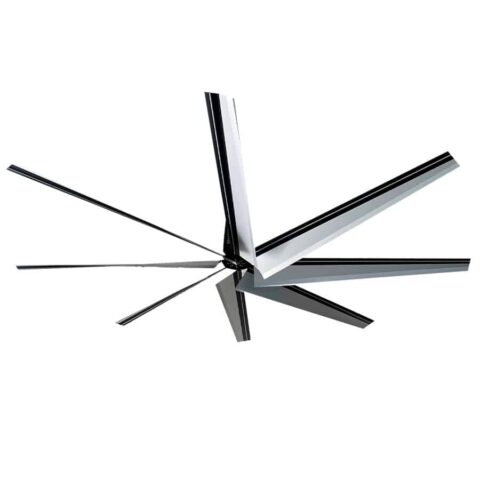
Warehouse ceiling fans provide broad air movement across storage areas, packing stations, production zones, loading areas, and other occupied spaces. HVLS fans may be appropriate for large, open warehouses with high ceilings, while commercial ceiling fans may be better suited for smaller rooms, lower ceilings, offices, and support areas.
Start by matching the fan type to the building size, ceiling height, and intended airflow area, then confirm that the selected fan fits the rack and aisle layout, occupied work zones, mounting structure, overhead clearances, environmental conditions, electrical service, controls, and existing HVAC and ventilation systems.
Selection Note: Warehouse ceiling fans move and mix indoor air. They do not independently provide outdoor-air ventilation, remove dust or airborne contaminants, control humidity, lower the actual air temperature, or replace required HVAC, exhaust, filtration, process cooling, smoke-control, or heat-risk systems.
Choosing the Right Warehouse Fan Type
| Air Movement Option | Typical Warehouse Use |
|---|---|
| HVLS Fans | Broad, low-speed air movement across large open warehouses, distribution centers, bulk-storage areas, production floors, and other high-ceiling spaces with adequate blade clearances. |
| Commercial Ceiling Fans | Smaller warehouses, packing rooms, offices, workshops, mezzanine rooms, and support spaces where a moderate-diameter fan is more practical. |
| Wall-Mounted Fans | Fixed directional airflow along packing stations, loading areas, production lines, maintenance zones, and locations where ceiling mounting is impractical. |
| Drum Fans | Portable airflow for temporary work areas, maintenance, seasonal needs, loading activity, and warehouse layouts that change frequently. |
| HVAC and Exhaust Systems | Outdoor-air ventilation, contaminant removal, filtration, humidity control, heating, and cooling when properly designed for the facility and processes. |
Many warehouse facilities use more than one fan type. HVLS fans may provide broad circulation while wall-mounted or drum fans serve specific work zones, and HVAC or exhaust systems handle actual ventilation, filtration, heating, cooling, or contaminant removal.
How to Select a Warehouse Ceiling Fan
| Selection Factor | What to Confirm |
|---|---|
| Building dimensions | Provide the warehouse length, width, clear ceiling height, roof shape, occupied zones, and possible mounting locations. |
| Airflow objective | Determine whether the goal is broad circulation, workstation airflow, heating-season air mixing, or added air movement in loading and packing areas. |
| Rack and aisle layout | Map rack rows, aisle widths, top-of-rack height, cross aisles, bulk-storage areas, staging zones, and open floor space. |
| Occupied work zones | Identify packing stations, picking areas, assembly zones, offices, shipping desks, maintenance areas, and other locations where employees remain for extended periods. |
| Dock and door activity | Review loading docks, frequently opened doors, drive-in doors, vestibules, air curtains, and outdoor-air infiltration patterns. |
| Overhead obstructions | Account for lights, sprinklers, ducts, heaters, cranes, lifts, conveyors, signs, cameras, mezzanines, and other suspended equipment. |
| Mounting structure | Identify beams, joists, trusses, or other structural members suitable for the selected fan and manufacturer-approved mounting system. |
| HVAC and ventilation | Review supply diffusers, returns, thermostats, unit heaters, exhaust systems, make-up air, smoke control, and existing air-distribution patterns. |
| Dust and process conditions | Determine whether airflow could spread dust, smoke, fumes, vapors, packaging debris, or process contaminants into occupied areas or interfere with source capture. |
| Environmental exposure | Identify humidity, condensation, washdown, chemicals, corrosion, high temperatures, cold-storage conditions, or hazardous-location requirements. |
| Electrical service and controls | Confirm voltage, phase, current draw, circuit requirements, controller location, speed control, scheduling, zoning, and building-management compatibility. |
| Sound and work tasks | Use model-specific sound information for offices, inspection areas, assembly stations, communication-sensitive zones, and occupied work areas. |
| Maintenance access | Plan how motors, blades, fasteners, restraints, controls, and mounting components will be inspected, cleaned, and serviced. |
| Product documentation | Verify airflow data, safety listing, approved mounting range, environmental rating, controls, installation requirements, maintenance schedule, and warranty. |
Rack Aisles, Storage Areas, and Work Zones
Warehouse fan selection should reflect how racks, aisles, storage, equipment, and employees are arranged. Tall rack rows can block or redirect airflow, while open bulk-storage areas may allow broader coverage.
Fan placement should account for top-of-rack height, flue spaces, cross aisles, picking equipment, forklifts, raised loads, storage changes, and occupied workstations. Airflow should reach the intended zones without disturbing lightweight packaging, labels, loose materials, or product-handling operations.
Employees at packing, inspection, assembly, and shipping stations may remain in one location for long periods. Airflow that feels comfortable while moving through an aisle may become distracting when directed continuously at a fixed workstation.
Loading Docks, Doors, and Outdoor-Air Infiltration
Frequently opened dock and drive-in doors can create changing temperature and airflow conditions. Ceiling fans may support circulation near these areas, but they do not prevent outdoor-air infiltration or replace air curtains, vestibules, heating, cooling, or building-pressure strategies.
Fan placement should be coordinated with dock doors, door tracks, levelers, truck traffic, heaters, air curtains, supply diffusers, returns, and nearby thermostats. Poor placement may redirect outdoor air farther into the building or affect thermostat response.
Sprinklers, Cranes, Conveyors, and Overhead Clearances
Before selecting a ceiling-mounted fan, confirm clearance from sprinklers, fire-protection equipment, lights, heaters, ducts, cranes, lifts, conveyors, mezzanines, cameras, signs, and other overhead systems in every operating position.
Fan placement and operation should be coordinated with sprinkler design, smoke detection, smoke-control systems, fire alarms, exhaust systems, and emergency procedures. Required separation, shutdown controls, interlocks, or operating restrictions may depend on the fan model, building occupancy, fire-protection design, and local requirements.
Larger fan diameter does not automatically mean better performance. The selected fan must fit the available structure, maintain required clearances, and direct useful airflow toward the intended occupied areas.
HVAC, Dust, Fumes, and Process Conditions
Fan placement should be coordinated with HVAC supplies, returns, unit heaters, local exhaust, dust collection, process ventilation, make-up air, smoke control, and temperature sensors.
Warehouse fans do not independently remove dust, smoke, fumes, vapors, odors, moisture, or airborne contaminants. Poor placement may spread contaminants, reduce source-capture effectiveness, or move air from one work zone into another.
Where combustible dust, flammable gases, vapors, or hazardous materials may be present, have the area classification and equipment requirements evaluated before selecting a fan. Standard commercial or industrial fans should not be assumed suitable for hazardous locations.
Temperature, Humidity, and Seasonal Operation
During warm conditions, air movement across occupied areas may improve perceived comfort when environmental conditions are appropriate. Actual results depend on fan speed, mounting height, temperature, humidity, clothing, activity level, obstructions, and whether airflow reaches the worker.
Fans do not reduce the actual air temperature by themselves. They should be used as one part of the facility’s broader approach to ventilation, cooling, work practices, hydration, rest schedules, and heat-risk management.
During the heating season, low-speed operation may help redistribute warm air that collects near high ceilings. Reversing capability and seasonal operating settings vary by fan model, so follow the selected manufacturer’s instructions.
Air movement does not independently control humidity or prevent condensation. Condensation depends on moisture levels, dew point, surface temperatures, insulation, door activity, ventilation, heating, cooling, and dehumidification.
Potential energy savings depend on the building, climate, HVAC system, ceiling height, door activity, thermostat strategy, controls, operating hours, and utility costs. Savings should not be based on a universal percentage.
Cold Storage, Freezers, and Specialized Warehouse Areas
Cold-storage and freezer applications require fans specifically approved for the expected ambient temperature, moisture, condensation, defrost cycles, and operating conditions. Standard warehouse fans should not be assumed suitable for low-temperature environments.
Fan operation may affect temperature distribution, evaporator airflow, door infiltration, frost formation, and stored-product conditions. Selection and placement should be coordinated with the refrigeration system, storage requirements, and cold-room operating plan.
Battery-charging areas, chemical storage, food storage, pharmaceutical spaces, and other specialized warehouse zones may have ventilation, sanitation, corrosion, or hazardous-location requirements that differ from the general warehouse.
Motors, Controls, and Electrical Requirements
Warehouse fan construction varies by model. Available products may use direct-drive, geared, permanent-magnet, AC, or other motor and drive configurations. Motor type, voltage, phase, current draw, speed range, sound, controls, maintenance, and environmental suitability should be reviewed using the selected product’s documentation.
| Product Feature | What to Review |
|---|---|
| Motor and drive | Confirm motor type, drive configuration, voltage, phase, current draw, operating range, service requirements, and approved environment. |
| Speed control | Determine whether the fan uses fixed speeds, continuous variable speed, wall controls, remote controls, or another approved controller. |
| Control zoning | Consider separate zones for storage, packing, loading, production, offices, and areas with different schedules or airflow needs. |
| Scheduling and automation | Review available scheduling, temperature-based control, occupancy input, remote operation, and building-management integration. |
| Electrical distribution | Confirm circuit loading, disconnects, wiring methods, controller requirements, and whether multiple fans may share electrical infrastructure. |
Mounting, Structural Support, and Maintenance
Warehouse ceiling fans should use manufacturer-approved mounting systems attached to suitable building structure. The exact fan model, static weight, operating loads, attachment method, and required restraints should be considered when evaluating the support.
Before installation, confirm the mounting structure, attachment hardware, fan weight, operating loads, blade clearances, voltage, wiring, disconnects, controls, and required access equipment.
Fan placement should allow reasonable access for inspection, cleaning, tightening, and service. Maintenance planning should account for racks, lifts, inventory protection, work schedules, and temporary closure of the area below the fan.
Inspection and maintenance intervals should follow the selected manufacturer’s instructions and actual operating conditions rather than a universal schedule.
Structural and electrical work should be completed by qualified personnel according to the fan manufacturer’s instructions and applicable project requirements.
Warehouse Ceiling Fan Layout Support
LED Lighting Supply can help develop a preliminary fan layout using the building dimensions, clear ceiling height, rack and aisle layout, occupied work zones, dock locations, overhead obstructions, HVAC systems, environmental conditions, mounting structure, electrical service, controls, and airflow goals.
You can also use our Ceiling Fan Count Calculator and Thermal Comfort Calculator for initial planning. Calculator results do not account for every rack row, dock condition, sprinkler system, overhead obstruction, HVAC pattern, process hazard, structural limitation, or occupied zone.
Layouts and calculator results are preliminary. Final fan type, diameter, quantity, placement, mounting, electrical requirements, environmental suitability, HVAC coordination, fire-protection coordination, and code compliance should be confirmed using the selected products and final field conditions.
Certifications, Environmental Ratings, and Warranty
Safety listings, voltage options, controls, maintenance requirements, environmental ratings, and warranties vary by fan model. Depending on the selected product, electrical safety certification may be provided by a Nationally Recognized Testing Laboratory (NRTL), such as UL, Intertek/ETL, MET, or CSA.
Electrical safety listings, ingress ratings, damp- or wet-location suitability, corrosion resistance, hazardous-location approval, ambient-temperature limits, and warranty coverage address different product characteristics and should be reviewed separately.
Before ordering, confirm the selected fan’s airflow data, mounting range, electrical specifications, controls, sound information, approved operating environment, cleaning requirements, maintenance schedule, and warranty terms.
Need Help Selecting Warehouse Ceiling Fans?
Contact LED Lighting Supply and provide the building dimensions, ceiling height, photographs, rack and aisle layout, occupied work zones, dock locations, overhead obstructions, HVAC details, environmental conditions, mounting structure, electrical service, controls, and airflow goals when available.
Our Product Specialists can help compare HVLS fans, commercial ceiling fans, mounting options, controls, and preliminary placement options. Final structural support, electrical installation, HVAC and ventilation requirements, process-exhaust coordination, environmental suitability, hazardous-location requirements, fire-protection coordination, and code compliance should be confirmed by the appropriate structural, electrical, mechanical, industrial hygiene, fire-protection, refrigeration, or code professionals when required.
Warehouse Ceiling Fans FAQs
How Do I Choose Between HVLS And Commercial Ceiling Fans?
HVLS fans may be appropriate for large, open warehouses with high ceilings and adequate blade clearances, while commercial ceiling fans may be better suited for smaller rooms, lower ceilings, offices, and support areas. Building dimensions, ceiling height, rack layout, occupied zones, obstructions, mounting structure, electrical service, and airflow goals should also be considered.
Can Warehouse Ceiling Fans Replace Ventilation Or Exhaust Systems?
No. Warehouse ceiling fans move and mix indoor air, but they do not independently provide outdoor-air ventilation, remove dust or airborne contaminants, control humidity, lower actual air temperature, or replace HVAC, exhaust, filtration, process cooling, smoke-control, or heat-risk systems.
What Should Be Considered When Planning Fan Placement Around Racks And Workstations?
Fan placement should account for rack rows, aisle widths, top-of-rack height, cross aisles, picking equipment, forklifts, raised loads, storage changes, and occupied workstations. Tall rack rows can block or redirect airflow, and airflow should reach intended zones without disturbing lightweight packaging, labels, loose materials, or product-handling operations.
How Should Warehouse Ceiling Fans Be Coordinated With Loading Docks?
Warehouse ceiling fan placement near loading docks should be coordinated with dock doors, door tracks, levelers, truck traffic, heaters, air curtains, supply diffusers, returns, and nearby thermostats. Ceiling fans may support circulation near doors, but they do not prevent outdoor-air infiltration or replace air curtains, vestibules, heating, cooling, or building-pressure strategies.
What Overhead Clearances Must Be Confirmed Before Selecting A Ceiling-Mounted Fan?
Confirm clearance from sprinklers, fire-protection equipment, lights, heaters, ducts, cranes, lifts, conveyors, mezzanines, cameras, signs, and other overhead systems in every operating position. The selected fan must fit the available structure, maintain required clearances, and direct useful airflow toward intended occupied areas.
Are Standard Warehouse Fans Suitable For Cold Storage Or Hazardous Areas?
Standard warehouse fans should not be assumed suitable for cold-storage, freezer, or hazardous-location applications. Cold-storage and freezer fans require approval for expected ambient temperature, moisture, condensation, defrost cycles, and operating conditions, while areas with combustible dust, flammable gases, vapors, or hazardous materials require evaluation of area classification and equipment requirements before fan selection.
Can A Ceiling Fan Calculator Or Preliminary Layout Finalize A Warehouse Fan Plan?
No. Calculator results and preliminary layouts do not account for every rack row, dock condition, sprinkler system, overhead obstruction, HVAC pattern, process hazard, structural limitation, or occupied zone. Final fan type, diameter, quantity, placement, mounting, electrical requirements, environmental suitability, HVAC coordination, fire-protection coordination, and code compliance should be confirmed using selected products and final field conditions.