LED Industrial Lighting
- Options for hazardous locations, high temperatures, and harsh environments
- Impact-resistant and vapor-tight fixtures available for demanding conditions
- Free lighting plans and application support from experienced specialists


Get Your Custom Lighting Plan With Product Recommendations
- Layout designed around mounting heights, beam distribution, and target foot-candle levels for industrial work areas
- Fixture count and wattage selection matched to facility size, ceiling height, and environmental rating requirements
- LED options can reduce energy consumption and extend maintenance intervals compared with legacy HID systems


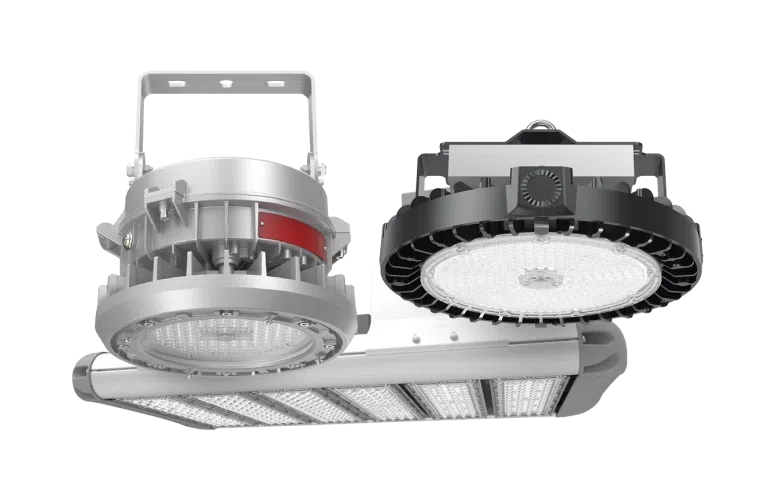
Our Industrial Grade LED Lights include indoor and outdoor fixtures such as high bays, vapor-tight lights, high-temperature lights, explosion-proof lights, high mast lights, flood lights, and roadway lighting. Available models include 480V compatibility, selectable 3000K-5000K color temperatures, precision optics for 25-50 foot mounting heights, and marine-grade epoxy coatings.
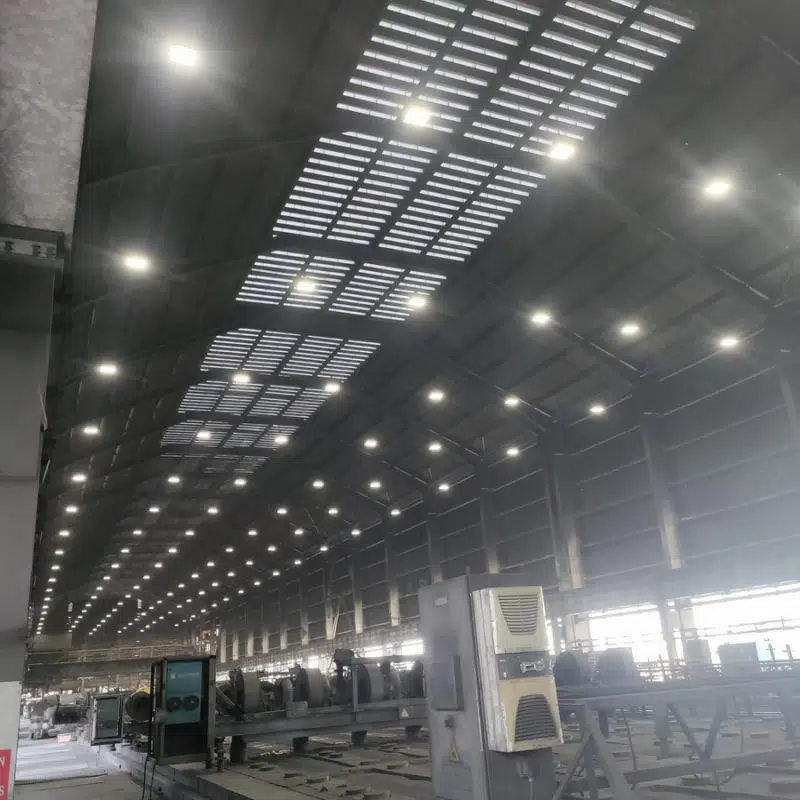
These products are used in warehouses, manufacturing facilities, steel mills, power plants, chemical plants, refineries, ports, container yards, airports, rail facilities, correctional facilities, food processing areas, and outdoor industrial sites.
What is LED Industrial Grade Lighting?
LED Lighting Supply specializes in energy-efficient lighting solutions designed for harsh environments where standard commercial fixtures may not provide the required durability, environmental protection, temperature rating, hazardous-location approval, impact resistance, or corrosion protection.
Industrial LED lighting may be used in manufacturing plants, warehouses, power plants, steel mills, processing facilities, ports, correctional facilities, hazardous locations, high-temperature areas, food-processing facilities, and other demanding environments. The correct fixture depends on the actual operating conditions and should be selected from the specific environmental, electrical, structural, and safety requirements of the installation.
Our industrial portfolio includes products designed for demanding conditions such as:
- High-output alternatives to legacy HID systems, including applications previously using fixtures up to 2000W
- High-voltage options, including selected fixtures for 480V systems
- Optics suitable for applications with mounting heights such as 25-50 feet, depending on fixture and layout
- Selected high-temperature fixtures rated for ambient temperatures up to approximately 302°F, depending on model
- Hazardous-location fixtures with ratings such as Class I Division 1 or Class I Division 2, depending on model
- Impact-resistant construction with selected models rated IK08-IK10
- Corrosion-resistant coatings and materials for selected marine, coastal, chemical, and harsh-environment applications
Industrial lighting used in hazardous classified locations must be matched to the required classification. OSHA's requirements for hazardous classified locations address electrical equipment used where flammable gases or vapors, combustible dusts, or ignitable fibers may create a hazard. NFPA 70, the National Electrical Code (NEC), contains requirements for equipment used in classified locations. The exact Class, Division or Zone, material Group, temperature requirements, and installation method should be confirmed for the specific project.

What Makes an LED Light Industrial Grade
Start by identifying the fixture type your application requires, then match it to the facility's environmental exposure, hazardous-area classification where applicable, impact risk, ambient temperature, mounting height, optics, available voltage, controls, corrosion exposure, chemical exposure, and required certifications.
No single rating establishes suitability for every industrial environment. For example, an IP rating addresses ingress protection against solids and water under specified test conditions, while chemical compatibility, corrosion resistance, impact resistance, temperature capability, and hazardous-location suitability are separate characteristics that must be verified independently.
| Impact Ratings | Selected fixtures may carry IK ratings such as IK08-IK10 to indicate resistance to specified levels of mechanical impact. The required rating depends on the actual impact risk and installation location. |
| Hazardous Location Certification | Selected explosion-proof and hazardous-location fixtures may carry Class I, Class II, Class III, Division-based, or Zone-based approvals. Match the exact fixture rating to the documented area classification. |
| Ingress Protection | IP ratings such as IP65, IP66, or other ratings indicate protection against specified solid-object and water-ingress conditions. An IP rating does not establish chemical compatibility or corrosion resistance. |
| Chemical and Corrosion Resistance | Where fixtures are exposed to chemicals, solvents, cleaning agents, salt air, corrosive vapors, or aggressive process environments, confirm housing materials, coatings, lens materials, gaskets, fasteners, cable entries, and manufacturer chemical-resistance data for the exact exposure. |
| Food-Processing Suitability | Selected fixtures may carry NSF certifications or other sanitation-related ratings. NSF certification, ingress protection, cleanability, wash-down suitability, and chemical compatibility should be reviewed separately for the specific processing area. |
| High-Voltage Power Compatibility | Selected industrial fixtures support higher-voltage systems such as 347V or 480V. Confirm the exact driver input range rather than assuming all industrial fixtures support high voltage. |
| Color Temperature Options | Fixed or selectable color-temperature options such as 3000K, 4000K, and 5000K may be available depending on model. |

Industrial Lighting Applications and Fixture Selection
Industrial environments place very different demands on lighting equipment. The right fixture should be selected around the actual operating conditions, including mounting height, ambient temperature, moisture, dust, impact risk, corrosion, chemicals, sanitation, hazardous-area classification, electrical system, controls, and task visibility.
| Application | Selection Guidance |
|---|---|
| Industrial Warehouses | High-ceiling storage and logistics facilities commonly use warehouse lighting systems with LED high bays. Select fixture output and optics based on mounting height, aisle layout, rack configuration, target foot-candles, controls, and uniformity. |
| Manufacturing Facilities | Manufacturing lighting should match the visual task, production process, mounting height, glare requirements, color quality, vibration, airborne contaminants, and maintenance access. |
| Dusty Manufacturing and Processing Areas | Vapor-tight fixtures with appropriate ingress-protection ratings can help limit dust and moisture entry. Confirm the exact IP rating for the exposure, and evaluate chemical or corrosion resistance separately. |
| Hazardous Locations | Areas containing flammable gases, vapors, combustible dusts, or ignitable fibers may require properly rated hazardous-location lighting. Match the exact Class, Division or Zone, Group, temperature requirement, and ambient rating to the documented area classification. |
| Chemical Plants & Refineries | Fixture selection may need to address both hazardous-location requirements and chemical exposure. Confirm the area classification separately from compatibility with acids, alkalis, solvents, corrosive vapors, coatings, gaskets, lenses, hardware, and other fixture materials. |
| Food Processing Facilities | Food-processing lighting may require NSF-certified or otherwise sanitary fixtures depending on the installation zone. Also review wash-down pressure, IP rating, cleanability, breakage protection, corrosion resistance, and compatibility with cleaning chemicals. |
| High-Temperature Areas | Facilities with elevated ambient temperatures may require specialized high-temperature LED fixtures. Confirm the selected model's actual maximum ambient temperature rather than relying on a general industrial rating. |
| Steel Mills & Foundries | Steel and foundry environments may combine high heat, vibration, impact, airborne contaminants, dust, and difficult maintenance access. Select fixtures for the actual ambient temperature, mounting location, optics, impact exposure, and environmental conditions. |
| Power Plants & 24/7 Facilities | Power-generation lighting should account for operating temperature, vibration, maintenance access, electrical system, emergency requirements, hazardous areas where applicable, and the need for dependable continuous operation. |
| Ports, Container Yards & Coastal Industrial Sites | Port and yard lighting may require high-output optics, wind-resistant mounting, salt-air corrosion protection, marine-grade coatings, stainless hardware, appropriate ingress protection, and photometric control for large areas. |
| Airports and Aviation Facilities | Airport lighting solutions can be used for applicable aprons, hangars, parking, maintenance, cargo, and facility areas. FAA-regulated runway, taxiway, approach, obstruction, and other airfield lighting systems require separate aviation-specific compliance. |
| Correctional Facilities | Correctional facility lighting may require impact-resistant, tamper-resistant, vandal-resistant, or secure construction depending on the location and risk level. |
| Automotive Assembly and Inspection Areas | Assembly and inspection applications may require higher CRI, appropriate CCT, glare control, uniformity, and task-specific light levels. Color-critical inspection may require additional color-quality criteria beyond CRI alone. |
| Cold Storage Facilities | Cold storage lighting should be rated for the minimum ambient temperature and should account for condensation, moisture, controls, door cycling, and cold-temperature driver performance. |
The same industrial facility may contain several different environments. A manufacturing plant, for example, could require standard high bays in one area, vapor-tight fixtures in another, hazardous-location fixtures near a process, and high-temperature fixtures near furnaces or ovens. Fixture selection should therefore be made by area rather than applying one industrial-lighting specification to the entire facility.
Arizona Algae Products New Explosion-Proof Workspace Case Study
The Backstory
Arizona Algae Products LLC was moving its warehouse operation to a newly constructed building and needed lighting for the center section of the space, which included two platforms, a walkway, and equipment that could create shadowing issues. They initially had only a rough estimate of what they might need and were seeking guidance on lighting for hazardous locations, wattage, fixture count, placement, and overall layout. The Director of Facilities and Maintenance, Christopher Knizeski, reached out to LED Lighting Supply and was paired up with Product Specialist Jake Hoffman for expert support in these areas.
The Customer Challenge
The customer knew they needed Class 1 Division 2 (C1D2) rated lighting for the area. This means flammable gases, vapors, or liquids could be present under abnormal conditions, such as equipment leaks or ventilation failures. Due to these factors, the area required an explosion-proof lighting solution. The fixtures needed to meet the safety demands of the environment while delivering strong, uniform illumination for a functional work area.
As the conversation developed, it became clear this wasn't a simple fixture installation. The customer needed to light a new warehouse workspace in a building that was still being constructed. The section being lit was obstructed by equipment and piping, all of which created the potential for shadowing and dark spots. The customer needed an expert's guidance to ensure the final lighting plan would support visibility, safety, and day-to-day work in the warehouse.


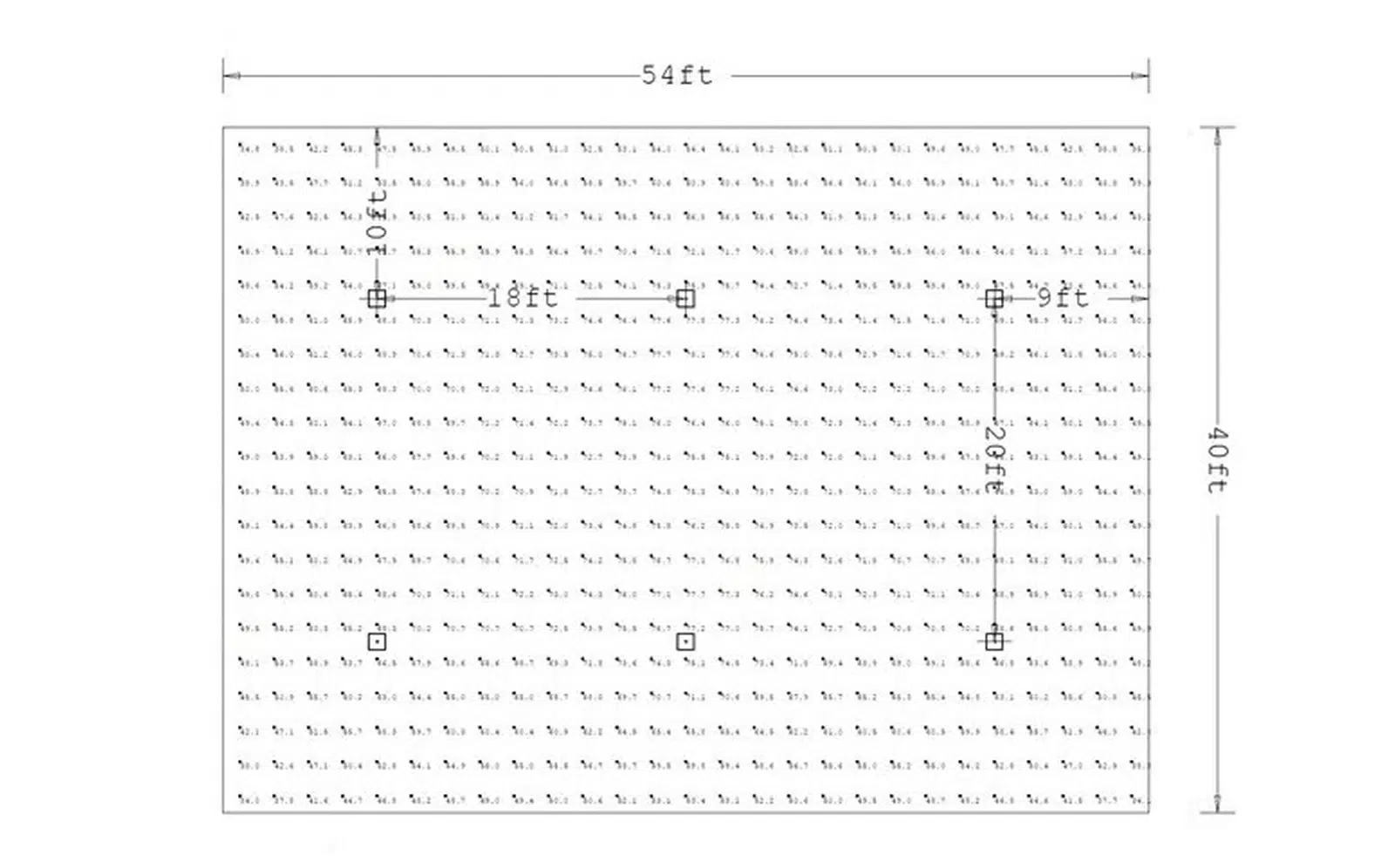
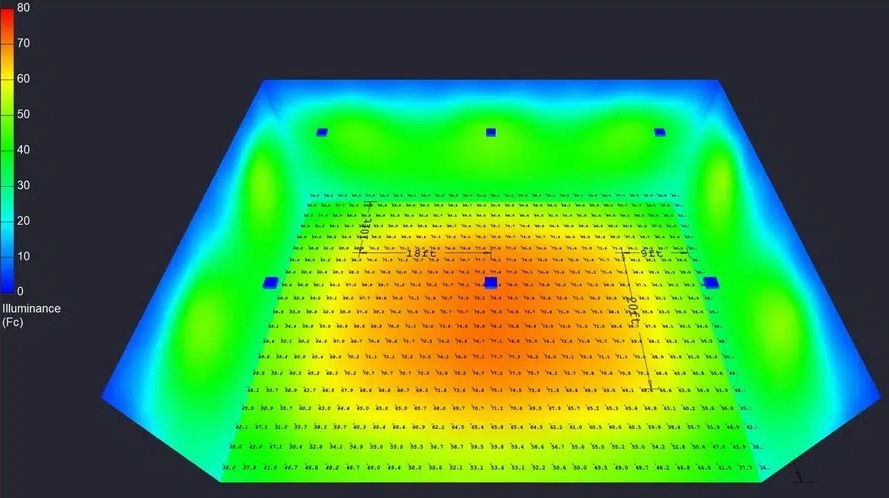
Lighting Plan We Created for the Customer
Lighting Plan Metrics
- Mounting Height: 20 ft
- Foot Candles Achieved: 62 average
- Product(s) Used: MLLG-E-LED-EXPLA-200-50-[V]-C1D2
Professional lighting design for industrial applications may reference Illuminating Engineering Society (IES) recommendations for illuminance, uniformity, glare, and other lighting-quality considerations. Applicable recommendations depend on the specific task and environment and should be combined with project, safety, electrical, and facility requirements.
What are the Different Types of LED Lighting Products
Our industrial lighting portfolio includes indoor and outdoor fixture types for different operating environments. Matching the fixture construction and ratings to the actual application is important for long-term performance, safety, and maintenance.
Industrial Indoor LED Lighting
| Explosion Proof | Explosion proof and hazardous-location lights for properly classified areas, including selected Class I Division 1 lights and Class I Division 2 lights. |
| High Bays | Industrial high bay lighting solutions for warehouse, manufacturing, production, and other high-ceiling applications. |
| Vapor-Tight | Vapor-tight lights for applications requiring protection against moisture, dust, or contaminants. Chemical resistance and corrosion suitability must be confirmed separately from the IP rating. |
| Food-Safe | NSF-certified food-processing lights for applicable food-processing and sanitary environments, depending on the exact certification and installation zone. |
| High-Temperature | High temperature LED lighting for applications where standard fixture ambient ratings are insufficient. |
Important: Incorrect fixture selection in hazardous classified locations can create a serious ignition risk. Confirm the documented Class, Division or Zone, Group, temperature requirement, and installation conditions before selecting electrical equipment. LED Lighting Supply can help match fixtures to an established classification, but the area classification should be established by the project engineer, qualified electrical professional, facility safety team, or authority having jurisdiction.
Industrial Outdoor LED Lighting
| High Mast | High mast lighting systems for large-area applications such as yards, ports, interchanges, terminals, and industrial sites. |
| Flood Lighting | Flood lighting for wide-area, perimeter, equipment, and directional industrial illumination. |
| Airport Applications | Airport lighting solutions for applicable airport facilities, apron areas, maintenance spaces, parking, and other areas. FAA-regulated airfield lighting requires separate compliance with applicable aviation requirements. |
| Security Lighting | Perimeter security lighting with available controls and motion-sensing options depending on model. |
| Roadway Illumination | Street and roadway lighting for roads, access drives, industrial campuses, and applicable exterior transportation areas. |

We Offer Free Industrial LED Lighting Plans
Professional photometric planning helps estimate fixture placement, spacing, mounting height, light levels, distribution, and uniformity before fixtures are ordered. Our lighting plans can help customers compare fixture options and reduce guesswork in large industrial spaces.
A lighting plan addresses photometric performance and can support the overall project design, but it does not by itself establish electrical-code compliance, hazardous-area classification, structural adequacy, emergency-lighting compliance, chemical compatibility, or other engineering requirements. Those requirements should be confirmed by the appropriate project professional or authority having jurisdiction.
What are the Benefits of Using LED Fixtures in Industrial Settings and Applications
- Energy Savings: Properly designed LED retrofits can reduce lighting energy use compared with older metal halide, high-pressure sodium, or fluorescent systems. Actual savings depend on existing wattage, proposed wattage, fixture count, operating hours, controls, and maintained light levels.
- Improved Light Distribution: Modern optics can provide controlled distributions suited to aisles, open production areas, warehouses, yards, and task spaces. Final performance depends on fixture photometrics and layout.
- Reduced Routine Lamp Maintenance: LED fixtures eliminate the frequent lamp and ballast replacement associated with many legacy HID and fluorescent systems. Actual service life depends on the specific fixture, driver, ambient temperature, operating conditions, and maintenance.
- Instant-On Operation: LED fixtures typically provide useful light immediately, unlike many HID systems that require warm-up or restrike time.
- Motion Sensor Compatibility: Selected LED fixtures support occupancy or motion controls, which can reduce output in intermittently occupied warehouse, storage, and industrial areas.
- Advanced Dimming: Compatible LED fixtures can support 0-10V or other dimming systems. Actual dimming range and controls compatibility vary by model.
LED systems can provide substantial energy savings compared with older lighting technologies, particularly when lower connected load is combined with controls. Actual savings should be calculated from the existing and proposed systems rather than assuming a fixed percentage for every project.
What are the Cost Savings and ROI When You Convert from Metal Halide to LED?
Compare estimated energy costs, 5-year savings, simple payback, and ROI for replacing metal halide fixtures with LED.
150W LED UFO High Bay vs 400W Metal Halide Replacement (with ballast)
Assumptions: Based on 16 hours/day, 220 days/year at $0.20/kWh,
50 fixture(s), and a 15% ballast factor applied to the metal halide wattage
(400W lamp + 15% ballast = ~ 460W input).
•
Energy cost and ROI calculations are based on energy savings only and assume an LED fixture cost of
$100.00 per fixture.
• Maintenance savings from reduced bulb and ballast replacements are not included
in these calculations.
In this example with 50 fixture(s), total LED fixture investment is approximately $5,000.00, and estimated annual energy-only savings are $10,912.00. Simple payback based on energy savings alone is under 6 months. Maintenance savings from eliminating metal halide bulb and ballast replacements provide additional value throughout the fixture's 50,000-hour lifespan, but are not included in this ROI calculation.

Industrial Lighting Certifications and Warranty Support
Industrial LED fixtures from LED Lighting Supply may carry safety listings or certifications from organizations such as UL, ETL, or CSA, depending on the model. Selected products may also be listed on the DLC Qualified Products List, which may support eligibility for participating utility rebate programs.
Certifications and environmental ratings address different requirements. A UL or ETL safety listing does not by itself establish hazardous-location suitability, chemical resistance, corrosion resistance, food-processing suitability, or wash-down performance. Similarly, an IP rating addresses ingress protection and should not be used as evidence of chemical compatibility.
Many industrial LED lights include a 5-year warranty unless otherwise specified, with USA-based warranty support. Before purchase, confirm the selected fixture's safety listing, DLC status where applicable, voltage, controls compatibility, mounting method, IP rating, ambient temperature range, corrosion resistance, chemical compatibility, impact rating, hazardous-location approval where required, warranty terms, and other environmental ratings relevant to the facility.
Why Choose LED Lighting Supply for Your Industrial Lighting Project
LED Lighting Supply has more than 15 years of experience supplying commercial and industrial lighting for warehouses, manufacturing facilities, industrial sites, sports facilities, power-generation facilities, hazardous locations, ports, high-temperature applications, and other demanding environments.
Our Product Specialists can help review fixture type, mounting height, lumen output, optics, voltage, controls, ambient temperature, ingress protection, corrosion exposure, chemical exposure, hazardous-location requirements, and other product specifications. We also provide complimentary photometric lighting plans to help customers evaluate fixture count, spacing, foot-candle levels, and uniformity before ordering.
Final electrical design, hazardous-area classification, structural requirements, environmental compatibility, code compliance, and installation requirements should be confirmed by the appropriate engineer, electrician, safety professional, manufacturer, or authority having jurisdiction.
LED Industrial Lighting FAQs
How Should I Select LED Industrial Lighting For A Demanding Environment?
Select the fixture type first, then match it to the facility's environmental exposure, hazardous-area classification where applicable, impact risk, ambient temperature, mounting height, optics, available voltage, controls, corrosion exposure, chemical exposure, and required certifications. No single rating establishes suitability for every industrial environment.
Can An IP Rating Confirm Chemical Or Corrosion Resistance?
No. IP ratings indicate protection against specified solid-object and water-ingress conditions, but they do not establish chemical compatibility or corrosion resistance. Confirm the fixture's materials, coatings, lens, gaskets, fasteners, cable entries, and manufacturer chemical-resistance data for the exact exposure.
How Should Hazardous-Location LED Fixtures Be Chosen?
Hazardous-location LED fixtures must match the documented Class, Division or Zone, material Group, temperature requirements, and installation method for the specific project. Selected fixtures may carry Class I Division 1, Class I Division 2, Class II, Class III, or Zone-based approvals depending on the model.
How Can I Plan Fixture Quantity And Spacing For An Industrial Facility?
Use photometric planning to estimate fixture placement, spacing, mounting height, light levels, distribution, and uniformity before fixtures are ordered. Fixture wattage or lumen output alone does not establish adequate foot-candles or uniformity because mounting height, spacing, optics, surface reflectance, and layout also affect performance.
What Should Be Verified For High-Voltage Industrial Lighting?
Confirm the facility supply voltage and the selected fixture's exact driver input range before ordering. Selected industrial fixtures support higher-voltage systems such as 347V or 480V, but not all industrial fixtures support high voltage.
Are High Bay Fixtures Suitable For High-Ceiling Warehouses?
High-ceiling warehouses with 25-50 foot ceilings may benefit from high-output high bay lighting systems. Fixture output and optics should be selected through photometric planning rather than mounting height alone.
What Should Be Confirmed For Food-Processing Lighting?
Confirm the exact NSF certification, sanitation zone, wash-down exposure, cleanability, IP rating, and chemical compatibility required for the installation. Selected fixtures may carry NSF certifications or other sanitation-related ratings, but those characteristics should be reviewed separately for the specific processing area.
What Should Be Checked Before Ordering Industrial LED Fixtures?
Before purchase, confirm the selected fixture's safety listing, DLC status where applicable, voltage, controls compatibility, mounting method, IP rating, ambient temperature range, corrosion resistance, chemical compatibility, impact rating, hazardous-location approval where required, and other relevant environmental ratings. Most industrial LED lights include a 5-year warranty unless otherwise specified.