LED Highway Lighting
- Fixtures available for highways, ramps, tunnels, and underpasses
- Distribution patterns and mounting options vary by model
- DLC-listed options available for utility rebate eligibility
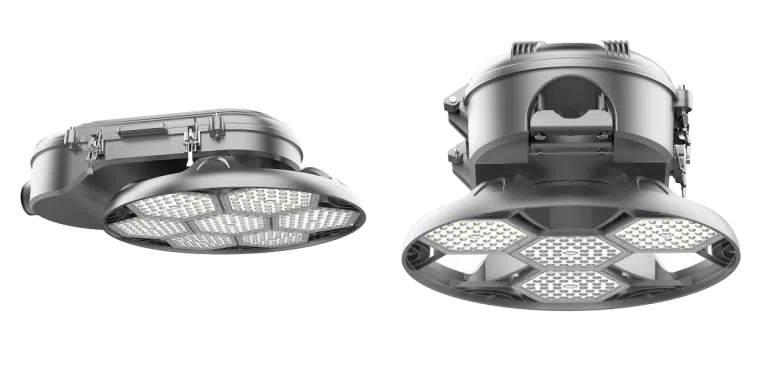


Our LED Highway Lights include cobra head street lights, roadway luminaires, high mast lights, tunnel lights, linear fixtures, wall packs, canopy lights, flood lights, and temporary work-zone fixtures. Available models vary by voltage configuration, distribution pattern, controls, and mounting method, including pole-mounted, wall-mounted, ceiling-mounted, and canopy-style installations.
These fixtures are used on highways, freeways, interchanges, ramps, exits, merge lanes, overpasses, underpasses, tunnels, pedestrian crossings, and highway construction work zones.
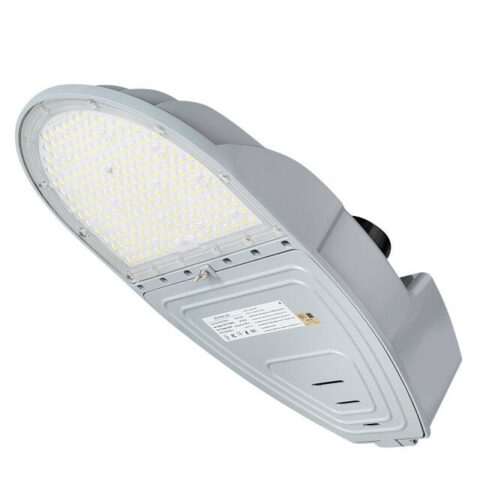


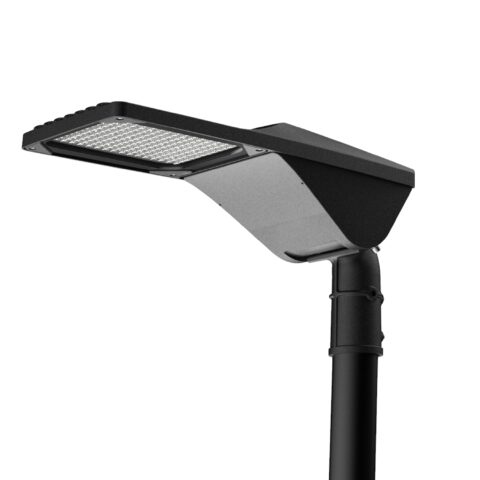

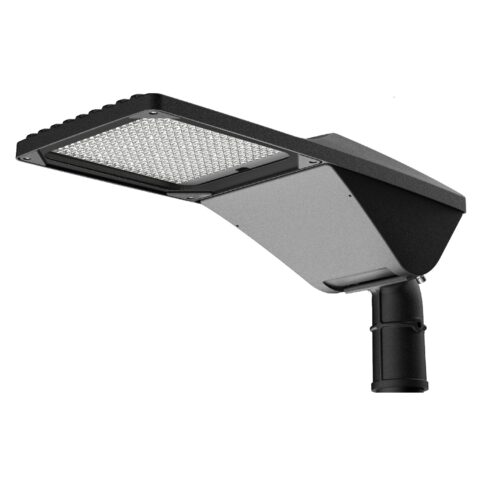
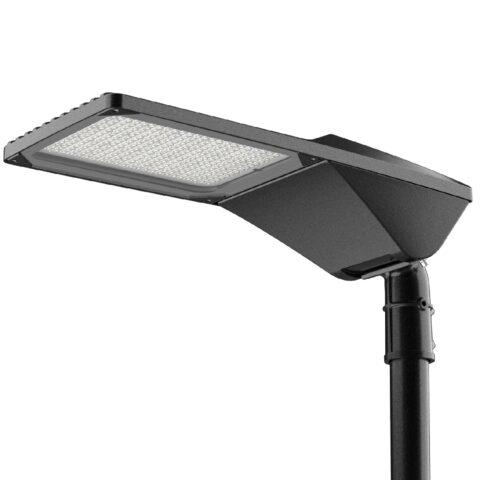
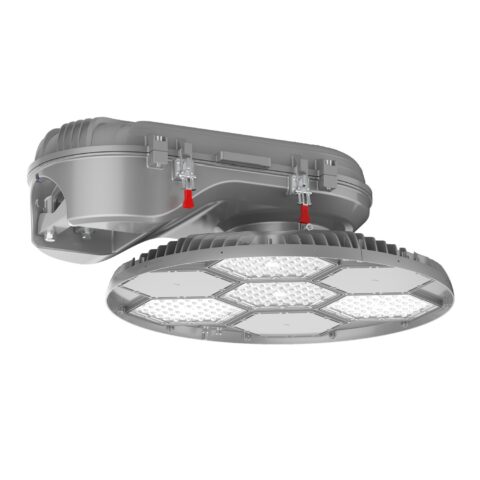
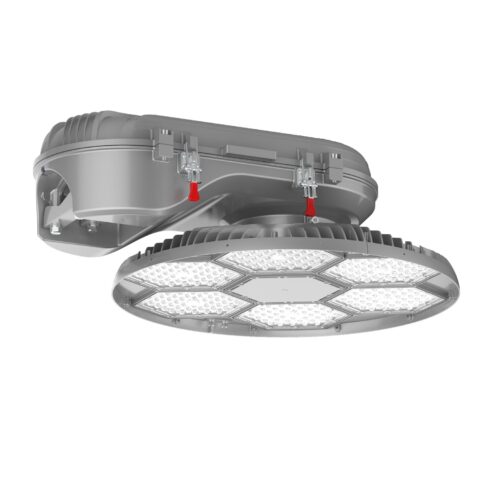
LED Highway Lighting for Roadways, Interchanges, Ramps, Underpasses, and Tunnels
LED highway lighting is used on roadways, freeways, ramps, exits, merge lanes, interchanges, overpasses, underpasses, tunnels, pedestrian crossings, and construction work zones. These applications require controlled light distribution, proper fixture spacing, glare control, reliable outdoor performance, and fixture selection that fits the roadway layout and project requirements. Start by identifying the roadway application, target light level, mounting height and pole spacing, distribution pattern, voltage, controls, and applicable project or DOT requirements.
Highway lighting is different from general parking lot or building-mounted exterior lighting. Roadway fixtures must support driver visibility, lane recognition, merging decisions, pavement visibility, signs, curves, conflict points, and roadside awareness without creating excessive glare or light trespass. Final requirements may depend on roadway classification, speed, traffic volume, geometry, pavement type, pedestrian activity, local standards, utility requirements, and DOT specifications.
Selection and Installation Note: Product specifications, wattage, lumen output, optics, distribution pattern, color temperature, voltage, dimming, controls, mounting method, certifications, roadway suitability, environmental rating, surge protection, and warranty coverage vary by model. Confirm the selected product specification before ordering. For highway lighting, roadway lighting, tunnels, interchanges, ramps, overpasses, underpasses, construction zones, public infrastructure, utility-owned systems, or DOT-related projects, verify requirements with the project engineer, local inspector, transportation agency, utility provider, roadway-lighting designer, or a licensed electrical professional.
Highway Lighting Applications and Fixture Types
Highway lighting projects may use cobra head street lights, roadway luminaires, high mast lights, wall packs, canopy lights, tunnel lights, linear fixtures, flood lights, or temporary work-zone fixtures, depending on the application. The best fixture type depends on the location, mounting height, distribution pattern, electrical service, access for maintenance, and project requirements.
| Application | Common Fixture Approach |
|---|---|
| Highways and freeways | LED street lights, roadway lights, and LED cobra head lights are commonly used for standard pole-mounted roadway lighting. |
| Interchanges, ramps, and exits | LED high mast lights, roadway lights, and cobra head lights may be used where multi-lane coverage, merging areas, and complex geometry require broader distribution. |
| Underpasses | LED wall packs, LED canopy lights, or linear fixtures may be used depending on the mounting surface, clearance, moisture exposure, and vandal exposure. |
| Tunnels | Tunnel-rated LED fixtures, linear fixtures, or ceiling-mounted fixtures may be required. Tunnel projects should be reviewed for entrance zones, interior zones, ventilation, corrosion, emergency requirements, and controls. |
| Highway construction zones | LED flood lights, portable work lights, and temporary area lights may be used for lane closures, staging areas, equipment zones, and nighttime work. |
| Pedestrian crossings and walkways | Street lights, area lights, or walkway fixtures may be used where pedestrian activity, transit stops, shared-use paths, or crossings are part of the roadway project. |
How to Choose LED Highway Lights
Highway lighting should be selected based on roadway conditions and project requirements, not wattage alone. Fixture wattage, lumen output, optic type, distribution pattern, mounting height, pole spacing, glare control, and uniformity all affect the final result.
| Selection Factor | What to Confirm |
|---|---|
| Roadway type | Confirm whether the project involves a highway, freeway, ramp, interchange, underpass, tunnel, overpass, pedestrian crossing, or work zone. Each application has different lighting needs. |
| Project requirements | Review local, utility, agency, DOT, or project-specific requirements before selecting fixtures. Public roadway projects often require formal engineering review. |
| Target light level | Use foot-candle ranges only as early planning guidance. Final levels may be based on luminance, illuminance, uniformity, glare, roadway classification, pavement type, and project criteria. |
| Distribution pattern | Type II, Type III, Type IV, Type V, or roadway-specific optics may be used depending on pole position, lane width, shoulder width, spacing, and desired light distribution. |
| Mounting height and pole spacing | Confirm existing pole height, arm length, pole spacing, setbacks, and mounting angle. Reusing existing poles may be possible, but spacing and light distribution still need review. For new installations, review appropriate street light poles and mounting requirements. |
| Glare control | Review driver viewing angles, ramps, curves, approaches, pedestrian areas, nearby properties, and opposing traffic. Excessive glare can reduce visibility even when measured light levels look adequate. |
| Uniformity | Uniformity is critical for roadway visibility. Uneven lighting can create bright and dark patches that make lane markings, pavement conditions, objects, and conflict points harder to see. |
| Voltage and electrical service | Confirm available voltage before ordering. Many roadway fixtures are available in 120-277V or 277-480V configurations, but compatibility varies by model. |
| Controls | Photocells, dimming, networked controls, scheduling, and adaptive controls may be useful depending on the project. Confirm driver compatibility, control protocol, agency requirements, and maintenance responsibilities. |
| Outdoor durability | Review wet-location rating, IP rating, corrosion exposure, vibration, wind, road salt, surge protection, operating temperature, and fixture housing construction. |
Recommended Foot-Candles for Highway and Roadway Lighting
Highway foot-candle levels vary by roadway type, traffic conditions, conflict points, pavement reflectance, fixture layout, pole spacing, mounting height, uniformity, glare limits, and project requirements. The ranges below are general planning values only. Final roadway lighting criteria should be confirmed against the applicable project standard, DOT requirement, local requirement, and photometric calculations when required.
Highway Lighting vs. Street Lighting
Street lighting and highway lighting often use similar fixture families, but they are not always designed the same way. Local streets may include lower speeds, driveways, sidewalks, storefronts, and pedestrians. Highway lighting often involves higher speeds, longer sight distances, wider lanes, ramps, exits, barriers, overpasses, and larger pole spacing.
For this reason, an LED street light that works well on a local roadway may not be the right fit for a freeway ramp, high-speed merge lane, tunnel approach, or interchange. Distribution pattern, mounting height, pole spacing, glare control, uniformity, and project standards should be reviewed before selecting fixtures.
Underpass and Tunnel Lighting Considerations
Underpasses and tunnels need special attention because daylight changes, shadows, enclosed spaces, moisture, exhaust, corrosion, clearance, and driver adaptation can affect visibility. Underpasses may use wall-mounted, ceiling-mounted, or canopy-style fixtures depending on the structure. Tunnel lighting may require more specialized review, including entrance and transition zones, emergency lighting, corrosion resistance, controls, and maintenance access. Projects involving overpasses or bridge structures may also require application-specific LED bridge lighting.
Do not choose tunnel or underpass lighting by wattage alone. Confirm the mounting location, fixture rating, distribution pattern, glare, visibility, electrical access, and project requirements before ordering.
Construction and Work-Zone Highway Lighting
Highway construction lighting may be temporary, portable, or semi-permanent depending on the project phase. Work-zone lighting should support worker visibility while avoiding glare toward drivers, equipment operators, flaggers, and nearby traffic. Mounting height, aiming, shielding, power source, portability, and work-zone layout should be reviewed before selecting flood lights or temporary area lights. Application-specific LED construction lighting options can support temporary work areas and nighttime operations.
For active roadway projects, confirm temporary lighting requirements with the project team, safety team, contractor, local inspector, or applicable transportation agency.
Benefits of LED Highway Lighting
- Improved visibility: Properly selected LED roadway fixtures can support nighttime visibility for lanes, shoulders, ramps, signs, pavement, and conflict points.
- More controlled light distribution: Roadway optics can help place light where it is needed and reduce wasted light outside the target area.
- Energy efficiency: LED fixtures can reduce energy use compared with older HID systems, with actual savings depending on wattage, operating hours, controls, utility rates, and existing fixture condition.
- Reduced maintenance: LED systems eliminate routine lamp and ballast replacement, which can reduce service calls and lane-closure-related maintenance when properly specified.
- Instant on operation: LEDs reach full output quickly without the warm-up time associated with some HID technologies.
- Controls compatibility: Some models support photocells, dimming, scheduling, networked controls, or adaptive strategies, depending on fixture and driver selection.
- Outdoor durability: Highway-grade fixtures may be available with wet-location ratings, IP ratings, corrosion-resistant housings, surge protection, and vibration-resistant construction, depending on model.
Highway Lighting Certifications, Rebates, and Warranty Support
Selected LED highway lights from LED Lighting Supply may carry a safety certification or listing from an organization such as UL, ETL, or CSA, depending on the product and its intended market. Some models may also be DLC or DLC Premium listed for utility rebate programs where available. DLC qualification is a performance and efficiency program, not an electrical safety certification. Rebate requirements vary by utility, region, and product listing, so confirm eligibility on the selected product specification before ordering.
Warranty terms vary by fixture and manufacturer; many products offer a 5-year warranty, while other terms may apply. Before purchase, confirm certifications, DLC status, voltage, controls compatibility, mounting method, wet-location or environmental rating, surge protection, warranty coverage, and whether the fixture is appropriate for the roadway layout and surrounding conditions.
Common Highway Lighting Purchasing and Project-Planning Mistakes
- Ordering before confirming the exact catalog configuration: Verify the ordered voltage, optic, mounting hardware, finish, control receptacle, photocell or control option, and surge-protection configuration. A fixture family may have multiple configurations that look similar but serve different applications.
- Not obtaining fixture-specific photometric files: Request the IES file and published photometric data for the exact optic and mounting orientation being considered. Generic lumen values or a product-family brochure cannot replace a layout using the selected fixture.
- Overlooking mounting-interface details: Confirm arm type, tenon size, slipfitter dimensions, bolt pattern, drill pattern, fixture weight, and available clearance before ordering replacements for existing poles or structures.
- Failing to account for maintenance access: Consider bucket-truck access, high-mast lowering systems, lane-closure requirements, replacement-driver availability, and how controls or photocells will be serviced after installation.
- Assuming an IP or wet-location rating addresses every outdoor exposure: In coastal, road-salt, tunnel, chemical, or high-vibration environments, also review housing materials, finish, hardware, gaskets, operating temperature, and manufacturer environmental documentation.
- Missing utility or agency submittal requirements: Public and utility-owned projects may require cut sheets, photometric reports, certifications, drawings, controls information, and approved-product documentation before equipment can be purchased or installed.
- Changing fixtures without reviewing pole loading: Fixture weight alone does not establish structural suitability. Pole loading can depend on fixture EPA, brackets, arms, mounting geometry, wind criteria, pole condition, and foundation or embedment details.
- Leaving commissioning until after installation: Plan photocell orientation, dimming settings, control addressing, scheduling, and nighttime aiming or verification before the project is turned over.
Contact us about LED highway lighting, and our Product Specialists can help review fixture type, distribution pattern, voltage, mounting height, controls, environmental rating, surge protection, and product specifications for your roadway application.
LED Highway Lighting FAQs
How Should I Choose LED Highway Lighting?
Choose LED highway lighting based on roadway conditions and project requirements, not wattage alone. Confirm fixture output, optics, distribution pattern, mounting height, pole spacing, glare control, uniformity, voltage, controls, and outdoor durability.
Can LED Street Lights Be Used For Highway Lighting?
LED street lights may be used for standard pole-mounted highway and freeway lighting, but a fixture that works on a local roadway may not be the right fit for a freeway ramp, high-speed merge lane, tunnel approach, or interchange. Review distribution pattern, mounting height, pole spacing, glare control, uniformity, and project standards before selecting fixtures.
What Should I Review When Reusing Existing Highway Light Poles?
When reusing existing poles, confirm pole height, arm length, pole spacing, setbacks, and mounting angle. Reusing poles may be possible, but spacing and light distribution still need review.
Can Foot-Candle Ranges Be Used To Finalize Highway Lighting?
Foot-candle ranges should be used only as early planning guidance for highway lighting. Final criteria may depend on luminance, illuminance, uniformity, glare, roadway classification, pavement type, project standards, and photometric calculations when required.
How Should Underpass And Tunnel Lighting Be Selected?
Underpass and tunnel lighting should be selected by confirming the mounting location, fixture rating, distribution pattern, glare, visibility, electrical access, and project requirements. Tunnel projects may require review of entrance and transition zones, emergency lighting, corrosion resistance, controls, and maintenance access.
What Voltage Options Are Available For LED Highway Lights?
Many roadway fixtures are available in 120-277V or 277-480V configurations, but voltage compatibility varies by model. Confirm available voltage and the selected product specification before ordering.
How Can I Confirm Rebate Eligibility And Warranty Coverage?
Confirm rebate eligibility and warranty coverage on the selected product specification before ordering. Many models are DLC or DLC Premium listed for utility rebate support where available, and most LED highway lights include a 5-year warranty unless otherwise specified.
What Should Be Confirmed Before Ordering LED Highway Lighting For A DOT Or Public Roadway Project?
For DOT-related, utility-owned, public infrastructure, highway, roadway, tunnel, interchange, ramp, underpass, or construction-zone projects, verify requirements with the appropriate project and roadway authorities identified for the project. Also confirm the selected fixture's specifications, mounting method, certifications, voltage, controls compatibility, environmental rating, surge protection, and roadway suitability.