LED High Mast Lighting
- Designed for ports, rail yards, and large industrial areas
- Photometric planning available for fixture placement and coverage
- Application support for retrofit and new high mast projects


Get Your Custom Lighting Plan With Product Recommendations
- Layout designed around pole spacing, mounting height, and beam distribution for uniform ground-level coverage
- Fixture count and optics matched to target foot-candle levels with appropriate wattage and aiming angles
- LED options can reduce energy use and extend maintenance intervals compared with legacy HID high mast systems


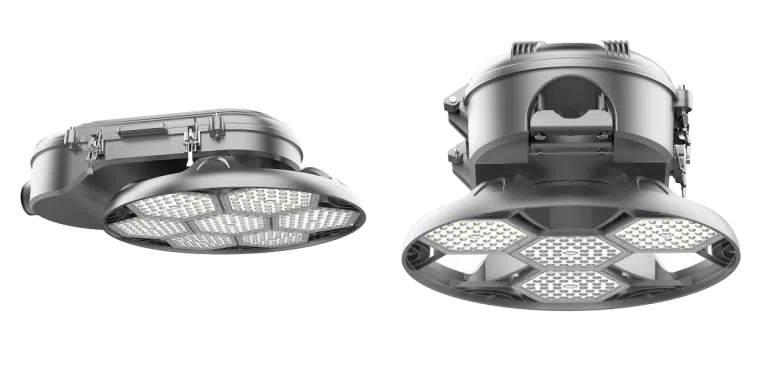
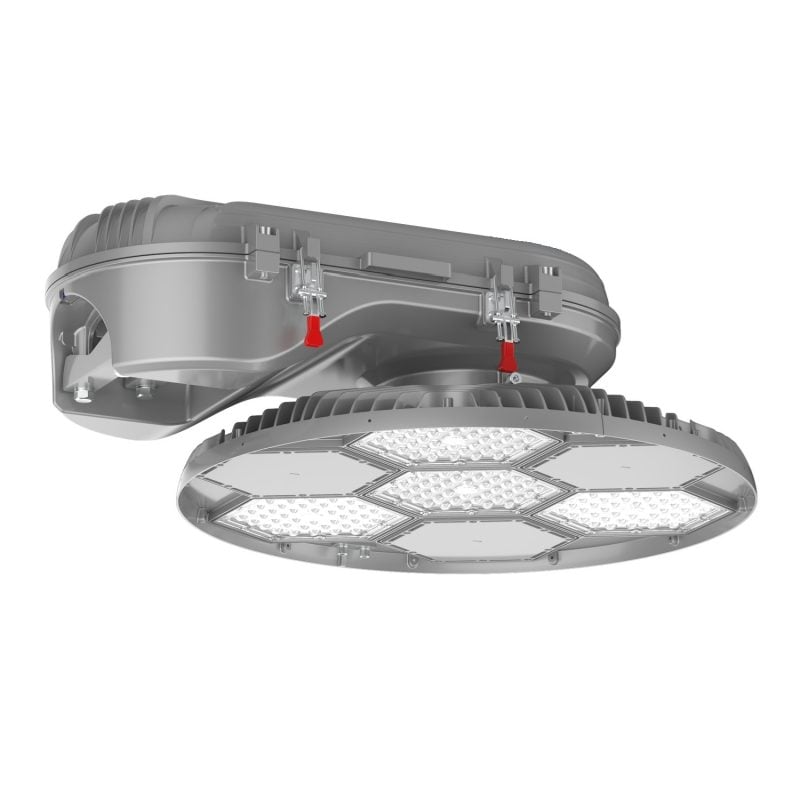
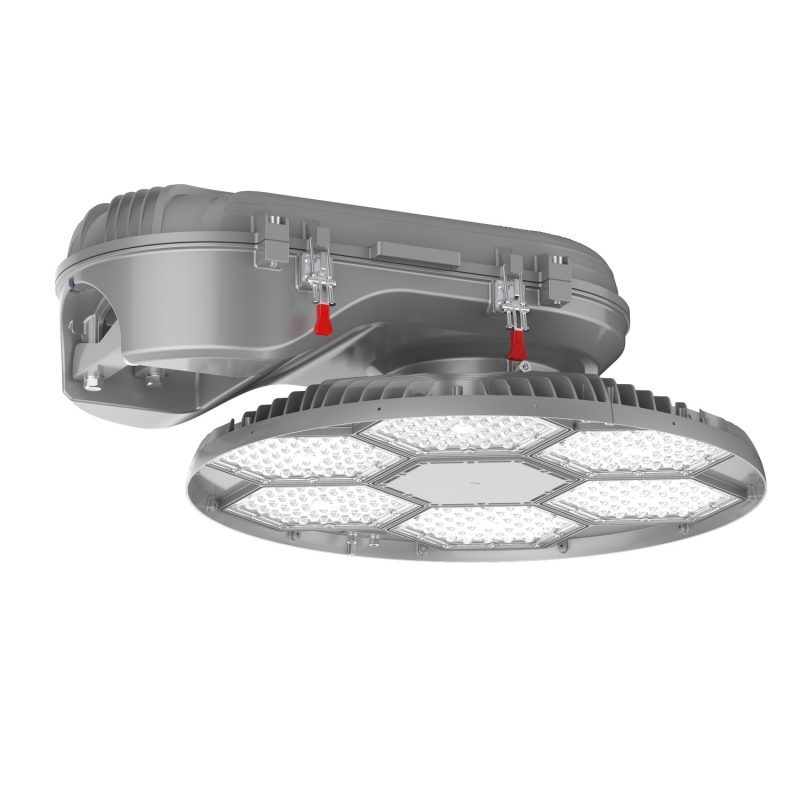
Our LED High Mast Lights include elevated outdoor fixtures with varied beam distributions, voltage configurations, controls, and mounting arrangements. Available models support high mast retrofit and new-installation projects, with options for photocells, dimming, motion sensing, and scheduling where compatible.
These fixtures are commonly used in ports, container terminals, rail yards, industrial and storage yards, large parking areas, roadways, interchanges, and security perimeter areas.

LED High Mast Lighting for Large Outdoor and Industrial Areas
LED high mast lights are designed to illuminate large outdoor and industrial areas from elevated mounting heights. They are commonly used where broad coverage is needed across ports, rail yards, container terminals, large parking areas, storage yards, industrial sites, security areas, and roadway or interchange applications.
Before selecting fixtures, start with the site layout: pole height and spacing, headframe or mounting configuration, coverage area, target foot-candles, uniformity, glare and spill control. Then verify fixture output and distribution, voltage, controls, wind exposure, and structural condition. High mast projects should be designed around these site requirements rather than fixture wattage alone.
Many projects replace older metal halide or other HID high mast systems with LED. An LED retrofit may reduce connected load and maintenance requirements while providing instant-on operation and more flexible control options. Actual energy use and lighting performance depend on the selected fixtures, existing system, operating schedule, and site design.
Planning and Installation Note: High mast installations can involve significant structural and electrical considerations. Pole condition, anchor base, mounting hardware, EPA (effective projected area), local wind requirements, voltage, controls, surge protection, and fixture weight should be reviewed for the specific project. Final structural and electrical requirements should be confirmed by qualified professionals where required.
When High Mast Lighting Is a Good Fit
High mast lighting is most useful where a relatively small number of tall poles must illuminate a large area. The elevated mounting position can provide broad coverage while keeping poles and fixtures away from normal vehicle and equipment movement.
| Project Condition | What to Consider |
|---|---|
| Large open areas | Ports, rail yards, container yards, storage areas, large parking areas, industrial yards, and similar sites may benefit from elevated lighting when the pole layout can provide suitable coverage. |
| Tall existing poles | For retrofit projects, review the existing pole, headframe, mounting hardware, fixture weight, and wind-loading requirements before selecting replacement fixtures. |
| Large coverage requirements | Fixture output and distribution should be selected around pole height, spacing, site geometry, and the required light levels rather than wattage alone. |
| Continuous or long operating hours | LED may reduce maintenance associated with older HID lamps and ballasts and can support photocells, dimming, motion controls, and other operating strategies where compatible. |
| Glare or spill concerns | Beam distribution, aiming, fixture location, and photometric performance should be reviewed to keep useful light within the intended area. |
For lower mounting heights or smaller areas, standard LED area lighting may be a better fit than a high mast system.
Key High Mast Lighting Selection Factors
| Selection Factor | What to Review |
|---|---|
| Pole height and spacing | Use the actual mounting height, pole locations, spacing, and coverage area when evaluating fixture output and distribution. |
| Lumen output and optics | Select fixtures according to required light levels, mounting height, spacing, beam distribution, glare control, and photometric performance. Do not rely on wattage alone. |
| Target foot-candles and uniformity | Required light levels depend on the application. A photometric plan can model average and minimum light levels, uniformity, fixture placement, and distribution across the site. |
| Headframe and mounting | Review the existing or proposed headframe, tenon or pipe-mount dimensions, fixture quantity, bolt pattern where applicable, fixture weight, and service access. |
| Wind load and EPA | LED fixtures may have different dimensions and wind profiles than the HID fixtures they replace. Review effective projected area, local wind requirements, pole condition, anchor condition, and mounting hardware as part of the structural evaluation. |
| Voltage | Confirm the site's available electrical service and the voltage supported by the selected fixture before ordering. High mast and industrial projects may use higher-voltage electrical systems. |
| Controls | Depending on the fixture and project, controls may include photocells, dimming, motion sensing, scheduling, or other control strategies. Verify compatibility with the exact fixture and electrical system. |
| Environmental exposure | Review rain, dust, temperature, impact exposure, corrosion, and other site conditions against the environmental ratings and construction of the selected fixture. |
| Surge protection | Outdoor pole-mounted lighting can be exposed to electrical surges. Review the fixture's surge protection and whether additional surge protection for LED lights is appropriate for the project. |
| Maintenance access | High mounting heights can require specialized access equipment. Consider fixture serviceability, crane or lift access, site operations, and maintenance planning before installation. |
Photometric Planning for High Mast Projects
High mast lighting should be planned around the required illumination on the ground, not simply by matching the wattage of the existing fixtures. Pole height, fixture distribution, aiming, spacing, surrounding structures, and site geometry can significantly affect light levels and uniformity.
A high mast lighting plan can model fixture placement and distribution before equipment is ordered. Photometric planning is especially useful for ports, rail yards, container terminals, industrial yards, large parking areas, roadways, security perimeters, and other sites where uneven lighting, excessive glare, or dark areas can create operational problems.
Information That Helps Build an Accurate Lighting Plan
- Site type and dimensions: Include the overall area, operational zones, boundaries, and important structures or obstructions.
- Pole details: Provide mounting height, quantity, spacing, and existing headframe or arm configuration.
- Mounting information: Include available tenon or pipe-mount dimensions, fixture mounting arrangement, and known weight or structural restrictions.
- Electrical information: Provide available voltage, phase, and control wiring information where known.
- Performance goals: Include target foot-candles, uniformity expectations, glare or spill concerns, and operating hours.
- Controls: Identify photocell, dimming, motion sensing, scheduling, or networked control requirements where applicable.
A site plan or aerial image showing approximate pole locations and dimensions can also improve the accuracy of a photometric layout.
Request a high mast lighting plan to review fixture placement, output, distribution, light levels, uniformity, and coverage before selecting fixtures for the project.
Common High Mast Lighting Applications
High mast systems are used where elevated lighting can provide broad coverage over a large operational area. Common applications include:
- Ports and container terminals: Large loading, unloading, and storage areas can require broad lighting coverage for equipment movement and nighttime operations. See port and container terminal lighting.
- Rail yards: Elevated lighting can help illuminate tracks, switching areas, loading zones, and other large rail facilities. See railroad yard lighting.
- Industrial and storage yards: High mast fixtures can cover large open areas where equipment, vehicles, or stored materials make lower pole placement less practical.
- Large parking areas: High mast systems may be suitable where the site layout favors fewer tall poles and broad-area coverage.
- Roadways and interchanges: Elevated lighting is also used for some highway and interchange applications. See LED highway lighting.
- Security and perimeter areas: Large sites may use high mast lighting where broad nighttime visibility is required across the property.
Structural and Installation Considerations
High mast retrofits require more than matching a new fixture to an old mounting location. The pole and mounting system should be suitable for the complete LED fixture array.
Review the pole, anchor base, headframe, tenon or mounting hardware, fixture weight, EPA, and local wind requirements. An LED retrofit may place a different load and wind profile on the pole than the original HID system, even when the mounting arrangement appears similar.
Installation planning should also account for electrical service, control wiring, surge protection, fixture access, crane or lift requirements, and how installation or future maintenance will affect site operations.
Structural suitability and installation requirements should be reviewed by qualified professionals where required by the project, local codes, or site conditions.
High Mast Lighting Certifications, Rebates, and Warranty Support
LED high mast lights from LED Lighting Supply may carry safety certification marks from organizations such as UL, Intertek/ETL, or CSA, depending on the fixture series and configuration. Selected models may also be qualified by the DesignLights Consortium (DLC), including DLC Premium where applicable, which may support utility rebate eligibility.
Safety certification, DLC qualification, environmental ratings, surge protection, controls, voltage, and other specifications vary by model. Confirm the documentation for the exact fixture configuration being considered before ordering, particularly when the project has bid, rebate, electrical, environmental, or regulatory requirements.
The DesignLights Consortium Qualified Products List can be used to check DLC qualification when rebate documentation is required. UL lighting resources can also help with product-listing information.
Warranty terms and durations vary by fixture and configuration. Review the product-specific warranty along with voltage, controls, mounting, surge protection, environmental ratings, and fixture configuration before purchase.
Replacing Metal Halide High Mast Lights with LED
LED high mast fixtures are commonly used to replace older metal halide and other HID systems. LED can reduce connected wattage, eliminate lamp warm-up time, support lighting controls, and reduce maintenance associated with lamp and ballast replacement.
A retrofit should not be treated as a watt-for-watt or fixture-for-fixture substitution without checking photometric performance. The appropriate LED output depends on the existing pole layout, mounting height, beam distribution, required foot-candles, uniformity, and the operating needs of the site.
Choosing Between a High Mast Retrofit and a New Lighting Layout
A high mast retrofit may be appropriate when the existing poles, headframes, mounting arrangement, electrical system, and structural loading can support the selected LED fixtures. Retaining a suitable pole layout can reduce scope compared with installing new poles, but the replacement fixture array still requires project-specific review.
A new layout may be the better option when the existing poles are poorly located for current operations, cannot support the proposed fixture loading, provide inadequate coverage, or create glare and spill concerns that cannot be resolved through fixture selection and aiming. A photometric plan can compare fixture distributions, pole locations, and light levels before equipment is ordered.
Need help planning a high mast project? Provide the pole layout, mounting heights, site dimensions, voltage, and target lighting requirements so the fixture configuration and photometric performance can be reviewed before ordering.
LED High Mast Lighting FAQs
When Is High Mast Lighting A Good Fit?
High mast lighting is most useful when a relatively small number of tall poles must illuminate a large area. It is commonly used for ports, rail yards, container terminals, large parking areas, storage yards, industrial sites, security areas, and roadway or interchange applications.
How Should I Select High Mast Fixtures For A Large Site?
Select high mast fixtures around the site's pole height, pole spacing, coverage area, required light levels, beam distribution, glare control, and photometric performance rather than wattage alone. Site geometry, fixture aiming, surrounding structures, and uniformity requirements can also affect the selection.
Why Is A Photometric Plan Important For High Mast Lighting?
A photometric plan can model fixture placement, distribution, average and minimum light levels, uniformity, and coverage before equipment is ordered. It can also help identify poor uniformity, dark areas, excessive light, glare, and spill on large projects.
What Information Is Needed For A High Mast Lighting Plan?
An accurate high mast lighting plan uses site dimensions, operational zones, pole mounting height and spacing, headframe or arm configuration, available voltage, control wiring information, and target foot-candles or uniformity expectations. A site plan or aerial image with approximate pole locations and dimensions can also improve layout accuracy.
Can LED High Mast Lights Replace Metal Halide Or HID Systems?
LED high mast fixtures are commonly used to replace older metal halide and other HID systems, and may reduce connected load and maintenance requirements while providing instant-on operation and more flexible control options. The retrofit should not be treated as a watt-for-watt or fixture-for-fixture substitution without checking photometric performance, pole layout, mounting height, beam distribution, required foot-candles, uniformity, and site operating needs.
What Should Be Reviewed Before Retrofitting Existing High Mast Poles?
Before a high mast retrofit, review the existing pole, anchor base, headframe, mounting hardware, fixture weight, effective projected area, and local wind requirements. An LED fixture array may have a different load and wind profile than the original HID system, even when the mounting arrangement appears similar.
How Should Voltage And Controls Be Verified For A High Mast Project?
Confirm the site's available electrical service and the voltage supported by the selected fixture before ordering. Depending on the fixture and project, controls may include photocells, dimming, motion sensing, scheduling, or other strategies, but compatibility with the exact fixture and electrical system should be verified.
What Should Be Considered For High Mast Maintenance Access?
High mast maintenance planning should account for fixture serviceability, crane or lift access, site operations, and how installation or future maintenance may affect the site. High mounting heights can require specialized access equipment.