


LED Sports Lighting
- Fixture options for fields, courts, gyms, and arenas
- Beam angles and aiming accessories for glare control
- USA-based support for fixture and layout selection


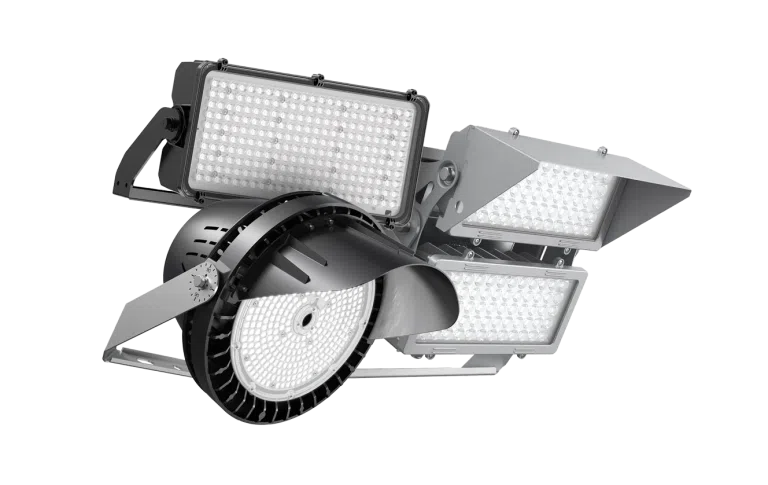

Get Your Custom Lighting Plan With Product Recommendations
- Tell us about the sports facility you're lighting, and a product specialist can help you decide which fixtures to use, how many you need, and where to place them.


Our LED Sports Lighting includes stadium lights, flood lights, high bays, low bays, and impact-resistant fixtures for indoor and outdoor athletic facilities. Available models vary by optics, beam angles, mounting configuration, dimming, zone controls, shields, visors, aiming brackets, and surge protection options.
These fixtures are used for sports fields, stadiums, courts, gyms, arenas, tracks, recreational facilities, training facilities, field houses, and multi-sport complexes.
What Is LED Sports Lighting?
LED sports lighting is used to illuminate indoor and outdoor athletic spaces, including fields, courts, gyms, arenas, tracks, recreational facilities, and multi-sport complexes. These lighting systems are designed to support visibility for players, spectators, coaches, officials, staff, and cameras when properly specified for the sport, mounting height, facility layout, and level of play.
Sports lighting is not one-size-fits-all. Start by identifying the sport, indoor or outdoor environment, mounting height, facility layout, existing infrastructure, electrical service, and level of play. These factors help determine the appropriate fixture type, mounting layout, optics, controls, glare management, and light-level targets. A baseball field, football field, tennis court, basketball gym, soccer field, pickleball court, rodeo arena, and recreational complex can each require a different approach. This page provides a general overview of LED sports lighting; for sport-specific recommendations, fixture spacing, pole layout, and light-level guidance, review the individual sports lighting category that matches your facility.
Selection and Installation Note: Product specifications, wattage, lumen output, optics, beam angle, pole height, mounting hardware, voltage, dimming, controls, color temperature, CRI, surge protection, environmental rating, certifications, and warranty coverage vary by model. Confirm the selected product specification before ordering. For sports fields, courts, arenas, gyms, schools, parks, broadcast applications, or code-sensitive installations, verify requirements with the facility team, project specifier, local authority, league or organization requirements where applicable, and a licensed electrical professional.
Spartan Sports Park Improves Field Lighting With LED Flood Lights Case Study
The Backstory:
Spartan Sports Park recognized that their existing 1000-watt metal halide fixtures were falling short on the field. Suboptimal light levels negatively impacted player performance, while the energy demands of the outdated system drove operating costs higher than necessary. They reached out to LED Lighting Supply seeking a custom solution built for their baseball field requirements.
The Customer's Challenge:
The metal halide fixtures were inefficient, resulting in a significant energy expense. Additionally, uneven light levels on the field created safety risks for both players and sideliners.
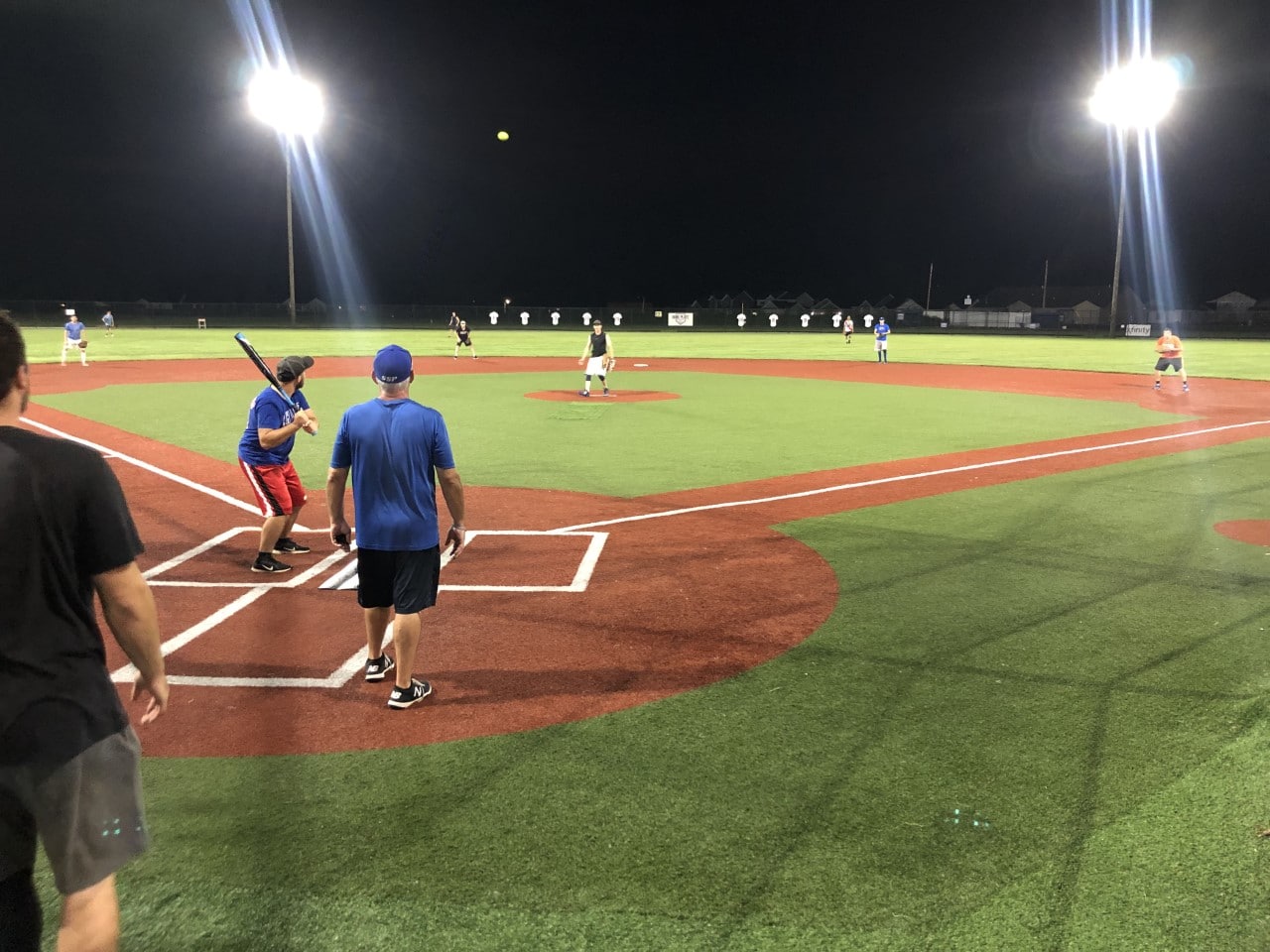
Lighting Plan We Created for the Customer
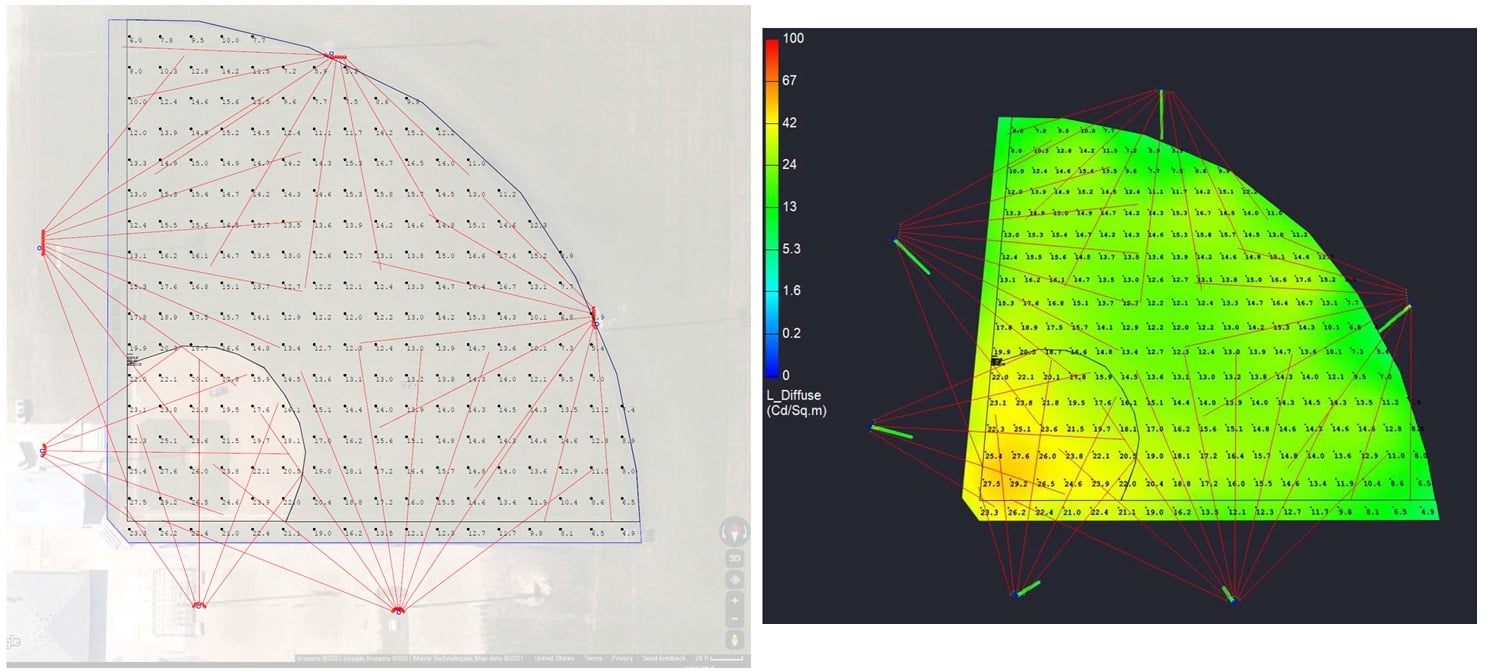
Lighting Plan Metrics:
- Mounting Height: 25 feet
- Infield Foot Candles Achieved: 20 FC
- Outfield Foot Candles Achieved: 13 FC
- Product(s) Used: MLLG-AG-LED-IMF-400-5-[Optic]-TR-[V]
St. Francis Borgia High School Sports Field Flood Light Upgrade Case Study
The Backstory of Our Relationship with St. Francis Borgia High School
LED Lighting Supply was approached by Travis Stockhorst, Maintenance Director at St. Francis Borgia High School in Washington, Missouri.
Referred to us by one of our sports field lighting customers, Travis was seeking professional support for the school’s football and soccer field lighting upgrade. At the time of his inquiry, the field operated on aging 1500-watt metal halide lights, creating inadequate light levels.
The Challenge of Lighting St. Francis Borgia High School’s Football and Soccer Field
The legacy lighting in place produced glare and shadows on the field, impacting player performance while increasing safety risks. Due to tight budgets, the field required an updated lighting system that would adhere to the four existing 60-foot poles.
The project required confirmation of local football and soccer field lighting requirements before our team could create a photometric lighting plan and a custom light fixture recommendation.
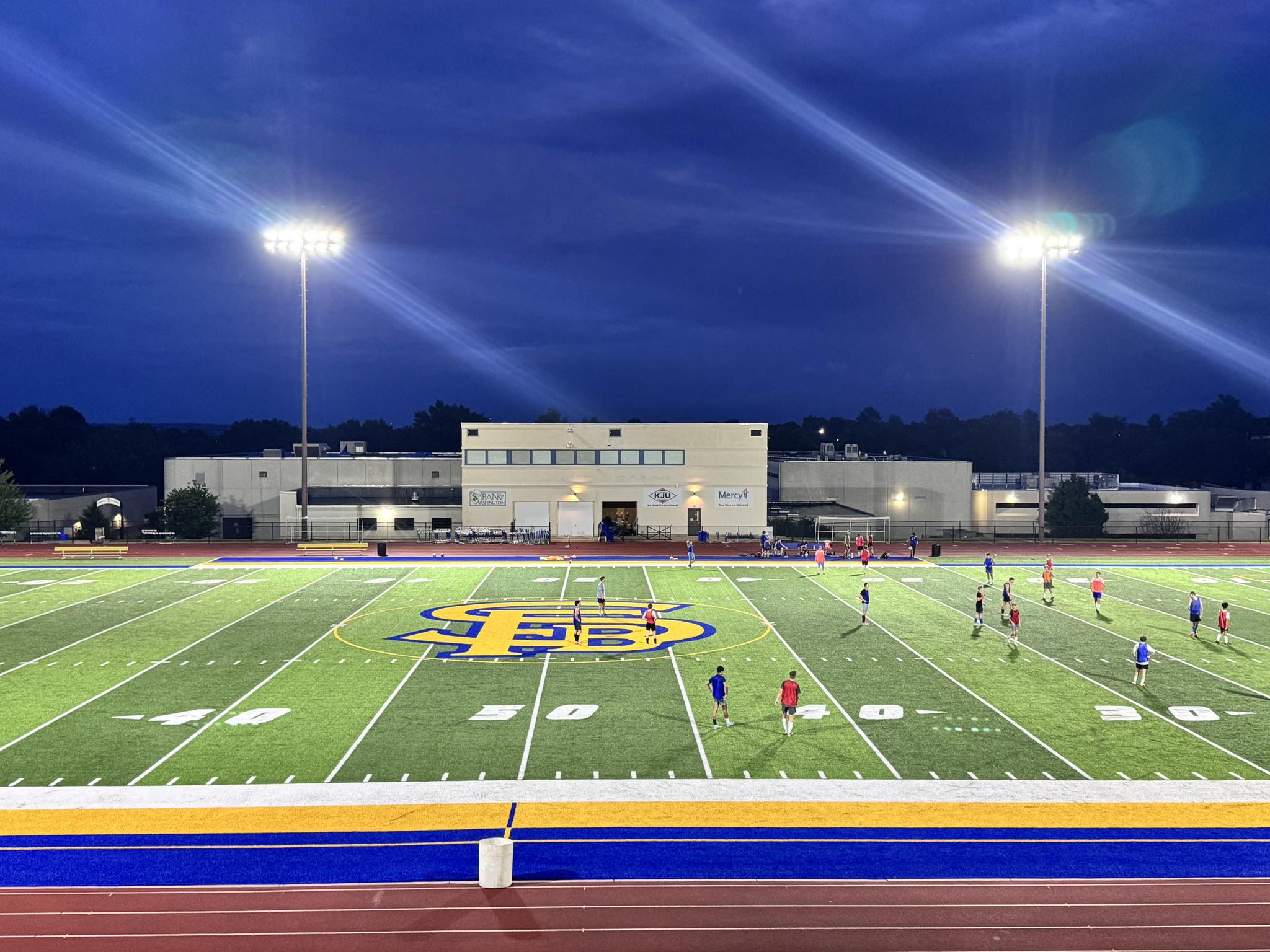
St. Francis Borgia High School Football and Soccer Field With Our LED Lighting Solution Installed
Featured Lighting Plan for St. Francis Borgia High School
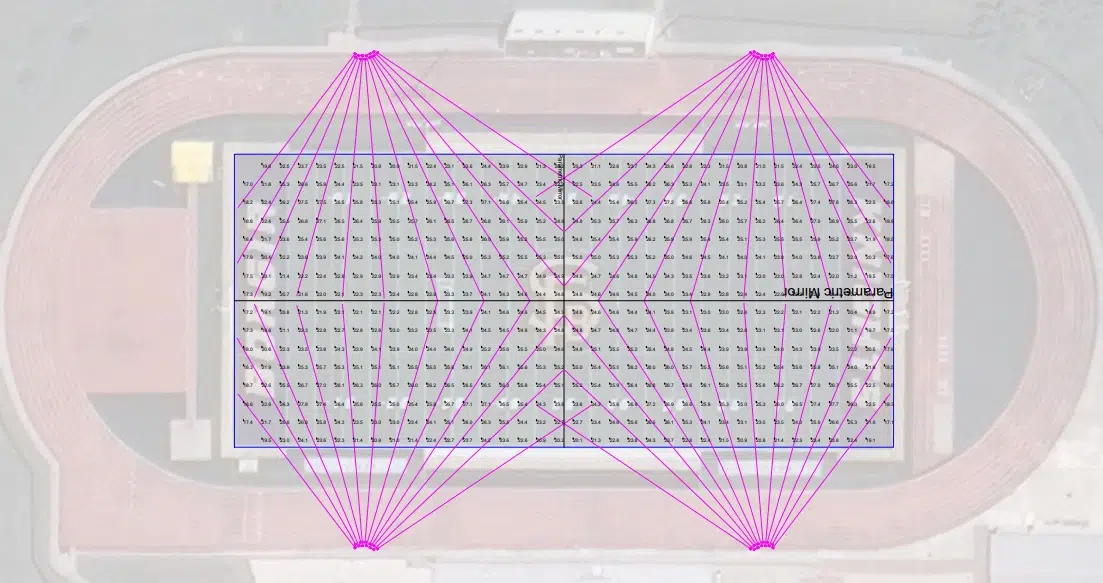
Lighting Plan Metrics
- Mounting Height (Feet): 60 ft
- Average Foot Candles (fc) Achieved: 34 fc
- Uniformity (Max/Min): 1.61
- Product(s) Used: MLLG-LED-HPSL-600-57-60-[V]
Where LED Sports Lighting Is Used
LED sports lighting can be used in both indoor and outdoor athletic facilities. Outdoor projects often involve athletic field light poles, aiming, glare control, and spill-light management. Indoor projects may involve ceiling-mounted, pendant-mounted, or structure-mounted fixtures depending on the building and sport.
| Sports Lighting Area | General Lighting Priorities |
|---|---|
| Outdoor sports fields | Field coverage, pole height, aiming, uniformity, glare control, spill light, player visibility, and spectator comfort. |
| Outdoor courts | Clear ball tracking, reduced glare, controlled fixture aiming, court coverage, and neighboring-property considerations. |
| Indoor gyms and courts | Uniform light, comfortable visibility, ceiling height, fixture protection, controls, and reduced glare from polished floors. |
| Arenas and event spaces | Higher mounting, spectator visibility, cameras, controls, maintenance access, and event flexibility. |
| Recreational and park facilities | Balanced visibility, operating cost control, durability, neighborhood impact, and appropriate light levels for recreational use. |
| Multi-sport complexes | Lighting layouts that support different field sizes, schedules, sports, controls, and maintenance needs. |
Indoor vs. Outdoor Sports Lighting
Indoor and outdoor sports facilities have different lighting challenges. Outdoor facilities must account for pole placement, wind exposure, fixture aiming, glare, spill light, and weather. Indoor facilities must account for ceiling height, roof structure, fixture protection, reflected glare, controls, and maintenance access.
| Facility Type | What to Consider |
|---|---|
| Outdoor sports lighting | Review pole heights, pole locations, fixture aiming, beam angles, wind exposure, neighboring properties, player sightlines, and glare control. |
| Indoor sports lighting | Review ceiling height, mounting structure, fixture protection, glare from floors or walls, emergency lighting, controls, and maintenance access. |
| Hybrid or covered facilities | Review weather exposure, ceiling structure, open sides, corrosion, controls, and whether fixtures need indoor, damp, wet-location, or outdoor ratings. |
How to Choose LED Sports Lighting
The best LED sports lighting system starts with the sport, facility layout, mounting height, existing infrastructure, electrical service, and level of play. A small recreational court does not need the same lighting approach as a competitive stadium or broadcast venue.
| Selection Factor | What to Confirm |
|---|---|
| Sport or activity | Confirm the sport being played and whether the facility is recreational, school, club, competitive, professional, or broadcast-oriented. |
| Indoor or outdoor use | Confirm whether fixtures need indoor, damp-location, wet-location, outdoor, corrosion-resistant, or high-impact construction. |
| Mounting height | Confirm pole height, ceiling height, structural mounting points, aiming range, and maintenance access. |
| Existing infrastructure | Review existing poles, crossarms, brackets, wiring, panels, controls, and mounting hardware before selecting fixtures. |
| Optics and aiming | Beam angle and fixture aiming should match the playing surface and mounting height. Incorrect optics can create hot spots, dark areas, or glare. |
| Glare and spill light | Review player sightlines, spectator areas, neighboring properties, roads, homes, and local lighting restrictions. |
| Controls | Confirm whether the facility needs manual switching, zones, dimming, scheduling, remote controls, scene controls, or separate practice/game settings. |
| Electrical requirements | Confirm voltage, phase, surge protection, circuit capacity, controls wiring, and installation requirements with a qualified electrician. |
LED Sports Lighting Fixture Types
Different sports facilities may use different fixture styles. The fixture type should match the mounting location, sport, facility size, environmental exposure, and performance requirement.
| Fixture Type | Common Use |
|---|---|
| LED stadium lights | Outdoor fields, stadiums, large courts, sports complexes, and higher mounting applications. |
| LED flood lights | Recreational courts, small fields, practice areas, and targeted outdoor sports lighting applications. |
| LED high bays | Indoor gyms, field houses, training facilities, and high-ceiling indoor sports areas. |
| LED low bays | Lower-ceiling indoor courts, recreation rooms, and support spaces where high bays may be too intense. |
| Sports-rated or impact-resistant fixtures | Gyms, courts, and athletic areas where ball impact, protective guards, or fixture durability must be reviewed. |
| Controls and accessories | Shields, visors, dimming controls, aiming brackets, surge protection, and zone controls depending on the facility. |
Sports Lighting Categories
Use the individual sports lighting categories when you need more specific fixture recommendations, layout guidance, or application details for a particular sport or facility type.
| Category | Use This When |
|---|---|
| Baseball field lighting | You need lighting for infields, outfields, batting areas, recreational fields, or competitive baseball facilities. |
| Football field lighting | You need lighting for football fields, school stadiums, practice fields, or multipurpose football venues. |
| Soccer field lighting | You need lighting for recreational, school, club, or competitive soccer fields. |
| Tennis court lighting | You need lighting for indoor or outdoor tennis courts, club courts, or recreational tennis facilities. |
| Pickleball court lighting | You need lighting for indoor or outdoor pickleball courts, parks, clubs, or multipurpose courts. |
| Basketball court lighting | You need lighting for indoor gyms, outdoor courts, school courts, recreation centers, or multipurpose courts. |
| Softball field lighting | You need lighting for recreational, school, municipal, or competitive softball fields. |
Color Temperature, CRI, and Visibility
Many sports lighting projects use neutral white or daylight white LED fixtures, often in the 4000K to 5000K range depending on the facility and preference. Color temperature describes the apparent warm or cool appearance of white light. CRI describes color-rendering performance and can matter where color recognition, uniforms, cameras, or broadcast-quality imagery are important.
Do not choose color temperature or CRI by assumption alone. Confirm the sport, venue expectations, camera needs, facility preference, and selected product specification before ordering.
Controls for Sports Lighting
Sports facilities may benefit from lighting controls that separate zones, reduce output during practice, or support different event modes. Controls can be especially useful for multi-sport complexes, indoor gyms, fields with practice and game settings, and facilities with scheduled use.
- Zone controls: Useful when only one field, court, or section is in use.
- Dimming: Useful for practice, cleaning, maintenance, and non-event use when compatible with the fixture.
- Scheduling: Useful for parks, schools, and facilities with programmed hours.
- Remote or centralized control: Useful for multi-field complexes or facilities managed by staff.
- Surge protection: Important for outdoor pole-mounted systems and areas with electrical storm exposure.
Benefits of LED Sports Lighting
- Improved visibility: Properly selected LED fixtures can support player visibility, ball tracking, spectator comfort, and facility usability.
- Energy efficiency: LED systems can reduce energy use compared with older HID or metal halide systems, with actual savings depending on wattage, controls, operating hours, and existing conditions.
- Instant-on operation: LED fixtures reach usable output quickly compared with HID systems that require warm-up time.
- Reduced maintenance: LED fixtures eliminate routine lamp and ballast replacement, which can reduce maintenance for high poles, ceilings, and hard-to-access locations.
- Optical control: Sports lighting fixtures are available with different beam angles, shielding options, and mounting accessories to help place light where it is needed.
- Controls compatibility: Some systems support dimming, zoning, scheduling, or remote operation depending on the fixture and controls package.
Information to Prepare for a Sports Lighting Layout
A fixture count, wattage, spacing, and aiming plan should be based on the actual site and fixture photometric data rather than a universal rule. Having the following information available can make product selection and lighting-plan development more accurate.
- Site dimensions: Provide field, court, track, gym, or arena dimensions, including playing boundaries and surrounding areas that need illumination.
- Mounting details: Identify pole locations and heights, ceiling elevations, crossarms, brackets, available mounting points, and any fixture orientation limitations.
- Photos and drawings: Share site photos, aerial images, pole schedules, floor plans, or CAD drawings when available. These help identify obstructions, sightlines, nearby roads, and adjacent properties.
- Existing equipment: Document existing fixture quantities, model information if available, pole condition, electrical service, panel capacity, voltage, and controls.
- Performance goals: Identify the sport, level of play, expected use, target areas, league or owner requirements, camera needs, and whether the facility will host tournaments or broadcasts.
- Neighboring conditions: Note homes, roads, parking areas, other fields, waterways, and property boundaries that may affect spill-light and glare considerations.
- Control preferences: Identify desired zones, practice and game modes, scheduling, dimming, remote access, and any existing building-management or control system requirements.
LED Lighting Supply can review customer-supplied application information, fixture specifications, and photometric files and can prepare a photometric lighting plan. Final electrical installation, structural suitability of poles and mounting systems, and compliance with applicable codes or project requirements should be confirmed by the appropriate qualified professionals and authorities.
Sports Lighting Certifications, Rebates, and Warranty Support
Safety certifications, DLC qualification, environmental ratings, and warranty coverage vary by fixture model. Selected products may carry a safety listing from an NRTL such as UL, ETL, or CSA, and selected models may be DLC or DLC Premium listed. DLC qualification is an efficiency and performance program, not an electrical safety certification. Rebate requirements vary by utility, region, installation type, and product listing, so confirm eligibility with the utility and on the selected product specification before ordering.
Warranty terms vary by product. Before purchase, confirm the exact fixture's certifications, DLC status, warranty, voltage, controls compatibility, mounting method, environmental rating, and suitability for the field or court layout, mounting height, aiming plan, and glare-control requirements.
LED Sports Lighting FAQs
How Should I Choose LED Sports Lighting For My Facility?
Choose LED sports lighting based on the sport, facility layout, mounting height, existing infrastructure, electrical service, and level of play. A recreational court may require a different lighting approach than a competitive stadium or broadcast venue.
What Should I Review For Indoor Versus Outdoor Sports Lighting?
Outdoor sports lighting requires review of pole placement, wind exposure, fixture aiming, glare, spill light, and weather, while indoor lighting requires review of ceiling height, roof structure, fixture protection, reflected glare, controls, and maintenance access. Hybrid or covered facilities also require review of weather exposure, open sides, corrosion, and applicable fixture ratings.
Why Is Wattage Alone Not Enough To Select Sports Lighting?
Wattage alone does not determine sports lighting performance because pole height, beam angle, aiming, and fixture placement also matter. Beam angle and fixture aiming should match the playing surface and mounting height to help avoid hot spots, dark areas, or glare.
What Existing Infrastructure Should Be Reviewed Before Ordering Fixtures?
Review existing poles, crossarms, brackets, wiring, panels, controls, and mounting hardware before selecting LED sports lighting fixtures. Electrical requirements should also be confirmed for voltage, phase, surge protection, circuit capacity, controls wiring, and installation requirements.
When Should A Sports Facility Use Lighting Controls?
Sports facilities may use controls to separate zones, reduce output during practice, or support different event modes. Zone controls can be useful when only one field, court, or section is in use, while compatible dimming, scheduling, and remote or centralized control can support specific facility needs.
How Should Color Temperature And CRI Be Selected For Sports Lighting?
Select color temperature and CRI by confirming the sport, venue expectations, camera needs, facility preference, and selected product specification. Many projects use neutral white or daylight white fixtures, often in the 4000K to 5000K range depending on the facility and preference.
What Should Be Confirmed Before Purchasing LED Sports Lighting?
Confirm the selected product specifications for certifications, DLC status, voltage, controls compatibility, mounting method, environmental rating, field or court layout, mounting height, aiming plan, and glare-control requirements. Specifications, warranty coverage, and rebate eligibility vary by model, product listing, utility, and region.
