LED Gymnasium Lighting
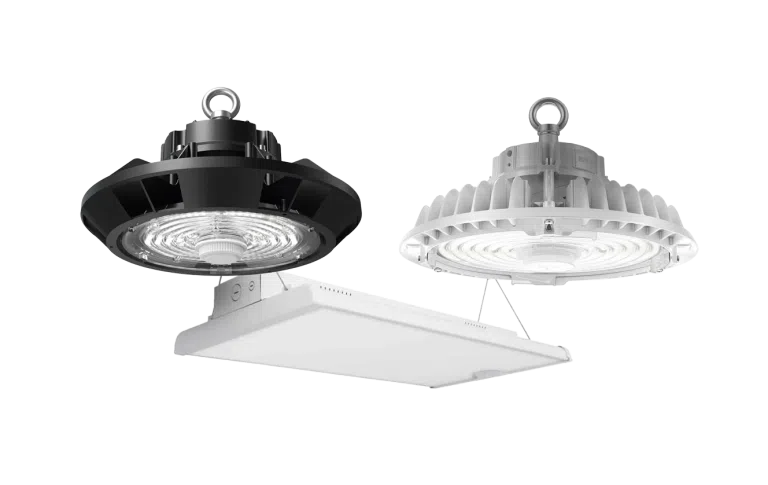
- Impact-rated UFO high bay options available for school gyms
- Fixture types for courts, fitness areas, and locker rooms
- Free lighting plans help evaluate coverage and fixture placement


Get Your Custom Lighting Plan With Product Recommendations
- Spacing and aiming designed for uniform court coverage and reduced overhead glare for players
- Fixture count and lumen output matched to target foot-candles for recreational or competitive play
- LED options can reduce energy use and extend maintenance intervals compared with legacy HID systems


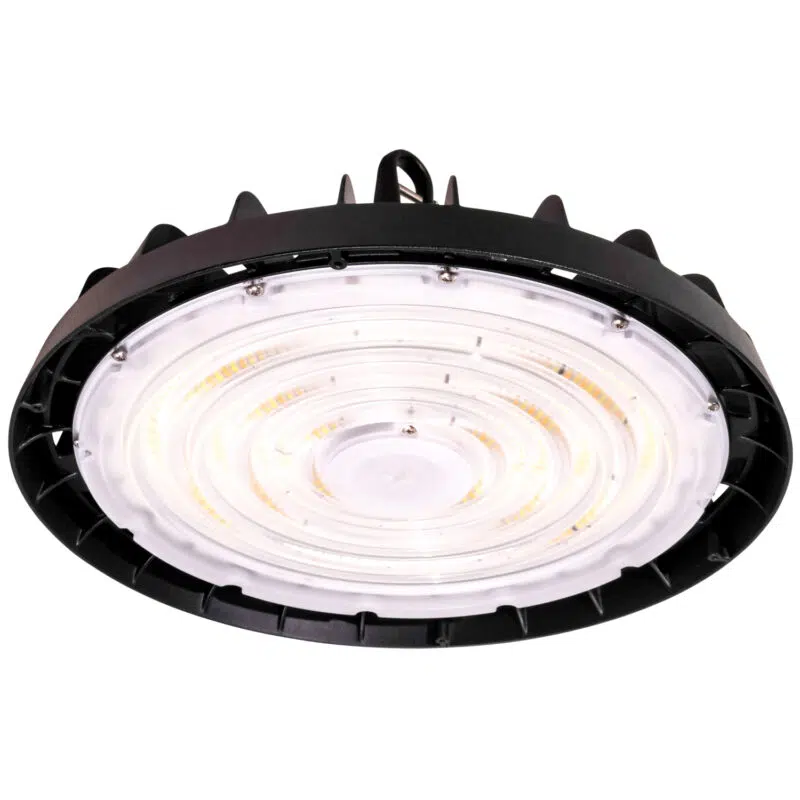
Our LED Gymnasium Lighting includes UFO high bays, linear high bays, low bays, LED panels, and vapor tight fixtures for athletic and fitness facilities. Available models include dimmable, wattage-selectable, and CCT-selectable configurations, with 100-277V and 277-480V options depending on the fixture. Some UFO high bays are available with impact-rated construction.
These fixtures are commonly used in school gymnasiums, public gyms, fitness centers, weight rooms, group exercise rooms, indoor courts, locker rooms, lobbies, multi-purpose athletic spaces, and pool support areas.
-
 Starting At $358.44

-
Starting At $384.03
-
Starting At $457.46
-
Starting At $539.94


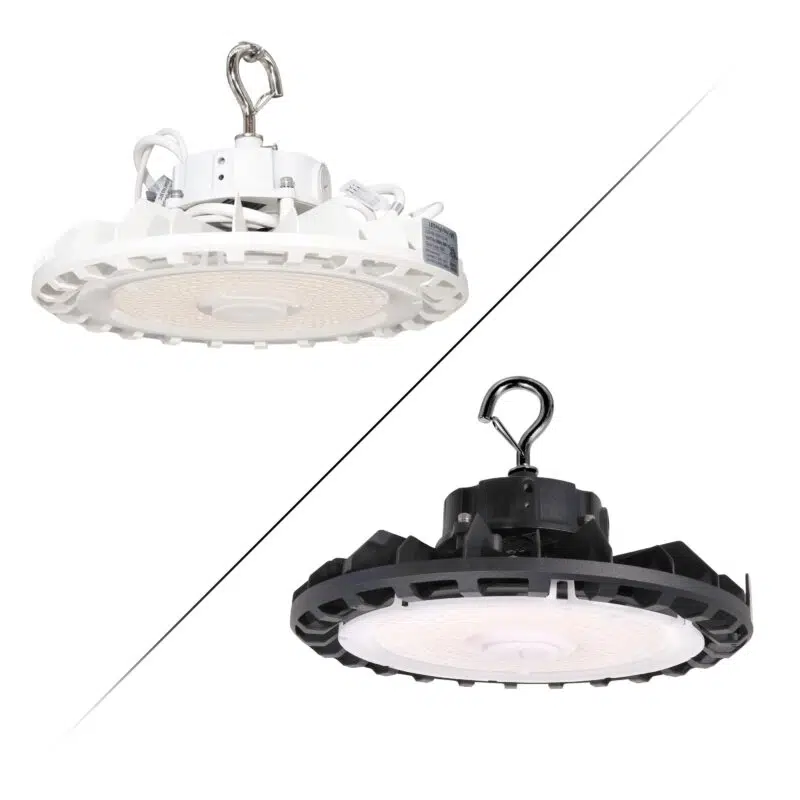

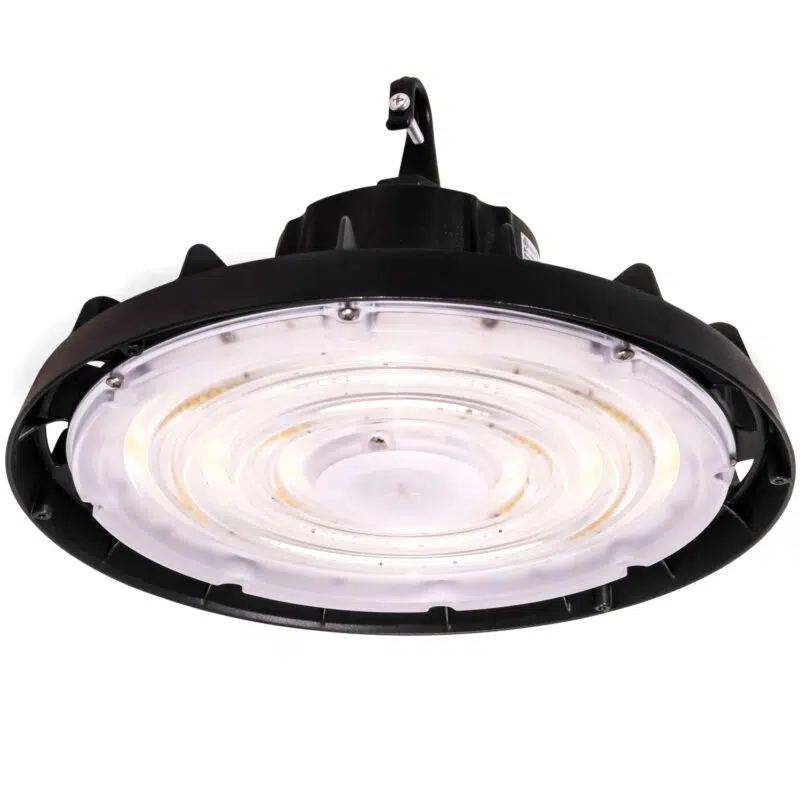

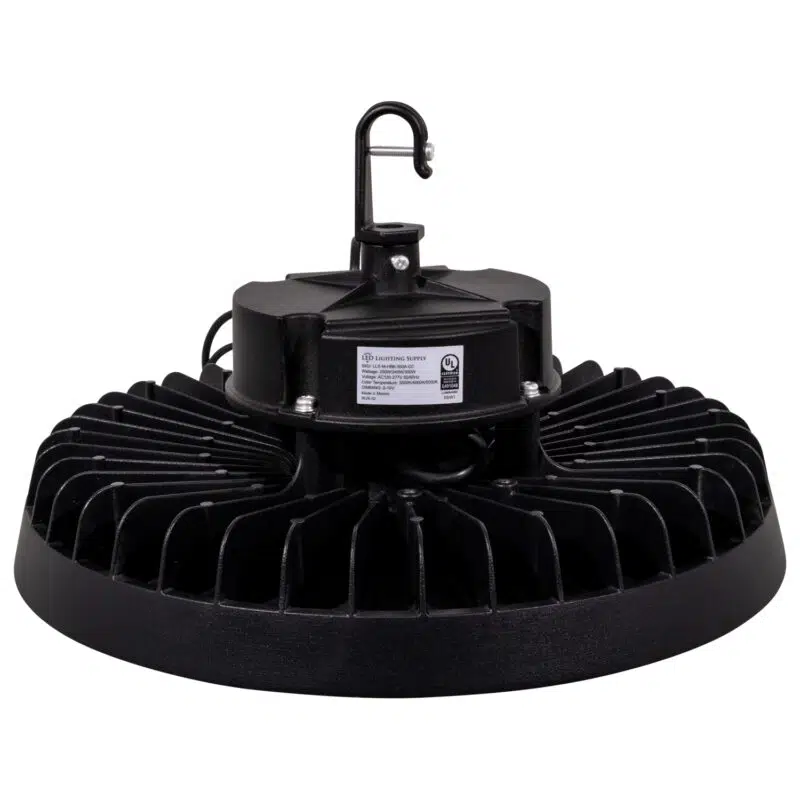
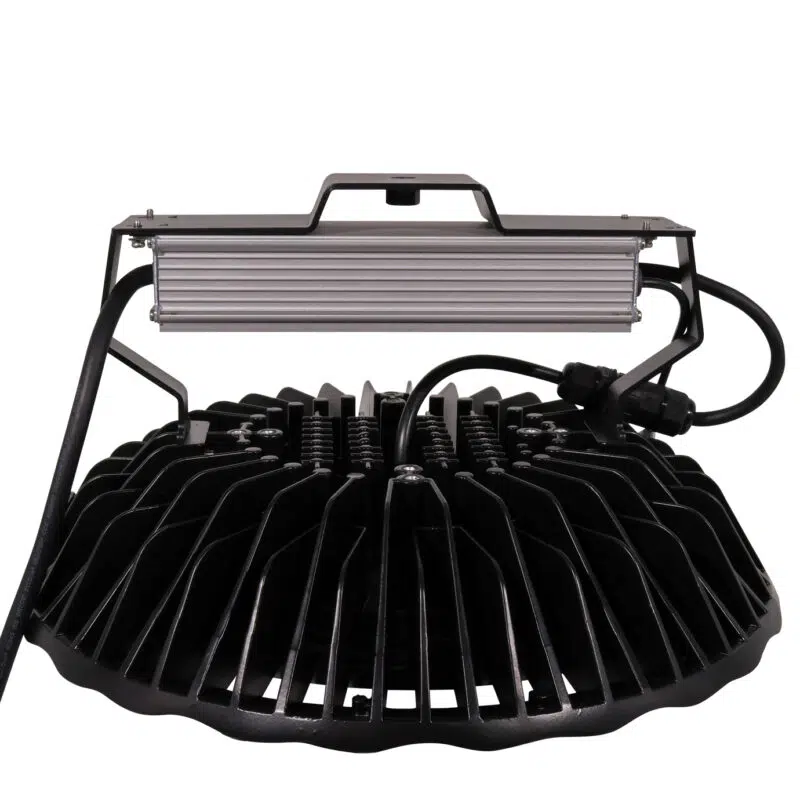
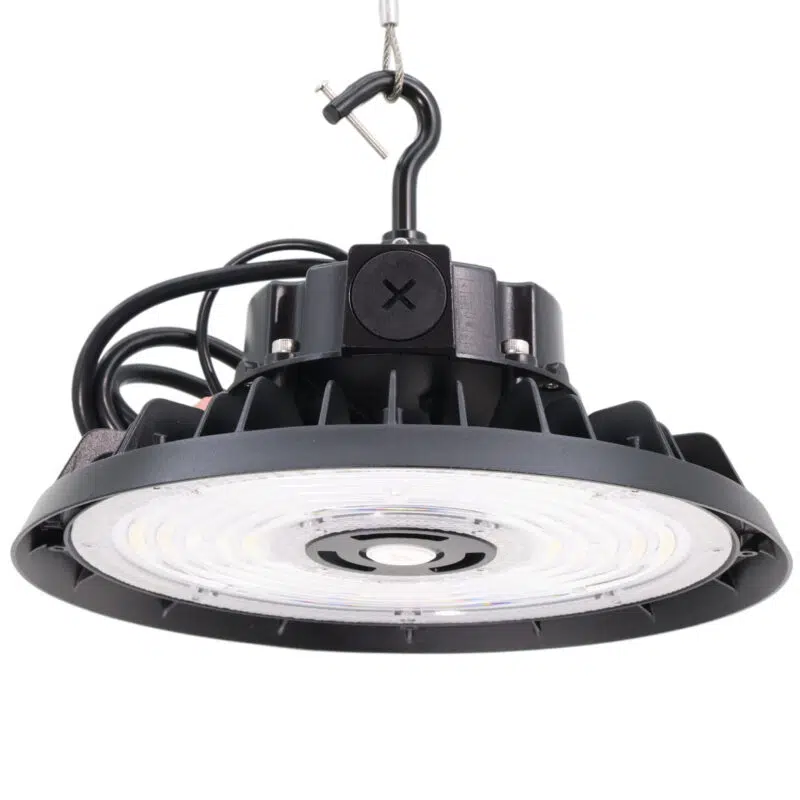
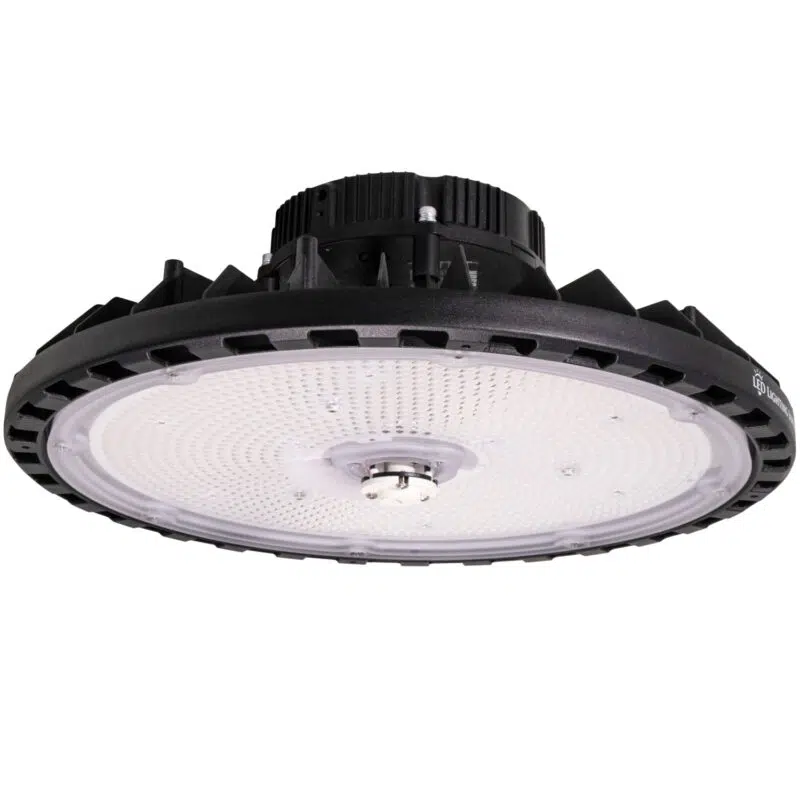

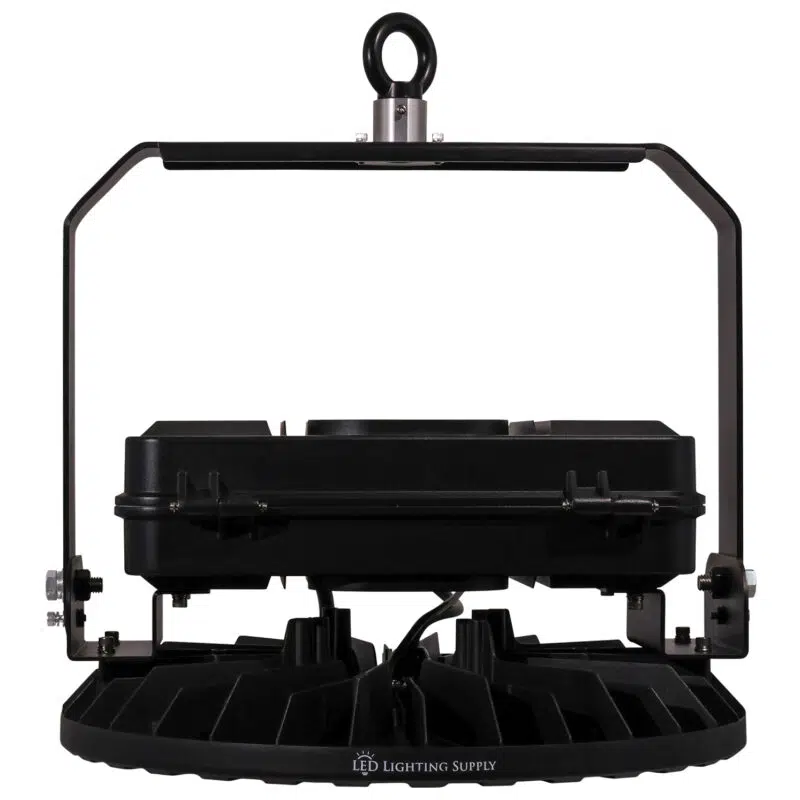


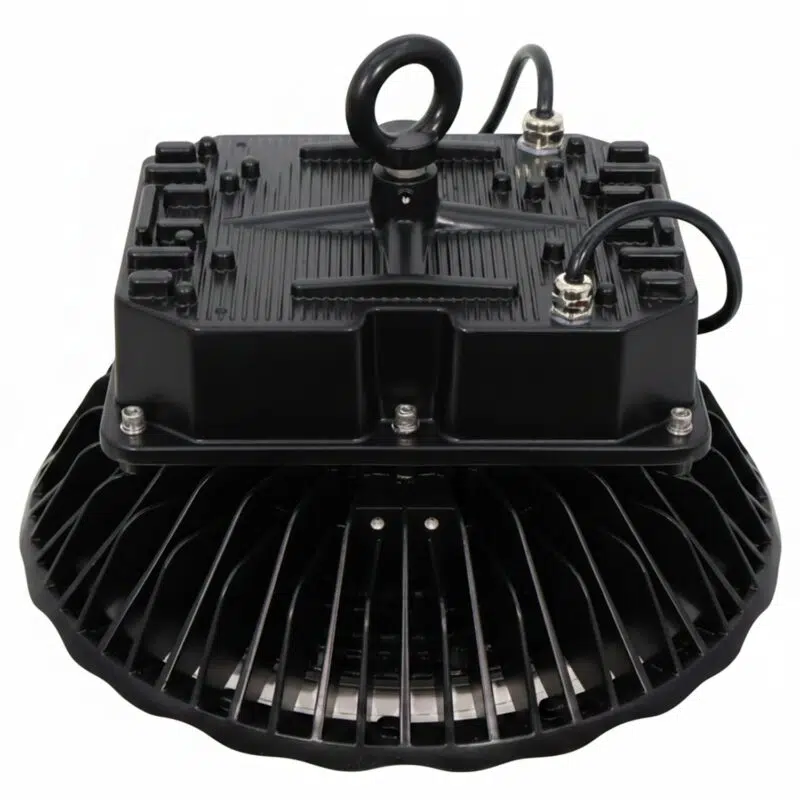
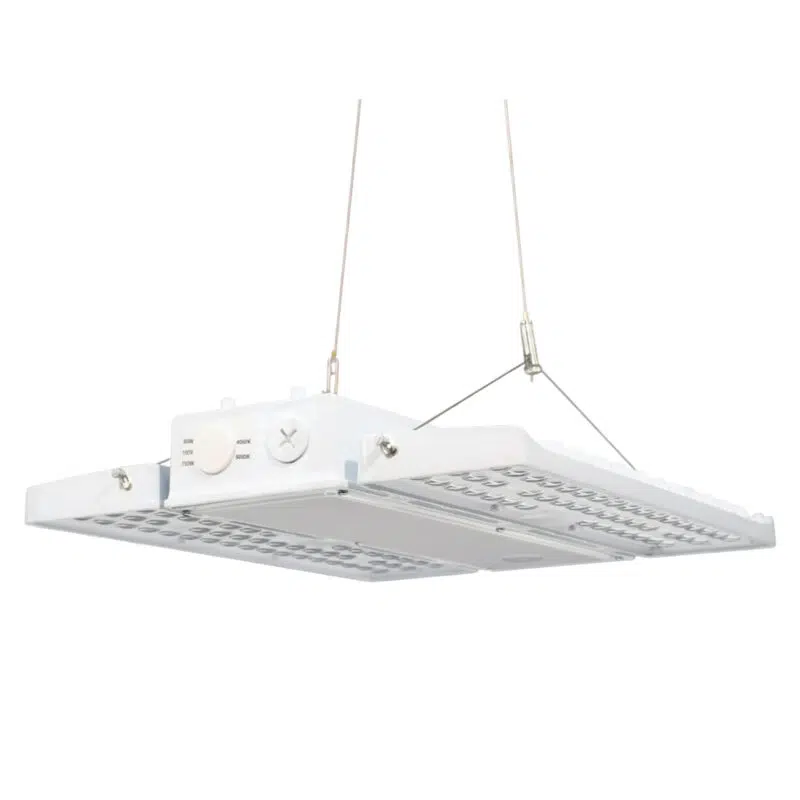

LED Gym Lighting for School Gyms, Fitness Centers, and Athletic Facilities
LED gym lighting is used in school gymnasiums, public gyms, fitness centers, weight rooms, group exercise rooms, indoor courts, locker rooms, lobbies, and multi-purpose athletic spaces. These facilities need bright, comfortable, and uniform light for sports, exercise, classes, events, maintenance, and customer-facing areas.
Start by matching the fixture type and light level to the facility and ceiling height, then confirm layout, beam angle, and uniformity for the target foot-candles. School gyms and indoor courts should also be reviewed for ball-strike exposure, while fitness centers may prioritize glare control, mirror reflections, appearance, and control zones. Confirm color temperature, controls, voltage, and how the space is used before selecting a system.
Selection and Installation Note: Product specifications, wattage, lumen output, optics, beam angle, color temperature, voltage, dimming, controls, mounting method, impact rating, certifications, and warranty coverage vary by model. Confirm the selected product specification before ordering. For gym lighting, school gymnasiums, fitness centers, indoor courts, LED retrofits, impact-sensitive applications, electrical upgrades, code-sensitive applications, or safety-critical spaces, verify requirements with your local inspector, facility team, project specifier, athletic director, or a licensed electrical professional.
Recommended Foot-Candles for Gym Lighting
Gym lighting levels vary by activity and space type. Competitive events, public gymnasiums, school gyms, general fitness areas, group exercise rooms, locker rooms, lobbies, and pool areas each have different visibility needs. The values below are general planning ranges and should be confirmed against project requirements, local standards, fixture layout, and the selected products.
Step 1: Find your foot candle levels
Step 2: Estimate your fixture count and space
LED High Bay Lighting Layout Estimator
Use this estimator to calculate approximate fixture count, spacing, and average foot-candles for warehouses, shops, gyms, industrial spaces, and commercial interiors using LED high bay fixtures. Enter your room dimensions, mounting height, target foot-candles, light loss factor, and room/layout condition to generate a preliminary lighting layout. When IES photometry is available, workplane height and room reflectance controls are shown.
Project Inputs
Estimated Results
Estimated average foot-candles are preliminary and should be verified with a lighting plan for project-critical applications.
Room / Layout Condition: This field is used only when usable IES photometry is not available. In fallback mode, it acts as a simplified room utilization factor for reflectance, fixture distribution, racking, obstructions, and how much fixture light reaches the work area. Open / light-colored spaces use 0.90, typical warehouses or shops use 0.75, racked or obstructed spaces use 0.60, and dark or complex spaces use 0.45. When IES photometry is active, this field is hidden and the estimator uses the selected workplane height, LLF, and simplified reflectance adjustment instead.
Photometry / Simulation Note: When usable IES photometry is available for the selected fixture, this estimator uses the fixture’s IES candela data, selected workplane height, light loss factor, and simplified reflectance adjustment to estimate fixture count, average foot-candles, and visual light distribution. The reflectance adjustment is a conservative approximation and is not a full zonal-cavity, radiosity, or professional photometric room calculation. When IES photometry is not available, the estimator uses a simulated beam model based on lumens, mounting height, room/layout condition, light loss factor, and beam angle.
Preliminary Estimate Only: This estimator is intended for simple square or rectangular spaces and should be used as a planning aid, not a final photometric lighting plan. Actual light levels may vary based on fixture optics, selected IES file, mounting conditions, workplane height, ceiling height, surface reflectance, obstructions, controls, voltage, installation conditions, and site-specific requirements. Project-critical applications should be verified with a formal lighting plan.
This estimate is a starting point. Warehouses, industrial facilities, hazardous locations, sports areas, schools, healthcare spaces, public areas, and code-sensitive projects may require a reviewed lighting layout before purchase or installation.
School Gym Lighting vs. Fitness Center Lighting
School gyms and fitness centers are both indoor athletic spaces, but they usually need different fixture strategies. School gyms often require fixtures and mounting arrangements suitable for ball-strike exposure because basketballs, volleyballs, and other equipment may strike the lights. Fitness centers often prioritize visual comfort, fixture appearance, glare control, mirror reflections, and flexible controls for different training zones.
| Facility Type | Lighting Priorities |
|---|---|
| School gymnasiums | Impact suitability, uniform court lighting, ceiling height, ball-strike exposure, assemblies, dimming, and multi-purpose use. |
| Public gymnasiums | Bright, uniform light for recreation, events, rentals, community use, spectator areas, and flexible scheduling. |
| Fitness centers | Comfortable light for cardio, free weights, machines, mirrors, training zones, color temperature, and member experience. |
| Group exercise rooms | Dimming, lower-glare fixtures, class flexibility, ceiling height, wall mirrors, and comfortable visibility. |
| Locker rooms | Practical visibility, moisture considerations, glare control, mirror areas, controls, and fixture rating. |
| Pool and natatorium areas | Moisture exposure, corrosion resistance, glare off water, maintenance access, and fixture suitability for the pool environment. |
Types of LED Gym Lights
Gym lighting can use different fixture styles depending on ceiling height, activity type, impact exposure, and desired appearance. UFO high bays, linear high bays, low bays, panels, and vapor tight fixtures all have a place in the right application.
| Fixture Type | Best Use |
|---|---|
| UFO high bay gym lights | Common for school gymnasiums, indoor courts, and athletic spaces with higher ceilings. Models with a documented impact rating or suitable protective arrangement may be preferred where ball strikes are possible. |
| Linear high bay gym lights | Often used in fitness centers, weight rooms, training spaces, and structured layouts where wide, even light distribution and a modern appearance are preferred. |
| Low bay lights | Useful for lower ceilings, small fitness rooms, training areas, storage rooms, or spaces where high-bay mounting and optics are not appropriate. |
| LED panel lights | Used in offices, lobbies, locker rooms, group rooms, and drop-ceiling spaces where a clean, flat ceiling appearance is desired. |
| Vapor tight lights | Useful in locker rooms, utility areas, pool support spaces, and areas where moisture, dust, or wash-down exposure may be present. Confirm the required ingress rating and environmental suitability for the actual exposure. |
| Dimmable gym lights | Support different activities, assemblies, classes, training zones, and energy-saving control strategies when paired with compatible dimming systems. |
| Wattage or CCT selectable fixtures | Allow light output or color temperature to be adjusted on-site, depending on model, which can help fine-tune a retrofit after installation. |

How to Choose LED Gym Lighting
Gym lighting should be selected around the facility’s actual use, not just by replacing old wattage one-for-one. Ceiling height, fixture count, beam angle, target foot-candles, impact exposure, color temperature, controls, and uniformity all affect the final result.
| Selection Factor | What to Confirm |
|---|---|
| Facility type | Confirm whether the space is a school gym, public gymnasium, fitness center, court, group exercise room, locker room, lobby, or pool area. |
| Target foot-candles | Use the target range for the specific activity and space type. Competitive events, recreation, assemblies, and fitness areas may require different levels. |
| Ceiling height | Higher ceilings often need high bay fixtures. Lower ceilings may be better served by low bays, panels, or linear fixtures. |
| Impact resistance | School gymnasiums, indoor courts, and athletic spaces should be reviewed for ball-strike exposure from basketballs, volleyballs, dodgeballs, and other equipment. Confirm the fixture’s documented impact rating, lens construction, mounting position, guard options, and suitability for the application. |
| Fixture type | Choose UFO high bays, linear high bays, low bays, panels, or vapor-tight fixtures based on ceiling height, layout, environment, and appearance. |
| Optics and beam angle | Beam angle affects fixture spacing, glare, uniformity, and floor coverage. A lighting layout can help confirm the correct optic. |
| Color temperature | 4000K is often used in fitness centers, group exercise rooms, locker rooms, lobbies, and fluorescent replacement projects. 5000K provides a cooler white appearance and is often used in school gymnasiums, indoor courts, and metal halide replacement projects. Color temperature does not determine lumen output or brightness. Selectable CCT fixtures may allow on-site adjustment, depending on the model. |
| Dimming and controls | 0-10V or 1-10V dimming, motion sensors, occupancy controls, time clocks, wall controls, and zone controls may be useful for gyms, classes, assemblies, events, cleaning, and unoccupied periods. Confirm fixture driver and control compatibility before ordering. |
| Voltage | Confirm whether the building requires 100-277V, 277-480V, or another input voltage before selecting fixtures. For compatible high-ceiling applications, review available 480-volt LED high bay lights. |
| Moisture or pool exposure | Locker rooms, pool areas, and utility spaces may require fixtures suited for damp, wet, humid, or corrosive environments. An IP rating addresses ingress of solids and water, but does not by itself establish corrosion or chemical resistance; confirm materials, coatings, hardware, seals, and manufacturer environmental documentation. |
Why a Lighting Plan Matters for Gyms and Fitness Centers
A gym lighting plan helps verify fixture placement, expected foot-candle levels, uniformity, glare, fixture count, mounting height, and beam angles before fixtures are ordered. This is especially useful for school gyms, indoor courts, high-ceiling retrofits, fitness centers with equipment layouts, and multi-purpose facilities.
Lighting plans are also helpful when replacing older metal halide or fluorescent systems. A one-for-one retrofit may reduce energy use, but it may not fix dark spots, glare, uneven coverage, poor court visibility, or overly bright areas.
Request a gym lighting plan to review ceiling height, fixture count, target foot-candles, beam angles, impact exposure, controls, and expected light distribution before ordering.
Fitness Center Lighting Considerations
Fitness center lighting should support both visibility and member experience. Cardio areas, free-weight zones, machine areas, turf zones, studios, front desks, and locker rooms may need different fixture types or control zones.
Glare and reflections matter in fitness centers because many facilities use mirrors, glossy flooring, screens, and equipment surfaces. Linear high bays, low bays, panels, and controlled optics can help create a cleaner, more comfortable lighting layout when properly selected.

Replacing Metal Halide or Fluorescent Gym Lights
Many gym lighting projects replace older metal halide high bays, fluorescent high bays, or T5 fixtures. LED replacements can reduce energy use and maintenance, but the replacement should be reviewed by lumen output, fixture spacing, optics, mounting height, and target light levels instead of wattage alone.
Older metal halide systems may have warm-up time, lamp depreciation, ballast maintenance, and inconsistent light output. LED fixtures typically provide immediate light output and avoid the routine lamp and ballast replacements associated with these older systems, but fixture life and performance depend on the selected product, operating conditions, and layout.
What are the Cost Savings and ROI When You Convert from Metal Halide to LED?
Compare estimated energy costs, 5-year savings, simple payback, and ROI for replacing metal halide fixtures with LED.
150W LED UFO High Bay vs 400W Metal Halide Replacement (with ballast)
Assumptions: Based on 12 hours/day, 200 days/year at $0.20/kWh,
25 fixture(s), and a 15% ballast factor applied to the metal halide wattage
(400W lamp + 15% ballast = ~ 460W input).
•
Energy cost and ROI calculations are based on energy savings only and assume an LED fixture cost of
$100.00 per fixture.
• Maintenance savings from reduced bulb and ballast replacements are not included
in these calculations.
In this example with 25 fixture(s), total LED fixture investment is approximately $2,500.00, and estimated annual energy-only savings are $3,720.00. Simple payback based on energy savings alone is under 9 months. Maintenance savings from eliminating metal halide bulb and ballast replacements provide additional value throughout the fixture's 50,000-hour lifespan, but are not included in this ROI calculation.

Product Listings and Warranty Support
Available LED gym lights may carry a safety listing such as UL, ETL, or CSA, depending on product. Many models may also be DLC or DLC Premium listed where utility rebate programs apply. DLC qualification is an efficiency and performance designation, not an electrical safety certification. Warranty terms vary by model; review the product specification and warranty documentation before ordering.
Before ordering, confirm the selected fixture’s safety listing, DLC status where relevant, voltage, dimming, controls compatibility, mounting method, impact rating, and fit for the gym layout.
Common Gym Lighting Mistakes
- Leaving existing controls untested: Verify dimming conductors, control voltage, sensors, relays, emergency circuits, and control programming before installation. A dimmable fixture may not operate correctly with an incompatible control system.
- Failing to aim or commission adjustable fixtures: Fixtures with adjustable output, CCT settings, sensors, or aiming components should be set and tested after installation rather than left at factory defaults.
- Blocking light with new equipment: Scoreboards, divider curtains, basketball backstops, suspended equipment, fitness machines, banners, and storage can change light distribution after a layout is completed.
- Ignoring maintenance access: Confirm that lifts, ladders, catwalks, or other safe access methods are available for future cleaning, inspection, driver replacement, and fixture service.
- Using occupancy settings that interrupt active use: Sensor time delays and coverage should account for practices, classes, events, cleaning, and areas where occupants may remain relatively still.
- Not measuring the completed installation: Compare post-installation foot-candle readings and uniformity with project targets after fixtures are installed, aimed, and programmed.
- Overlooking emergency and egress lighting: General gym lighting does not replace code-required emergency lighting or exit signage. These systems should be designed and verified separately by the appropriate project authority.
- Assuming an IP rating solves pool-area exposure: Pool and natatorium environments may require documented resistance to humidity, chlorine compounds, and corrosion in addition to the needed ingress protection.
Request a gym lighting plan, and our Product Specialists can help review facility type, ceiling height, target foot-candles, fixture type, impact exposure, beam angles, controls, voltage, glare, and published product specifications.
LED Gymnasium Lighting FAQs
Why Should I Request A Gym Lighting Plan Before Ordering?
A gym lighting plan helps verify fixture placement, expected foot-candle levels, uniformity, glare, fixture count, mounting height, and beam angles before fixtures are ordered. It is especially useful for school gyms, indoor courts, high-ceiling retrofits, fitness centers with equipment layouts, and multi-purpose facilities.
How Should I Choose Between High Bays, Low Bays, Panels, And Vapor Tight Fixtures?
Choose the fixture type based on ceiling height, layout, environment, appearance, activity type, and impact exposure. Higher ceilings often need high bay fixtures, while lower ceilings may be better served by low bays, panels, or linear fixtures; vapor tight fixtures are useful where moisture, dust, or wash-down exposure may be present.
When Should A Gym Lighting Project Consider Impact-Rated Fixtures?
School gymnasiums, indoor courts, and athletic spaces should be reviewed for ball-strike exposure from basketballs, volleyballs, dodgeballs, and other equipment. Confirm the fixture impact rating, lens construction, mounting position, guard options, and whether an impact-rated UFO high bay or protected fixture is required for the application.
What Color Temperature Is Commonly Used For LED Gym Lighting?
4000K is often used for comfortable fitness centers, group exercise rooms, locker rooms, lobbies, and fluorescent replacement projects, while 5000K is often used for school gymnasiums, indoor courts, and metal halide replacement where a brighter athletic appearance is preferred. Selectable CCT fixtures may allow on-site adjustment, depending on the model.
What Should Be Confirmed Before Choosing Dimming Or Controls?
Confirm fixture driver and control compatibility before ordering gym lighting with dimming, motion sensors, occupancy controls, time clocks, wall controls, or zone controls. These options may be useful for gyms, classes, assemblies, events, cleaning, and unoccupied periods.
Can LED Gym Lights Replace Older Metal Halide Or Fluorescent Fixtures?
LED gym lighting can replace older metal halide high bays, fluorescent high bays, or T5 fixtures, but the replacement should be reviewed by lumen output, fixture spacing, optics, mounting height, and target light levels instead of wattage alone. A one-for-one retrofit may reduce energy use, but it may not fix dark spots, glare, uneven coverage, poor court visibility, or overly bright areas.
What Should I Check For Locker Rooms And Pool-Related Areas?
Locker rooms, pool areas, and utility spaces may require fixtures suited for damp, wet, humid, or corrosive environments. Confirm the selected fixture rating and suitability for the specific environment before ordering.
What Product Details Should Be Confirmed Before Ordering LED Gym Lights?
Confirm the selected fixture's DLC status, voltage, dimming, controls compatibility, mounting method, impact rating, and fit for the gym layout before ordering. Product specifications, wattage, lumen output, optics, beam angle, color temperature, certifications, and warranty coverage vary by model.