LED Vapor Tight Light Fixtures
- Sealed fixtures designed for wet, dusty, or humid environments
- Options available with motion sensors, dimming, or emergency backup
- Application support for food processing, cold storage, and washdown areas


Get Your Custom Lighting Plan With Product Recommendations
- Fixture Placement and Spacing Designed Around Mounting Height, Aisle Layout, and Target Foot-Candles for Wet or Dusty Environments
- Fixture Count and Selection Matched to IP Rating, Lumen Output, Lens Optics, and Environmental Exposure Requirements
- LED Vapor Tight Fixtures Can Reduce Energy Use and Maintenance Compared with Fluorescent Vapor Tight Systems


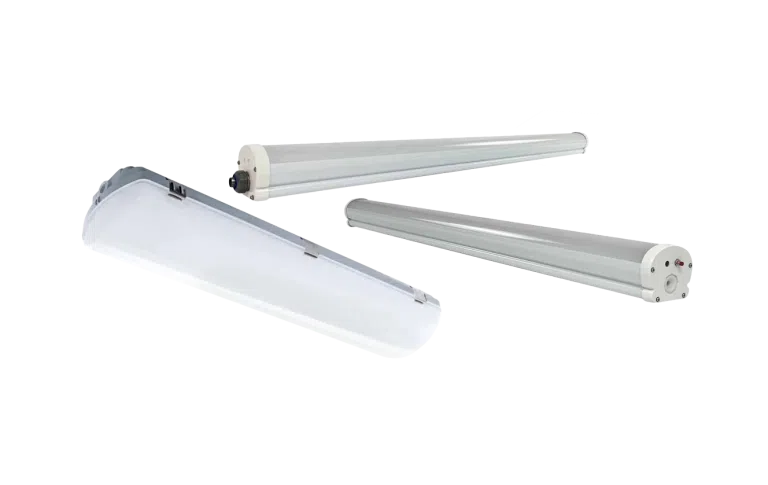
Our LED Vapor Tight Lights include 4-foot and 8-foot linear fixtures, jelly jar lights, and models with wattage adjustment, color-selectable settings, motion sensors, and emergency backup. Available configurations include surface, pendant, and chain mounting options for retrofit and new-installation projects.
These fixtures are commonly used in industrial facilities, food processing plants, cold storage areas, parking garages, car washes, agricultural buildings, marinas, tunnels, mechanical rooms, utility spaces, and loading docks.






What Are LED Vapor Tight Lights?
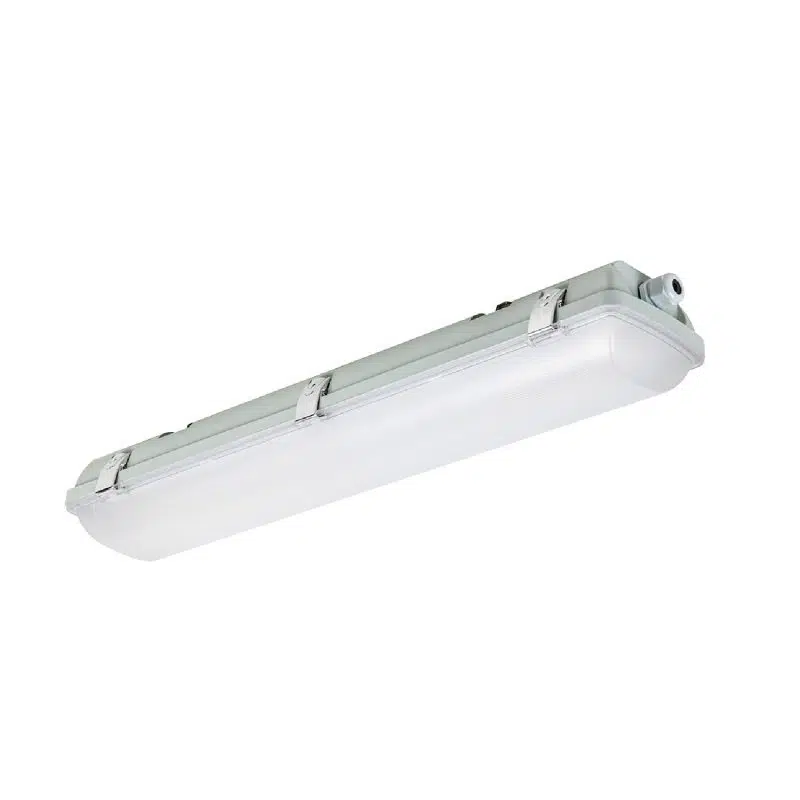
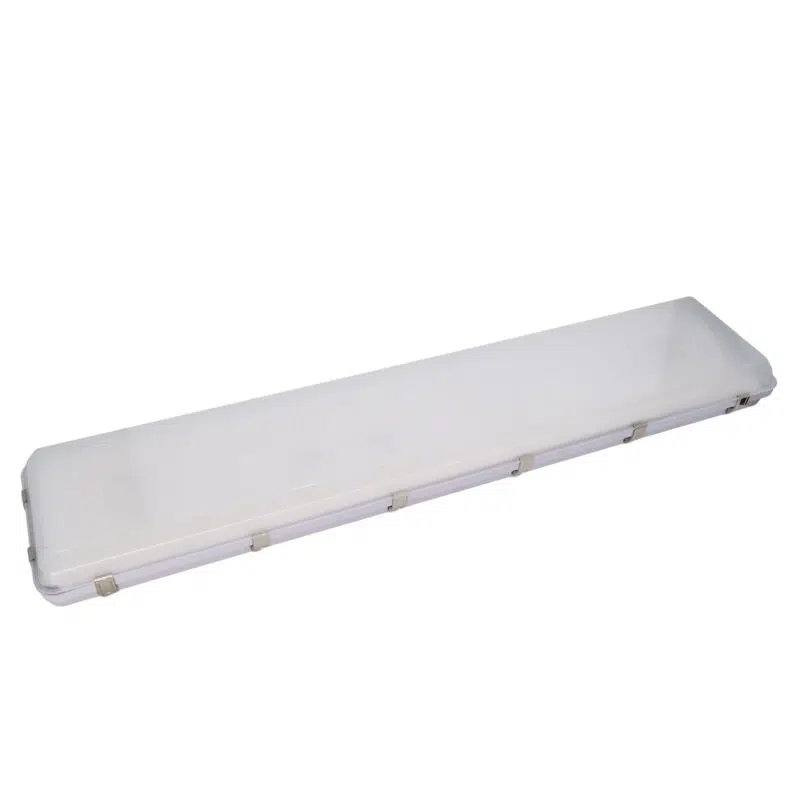
LED vapor tight lights are sealed commercial and industrial fixtures used in wet, dusty, humid, or washdown-prone environments. They are designed to help protect internal electrical components from moisture, dust, debris, steam, and other environmental contaminants, depending on the fixture's construction and ratings.
Vapor tight fixtures are commonly used in industrial facilities, food processing plants, cold storage areas, parking garages, car washes, agricultural buildings, marinas, tunnels, mechanical rooms, utility spaces, loading docks, and other harsh commercial environments. Many models include gasketed housings, wet-location ratings, impact-resistant lenses, corrosion-resistant materials, dimming options, motion sensors, color-selectable settings, or emergency backup depending on the model.
Standard vapor tight lights are not the same as explosion proof or hazardous-location fixtures. If flammable vapors, combustible dust, or classified-location conditions are present, confirm whether a properly certified hazardous-location fixture is required before ordering.

Selection and Installation Note: Product specifications, IP ratings, gasket materials, controls, certifications, emergency backup options, hazardous-location ratings, and warranty coverage vary by model. Confirm the selected product specification before ordering. For code-sensitive, electrical, food processing, washdown, corrosive, hazardous-location, emergency, or safety-critical applications, verify requirements with your local inspector or a licensed electrical professional.
Choose LED Vapor Tight Lights by Fixture Type, Rating, or Application
Start by confirming the environment and any required ratings or certifications, including whether hazardous-location certification is required. Then select fixture type, length, and mounting method for the layout, mounting height, spacing, and light output needs. Finally, confirm controls, emergency lighting needs, and whether the project is replacing fluorescent vapor tight fixtures or starting from a new layout. Standard vapor tight fixtures should not be used where hazardous-location certification is required.
| Vapor Tight Light Type | Best Used For |
|---|---|
| 4 Foot LED Vapor Tight Lights | Replacing common fluorescent vapor tight fixtures in wet, dusty, humid, or industrial spaces where linear coverage is needed. |
| 8 Foot LED Vapor Tight Lights | Longer runs, larger industrial areas, storage facilities, maintenance spaces, and applications replacing long fluorescent strip or vapor tight systems. |
| Wattage Adjustable Vapor Tight Lights | Projects where field-adjustable lumen output helps fine-tune brightness after installation or where existing light levels are uncertain. |
| Color Adjustable Vapor Tight Lights | Retrofits where 3500K, 4000K, or 5000K color temperature selection may need to be finalized after installation or matched to nearby lighting. |
| Motion Sensor Vapor Tight Lights | Parking garages, storage areas, service spaces, corridors, and intermittent-use areas where occupancy-based dimming or switching may reduce energy use. |
| Emergency Backup Vapor Tight Lights | Exit routes, egress areas, parking garages, utility rooms, service corridors, and code-sensitive spaces where backup illumination may be required during power loss. |
| NSF Rated Vapor Tight Lights | Food processing, packaging, sanitation, and washdown spaces where the selected fixture must meet applicable NSF sanitation and construction requirements for the installation area. |
| Jelly Jar Vapor Tight Lights | Compact wall, ceiling, or pendant-mounted applications where a traditional form factor is needed in a damp or wet location. |
| Hazardous-Location Vapor Tight or Explosion Proof Lights | Class-rated hazardous locations where properly certified fixtures are required. Standard IP65 vapor tight lights should not be substituted for hazardous-location fixtures. |
When LED Vapor Tight Lights Are the Right Fit
LED vapor tight lights can be a good fit when standard fixtures would be exposed to moisture, dust, steam, humidity, or washdown. For corrosive environments, confirm that the housing, lens, gasket, coating, and hardware are compatible with the specific chemicals or contaminants present. Vapor tight fixtures are not always the right choice for classified hazardous locations, extreme chemical exposure, unsupported ceiling structures, or applications requiring a different fixture family.
| Use LED Vapor Tight Lights When | Do Not Use Standard Vapor Tight Lights When |
|---|---|
| Moisture, dust, humidity, or washdown exposure is present and a sealed fixture is needed to help protect internal components. | The area is classified as hazardous due to flammable vapors, gases, or combustible dust. Use properly certified hazardous-location fixtures instead. |
| Food processing, cold storage, utility rooms, car washes, parking garages, or industrial spaces need wet-location or sealed lighting. | The selected fixture does not have the required NSF, IP, wet-location, corrosion, emergency, or safety rating for the application. |
| Motion sensors or dimming are useful for intermittent-use areas such as parking garages, storage rooms, corridors, or service spaces. | Production areas require constant illumination and sensor settings could create unsafe delays, dimming, or nuisance shutoffs. |
| Fluorescent vapor tight fixtures are being replaced and the project needs lower maintenance, better cold-start performance, or improved control compatibility. | The ceiling, mounting surface, or suspension method cannot support the selected fixture or does not match the required mounting method. |
| Chemical exposure is present and the fixture housing, lens, hardware, and gasket material are compatible with the environment. | Cleaning agents, ammonia, chlorine, salt, or other chemicals may attack the housing, lens, or gasket material and compatibility has not been confirmed. |
Choosing Vapor Tight Lighting by IP Rating, Environment, Mounting Height, Controls, and Certifications
Vapor tight lights should not be selected by wattage alone. The right fixture depends on moisture exposure, dust exposure, chemical exposure, IP rating, mounting height, fixture spacing, required light levels, controls, emergency lighting, certification needs, and whether the space has hazardous-location requirements.
A photometric plan is recommended for larger facilities, parking garages, food processing areas, industrial spaces, cold storage rooms, tunnels, car washes, and other projects where fixture quantity, spacing, light levels, uniformity, glare, or emergency lighting must be reviewed before ordering.
Planning Checklist
| Planning Factor | What to Confirm |
|---|---|
| Environment | Confirm whether the space has moisture, dust, steam, washdown, vehicle exhaust, salt air, ammonia, chlorine, chemical cleaners, livestock moisture, or other exposure risks. |
| IP and wet-location rating | Confirm that the selected fixture rating matches the environment. IP65 is common for many vapor tight fixtures, but requirements vary by application and exposure level. |
| Hazardous-location classification | Standard vapor tight fixtures are not substitutes for fixtures specifically listed or approved for the required hazardous-location classification. Confirm classification requirements before ordering. |
| Gasket and material compatibility | Confirm gasket, lens, housing, coating, and hardware compatibility with chemical cleaners, ammonia, chlorine, salt, oils, vapors, or other contaminants in the space. |
| NSF or food processing requirements | For food processing and washdown areas, confirm whether NSF-rated fixtures are required and whether the selected model is appropriate for the specific zone and cleaning process. |
| Cold storage performance | Confirm minimum operating temperature, cold-start performance, condensation risk, and whether controls or emergency backup components are rated for the environment. |
| Mounting height and spacing | Confirm ceiling height, fixture spacing, aisle layout, obstructions, wall reflectance, task visibility, and whether a lighting plan is needed to avoid hot spots or dark areas. |
| Fixture length and mounting method | Confirm whether the project requires 4-foot, 8-foot, jelly jar, surface mount, pendant mount, chain mount, or retrofit-compatible fixtures. |
| Controls | Confirm compatibility with motion sensors, photocells, 0-10V dimming, timers, or building controls. Avoid sensor layouts that reduce visibility in active work areas. |
| Emergency backup | Confirm whether emergency backup is required for exit routes, egress areas, parking structures, utility rooms, or code-sensitive spaces. Backup duration varies by model. |
| Voltage and wiring | Confirm voltage, wiring method, conduit entry, sealing, controls wiring, surge protection, and whether the existing electrical system is compatible with the selected fixture. |
| Structural support | Confirm fixture weight, mounting hardware, ceiling anchors, suspension method, vibration exposure, and impact risk before replacing older fluorescent fixtures. |
Recommended Foot-Candles for LED Vapor Tight Lighting
Use the tool below for general starting foot-candle ranges for vapor-tight lighting applications. It includes industrial and manufacturing areas, food processing and washdown areas, cold storage, parking garages, car washes, barns and agricultural buildings, marine and dock areas, tunnels, natatorium support spaces, loading docks, utility rooms, and commercial back-of-house spaces.
Foot-candle guidance helps with light-level planning, but it does not determine fixture count, fixture spacing, IP rating, gasket compatibility, hazardous-location suitability, NSF requirements, chemical resistance, controls, emergency backup, or installation requirements. For harsh, wet, corrosive, or code-sensitive applications, request a lighting plan before ordering.
Step 1: Find your foot candle levels
Step 2: Estimate your fixture count and space
Vapor Proof Lighting Layout Estimator
Use this estimator to calculate approximate fixture count, spacing, and average foot-candles for wet, damp, dusty, and washdown environments using vapor proof LED fixtures. Enter your room dimensions, mounting height, target foot-candles, light loss factor, and room/layout condition to generate a preliminary lighting layout. When IES photometry is available, workplane height and room reflectance controls are shown.
Project Inputs
Estimated Results
Estimated average foot-candles are preliminary and should be verified with a lighting plan for project-critical applications.
Room / Layout Condition: This field is used only when usable IES photometry is not available. In fallback mode, it acts as a simplified room utilization factor for reflectance, fixture distribution, racking, obstructions, and how much fixture light reaches the work area. Open / light-colored spaces use 0.90, typical warehouses or shops use 0.75, racked or obstructed spaces use 0.60, and dark or complex spaces use 0.45. When IES photometry is active, this field is hidden and the estimator uses the selected workplane height, LLF, and simplified reflectance adjustment instead.
Photometry / Simulation Note: When usable IES photometry is available for the selected fixture, this estimator uses the fixture’s IES candela data, selected workplane height, light loss factor, and simplified reflectance adjustment to estimate fixture count, average foot-candles, and visual light distribution. The reflectance adjustment is a conservative approximation and is not a full zonal-cavity, radiosity, or professional photometric room calculation. When IES photometry is not available, the estimator uses a simulated beam model based on lumens, mounting height, room/layout condition, light loss factor, and beam angle.
Preliminary Estimate Only: This estimator is intended for simple square or rectangular spaces and should be used as a planning aid, not a final photometric lighting plan. Actual light levels may vary based on fixture optics, selected IES file, mounting conditions, workplane height, ceiling height, surface reflectance, obstructions, controls, voltage, installation conditions, and site-specific requirements. Project-critical applications should be verified with a formal lighting plan.
This estimate is a starting point. Warehouses, industrial facilities, hazardous locations, sports areas, schools, healthcare spaces, public areas, and code-sensitive projects may require a reviewed lighting layout before purchase or installation.
Vapor Tight Lights Compared with High Bays, Wet Location Fixtures, and Explosion Proof Lights
Vapor tight lights are often compared with high bays, wet-location fixtures, NSF fixtures, and explosion proof lights. The right fixture depends on mounting height, exposure level, certification requirements, and whether the environment is wet, dusty, corrosive, food-safe, or classified as hazardous.
| Lighting Type | Best Used For |
|---|---|
| LED Vapor Tight Light | Wet, dusty, humid, corrosive, washdown-prone, or harsh commercial and industrial environments where sealed fixture construction is needed and the selected materials are compatible with the exposure. |
| LED High Bay Light | Higher ceiling indoor spaces such as warehouses, manufacturing floors, gyms, and large open facilities where sealed construction may not be required. |
| Wet Location Fixture | General wet or damp applications where moisture resistance is required, but full vapor tight construction, gasket compatibility, or washdown suitability may not be needed. |
| NSF Rated Fixture | Food processing, sanitation, washdown, packaging, and cleanable environments where NSF sanitation and construction requirements may apply. |
| Explosion Proof or Hazardous-Location Fixture | Classified areas with flammable gases, vapors, combustible dust, or hazardous-location requirements. Standard vapor tight fixtures should not be substituted. |
| Fluorescent Vapor Tight Fixture | Older lighting technology with lamp and ballast maintenance, reduced cold-weather performance, and less control flexibility compared with LED retrofit options. |
Vapor Tight Lighting Project Examples
Project examples help show how vapor tight lighting decisions depend on moisture exposure, mounting height, fixture spacing, environmental conditions, and the type of work performed in the space.

Parking garages often use sealed or vapor tight fixtures where moisture, vehicle exhaust, corrosion, and intermittent occupancy affect fixture selection.

Brewery lighting, washdown, and food-adjacent environments often require sealed lighting selected for moisture exposure, cleaning conditions, and corrosion resistance.
Certifications, Rebates, and Warranty Support
LED vapor tight lights from LED Lighting Supply carry a safety listing such as UL, ETL, or CSA, depending on product. Some models are listed on the DLC Qualified Products List as Standard or Premium products, which may support eligibility for participating utility incentive programs. Rebate requirements vary by utility, region, and product listing, so confirm eligibility on the selected product specification before ordering.
Most LED vapor tight lights include a 5-year warranty unless otherwise specified, with USA-based warranty support. Before purchase, confirm certifications, DLC status, voltage, surge protection, controls compatibility, emergency backup requirements, mounting conditions, chemical exposure, environmental exposure, IP rating, gasket compatibility, and whether the fixture is right for the environment.
Common LED Vapor Tight Lighting Mistakes
Vapor tight lighting projects go wrong when fixtures are selected without confirming the environment, rating, mounting method, controls, emergency requirements, or chemical compatibility. These mistakes can lead to fixture failure, code issues, poor visibility, or unnecessary maintenance.
- Using standard vapor tight fixtures in hazardous locations: Class-rated hazardous locations require properly certified hazardous-location or explosion proof fixtures, not standard IP-rated vapor tight fixtures.
- Choosing the wrong gasket or material for chemical exposure: Cleaning agents, ammonia, chlorine, salt, oils, or corrosive vapors may require specific gasket, lens, housing, or hardware materials.
- Assuming IP65 is enough for every wet area: Confirm whether the fixture rating matches direct spray, washdown, corrosion, condensation, or outdoor exposure conditions.
- Skipping NSF review in food processing spaces: Food processing and sanitation areas may require NSF-rated fixtures suitable for the specific application zone and cleaning process.
- Using motion sensors where constant light is required: Production areas, machinery zones, and safety-sensitive workspaces may need continuous illumination instead of occupancy-based dimming.
- Overlooking emergency lighting requirements: Exit routes, egress paths, parking garages, tunnels, and utility areas may require emergency backup or separate emergency lighting.
- Reusing damaged or non-matching gaskets: Replacement gaskets should maintain the fixture rating and match the fixture design. Generic gaskets may compromise sealing and warranty coverage.
- Ignoring structural support: Confirm fixture weight, mounting hardware, ceiling anchors, suspension method, vibration, and impact exposure before replacing older fluorescent fixtures.
- Using incompatible dimming controls: Confirm whether the fixture uses 0-10V dimming, sensor controls, or another control method before connecting to existing dimmers.
Request a vapor tight lighting plan and our Product Specialists can help review fixture type, IP rating, mounting height, spacing, chemical exposure, gasket compatibility, certifications, controls, emergency backup, light levels, and product specifications for your LED vapor tight lighting project.
This Content on LED vapor tight lighting guidance, IP and wet-location considerations, NSF requirements, hazardous-location distinctions, controls, certifications, and fixture selection content Was Professionally Reviewed By:

Jamie Popp, Professional Electrical Engineer (PE)
Multi-State Licensed Professional Engineer
Master of Science in Engineering
Master of Science in Project Management
Jamie has spent over 15 years working directly with industrial energy systems and facility operations. In his engineering design work, he focuses on comprehensive lighting designs, complex power distribution engineering, technical hazardous area classifications, and design-level construction support.
He applies these specialized design skills across demanding environments, including petrochemical, nuclear, mining, pulp and paper, and manufacturing facilities.
This content was reviewed for technical accuracy, engineering relevance, real-world application, and clarity for the stated lighting topic.
LED Vapor Tight Light Fixtures FAQs
When Are LED Vapor Tight Lights The Right Fit?
LED vapor tight lights are a good fit when standard fixtures would be exposed to moisture, dust, steam, humidity, washdown, or corrosive conditions. They are commonly used in industrial facilities, food processing plants, cold storage areas, parking garages, car washes, agricultural buildings, marinas, tunnels, mechanical rooms, utility spaces, and loading docks.
Can Standard Vapor Tight Lights Be Used In Hazardous Locations?
No, standard vapor tight fixtures are not substitutes for properly certified hazardous-location or explosion proof fixtures. If flammable vapors, gases, combustible dust, or classified-location conditions are present, confirm the required hazardous-location classification before ordering.
What Should I Confirm Before Choosing A Vapor Tight Light Fixture?
Confirm the environment, moisture and chemical exposure, IP or wet-location rating, mounting height, spacing, required light levels, controls, emergency lighting needs, certifications, and hazardous-location requirements. Gasket, lens, housing, coating, and hardware compatibility should also be confirmed where cleaners, ammonia, chlorine, salt, oils, vapors, or other contaminants are present.
How Do I Determine Fixture Quantity And Spacing For A Vapor Tight Lighting Project?
Fixture quantity and spacing should be based on ceiling height, aisle layout, obstructions, wall reflectance, task visibility, required light levels, and uniformity. A photometric plan is recommended for larger facilities and projects where fixture quantity, spacing, glare, emergency lighting, or light levels must be reviewed before ordering.
Are Vapor Tight Lights Suitable For Food Processing Or Washdown Areas?
Vapor tight lights may be used in food processing, packaging, sanitation, and washdown spaces when the selected fixture meets the applicable food-safe or cleanable lighting requirements. Confirm whether NSF-rated fixtures are required and whether the selected model is appropriate for the specific zone and cleaning process.
When Should Motion Sensors Be Avoided With Vapor Tight Lights?
Motion sensors should be avoided where production areas, machinery zones, or safety-sensitive workspaces require continuous illumination. Sensor layouts should not reduce visibility in active work areas or create unsafe delays, dimming, or nuisance shutoffs.
What Should Be Verified When Replacing Fluorescent Vapor Tight Fixtures?
When replacing fluorescent vapor tight fixtures, confirm fixture length, mounting method, voltage, wiring method, controls compatibility, structural support, and environmental requirements for the selected LED fixture. Also confirm fixture weight, mounting hardware, ceiling anchors, suspension method, vibration exposure, and impact risk.
Are Utility Rebates Available For LED Vapor Tight Lights?
Many LED vapor tight light models are DLC or DLC Premium listed for utility rebate support where available. Rebate eligibility varies by utility, region, and product listing, so confirm eligibility on the selected product specification before ordering.