


Light Poles
- Steel, fiberglass, and wood options for varied applications
- Heights from 10 feet to 70+ feet available
- Anchor base and direct burial mounting options


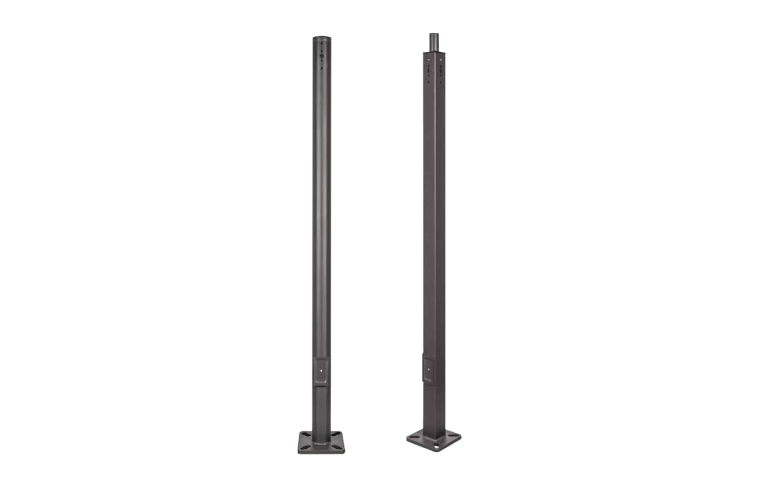

Our Commercial Light Poles include fiberglass, steel, and wood poles in tapered, square, and round configurations. Available models range from 10 feet to 70+ feet, with anchor-base and direct-burial installation options. Wood poles are available in classes 1 through 6.
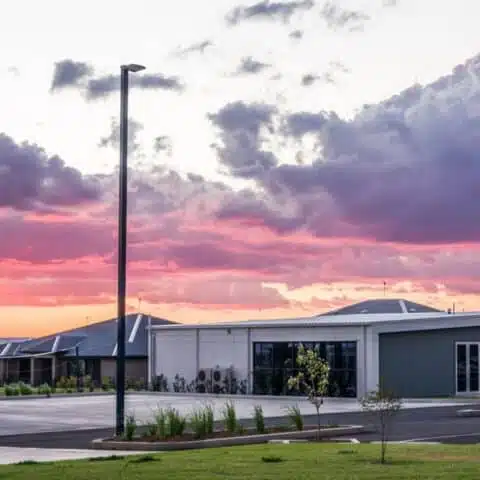
These poles are used for parking lots, roadways, recreational facilities, industrial areas, athletic fields, telecommunication towers, and power distribution systems.





What Are the Different Types of Light Poles?
Commercial light poles are commonly selected by mounting method, material, shape, mounting height, fixture loading, and project environment. The correct combination depends on the lighting layout, pole model, fixture and accessory loading, site wind criteria, soil and foundation conditions, mounting requirements, and manufacturer specifications.
Two common installation methods are anchor base and direct burial. Both methods are available across multiple pole materials, heights, and applications depending on the engineered pole model and manufacturer. Neither mounting method should be selected from pole height or material alone.
Before ordering, confirm the required mounting height, fixture quantity, fixture and accessory weight, effective projected area (EPA), mounting geometry, pole material, site design wind requirements, foundation or embedment requirements, and fixture mounting interface. LED Lighting Supply offers commercial light pole solutions in fiberglass/composite, steel, wood, and other configurations depending on project requirements.
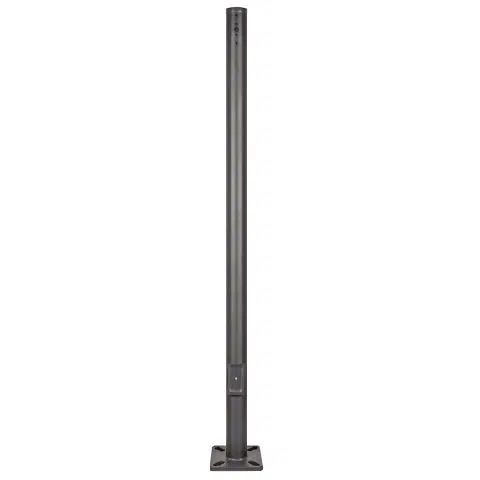
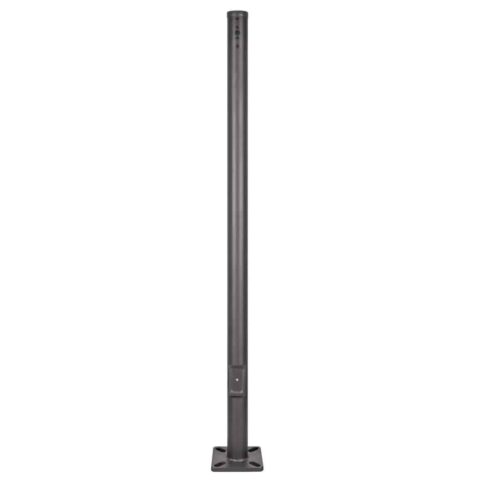
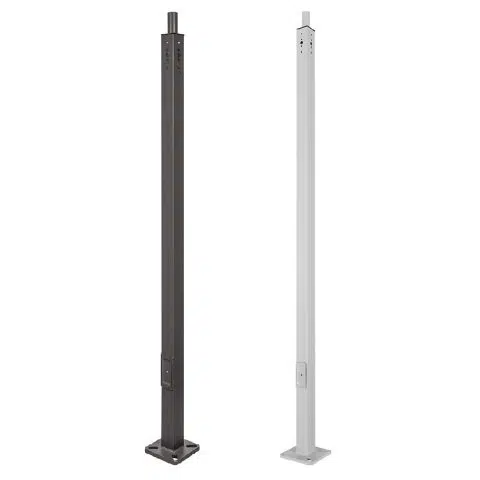
| Anchor-base systems | Anchor base light poles use a base plate secured to anchor bolts installed in a concrete foundation. Anchor-base poles are available in multiple materials, heights, and structural configurations. Suitability depends on the exact pole model, fixture and accessory loads, site wind criteria, anchor-bolt configuration, foundation design, soil conditions, and manufacturer requirements. |
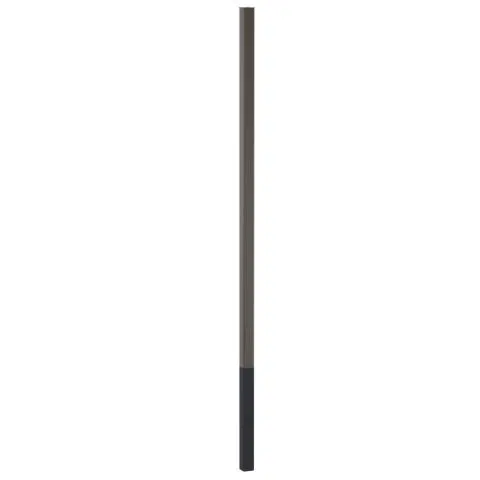
| Direct-burial systems | Direct burial light poles are installed with an engineered portion of the pole or embedment section below grade. Direct-burial construction is available in multiple pole materials and configurations. Required embedment, backfill, foundation treatment, and installation method depend on the specific pole design, loading, soil conditions, local requirements, and manufacturer specifications. |
Structural Note: Mounting method alone does not establish pole structural suitability. The complete pole, fixtures, arms, brackets, accessories, foundation or embedment, and site design conditions should be evaluated together. LED Lighting Supply can help assemble pole and fixture specifications, but structural capacity, foundation design, soil requirements, and site-specific code criteria should be verified by the pole manufacturer, project engineer, or other qualified professional where required.
Understanding Light Pole Shape Options
Light poles are available in different shaft shapes depending on material, manufacturer, mounting method, aesthetics, and structural requirements. Common configurations include straight square, straight round, tapered square, tapered round, fluted, and other specialty profiles. Not every material or pole family is available in every shape.
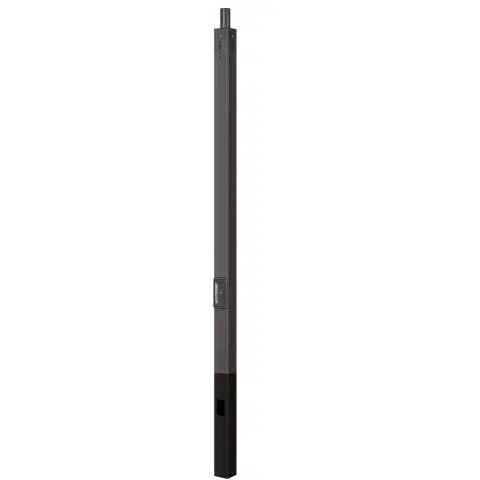
- Steel Square Light Poles: Steel Square Light Poles
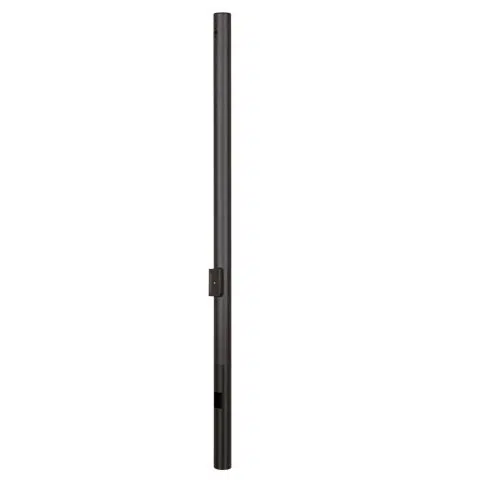
- Steel Round Light Poles: Available in selected straight and tapered configurations depending on manufacturer and model.
- Wood Round Light Poles: Wood Round Light Poles
- Fiberglass / Composite Light Poles: Fiberglass and Composite Light Poles are available in selected round, square, tapered, or other profiles depending on product.
Pole shape can affect appearance, fabrication, fixture mounting, and aerodynamic characteristics, but structural performance should be evaluated from the exact pole manufacturer’s published ratings rather than assuming one general shape always performs better in wind.
Demystifying Different Light Pole Materials
Material selection depends on more than height or aesthetics. Steel, aluminum, fiberglass/composite, and wood poles each have different structural, corrosion, installation, maintenance, and environmental characteristics. The appropriate material depends on the pole model, mounting height, fixture loading, site exposure, mounting method, project specifications, and required service conditions.
What Is a Fiberglass Light Pole?
Fiberglass and composite light poles can be useful where low weight, electrical nonconductivity where applicable, and resistance to certain corrosion mechanisms are important. Because composite formulations and pole constructions vary, corrosion resistance, UV performance, fire characteristics, impact resistance, deflection, wind capacity, and environmental suitability should be confirmed from the specific manufacturer’s data.
Fiberglass/composite poles may be appropriate for coastal, industrial, utility, parking, roadway, or other installations when the selected model is engineered for the required fixture loads and site conditions. Do not assume salt exposure, hurricane conditions, chemicals, or fire exposure have minimal effect on every composite pole.
What Is a Steel Light Pole?
Steel light poles are widely used for parking lots, roadways, commercial properties, recreation facilities, industrial sites, and other outdoor lighting applications. They are available in multiple heights, shaft sizes, wall thicknesses, shapes, finishes, and mounting configurations.
Steel pole suitability depends on the exact model and project loading. Fixture weight, fixture EPA, arms, brackets, cameras, banners, signs, wind criteria, mounting height, and other attachments all affect allowable loading. Heavy outdoor LED stadium light fixtures or multiple flood lights should not be assumed suitable for a pole simply because it is made from steel.
What Is a Wood Light Pole?
Wood light poles are used in utility, industrial, rural, roadway, sports, and other applications when the selected wood pole system meets the project requirements.
Wood poles are available in multiple lengths, species, treatments, classes, and dimensional configurations. Pole class, length, treatment, mounting method, fixture loading, guying where applicable, soil conditions, environmental exposure, and governing project requirements should all be considered before selection.
Wood pole construction does not by itself determine whether a project should use direct burial or another mounting system. Use the engineered pole design and project requirements to determine the appropriate installation method.
What Are Typical Height Ranges for Commercial Light Poles?
Commercial light poles are available across a broad range of mounting heights. Parking lots, pedestrian areas, roadways, industrial yards, sports facilities, utility applications, and other projects may require very different pole heights.
The appropriate mounting height should be selected from the lighting plan, site geometry, fixture photometrics, glare and spill-light requirements, maintenance access, structural loading, and project design criteria. Pole height should not be used by itself to determine whether an anchor-base or direct-burial system is appropriate.
LED Lighting Supply offers pole options across multiple mounting-height ranges for commercial, industrial, parking, roadway, sports, and utility applications. Availability depends on material, pole family, manufacturer, loading requirements, and mounting method.
Anchor Base vs. Direct Burial Light Poles
The choice between anchor-base and direct-burial construction should be based on the engineered pole system and project conditions rather than a general rule tied to pole height, pole material, or application type.
| Selection Factor | What to Review |
|---|---|
| Pole model | Confirm whether the manufacturer offers the required pole configuration as anchor base, direct burial, or both. |
| Mounting height | Verify that the exact pole model and mounting method are available and structurally rated for the required mounting height and loading. Do not use mounting height alone to choose the installation method. |
| Fixture and accessory loading | Include fixture weight and EPA plus cross arms, bullhorns, brackets, cameras, signs, banners, and other mounted equipment. |
| Wind requirements | Use the applicable project design wind criteria and confirm the pole’s allowable loading at that condition. |
| Soil conditions | Soil properties can affect both direct-embedment requirements and engineered foundation design. Do not determine embedment depth or foundation suitability from pole height alone. |
| Foundation or embedment | Anchor-base poles require a compatible anchor-bolt and foundation design. Direct-burial poles require the embedment, backfill, or foundation method specified for the particular pole and project. |
| Material | Mounting method should be based on the engineered pole product rather than assuming a particular material must use anchor-base or direct-burial construction. |
| Maintenance and replacement | Consider access, future pole replacement, foundation reuse, below-grade exposure, corrosion, and long-term site maintenance. |
The Influence of Wind Load on Commercial Light Pole Selection
Geographic location and applicable design criteria affect the wind requirements used for light pole selection. The pole should be evaluated as a complete assembly that includes the pole shaft, fixtures, arms, brackets, adapters, and other attachments.
EPA, or Effective Projected Area, is used to represent the wind-loading effect of mounted fixtures and accessories. The combined EPA and weight of all mounted components should be checked against the allowable values for the exact pole at the applicable design wind condition.
Our high-wind light poles include models designed for projects with higher structural requirements, but the correct pole still depends on the project location, pole model, mounting height, loading, and design criteria.
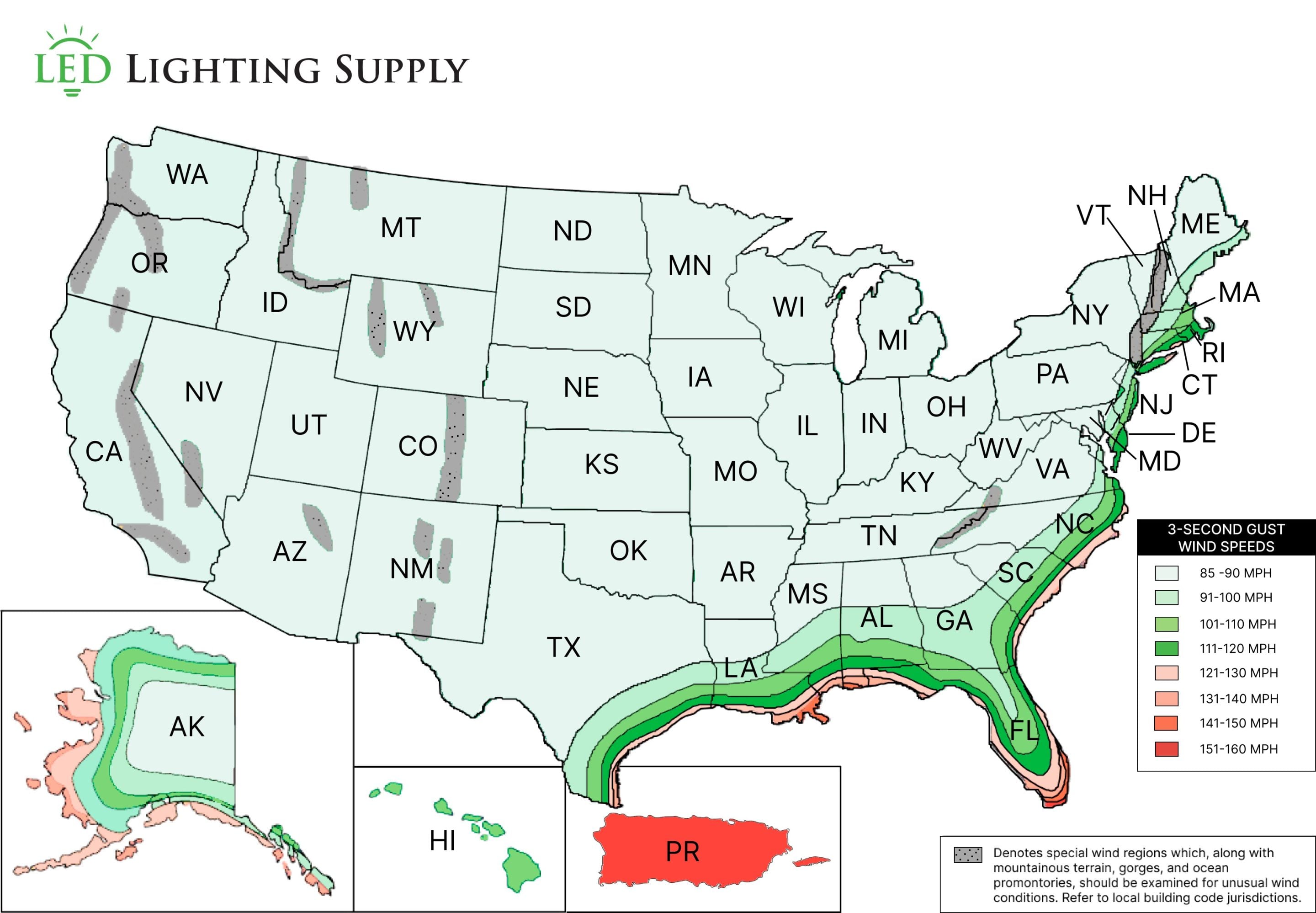
Wind Rating Note: A generic wind map or nominal wind-speed label is useful for early planning but should not replace site-specific structural verification. Building-code edition, exposure, importance/risk category, elevation, topography, pole location, fixture EPA, mounting height, and manufacturer criteria can affect the final design.
Foundation and Embedment Requirements
The pole itself is only one part of the structural system. Anchor-base and direct-burial installations both depend on appropriate support at grade.
For anchor-base poles, the foundation design should account for the pole reactions, anchor-bolt pattern, base plate, concrete design, reinforcement, soil conditions, and project loading. An existing concrete base should not automatically be reused simply because the new pole base plate appears to fit.
For direct-burial poles, required embedment should follow the exact pole design and project requirements. Pole geometry, loading, soil properties, groundwater, backfill, frost conditions where applicable, manufacturer instructions, and project engineering can affect the required installation.
Where foundation or embedment design is not already provided by the pole manufacturer or project documents, use a qualified structural or geotechnical professional as appropriate for the project.
Top LED Fixtures for Light Pole Installation
Fixture selection depends on the application, required light levels, mounting height, pole layout, optics, aiming, glare limits, and surrounding property. The fixture must also remain within the structural loading limits of the selected pole system.
- Flood lights: LED flood lights provide adjustable directional illumination for building perimeters, yards, loading areas, sports applications, and other targeted lighting needs.
- Parking lot lights: LED shoebox lights and commercial light poles for parking lot lighting can provide controlled area-lighting distributions when fixture optics, pole height, spacing, and layout are properly selected.
- Stadium and sports lights: LED stadium lights provide high-output, controlled optics for sports fields and other large-area applications. Their weight, EPA, quantity, brackets, and mounting geometry should be included in the pole structural review.
Our lighting design services can help determine fixture quantities, optics, pole locations, mounting heights, aiming, calculated light levels, and uniformity. Photometric design does not establish pole or foundation structural capacity; those requirements should be verified separately from the applicable pole and project engineering information.
How Long Does It Take to Get Light Poles After Ordering?
Commercial light pole lead times vary by manufacturer, pole material, height, finish, mounting configuration, quantity, structural requirements, and current production schedule. Custom poles may require additional engineering and fabrication time, while selected standard configurations may be available through quick-ship programs.
Confirm current lead time for the exact pole before scheduling installation. Larger poles, custom colors, unusual mounting configurations, high-wind requirements, specialty finishes, and project-specific engineering can require additional production time.
Why LED Lighting Supply Is Your Strategic Partner for Commercial Light Poles
Our Product Specialists can help coordinate the lighting and product-selection side of a commercial light pole project. We can provide complimentary lighting plans, fixture specifications, pole options, fixture weight and EPA information, mounting requirements, and available manufacturer structural data.
We can also help identify information that should be reviewed before ordering, including pole height, fixture quantity, mounting configuration, wind criteria, soil or foundation information, and site conditions.
LED Lighting Supply does not replace the structural engineer, geotechnical professional, pole manufacturer, electrician, or authority having jurisdiction. Final pole capacity, foundation or embedment design, soil suitability, structural loading, installation method, and code-sensitive requirements should be verified by the appropriate qualified professional for the project.
Light Poles FAQs
How Should I Choose Between Anchor-Base And Direct-Burial Light Poles?
Choose between anchor-base and direct-burial construction based on the engineered pole system and project conditions, not pole height, material, or application type alone. Review the exact pole model, fixture and accessory loading, wind criteria, soil conditions, and required foundation or embedment method.
What Information Should Be Confirmed Before Ordering A Commercial Light Pole?
Before ordering, confirm mounting height, fixture quantity, fixture and accessory weight, EPA, mounting geometry, pole material, site design wind requirements, foundation or embedment requirements, and fixture mounting interface. The complete pole, fixtures, arms, brackets, accessories, support system, and site conditions should be evaluated together.
How Do Fixture Weight And EPA Affect Light Pole Selection?
Fixture weight and EPA must be checked with all other mounted components against the allowable values for the exact pole at the applicable design wind condition. Arms, brackets, adapters, cameras, signs, banners, bullhorns, and other attachments can also affect pole loading.
Can Pole Height Alone Determine The Right Mounting Method?
No, pole height alone should not determine whether an anchor-base or direct-burial system is appropriate. The required mounting height must be verified with the exact pole model, mounting method, structural rating, loading, and project conditions.
How Should I Select A Light Pole Material?
Select light pole material based on the pole model, mounting height, fixture loading, site exposure, mounting method, project specifications, and required service conditions. Steel, aluminum, fiberglass/composite, and wood poles have different structural, corrosion, installation, maintenance, and environmental characteristics.
Can An Existing Concrete Base Be Reused For A New Anchor-Base Pole?
An existing concrete base should not automatically be reused because a new pole base plate appears to fit. Foundation design should account for pole reactions, anchor-bolt pattern, base plate, concrete design, reinforcement, soil conditions, and project loading.
What Should Be Considered When Planning Light Pole Fixture Layout?
Fixture layout should consider the application, required light levels, mounting height, pole layout, optics, aiming, glare limits, surrounding property, and the structural loading limits of the selected pole system. LED Lighting Supply lighting design services can help determine fixture quantities, optics, pole locations, mounting heights, aiming, calculated light levels, and uniformity.
What Affects Commercial Light Pole Lead Time?
Commercial light pole lead times vary by manufacturer, material, height, finish, mounting configuration, quantity, structural requirements, and current production schedule. Custom poles may require additional engineering and fabrication time, while selected standard configurations may be available through quick-ship programs.
