Food Grade LED Lights
- NSF certified options available for splash zone and sanitation areas
- Washdown-rated and IP69K models for high-pressure cleaning environments
- Selection support for temperature, lens material, and mounting requirements


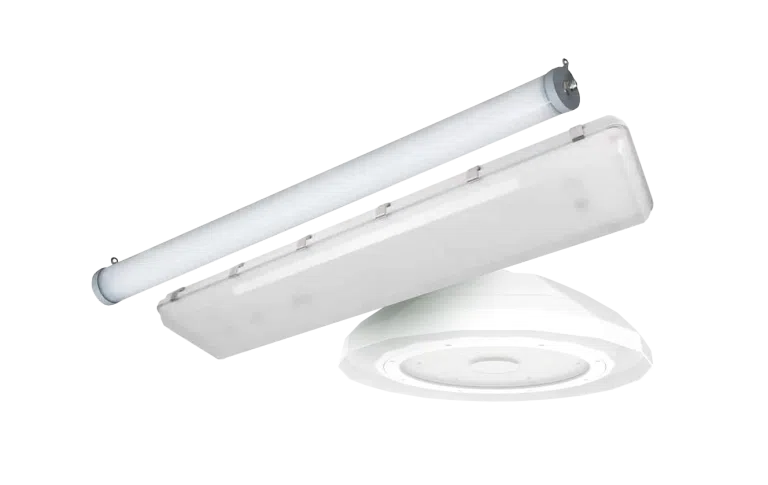
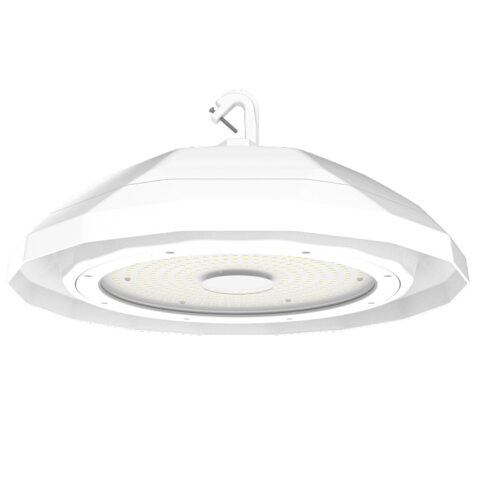
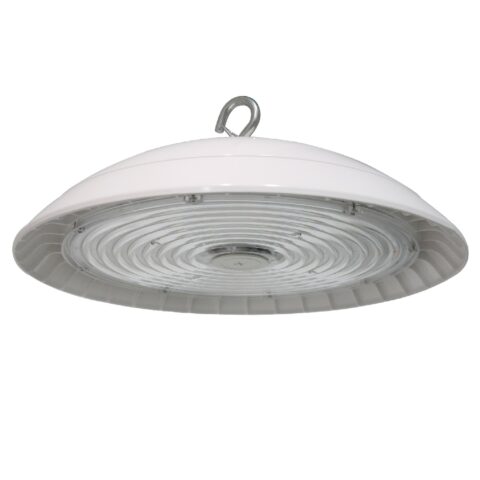
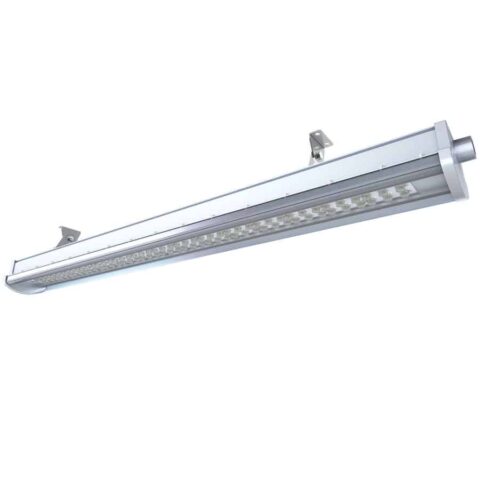
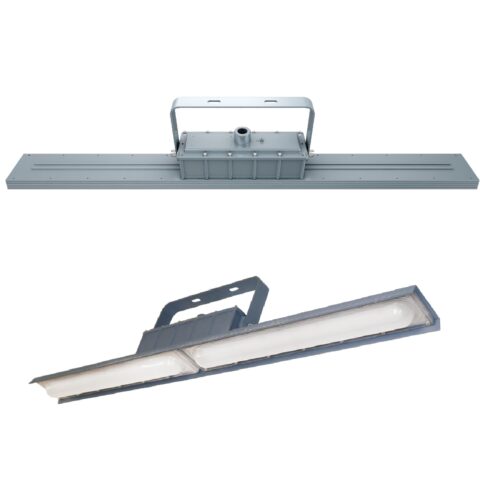
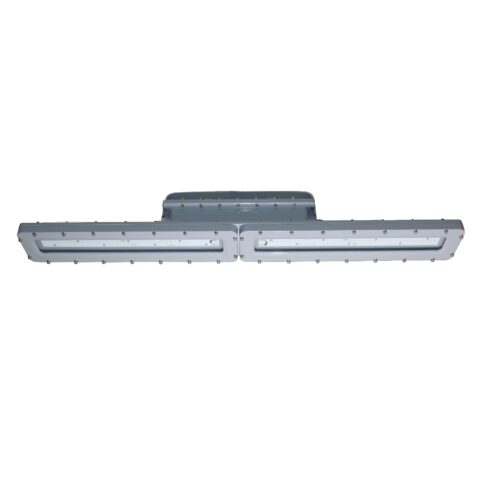
Our NSF Rated Lighting and Food Grade LED Lights include food-safe LED fixtures with smooth, crevice-resistant housings, sealed designs, and drainable or sloped profiles. Available models may vary by lens material, color temperature, mounting method, temperature range, and washdown exposure.
These fixtures are commonly used in food processing plants, commercial kitchens, meat and poultry facilities, dairy plants, bakeries, cold storage rooms, freezers, food laboratories, packaging lines, washdown areas, and grocery prep spaces.








What Are Food Grade LED Lights?
Food grade LED lights are designed for commercial and industrial facilities where food is processed, prepared, packaged, stored, or handled. Depending on the product and certification, these fixtures may use materials, lenses, housings, seals, smooth surfaces, crevice-resistant designs, and sloped or drainable profiles intended to support cleaning and sanitation programs and reduce locations where debris, moisture, or contaminants can accumulate.
NSF-certified lighting is different from standard commercial lighting, vapor tight lighting, and general washdown lighting. NSF certification addresses food-equipment sanitation considerations and identifies the use zones for which the specific product has been evaluated. Electrical safety listings, IP ratings, wet-location ratings, DLC qualification, washdown ratings, and NSF certification evaluate different characteristics and should not be treated as interchangeable.
Food-grade LED fixtures are commonly used in food processing plants, commercial kitchens, meat and poultry processing facilities, dairy plants, bakeries, cold storage rooms, freezers, food laboratories, packaging lines, sanitation areas, and grocery prep spaces. The correct fixture depends on the NSF use-zone requirement, cleaning process, water exposure, mounting height, lens material, temperature, corrosion exposure, required foot-candles, and facility requirements.
Selection and Installation Note: Product specifications, ratings, controls, certifications, and warranty coverage vary by model. Confirm the selected product specification and current NSF listing before ordering. For code-sensitive, electrical, emergency, hazardous-location, food-safety, sanitation, washdown, or safety-critical applications, verify requirements with the appropriate facility professional, inspector, engineer, or licensed electrical professional.
Start with the food-safety requirement: Determine whether NSF certification is required and identify the specific use zone required for the installation. For lighting products, NSF listings may identify use such as Non-Food Zone, Splash Zone, or Food Zone (Non-Contact), depending on the model. Then separately evaluate washdown exposure, water-ingress protection, lens material, temperature range, corrosion conditions, mounting clearance, cleaning chemicals, and required task light level. Always verify the exact model's NSF listing and environmental ratings before ordering.
Recommended Foot-Candles for Food Processing Lighting
Use the tool below for general starting foot-candle ranges by food processing application. The widget includes common food-processing areas such as food prep lines, meat processing, poultry processing, seafood processing, dairy production, bakeries, quality control, HACCP critical control points, packaging, cold storage, freezers, commercial kitchens, laboratories, breweries, and wet processing areas.
Foot-candle guidance helps with light-level planning, but it does not determine whether a fixture is NSF certified, approved for a particular NSF use zone, rated for washdown, suitable for high-temperature or cold-storage use, corrosion resistant, or suitable for a hazardous classified location. Confirm fixture ratings, certifications, lens material, environmental exposure, and facility requirements before ordering.
Step 1: Find your foot candle levels
Step 2: Estimate your fixture count and space
Food Processing Lighting Layout Estimator
Use this estimator to calculate approximate fixture count, spacing, and average foot-candles for food processing, washdown, and clean production areas using food-safe LED fixtures. Enter your room dimensions, mounting height, target foot-candles, light loss factor, and room/layout condition to generate a preliminary lighting layout. When IES photometry is available, workplane height and room reflectance controls are shown.
Project Inputs
Estimated Results
Estimated average foot-candles are preliminary and should be verified with a lighting plan for project-critical applications.
Room / Layout Condition: This field is used only when usable IES photometry is not available. In fallback mode, it acts as a simplified room utilization factor for reflectance, fixture distribution, racking, obstructions, and how much fixture light reaches the work area. Open / light-colored spaces use 0.90, typical warehouses or shops use 0.75, racked or obstructed spaces use 0.60, and dark or complex spaces use 0.45. When IES photometry is active, this field is hidden and the estimator uses the selected workplane height, LLF, and simplified reflectance adjustment instead.
Photometry / Simulation Note: When usable IES photometry is available for the selected fixture, this estimator uses the fixture’s IES candela data, selected workplane height, light loss factor, and simplified reflectance adjustment to estimate fixture count, average foot-candles, and visual light distribution. The reflectance adjustment is a conservative approximation and is not a full zonal-cavity, radiosity, or professional photometric room calculation. When IES photometry is not available, the estimator uses a simulated beam model based on lumens, mounting height, room/layout condition, light loss factor, and beam angle.
Preliminary Estimate Only: This estimator is intended for simple square or rectangular spaces and should be used as a planning aid, not a final photometric lighting plan. Actual light levels may vary based on fixture optics, selected IES file, mounting conditions, workplane height, ceiling height, surface reflectance, obstructions, controls, voltage, installation conditions, and site-specific requirements. Project-critical applications should be verified with a formal lighting plan.
This estimate is a starting point. Warehouses, industrial facilities, hazardous locations, sports areas, schools, healthcare spaces, public areas, and code-sensitive projects may require a reviewed lighting layout before purchase or installation.
Food Facility Lighting Layout Example
Real project examples help show how fixture count, mounting height, and product selection affect light levels in food processing environments.

Food Processing Facility
| Specification | Details |
|---|---|
| Mounting height | 15 ft |
| Fixture used | 150 Watt LED Food Grade Light | 22500 Lumens | 5000K | 100-277V | NSF Rated |
| Average light level achieved | 56.62 foot-candles |
| Uniformity | 3.08 |
A food processing lighting plan can help estimate fixture count, placement, expected foot-candle levels, and uniformity before fixtures are ordered. For food-safe projects, review the lighting layout separately from the product's NSF certification, listed use zone, washdown rating, mounting clearance, lens material, temperature range, and facility requirements.
What NSF Rated Lighting Means - and What It Does Not Mean
A fixture may be vapor tight, wet-location rated, IP65, IP66, IP67, or IP69/IP69K rated and still not have the NSF certification required for a food-processing installation. IP and washdown ratings address environmental protection such as resistance to water and dust ingress. Vapor-tight construction helps protect internal electrical components from moisture, dust, and contaminants. NSF certification addresses sanitation-related product requirements and identifies the use zones for which the specific fixture has been evaluated.
Likewise, an NSF-certified fixture is not automatically rated for every washdown process. High-pressure water, high-temperature water, steam, sanitation chemicals, and corrosive cleaning agents can require separate environmental ratings or manufacturer approval. Confirm both the model's NSF listing and its environmental ratings for the actual installation.
| Rating or Certification | What It Helps Confirm |
|---|---|
| NSF certification | Confirms that the specific product has been evaluated to the applicable NSF requirements and identifies its certified use zone or zones. For lighting, verify whether the exact model is listed for Non-Food Zone, Splash Zone, Food Zone (Non-Contact), or another applicable use. |
| IP rating | Describes protection against ingress of solids and water under defined test conditions. Select an IP rating appropriate for the actual water and cleaning exposure. |
| IP69 / IP69K | May be specified for equipment exposed to demanding high-pressure and high-temperature water-cleaning conditions, depending on the applicable rating and product. Confirm the exact fixture rating and compatibility with the facility's cleaning process. |
| UL / ETL listing | Addresses electrical product safety under the applicable standard. An electrical safety listing does not replace NSF certification where NSF certification is required. |
| DLC / DLC Premium | Relates to energy-efficiency qualification and may support utility rebate eligibility where applicable. It does not establish food-safety suitability or NSF use-zone approval. |
| Hazardous-location rating | Addresses suitability for specifically classified hazardous locations. NSF certification does not make a fixture suitable for locations containing combustible dusts, flammable gases, vapors, fibers, or flyings unless the fixture also has the required hazardous-location certification. |
NSF Lighting Zones: Verify the Exact Product Listing
NSF/ANSI food-equipment listings identify the use zone or zones for which a product has been evaluated. For luminaires, current NSF listings commonly use categories such as Non-Food Zone, Splash Zone, and Food Zone (Non-Contact). Not every NSF-certified fixture is approved for all of these zones, so the exact listing for the selected model should be checked before specifying it.
| NSF Listing Category | What It Means for Lighting Selection |
|---|---|
| Non-Food Zone | Use a fixture specifically listed for Non-Food Zone applications where that classification matches the installation. Do not infer that a fixture has additional Splash Zone or Food Zone approval unless those zones also appear in the product's NSF listing. |
| Splash Zone | Use a fixture specifically certified for Splash Zone applications when the installation falls within that NSF use classification. Splash Zone status is determined by the applicable NSF standard and the product's certification; it should not be assigned solely because an area is wet or periodically washed down. |
| Food Zone (Non-Contact) | Some luminaires are specifically listed by NSF for Food Zone (Non-Contact) applications in addition to Splash Zone and Non-Food Zone use. Verify that this designation appears in the exact product listing when the installation requires it. |
NSF Listing Note: Do not determine an NSF use zone from washdown exposure alone. First identify the sanitation/use-zone requirement for the installation and confirm that the selected model's NSF listing includes that zone. Then independently verify the fixture's IP rating, wet-location or washdown rating, lens material, mounting method, chemical resistance, temperature range, and other environmental requirements.
NSF's current certification database illustrates why model-specific verification matters: some lighting products are certified for Food Zone (Non-Contact), Splash Zone, and Non-Food Zone, while others are certified only for Splash Zone and Non-Food Zone. The presence of an NSF mark by itself does not tell you every zone for which a particular luminaire is approved.
When NSF Food Grade Lights Are the Right Fit
Food grade LED lights are used when the lighting fixture needs to satisfy sanitation, cleanability, material, food-safety, or facility requirements beyond those of standard industrial lighting. The required NSF certification and use zone should come from the facility requirement or project specification rather than being inferred from the fact that an area is wet or regularly cleaned.
| Use NSF Food Grade Lights When | Do Not Use Them as a Shortcut When |
|---|---|
| The facility or project specification requires NSF-certified luminaires for the installation area. | The space is a standard commercial or industrial area with no applicable food-safety or sanitation requirement requiring NSF certification. |
| The selected fixture's NSF listing includes the required use zone for the installation. | The fixture is only described as vapor tight, wet-location rated, or washdown rated. Those ratings do not establish NSF certification. |
| The area has sanitation requirements that call for fixture construction, materials, or cleanability addressed by the applicable NSF listing. | The area requires hazardous-location lighting. Hazardous locations require the appropriate Class, Division or Zone, Group, and temperature-rated equipment independent of NSF status. |
| Quality control, inspection, HACCP monitoring, labeling, or contamination checks require both suitable illumination and sanitation-compatible equipment. | The only problem is insufficient illumination. A photometric layout may address light levels without requiring NSF-certified fixtures if the facility does not require that certification. |
| Cold storage, freezers, hot processing, wet processing, or corrosive areas require both food-safety suitability and appropriate environmental ratings. | The NSF listing has been checked but the environmental ratings have not. NSF certification does not replace temperature, corrosion, water-ingress, or washdown requirements. |
Choosing Food Processing Lights by NSF Zone, Washdown, Lens, Temperature, Mounting, and Environment
The best food processing light is not selected by wattage or NSF certification alone. Start with the required NSF use zone and sanitation requirements. Then separately confirm required light levels, mounting height, lens material, water exposure, washdown process, temperature range, voltage, controls, corrosion exposure, and other certifications.
| Selection Factor | Why It Matters |
|---|---|
| NSF certification | Confirm that the exact fixture is NSF certified and that its listing includes the use zone required for the installation. |
| NSF use zone | Verify whether the installation requires a fixture listed for Non-Food Zone, Splash Zone, Food Zone (Non-Contact), or another designation shown in the applicable NSF listing. Do not determine the zone from washdown exposure alone. |
| Washdown exposure | Separately evaluate water pressure, water temperature, steam, frequency of cleaning, cleaning chemicals, hose direction, and sanitation procedures. Select a fixture with environmental ratings appropriate for those conditions. |
| Lens material | Polycarbonate, tempered glass, coated glass, or other lens materials should be selected based on sanitation requirements, impact exposure, heat, cleaning chemicals, and facility requirements. Where glass is used over food processing or handling areas, confirm any required breakage-containment measures. |
| Color temperature and CRI | Select color temperature and color rendering based on the visual task and facility requirements. 5000K is commonly used for some inspection and processing environments, while 4000K may be preferred for other general work areas. |
| Temperature range | Cold storage, freezers, hot processing areas, ovens, fryers, and bakeries may require high-temperature LED lights or fixtures specifically rated for low-temperature operation. |
| Corrosion resistance | Seafood processing, wet processing, dairies, beverage production, and chemical sanitation areas may require harsh-environment lighting with appropriate corrosion-resistant housings, lenses, seals, and mounting hardware. |
| Mounting method | Pendant, hook, surface, suspended, or linear mounting should provide the required structural support while considering cleaning access, sanitation practices, clearances, and potential contamination traps. |
| Hazardous-location overlap | Some food or beverage facilities may contain combustible dusts, flammable vapors, or other classified hazards. NSF certification does not replace hazardous-location certification. Where both requirements apply, review appropriately certified NSF-rated explosion-proof LED lights. |
| Photometric plan | A lighting plan can estimate fixture count, mounting height, expected foot-candles, and uniformity before fixtures are ordered. It does not establish NSF use-zone suitability or environmental compatibility. |
Food-safety planning note: Treat NSF zone classification and washdown suitability as separate selection steps. Confirm the required NSF use zone and exact product listing first. Then confirm washdown rating, water-ingress protection, cleaning-chemical compatibility, temperature range, corrosion resistance, lens material, mounting method, and facility inspection requirements.
Product Verification and Warranty Support
Available certifications and ratings vary by model and may include NSF, UL Listed, ETL Listed, DLC, DLC Premium, IP-rated, IK-rated, wet-location, washdown, and dimming-compatible options. Confirm the exact certification, NSF use zone, environmental rating, and rebate eligibility on the selected product specification before ordering.
NSF certification addresses the product's evaluation for the applicable food-equipment sanitation requirements and listed use zones. UL and ETL listings generally address electrical product safety under applicable standards. DLC and DLC Premium relate to energy-efficiency qualification and may support rebate eligibility. IP ratings describe protection from solid and water ingress under specific test conditions. These certifications and ratings are not interchangeable.
Warranty coverage varies by fixture model; selected food-safe and NSF-rated LED fixtures may include a 5-year warranty. Confirm warranty coverage, installation requirements, approved cleaning exposure, operating-temperature limits, environmental restrictions, and claim requirements for the exact selected product. If an issue occurs, our support team can help review the product, application, and warranty claim process.
Request a food processing lighting plan and our Product Specialists can help review fixture count, mounting height, light levels, required NSF listing, washdown exposure, environmental ratings, and product specifications for your food-safe lighting project.
This Content on food grade and NSF lighting guidance, NSF listing and use-zone distinctions, washdown and environmental-rating considerations, and fixture selection content Was Professionally Reviewed By:

Jamie Popp, Professional Electrical Engineer (PE)
Multi-State Licensed Professional Engineer
Master of Science in Engineering
Master of Science in Project Management
Jamie has spent over 15 years working directly with industrial energy systems and facility operations. In his engineering design work, he focuses on comprehensive lighting designs, complex power distribution engineering, technical hazardous area classifications, and design-level construction support.
He applies these specialized design skills across demanding environments, including petrochemical, nuclear, mining, pulp and paper, and manufacturing facilities.
This content was reviewed for technical accuracy, engineering relevance, real-world application, and clarity for the stated lighting topic.
Food Grade LED Lights FAQs
How Should I Choose Food Grade LED Lights?
Choose food grade LED lights by first identifying the required NSF use zone and sanitation requirements, then separately confirming required light levels, mounting height, lens material, water exposure, washdown process, temperature range, voltage, controls, corrosion exposure, and other certifications.
Can Vapor Tight, Wet-Location, Or IP-Rated Lighting Replace NSF Certification?
No. A fixture may be vapor tight, wet-location rated, or IP rated and still not have the NSF certification required for a food-processing installation. These ratings evaluate different characteristics, and the exact model's NSF listing should be confirmed when NSF certification is required.
How Do I Verify The Correct NSF Use Zone For A Fixture?
Identify the sanitation and use-zone requirement for the installation, then confirm that the selected model's NSF listing includes that zone. Lighting listings may identify Non-Food Zone, Splash Zone, or Food Zone (Non-Contact), but not every NSF-certified fixture is approved for all zones.
Does NSF Certification Confirm A Fixture Is Suitable For Every Washdown Process?
No. NSF certification does not automatically confirm suitability for every washdown process, including high-pressure water, high-temperature water, steam, sanitation chemicals, or corrosive cleaning agents. Confirm both the model's NSF listing and its environmental ratings for the actual installation.
Do Recommended Foot-Candle Levels Determine Whether A Fixture Is Food-Safe?
No. Foot-candle guidance helps with light-level planning, but it does not determine whether a fixture is NSF certified, approved for a particular NSF use zone, rated for washdown, corrosion resistant, or suitable for high-temperature, cold-storage, or hazardous classified locations.
What Can A Food Processing Lighting Plan Help Estimate?
A food processing lighting plan can help estimate fixture count, placement, expected foot-candle levels, and uniformity before fixtures are ordered. Review the layout separately from the selected product's NSF certification, listed use zone, washdown rating, mounting clearance, lens material, temperature range, and facility requirements.