Commercial Wet Rated Ceiling Fans
- Options for agricultural, industrial, and covered outdoor spaces
- Wet-location and IP-rated models available depending on application
- Selection support for moisture exposure, corrosion, and mounting conditions


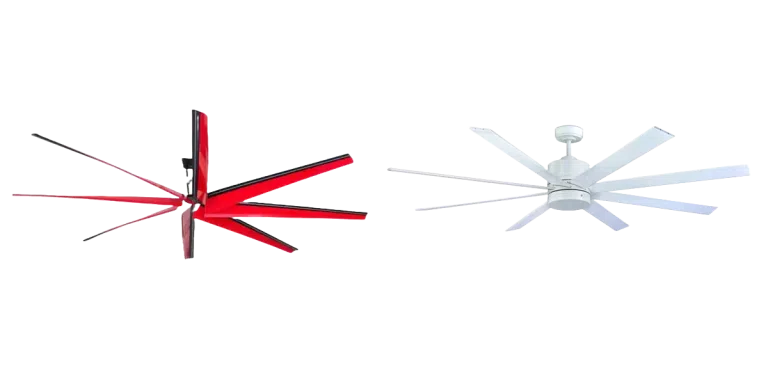

Our Commercial Wet Rated Ceiling Fans include large wet-rated HVLS fans and smaller commercial ceiling fans for moisture-prone indoor and covered outdoor areas. Available models provide options for large spaces with sufficient ceiling height and structural clearance, as well as smaller work areas, lower ceilings, utility spaces, and covered patios.
These fans are commonly used in agricultural buildings, livestock facilities, open-sided barns, manufacturing and assembly facilities, maintenance garages, service bays, covered loading docks, warehouses, marine facilities, and outdoor work areas.
-
 Starting At $4,777.63

-
Starting At $5,085.97
-
Starting At $6,831.67
-
Starting At $7,165.00
-
Starting At $7,498.33


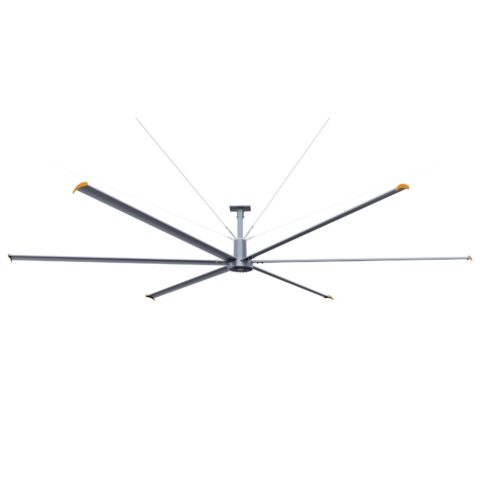
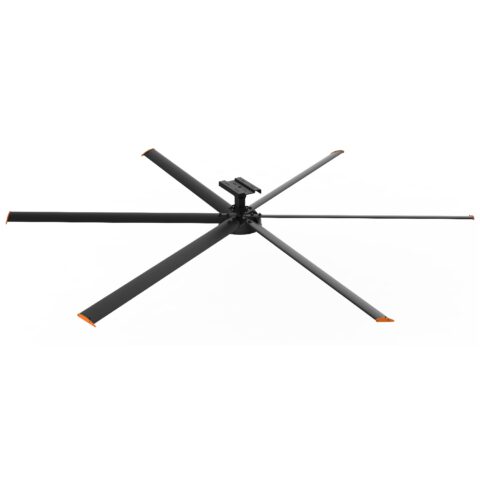


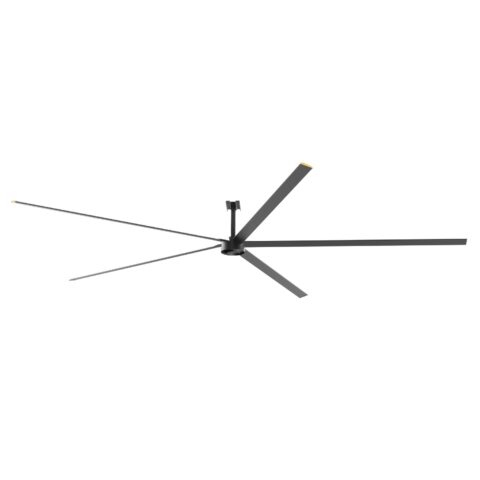
Wet-Rated Commercial and Industrial Ceiling Fans
Wet-rated ceiling fans provide reliable air movement in facilities exposed to moisture, humidity, splashing, routine cleaning, or covered outdoor conditions. Available options include large wet-rated HVLS fans for broad circulation and smaller commercial wet-rated ceiling fans for areas where a large-diameter fan is not practical.
Common applications include agricultural buildings, open-sided warehouses, manufacturing facilities, maintenance garages, covered loading areas, marine environments, food-related facilities, and other spaces where standard indoor fans may not be suitable.
Start by matching the fan type to the space and airflow objective, then confirm that the selected model is approved for the moisture exposure and installation environment. Room dimensions, ceiling height, mounting structure, electrical service, corrosion risk, controller location, and required clearances also affect the final selection.
Selection Note: Wet-location approvals, ingress-protection ratings, certifications, materials, voltage, controls, and warranties vary by model. Confirm the selected fan’s product documentation for the exact installation environment before ordering.
Wet-Rated HVLS Fans vs Commercial Ceiling Fans
| Fan Type | Typical Application |
|---|---|
| Wet-Rated HVLS Fans | Broad, low-speed air movement in large agricultural, industrial, warehouse, maintenance, and covered outdoor spaces with sufficient ceiling height and structural clearance. |
| Wet-Rated Commercial Ceiling Fans | Smaller work areas, lower ceilings, covered patios, loading areas, utility spaces, and locations where an HVLS fan would be too large or impractical. |
Fan diameter alone does not determine suitability. Coverage depends on the exact model, mounting height, operating speed, building geometry, open doors, obstructions, outdoor airflow, and the desired air movement at occupied level.
How to Select a Wet-Rated Ceiling Fan
| Selection Factor | What to Confirm |
|---|---|
| Moisture exposure | Identify whether the fan will encounter humidity, condensation, splashing, direct rain, wind-driven water, routine washdown, or pressurized cleaning. |
| Installation location | Confirm whether the fan will be indoors, in a damp area, beneath a covered exterior structure, or exposed to full outdoor conditions. |
| Facility dimensions | Provide the room length, width, clear ceiling height, occupied work areas, open sides, and major door locations. |
| Fan size and coverage | Use model-specific airflow, diameter, mounting-height range, speed, and coverage guidance rather than a fixed square-foot formula. |
| Mounting and clearances | Account for beams, lights, sprinklers, ducts, doors, cranes, lifts, vehicles, storage, equipment, and maintenance access. |
| Corrosion exposure | Identify salt air, fertilizers, cleaning chemicals, process vapors, or other substances that may require specific materials, coatings, or enclosure ratings. |
| Electrical service | Confirm voltage, phase, circuit capacity, disconnects, wiring routes, control location, and environmental ratings for electrical components. |
| Operating conditions | Review temperature range, operating hours, seasonal use, door activity, outdoor wind, and the existing HVAC or ventilation system. |
| Product documentation | Verify the selected fan’s certification, environmental rating, controller requirements, mounting instructions, maintenance requirements, and warranty. |
Understanding Wet-Location and IP Ratings
Wet-location approvals and ingress-protection ratings help define where a fan may be installed. They do not automatically make every fan suitable for every outdoor, washdown, coastal, or industrial environment.
Before selecting a fan, confirm:
- Whether the complete fan is approved for damp, wet, covered-outdoor, or full outdoor use
- The ingress-protection rating of the motor, controller, and related electrical components
- Whether direct rain or wind-driven water is permitted
- Whether routine washdown or pressurized cleaning is permitted
- Resistance to dust, salt, chemicals, and corrosive vapors
- The approved ambient-temperature range
- Required mounting orientation and protective clearances
The motor, fan assembly, controller, and other components may carry different environmental ratings. Each part of the system should be installed within its approved conditions.
Common Wet-Rated Fan Applications
- Agricultural buildings and livestock facilities
- Open-sided barns and equipment storage buildings
- Manufacturing and assembly facilities
- Maintenance garages and service bays
- Covered loading docks and staging areas
- Warehouses with frequent open-door operation
- Marine and coastal facilities
- Food-related facilities outside specialized processing zones
- Covered patios and outdoor work areas
- Facilities with routine cleaning or elevated humidity
Applications involving combustible dust, flammable vapors, corrosive chemicals, food-sanitation requirements, or classified electrical areas may require specialized equipment beyond a general wet-rated fan.
Moisture, Humidity, and Condensation
Wet-rated ceiling fans are designed to operate in moisture-prone environments, but they do not remove humidity from the building. Air movement may reduce stagnant conditions, distribute conditioned or dehumidified air, and help wet surfaces dry faster.
Condensation depends on humidity, dew point, surface temperature, insulation, ventilation, outdoor-air infiltration, and process moisture. Facilities with persistent condensation may also require ventilation, dehumidification, heating, cooling, drainage, or insulation improvements.
Corrosion, Washdown, and Outdoor Exposure
Moisture is only one environmental concern. Coastal salt, fertilizers, cleaning chemicals, industrial vapors, and repeated washdown can affect blades, fasteners, motor housings, controllers, coatings, and mounting hardware.
For corrosive or cleaning-intensive environments, review the selected fan’s:
- Blade and housing materials
- Protective coatings
- Motor and controller enclosure ratings
- Fastener and mounting-hardware materials
- Approved cleaning methods
- Inspection and maintenance requirements
A wet rating does not necessarily establish chemical resistance, salt resistance, or suitability for high-pressure washdown.
Mounting, Controls, and Electrical Requirements
Wet-rated ceiling fans should be installed using manufacturer-approved mounting systems attached to suitable building structure. The fan, controller, wiring, disconnects, and related components must all be appropriate for their installed environment.
Before ordering, confirm:
- Approved mounting point and attachment method
- Fan weight, operating loads, and required restraints
- Blade clearances from structure, lights, sprinklers, doors, vehicles, and equipment
- Voltage, phase, wiring, disconnects, and controls
- Environmental rating and placement of the controller
- Coordination with fire-protection and ventilation systems
- Inspection, cleaning, and service access
- Applicable seismic and local requirements
A qualified structural professional should confirm the supporting structure and attachment method. Electrical installation should be completed by qualified personnel according to the manufacturer’s instructions and applicable requirements.
Wet-Rated Fan Layout Plans
LED Lighting Supply can prepare a preliminary fan layout plan using the facility dimensions, ceiling height, structural mounting locations, occupied areas, doors, open sides, obstructions, environmental conditions, voltage, and airflow goals.
A preliminary layout can help narrow fan diameter, quantity, spacing, mounting height, and product options. Final structural support, electrical requirements, environmental suitability, clearances, and installation conditions should be confirmed using the selected model and final field information.
Certifications, Environmental Ratings, and Warranty
Certifications, environmental ratings, control options, and warranties vary by wet-rated fan model. Depending on the selected product, documentation may include a UL, ETL, MET, or other recognized listing along with an applicable wet-location or ingress-protection rating.
Before ordering, verify:
- Product certification and environmental rating
- Approved indoor, covered-outdoor, or outdoor use
- Fan diameter, airflow, coverage, and mounting range
- Motor, controller, voltage, and control options
- Materials, coatings, and corrosion resistance
- Cleaning and maintenance requirements
- Warranty term, exclusions, and service procedures
Need Help Selecting a Wet-Rated Ceiling Fan?
Contact us about wet-rated commercial and industrial ceiling fans and include the facility dimensions, ceiling height, photographs, mounting structure, moisture exposure, cleaning methods, corrosion concerns, voltage, controls, and airflow requirements when available.
LED Lighting Supply can assist with wet-rated fan selection and preliminary layout coordination. Final structural support, electrical installation, environmental suitability, fire-protection coordination, and code compliance should be confirmed by the appropriate qualified project professionals and authorities.
Commercial Wet Rated Ceiling Fans FAQs
How Do I Choose Between A Wet-Rated HVLS Fan And A Commercial Ceiling Fan?
Wet-rated HVLS fans are used for broad, low-speed air movement in large spaces with sufficient ceiling height and structural clearance, while commercial wet-rated ceiling fans suit smaller work areas, lower ceilings, covered patios, loading areas, utility spaces, and locations where an HVLS fan would be too large or impractical.
What Should I Confirm About Moisture Exposure Before Ordering A Wet-Rated Ceiling Fan?
Confirm whether the fan will encounter humidity, condensation, splashing, direct rain, wind-driven water, routine washdown, or pressurized cleaning, and verify that the selected fan documentation approves the exact installation environment.
Are Wet-Location Ratings Enough For Outdoor Or Washdown Environments?
No, wet-location approvals and ingress-protection ratings do not automatically make every fan suitable for every outdoor, washdown, coastal, or industrial environment. Confirm approval for the intended location, permitted water exposure, cleaning conditions, corrosion exposure, ambient temperature range, mounting orientation, and protective clearances.
How Should I Determine Fan Size, Quantity, And Spacing?
Use model-specific airflow, diameter, mounting-height range, speed, and coverage guidance rather than a fixed square-foot formula. Fan coverage also depends on building geometry, open doors, obstructions, outdoor airflow, operating speed, mounting height, and desired air movement at occupied level.
Can A Wet-Rated Ceiling Fan Remove Humidity From A Building?
No, wet-rated ceiling fans do not remove humidity from a building. Air movement may reduce stagnant conditions, distribute conditioned or dehumidified air, and help wet surfaces dry faster.
What Should Be Reviewed For Corrosive Or Cleaning-Intensive Locations?
Review the selected fan's blade and housing materials, protective coatings, motor and controller enclosure ratings, fastener and mounting-hardware materials, approved cleaning methods, and inspection and maintenance requirements. A wet rating does not necessarily establish chemical resistance, salt resistance, or suitability for high-pressure washdown.
What Information Is Needed For A Preliminary Wet-Rated Fan Layout Plan?
A preliminary fan layout plan can use facility dimensions, ceiling height, structural mounting locations, occupied areas, doors, open sides, obstructions, environmental conditions, voltage, and airflow goals. The plan can help narrow fan diameter, quantity, spacing, mounting height, and product options.
What Should Be Confirmed Before Installing A Wet-Rated Ceiling Fan?
Confirm the approved mounting point and attachment method, fan weight and operating loads, blade clearances, voltage, phase, wiring, disconnects, controls, controller placement, service access, and coordination with fire-protection and ventilation systems. Final structural support, electrical installation, environmental suitability, and installation conditions should be confirmed using the selected model and final field information.