Harsh Environment Lighting
- Fixtures designed for heat, moisture, dust, and corrosion exposure
- Options available for high-temperature, washdown, and marine conditions
- Application support helps match fixtures to environmental stressors


Get Your Custom Lighting Plan With Product Recommendations
- Tell us where you’re installing harsh environment LED lighting, and a product specialist can help you decide which fixtures to use, how many you need, and where to place them.


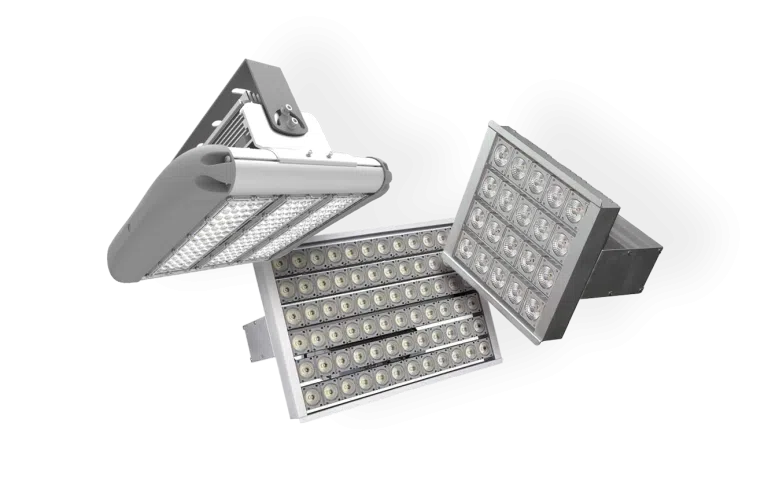
Our Harsh Environment LED Lighting includes high-temperature, vapor tight, food processing, marine and corrosion-resistant, explosion-proof, industrial high bay, impact-resistant, vibration-resistant, and cold-temperature fixtures. Products vary by fixture construction, voltage, controls, optics, and mounting method. These fixtures are commonly used in steel mills, foundries, food processing plants, wastewater facilities, chemical plants, marine environments, offshore platforms, manufacturing facilities, cold storage areas, and heavy industrial sites.
What Are Harsh Environment LED Lights?
Harsh environment LED lights are commercial and industrial fixtures built for locations where standard lighting may fail because of heat, moisture, washdown, chemicals, corrosion, vibration, dust, impact, outdoor exposure, or hazardous-location requirements. They are commonly used in steel mills, foundries, food processing plants, wastewater facilities, chemical plants, marine environments, offshore platforms, manufacturing facilities, and heavy industrial sites.
No single condition defines a harsh environment. The right fixture depends on the combination of environmental stressors present at the site. A high-temperature area, washdown zone, corrosive marine location, food processing room, and classified hazardous location can all require different fixture construction, certifications, gaskets, coatings, optics, mounting methods, and electrical ratings.
Many harsh environment lighting projects involve replacing older metal halide, high-pressure sodium, fluorescent, or HID fixtures. LED fixtures can provide lower energy use, instant-on operation, reduced maintenance, better control compatibility, and more consistent light output over time when the product is properly matched to the environment.
Selection and Installation Note: Product specifications, ratings, controls, certifications, environmental suitability, and warranty coverage vary by model. Confirm the selected product specification before ordering. For code-sensitive, electrical, washdown, food processing, hazardous-location, high-temperature, corrosive, marine, emergency, or safety-critical applications, verify requirements with your local inspector or a licensed electrical professional.
Choose Harsh Environment Lighting by Environmental Stressor
The best harsh environment fixture depends on what the light must survive. Start by identifying the environmental stressors at the site, then confirm the required fixture type, IP rating, temperature rating, impact rating, corrosion resistance, voltage, controls, mounting method, and certifications.
| Harsh Environment Condition | Best Fixture Starting Point |
|---|---|
| High Temperature LED Lighting | Use for steel mills, foundries, forging areas, hot production zones, heat treatment areas, ovens, furnaces, and other spaces with elevated ambient temperatures. Confirm the fixture’s rated ambient temperature before ordering. |
| Vapor Tight / Vapor Proof LED Lights | Use for wet, dusty, humid, or washdown-prone areas where enclosed fixtures are needed to help protect internal components from water, dust, and airborne contaminants. |
| Food Processing / NSF Rated Lighting | Use for food production, packaging, washdown, cold processing, and sanitary environments where fixture cleanability, lens materials, shatter resistance, and NSF suitability may be required. |
| Marine and Corrosion-Resistant LED Lighting | Use for coastal, saltwater, dock, port, shipyard, wastewater, offshore, and corrosive environments where coatings, hardware, gasket materials, and corrosion resistance matter. |
| Explosion Proof and Hazardous Location Lighting | Use for documented classified areas involving flammable gases or vapors, combustible dust, or ignitible fibers or flyings. Select fixtures certified for the established Class, Division or Zone, Group, temperature code, and ambient conditions; explosionproof construction is not required for every hazardous location. |
| Industrial High Bay Lighting | Use for high-ceiling manufacturing areas, equipment bays, service areas, and industrial spaces where mounting height, impact risk, vibration, heat, or dust may influence fixture selection. |
| Impact-Resistant Lighting | Use for high-abuse areas, equipment zones, public facilities, manufacturing areas, and locations where fixtures may be exposed to accidental contact, machinery movement, or falling objects. Confirm IK rating by model. |
| Vibration-Resistant Lighting | Use for conveyor lines, heavy machinery areas, processing equipment, compressors, and industrial spaces where continuous vibration can damage standard fixtures or mounting hardware. |
| Cold, Freezer, or Low-Temperature Lighting | Use for cold storage, freezer rooms, refrigerated processing areas, and other low-temperature spaces. Confirm startup temperature, operating temperature, lens material, condensation risk, and driver suitability. |
When Harsh Environment Fixtures Are the Right Fit
Harsh environment fixtures are used when the installation conditions exceed what standard commercial or industrial lighting is designed to handle. They are not automatically required for every warehouse, production floor, or outdoor area.
| Use Harsh Environment Fixtures When | Do Not Use Them as a Shortcut When |
|---|---|
| Multiple environmental stressors are present, such as heat, moisture, chemicals, corrosion, vibration, dust, or impact risk. | The space has standard commercial conditions, such as controlled temperature, low humidity, and minimal chemical or impact exposure. |
| Standard fixtures have failed early because of washdown, corrosion, heat, dust, vibration, or mechanical abuse. | The environmental condition is temporary, such as short-term construction lighting or a limited-duration project. |
| Maintenance access is difficult, such as high ceilings, continuous-operation plants, offshore platforms, or critical production areas. | The fixture certification does not match the requirement, especially in hazardous locations, food processing, or emergency egress areas. |
| Special certifications or ratings are required, such as NSF, hazardous-location ratings, wet-location ratings, impact ratings, or elevated temperature ratings. | Installation expertise is not available for code-sensitive, high-temperature, washdown, hazardous-location, or corrosive environments. |
| Downtime is costly, and the facility needs durable fixtures selected for the real operating environment. | The project only needs a basic light output upgrade and does not involve harsh environmental exposure. |
Choosing Harsh Environment LED Lights by Rating, Temperature, Voltage, Controls, and Fixture Construction
Harsh environment lighting should not be selected by wattage alone. The right fixture depends on environmental exposure, required certifications, mounting height, lumen output, voltage, controls, fixture housing, lens material, gasket compatibility, mounting method, and maintenance access. Because this is a broad category, a single foot-candle chart is not the best decision tool. Light levels should be determined by the specific application, such as high-temperature manufacturing, food processing, vapor tight lighting, marine lighting, explosion proof lighting, factory lighting, or warehouse lighting. For large industrial spaces or critical environments, a photometric plan is recommended to confirm fixture count, light levels, mounting height, glare, and coverage before ordering.
Planning Checklist
| Planning Factor | What to Confirm |
|---|---|
| Environmental stressors | Confirm heat, moisture, washdown, chemicals, corrosion, dust, vibration, impact, outdoor exposure, and whether multiple stressors occur at the same time. |
| Temperature rating | Confirm the fixture’s rated ambient temperature against the actual site temperature. High-temperature fixtures must be selected by model rating, not by fixture appearance or wattage. |
| IP rating | Confirm the level of water and dust exposure. IP65 is dust-tight and protected against water jets; IP66 is dust-tight and protected against powerful water jets. For high-pressure or high-temperature washdown, review fixtures rated IP69 or IP69K where applicable. IP67 addresses temporary immersion under defined test conditions, not high-pressure washdown. Verify materials, seals, hardware, and manufacturer documentation separately for chemical, corrosive, or sanitary environments. |
| Impact rating | Review IK ratings where fixtures may be exposed to accidental contact, equipment strikes, falling objects, or high-abuse conditions. |
| Corrosion resistance | Confirm housing material, coating, hardware, gasket material, and lens compatibility for salt spray, chemicals, wastewater, cleaning agents, or corrosive industrial conditions. |
| Hazardous-location classification | Confirm the documented Class, Division or Zone, Group, temperature code, and ambient-temperature requirements where flammable gases or vapors, combustible dust, or ignitible fibers or flyings may be present. Standard harsh environment fixtures are not substitutes for certified hazardous-location fixtures. |
| Food processing suitability | Confirm NSF suitability or listing where required, lens material, cleanability, shatter resistance, gasket compatibility, washdown exposure, and whether the fixture is used in splash-zone or non-food-zone areas. |
| Mounting method | Confirm pendant, surface, chain, bracket, pole, or high-bay mounting requirements, plus vibration exposure, thermal expansion, service access, and structural support. |
| Lumen output and optics | Select by lumens, mounting height, beam angle, spacing, and photometric performance. Narrower optics may help with higher mounting heights, while wider distributions may suit lower ceilings or broad coverage areas. |
| Voltage and electrical system | Confirm 120-277V, 347-480V, or other site voltage requirements before ordering, especially in industrial facilities, plants, utilities, and heavy manufacturing environments. |
| Controls and dimming | Review 0-10V dimming, occupancy sensors, photocells, daylight controls, timers, and building automation compatibility before selecting fixtures. |
| Maintenance access | Consider ceiling height, lift access, shutdown windows, emergency replacement needs, remote drivers, wire guards, and whether fixtures must operate continuously. |
Harsh Environment Lighting Project Examples
Completed harsh environment projects help show how fixture construction, temperature rating, environmental exposure, and mounting conditions affect product selection. They also reinforce why demanding industrial applications should be reviewed before fixtures are ordered.
Arizona Algae Products New Explosion-Proof Workspace Case Study
The Backstory
Arizona Algae Products LLC was moving its warehouse operation to a newly constructed building and needed lighting for the center section of the space, which included two platforms, a walkway, and equipment that could create shadowing issues. They initially had only a rough estimate of what they might need and were seeking guidance on lighting for hazardous locations, wattage, fixture count, placement, and overall layout. The Director of Facilities and Maintenance, Christopher Knizeski, reached out to LED Lighting Supply and was paired up with Product Specialist Jake Hoffman for expert support in these areas.
The Customer Challenge
The customer knew they needed Class 1 Division 2 (C1D2) rated lighting for the area. This means flammable gases, vapors, or liquids could be present under abnormal conditions, such as equipment leaks or ventilation failures. Due to these factors, the area required an explosion-proof lighting solution. The fixtures needed to meet the safety demands of the environment while delivering strong, uniform illumination for a functional work area.
As the conversation developed, it became clear this wasn't a simple fixture installation. The customer needed to light a new warehouse workspace in a building that was still being constructed. The section being lit was obstructed by equipment and piping, all of which created the potential for shadowing and dark spots. The customer needed an expert's guidance to ensure the final lighting plan would support visibility, safety, and day-to-day work in the warehouse.


Lighting Plan We Created for the Customer
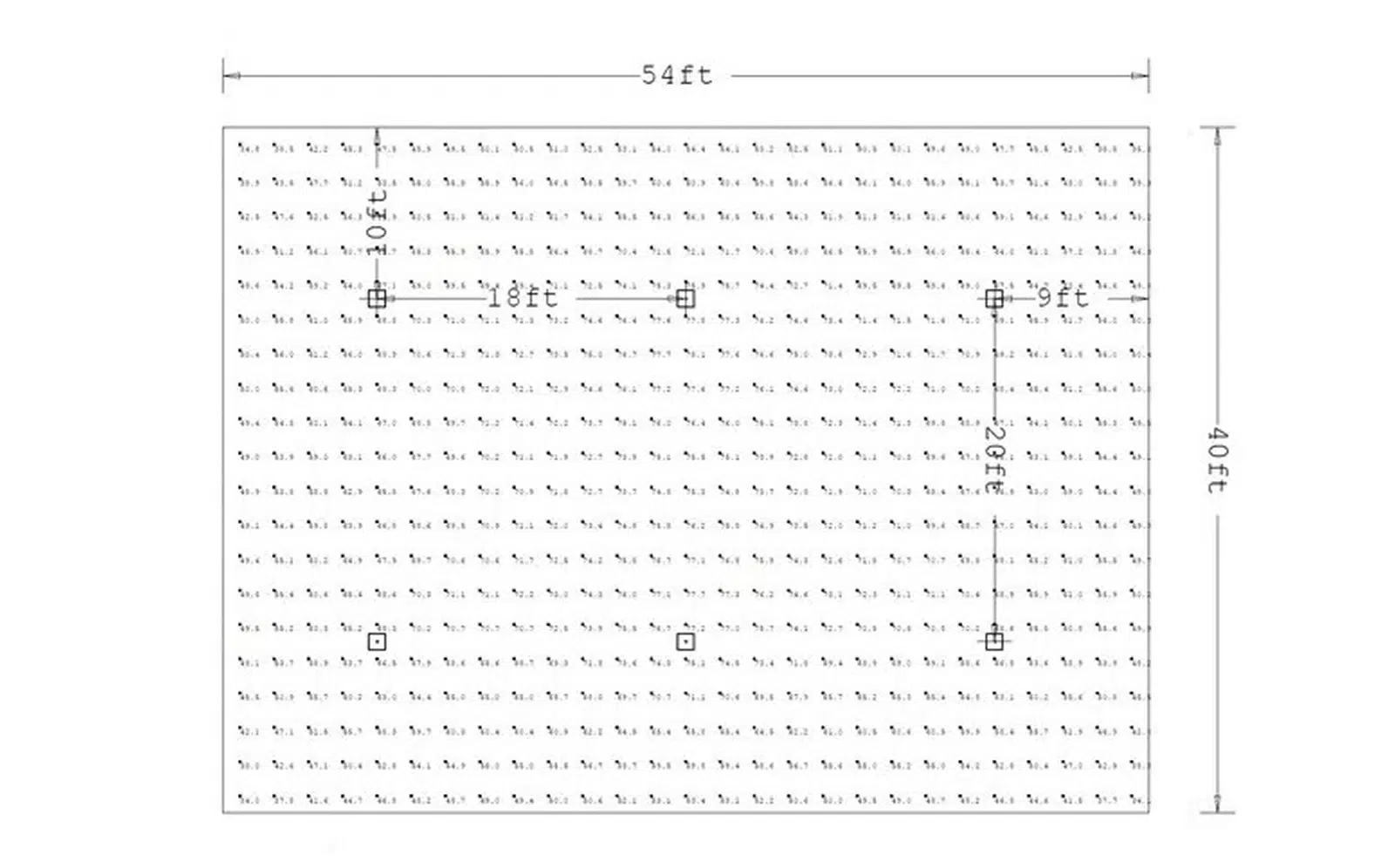
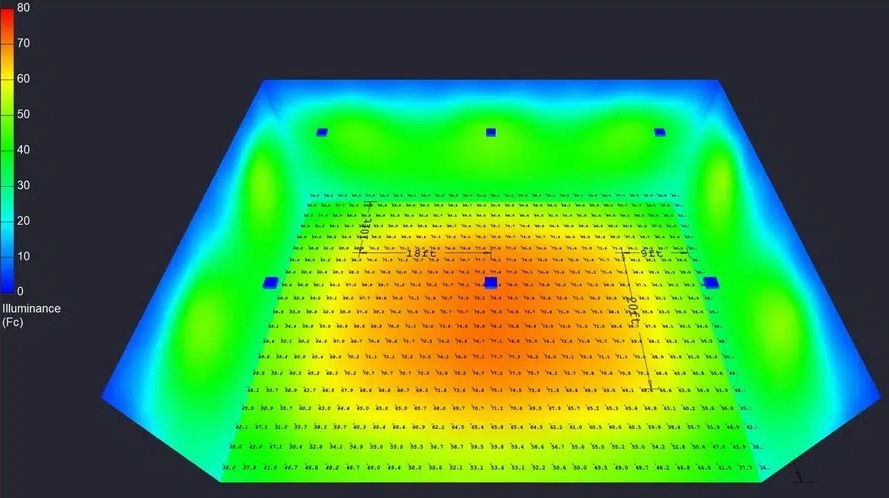
Lighting Plan Metrics
- Mounting Height: 20 ft
- Foot Candles Achieved: 62 average
- Product(s) Used: MLLG-E-LED-EXPLA-200-50-[V]-C1D2
International Paper Facilities Upgrade to High-Temperature LED Lights Case Study
The Backstory:
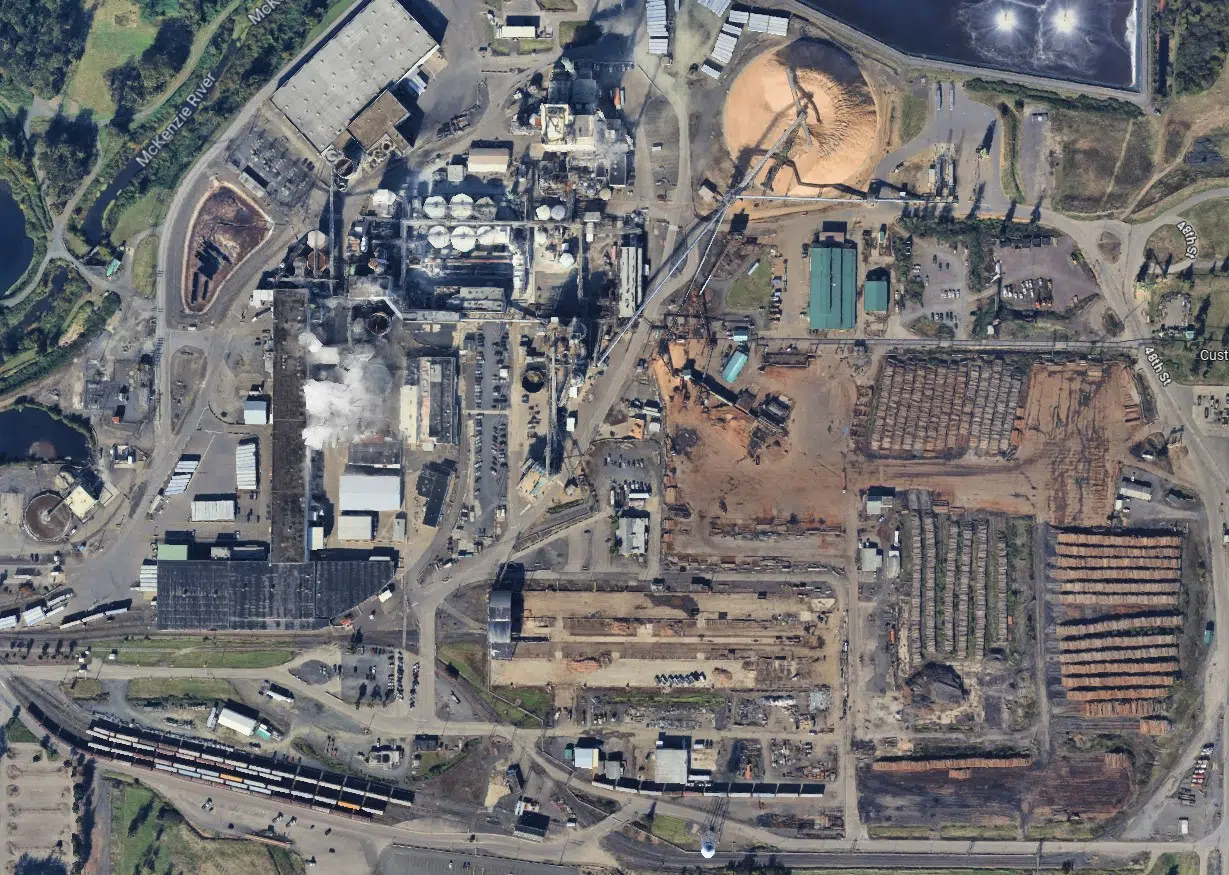
International Paper turns renewable resources into packaging, recycling, and related pulp products that people rely on every day. As one of the largest global paper packaging companies, International Paper holds itself to a high standard for facility safety and operational reliability. That standard extends to the lighting at its paper processing facilities. International Paper's Springfield, Oregon, facility is one of the company's longest-standing paper mills. Across 450 acres, the site spans everything from high-heat machine rooms to open outdoor work areas. Each area has its own lighting requirements. The facility lighting had aged into inefficiency. That included 400-watt metal halide fixtures still operating in areas that required a more reliable solution.
International Paper required a lighting partner with in-stock units and real expertise across a range of industrial lighting types. This combination led the customer to its first project with LED Lighting Supply. International Paper’s Maintenance Supervisor, Scott Adair, partnered with LED Lighting Supply’s Product Specialist, Jeff Cesenaro, to determine the appropriate lighting solutions for the facility.
Featured Lighting Plan for International Paper’s 275 x 275 Foot Warehouse in Walton, Kentucky
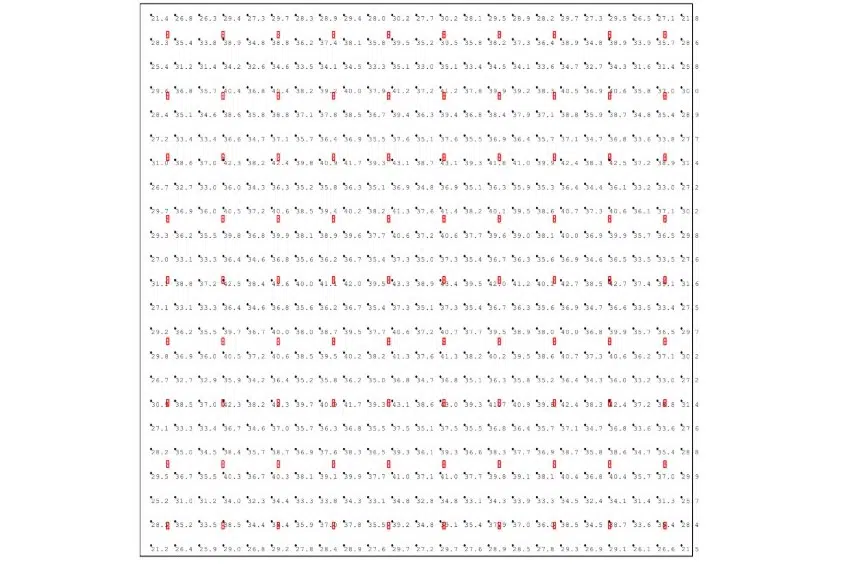
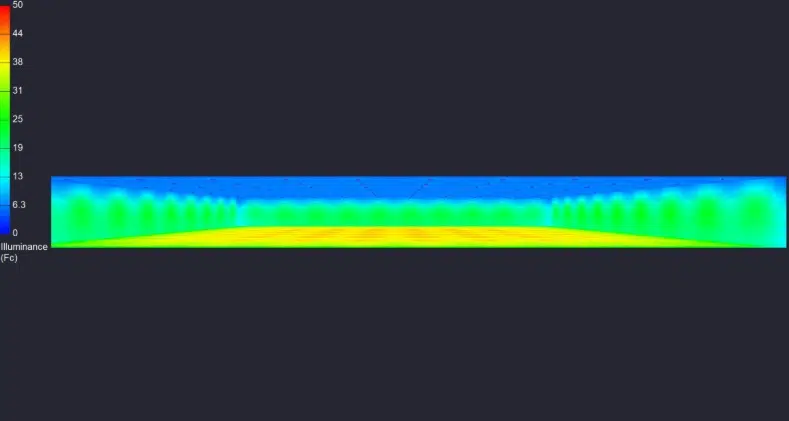
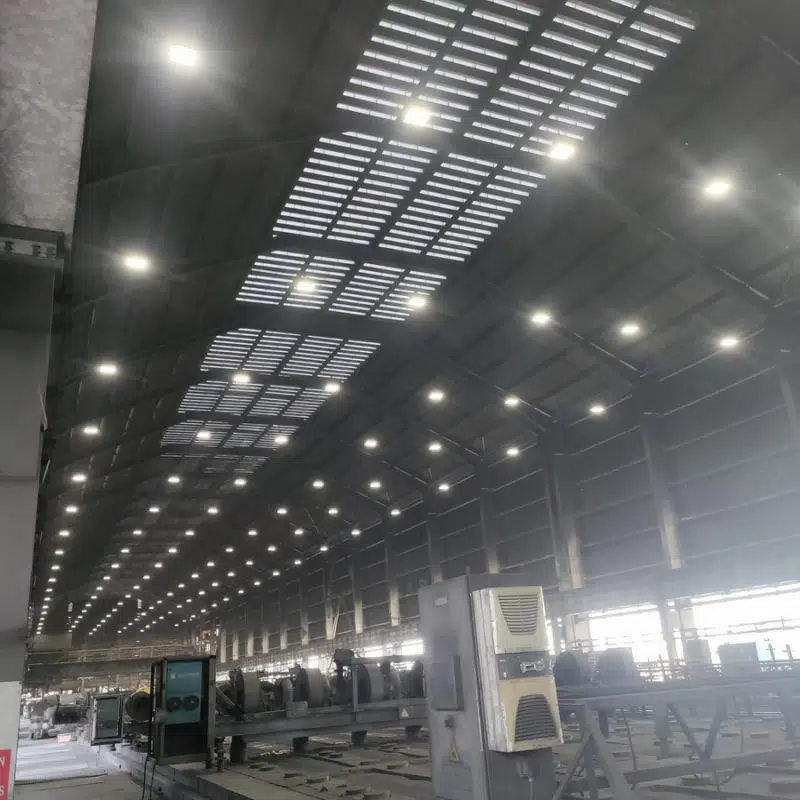
Lighting Plan Metrics:
- Mounting height: 25 feet
- Fixture Used: LLS-M-HBLINR-300A-CC
- Foot Candles achieved: 35 fc average

Certifications, Rebates, and Warranty Support
Selected harsh environment LED lights from LED Lighting Supply carry safety listings such as UL, ETL, or CSA, depending on the model. Selected fixtures may be DLC or DLC Premium listed, supporting utility rebate eligibility where applicable. DLC qualification is an efficiency and performance designation, not an electrical safety certification. Rebate requirements vary by utility, region, and product listing, so confirm eligibility on the selected product specification before ordering. Warranty terms vary by product, with many fixtures offering a 5-year warranty unless otherwise specified. Before purchase, confirm certifications, DLC status, voltage, surge protection, controls compatibility, ambient temperature, mounting conditions, environmental exposure, and whether the fixture is right for the installation area.
Common Harsh Environment Lighting Mistakes
Harsh environment lighting projects go wrong when fixtures are selected without confirming the actual site conditions. The most important step is matching the fixture construction and certification to the environment.
- Using a standard fixture in a harsh environment: Heat, washdown, corrosion, chemicals, vibration, and impact can shorten fixture life if the product is not designed for the exposure.
- Assuming IP65 is enough for all wet locations: IP65 is dust-tight and protected against water jets, but powerful-jet washdown may require IP66, and high-pressure or high-temperature washdown may require IP69 or IP69K where applicable. IP67 addresses temporary immersion, not high-pressure water jets.
- Using a generic harsh environment fixture in a hazardous location: Classified areas require fixtures certified for the established hazardous-location classification. Water-resistant, vapor-tight, or corrosion-resistant construction does not establish hazardous-location approval.
- Ignoring gasket and material compatibility: Cleaning agents, petroleum exposure, chemicals, salt spray, and wastewater conditions can affect gaskets, coatings, hardware, lenses, and housings.
- Overlooking ambient temperature: High-wattage fixtures and high-temperature spaces require careful review of fixture temperature ratings and thermal performance.
- Skipping vibration protection: Conveyor systems, compressors, heavy machinery, and moving equipment may require vibration-resistant mounting or isolation.
- Forgetting emergency lighting requirements: Emergency or egress lighting in harsh or hazardous areas must be selected for the correct environment and code requirements.
- Selecting by wattage alone: Lumens, optics, mounting height, temperature rating, voltage, and photometric results matter more than wattage by itself.
- Not verifying voltage: Industrial facilities may use 120-277V, 347-480V, or other electrical systems that must match the fixture driver.
- Skipping a lighting plan for large or critical areas: Industrial floors, processing lines, high bays, outdoor yards, and hazardous areas should be reviewed for fixture count, placement, light levels, and uniformity.
Request a harsh environment lighting plan, and our Product Specialists can help review fixture type, environmental exposure, mounting height, voltage, controls, light levels, certifications, and product specifications for your harsh environment lighting project.
Harsh Environment Lighting FAQs
How Do I Choose Harsh Environment LED Lighting?
Choose harsh environment LED lighting by identifying the site's environmental stressors, then confirming the required fixture type, IP rating, temperature rating, impact rating, corrosion resistance, voltage, controls, mounting method, and certifications.
When Are Harsh Environment Fixtures the Right Fit?
Harsh environment fixtures are the right fit when installation conditions exceed what standard commercial or industrial lighting is designed to handle, including multiple stressors such as heat, moisture, chemicals, corrosion, vibration, dust, or impact risk. They are not automatically required for every warehouse, production floor, or outdoor area.
How Should I Select an IP Rating for Washdown or Wet Areas?
Select the IP rating according to the actual water and dust exposure: IP65 is dust-tight and protected against water jets, while IP66 is dust-tight and protected against powerful water jets. High-pressure or high-temperature washdown may require IP69 or IP69K where applicable, and IP67 addresses temporary immersion under defined test conditions rather than high-pressure washdown.
How Many Harsh Environment Fixtures Will My Project Need?
Fixture count should be determined by lumen output, mounting height, beam angle, spacing, and photometric performance. For large industrial spaces or critical environments, a photometric plan is recommended to confirm fixture count, light levels, mounting height, glare, and coverage before ordering.
Can Standard Harsh Environment Fixtures Be Used in Hazardous Locations?
No, standard harsh environment fixtures are not substitutes for certified hazardous-location fixtures. Documented classified areas require fixtures certified for the established Class, Division or Zone, Group, temperature code, and ambient conditions.
What Should Be Confirmed for Corrosive or Marine Environments?
For corrosive or marine environments, confirm housing material, coating, hardware, gasket material, and lens compatibility for salt spray, chemicals, wastewater, cleaning agents, or corrosive industrial conditions. Coatings, hardware, gasket materials, and corrosion resistance matter in coastal, saltwater, dock, port, shipyard, wastewater, offshore, and corrosive environments.
What Should Be Confirmed for Food Processing Lighting?
For food processing lighting, confirm NSF suitability or listing where required, lens material, cleanability, shatter resistance, gasket compatibility, washdown exposure, and whether the fixture will be used in splash-zone or non-food-zone areas. Product specifications, ratings, certifications, environmental suitability, and warranty coverage vary by model.
What Certifications and Warranty Coverage Are Available?
Selected harsh environment LED lights carry UL, ETL, or CSA safety listings depending on the model, and selected fixtures may be DLC or DLC Premium listed. Warranty terms vary by product, with many fixtures offering a 5-year warranty unless otherwise specified