Stadium Lighting Layout & Design
Get Your Custom Lighting Plan With Product Recommendations
 Includes up to 8% off the price of our recommended lighting products
What to expect when Requesting a lighting plan?

 A Lighting Expert Reviews Your Request

 We Follow Up to Gather Project Details
 Custom Lighting Plan With Product Recommendations is Created
 Review and Approve Your Lighting Design
 Purchase the Recommended Products


Dedicated Sales Support

Every lighting plan comes with a dedicated product specialist, providing personalized service and expert advice for your project needs.
How long does it take to get a plan?

1-2 for indoor and 2-3 days for outdoor projects
Our Customers


 CBRE needed high quality lighting for their customer, with stock available for ongoing projects.
 Customer had an urgent need for high temperature lights. We had them in stock & shipped out next day.
 Poor lighting caused parking lot safety issues for spectators. Our lighting plan & new lights resulted in an improved experience.
 Customer needed to source large quantities of specialty fixtures for use in their manufactured products.
 Tracy Electric was seeking a reliable source for ongoing lighting projects.
 Distributors partner with us to provide customers a high quality product at a reasonable price.
 Repeat lighting supplier for an electrical contractor working in manufacturing facilities.
 Permanent tent lighting for large acrobatics facility. Our lighting plan & recommendations resulted in ideal performer & spectator safety.
Frequently Asked Questions
What Is a Lighting Design for a Stadium?
What Are the Recommended Lux Levels for Stadiums?
- Baseball (High school): Infield 500 lux (50 foot-candles), Outfield 300 lux (30 foot-candles)
- Football (High school): 400-500 lux (40-50 foot-candles)
- Softball (High school): Infield 500 lux (50 foot-candles), Outfield 300 lux (30 foot-candles)
Professional and broadcast venues often require 1000+ lux for high-definition visibility.
What Are the Typical Foot-Candle Requirements for Stadium Lights?
- Baseball (High school): Infield 50 fc, Outfield 30 fc
- Football (High school): 40-50 fc
- Softball (High school): Infield 50 fc, Outfield 30 fc
College and professional stadiums may require 75-150 fc, especially for televised events.
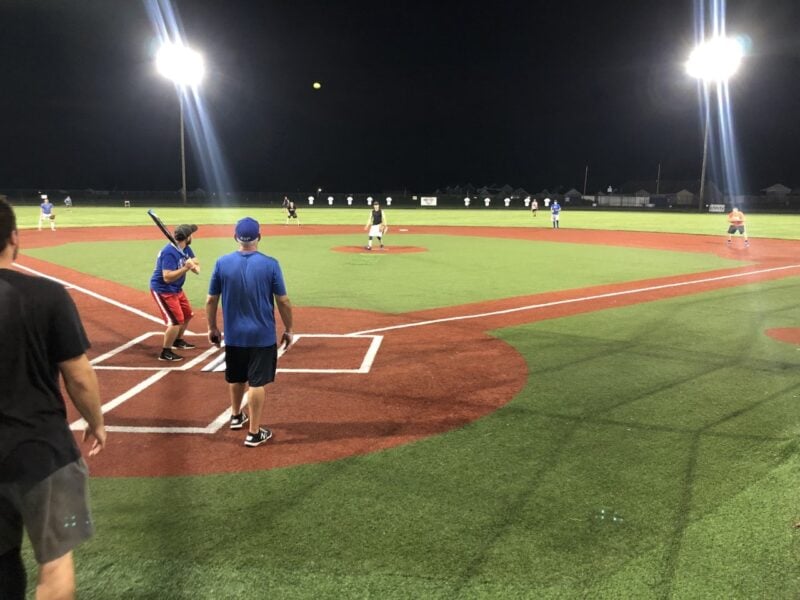
How Do LED Lights Impact a Stadium Lighting Design?
LED stadium lights provide up to 70% energy savings compared to traditional lighting and offer 50,000+ hour lifespans. Their precise beam control enables superior light uniformity and minimizes glare and spill light. LEDs also deliver instant-on performance and high CRI ratings (80+) for accurate color rendering, which is critical for both players and spectators.
What Are the Typical Lighting Design Standards for Stadiums?
How Many Lumens Are Required for Lighting Up a Stadium?
- Recreational fields: 30 lumens per square foot
- Professional/broadcast venues: 150+ lumens per square foot
A typical high school football field may require around 2.4 million lumens, while professional stadiums can exceed 8 million lumens for optimal visibility and broadcast quality.
Why Do I Need a Professional Stadium Lighting Plan?
How Much Does a Stadium Lighting Design Cost?
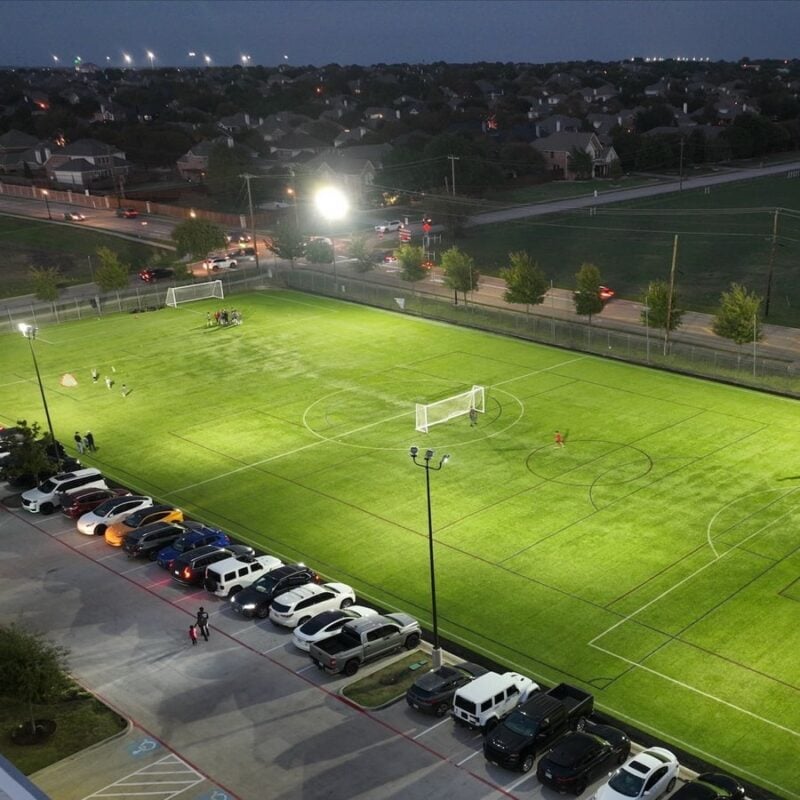
Can a Lighting Plan Help Reduce My Stadium’s Energy Costs?
A well-designed lighting plan optimizes fixture placement and selection to achieve required light levels with minimum energy consumption. Upgrading to LED stadium lighting can deliver 60-70% energy savings compared to metal halide systems. Strategic design can also reduce the total number of fixtures needed by 15-25% while maintaining high-quality, uniform illumination.
What Information Is Needed to Create a Stadium Lighting Plan?
How Many Lights Do I Need for My Stadium?
What Mounting Height Should Stadium Lights Be Installed At?
How Can I Reduce Shadows or Dark Spots on the Field?
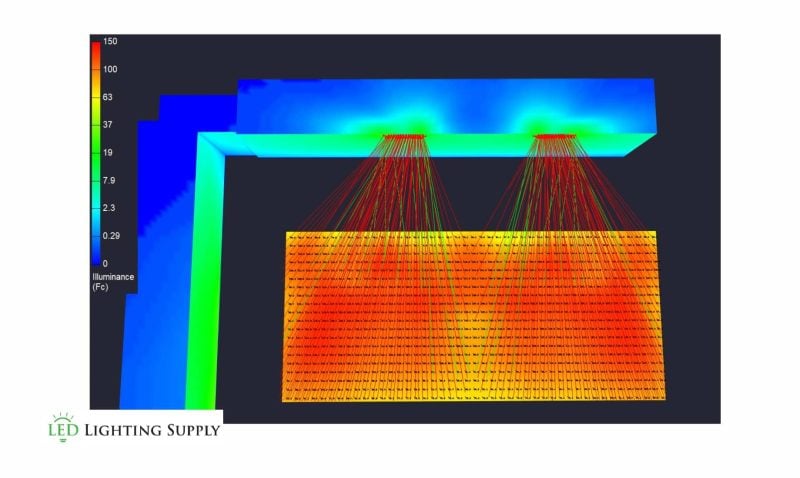
Sample Stadium Lighting Plan and Heatmap