LED Parking Garage Lighting
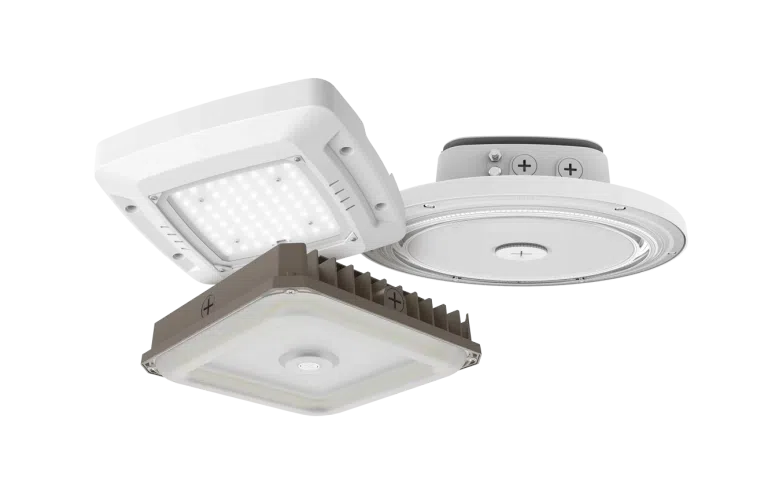
- Canopy and vapor tight options for varied garage environments
- Sealed fixtures available for damp or exhaust-exposed areas
- Selection support for drive lanes, ramps, stairwells, and stalls


Get Your Custom Lighting Plan With Product Recommendations
- Layout planned for low ceilings, columns, ramps, and drive-lane coverage with glare control
- Fixture count and optics matched to garage areas, stairwells, and entrance transitions
- LED fixtures can reduce energy use and eliminate ballast-related maintenance


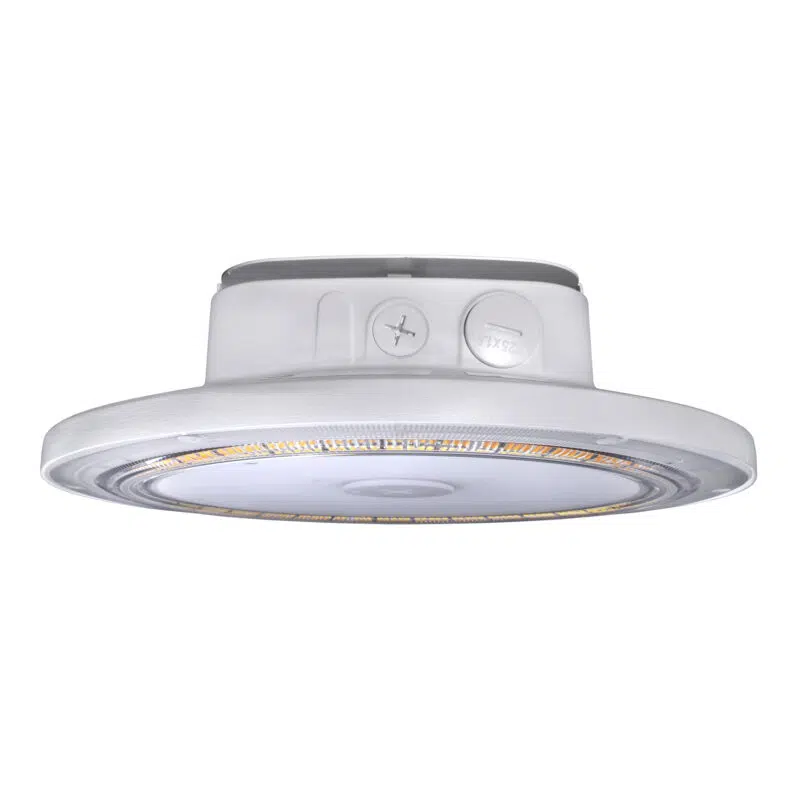
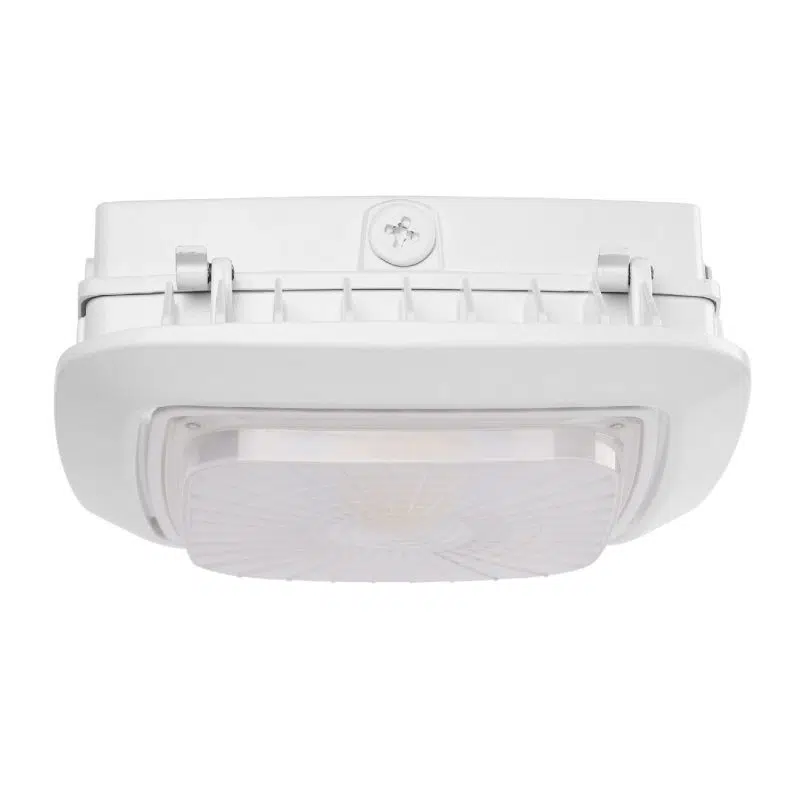
Our LED Parking Garage Lights include LED canopy lights and vapor tight fixtures for enclosed and open parking structures. Available models vary by wattage, lumen output, optics, voltage, color temperature, dimming, controls, mounting method, and emergency battery backup options.
These fixtures are commonly used in underground garages, above-ground parking decks, drive lanes, parking stalls, ramps, entrances, exits, elevator lobbies, stairwells, payment areas, and rooftop parking decks.
-
 Starting At $216.00
-
Starting At $230.00






LED Parking Garage Lighting for Parking Structures, Drive Lanes, Ramps, and Stairwells
LED parking garage lighting is used in enclosed garages, underground parking structures, above-ground parking decks, drive lanes, parking stalls, ramps, entrances, exits, elevator lobbies, stairwells, payment areas, and rooftop parking decks. Because these spaces usually have lower ceiling heights than outdoor parking lots, selection should start with the garage environment and layout: choose distribution suitable for the mounting height, account for beams and columns that can create shadows, confirm glare control and uniformity, and verify moisture, exhaust exposure, and emergency lighting needs.
The two most common fixture types are LED canopy lights and LED vapor tight lights. Canopy fixtures are often used in open or well-ventilated garage areas where broad distribution is needed. Vapor tight fixtures are often preferred in enclosed, underground, damp, or dusty areas where sealed construction is useful. Sealed construction does not by itself establish resistance to exhaust chemicals, corrosion, or every environmental exposure. Rooftop decks, open decks, and exterior approaches may require different fixture types.
Selection and Installation Note: Product specifications, wattage, lumen output, optics, beam angle, color temperature, voltage, dimming, controls, mounting method, emergency backup, damp or wet-location rating, IP rating, impact rating, certifications, and warranty coverage vary by model. Confirm the selected product specification before ordering. For parking garages, underground parking structures, enclosed garages, stairwells, elevator lobbies, entrances, ramps, emergency lighting, electrical upgrades, or code-sensitive areas, verify requirements with your facility team, local inspector, project specifier, or a licensed electrical professional.
Recommended Foot-Candles for Parking Garage Lighting
Parking garage light levels vary by area type, ceiling height, structure layout, columns, ramps, pedestrian movement, security needs, daylight transition, emergency requirements, and local code. The ranges below are general planning values. Final fixture selection should confirm uniformity, glare, controls, emergency lighting, and the selected product specifications.

Parking Garage Before Conversion to LED Fixtures
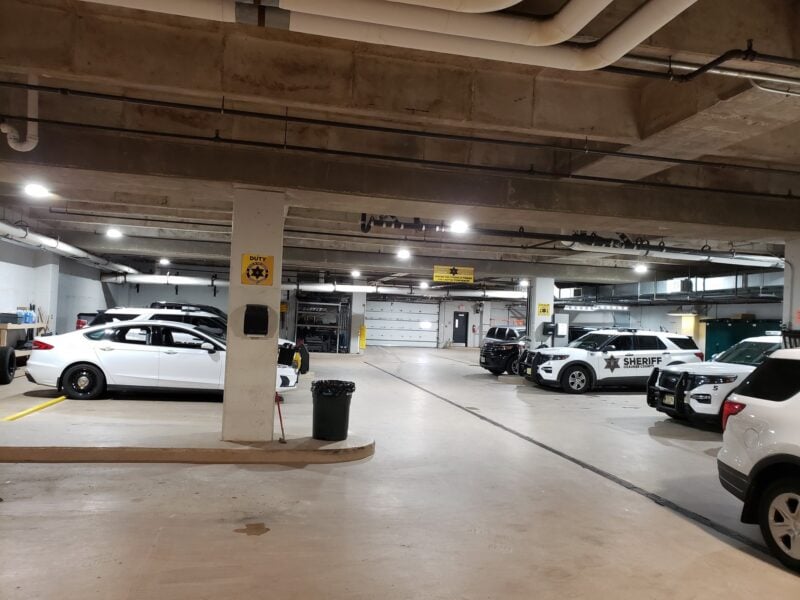
Parking Garage After Conversion to LED Parking Garage Fixtures
Best LED Fixtures for Parking Garages
Most parking garage projects should start with either canopy lights or vapor tight lights. Other outdoor fixture types may apply to rooftops, open decks, exterior approaches, or building perimeters, but they should not be the default choice for low-ceiling garage interiors.
| Fixture Type | Where It Fits Best |
|---|---|
| LED canopy lights | Often a good fit for standard parking garage ceilings, drive lanes, parking stalls, ramps, entrances, and above-ground structures where broad overhead distribution and low-profile mounting are useful. |
| LED vapor tight lights | Often a good fit for underground garages, damp areas, enclosed structures, humid spaces, dusty locations, stairwells, utility areas, and locations where sealed fixture construction is preferred. |
| LED parking garage retrofit fixtures | Useful when replacing existing fluorescent, HID, or older LED garage fixtures while reusing existing mounting locations, provided the proposed fixture photometrics still support the required coverage and uniformity. |
| LED panels | May be used in garage offices, payment rooms, attendant booths, elevator support spaces, and other finished interior areas where the fixture is suitable for the environment. |
| LED parking lot lights | Used on rooftop decks, open parking decks, exterior approaches, and pole-mounted areas rather than typical low-ceiling garage interiors. |
| LED wall packs | Used around garage exterior walls, stair towers, pedestrian doors, service areas, and perimeter locations where wall-mounted fixtures are appropriate. |
Canopy Lights vs. Vapor Tight Lights for Parking Garages
Both canopy and vapor tight fixtures can provide effective garage lighting when their photometric distribution, mounting method, environmental rating, and controls match the application. In general, canopy lights are selected where a low-profile fixture and broad overhead distribution suit the layout. Vapor tight fixtures are selected where the exposure makes sealed construction beneficial.
An individual garage may use both fixture types. For example, general parking levels may use canopy fixtures while stairwells, utility rooms, lower levels, or areas with greater moisture or dirt exposure use vapor tight fixtures. An IP rating addresses protection against solids and water ingress; it does not by itself establish corrosion resistance, chemical resistance, or suitability for every garage environment. Verify the selected fixture's published damp-location, wet-location, IP, material, seal, and environmental ratings for the actual exposure.
How to Choose LED Parking Garage Lighting
Parking garage lighting should be selected for low mounting heights, structural obstructions, columns, ramps, vehicle movement, pedestrian visibility, and environmental conditions. Do not use outdoor parking lot spacing rules inside a garage.
| Selection Factor | What to Confirm |
|---|---|
| Garage type | Confirm whether the garage is underground, enclosed, above-ground, naturally ventilated, mechanically ventilated, open deck, or rooftop. |
| Ceiling height | Most garage interiors have low ceiling heights compared with outdoor parking lots. Confirm clear height, beams, pipes, ducts, signs, sprinklers, and other obstructions. |
| Fixture distribution | Wide distributions are often useful for low-ceiling garages. Confirm fixture photometrics, spacing, and whether columns or beams create shadows. |
| Moisture, dust, and exhaust exposure | Underground and enclosed garages may require sealed or environmentally rated fixtures. Confirm moisture, humidity, dust, cleaning exposure, damp or wet-location requirements, and applicable IP ratings for the exact product. Verify materials and manufacturer documentation separately where exhaust contaminants or corrosive exposure is a concern. |
| Glare control | Low ceilings can make glare more noticeable to drivers and pedestrians. Confirm lens design, distribution, fixture placement, color temperature, and output level. |
| Entrances and exits | Garage entrances may need different light levels for daytime and nighttime transitions. Confirm project and local requirements along with daylight adaptation needs. |
| Stairwells and elevator lobbies | Confirm emergency lighting, vandal or impact exposure, egress requirements, controls, fixture protection, and applicable code requirements. |
| Controls | Compatible models may support motion sensors, occupancy controls, dimming, schedules, or daylight controls. Confirm the exact fixture, driver, sensor, control protocol, and required minimum lighting levels before ordering. |
| Emergency operation | Confirm whether emergency battery backup, generator-backed circuits, central inverter systems, or separate emergency and egress fixtures are required. Emergency compatibility varies by fixture. |
Parking Garage Lighting by Area
Different garage areas have different visibility and operating requirements. Entrances, ramps, drive lanes, stairwells, elevator lobbies, general parking areas, and rooftop decks should not automatically use the same fixture or lighting strategy.
| Garage Area | Lighting Priorities |
|---|---|
| General parking stalls | Uniform visibility around parked cars, doors, pedestrians, carts, columns, and walk paths while controlling glare. |
| Drive lanes | Clear visibility for vehicles, pedestrians, turns, columns, speed-control features, markings, and wayfinding. |
| Ramps | Visibility for grade changes, turns, vehicle movement, pedestrians, and transitions between levels. |
| Entrances and exits | Daytime and nighttime transition visibility, ticketing, gates, pedestrian crossings, and driver adaptation. |
| Stairwells and elevator lobbies | Pedestrian visibility, egress, emergency operation, vandal or impact resistance where needed, and visual comfort. |
| Payment and ticketing areas | Task visibility for kiosks, ticket machines, payment screens, cards, attendants, and customer interaction. |
| Rooftop and open decks | Use exterior-rated fixtures selected for weather, wind exposure, mounting height, glare, light trespass, and snow or rain exposure where applicable. |
| Loading or receiving areas | Visibility for trucks, carts, pallets, service doors, after-hours work, and potential fixture impact. |
Parking Garage Lighting vs. Parking Lot Lighting
Parking garage lighting and parking lot lighting are related, but they are not the same. Parking garages usually have lower ceilings, structural beams, columns, ramps, and enclosed spaces. Parking lots usually use pole-mounted fixtures at much higher mounting heights.
Garage interiors often use fixtures with distributions suited to lower mounting heights and closer spacing than outdoor parking lots. Outdoor parking lots commonly use pole-mounted area lights or shoebox lights with optics selected for larger open areas. Rooftop decks and open parking decks may use parking-lot-style fixtures, while interior garage levels usually use canopy, vapor tight, or other low-profile fixtures suited to the garage environment.
How to Reduce Shadows in a Parking Garage
Shadows in parking garages can result from narrow optical distributions, poor fixture spacing, structural beams, columns, pipes, ducts, signs, parked vehicles, or fixtures mounted in ineffective locations. Increasing fixture wattage alone does not necessarily solve the problem. Distribution, spacing, and placement often matter more.
- Use broad-distribution fixtures where appropriate for low ceiling heights.
- Position fixtures to reduce shadows from beams, columns, parked vehicles, and other obstructions.
- Review fixture spacing separately for drive lanes, stalls, ramps, entrances, and pedestrian zones.
- Use environmentally appropriate fixtures where moisture, dust, dirt, or cleaning exposure can affect performance.
- Confirm whether stairwells, elevator lobbies, entrances, and support spaces require separate fixture types or emergency operation.
- Use a photometric plan where structure, fixture spacing, or target light levels make coverage difficult to predict.
Parking Garage Lighting Certifications and Warranty Support
Certifications, listings, environmental ratings, controls, and optional features vary by parking garage fixture. Depending on the exact model, a fixture may carry a safety listing or certification such as UL, ETL, or CSA. Selected models may also appear on the DLC or DLC Premium Qualified Products List and may be eligible for participating utility rebate programs. DLC qualification is an efficiency and performance designation, not an electrical safety certification.
Other model-specific features may include 0-10V or 1-10V dimming, motion or occupancy sensors, photocells, emergency battery backup, IP ratings, IK impact ratings, damp-location or wet-location ratings, selectable wattage, selectable color temperature, or other controls and environmental options. These features should not be assumed to apply to every fixture in the category.
Warranty terms and coverage vary by product. Many commercial LED parking garage fixtures offer multi-year warranties, but the warranty term, exclusions, and coverage should be confirmed for the exact product being ordered.
Before purchase, review the selected fixture specification to confirm:
- Safety listing or certification
- DLC status, where rebate eligibility matters
- Input voltage
- Lumen output and optical distribution
- Dimming compatibility
- Sensor or controls compatibility
- Mounting method
- Damp-location or wet-location rating
- IP rating, if required
- IK impact rating, if required
- Emergency battery backup compatibility
- Ambient-temperature range
- Warranty coverage
- Suitability for the intended garage environment and layout
LED Parking Garage Lighting FAQs
How Do I Choose Between LED Canopy Lights And Vapor Tight Lights For A Parking Garage?
Choose LED canopy lights for standard garage ceilings, drive lanes, parking stalls, ramps, entrances, and above-ground structures where broad overhead coverage is needed. Choose LED vapor tight lights for underground, enclosed, damp, exhaust-exposed, or dust-prone areas where sealed construction is preferred.
What Should I Confirm Before Selecting Parking Garage Fixtures?
Confirm the garage type, clear ceiling height, obstructions, fixture distribution, spacing, moisture and exhaust exposure, glare considerations, entrance and exit conditions, controls, and emergency operation requirements. Selected product specifications should also be confirmed before ordering because wattage, output, optics, voltage, mounting, ratings, controls, and backup options vary by model.
Why Should Parking Garage Lighting Not Use Outdoor Parking Lot Spacing Rules?
Parking garages usually have lower ceilings, structural beams, columns, ramps, and enclosed spaces, while parking lots typically use pole-mounted fixtures at much higher mounting heights. Interior garage levels generally need wide distribution and closer spacing, with canopy or vapor tight fixtures typically used instead of pole-mounted area lights.
How Can I Reduce Shadows In A Parking Garage?
Reduce shadows by using wide-distribution fixtures where ceiling heights are low, positioning fixtures around beams, columns, and parked vehicles, and reviewing spacing separately for drive lanes, stalls, ramps, and entrances. Shadows can result from narrow beam angles, poor spacing, structural obstructions, or fixtures mounted in the wrong locations.
Can One Fixture Type Be Used Throughout A Parking Garage?
A mixed fixture layout may be appropriate when a garage has both open parking areas and harsher environmental zones. Canopy lights can be used in open parking areas, while vapor tight fixtures can be used in stairwells, lower levels, utility rooms, and areas with moisture, exhaust, dust, or corrosion concerns.
What Should Be Considered For Garage Entrances, Ramps, And Stairwells?
Entrances may need different light levels for daytime and nighttime transitions, while ramps need visibility for grade changes, turns, vehicle movement, pedestrians, and transitions between levels. Stairwells and elevator lobbies require confirmation of emergency lighting, egress requirements, controls, fixture protection, vandal exposure, and code requirements.
Are Motion Sensors, Dimming, And Emergency Battery Backup Available?
Some LED parking garage lighting models support dimming, motion sensors, schedules, daylight controls, or emergency battery backup, depending on fixture, driver compatibility, and project requirements. Motion sensors and dimming must maintain required light levels for vehicles, pedestrians, security, and egress.
What Certifications And Warranty Coverage Should I Confirm Before Ordering?
LED parking garage lights from LED Lighting Supply carry a safety listing such as UL, ETL, or CSA depending on product, and many models are DLC or DLC Premium listed for utility rebate support where available. Most LED parking garage lights include a 5-year warranty unless otherwise specified, and rebate eligibility, certifications, DLC status, and warranty coverage should be confirmed on the selected product specification.