Low Bay LED Lights
- Designed for 8-20 ft ceilings with selectable wattage options
- IP65-rated and motion sensor options available on select models
- Free lighting plans help determine fixture quantity and placement
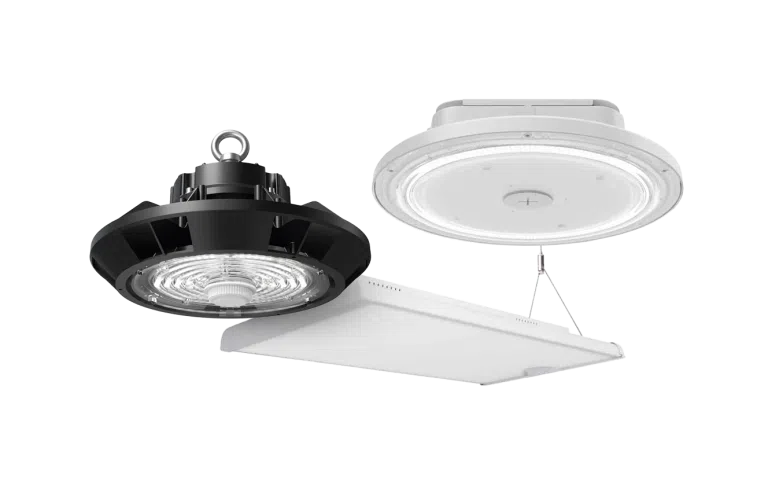


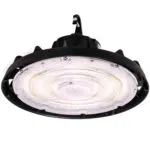
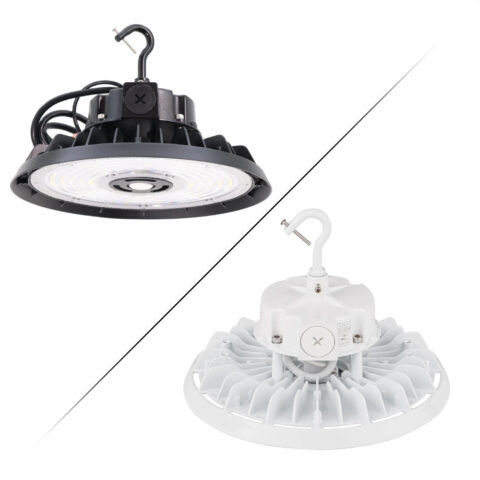
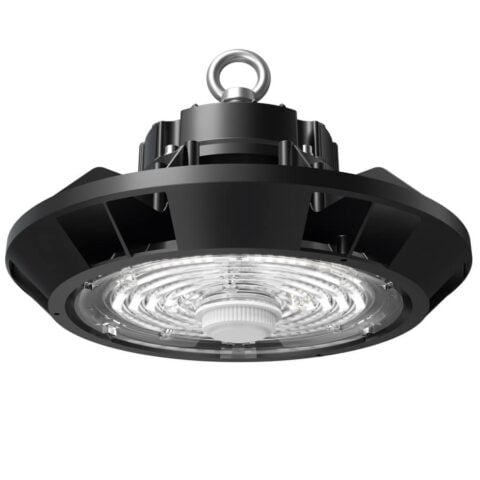
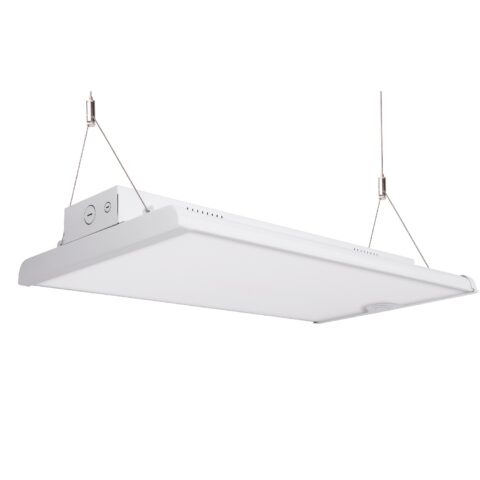
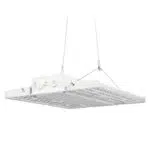
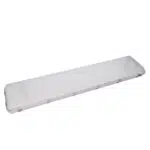
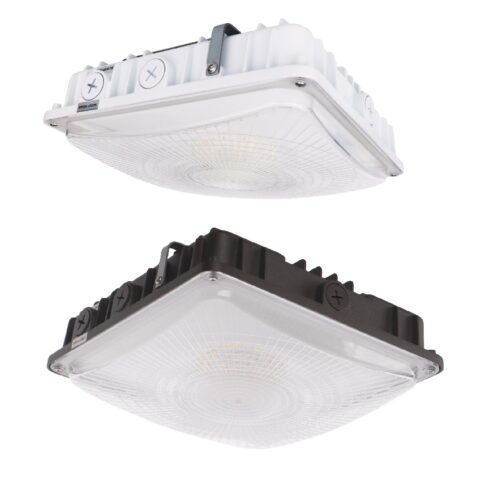
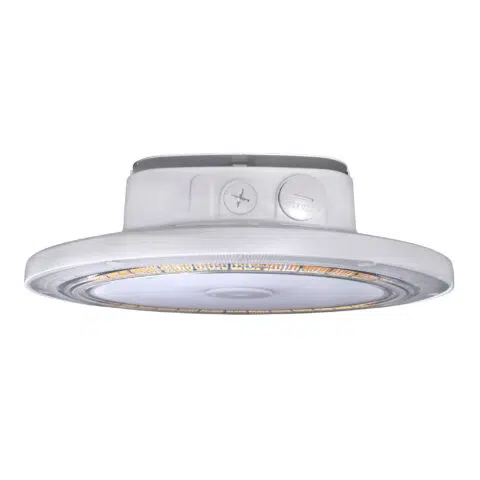
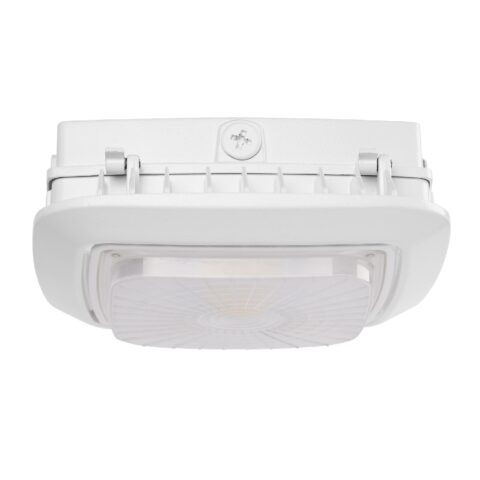
Our LED Low Bay Lights include linear and UFO fixtures for commercial and industrial indoor lighting. Available models include 3,000 to 15,000 lumen outputs, 4000K and 5000K color temperatures, 60 to 120 degree beam angles, and selectable wattage and color temperature options. Mounting configurations include hooks and chains, surface mounts, and pendant mounts, with motion sensor and 1-10V dimming options available.
These fixtures are commonly used in workshops, retail spaces, aircraft hangars, light manufacturing areas, small warehouses, warehouse aisles, office areas, assembly lines, and precision work areas.





What Are LED Low Bay Lights?
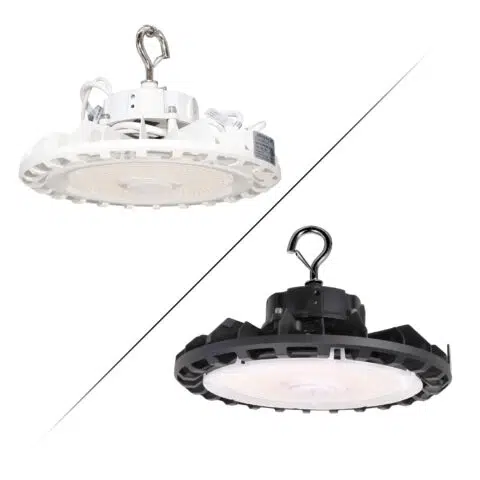
LED low bay lights are commercial and industrial lighting fixtures used in lower mounting-height applications where a traditional high bay may not provide the desired distribution, glare control, or fixture spacing. Low bay applications commonly include workshops, retail spaces, aircraft hangars, light manufacturing areas, service areas, and small warehouses.
Low bay lighting is often used at mounting heights around 8 to 20 feet, but ceiling height alone should not determine fixture selection. Required light levels, room dimensions, fixture optics, spacing, glare, task type, mounting method, environmental exposure, and controls all affect whether a low bay fixture is appropriate.
Compared with older fluorescent or HID systems, properly selected LED low bay lighting can reduce energy use and maintenance while providing instant-on operation and improved lighting control. Dimming, sensors, selectable wattage, selectable color temperature, environmental ratings, and other features vary by fixture.
Properly specified LED low-bay lighting can improve visibility and support task performance while reducing operating and maintenance costs. Final fixture selection should be based on the actual space and product specifications rather than ceiling height or wattage alone.
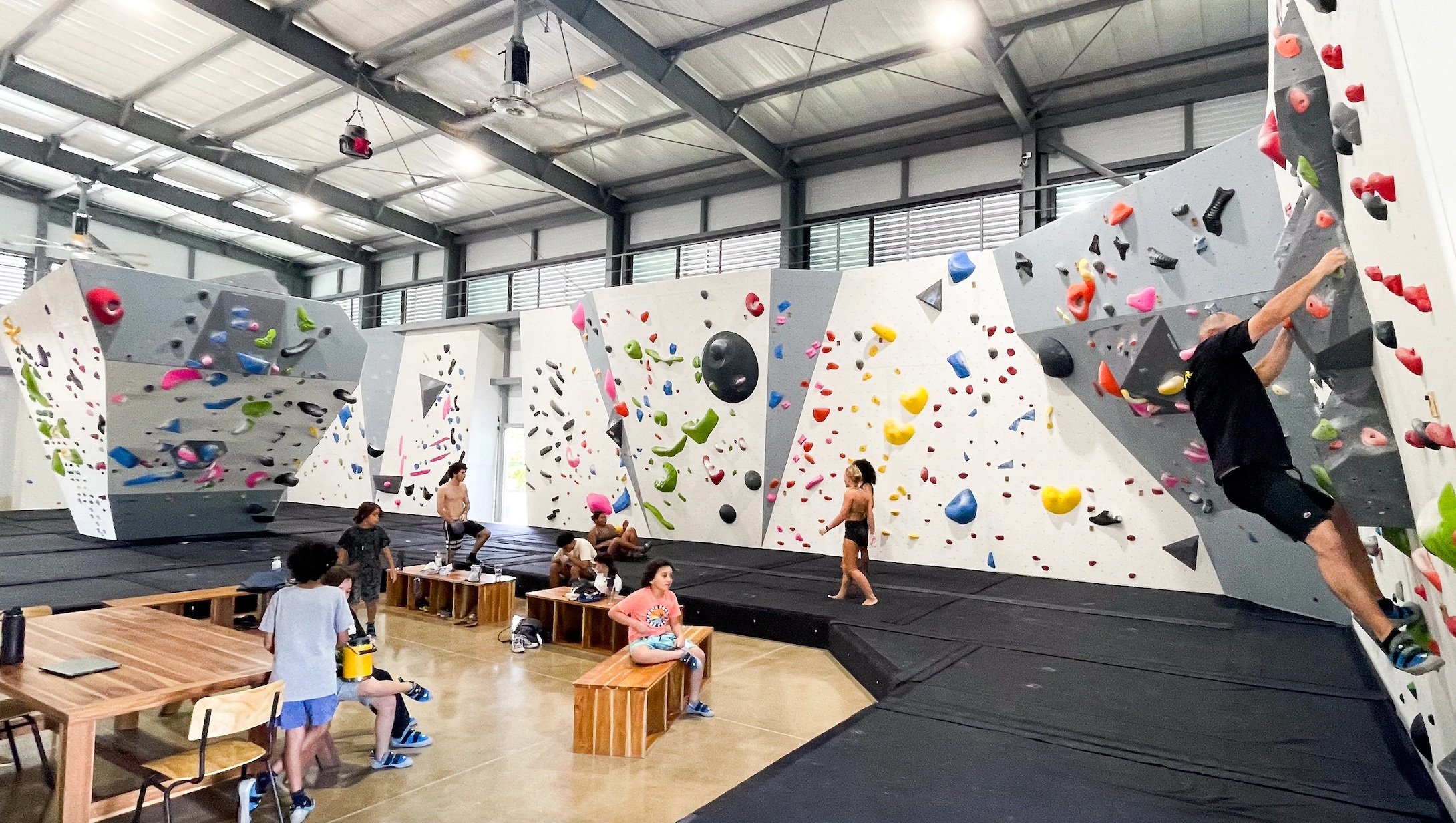
Case Study: Installation of 12 200 Watt LED UFO High Bays into Tamarock Rock Climbing Gym in Tamarindo, Costa Rica
| After: 100 / 120 / 150 / 200 Watt Adjustable LED UFO High Bay | 15000 to 30000 Lumens | 5000K | 100-277V | White Housing |
 |
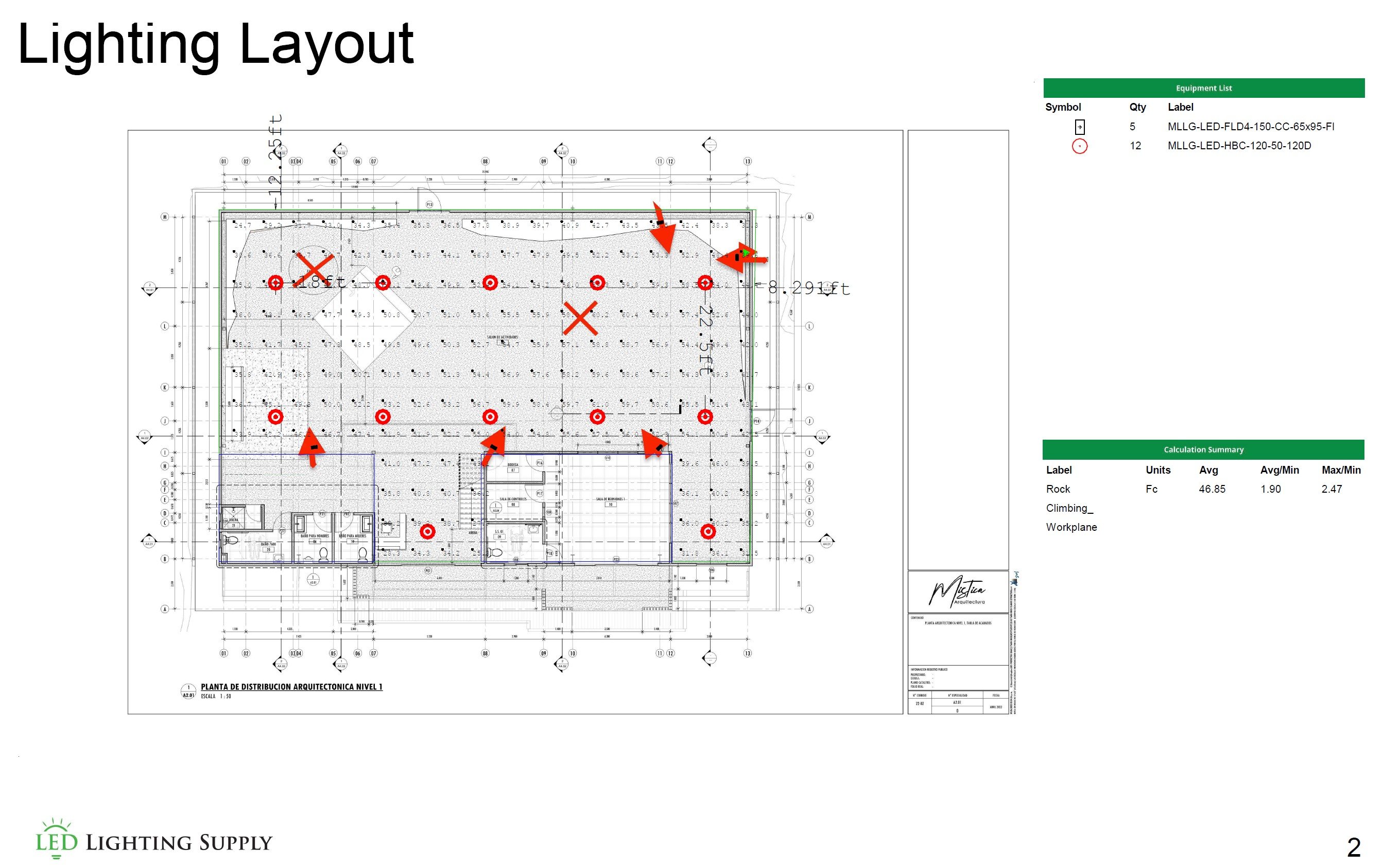
Lighting Plan We Created for the Customer
|
Lighting Plan |
Heat Map |
 |
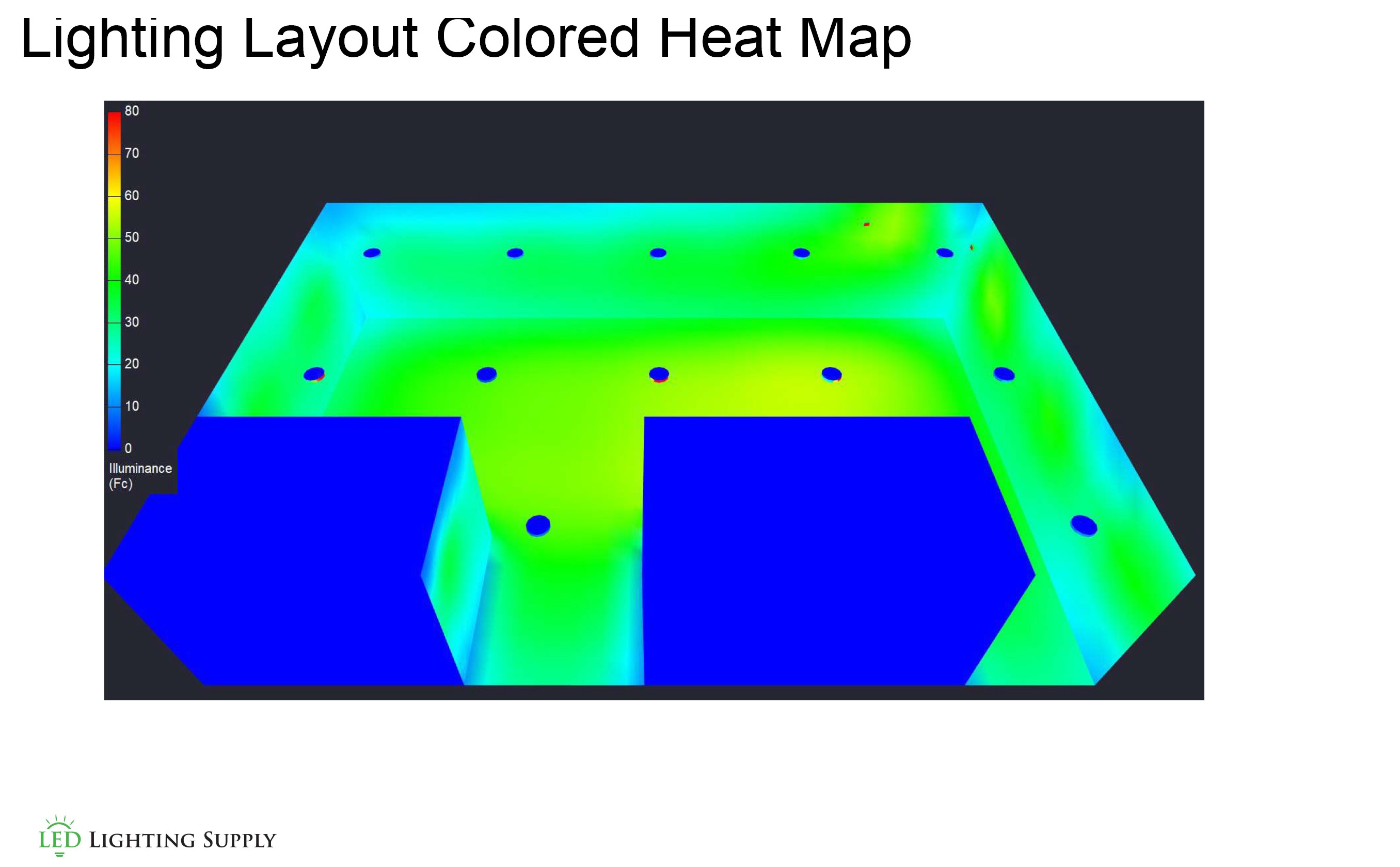 |
Climbing Gym Lighting Installation Plan Metrics
- Mounting height: 20 ft
- Fixture Used: MLLG-LED-HBC-200-5-120: 100 / 120 / 150 / 200 Watt Adjustable LED UFO High Bay | 15000 to 30000 Lumens | 5000K | 100-277V | White Housing
- FC achieved: 46.85 FC average
- Uniformity (Avg/Min): 1.90
Use When / Don't Use When
Use LED Low Bay Lights When
- Mounting height and layout favor a lower-bay fixture, often in spaces around 8-20 feet depending on the fixture and required light distribution
- Replacing fluorescent or metal halide systems in workshops, retail areas, light manufacturing, service spaces, or smaller warehouses
- You need appropriate light levels with controlled glare for lower mounting heights
- You want controls such as dimming or sensors and the selected fixture supports the required control method
- The selected fixture has environmental ratings appropriate for the actual dust, moisture, impact, temperature, or cleaning exposure
Don't Use LED Low Bay Lights When
- The mounting height, layout, or required distribution favors a high bay: high bay fixtures may provide better coverage for taller spaces
- The area has specialized environmental or hazardous-location requirements that the selected low bay fixture does not meet
- The fixture cannot provide the required light levels, uniformity, or glare control for the application
- Installation clearance or equipment movement creates impact risk that the mounting arrangement does not adequately address
- The required voltage, controls, mounting method, or certification is not available on the selected fixture
What We Can Help Review Before You Order
We can help review
- Ceiling or mounting height and mounting-method compatibility
- Required lumen output, fixture distribution, and beam characteristics
- Environmental protection needs, including wet/damp location, IP rating, impact resistance, temperature, or cleaning exposure where applicable
- Voltage and electrical compatibility
- Controls requirements such as dimming, sensors, or switching
- Model-specific certifications, DLC status, and warranty coverage
If we provide a lighting plan, you will get
- Photometric calculations showing predicted light levels and uniformity
- Recommended fixture quantities and placement for the supplied layout
- Energy-use projections based on the project assumptions provided
Note: Guidance is general planning information. Final selection should be confirmed against the actual fixture specification and project conditions. Code-, safety-, structural-, or environment-sensitive applications should be reviewed by the appropriate qualified professional where required.
Quick Selection Guide
Start with mounting height, required light level, and room layout. Then choose a fixture type and photometric distribution that fit the application. Before ordering, confirm environmental protection, mounting, voltage, controls, certifications, and the exact fixture specifications.
- Lower mounting heights: Use lower-output fixtures or wider distributions where appropriate to control glare and avoid excessive illumination
- Higher low-bay mounting heights: Higher-output fixtures or different optical distributions may be needed depending on spacing and target light levels
- Taller spaces: Consider LED high bay lights when their output and distribution better match the space
- Linear fixtures: Often useful for aisles, work areas, rectangular layouts, or fluorescent fixture replacement
- Round/UFO fixtures: May work well in open areas when their distribution, mounting height, and glare characteristics fit the project
- Environmental protection: Match the exact wet/damp-location, IP, impact, temperature, chemical, or sanitation requirements to the selected fixture rather than assuming one rating is appropriate for every shop or industrial space
Tip: Keeping color temperature consistent within the same visual area usually provides a more uniform appearance. Confirm the preferred CCT for the application and selected fixture.
Boston Logan Airport’s Enterprise Rent-A-Car Lanes Upgrade To High Bay Lights Case STudy
The Backstory:
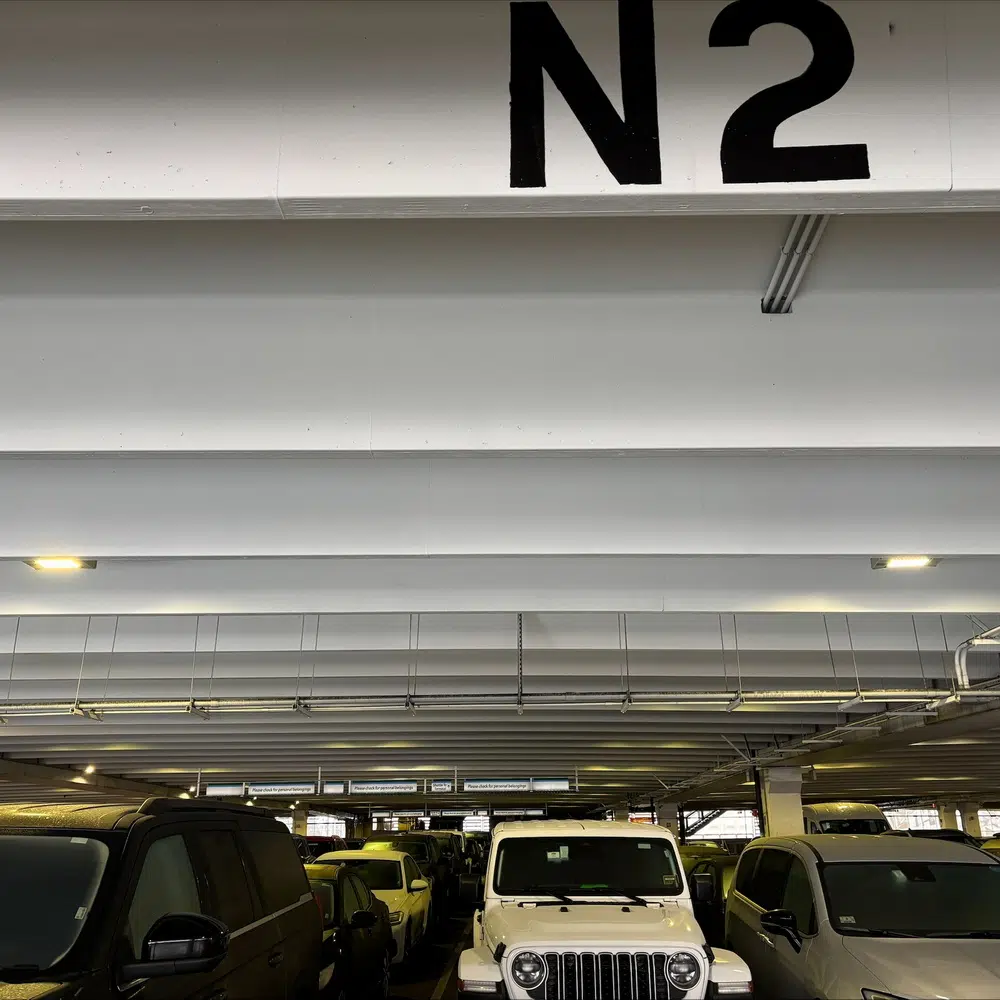
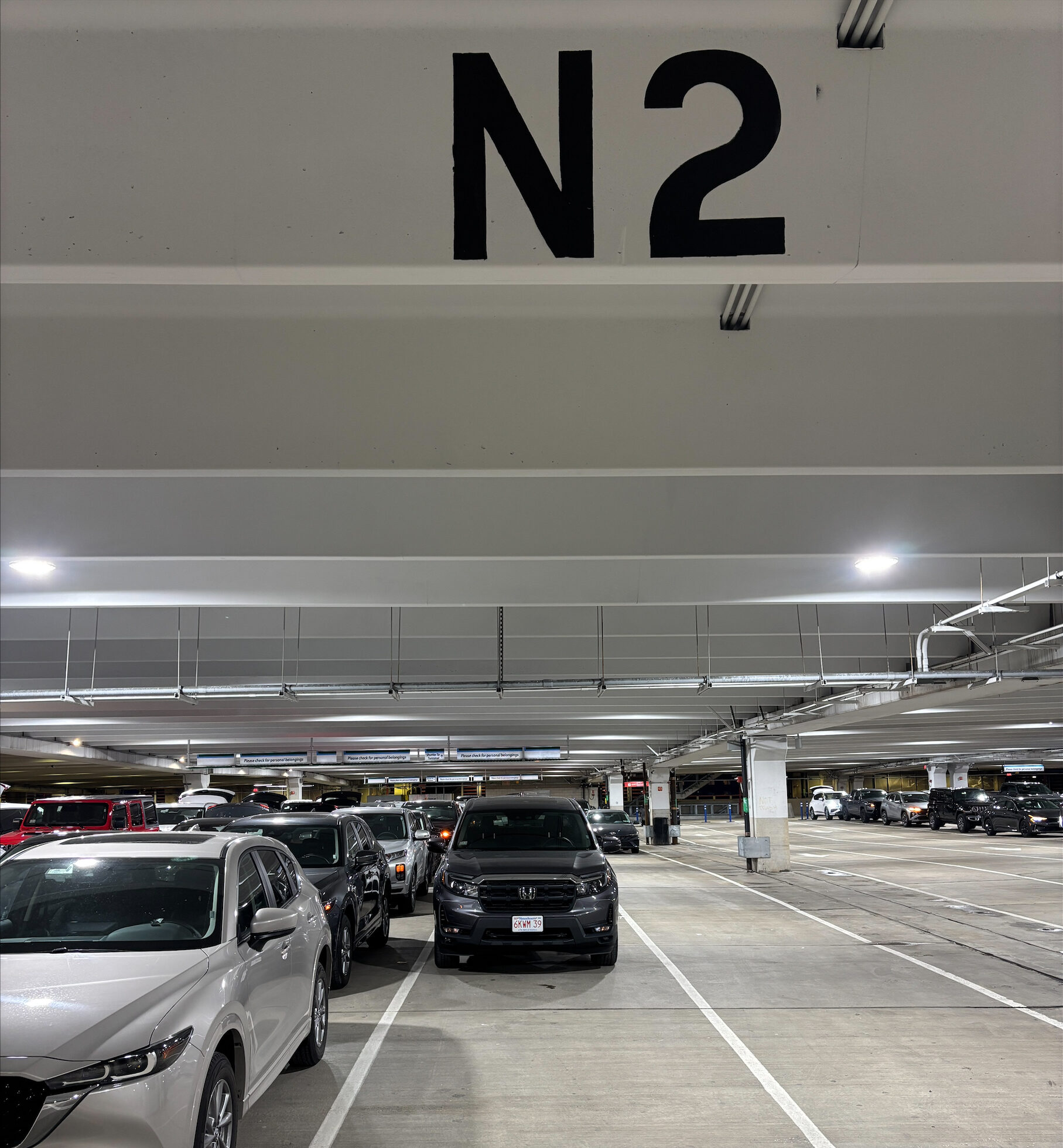
Enterprise Rent-a-Car, located at Logan Airport in Boston, Massachusetts, reached out to LED Lighting Supply seeking assistance with a lighting upgrade for its parking garage rental car return lanes across two areas. The sections of the garage where the return lanes are located were operating with aged canopy light fixtures, delivering low brightness across the space. Inconsistent, dim light levels create dark spots, among other security threats, in a high-traffic parking garage.
The Customer's Challenge:
The areas lacked overall brightness across all return lanes, making it difficult to support accurate vehicle inspections and ensure safety for both employees and customers. The return lane areas fell below recommended illumination levels for parking structures, hardly reaching 5 foot-candles (fc) with the existing lighting system. Depending on the size, the recommended numerical calculation of light levels in a parking garage is typically between 5 and 10 fc.
Lighting Plan We Created for the Customer
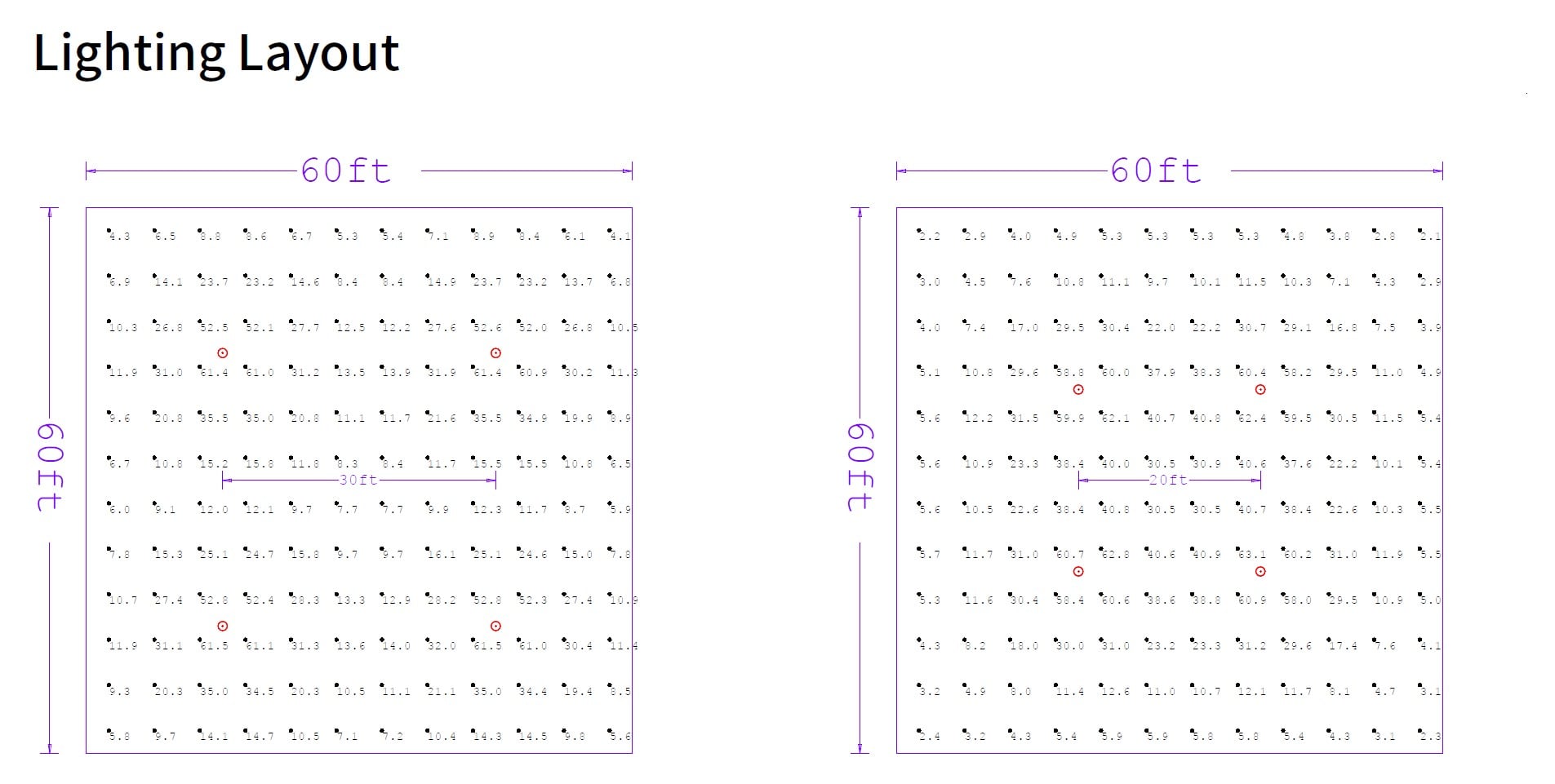
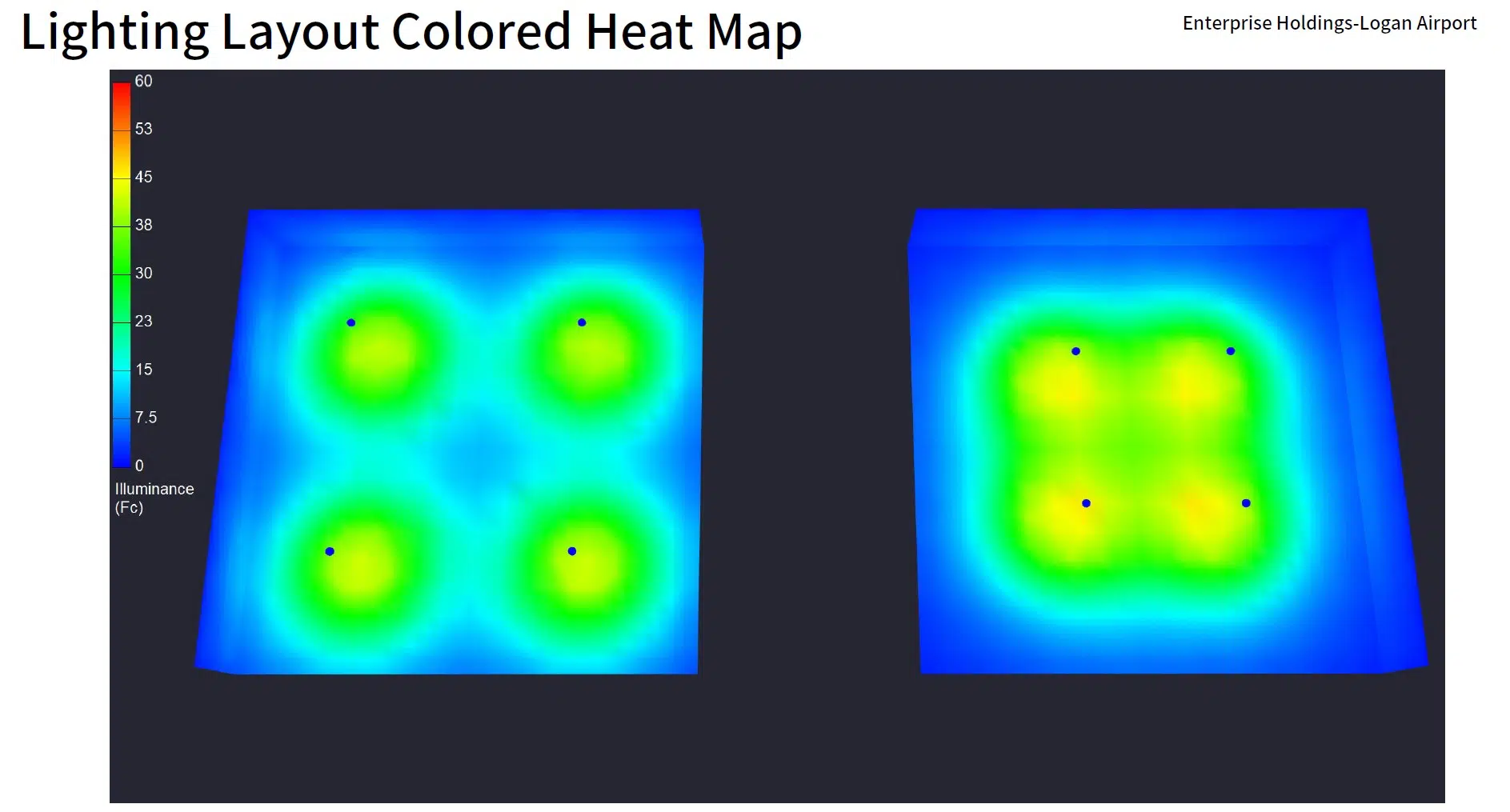
Lighting Plan Metrics:
- Mounting height: 12 ft
- Fixture Used: LLS-HB-200A-CC-B
- FC Achieved: 15 FC average
- Uniformity (Avg/Min): 3.71 FC
- Product(s) Used: LLS-HB-200A-CC-[C]
Important Factors to Consider When Purchasing a Low Bay LED Light

Ceiling Height and Lumen Output
Mounting height is one of several factors that determine the output needed from a low bay fixture. Room dimensions, surface reflectance, fixture spacing, optics, task requirements, target foot-candles, glare, and existing light levels also matter.
Rather than assigning a fixed lumen range to every ceiling height, use the selected fixture’s photometric data to confirm how it performs in the actual layout. Two fixtures with similar lumen output can produce very different results because of optical distribution and fixture geometry.
A workshop with a 10-foot ceiling, for example, may require very different fixture quantities and outputs depending on whether it is used for storage, equipment repair, machining, assembly, detailing, or general circulation.
LED Lighting Supply High Bay Product Selector
Use this selector to identify the best starting high bay recommendation based on mounting height, application type, and lighting requirements.
Fixture Type: Linear vs. UFO
Linear Low Bay Lights:
- Warehouse aisles, work rows, and rectangular spaces may benefit from linear fixture distributions
- Linear fixtures can provide broad coverage when their optics and spacing match the room geometry
- They are often considered when replacing older fluorescent strip or linear high/low bay systems
UFO Low Bay Lights:
- Round fixtures can work well in open areas where their distribution matches the mounting height and spacing
- Selected models may offer IP ratings, impact ratings, selectable wattage, dimming, sensors, or other features
- UFO designs may be useful in some HID replacement projects where mounting and photometric requirements are compatible
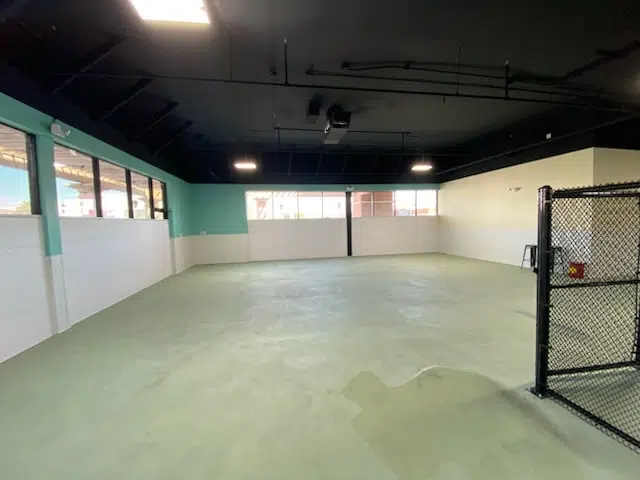
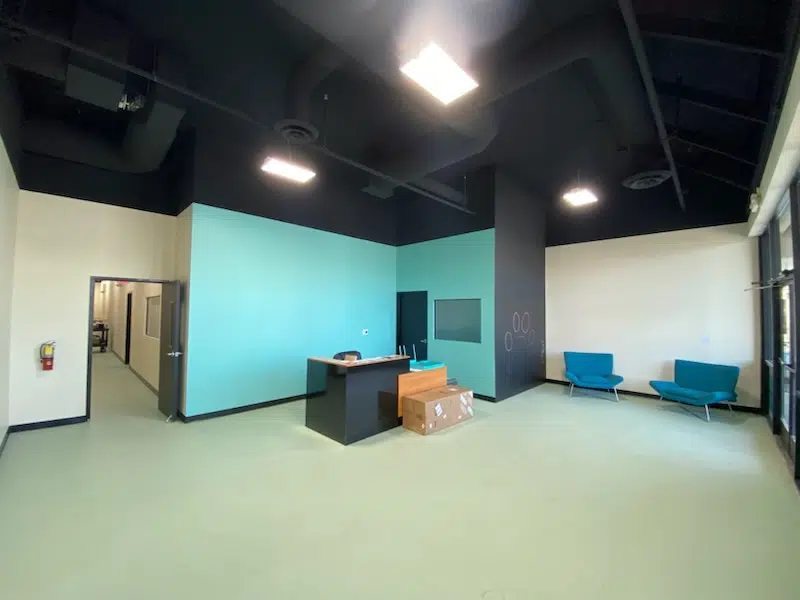
Case Study: Doggy Day Care with LED Lighting Supply 80 / 90 / 105 Watt Adjustable Linear LED High Bay in Scottsdale, AZ
|
After: 80 / 90 / 105 Watt Adjustable Linear LED High Bay | 12000 to 15750 Lumens |
After: 80 / 90 / 105 Watt Adjustable Linear LED High Bay | 12000 to 15750 Lumens |
 |
 |
Lighting Plan We Created for the Customer
|
Lighting Plan |
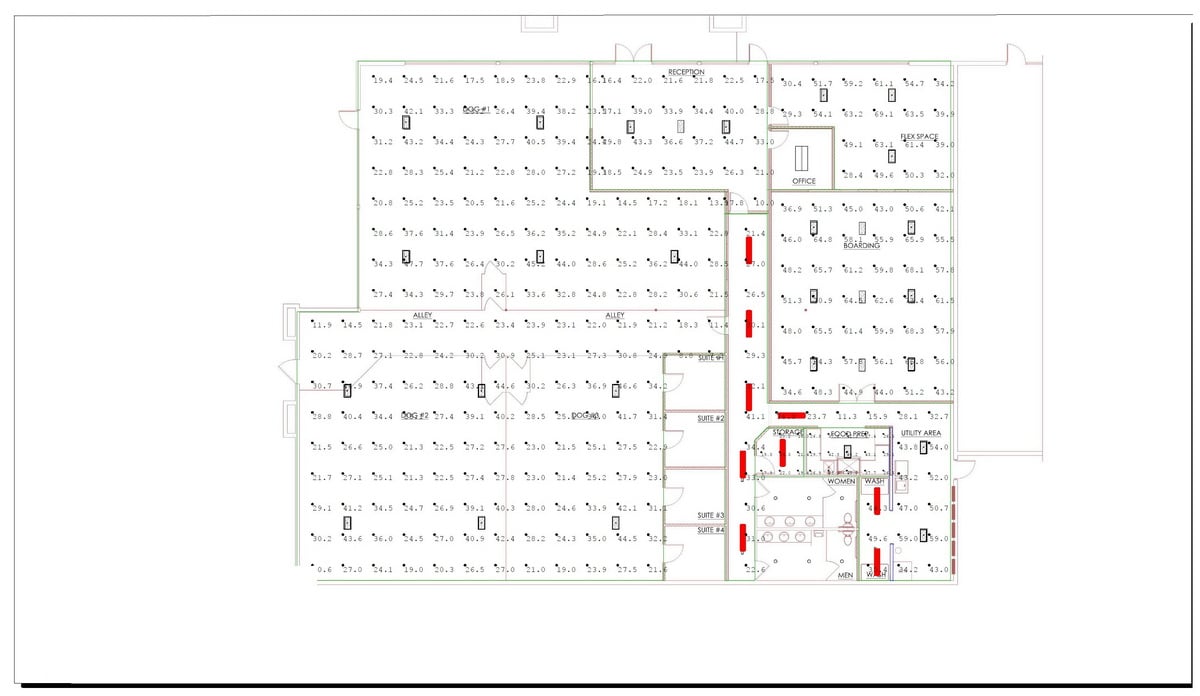 |
Doggy Day Care Installation Plan Metrics
- Mounting height: 14 ft
- Fixture Used: LLS-X-HBLIN8-2-105/90/80-CC: 80 / 90 / 105 Watt Adjustable Linear LED High Bay | 12000 to 15750 Lumens | 4000K / 5000K Adjustable | 100-277V | 2 Foot
- FC achieved: 55.57 fc average
- Uniformity (Avg/Min): 1.61
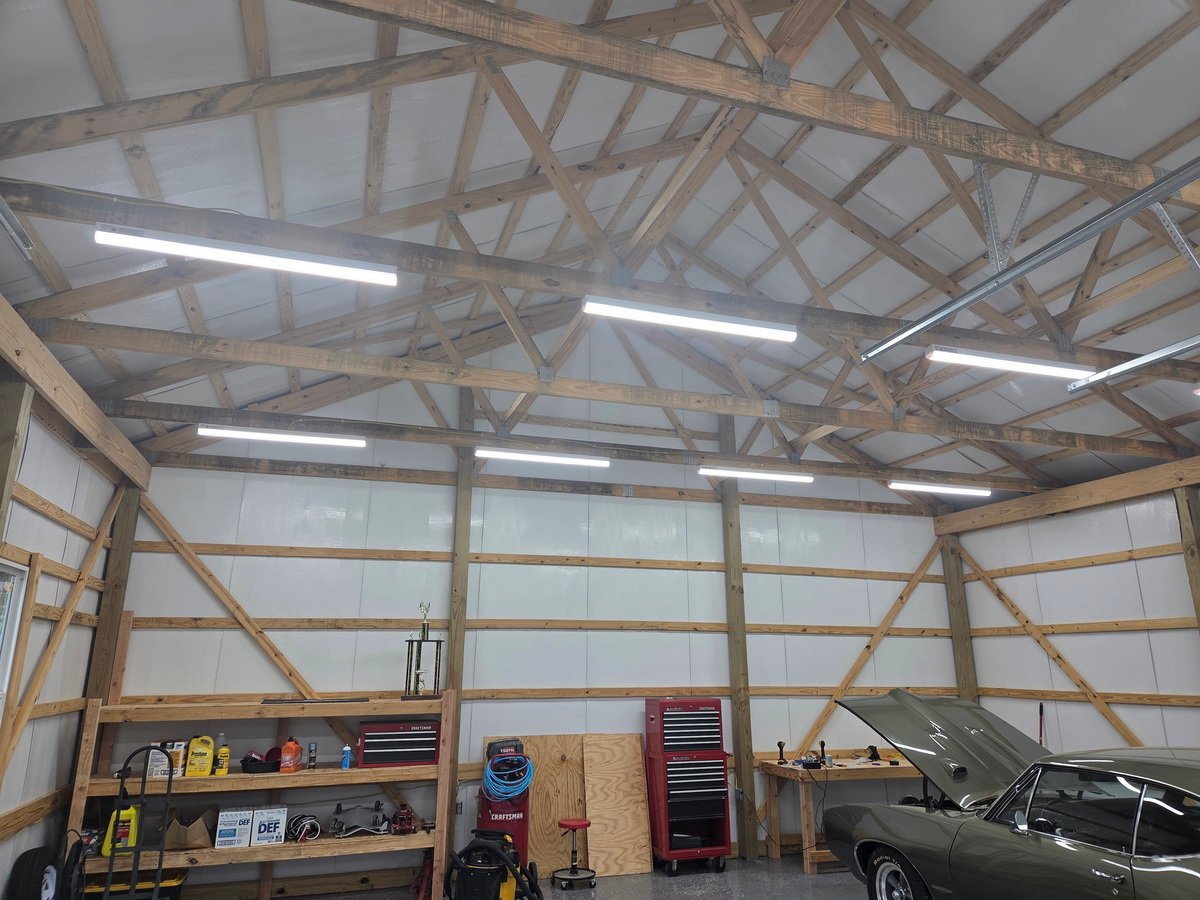
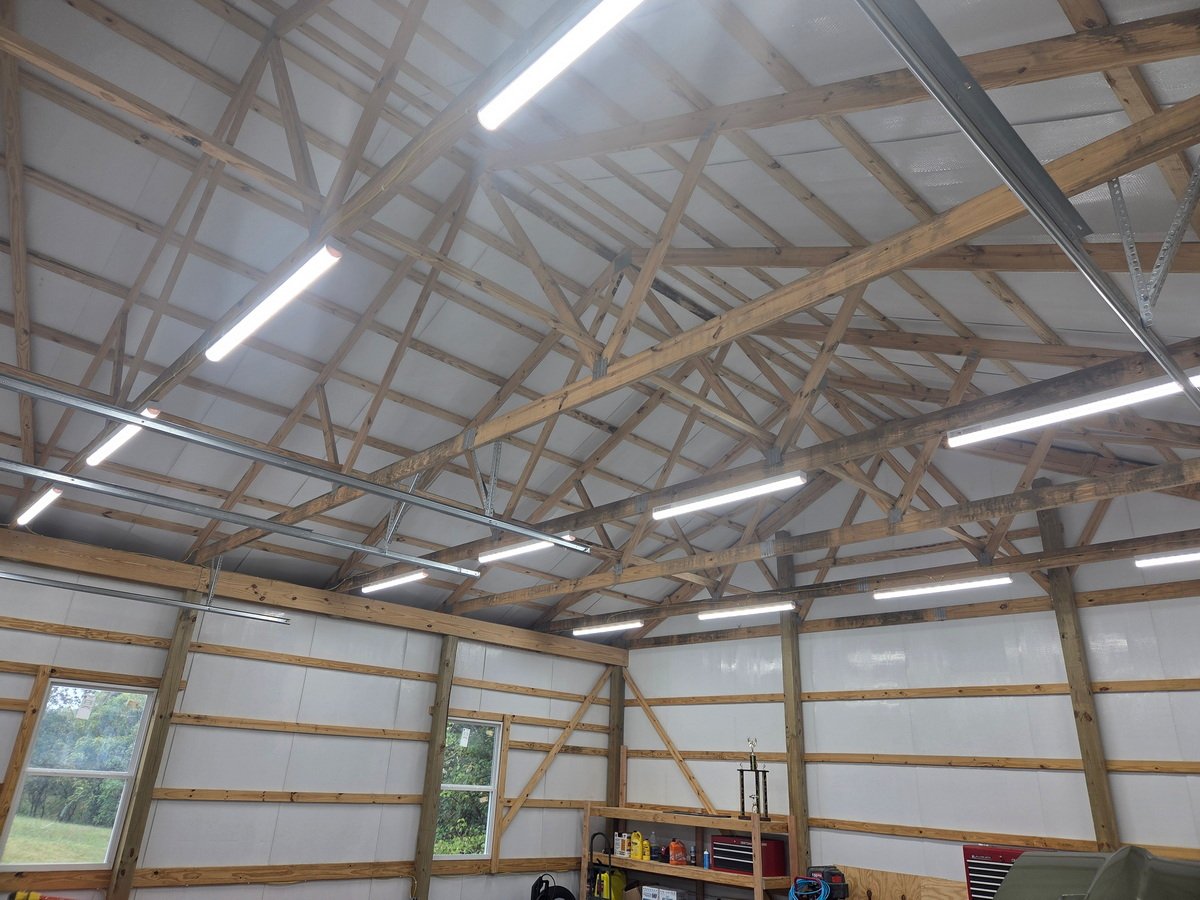
Case Study:Garage Shop Lighting with LED Lighting Supply 30 / 40 / 50 Watt Adjustable 4 Foot Shop Strip Light in Clarksville, TN
| After: 30 / 40 / 50 Watt Adjustable 4 Foot Shop Strip Light | 4200 to 6500 Lumens | After: 30 / 40 / 50 Watt Adjustable 4 Foot Shop Strip Light | 4200 to 6500 Lumens |
 |
 |
Lighting Plan We Created for the Customer
| Lighting Plan |
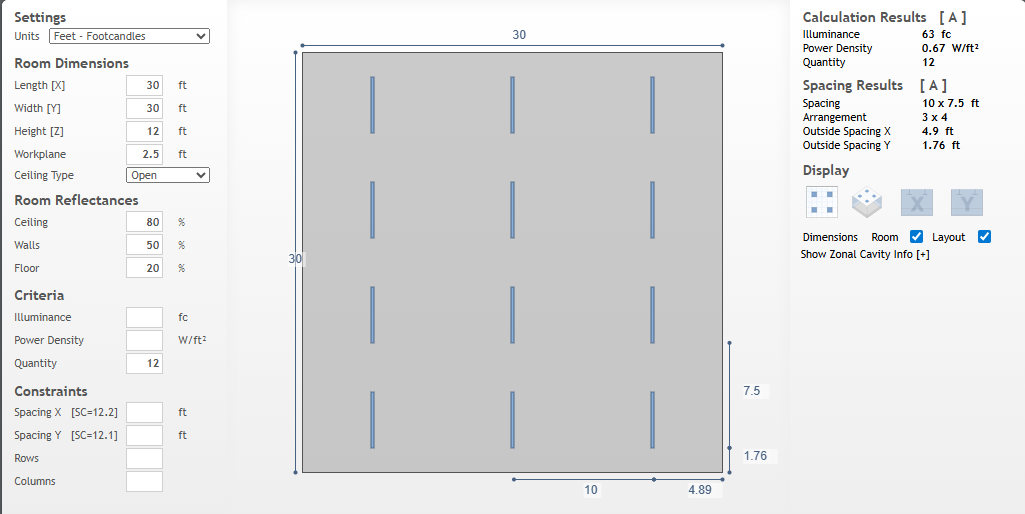 |
Garage Shop Lighting Installation Plan Metrics
- Mounting height: 12 ft
- Fixture Used: LLS-X-STL-4-50A-CC: 30 / 40 / 50 Watt Adjustable 4 Foot Shop Strip Light | 4200 to 6500 Lumens | 3500K / 4000K / 5000K Adjustable | 100-277V
- FC achieved:63 fc average
- Uniformity (Avg/Min): 1.95
Case Study: Workshop / Garage with Indoor and Outdoor Lighting
|
After: 60 / 80 / 100 Watt Adjustable UFO High Bay | 8400 to 14000 Lumens |
After: 60 / 80 / 100 Watt Adjustable UFO High Bay | 8400 to 14000 Lumens |
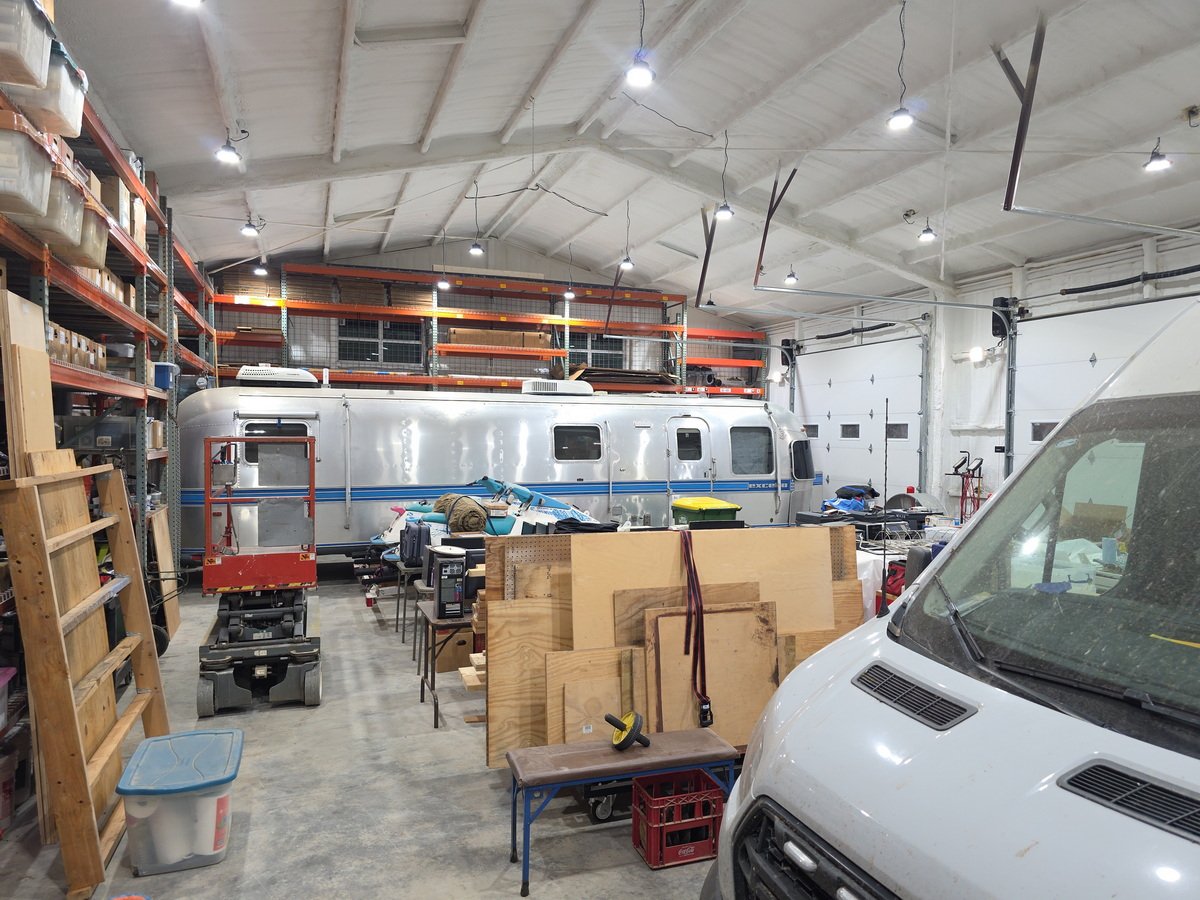 |
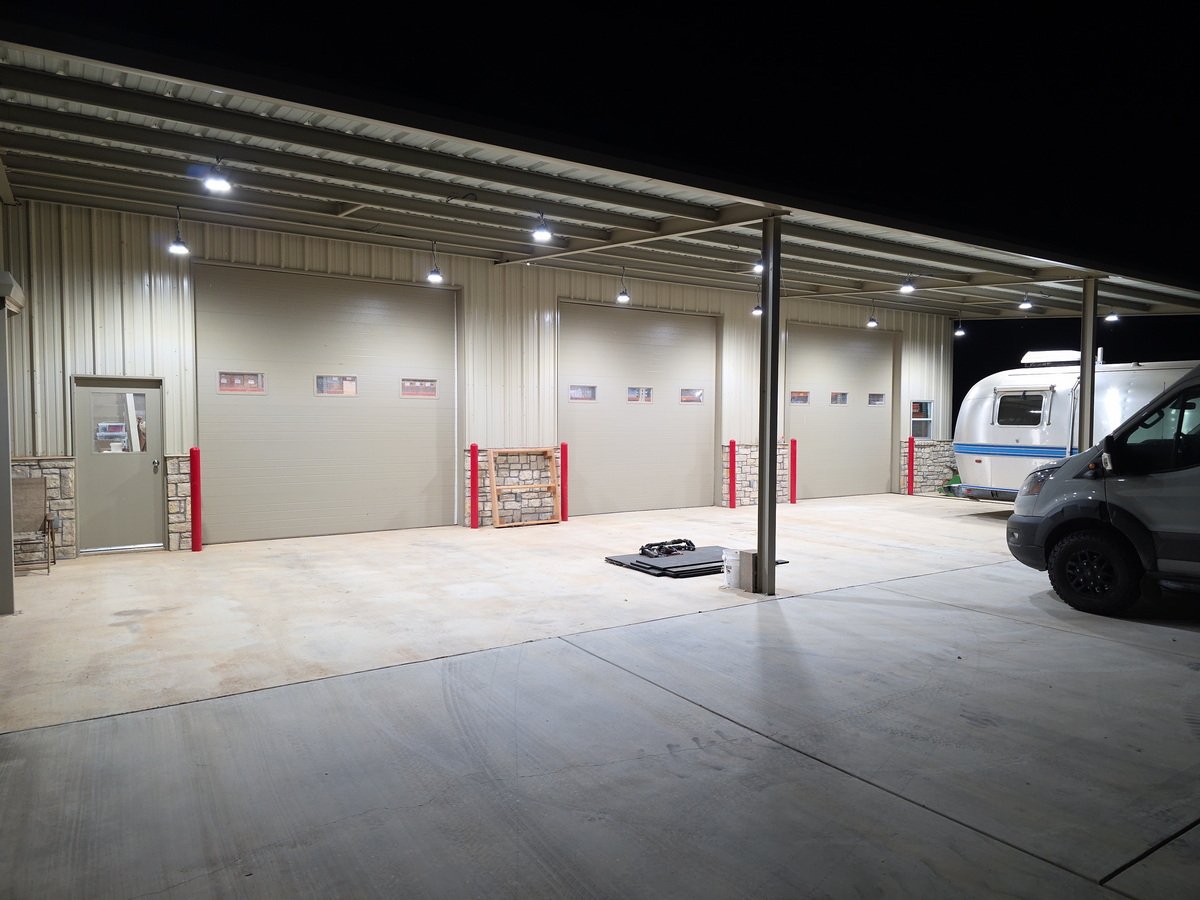 |
Lighting Plan We Created for the Customer
|
Indoor Lighting Plan |
Outdoor Lighting Plan |
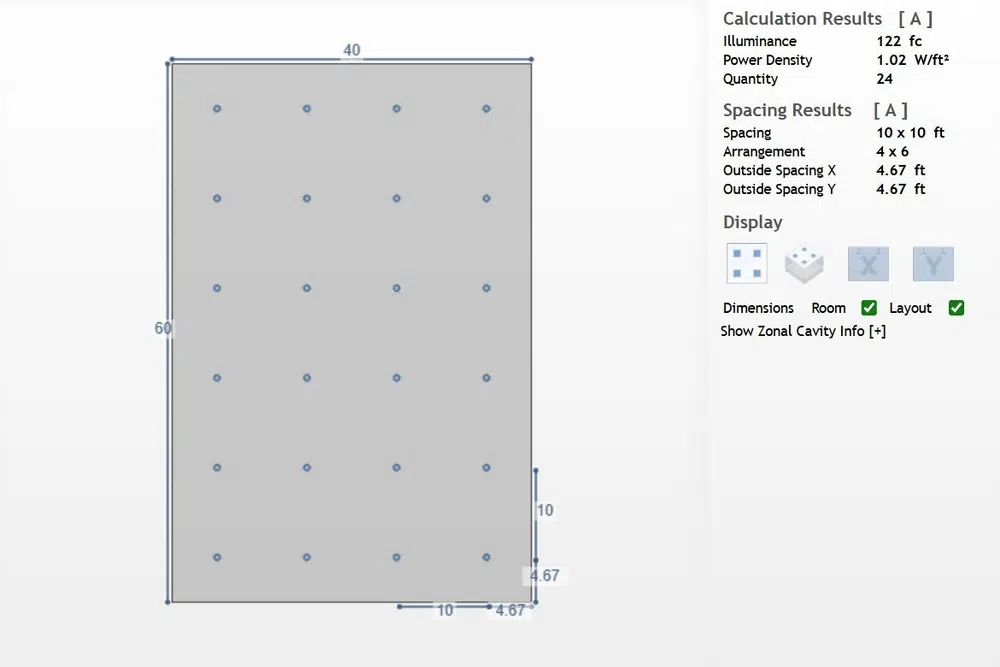 |
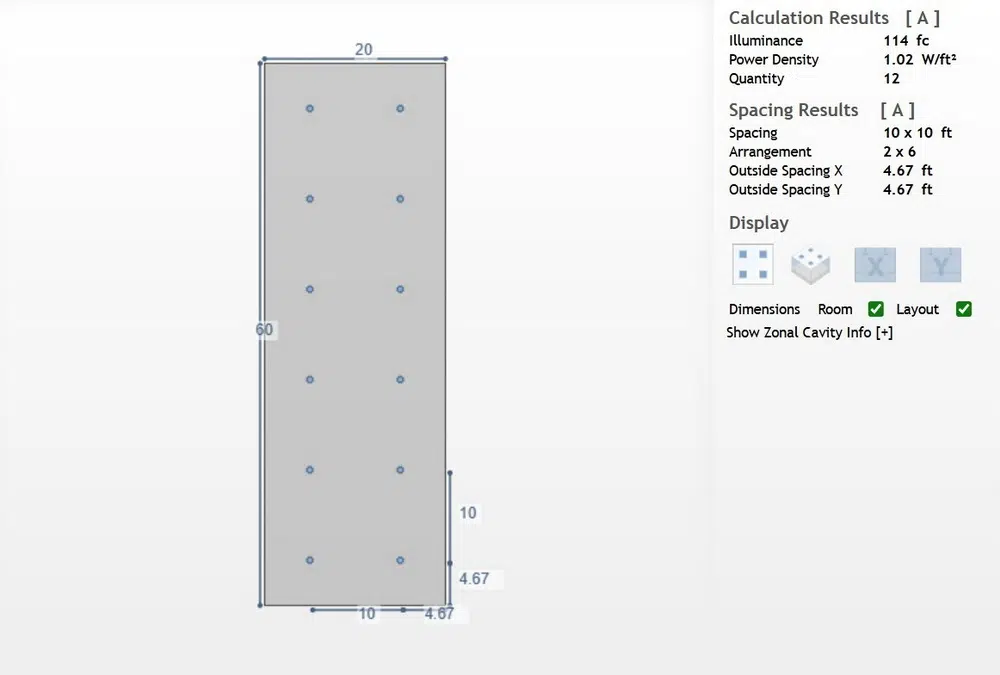 |
Workshop / Garage Lighting Installation Plan Metrics
- Indoor Mounting height: 18 ft
- Outdoor Mounting height: 14 ft
- Fixture Used: MLLG-LED-HB3-100-50-120: 60 / 80 / 100 Watt Adjustable UFO High Bay | 8400 to 14000 Lumens | 5000K | 100-277V
- Indoor FC achieved: 122.00 fc average
- Outdoor FC achieved: 114.00 fc average
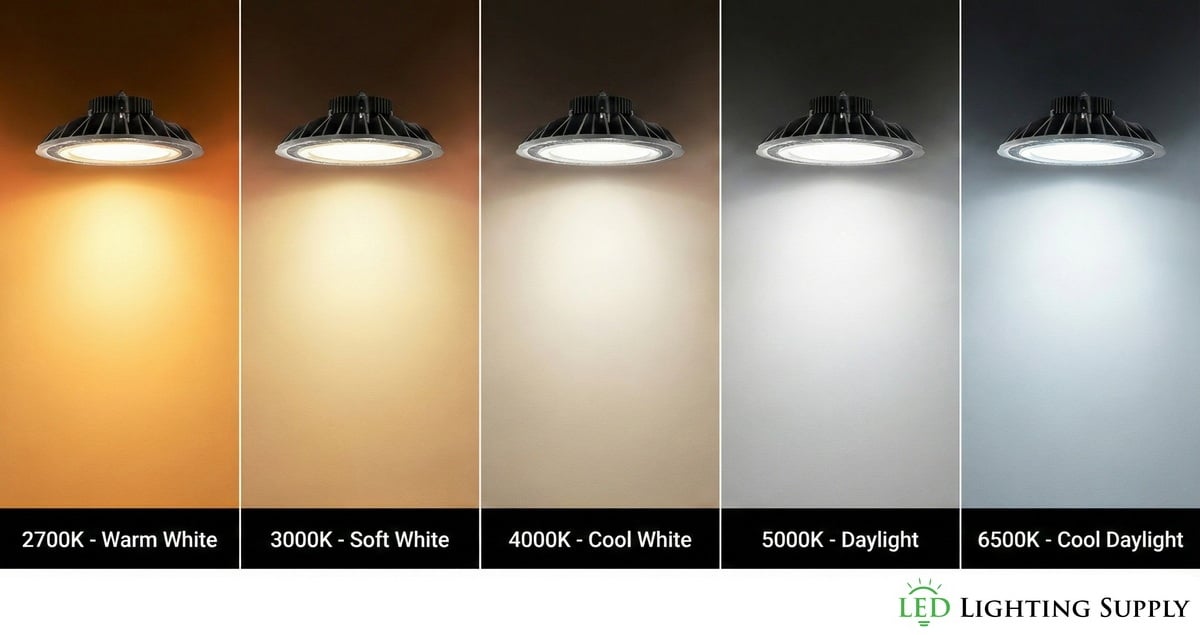
Color Temperature
Color temperature affects appearance and visual preference in LED low bay lights for retail, workshop, commercial, and industrial environments.
- 4000K: A neutral-white option commonly used in retail, service, warehouse, commercial, and work areas
- 5000K: A cooler-white option commonly used in manufacturing, warehouses, workshops, and task-oriented environments
Neither color temperature is universally better for productivity or accuracy. Select CCT according to the task, facility preference, existing lighting, color-rendering needs, and project requirements.
Mounting Options
Mounting options vary by fixture model and building conditions. Common methods may include:
- Hooks or chains: Useful where suspended mounting is appropriate and the fixture supports it
- Surface mounting: Useful where the fixture is designed for direct mounting and maintaining headroom is important
- Pendant mounting: Available on selected fixtures where the building and electrical arrangement support pendant installation
Confirm the exact mounting hardware, allowable orientation, structure, clearances, and installation instructions for the selected fixture.

Beam Angle and Distribution
Use the fixture’s photometric distribution rather than beam angle alone when comparing low bay lighting. Beam angle and light distribution should match mounting height, fixture spacing, room geometry, target light levels, and glare requirements.
- Narrower distributions: May be useful where more controlled or concentrated light is required
- Wider distributions: May be useful for general-area coverage at lower mounting heights when the photometric layout supports them
A 120-degree distribution should not be treated as a universal default for every low bay application. Confirm performance with the fixture IES file or a lighting plan.

Energy Efficiency
LED low bay fixtures can reduce energy use compared with older fluorescent, metal halide, or other legacy lighting, but the savings percentage varies by project.
- Compare the existing system’s actual input wattage with the proposed LED fixture wattage
- Include fixture quantity, annual operating hours, controls, dimming, and occupancy patterns
- Do not assume every LED low bay conversion will produce the same percentage reduction
Facilities upgrading to LED low bay shop lights can use an energy calculation based on their existing lighting and operating schedule to estimate potential savings.
LED vs Metal Halide: Energy Savings Guide
Based on 140 hours per week operation at $0.15/kWh.
Adjustability
Selected low bay fixtures offer selectable wattage, selectable color temperature, or both. These features can provide flexibility when one fixture family is being used across areas with different light-level or CCT preferences.
Selectable settings are model-specific. Confirm available wattages, lumen output, CCT options, switch locations, and installation requirements before ordering.

Ingress Protection (IP) Ratings
IP ratings describe protection against specified solid-object and water ingress. The appropriate rating depends on the actual environment and should not be selected from the word “shop” or “warehouse” alone.
- Dry indoor spaces: A lower ingress-protection level may be appropriate when the fixture is not exposed to significant dust, moisture, or cleaning water
- Dusty spaces: Review the type and amount of dust, fixture construction, cleaning frequency, operating temperature, and project requirements before selecting the required IP rating
- Damp or wet areas: Confirm damp-location or wet-location suitability and the required water-ingress protection for the actual exposure
- Washdown areas: Verify that the exact fixture rating and construction are suitable for the cleaning method and water exposure
- Food-processing environments: food-processing lighting may require NSF or other sanitation-related certification depending on the location, process, and project specification
IP65 is not automatically required for every dusty shop. Likewise, an IP65 rating does not establish suitability for chemicals, corrosion, hazardous locations, food sanitation, or every washdown process. Confirm each of those requirements separately.

Motion Sensors and Controls
Controls can reduce lighting energy use in spaces that are intermittently occupied, but available functions and energy savings vary by fixture, sensor, driver, schedule, and facility use.
- Motion or occupancy sensors: Selected systems can switch fixtures off or reduce output during unoccupied periods
- Dimming: Selected drivers may support 0-10V, 1-10V, or other dimming methods depending on product
- Control behavior: High-end and low-end trim, standby level, delay time, daylight response, and sensor settings vary by control system
Do not assume every low bay fixture includes a sensor or the same dimming protocol. Confirm the exact driver and control compatibility before ordering.

Certifications, Rebates, and Warranty Support
Certifications and rebate qualifications are model-specific. Depending on the selected LED low bay fixture, certifications or listings may include UL, ETL, cULus, or other recognized marks. A fixture should not be assumed to carry every certification shown elsewhere in the category.
Selected models may be listed on the DLC or DLC Premium Qualified Products List. DLC status does not apply to every low bay fixture, and utility rebate eligibility depends on the exact product and local utility program.
Warranty length and terms vary by model. Confirm warranty coverage on the exact product specification before ordering.
Before ordering, confirm:
- Safety listing or certification
- DLC or DLC Premium status where relevant
- Voltage and electrical characteristics
- Dimming and sensor compatibility
- Mounting method
- Wet- or damp-location suitability
- IP rating where required
- Impact rating where required
- Ambient-temperature range
- Food-processing or sanitation certification where applicable
- Warranty coverage
Why Choose Our Low Bay LED Lights?
- Multiple Fixture Options: Our low bay product selection includes fixtures for different mounting heights, layouts, outputs, controls, and environmental conditions.
- Free Lighting Plans: Photometric analysis can help determine fixture quantity, placement, calculated light levels, and uniformity for your specific space.
- Product Support: Our Product Specialists can help review fixture specifications, mounting height, controls, environmental requirements, and lighting-plan results.
- Reduced Maintenance: LED low bay fixtures can reduce routine lamp and ballast replacement associated with many legacy fluorescent and HID systems. Actual service life and maintenance needs depend on the selected product and operating conditions.
Case Study: Installation of new LED Lighting for Stone Basyx in Charlotte, NC
|
After: 150 Watt High Output UFO High Bay | 24000 Lumens |
 |
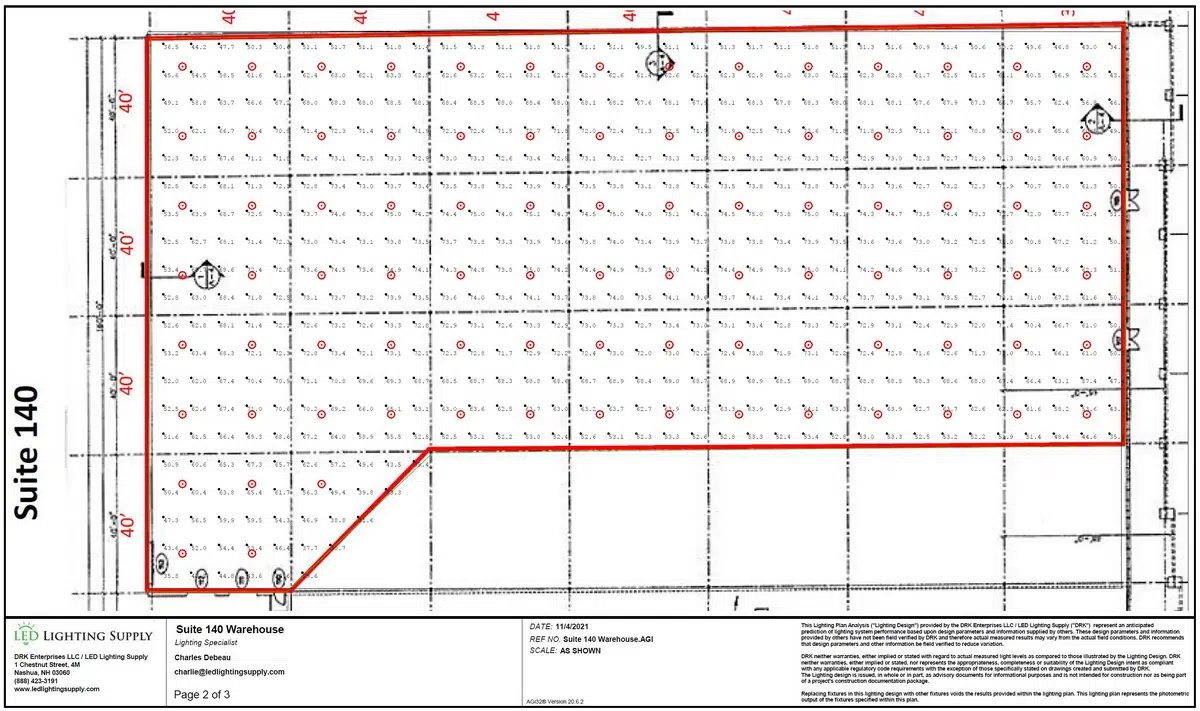
Lighting Plan We Created for the Customer
|
Lighting Plan |
Heat Map |
 |
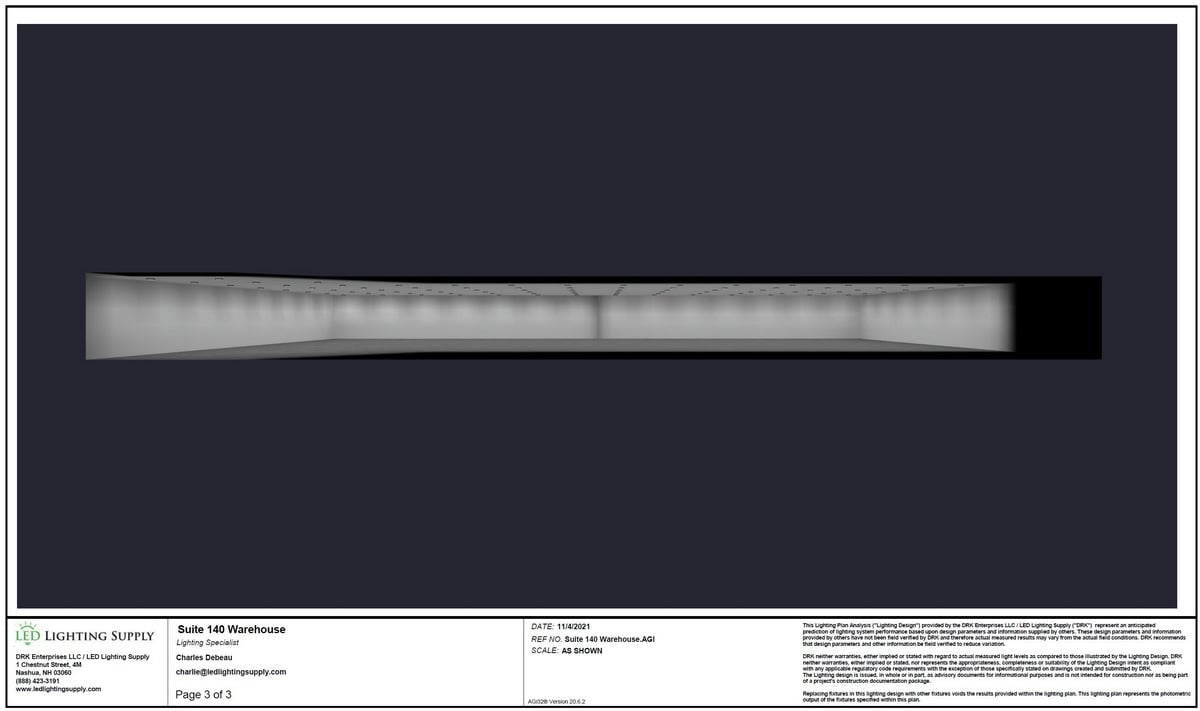 |
Warehouse / Retail Lighting Installation Plan Metrics
- Mounting height: 23 ft
- Fixture Used: MLLG-LED-HBHO-150-5-120: 80 / 100 / 120 / 150 Watt Adjustable UFO High Bay | 16000 to 30000 Lumens | 5000K | 100-277V | High Performance
- FC achieved: 65.36 FC average
- Uniformity (Avg/Min): 2.21

Prepare for an Accurate Low Bay Lighting Quote
Providing a few project details upfront helps us recommend compatible fixtures and, where requested, prepare a more useful photometric lighting plan.
- Space dimensions: Length, width, ceiling height, and any changes in ceiling elevation
- Mounting information: Existing fixture locations, mounting method, available mounting points, and clearance limitations
- Application details: Primary tasks, target areas, operating schedule, and whether the space is used for storage, assembly, repair, retail, or other activities
- Existing lighting: Fixture type, quantity, actual input wattage where available, and current lighting concerns such as shadows, glare, or dark areas
- Electrical and controls information: Available voltage, switching arrangement, dimming requirements, and sensor or control preferences
- Environmental conditions: Dust, moisture, washdown, temperature extremes, impacts, chemicals, corrosion, or sanitation requirements that may affect fixture selection
- Project documents: Floor plans, reflected ceiling plans, photographs, and equipment layouts can help improve layout accuracy
For a lighting plan, fixture quantities and calculated light levels are based on the dimensions, reflectances, obstructions, mounting locations, and other project information supplied. Confirm final installation conditions, electrical work, mounting support, and code compliance with the appropriate qualified professionals.
Low Bay LED Lights FAQs
How Do I Know Whether Low Bay LED Lights Fit My Space?
Low bay LED lights are commonly used at mounting heights around 8 to 20 feet when the mounting height, layout, required distribution, and glare control favor a lower-bay fixture. Final selection should also consider required light levels, room dimensions, spacing, task type, mounting method, environmental exposure, and controls.
When Should I Consider High Bay Fixtures Instead Of Low Bay Lights?
Consider LED high bay lights when the mounting height, layout, or required distribution favors a high bay fixture, particularly in taller spaces where high bay output and distribution better match the area. A low bay fixture should not be used if it cannot provide the required light levels, uniformity, or glare control.
How Can I Determine The Right Fixture Quantity And Placement?
Fixture quantity and placement should be based on the actual layout and the selected fixture's photometric data, not ceiling height or wattage alone. A lighting plan can provide predicted light levels, uniformity, recommended fixture quantities, and placement for the supplied layout.
Should I Choose Linear Or UFO Low Bay LED Lights?
Linear low bay fixtures may benefit warehouse aisles, work rows, rectangular spaces, and some fluorescent replacement projects, while round UFO fixtures can work well in open areas when their distribution matches the mounting height and spacing. The choice should be based on room geometry, fixture distribution, mounting requirements, and photometric performance.
How Should I Select A Low Bay Light Distribution?
Select low bay light distribution by matching the fixture photometrics to mounting height, fixture spacing, room geometry, target light levels, and glare requirements. Narrower distributions may be useful for more controlled or concentrated light, while wider distributions may be useful for general-area coverage at lower mounting heights when supported by the photometric layout.
What Environmental Ratings Should I Confirm Before Ordering?
Confirm wet- or damp-location suitability, IP rating, impact rating, temperature range, cleaning exposure, and any other environmental requirements that apply to the actual installation. IP ratings address specified solid-object and water ingress, but an IP65 rating does not by itself establish suitability for chemicals, corrosion, hazardous locations, food sanitation, or every washdown process.
Do All Low Bay LED Lights Include Dimming Or Motion Sensors?
No, dimming, sensors, drivers, and control compatibility vary by fixture model. Selected systems can switch fixtures off or reduce output during unoccupied periods, and selected drivers may support 0-10V, 1-10V, or other dimming methods depending on the product.
Can I Replace Existing Fluorescent Or Metal Halide Fixtures One For One?
A one-for-one replacement does not automatically reproduce the existing light distribution, uniformity, or light level. Compare the selected fixture's output, distribution, mounting, spacing, controls, voltage, and photometric performance with the actual project layout before ordering.