Anchor Base Light Poles
- Steel, aluminum, and fiberglass material options available
- Selection support for height, mounting, and fixture compatibility
- Designed for removable installation on concrete foundations



Our Anchor-Base Light Poles include steel, aluminum, and fiberglass poles with base plates for concrete foundation mounting. Available configurations include common tenons, bullhorns, crossarms, side mounts, and fixture arrangements, depending on the selected model.
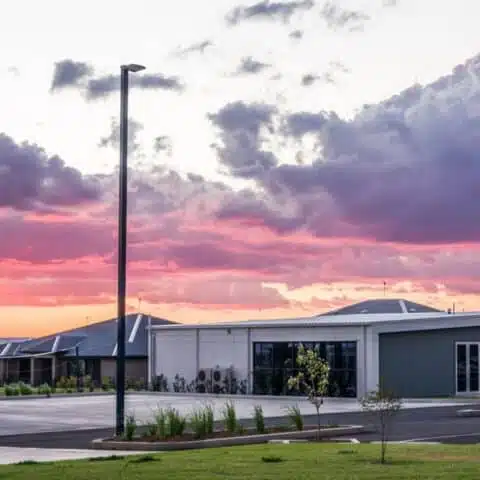
These poles are commonly used in parking lots, roadways, campuses, commercial properties, sports facilities, pedestrian areas, sidewalks, plazas, and other outdoor lighting projects.
-
 Starting At $1,399.00
-
Starting At $1,482.69

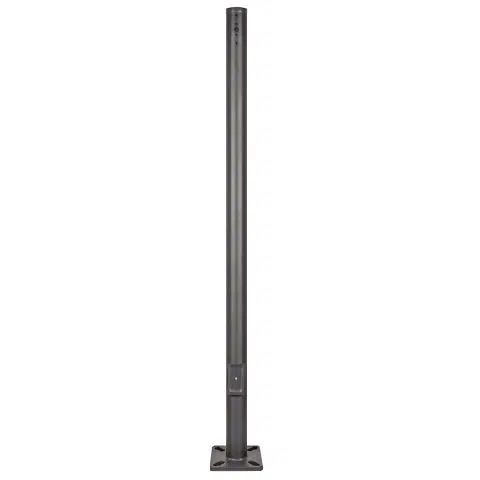
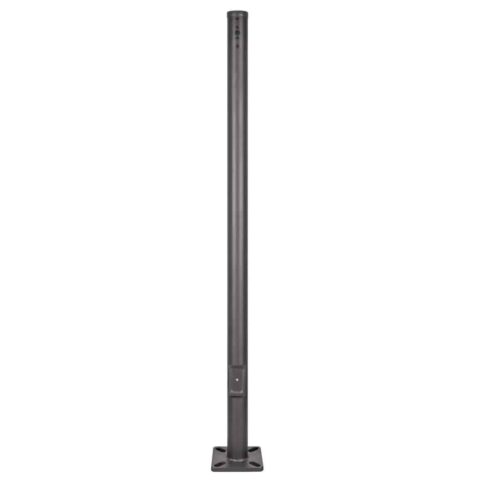

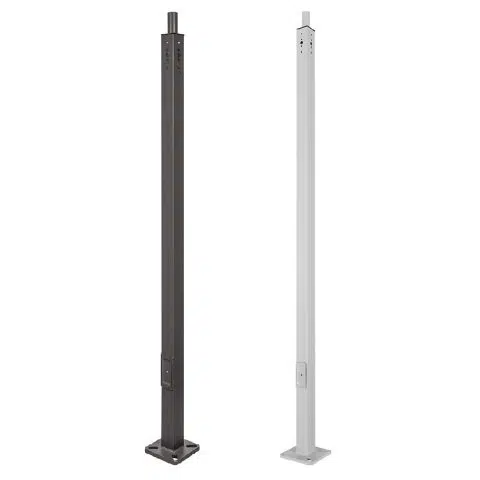



Choose an anchor-base pole by confirming the required height, material, fixture and accessory load, allowable EPA, wind criteria, mounting configuration, and finish for the project environment. Coordinate the selected pole’s base plate and anchor-bolt pattern with the proposed foundation design before ordering.
Selection Note: An anchor-base pole is only one part of the installed system. The pole, base plate, anchor bolts, foundation, reinforcement, fixtures, arms, accessories, soil conditions, and wind requirements must be compatible. Confirm the exact product and project specifications before ordering.
When to Use Anchor-Base Light Poles
Anchor-base poles are widely used for permanent commercial lighting where a concrete foundation can be installed and future pole replacement may be desirable. The pole can often be removed from the anchor bolts without excavating the surrounding area, provided the existing foundation and anchor-bolt system remain suitable.
| Project Condition | Why Anchor-Base Installation May Fit |
|---|---|
| Finished commercial sites | Anchor-base poles are commonly integrated into paved parking lots, sidewalks, plazas, campuses, and other finished surfaces. |
| Future replacement planning | A damaged or outdated pole may be removable from the foundation when the anchor bolts, bolt circle, foundation, and new loading remain compatible. |
| Precise pole placement | Foundation and anchor-bolt layout can establish the intended pole location, orientation, setback, and fixture direction before the pole is installed. |
| Commercial mounting configurations | Anchor-base poles are available with common tenons, bullhorns, crossarms, side mounts, and fixture arrangements when approved for the selected model. |
| Engineered foundation design | The foundation can be designed around the pole height, fixture load, wind criteria, soil conditions, and project requirements. |
Anchor Base Versus Direct-Burial Light Poles
| Installation Method | How It Differs |
|---|---|
| Anchor Base | The pole attaches to a base plate and anchor bolts installed in an engineered concrete foundation. Pole replacement may be simpler when the existing foundation remains suitable. |
| Direct Burial | A portion of the pole is embedded below grade. Installation depends on embedment depth, excavation, backfill, drainage, soil conditions, and manufacturer requirements. |
Neither method is automatically stronger, less expensive, or better. Selection depends on the site layout, soil, corrosion exposure, construction sequencing, maintenance plans, pole loading, foundation requirements, and available product configurations.
Anchor-Base Pole Materials
| Pole Material | Common Advantages and Considerations |
|---|---|
| Steel Anchor-Base Light Poles | Steel provides structural stiffness and broad compatibility with commercial fixtures, tenons, bullhorns, crossarms, cameras, and accessories. Galvanizing, coatings, base protection, and corrosion exposure should be reviewed for the site. |
| Aluminum Anchor-Base Light Poles | Aluminum is lighter than steel and naturally forms a corrosion-resistant oxide layer. Alloy, wall thickness, finish, galvanic corrosion, fixture load, and manufacturer wind data must still be confirmed. |
| Fiberglass Anchor-Base Light Poles | Fiberglass does not rust, is generally lightweight, and may be useful in coastal, wastewater, utility, or other corrosive environments. Deflection, base design, approved mounting hardware, ultraviolet exposure, and structural ratings vary by model. |
Steel Versus Aluminum Versus Fiberglass Anchor-Base Poles
| Selection Factor | General Difference |
|---|---|
| Structural stiffness | Comparable steel pole designs are generally stiffer, although actual deflection depends on pole geometry, wall construction, height, and loading. Aluminum and fiberglass designs may show more movement depending on the selected model. |
| Weight | Aluminum and fiberglass are generally lighter than steel, which may simplify handling. Equipment needs still depend on pole height, weight, and site access. |
| Corrosion resistance | Steel requires an appropriate protective finish. Aluminum resists rust but can be affected by galvanic corrosion and certain environments. Fiberglass does not rust but still requires review for ultraviolet exposure, chemicals, impact, and hardware compatibility. |
| Electrical conductivity | Steel and aluminum are conductive. Fiberglass pole shafts are generally nonconductive, although fixtures, wiring, bases, fasteners, and mounting hardware may still be conductive and applicable grounding or bonding requirements still apply. |
| Mounting compatibility | Steel typically offers broad commercial accessory compatibility. Aluminum and fiberglass mounting options depend on the exact pole design and manufacturer-approved attachments. |
| Best application fit | Steel is commonly selected for rigid commercial mounting systems. Aluminum may be useful where lower weight and corrosion resistance matter. Fiberglass may be considered where corrosion resistance or a nonconductive shaft is desired. |
Material alone does not determine structural capacity. Compare the exact pole model, height, wall construction, base plate, allowable EPA, fixture load, wind criteria, finish, and foundation requirements.
How to Select an Anchor-Base Light Pole
| Selection Factor | What to Confirm |
|---|---|
| Project location | Provide the installation address so available pole options can be compared with known wind exposure, corrosion conditions, terrain, frost conditions, and other project details. Confirm governing criteria with the appropriate local or project authority. |
| Pole height | Select height using the lighting layout, fixture distribution, glare considerations, service access, and structural data for the exact pole model. |
| Fixture and accessory load | Confirm the weight and EPA of all fixtures, tenons, arms, bullhorns, cameras, banners, signs, and other equipment. |
| Allowable EPA | Compare the combined EPA of all mounted components with the pole manufacturer’s published allowable EPA for the required wind criteria and mounting configuration. |
| Base plate dimensions | Confirm the base plate size, thickness, bolt-hole arrangement, pole orientation, and compatibility with the proposed foundation. |
| Anchor-bolt pattern | Verify bolt diameter, projection, spacing, bolt circle, orientation, template, and manufacturer requirements before concrete is placed. |
| Foundation design | Foundation diameter, depth, reinforcement, anchor-bolt embedment, and concrete requirements depend on pole loading, soil conditions, frost depth, and project criteria. |
| Corrosion exposure | Review salt air, deicing salts, irrigation, standing water, chemicals, dissimilar metals, damaged finishes, and moisture around the base. |
| Wiring and service access | Confirm conduit placement, cable entry, handhole orientation, grounding or bonding requirements, and access for future maintenance. |
Anchor Bolts, Base Plates, and Foundations
The anchor bolts and concrete foundation must match the exact pole base. Bolt circle, bolt diameter, projection above the foundation, embedment, orientation, and template should be confirmed before concrete is poured. Similar-looking poles may use different anchor-bolt patterns.
Do not assume an existing foundation is suitable for a replacement pole. The new pole may have a different base plate, bolt pattern, height, fixture load, allowable EPA, or overturning demand. Existing concrete and anchor bolts should be evaluated before reuse.
There is no universal foundation size for anchor-base poles. Foundation design depends on the complete pole and fixture loading, soil conditions, frost depth, concrete and reinforcement requirements, and governing project criteria. These details should be determined or verified by the appropriate qualified professional.
Wind Load and Allowable EPA
Anchor-base installation does not by itself establish wind resistance. Pole suitability depends on the exact material, height, shape, wall construction, base plate, fixture arrangement, mounting hardware, foundation, and site conditions.
Effective Projected Area, or EPA, is a manufacturer-calculated value used to represent the wind effect of fixtures and accessories. The combined EPA of mounted equipment should remain within the pole manufacturer’s published capacity for the required wind criteria and configuration. Foundation suitability must be evaluated separately.
For coastal, hurricane-prone, open-exposure, or severe-wind projects, review our high-wind rated light poles and verify the complete pole, fixture, foundation, and site requirements.
Corrosion at the Pole Base
The base area deserves particular attention because water, deicing salts, irrigation, fertilizers, debris, and damaged coatings can collect near the foundation. Steel base plates, anchor bolts, nuts, washers, and lower pole sections require finishes appropriate for the environment.
Aluminum poles should be reviewed for contact with dissimilar metals and materials that could contribute to galvanic corrosion. Fiberglass shafts do not rust, but metal base components, anchor bolts, fasteners, and accessories may still require corrosion protection.
Base covers can improve appearance and help shield exposed hardware, but they should not trap standing water or conceal corrosion, loose nuts, foundation cracking, or other conditions that require inspection.
Common Anchor-Base Pole Selection and Installation Mistakes
- Ordering the pole before confirming the foundation: Base plate dimensions and anchor-bolt patterns must be coordinated before concrete is placed.
- Using an incorrect anchor-bolt template: Small differences in bolt circle, spacing, orientation, or projection can prevent installation.
- Reusing an unverified foundation: Existing concrete and anchor bolts may not support a different pole height, base, fixture load, or wind requirement.
- Excluding mounting hardware from the load: Arms, bullhorns, cameras, signs, banners, and brackets contribute to weight and wind-exposed area.
- Assuming anchor base means high wind rated: Wind capacity depends on the complete pole, fixture, foundation, and site configuration.
- Ignoring base corrosion: Salt, irrigation, chemicals, damaged coatings, and standing water can affect poles and hardware near grade.
- Misaligning the foundation: Anchor bolts and conduit must be positioned so the handhole, fixture arms, drilling patterns, cameras, and base plate face the intended direction.
- Using the nuts to correct major leveling errors: Pole leveling, grout requirements, nut arrangement, and base installation should follow the manufacturer’s instructions and project details.
Need Help Selecting Anchor-Base Light Poles?
LED Lighting Supply can help narrow anchor-base pole options using the project location, preferred material, pole height, fixture model, fixture EPA, mounting hardware, wind requirements, finish, and base configuration.
Contact us about anchor-base light poles and provide the project address, desired pole height, fixture quantity, fixture model, mounting arrangement, preferred material, and any available foundation or anchor-bolt information. Final structural, foundation, electrical, installation, and code requirements should be confirmed by the appropriate qualified professionals for the project.
Anchor Base Light Poles FAQs
What Should I Confirm Before Ordering An Anchor-Base Light Pole?
Confirm the exact pole model, height, material, fixture and accessory load, allowable EPA, wind criteria, base plate dimensions, anchor-bolt pattern, foundation compatibility, corrosion exposure, mounting configuration, and site conditions before ordering.
How Do Anchor-Base Light Poles Differ From Direct-Burial Poles?
Anchor-base poles attach to a base plate and anchor bolts in an engineered concrete foundation, while direct-burial poles have a portion of the pole embedded below grade. Anchor-base pole replacement may be simpler when the existing foundation remains suitable.
Can An Existing Foundation Be Reused For A Replacement Anchor-Base Pole?
An existing foundation may be reused only when the concrete, anchor bolts, bolt circle, base plate, new loading, and other requirements remain suitable for the replacement pole. A new pole may have different height, fixture load, allowable EPA, base plate, bolt pattern, or overturning demand.
How Do I Choose Between Steel, Aluminum, And Fiberglass Anchor-Base Poles?
Choose the material by comparing the exact pole design, structural needs, weight, corrosion exposure, mounting compatibility, fixture load, allowable EPA, wind criteria, finish, and foundation requirements. Steel is commonly selected for rigid commercial mounting systems, aluminum may be useful where lower weight and corrosion resistance matter, and fiberglass may be considered for corrosive or electrically sensitive locations.
What Loads Need To Be Included When Selecting An Anchor-Base Pole?
Include the weight and EPA of all fixtures, tenons, arms, bullhorns, cameras, banners, signs, brackets, and other mounted equipment. The combined EPA must remain within the pole manufacturer's published allowable EPA at the required wind speed.
Does An Anchor-Base Pole Automatically Provide High-Wind Capacity?
No, anchor-base installation alone does not establish wind resistance. Pole suitability depends on the exact material, height, shape, wall construction, base plate, fixture arrangement, mounting hardware, foundation, and site conditions.
Why Must The Anchor-Bolt Pattern Be Confirmed Before Concrete Is Poured?
The bolt circle, bolt diameter, projection, spacing, orientation, template, and manufacturer requirements must match the exact pole base before concrete is poured. Similar-looking poles may use different anchor-bolt patterns, and small differences can prevent installation.
What Should Be Reviewed For Corrosion At The Pole Base?
Review water, deicing salts, irrigation, fertilizers, debris, chemicals, damaged coatings, moisture, and dissimilar-metal contact near the foundation. Steel base components require appropriate finishes, while fiberglass shafts do not rust but metal base components and hardware may still require corrosion protection.