LED Pickleball Court Lights
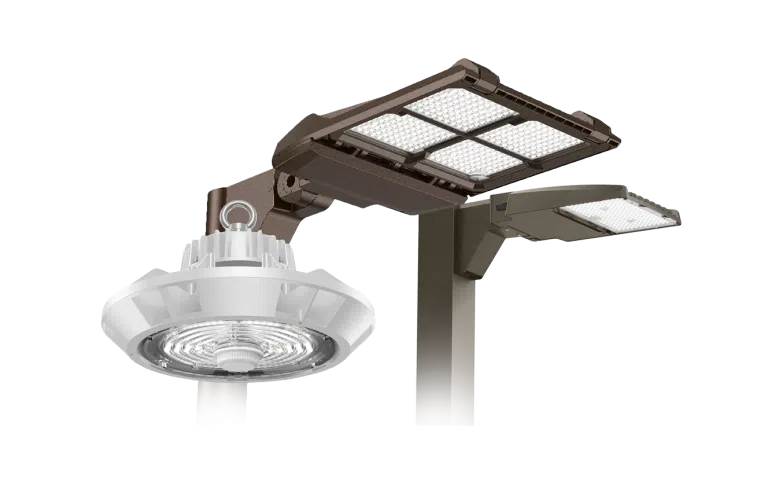
- Indoor and outdoor fixture options for varied court layouts
- Photometric plans available to evaluate coverage and glare control
- DLC-listed options available for utility rebate eligibility


Get Your Custom Lighting Plan With Product Recommendations
- Fixture placement and aiming designed around court boundaries for uniform coverage and reduced glare for players
- Fixture count, mounting height, and beam angles selected to help achieve target foot-candle levels across playing surfaces
- LED options can reduce energy use and extend maintenance intervals compared with legacy metal halide systems


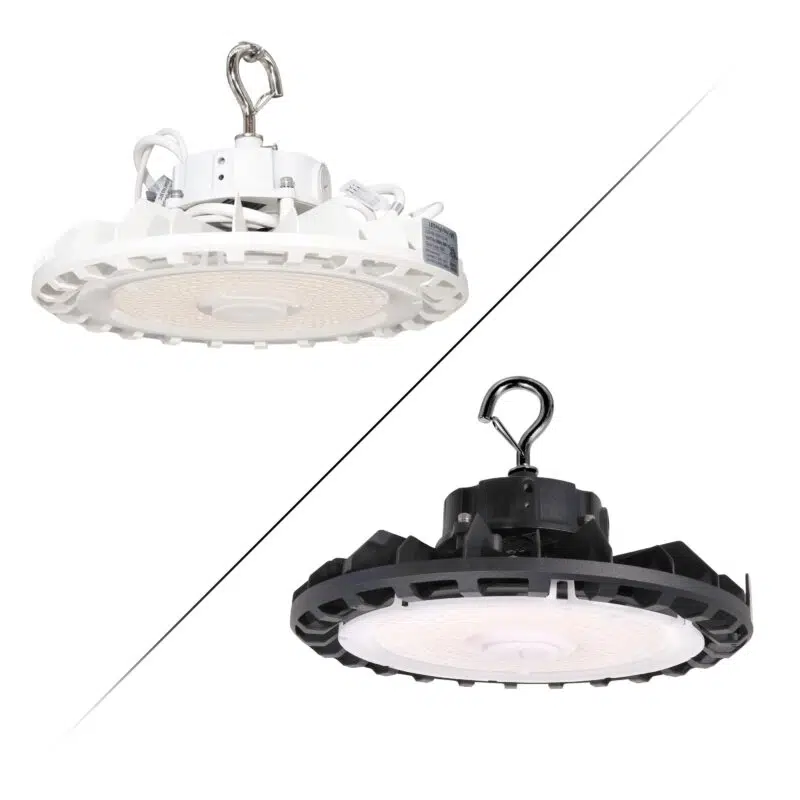
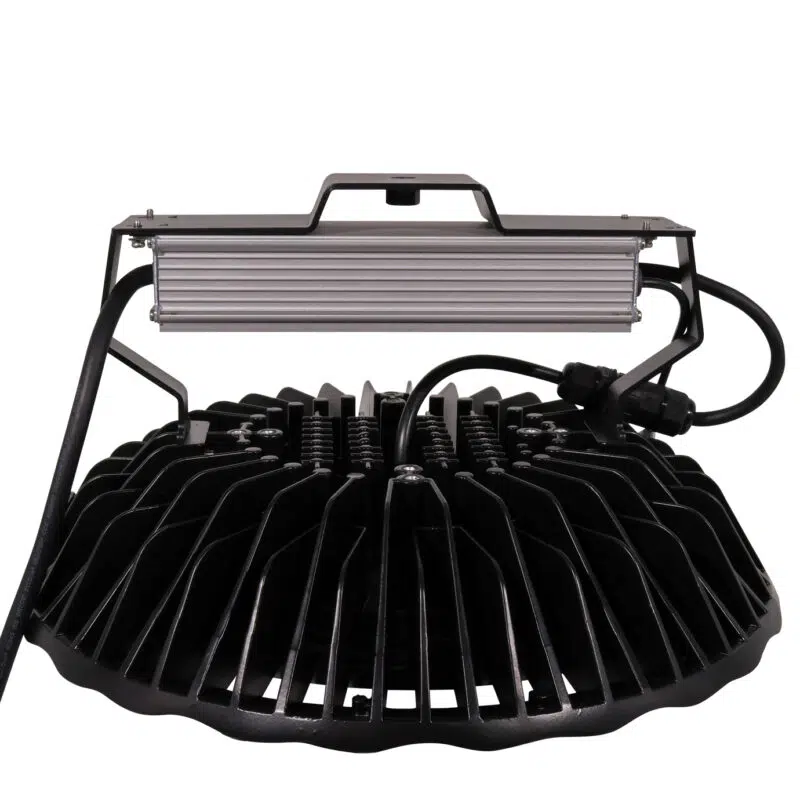
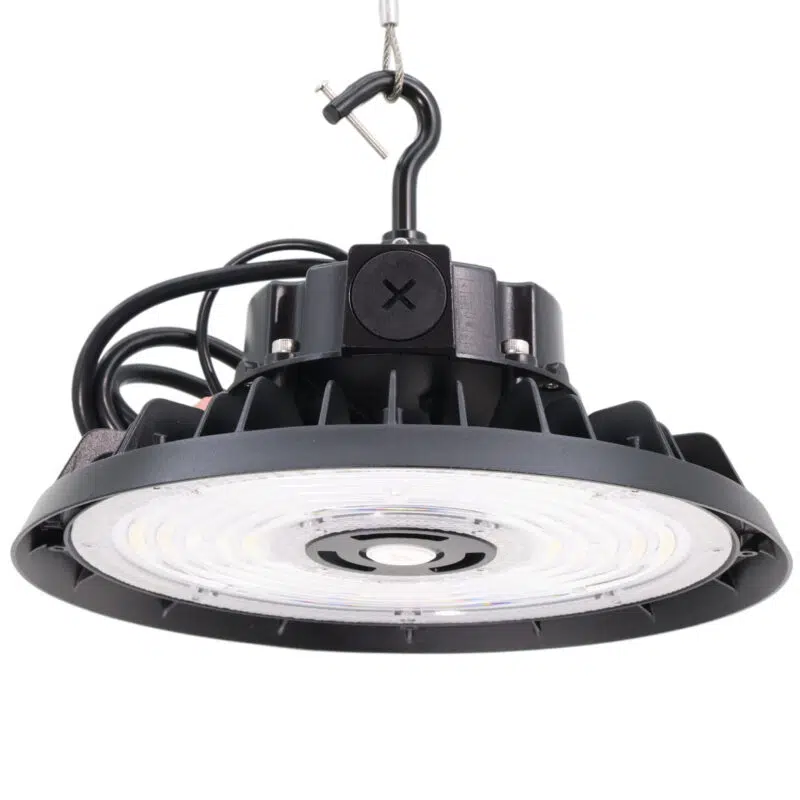
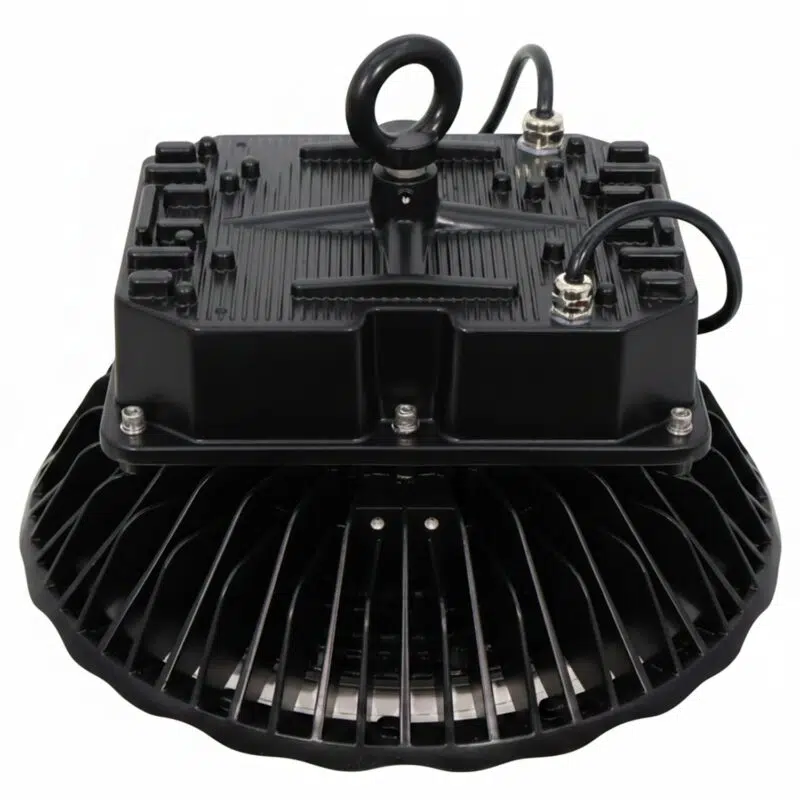
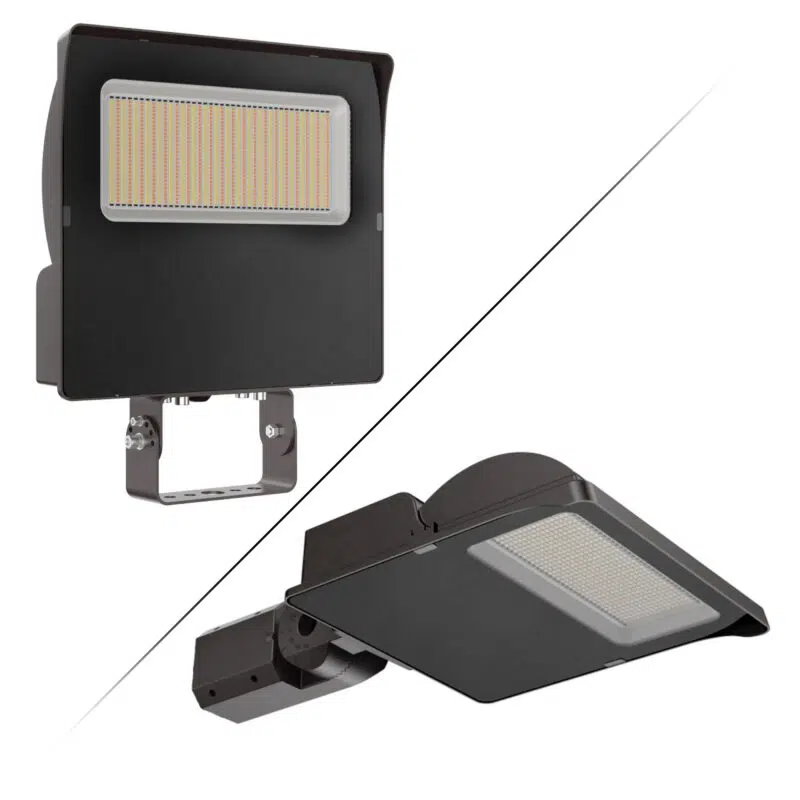
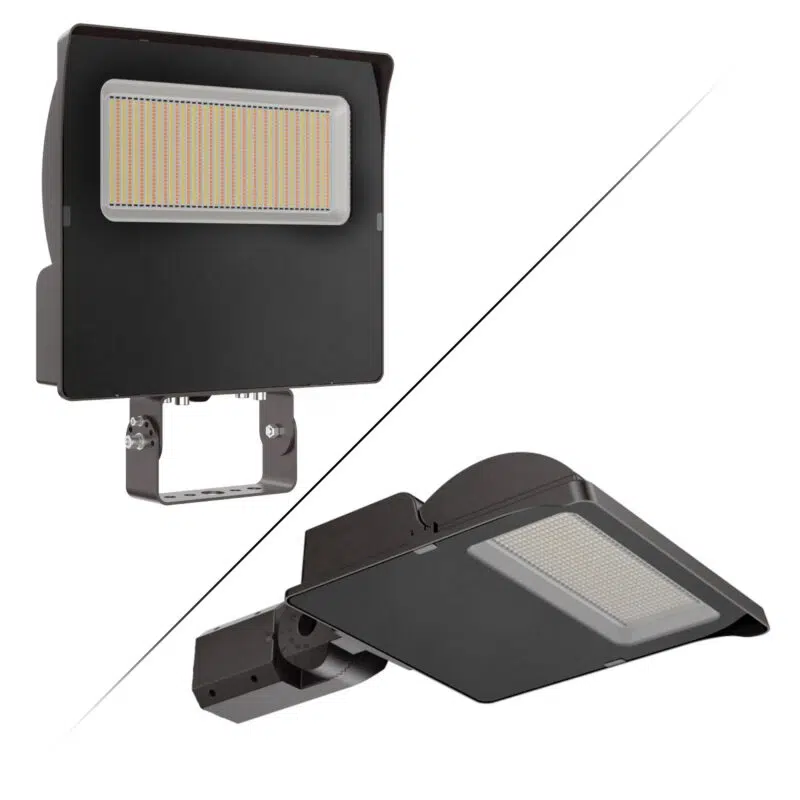
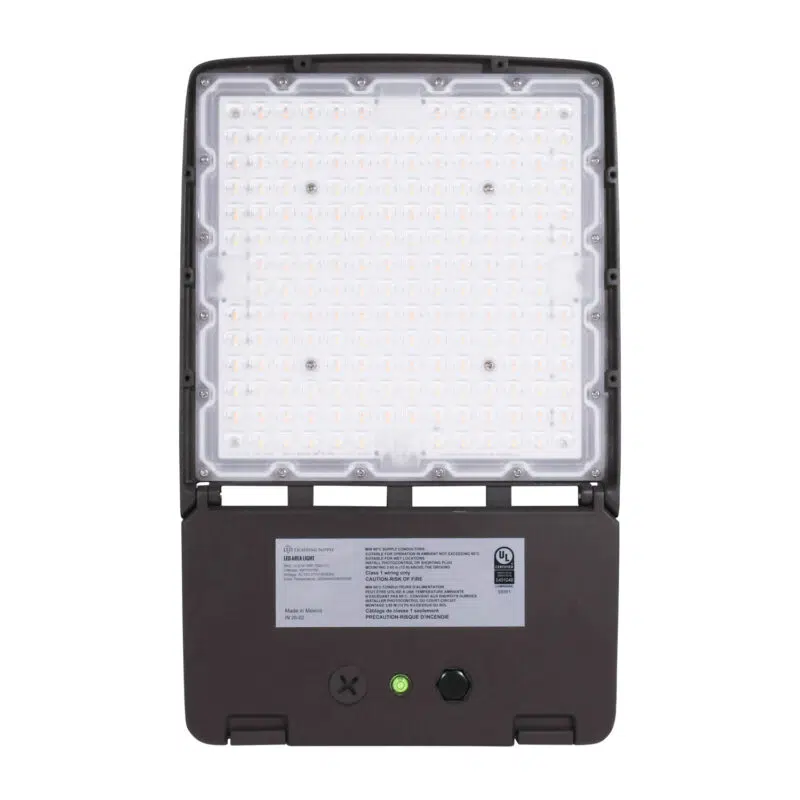
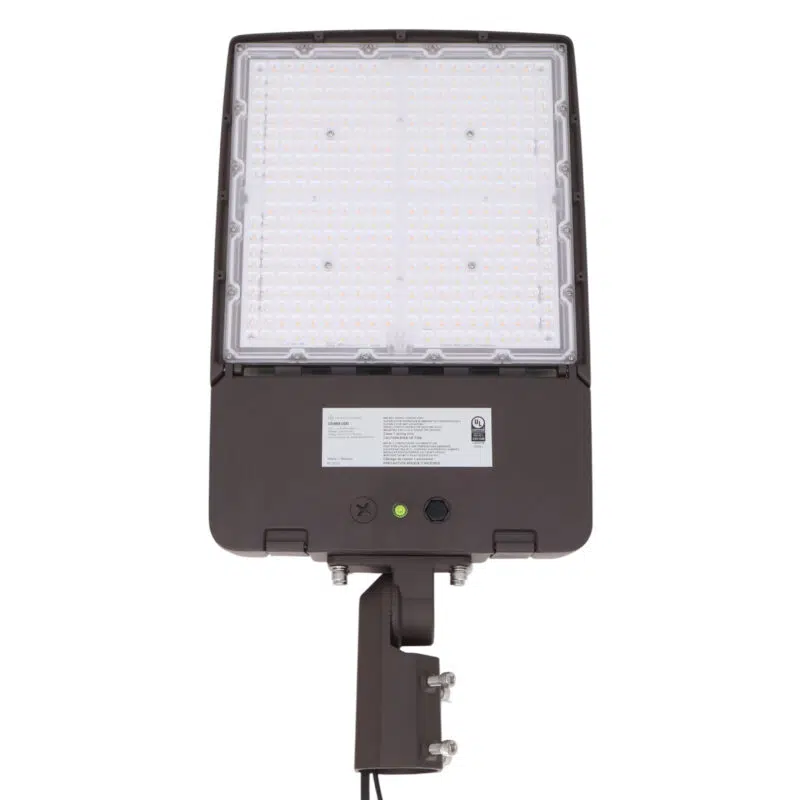
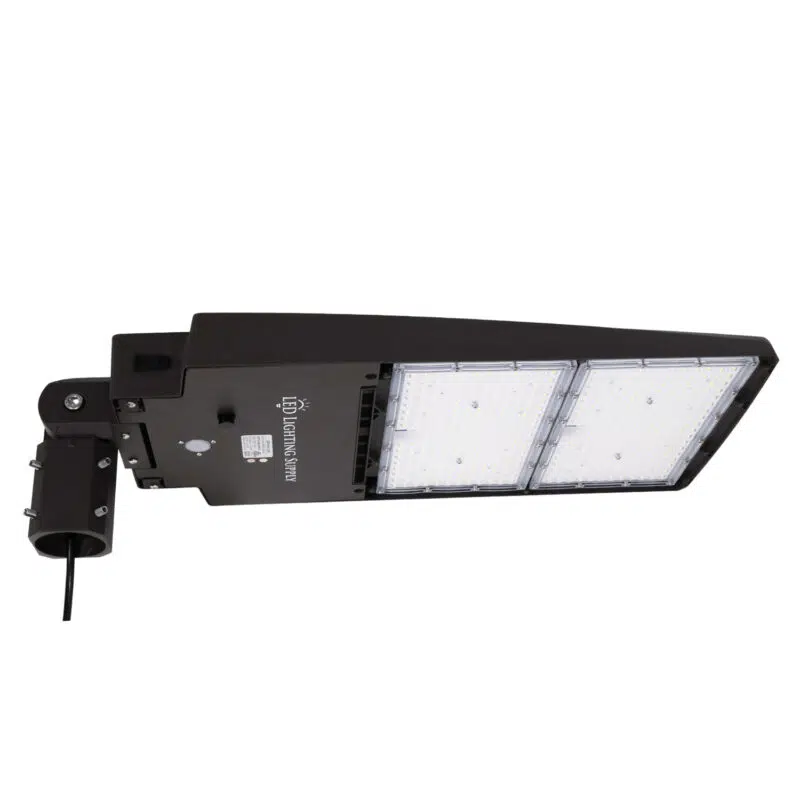
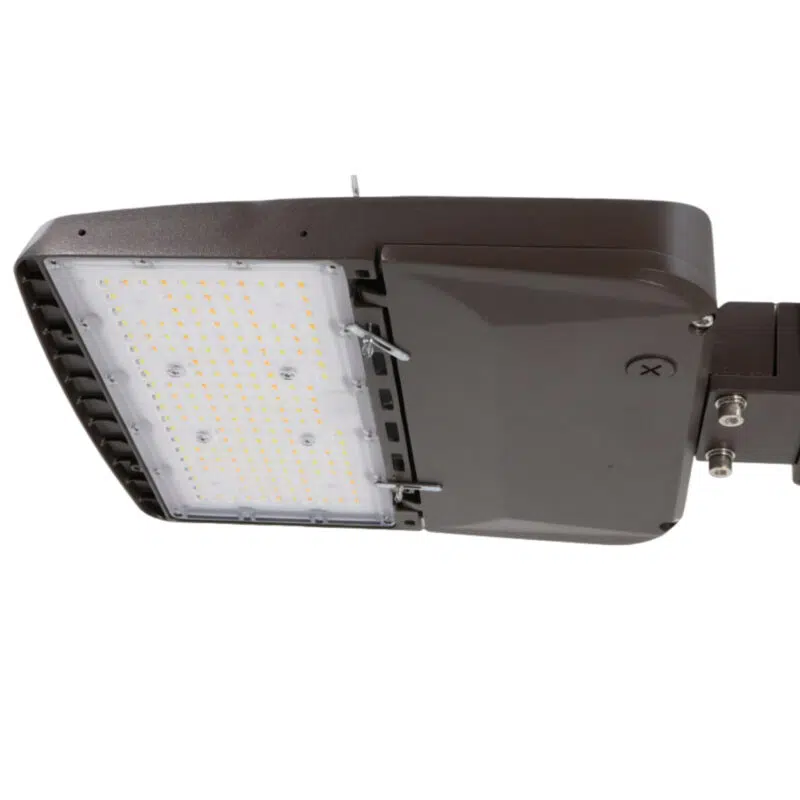
Our LED Pickleball Court Lighting includes indoor high bays, linear fixtures, indirect lighting systems, LED shoebox lights, flood lights, and sports field lights for indoor and outdoor courts. Available models include ceiling-mounted and pole-mounted configurations, with optics, shielding, aiming, dimming, timers, occupancy sensors, and court-bank controls varying by product.
These fixtures are commonly used in indoor recreation centers, private clubs, outdoor park courts, community courts, multi-court complexes, competition courts, and multi-sport facilities.








Pickleball Court Lighting Should Protect Ball Tracking and Player Sightlines
Start by identifying whether the court is indoor or outdoor, the court layout, and the available mounting conditions. Then establish the target light level and review player sightlines, ball tracking, uniformity, glare control, pole placement or ceiling height, controls, and electrical infrastructure before selecting fixtures. Indoor recreation centers, private clubs, outdoor park courts, multi-court complexes, and competition courts all have different lighting needs.
The goal is not just to make the court bright. Players need to track a fast-moving ball across the net, near the kitchen line, along the sidelines, and against the background of walls, fencing, ceilings, or outdoor surroundings. Poorly placed fixtures can create glare, shadows, uneven light, or distracting bright spots that players notice immediately.
Most indoor pickleball courts use ceiling-mounted LED high bays, linear fixtures, court fixtures, or indirect lighting systems, depending on ceiling height, mounting structure, and glare goals. Outdoor pickleball courts often use pole-mounted LED area lights, sports field lights, or adjustable flood lights, depending on pole height, court count, spill-light limits, and required light levels.

Selection and Installation Note: Product specifications, fixture wattage, lumen output, beam angle, optic type, mounting hardware, voltage, controls, dimming, motion sensors, surge protection, impact rating, certifications, and warranty coverage vary by model. Confirm the selected product specification before ordering. For indoor pickleball courts, outdoor courts, pole-mounted lighting, multi-court complexes, recreation facilities, electrical upgrades, structural mounting review, emergency lighting, code-sensitive applications, or safety-critical projects, verify requirements with your local inspector, structural professional, or licensed electrical professional.
Indoor and Outdoor Pickleball Courts Have Different Lighting Problems
Indoor pickleball lighting can create problems when fixtures produce glare, shadows, or uncomfortable brightness across a low or moderate ceiling. Outdoor pickleball lighting can create problems when poles are too low for the selected optics, fixtures are poorly aimed, or light spills into nearby homes, roads, parking areas, or other courts.
| Court Type | What to Review Before Selecting Fixtures |
|---|---|
| Indoor recreational courts | Ceiling height, fixture glare, player sightlines, ball tracking, impact risk, controls, and visual comfort. |
| Indoor club or competition courts | Uniformity, glare, ceiling reflectance, fixture spacing, spectator viewing, camera needs, and dimming options. |
| Indirect indoor lighting | Ceiling reflectance, mounting access, light distribution, glare reduction, and whether the building structure supports the layout. |
| Outdoor recreational courts | Pole height, pole location, court setbacks, spill light, neighbor glare, fixture aiming, and weather exposure. |
| Outdoor club or competition courts | Higher light levels, pole-sharing layouts, cross-court glare, uniformity, controls by court bank, and local requirements. |
| Multi-court complexes | Light spill between courts, player sightlines on adjacent courts, pole placement, control zones, and pedestrian routes. |
Recommended Foot-Candles for Pickleball Court Lighting
Pickleball court lighting levels vary by use. Recreational courts may need lower light levels than club, competition, or event courts. Indoor and outdoor courts may also require different fixture layouts even when the target foot-candle range is similar, because ceiling height, pole placement, background contrast, and glare control are different.
Use the foot-candle guide below as a starting point for indoor and outdoor pickleball lighting levels. Final fixture selection should be confirmed with a photometric plan that accounts for court dimensions, ceiling height, pole height, fixture placement, beam angles, uniformity, glare, spill light, impact risk, controls, and electrical infrastructure.
Step 1: Find your foot candle levels
Step 2: Estimate your fixture count and space
Shoebox Lighting Layout Estimator
Use this estimator to calculate approximate fixture count, pole placement, spacing, and average foot-candles for parking lots, exterior areas, and outdoor sport court applications using LED shoebox fixtures. Enter the area size, mounting height, target foot-candles, light loss factor, and outdoor light use factor to generate a preliminary layout.
Project Inputs
Estimated Results
Estimated average foot-candles are preliminary. The visual heat map is normalized to the estimated average and is intended to show approximate coverage behavior, not a verified lighting plan.
Parking Lot / Exterior Area Mode: Fixtures are placed on poles along the longest edges of the area. Edge fixtures are modeled as level / down-facing shoebox fixtures with the optic directed inward. For wider parking areas, a center row can be added.
Sport Court Mode: Poles are placed on the long edges of the court. Fixtures are modeled as level / down-facing and directed toward court coverage zones instead of being tilted toward one center point.
Photometry / Simulation Note: When usable IES photometry is available for the selected fixture, this estimator uses the fixture’s IES candela data to improve the visual ground-level light distribution. When IES photometry is not available, the estimator uses a simulated Type 3 or Type 5 optic model based on lumens, mounting height, outdoor light use factor, light loss factor, and fixture direction.
Outdoor Light Use Factor: Suggested starting points: open rectangular paved area 0.60–0.70, typical parking lot 0.45–0.60, areas with setbacks or edge losses 0.35–0.50, complex outdoor sites 0.25–0.40.
Preliminary Estimate Only: This estimator is intended for simple rectangular outdoor areas. Actual light levels may vary based on fixture optics, pole setbacks, mounting height, fixture orientation, distribution type, surface reflectance, obstructions, voltage, installation conditions, spill light requirements, and site-specific requirements.
This estimate is a starting point. Parking lots, roadways, sport courts, public areas, campuses, vehicle areas, and code-sensitive exterior projects should be reviewed with a lighting plan before purchase or installation.
What a Pickleball Court Lighting Plan Needs to Prove
A pickleball lighting plan should show more than average brightness. It should verify whether the design provides usable visibility across the full court without creating glare or uneven light that affects play.
| Planning Detail | Why It Matters for Pickleball |
|---|---|
| Court layout | Single courts, side-by-side courts, and multi-court complexes require different fixture spacing and aiming strategies. |
| Indoor ceiling height | Ceiling height affects fixture type, beam spread, glare, impact risk, and whether direct or indirect lighting makes sense. |
| Outdoor pole placement | Poles should be placed outside court safety zones and positioned to reduce glare, shadows, and spill light. |
| Player sightlines | Lighting should support ball tracking across the net, kitchen line, baselines, sidelines, and overhead shots. |
| Uniformity | Uneven light can make the ball harder to track, especially when moving between bright and dark areas. |
| Glare control | Fixture placement, aiming, and optic selection should reduce direct glare for players looking upward or across the court. |
| Spill light | Outdoor courts near homes, roads, parking areas, or other amenities may require tighter optics, shielding, or aiming adjustments. |
| Impact resistance | Indoor fixtures and lower-mounted outdoor fixtures should be reviewed for ball-strike exposure and fixture durability. |
| Controls | Multi-court facilities may need separate court-bank controls, timers, dimming, occupancy sensors, or scheduling. |
| Electrical service | Confirm voltage, circuit capacity, conductor sizing, switching, controls, and surge protection before selecting fixtures. |
Request a pickleball court lighting plan to confirm fixture count, court coverage, mounting layout, target foot-candle levels, glare control, spill light, voltage, and product specifications before ordering.
Choosing Indoor Pickleball Lighting
Indoor pickleball courts need lighting that supports fast ball tracking without creating glare, harsh shadows, or uncomfortable brightness for players looking upward or across the net. The best fixture choice depends on ceiling height, court layout, fixture mounting location, ceiling reflectance, ball-strike exposure, background contrast, and whether the space is used for recreational play, club play, tournaments, or multi-sport activity.
Most indoor pickleball lighting projects use LED high bays, linear high bays, direct court lighting, or indirect lighting systems. Lower or moderate ceilings may require wider distribution, lower-output fixtures, or indirect lighting to reduce glare. Taller indoor facilities may use high bays or linear fixtures, but fixture spacing, beam angle, and aiming still need to be reviewed from the player’s sightline, not just from the ceiling plan.
| Indoor Option | Best Used For |
|---|---|
| LED High Bays | Indoor courts with adequate ceiling height where broad, direct illumination is needed. Review glare, beam spread, mounting height, and fixture placement before selecting high bays for active court areas. |
| Linear LED Fixtures | Indoor court layouts where fixture rows, rectangular distribution, and even coverage are useful. Linear fixtures can work well in multi-court spaces when rows are aligned with the court layout. |
| Indirect Lighting | Facilities that prioritize glare reduction and have a reflective ceiling suitable for indirect light. Ceiling reflectance, mounting access, and total light output should be reviewed before choosing this approach. |
| Impact-Resistant Fixtures | Courts where fixtures may be exposed to ball strikes, vibration, or frequent active play. Fixture location, lens material, mounting security, and impact risk should be reviewed before ordering. |
For indoor pickleball courts, avoid selecting fixtures only by wattage. Ceiling height, fixture spacing, beam angle, glare control, court surface color, wall and ceiling reflectance, player sightlines, and target foot-candle levels are usually more important than fixture power alone. A photometric plan is recommended for multi-court facilities, competition courts, low ceilings, indirect lighting layouts, or spaces where glare has been a problem with previous fixtures.
Choosing Outdoor Pickleball Lighting
Outdoor pickleball courts usually use pole-mounted fixtures around the court perimeter. The best layout depends on the number of courts, pole height, pole locations, safety-zone setbacks, fixture optics, mounting angle, wind exposure, neighboring properties, and local spill-light requirements. Outdoor pickleball lighting should place light on the court while reducing glare for players, nearby courts, roads, parking areas, walkways, and surrounding homes or businesses.
Unlike general area lighting, outdoor pickleball lighting needs to account for a rectangular playing surface, fast ball movement, overhead shots, court boundaries, and player sightlines. Pole placement and fixture aiming are just as important as fixture output. Poorly placed poles or overly broad optics can create shadows, hot spots, cross-court glare, or light trespass that affects play and nearby properties.
| Outdoor Option | Best Used For |
|---|---|
| LED Shoebox Lights | Outdoor recreational courts, parks, and community court layouts where controlled site lighting is needed. Review pole height, optic type, fixture aiming, and spill-light control before using standard area lights. |
| LED Flood Lights | Projects that need aimable fixtures for specific court layouts or existing pole locations. Flood lights should be aimed carefully to avoid player glare and unnecessary spill light. |
| LED Sports Field Lights | Higher-output outdoor courts, club courts, competition courts, and multi-court complexes that need stronger beam control, higher mounting heights, and better long-distance aiming. |
| Shielded or Cutoff Fixtures | Outdoor courts near homes, roads, walking paths, parking areas, or other courts where spill light and glare must be reduced. Shielding, cutoff optics, and fixture aiming should be reviewed during layout planning. |
Outdoor courts should review pickleball light pole placement carefully. Poles should be outside court safety zones, should not block player movement, and should be positioned to reduce glare across the net and between adjacent courts. Multi-court complexes may also need separate control zones, timers, dimming, or court-bank switching so lights are not operating at full output when only some courts are in use.
Pickleball Court Lighting Project Examples
Pickleball lighting projects vary by court count, indoor or outdoor layout, ceiling height, pole height, surrounding property, existing infrastructure, player level, and electrical service. A photometric plan helps determine whether high bays, linear fixtures, area lights, flood lights, sports field lights, or indirect lighting systems are the right fit.
The Picklr Franchise Levels Up Pickleball Courts with High Bay LEDs Case Study
The Backstory:
When The Picklr, a rapidly expanding indoor pickleball franchise, set out to standardize lighting across its growing network of facilities, it turned to LED Lighting Supply. What began as a single-court engagement quickly evolved into something far more strategic. The Picklr named LED Lighting Supply its preferred lighting partner and built us directly into the franchise rollout plan for every future location.
To date, we've provided custom lighting plans and fixtures for 39 locations nationwide. Rather than defaulting to a one-size-fits-all package, our Lighting Specialist, Tyler Greene, works closely with each franchisee to engineer a tailored solution that accounts for ceiling heights, court configurations, and facility layouts unique to every site, while preserving the consistent playing experience The Picklr brand demands.
The Customer's Challenge:
As The Picklr expanded across the country, the franchise needed more than a lighting partner. It needed a trusted partner capable of delivering consistent, high-quality lighting solutions at every new location.
Rather than approaching each location individually, The Picklr required a single, reputable source to provide standardized lighting plans, expert guidance, and reliable product recommendations that could scale alongside the brand.
However, sports lighting introduces several contributing factors that aren't always present in traditional commercial lighting projects. Fixtures must be impact-rated to withstand the occasional stray ball, light levels must remain uniform across the entire court to eliminate shadows, and glare must be controlled to maximize visibility for players.
The Picklr needed a partner who could deliver:
- Scalable, franchise-wide lighting products available without long lead times
- Expert advice tailored to the unique demands of sports environments
- Consistent performance and quality across all installations
- Custom-tailored layout plans to match each facility's dimensions rather than a one-size-fits-all approach
Partnering with LED Lighting Supply allowed The Picklr to confidently meet these demands while maintaining a cohesive, professional lighting standard across every court in the network.
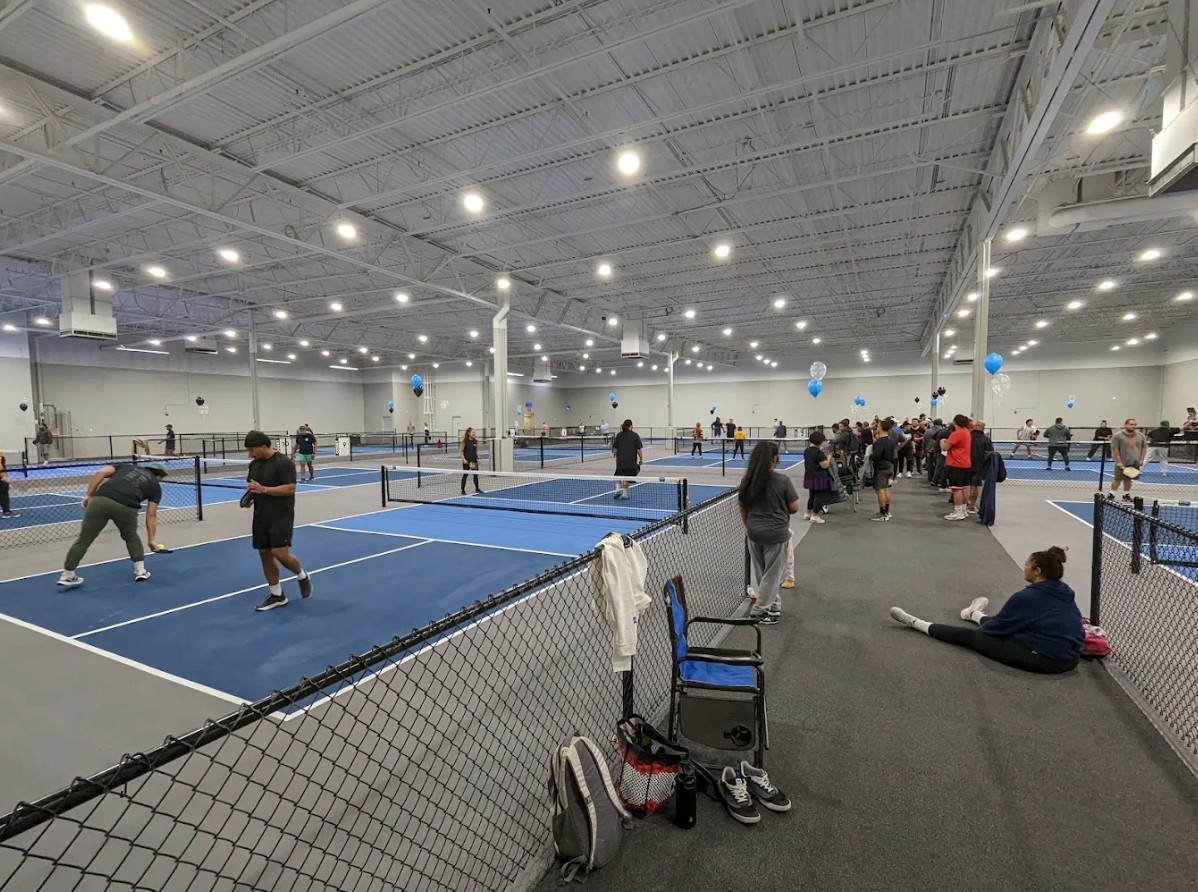
Lighting plan metrics:
- Product(s) Used: MLLG-LED-HB3-200-50-120
Match Point Pickleball Club UFO High Bay Lighting Case Study
The Backstory of Our Relationship With Match Point Pickleball Club
Bill Taylor spent 10 years as a professional pickleball player before he became a facility builder. That background shaped every decision behind Match Point Pickleball Club. As Head Pro and Founder, he set out to build the world's largest indoor pickleball facility. This project was a new construction build across a 125,000-square-foot space in Columbus, Ohio. Today, Match Point ranks Number 7 on the Top 100 Pickleball Clubs in the US, the highest-ranked club in Ohio, with a perfect 5.0 out of 5 rating. The facility has 38 championship-level courts, 5 golf simulators, and table tennis all under one roof.
Bill reached out to LED Lighting Supply for guidance on lighting the new courts. He sought support from various suppliers before connecting with LED Lighting Supply. The alternative companies offered to run a full photometric plan at a premium price. We custom-tailored a lighting plan at no cost with product recommendations and responsive support before Bill committed to purchasing the lights from our company.
Bill had already seen what happens when lighting gets treated as an afterthought for indoor pickleball. "I built another club that didn't do the lighting really well," Bill said. "It was a contention spot for the players, for the tournaments, even though that club is at the so-called competitive minimum. As we dealt with the older players, I mean, it was difficult to follow the ball."
That experience became the standard Match Point was built against.
The Challenge of Lighting a Tournament-Grade Pickleball Facility
The lighting solution needed to support the tournament, broadcast-level pickleball play that Match Point wanted to host. Bill needed a partner that could offer professional support on indoor pickleball lighting.
Potential Risks of Inconsistent Court Lighting
- Under-lit courts slow player reaction time, affecting how well someone tracks a fast-moving ball
- Uneven contrast makes it harder to follow play, an issue for older or highly competitive players
- A facility with only a few well-lit courts creates friction among members competing for the best amenities
- Falling short of broadcast-ready light levels would put Professional Pickleball Association (PPA) and televised tournament play out of reach
- Courts lit to the bare minimum tend to generate ongoing member complaints rather than a one-time fix
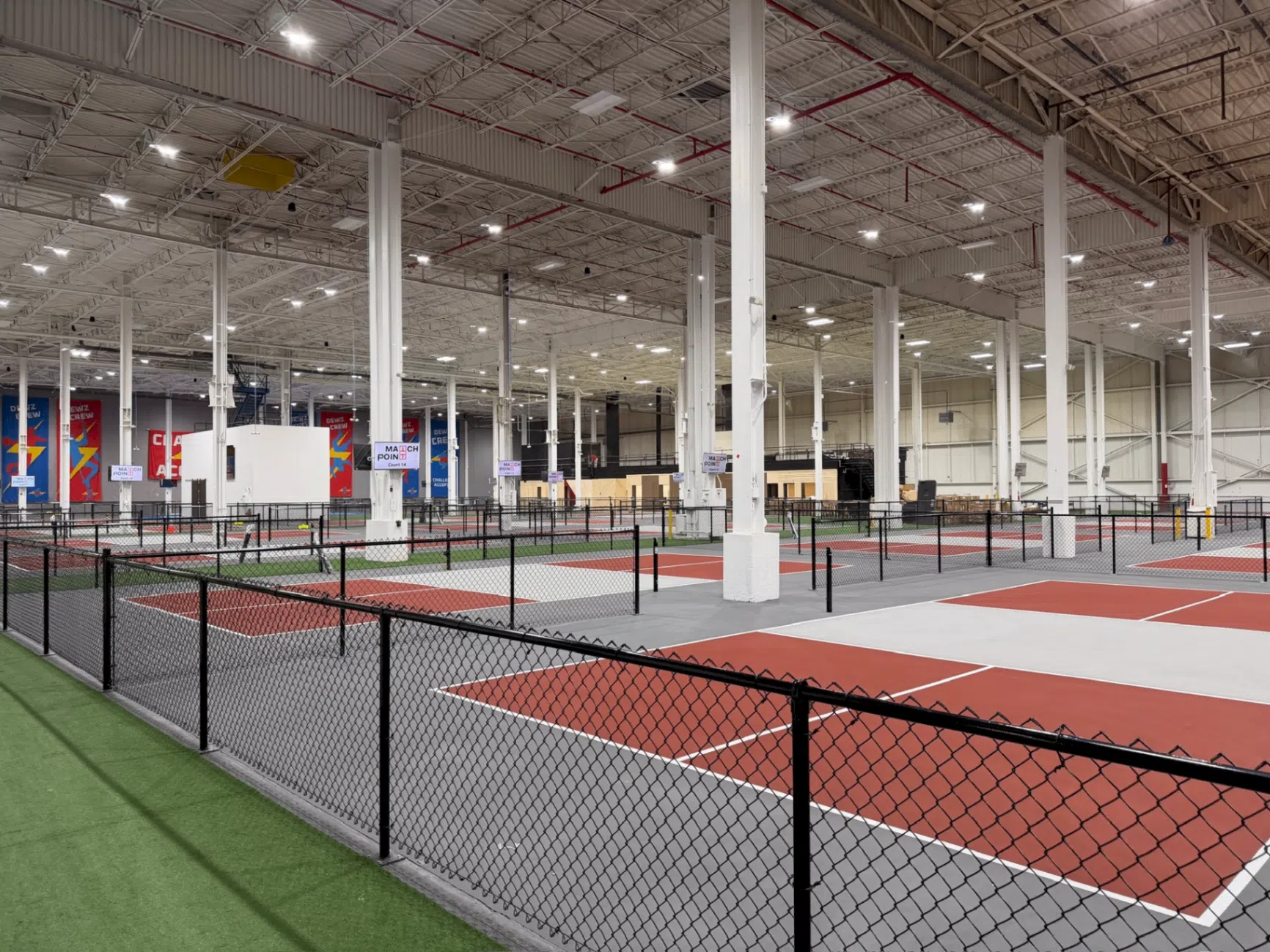
Completed Match Point Pickleball Club Courts with Our LED Lighting Solution Installed
Lighting Plan We Created for Match Point
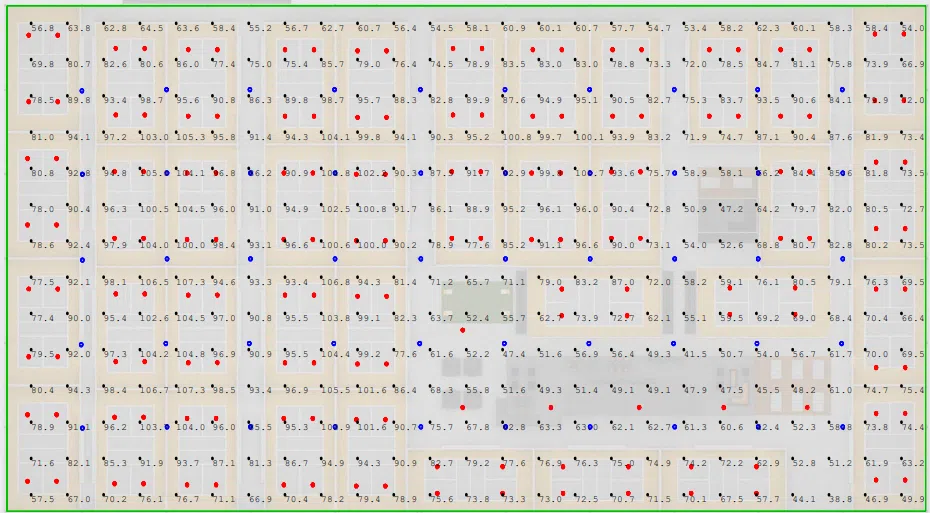
Lighting Plan Metrics
- Mounting Height: 35 feet (ft)
- Average Foot Candles (fc): 98 fc
- Maximum Foot Candles: 134 fc
- Uniformity (Max/Min fc): 2.76
- Product(s) Used: LLS-X-HB9-320A-CC-[C]
Case Study: Lighting up a new Outdoor Pickleball Court with LED Lighting Supply 300 Watt LED Shoebox Area Light in North Carolina
|
After: 300 Watt LED Shoebox Light | 24000 Lumens |
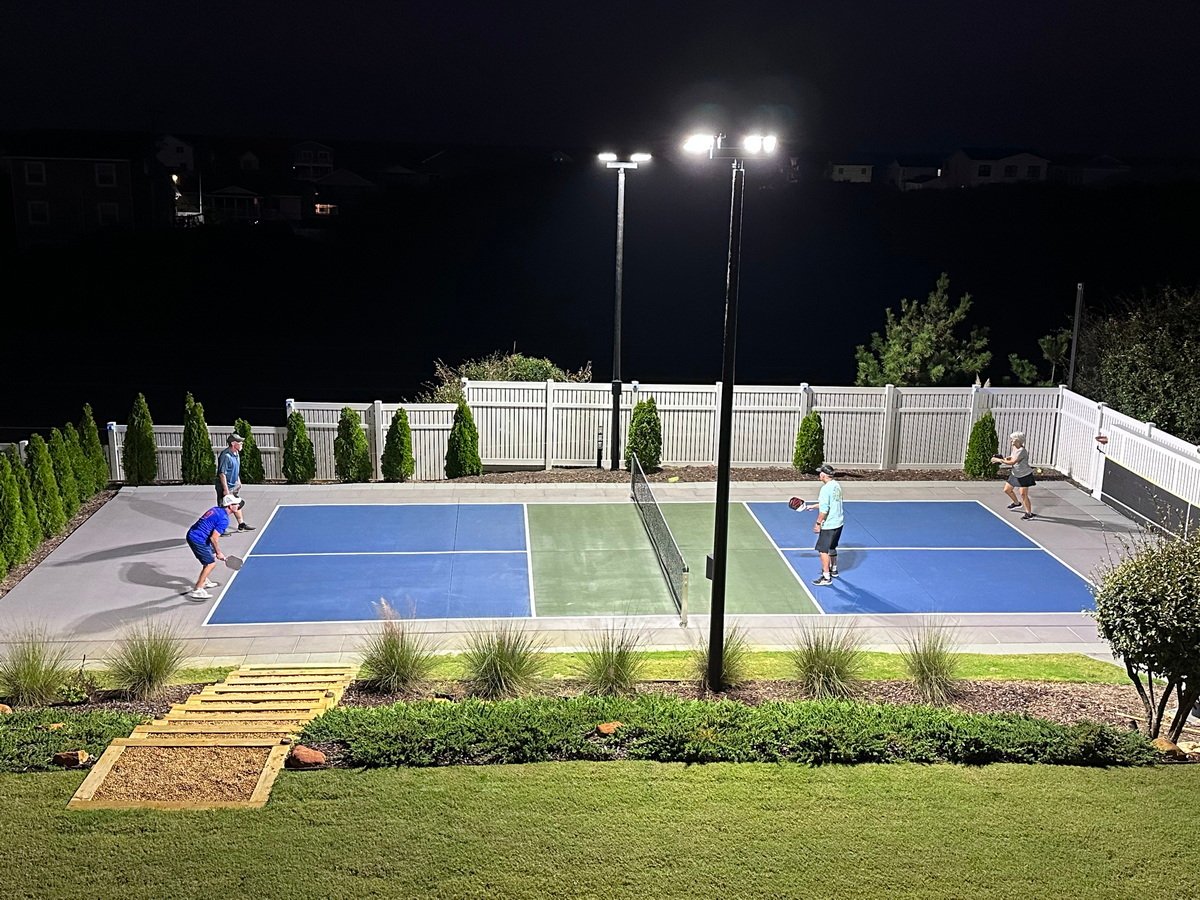 |
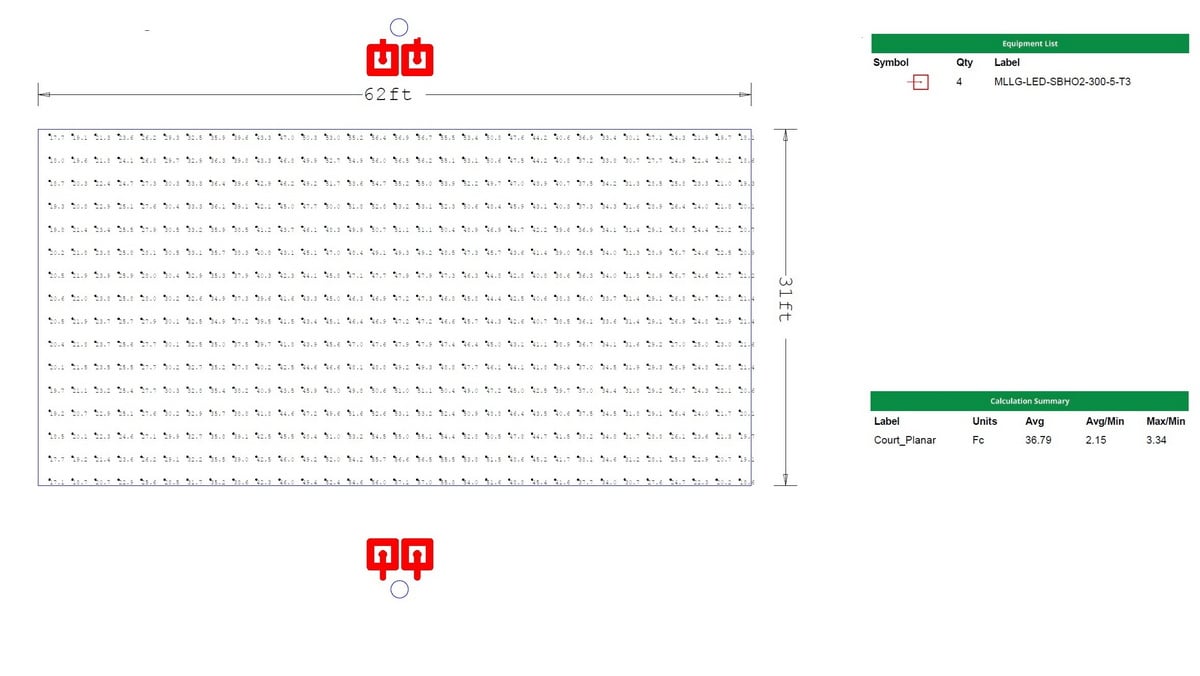
Lighting Plan We Created for the Customer
|
Lighting Plan |
Heat Map |
 |
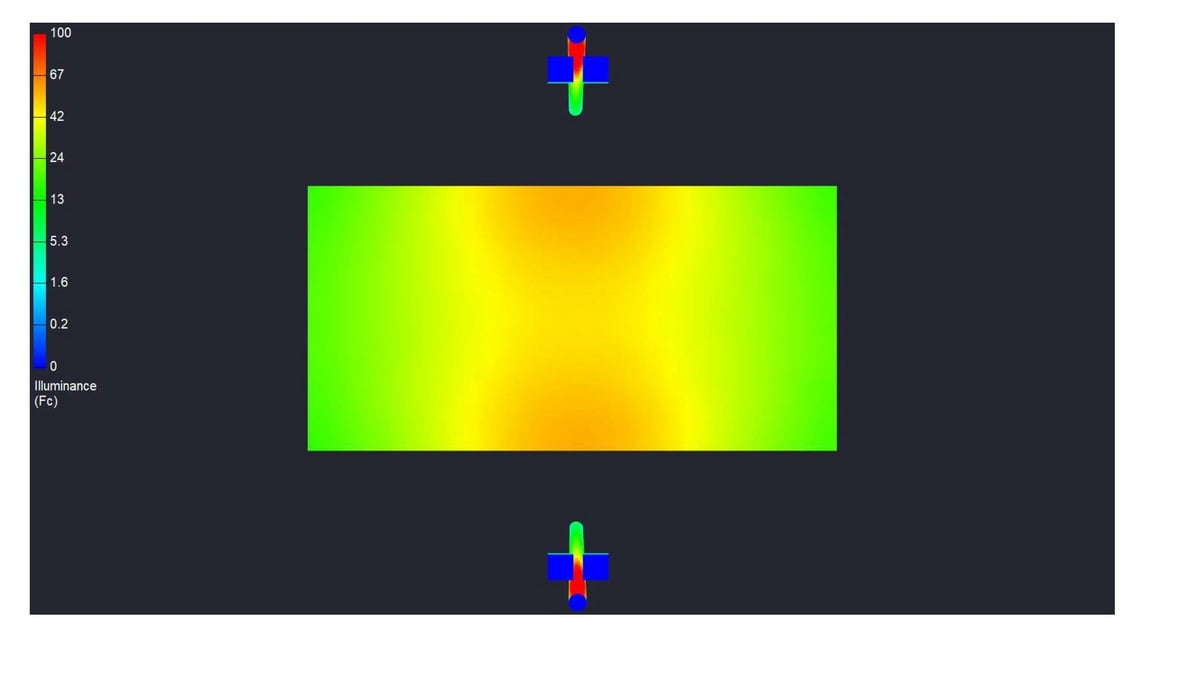 |
Outdoor Pickleball Court Lighting Installation Plan Metrics
- Mounting height: 22 ft
- Fixture Used: MLLG-LED-SBHO2-300-50: 300 Watt LED Shoebox Area Light | 48000 Lumens | 5000K | 100V-277V
- FC achieved: 36.79 fc average
- Uniformity (Avg/Min): 2.15

Related Court Lighting Options
Pickleball courts often share lighting considerations with other court sports, but each court type has different dimensions, mounting needs, and glare concerns.
- Indoor pickleball lighting focuses on ceiling height, glare control, impact resistance, and player sightlines.
- Outdoor pickleball court lighting focuses on pole placement, spill light, court setbacks, and weather exposure.
- Tennis court lighting supports larger court dimensions and different play patterns.
- Padel court lighting must account for enclosed court walls, glass, and different reflection concerns.
Pickleball Court Lighting Certifications and Warranty Support
Selected LED pickleball court light models from LED Lighting Supply carry a safety listing or certification such as UL, ETL, or CSA, depending on product. Many models may be DLC or DLC Premium listed for utility rebate programs where available. DLC qualification is a performance and efficiency program, not an electrical safety certification. Rebate requirements vary by utility, region, and product listing, so confirm eligibility on the selected product specification before ordering.
Warranty coverage varies by product, with many models offering a 5-year warranty. Warranty terms, certifications, DLC status, voltage, controls compatibility, mounting method, environmental exposure, ball-strike exposure, and suitability for the court layout should be confirmed on the selected product specification before purchase.
Which Pickleball Court Light Is the Right Buying Choice?
The right fixture category depends on the court and the project constraints. A standard LED area light may be appropriate for a simple outdoor recreational court with suitable existing poles, while a multi-court club, competition venue, low-ceiling indoor court, or site near residences may benefit from more specialized optics, controls, shielding, or a complete photometric layout.
| Buying Situation | What to Prioritize |
|---|---|
| Replacing existing indoor fixtures | Match the available voltage and mounting conditions, then compare light distribution, glare performance, fixture dimensions, controls compatibility, and ball-strike exposure rather than choosing solely by wattage. |
| New indoor court or court conversion | Choose between high bays, linear fixtures, or indirect lighting based on ceiling height, reflectance, court orientation, player sightlines, and the desired glare-control approach. |
| Single outdoor recreational court | Prioritize fixture optics that fit the court, pole placement outside the active area, appropriate weather ratings, and manageable spill light for the surrounding site. |
| Multi-court outdoor complex | Prioritize fixture-specific photometric analysis, cross-court glare control, pole loading review, court-bank controls, and spill-light performance at property boundaries. |
| Courts near homes, roads, or walkways | Prioritize controlled optics, shielding where compatible with the fixture, careful aiming, and verification against applicable local lighting or nuisance-light requirements. |
| Competition, broadcast, or event use | Prioritize the applicable governing-body or owner requirements for illuminance, uniformity, glare, color quality, controls, and any camera or spectator considerations. |
| Existing poles or unfamiliar mounting structures | Confirm fixture weight, EPA, mounting geometry, pole condition, wind criteria, and manufacturer loading information. Fixture selection does not by itself establish pole or foundation capacity. |
If the project involves multiple courts, new poles, unusual mounting conditions, competition use, nearby property concerns, or previous glare complaints, start with a photometric plan instead of selecting a fixture count from wattage or lumen output alone.
Request a pickleball court lighting plan, and our Product Specialists can help review court layout, indoor or outdoor mounting, target foot-candle levels, pole placement, fixture selection, aiming, glare control, spill light, voltage, controls, and product specifications for your pickleball court lighting project.
LED Pickleball Court Lights FAQs
How Should I Plan LED Pickleball Court Lighting?
Plan LED pickleball court lighting around court layout, mounting conditions, player sightlines, ball tracking, uniformity, glare control, controls, and electrical infrastructure. A photometric plan should confirm fixture count, coverage, mounting layout, target foot-candle levels, glare control, spill light, voltage, and product specifications before ordering.
What Should I Consider When Choosing Indoor Pickleball Court Lights?
Indoor fixture selection depends on ceiling height, court layout, mounting location, ceiling reflectance, ball-strike exposure, background contrast, and how the space is used. LED high bays, linear fixtures, direct court lighting, and indirect lighting systems are commonly used, depending on those project conditions and glare goals.
When Is Indirect Lighting Appropriate For An Indoor Pickleball Court?
Indirect lighting is an option for facilities that prioritize glare reduction and have a reflective ceiling suitable for indirect light. Ceiling reflectance, mounting access, light distribution, and total light output should be reviewed before choosing this approach.
How Should Outdoor Pickleball Court Lights Be Laid Out?
Outdoor pickleball court layouts should consider court count, pole height, pole locations, safety-zone setbacks, fixture optics, mounting angle, wind exposure, neighboring properties, and local spill-light requirements. Poles should be outside court safety zones, avoid blocking player movement, and be positioned to reduce glare across the net and between adjacent courts.
Why Is A Photometric Plan Important For Pickleball Court Lighting?
A photometric plan helps confirm whether the lighting design provides usable visibility across the full court without glare or uneven light that affects play. It accounts for factors including court dimensions, ceiling or pole height, fixture placement, beam angles, uniformity, spill light, impact risk, controls, and electrical infrastructure.
How Should Multi-Court Pickleball Facilities Handle Lighting Controls?
Multi-court facilities may need separate court-bank controls, timers, dimming, occupancy sensors, scheduling, or court-bank switching. These options can help avoid operating lights at full output when only some courts are in use.
What Should Be Confirmed Before Ordering LED Pickleball Court Lights?
Confirm the selected product specifications before ordering because wattage, lumen output, beam angle, optic type, mounting hardware, voltage, controls, dimming, motion sensors, surge protection, impact rating, certifications, and warranty coverage vary by model. Also confirm the fixture is right for the court layout, environmental exposure, ball-strike exposure, and surrounding conditions.
What Warranty And Certifications Are Available For LED Pickleball Court Lights?
LED pickleball court lights from LED Lighting Supply carry a safety listing such as UL, ETL, or CSA, depending on product, and many models are DLC or DLC Premium listed for utility rebate support where available. Most LED pickleball court lights include a 5-year warranty unless otherwise specified, with USA-based warranty support.