LED School Lighting
- Fixture options for classrooms, gyms, parking lots, and fields
- DLC-listed models available for utility rebate eligibility
- Lighting plans help evaluate layouts across campus spaces



Get Your Custom Lighting Plan With Product Recommendations
- Layout planned around classroom, corridor, gym, and exterior coverage with spacing matched to ceiling height and task visibility
- Fixture selection helps evaluate wattage, lumen output, color temperature, and optics for each school space type
- LED options can reduce energy use and maintenance across classrooms, gyms, parking lots, and campus exteriors


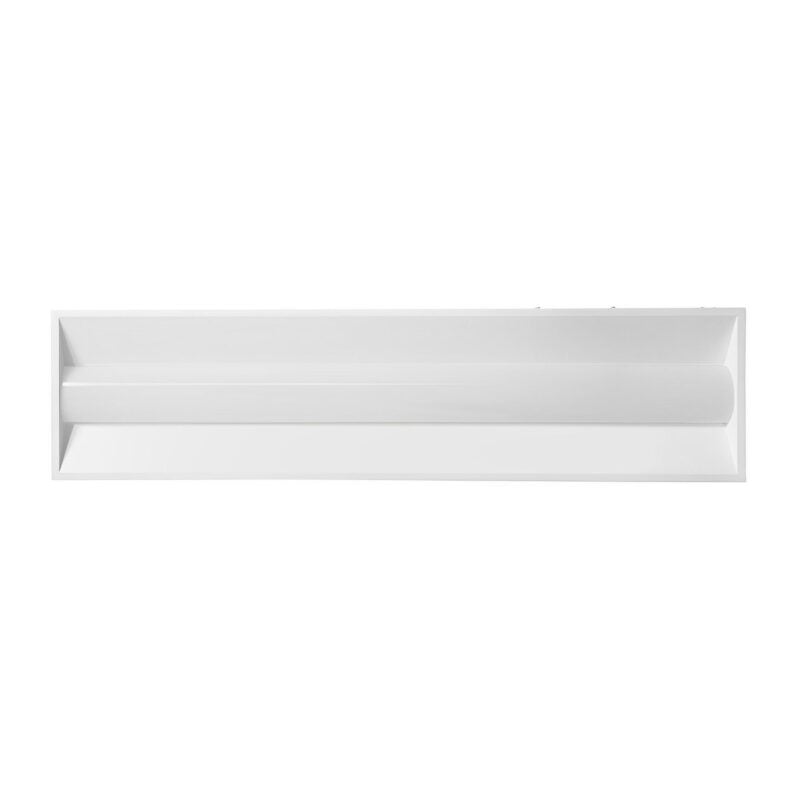
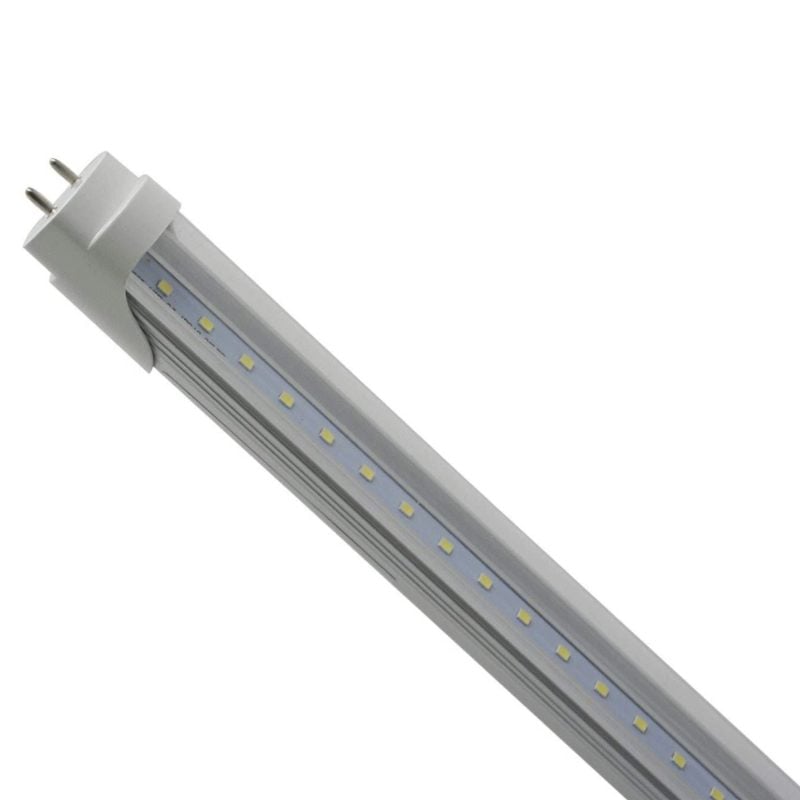
Our LED Lighting for Schools includes panels, troffers, linear fixtures, high bays, sports lights, area lights, shoebox fixtures, wall packs, canopy lights, and exterior linear fixtures. Available models include color-selectable options, dimming, occupancy sensors, daylight controls, and emergency backup compatibility.
These fixtures are used in classrooms, corridors, libraries, cafeterias, offices, gymnasiums, sports fields, parking lots, bus loops, building entrances, exterior walkways, and service areas.





What Are LED Lighting Fixtures for Schools?
LED lighting fixtures for schools are commercial lighting products used across classrooms, corridors, gyms, libraries, cafeterias, offices, parking lots, building entrances, exterior walkways, and outdoor sports areas. School lighting needs to support learning, supervision, safety, athletics, after-hours activities, and long-term maintenance planning across many different spaces.
A school campus can include several lighting applications in one project. Classrooms may use LED panels or troffers, gyms may use LED high bays, sports fields may use pole-mounted LED sports lights, and parking lots may use LED area lights or shoebox fixtures. This page provides a broad overview of LED lighting for schools and educational facilities. For detailed gym or sports field layout guidance, use the dedicated gym lighting and sports field lighting pages.
Start by separating the campus into room and area types, then review ceiling or pole height, fixture durability, controls, emergency requirements, and maintenance access for each space. Classrooms, corridors, gyms, sports fields, parking lots, and entrances require different fixture types and layouts; the application and selection sections below explain these decisions in more detail.
Selection and Installation Note: Product specifications, wattage, lumen output, color temperature, voltage, dimming, controls, emergency compatibility, impact resistance, mounting method, certifications, and warranty coverage vary by model. Confirm the selected product specification before ordering. For classrooms, gyms, sports fields, parking areas, egress areas, emergency lighting, or code-sensitive school projects, verify requirements with the school facilities team, project specifier, local inspector, district requirements, and a licensed electrical professional.
How to Choose LED Lighting for Schools
Start by separating the campus into room and area types. A classroom, corridor, gym, sports field, parking lot, and entry canopy all have different lighting requirements. Choosing by fixture wattage alone can lead to uneven light, glare, poor controls compatibility, or unnecessary energy use.
| Selection Factor | What to Confirm |
|---|---|
| Space type | Separate classrooms, corridors, gyms, offices, cafeterias, exterior areas, parking lots, and sports fields before selecting fixtures. |
| Ceiling height | Classrooms may use panels or troffers, while gyms and multipurpose spaces may need high bays or other higher-output fixtures. |
| Fixture durability | Gyms, corridors, utility areas, locker rooms, and exterior areas may need more durable fixtures, lenses, or housings. |
| Color temperature | Use consistent color temperature within related areas where possible. Avoid mixing noticeably different color temperatures in the same hallway or room group. |
| Controls | Review occupancy sensors, dimming, daylight harvesting, scheduling, after-hours control, and building automation compatibility. |
| Emergency requirements | Confirm emergency lighting and egress lighting, backup systems, and local code requirements for applicable areas. |
| Maintenance access | Review fixture locations, lift access, ceiling access, pole access, and long-term service needs before ordering. |
Recommended Foot-Candles for School Lighting
School lighting requirements vary by room type, age group, activity, ceiling height, visual task, controls, daylight, and local requirements. Use the widget below as early planning guidance for common school spaces. Final fixture selection, quantity, layout, and controls should be verified for the specific school building or campus area.
School Lighting Applications
Most school lighting projects include several different fixture types. A classroom fixture is not the same as a gym fixture, and a gym fixture is not the same as a sports field light. Choosing the right product depends on the space, ceiling height, activity, occupancy, fixture protection, and maintenance access.
| School Area | Common Lighting Approach |
|---|---|
| Classrooms | LED panels, troffers, or linear fixtures that provide comfortable general light for reading, writing, screens, and instruction. |
| Hallways and corridors | LED panels, linear fixtures, or strip fixtures that provide consistent circulation lighting and support supervision. |
| Libraries and media centers | LED panels, troffers, or linear fixtures selected for reading areas, shelving, computer zones, and collaboration spaces. |
| Cafeterias and multipurpose rooms | LED panels, high bays, or linear fixtures depending on ceiling height, room use, dimming needs, and event flexibility. |
| School gyms | LED high bays or impact-resistant gym fixtures selected for higher ceilings, ball-impact exposure, and activity areas. |
| School sports fields | LED sports lights or flood lights selected around pole height, field size, aiming, glare, and spill-light control. |
| Parking lots and bus loops | LED area lights, shoebox lights, or wall packs used for vehicle circulation, pedestrian routes, entrances, and campus access. |
Classroom LED Lighting
Classrooms need comfortable, consistent illumination for reading, writing, instruction, computer use, presentations, and group activities. LED panels and troffers are common choices because they fit many standard ceiling grids and provide even general light across the room.
Many schools prefer neutral white lighting, often around 3500K to 4000K, while some task-heavy or utility spaces may use 5000K. Color-selectable fixtures can be useful when a district wants flexibility during installation or across different room types. Color temperature describes the apparent warm or cool appearance of the light; it does not by itself determine brightness or color-rendering performance.
| Classroom Factor | What to Confirm |
|---|---|
| Ceiling grid | Confirm whether existing openings use 2x4, 2x2, 1x4, linear, or another fixture format. |
| Color temperature | Choose a color temperature that supports visual comfort and district preference. Field-adjustable fixtures may help standardize inventory. |
| Dimming | Confirm whether classrooms need dimming for presentations, testing, videos, or flexible instruction. |
| Controls | Review occupancy sensors, daylight controls, wall controls, and building automation compatibility. |
| Emergency operation | Confirm emergency backup or egress requirements where applicable. |
LED Lighting for School Gymnasiums
School gym lighting needs to support physical education, assemblies, recreational play, practices, and school sports. Gyms often need higher-output fixtures because of ceiling height and court size, and fixture durability matters because balls and equipment may contact the fixtures or lenses.
This page covers school gym lighting at a high level. For detailed fixture selection, mounting height, gym foot-candle ranges, impact protection, and gym-specific layouts, use the dedicated LED gym lighting page.

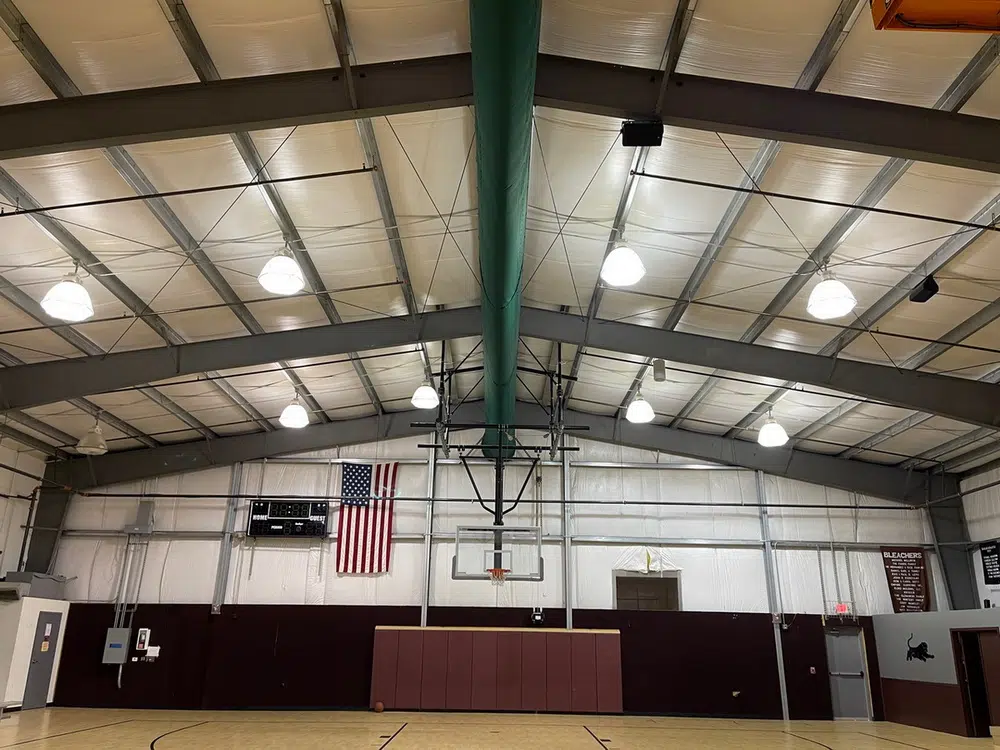
Before conversion to LED
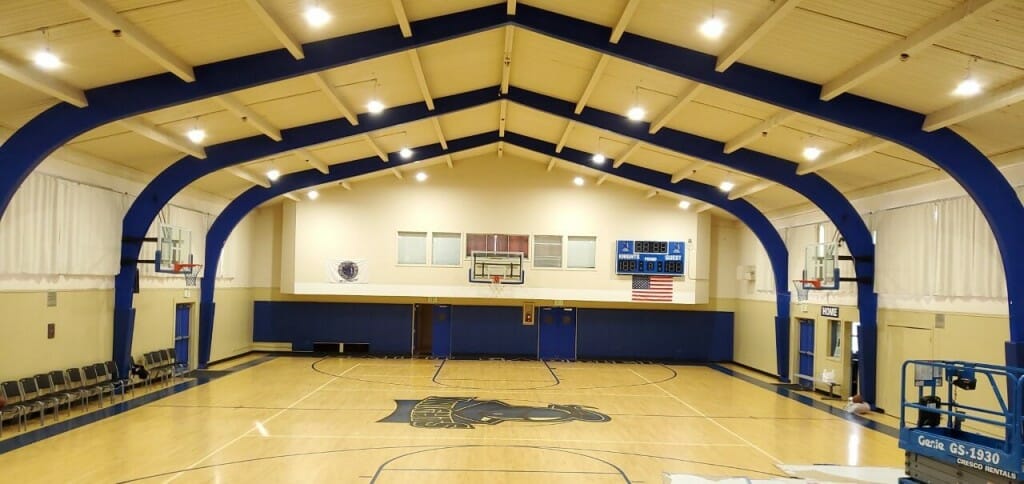
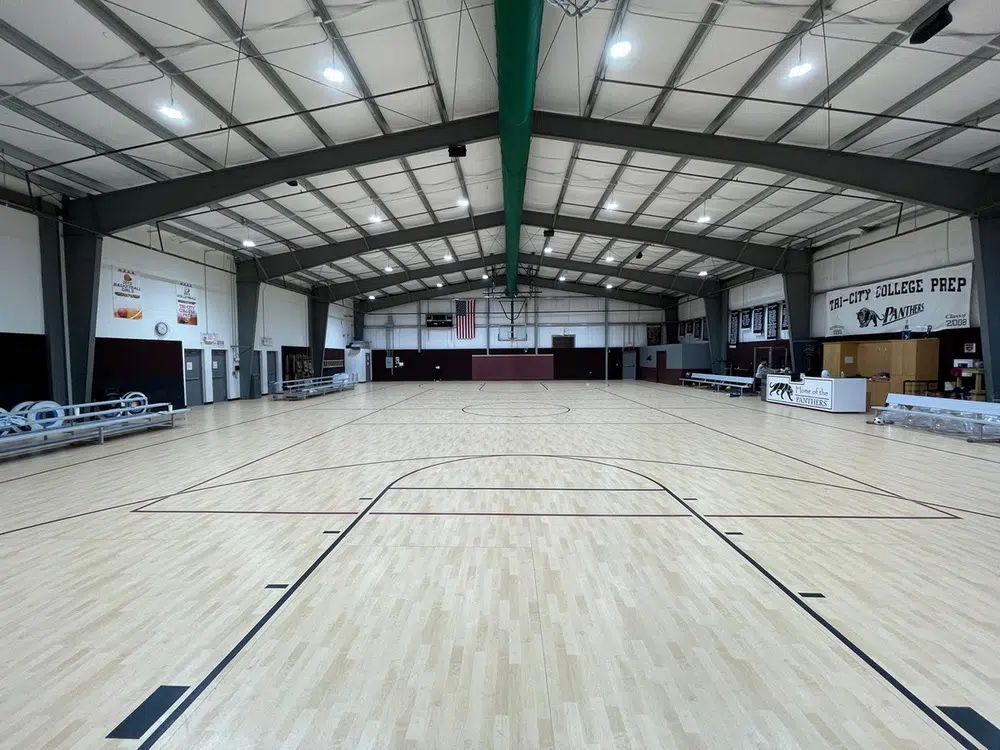
School gymnasium after conversion to LED Lighting Supply UFO fixtures
Case Study: Conversion of 400 Watt metal halide lighting to LED Lighting Supply 160 Watt LED UFO High Bay at Tri-City College Prep in Prescott, AZ
|
Before: 400 Watt Metal Halide High Bays |
After: 160 Watt LED UFO High Bay | 26400 Lumens |
 |
 |
Lighting Plan We Created for the Customer
|
Lighting Plan |
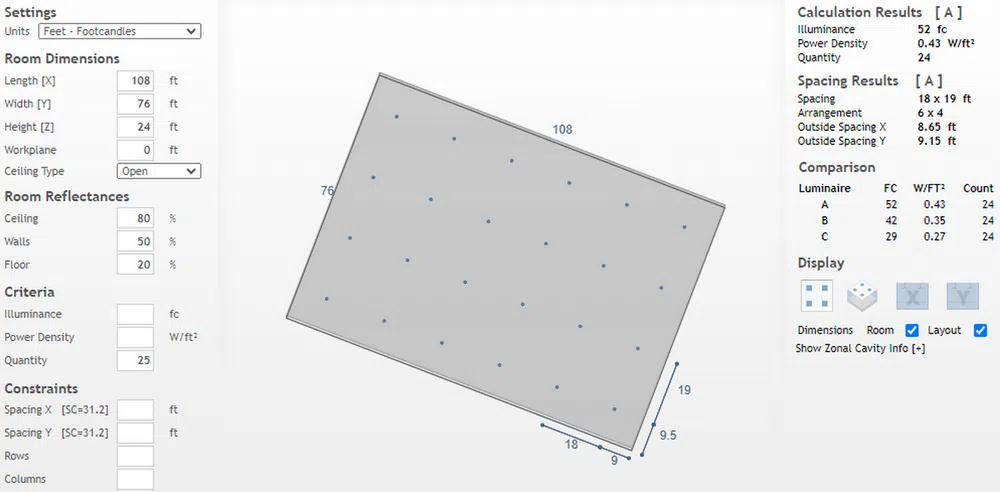 |
Gymnasium Lighting Installation Plan Metrics
- Mounting height: 24 ft
- Fixture Used: LLS-HB-200A-CC-[C]: 120 / 160 / 200 Watt Adjustable UFO High Bay | 19800 to 33000 Lumens | 4000K / 5000K | 100-277V | White or Black Housing
- FC achieved: 52 FC
- Uniformity (Avg/Min): 2.25
LED Lighting for School Sports Fields
School sports fields may need LED sports lights, flood lights, or stadium-style fixtures depending on the sport, field size, pole layout, level of play, surrounding properties, and after-hours use. These projects should account for field coverage, glare control, spill light, pole height, controls, and maintenance access.
School fields may include football, soccer, baseball, softball, track areas, and multi-use athletic spaces. This page summarizes the school-campus side of the project. For detailed field-specific guidance, use the dedicated sports field and sport-specific pages.

LED Lighting for School Parking Lots and Campus Exteriors
School parking lots, bus loops, drop-off lanes, building entrances, exterior walkways, and service areas need reliable outdoor lighting for students, staff, visitors, deliveries, and after-hours activities. LED area lights and shoebox lights, wall packs, canopy lights, and exterior linear fixtures may all be used depending on the space.
Exterior school lighting should be reviewed for pole height, fixture aiming, glare, light spill, pedestrian routes, cameras, controls, and local requirements. Parking and exterior lighting should not create excessive glare toward classrooms, roads, neighboring properties, or athletic areas.
Why a School Lighting Plan Helps
A school lighting plan helps review fixture quantity, placement, light levels, uniformity, controls, and possible dark spots before the fixtures are ordered. This is useful because a school campus may include many different lighting conditions in one project, from classrooms and corridors to gyms, parking lots, and athletic areas.
| Lighting Plan Review | Why It Matters for Schools |
|---|---|
| Classroom layouts | Helps confirm fixture count, spacing, glare, and comfortable light for learning tasks. |
| Gym layouts | Helps review court coverage, ceiling height, impact exposure, and activity areas without duplicating detailed gym design guidance. |
| Sports fields | Helps review pole layout, fixture aiming, field coverage, glare, and spill light before installation. |
| Parking and exterior areas | Helps identify dark zones, overlit areas, glare toward drivers, and coverage around entrances and walkways. |
| Controls planning | Helps coordinate occupancy sensors, dimming, scheduling, daylight controls, and after-hours use. |
Request a school lighting plan
LED School Lighting Retrofit Decisions
An LED upgrade can reduce lamp and ballast maintenance and may reduce energy use compared with older fluorescent, HID, or metal halide systems. Actual results depend on the existing equipment, selected fixtures, operating hours, controls, utility rates, and installation conditions. Before ordering, document the existing installation and make decisions that affect the scope, budget, and long-term serviceability of the project.
| Buyer Decision | What to Review Before Ordering |
|---|---|
| Fixture replacement or retrofit | Determine whether the project will replace complete fixtures or use a listed retrofit solution compatible with the existing housing and installation conditions. |
| Existing electrical conditions | Confirm available voltage, branch-circuit capacity, emergency circuits, switching, dimming wiring, and compatibility with the selected drivers and controls. |
| Controls scope | Decide which spaces need occupancy sensing, daylight response, scheduling, local dimming, scene control, or after-hours operation. Verify that the fixture, sensor, driver, and control system are compatible. |
| Maintenance strategy | Consider access equipment, spare-fixture strategy, driver replacement options, and the cost of servicing high ceilings, exterior poles, and hard-to-reach locations. |
| Emergency and egress equipment | Identify applicable emergency lighting, exit signage, generator, inverter, or integral battery-backup requirements. Emergency equipment must be selected and installed for the project requirements. |
| Phasing and installation timing | Plan classroom, gym, parking, and athletic-field work around school schedules, testing periods, events, and safe access to occupied areas. |
School Lighting Verification Before Purchase
- Confirm actual field conditions: Verify ceiling grids, mounting locations, dimensions, branch voltage, pole information, and access conditions rather than relying only on drawings or fixture schedules.
- Review photometric performance: Use fixture-specific photometric data to evaluate light levels, uniformity, glare, and distribution. Lumens alone do not establish delivered foot-candles on desks, courts, walkways, or fields.
- Match durability to the environment: Review lenses, housings, mounting, impact resistance, environmental exposure, and manufacturer documentation for gyms, locker rooms, utility spaces, and exterior locations.
- Coordinate controls and drivers: Confirm dimming type, sensor options, control voltage, wireless or wired compatibility, and commissioning requirements before installation.
- Verify emergency-system compatibility: Do not assume a standard fixture can provide emergency operation. Confirm the selected fixture, battery backup, inverter, or generator arrangement meets the applicable project requirements.
- Review exterior aiming and site impacts: For parking lots and fields, evaluate fixture optics, aiming, glare, spill light, pole loading information, and maintenance access as part of the complete project.
School Lighting Certifications, Rebates, and Warranty Support
Safety listings, DLC qualification, environmental ratings, controls, voltage, and warranty coverage vary by product. Selected LED Lighting Supply fixtures may carry a safety certification from an organization such as UL, ETL, or CSA, depending on the model and intended application. UL, ETL, and CSA markings should be verified on the exact product documentation; DLC qualification is an efficiency and performance program, not an electrical safety certification.
Some models may be DLC or DLC Premium listed and may qualify for utility rebates where available. Rebate requirements vary by utility, region, installation date, and exact product listing, so confirm current eligibility with the utility and on the selected product specification before ordering.
Warranty terms vary by product. Review the selected product specification and warranty documentation to confirm warranty duration, coverage, voltage, controls compatibility, emergency compatibility, mounting method, environmental rating, and suitability for the school project.
Request a school lighting plan, and our Product Specialists can help review classrooms, corridors, gyms, parking areas, exterior spaces, sports fields, controls, and published product specifications.
LED School Lighting FAQs
How Should A School Lighting Project Be Planned?
Plan school lighting by separating the campus into room and area types, including classrooms, corridors, gyms, offices, cafeterias, exterior areas, parking lots, and sports fields. Final fixture selection, quantity, layout, and controls should be verified for the specific building or campus area.
What Fixture Types Are Commonly Used In Different School Areas?
Fixture types vary by school area: classrooms may use LED panels or troffers, gyms may use LED high bays or impact-resistant gym fixtures, sports fields may use LED sports lights or flood lights, and parking lots may use LED area lights, shoebox lights, or wall packs. Choosing one fixture type for every space can overlook differences in ceiling height, activity, occupancy, fixture protection, and maintenance access.
What Should Be Confirmed Before Ordering Classroom LED Fixtures?
Confirm the existing ceiling-grid opening and whether classrooms need dimming, controls, or emergency operation before ordering classroom LED fixtures. Schools may also choose color temperature based on visual comfort and district preference, with color-selectable fixtures offering flexibility across room types.
Why Is A Lighting Plan Helpful For A School Campus?
A school lighting plan helps review fixture quantity, placement, light levels, uniformity, controls, and possible dark spots before fixtures are ordered. It can also help review classroom spacing and glare, gym coverage and impact exposure, sports-field aiming and spill light, and exterior coverage around entrances and walkways.
What Should Be Reviewed For School Gym Lighting?
School gym lighting should account for ceiling height, court size, physical education, assemblies, recreational play, practices, school sports, impact exposure, controls, and glare. Gyms often need higher-output fixtures, and fixture durability matters where balls or equipment may contact fixtures or lenses.
What Should Be Considered For School Parking Lots And Exterior Areas?
School parking and exterior lighting should be reviewed for pole height, fixture aiming, glare, light spill, pedestrian routes, cameras, controls, and local requirements. Lighting should not create excessive glare toward classrooms, roads, neighboring properties, or athletic areas.
Can LED School Lighting Support Utility Rebates?
Many LED school lighting models are DLC or DLC Premium listed for utility rebate support where available. Rebate requirements vary by utility, region, and product listing, so eligibility should be confirmed on the selected product specification before ordering.
What Product Details Should Be Confirmed Before Purchase?
Confirm the selected product's specifications for wattage, lumen output, color temperature, voltage, dimming, controls, emergency compatibility, impact resistance, mounting method, certifications, environmental rating, and warranty coverage before purchase. These details vary by model.