LED Sports Dome and Field House Lighting
- High-output fixtures for turf fields and multi-sport courts
- Ceiling-mounted and perimeter-mounted options available
- DLC-listed models may qualify for utility rebates


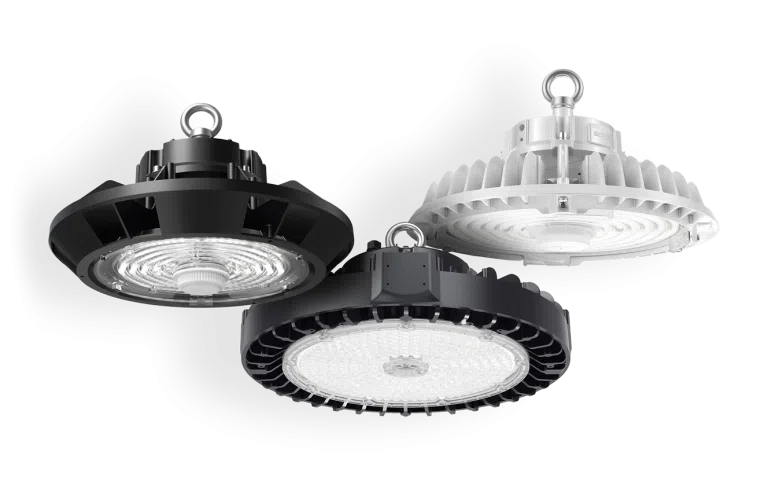
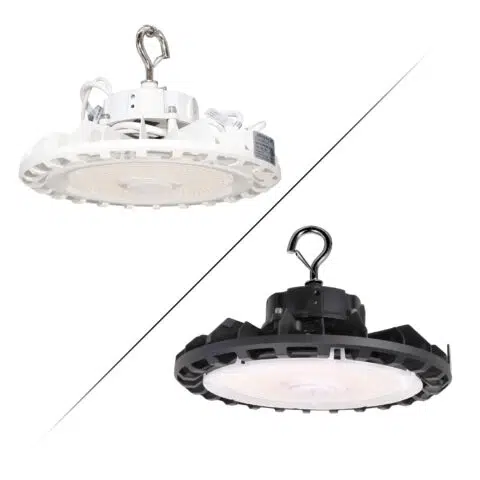
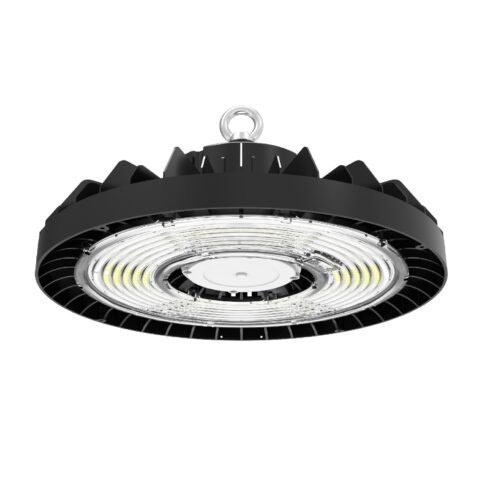
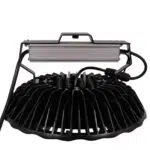
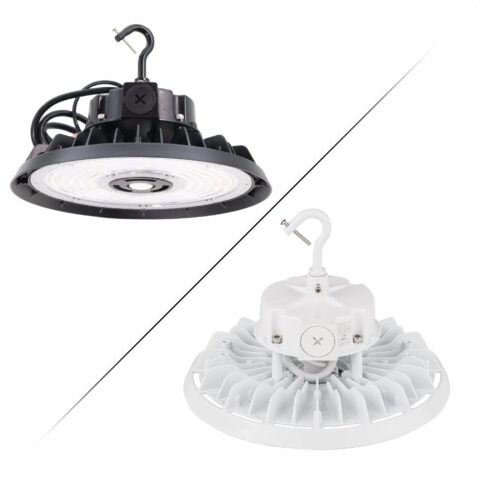
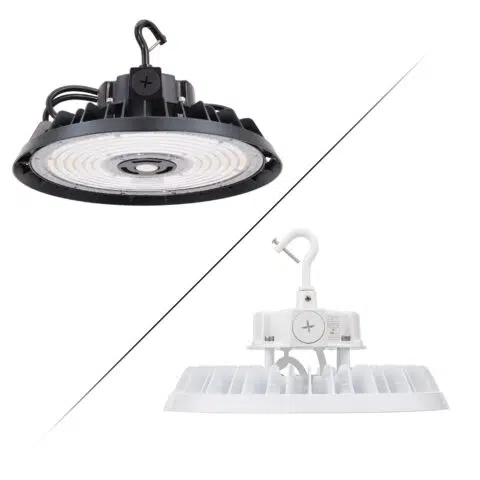
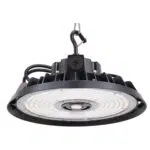
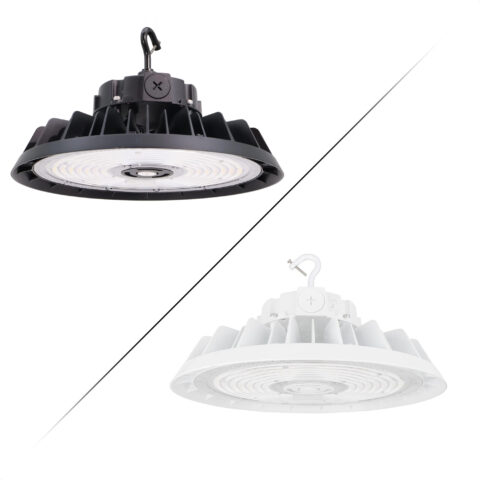
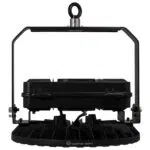
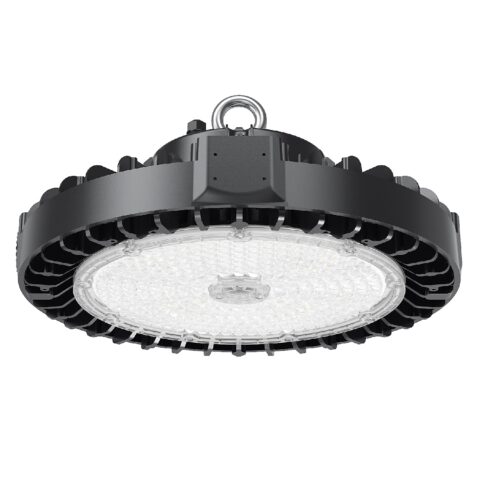
Our LED Sports Dome Lighting for Field Houses includes ceiling-mounted high bays, UFO high bays, linear high bays, and perimeter-mounted sports lights for enclosed athletic facilities. Available configurations include ceiling-mounted, perimeter-mounted, and hybrid layouts, with models that vary by output, optics, voltage, controls, and mounting method.
These fixtures are commonly used in air-supported domes, field houses, indoor turf fields, multi-sport courts, training centers, batting cages, walking tracks, netted areas, spectator circulation spaces, and recreational facilities.




What Are LED Sports Dome and Field House Lights?
LED sports dome and field house lights are high-output indoor sports lighting fixtures used in large enclosed athletic spaces such as air-supported domes, indoor turf fields, field houses, multi-sport training centers, and large recreational facilities. These spaces often need wide, uniform coverage across turf, courts, nets, lanes, spectator areas, and training zones.
Start with the mounting approach: determine whether the building can support ceiling-mounted fixtures or requires perimeter-mounted sports lights. Then review ceiling height, dome shape, field size, sport mix, coverage, glare, impact exposure, and service access. Sports dome and field house lighting can use ceiling-mounted LED high bay lights, UFO LED high bays, linear high bays, or perimeter-mounted sports lights depending on the building structure, ceiling height, dome shape, field size, and sport mix. The goal is to provide usable light for athletes, coaches, officials, spectators, and maintenance staff while controlling glare, shadows, impact exposure, and energy use.
Selection and Installation Note: Product specifications, wattage, lumen output, optics, beam angle, color temperature, CRI, voltage, dimming, controls, flicker performance, impact rating, mounting method, certifications, and warranty coverage vary by model. Confirm the selected product specification before ordering. For sports domes, field houses, indoor turf fields, large courts, ceiling-mounted fixtures, perimeter-mounted fixtures, structural mounting, broadcast-sensitive areas, or code-sensitive applications, verify requirements with the facility team, project specifier, structural professional, local inspector, and a licensed electrical professional.
Recommended Foot-Candles for Sports Domes and Field Houses
Foot-candle requirements vary by sport, level of play, field or court size, ceiling height, dome structure, fixture placement, glare control, spectator use, and whether the facility hosts recreational, competitive, or broadcast-sensitive events. Use the widget below for early planning ranges. Final fixture count, aiming, layout, and controls should be verified for the specific facility.
Step 1: Find your foot candle levels
Step 2: Estimate your fixture count and space
LED High Bay Lighting Layout Estimator
Use this estimator to calculate approximate fixture count, spacing, and average foot-candles for warehouses, shops, gyms, industrial spaces, and commercial interiors using LED high bay fixtures. Enter your room dimensions, mounting height, target foot-candles, light loss factor, and room/layout condition to generate a preliminary lighting layout. When IES photometry is available, workplane height and room reflectance controls are shown.
Project Inputs
Estimated Results
Estimated average foot-candles are preliminary and should be verified with a lighting plan for project-critical applications.
Room / Layout Condition: This field is used only when usable IES photometry is not available. In fallback mode, it acts as a simplified room utilization factor for reflectance, fixture distribution, racking, obstructions, and how much fixture light reaches the work area. Open / light-colored spaces use 0.90, typical warehouses or shops use 0.75, racked or obstructed spaces use 0.60, and dark or complex spaces use 0.45. When IES photometry is active, this field is hidden and the estimator uses the selected workplane height, LLF, and simplified reflectance adjustment instead.
Photometry / Simulation Note: When usable IES photometry is available for the selected fixture, this estimator uses the fixture’s IES candela data, selected workplane height, light loss factor, and simplified reflectance adjustment to estimate fixture count, average foot-candles, and visual light distribution. The reflectance adjustment is a conservative approximation and is not a full zonal-cavity, radiosity, or professional photometric room calculation. When IES photometry is not available, the estimator uses a simulated beam model based on lumens, mounting height, room/layout condition, light loss factor, and beam angle.
Preliminary Estimate Only: This estimator is intended for simple square or rectangular spaces and should be used as a planning aid, not a final photometric lighting plan. Actual light levels may vary based on fixture optics, selected IES file, mounting conditions, workplane height, ceiling height, surface reflectance, obstructions, controls, voltage, installation conditions, and site-specific requirements. Project-critical applications should be verified with a formal lighting plan.
This estimate is a starting point. Warehouses, industrial facilities, hazardous locations, sports areas, schools, healthcare spaces, public areas, and code-sensitive projects may require a reviewed lighting layout before purchase or installation.
Where Sports Dome and Field House Lighting Is Used
This lighting category is best for large indoor athletic spaces that are bigger or more varied than a standard gym. A field house or dome may include turf fields, multipurpose courts, training zones, batting cages, walking tracks, netted areas, spectator circulation, and equipment spaces in one facility.
| Facility Area | Lighting Priorities |
|---|---|
| Indoor turf fields | Uniform field coverage, ball tracking, glare control, turf reflectance, and flexible use for multiple sports. |
| Field houses | Large open-space lighting for courts, practice areas, events, assemblies, and training zones. |
| Air-supported domes | Wide coverage, structure-sensitive mounting, limited attachment points, and beam control across curved or fabric interiors. |
| Multi-sport courts | Visibility for basketball, volleyball, pickleball, futsal, and other court sports without making this page a dedicated gym page. |
| Training zones | Light for drills, conditioning, cages, nets, agility areas, and team practice spaces. |
| Spectator and circulation areas | Comfortable light for seating, walkways, entry routes, concessions, and support areas. |
Ceiling-Mounted vs. Perimeter-Mounted Sports Dome Lighting
Sports domes and field houses usually use one of two main mounting approaches: ceiling-mounted fixtures or perimeter-mounted sports lights. The right choice depends on the facility structure, mounting height, field layout, roof type, and whether fixtures can be safely supported overhead.
| Mounting Approach | Best Fit |
|---|---|
| Ceiling-mounted high bays | Best for field houses, large gyms, and indoor sports buildings with suitable roof structure, ceiling height, and service access. |
| UFO LED high bays | Common in high-ceiling indoor sports spaces where compact, high-output fixtures are needed for broad downlight coverage. |
| Linear high bays | Useful for courts, training areas, lanes, walkways, and spaces where long, even light distribution is preferred. |
| Perimeter-mounted sports lights | Used where ceiling mounting is limited or where light must be aimed across a turf field, dome, or large open span. |
| Hybrid layouts | Some facilities use a mix of ceiling-mounted and perimeter-mounted fixtures to cover turf fields, courts, spectator areas, and support zones. |
Sports Dome Lighting vs. Gym Lighting and Outdoor Sports Field Lighting
Sports dome and field house lighting overlaps with gym lighting and sports field lighting, but the applications are not the same. A dome or field house often combines indoor mounting constraints with sports-field visibility needs.
| Lighting Category | Best Used For |
|---|---|
| Gym lighting | Traditional indoor gyms, basketball courts, volleyball courts, school gyms, recreational courts, and court-specific fixture layouts. |
| Sports dome lighting | Air-supported or enclosed dome facilities with turf fields, perimeter lighting, large spans, and structure-specific mounting challenges. |
| Field house lighting | Large indoor athletic facilities with turf, courts, tracks, training spaces, events, and multi-zone use. |
| Outdoor sports field lighting | Outdoor fields using poles, aiming, high-output sports lights, glare control, spill-light review, and field-specific layouts. |
Benefits of LED Sports Dome and Field House Lighting
- Improved playing-surface visibility: Properly selected fixtures can support ball tracking, player movement, training drills, and spectator visibility.
- Energy efficiency: LED fixtures can reduce energy use compared with older HID or metal halide systems, with actual savings depending on wattage, controls, operating hours, and existing conditions.
- Instant-on operation: LED fixtures reach usable output quickly compared with HID systems that require warm-up time.
- Controls compatibility: Many LED systems can support dimming, scheduling, occupancy sensors, and zone controls, depending on the fixture and controls package.
- Reduced maintenance: LED fixtures eliminate routine lamp and ballast replacement, common with older high-ceiling lighting systems.
- Fixture flexibility: Ceiling-mounted, perimeter-mounted, and hybrid layouts can be reviewed based on the building structure.
- Glare and beam control: Different optics and accessories can help direct light across the playing surface while reducing unnecessary glare.
- Impact-resistant options: Some models offer higher impact resistance or protective accessories for sports environments.
Common Sports Dome and Field House Lighting Mistakes
- Choosing wattage before beam angle: Beam angle, mounting height, and aiming determine coverage more than wattage alone.
- Using a gym layout for a dome: Dome structures, turf fields, and perimeter mounting may require a different approach than a standard gym.
- Ignoring structural loading: Ceiling-mounted fixtures should be reviewed for weight, mounting method, and structural capacity.
- Overlooking impact exposure: Balls, nets, and athletic equipment may require impact-rated fixtures, lenses, cages, or protective placement.
- Creating glare for players: Poor aiming can affect goalkeepers, batters, receivers, spectators, or athletes tracking fast-moving balls.
- Skipping controls planning: Large facilities often benefit from zones for practice, games, cleaning, maintenance, and off-hours operation.
- Assuming existing fixture locations are correct: Old HID fixture spacing may not produce the best LED layout.
- Forgetting service access: High-ceiling fixtures and dome-mounted systems should be selected with maintenance access in mind.
Safety Listings, Rebates, and Warranty Support
LED sports dome and field house lights from LED Lighting Supply carry safety listings such as UL, ETL, or CSA, depending on the product. Many models are DLC or DLC Premium listed for utility rebate support where available. Rebate requirements vary by utility, region, and product listing, so confirm eligibility on the selected product specification before ordering.
Most LED sports dome and field house lights include a 5-year warranty unless otherwise specified, with USA-based warranty support. Before purchase, review the selected product specification to confirm certifications, DLC status, voltage, controls compatibility, mounting method, environmental ratings, impact exposure, and whether the fixture is right for the facility layout and surrounding conditions.
LED Sports Dome and Field House Lighting FAQs
How Do I Choose Between Ceiling-Mounted And Perimeter-Mounted Lighting?
Ceiling-mounted high bays are best for field houses and indoor sports buildings with suitable roof structure, ceiling height, and service access, while perimeter-mounted sports lights are used where ceiling mounting is limited or light must be aimed across a turf field, dome, or large open span. Some facilities use hybrid layouts to cover multiple activity and support areas.
What Should Determine The Fixture Layout For A Sports Dome Or Field House?
Fixture layout should be based on the facility structure, mounting height, field layout, roof type, ceiling height, dome shape, field size, sport mix, and available mounting support. Final fixture count, aiming, layout, and controls should be verified for the specific facility.
Why Should Beam Angle Be Considered Before Wattage?
Beam angle, mounting height, and aiming determine coverage more than wattage alone. Different optics and accessories can help direct light across the playing surface while reducing unnecessary glare.
When Are UFO LED High Bays A Good Fit?
UFO LED high bays are common in high-ceiling indoor sports spaces where compact, high-output fixtures are needed for broad downlight coverage. Product specifications, optics, mounting method, and other features vary by model.
When Are Linear High Bays Useful In A Field House?
Linear high bays are useful for courts, training areas, lanes, walkways, and spaces where long, even light distribution is preferred. Field houses may include courts, tracks, training spaces, events, and multi-zone use.
Can Sports Dome Lighting Include Controls?
Many LED systems can support dimming, scheduling, occupancy sensors, and zone controls, depending on the fixture and controls package. Large facilities often benefit from zones for practice, games, cleaning, maintenance, and off-hours operation.
What Should Be Verified Before Ordering Sports Dome Or Field House Lights?
Confirm the selected product specification for wattage, lumen output, optics, beam angle, color temperature, CRI, voltage, dimming, controls, flicker performance, impact rating, mounting method, certifications, and warranty coverage. For rebate support, confirm eligibility on the selected product specification because requirements vary by utility, region, and product listing.
How Can Buyers Address Impact Exposure In Sports Areas?
Some models offer higher impact resistance or protective accessories for sports environments. Balls, nets, and athletic equipment may require impact-rated fixtures, lenses, cages, or protective placement.