LED Field Hockey Lighting
- Options for training, scholastic, and competitive field hockey pitches
- Lighting plans help evaluate foot-candles, uniformity, and fixture placement
- USA-based support for fixture selection and pole compatibility


Get Your Custom Lighting Plan With Product Recommendations
- Fixture placement and aiming planned around pitch dimensions, pole height, and uniformity for fast ball tracking
- Fixture count, optics, and beam angles matched to target foot-candles and level of play
- LED sports lights can reduce energy use and eliminate ballast-related maintenance from older HID systems


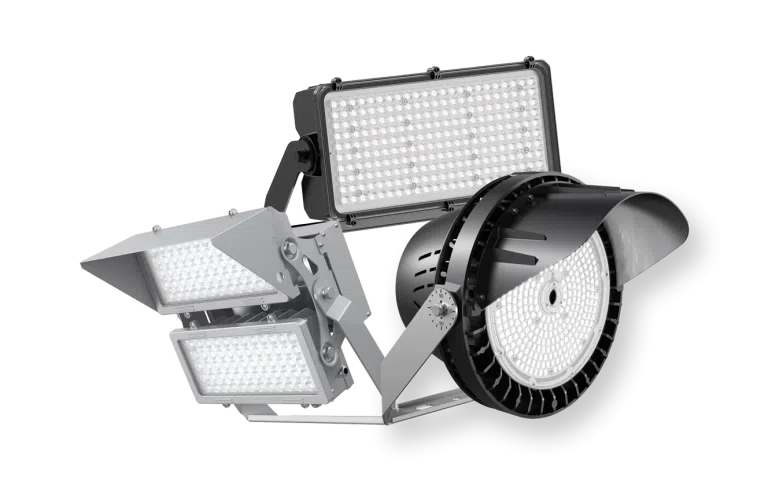
Our LED Field Hockey Lights include pole-mounted LED sports lights and stadium lights for hockey pitches and sports facilities. Available models vary by output, optics, beam angles, color temperature, glare-control options, dimming, controls, and mounting method.
These fixtures are commonly used for field hockey pitches supporting recreational play, practices, camps, high school competition, club play, college play, and multi-sport activities.
-
 Starting At $697.50




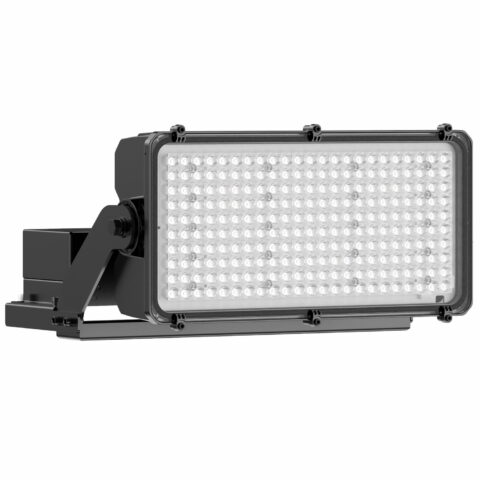


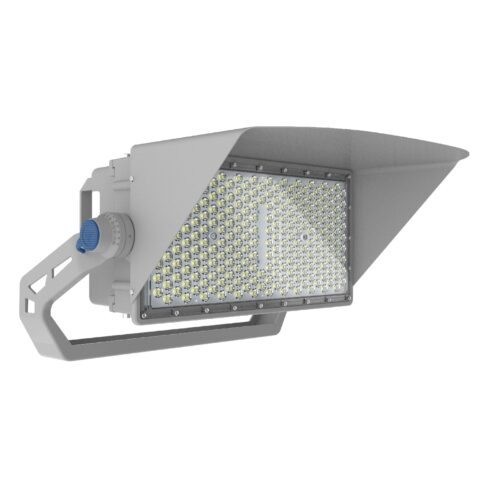
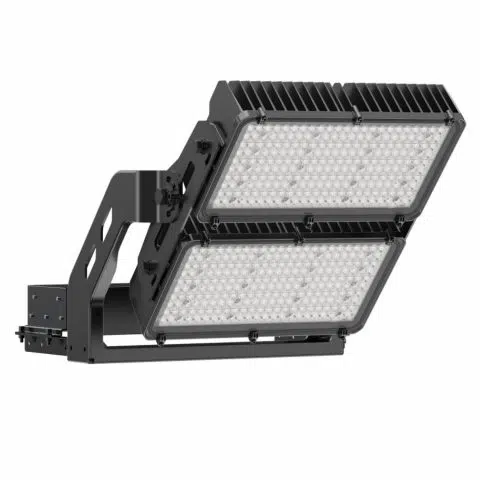
LED Field Hockey Lighting for Hockey Pitches and Sports Facilities
LED field hockey lighting needs to provide uniform visibility across the playing surface while controlling glare, spill light, and shadows. Field hockey is a fast sport with a small ball, quick passes, and rapid player movement, so fixture placement, optics, pole height, aiming, color temperature, and uniformity all matter.
Most field hockey lighting projects use LED sports lights mounted on poles around the pitch. Start by matching target foot-candles and uniformity to the level of play, then review existing pole layout, mounting height, fixture count, optics, and beam angles to determine light distribution. Glare control, spill light, color temperature, controls, surrounding properties, and whether the field supports training, high school competition, club play, college play, or multi-sport activity should also be considered before ordering.
Selection and Installation Note: Product specifications, wattage, lumen output, optics, beam angle, color temperature, voltage, dimming, controls, mounting method, pole requirements, certifications, and warranty coverage vary by model. Confirm the selected product specification before ordering. For field hockey lighting, pole-mounted sports lighting, LED retrofits, competitive fields, glare-sensitive sites, electrical upgrades, code-sensitive applications, or safety-critical spaces, verify requirements with your local inspector, facility team, project specifier, league representative, structural professional, or a licensed electrical professional.
Recommended Foot-Candles for Field Hockey Lighting
Field hockey light levels depend on how the pitch is used. Recreational and training fields usually require lower light levels than competitive facilities. Higher-level venues typically need stronger illumination, better uniformity, and more careful glare control.
Field Hockey Lighting by Level of Play
| Level of Play | Lighting Considerations |
|---|---|
| Recreational and training use | Focuses on practical visibility for casual play, skill work, practices, camps, and community use. Light levels are usually lower than competitive fields, but uniformity and glare control still matter. |
| High school and local competition | Requires stronger and more uniform lighting than basic training fields. Pole layout, fixture aiming, sideline visibility, light spill, and color consistency should be reviewed before ordering. |
| College, club, and higher-level competition | Needs higher maintained light levels, better uniformity, tighter glare control, and more deliberate aiming. These fields should be reviewed with a photometric layout before fixtures are selected. |
| Multi-use hockey pitches | May need to support field hockey along with soccer, lacrosse, football, or community events. Lighting should be planned around all sports and activities used on the surface. |
Why a Lighting Plan Matters for Field Hockey Fields
A field hockey pitch should not be lit by fixture wattage or lumen output alone. A photometric lighting plan helps show expected foot-candle levels, fixture locations, aiming angles, uniformity, and light distribution across the playing surface.
This is especially important for field hockey because the ball is small and fast-moving. Poor fixture placement can create dark areas, glare, uneven coverage, inconsistent color appearance, and distracting shadows that affect player visibility.
Request a field hockey lighting plan to review target foot-candles, pole locations, mounting heights, fixture count, beam angles, uniformity, glare control, spill light, and color temperature before ordering.
Choosing LED Sports Lights for Field Hockey
LED sports lights and stadium lights are commonly used for field hockey pitches because they provide high output, controlled optics, focused beam angles, and options for glare control. Modern LED systems can replace older metal halide sports lighting while improving control, startup time, color consistency, and fixture efficiency.
| Selection Factor | Why It Matters |
|---|---|
| Target foot-candles | Light levels should match the way the pitch is used. Training fields, scholastic competition, and higher-level facilities typically need different maintained foot-candle targets. |
| Uniformity | Uniformity helps reduce bright patches and dark areas. This is important for player reaction time, ball tracking, and overall field visibility. |
| Fixture optics and beam angle | Beam angle affects how light is delivered across the pitch. Narrower optics may be used for longer throws, while wider optics may be used for closer pole locations. |
| Glare control | Glare can affect players, goalkeepers, spectators, neighbors, and nearby roads. Fixture aiming, shields, optics, and pole placement should be reviewed during layout. |
| Color temperature | Many outdoor sports fields use 4000K or 5000K lighting for clear visibility. The selected CCT should be consistent across the pitch to avoid uneven appearance. |
| Mounting height | Pole height affects glare, fixture quantity, aiming, light distribution, and uniformity. Taller poles may help distribute light more evenly when properly designed. |
| Pole layout | Existing poles may limit fixture placement. New installations should consider field dimensions, setback, structural requirements, and surrounding properties. |
| Controls | Controls can support scheduling, dimming, practice modes, event modes, and reduced light levels when full competition lighting is not needed. |
Using Existing Poles for LED Field Hockey Lighting
Many field hockey facilities already have poles from older metal halide or HID systems. In those cases, the existing pole locations, fixture quantities, crossarms, weight limits, wind load, electrical service, and aiming angles should be reviewed before selecting replacement fixtures.
LED fixtures may reduce energy use compared with older systems, but they still need to be selected around the existing infrastructure. A one-for-one fixture replacement may not always provide the best light distribution, especially if the original pole layout created uneven coverage.
For projects that need new poles, request a pole quote for sports and athletic field light poles and confirm pole height, layout, foundation requirements, EPA, fixture weight, wind load, and structural needs before ordering fixtures.
Benefits of LED Field Hockey Lighting
- Instant-on operation: LED sports lights turn on quickly without the warm-up time associated with many older HID systems.
- Improved control: LED systems may support dimming, scheduling, event modes, and practice modes depending on the selected fixture and control system.
- Reduced routine maintenance: LED sports fixtures do not use the lamps and ballasts common in older metal halide systems, although drivers and other components should still be maintained as needed.
- Controlled optics: Sports lighting optics help direct light across the pitch and reduce wasted light when properly specified.
- Better visibility: Properly designed LED layouts can improve uniformity, reduce dark spots, and support better ball tracking.
- Energy efficiency: LED systems often reduce energy use compared with older HID sports lighting, with actual savings depending on fixture selection, operating hours, controls, and utility rates.
Field Hockey Lighting Certifications, Rebates, and Warranty Support
Selected LED field hockey lights from LED Lighting Supply may carry a safety listing from a Nationally Recognized Testing Laboratory, such as UL, ETL, or CSA, depending on the product. Selected models may also be DLC or DLC Premium listed for utility rebate programs where available. Rebate requirements vary by utility, region, and product listing, so confirm eligibility on the selected product specification before ordering.
Warranty coverage varies by product and manufacturer. Before purchase, confirm certifications, DLC status, warranty terms, voltage, controls compatibility, mounting method, environmental rating, pole mounting details, wind load considerations, and whether the fixture is right for the field layout and surrounding conditions.
Request a field hockey lighting plan, and our Product Specialists can help review field dimensions, level of play, target foot-candles, pole layout, mounting height, fixture count, optics, beam angles, glare control, spill light, color temperature, controls, and product specifications.
LED Field Hockey Lighting FAQs
Why Is A Photometric Lighting Plan Important For A Field Hockey Pitch?
A photometric lighting plan shows expected foot-candle levels, fixture locations, aiming angles, uniformity, and light distribution across the playing surface. It can help review target foot-candles, pole locations, mounting heights, fixture count, beam angles, glare control, spill light, and color temperature before ordering.
How Should Field Hockey Lighting Differ By Level Of Play?
Field hockey lighting should match how the pitch is used, because recreational and training fields usually require lower light levels than competitive facilities. Higher-level venues typically need stronger illumination, better uniformity, tighter glare control, and more deliberate aiming.
What Should Be Reviewed When Choosing LED Sports Lights For A Field Hockey Pitch?
Review target foot-candles, uniformity, fixture optics, beam angle, glare control, color temperature, mounting height, pole layout, and controls. Field size, level of play, surrounding properties, and whether the field supports multiple sports also affect the right system.
Can Existing Poles Be Used For LED Field Hockey Lighting?
Existing poles may be used, but pole locations, fixture quantities, crossarms, weight limits, wind load, electrical service, and aiming angles should be reviewed before selecting replacement fixtures. A one-for-one fixture replacement may not provide the best light distribution if the original pole layout created uneven coverage.
How Do Optics, Pole Height, And Aiming Affect Field Hockey Lighting?
Optics, pole height, and aiming affect light distribution, uniformity, glare, fixture quantity, and coverage across the pitch. Narrower optics may be used for longer throws, while wider optics may be used for closer pole locations.
What Controls May Be Available For LED Field Hockey Lighting?
LED systems may support dimming, scheduling, event modes, practice modes, and reduced light levels when full competition lighting is not needed, depending on the selected fixture and control system. Controls compatibility should be confirmed because options vary by fixture and control system.
What Should Buyers Confirm Before Ordering LED Field Hockey Lights?
Confirm the selected product specification, including certifications, DLC status, voltage, controls compatibility, mounting method, environmental rating, pole mounting details, wind load considerations, and suitability for the field layout and surrounding conditions. Product specifications, warranty coverage, and other features vary by model.