Sports Field Lighting Layout & Design
Get Your Custom Lighting Plan With Product Recommendations
 Includes up to 8% off the price of our recommended lighting products
What to expect when Requesting a lighting plan?

 A Lighting Expert Reviews Your Request

 We Follow Up to Gather Project Details
 Custom Lighting Plan With Product Recommendations is Created
 Review and Approve Your Lighting Design
 Purchase the Recommended Products
Ongoing Expert Support & Aftercare
Installation check-in, product support, and manufacturer direct warranty handling


Dedicated Sales Support

Every lighting plan comes with a dedicated product specialist, providing personalized service and expert advice for your project needs.
How long does it take to get a plan?

1-2 for indoor and 2-3 days for outdoor projects
Our Customers


 CBRE needed high quality lighting for their customer, with stock available for ongoing projects.
 Customer had an urgent need for high temperature lights. We had them in stock & shipped out next day.
 Poor lighting caused parking lot safety issues for spectators. Our lighting plan & new lights resulted in an improved experience.
 Customer needed to source large quantities of specialty fixtures for use in their manufactured products.
 Tracy Electric was seeking a reliable source for ongoing lighting projects.
 Distributors partner with us to provide customers a high quality product at a reasonable price.
 Repeat lighting supplier for an electrical contractor working in manufacturing facilities.
 Permanent tent lighting for large acrobatics facility. Our lighting plan & recommendations resulted in ideal performer & spectator safety.
A sports field lighting plan is essential for achieving safe, consistent, and competition-ready illumination. A well-designed plan addresses fixture selection, pole placement, mounting height, and light levels tailored to your specific sport and field size. Understanding these factors helps ensure optimal visibility, player safety, and compliance with local requirements-while maximizing energy efficiency and minimizing long-term costs.
Frequently Asked Questions
What Goes Into a Successful Sports Field Lighting Design?
A successful sports field lighting design starts with understanding the specific sport, level of play, and field dimensions. Key factors include pole locations, mounting heights, and a detailed photometric layout to ensure even light distribution. Each sport, football, baseball, softball, and soccer, requires a tailored approach to achieve optimal uniformity ratios and eliminate dark spots.
What Are the Typical Sports Field Lighting Foot Candle Requirements?
Sports field lighting requirements vary significantly based on the sport and competition level. High school football typically needs 30-70 foot-candles (fc), while college televised games require 80-150 fc. Baseball fields have separate infield and outfield requirements, with recreational play needing 30 fc infield and college televised requiring up to 100 fc.
Contact us for a custom lighting plan based on your specific field and usage needs.
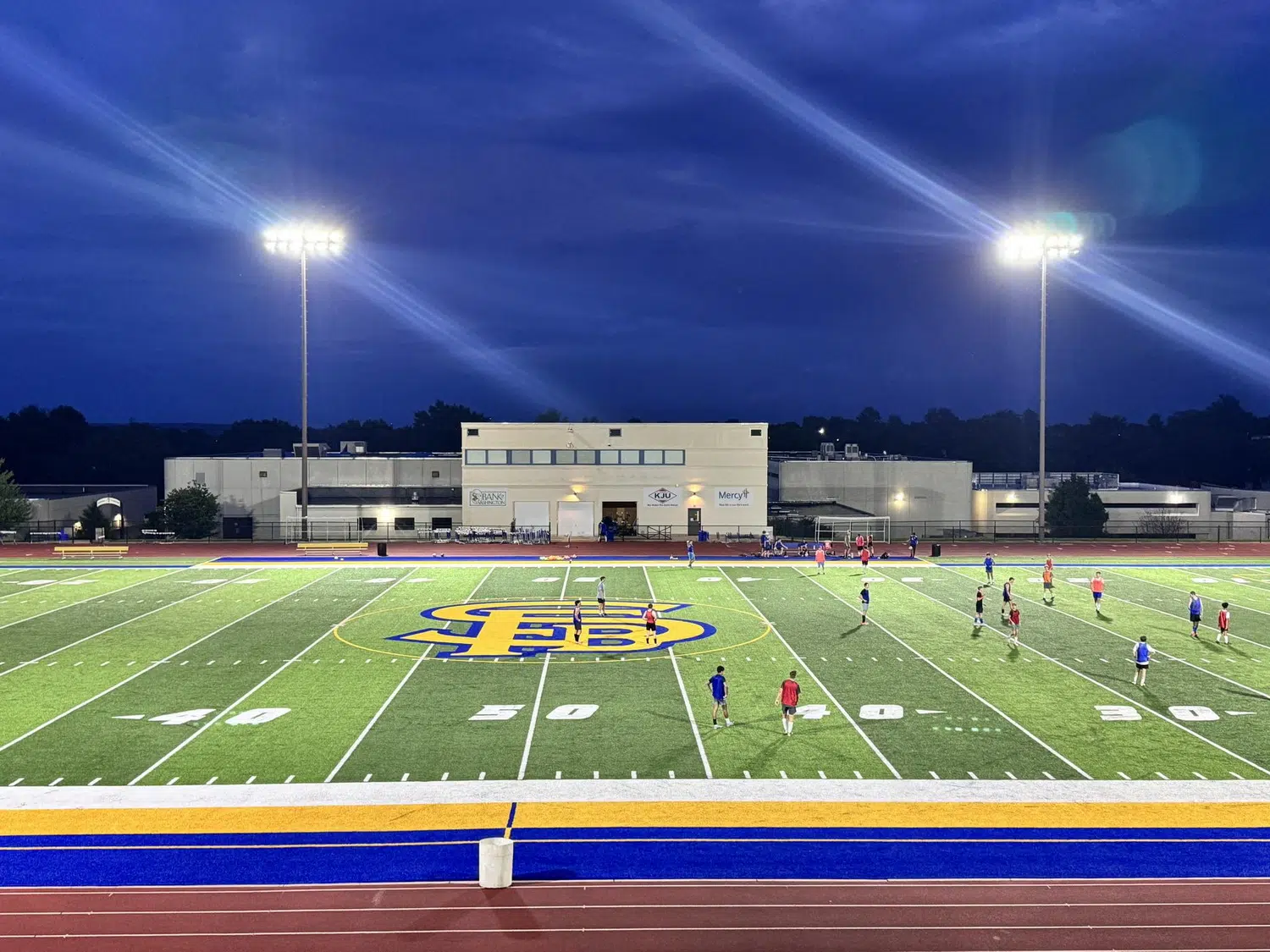
Is There a Difference Between High School and College Sports Field Lighting Standards?
Yes, collegiate sports fields typically require 30-50% higher light levels than high school fields. College facilities often have larger spectator areas, televised broadcasts, and higher performance standards. Higher light levels improve player safety, enhance spectator experience, and meet broadcast quality requirements for televised games.
What Are Typical Footcandle Measurements for Football Fields?
- College Televised: 80-150 fc
- College: 70-100 fc
- Large High School: 50-70 fc
- Smaller High School: 30-50 fc
- Pop Warner: 30-50 fc
- Recreational: 20-40 fc
What Are Typical Footcandle Measurements for Baseball Fields?
- Collegiate (Televised): Infield – 100 fc, Outfield – 70 fc
- Collegiate: Infield – 70 fc, Outfield – 50 fc
- High School: Infield – 50 fc, Outfield – 30 fc
- Little League: Infield – 50 fc, Outfield – 30 fc
- Recreational: Infield – 30 fc, Outfield – 20 fc
What Are Typical Footcandle Measurements for Soccer Fields?
- Recreational: 5-20 fc
- Middle School: 20-30 fc
- Small High School: 20-40 fc
- Larger High School: 40-50 fc
- College: 60-120 fc

Why Do I Need a Professional Lighting Plan for My Sports Field?
A professional lighting plan ensures proper light distribution, helps avoid costly installation mistakes, and supports compliance with local building codes. Detailed photometric analysis provides exact light levels, uniformity ratios, and fixture placement. This documentation is often required for permit approval and helps ensure your field meets competition standards before installation begins.
How Much Can I Save on Energy Costs With LED Sports Field Lighting?
LED sports field lighting typically delivers 60-75% energy savings compared to metal halide systems. A typical high school football field can save $8,000-12,000 annually on electricity costs. LEDs also reduce maintenance costs, with 50,000+ hour lifespans versus 3,000-5,000 hours for traditional lighting.
What Information Is Needed to Create a Sports Field Lighting Plan?
To create an accurate lighting plan, provide field dimensions, sport type, competition level, and details on existing pole locations or electrical infrastructure. Photos of the current setup and any specific requirements, such as broadcast compatibility or multi-sport usage, help ensure the design meets your needs. Most lighting plans are completed within 3-5 business days after receiving this information.

How Does a Lighting Plan Help With My Buying Decision?
A lighting plan shows exactly how many fixtures are needed, their placement, and the resulting light levels across your field. This removes guesswork and helps prevent over-buying or under-lighting your facility. You will see precise ROI calculations, energy savings projections, and can compare different fixture options before making your investment.
How Many Lights Do I Need for My Sports Field?
The number of lights required depends on your field size, sport, competition level, and desired foot-candle levels. A custom photometric plan calculates the optimal quantity and placement of fixtures to achieve uniform coverage and meet your specific requirements.
What Mounting Height Should I Use for Sports Field Lighting?
Mounting height is determined by field size, pole spacing, and the type of sport. Taller poles (typically 40-80 feet) help achieve better light distribution and minimize glare. The correct height is selected during the lighting design process to ensure uniformity and compliance with recommended light levels.
How Far Apart Should Sports Field Light Fixtures Be Spaced?
Fixture spacing depends on pole height, fixture beam angle, and field dimensions. Proper spacing is critical to avoid shadows and ensure even illumination. A photometric layout will specify the ideal spacing for your application.
What Type of Fixtures Are Best for Sports Field Lighting?
High-output LED flood lights designed for sports applications are recommended. These fixtures offer precise beam control, high lumen output, and long lifespans, making them suitable for outdoor sports fields of all sizes.
How Do I Reduce Shadows or Dark Spots on the Field?
Reducing shadows and dark spots requires careful fixture placement, correct aiming angles, and appropriate beam selection. A professional lighting plan uses photometric analysis to optimize uniformity and minimize areas of low illumination.
Sample Sports Field Lighting Plan and Heat Map