LED Sports Field Lighting
- Sport-specific fixture options for fields, parks, and schools
- Lighting plans available to evaluate coverage and uniformity
- USA-based support for fixture selection and application guidance


Get Your Custom Lighting Plan With Product Recommendations
- Fixture placement, aiming, and optics designed around field dimensions, pole heights, and sport-specific visibility needs
- Fixture count, beam angles, and mounting heights selected to help achieve target foot-candles and uniformity across the playing surface
- LED fixtures can reduce energy use and extend maintenance intervals compared with legacy metal halide systems


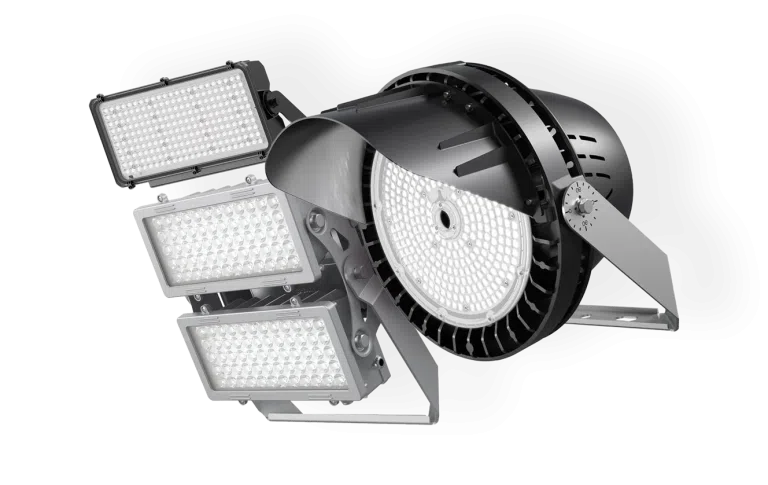
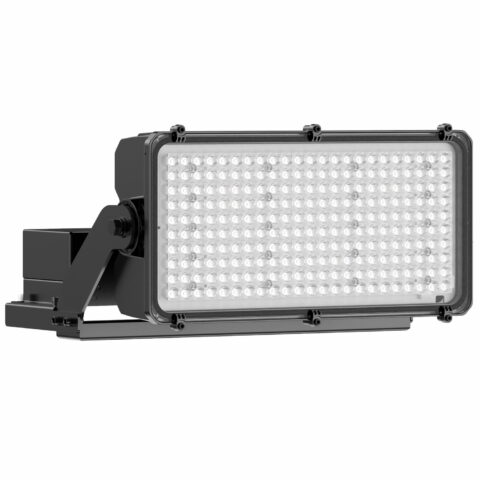
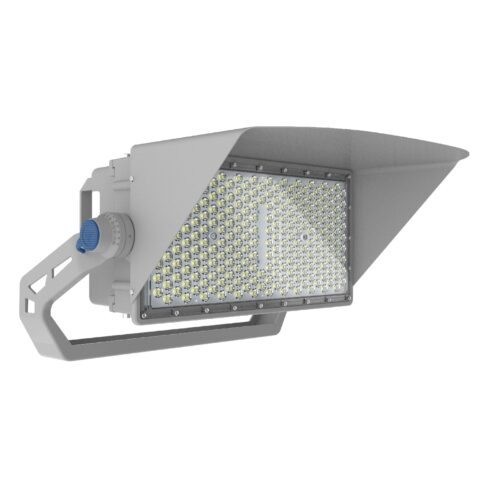
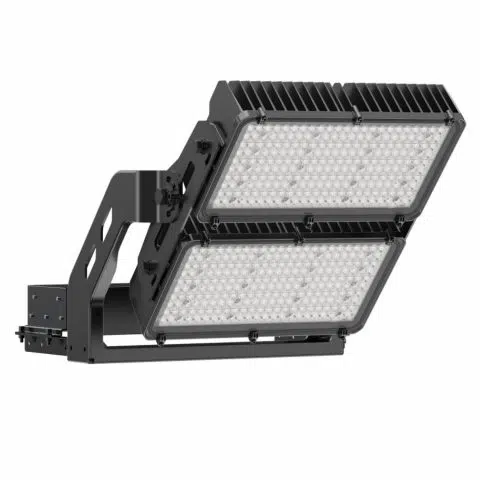
Our LED Sports Field Lighting includes high-output LED fixtures with pole-mounted optics, aiming options, and controls for outdoor athletic fields. Available models vary by wattage, lumen output, beam angle, color temperature, voltage, surge protection, and control compatibility.
These fixtures are commonly used for baseball, softball, football, soccer, multi-use, school, municipal park, recreation complex, and practice fields.






What Is LED Sports Field Lighting?
LED sports field lighting is outdoor lighting used for athletic fields such as baseball fields, softball fields, football fields, soccer fields, multi-use fields, school fields, municipal parks, recreation complexes, and practice facilities. These systems use high-output LED fixtures, pole-mounted optics, aiming, controls, and fixture layouts to place light across the playing surface.
Sports field lighting is different from general area lighting because the goal is not only brightness. A good field lighting design should support player visibility, ball tracking, spectator comfort, camera visibility where applicable, glare control, and reasonable spill-light management. The right system depends on the sport, field size, pole locations, mounting height, level of play, nearby properties, and existing electrical infrastructure.
Before choosing fixtures, first confirm the sport, field layout, and intended level of play to establish an appropriate foot-candle target. Then review existing or planned pole locations, mounting heights, and nearby property considerations. Baseball, softball, football, soccer, and multi-use fields require different pole layouts, aiming strategies, beam angles, and visibility priorities. Reviewing these factors before selecting fixtures helps prevent dark zones, glare, uneven coverage, and poor ball tracking.
Selection and Installation Note: Product specifications, wattage, lumen output, optics, beam angle, color temperature, voltage, surge protection, pole height, mounting hardware, aiming, controls, environmental rating, certifications, and warranty coverage vary by model. Confirm the selected product specification before ordering. For sports fields, school facilities, parks, recreational complexes, competitive fields, or code-sensitive installations, verify requirements with the facility team, local authority, project specifier, league, or organization requirements where applicable, and a licensed electrical professional.
Recommended Foot-Candles for Common Sports Fields
Foot-candle targets vary by sport, field size, class of play, organization requirements, spectator needs, and whether the field is used for practice, recreation, school, club, or competitive play. Practice fields commonly use lower light levels than game fields, but the target should still reflect the sport, speed of play, field size, and training intensity. Use the ranges below as early planning guidance only. Final light levels and uniformity should be verified with a sports field lighting plan.
Planning Note: Every sport has different field dimensions, play patterns, and visibility needs. Use sport-specific requirements and a lighting plan when you need fixture counts, pole locations, beam angles, uniformity, or final calculated light levels.
Spartan Sports Park Improves Field Lighting With LED Flood Lights Case Study
The Backstory:
Spartan Sports Park recognized that their existing 1000-watt metal halide fixtures were falling short on the field. Suboptimal light levels negatively impacted player performance, while the energy demands of the outdated system drove operating costs higher than necessary. They reached out to LED Lighting Supply seeking a custom solution built for their baseball field requirements.
The Customer's Challenge:
The metal halide fixtures were inefficient, resulting in a significant energy expense. Additionally, uneven light levels on the field created safety risks for both players and sideliners.
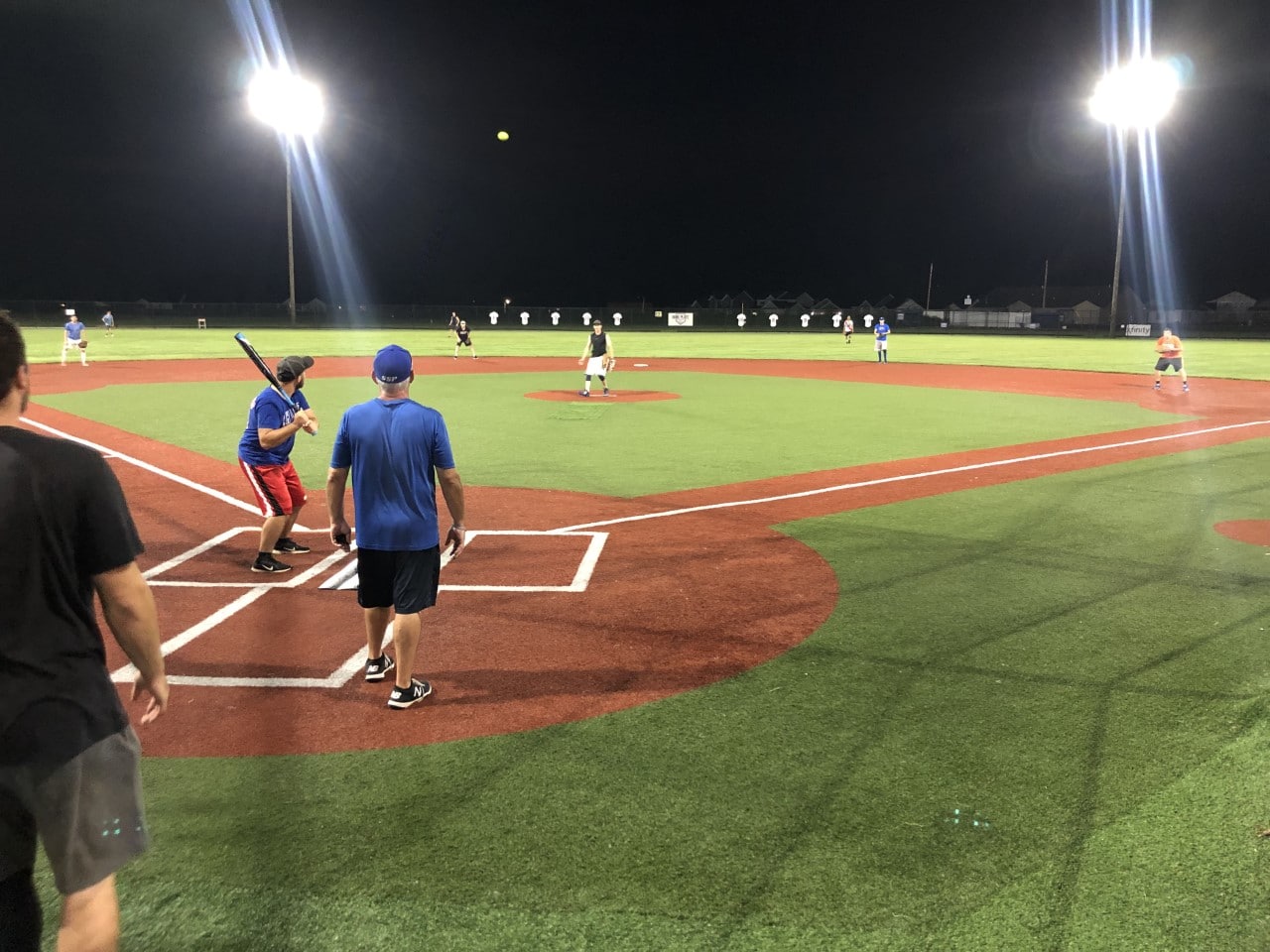
Lighting Plan We Created for the Customer
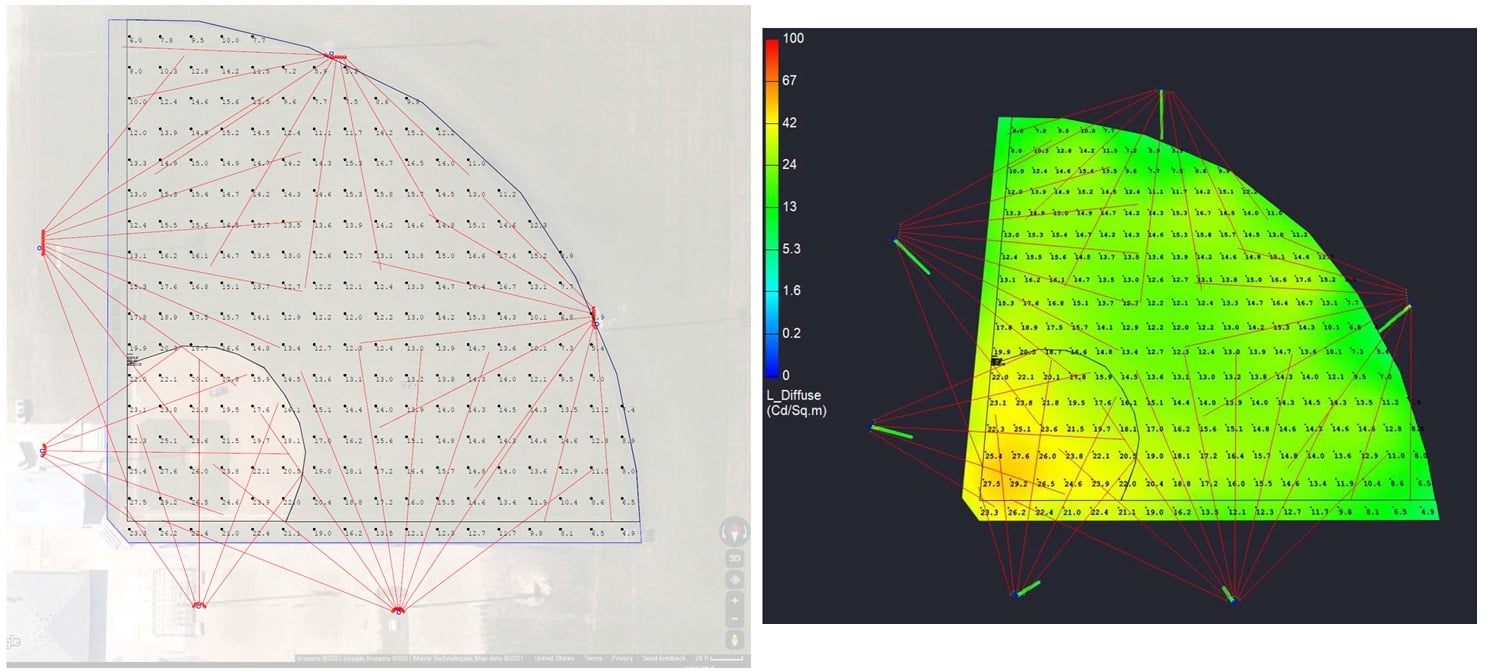
Lighting Plan Metrics:
- Mounting Height: 25 feet
- Infield Foot Candles Achieved: 20 FC
- Outfield Foot Candles Achieved: 13 FC
- Product(s) Used: MLLG-AG-LED-IMF-400-5-[Optic]-TR-[V]
St. Francis Borgia High School Sports Field Flood Light Upgrade Case Study
The Backstory of Our Relationship with St. Francis Borgia High School
LED Lighting Supply was approached by Travis Stockhorst, Maintenance Director at St. Francis Borgia High School in Washington, Missouri.
Referred to us by one of our sports field lighting customers, Travis was seeking professional support for the school’s football and soccer field lighting upgrade. At the time of his inquiry, the field operated on aging 1500-watt metal halide lights, creating inadequate light levels.
The Challenge of Lighting St. Francis Borgia High School’s Football and Soccer Field
The legacy lighting in place produced glare and shadows on the field, impacting player performance while increasing safety risks. Due to tight budgets, the field required an updated lighting system that would adhere to the four existing 60-foot poles.
The project required confirmation of local football and soccer field lighting requirements before our team could create a photometric lighting plan and a custom light fixture recommendation.
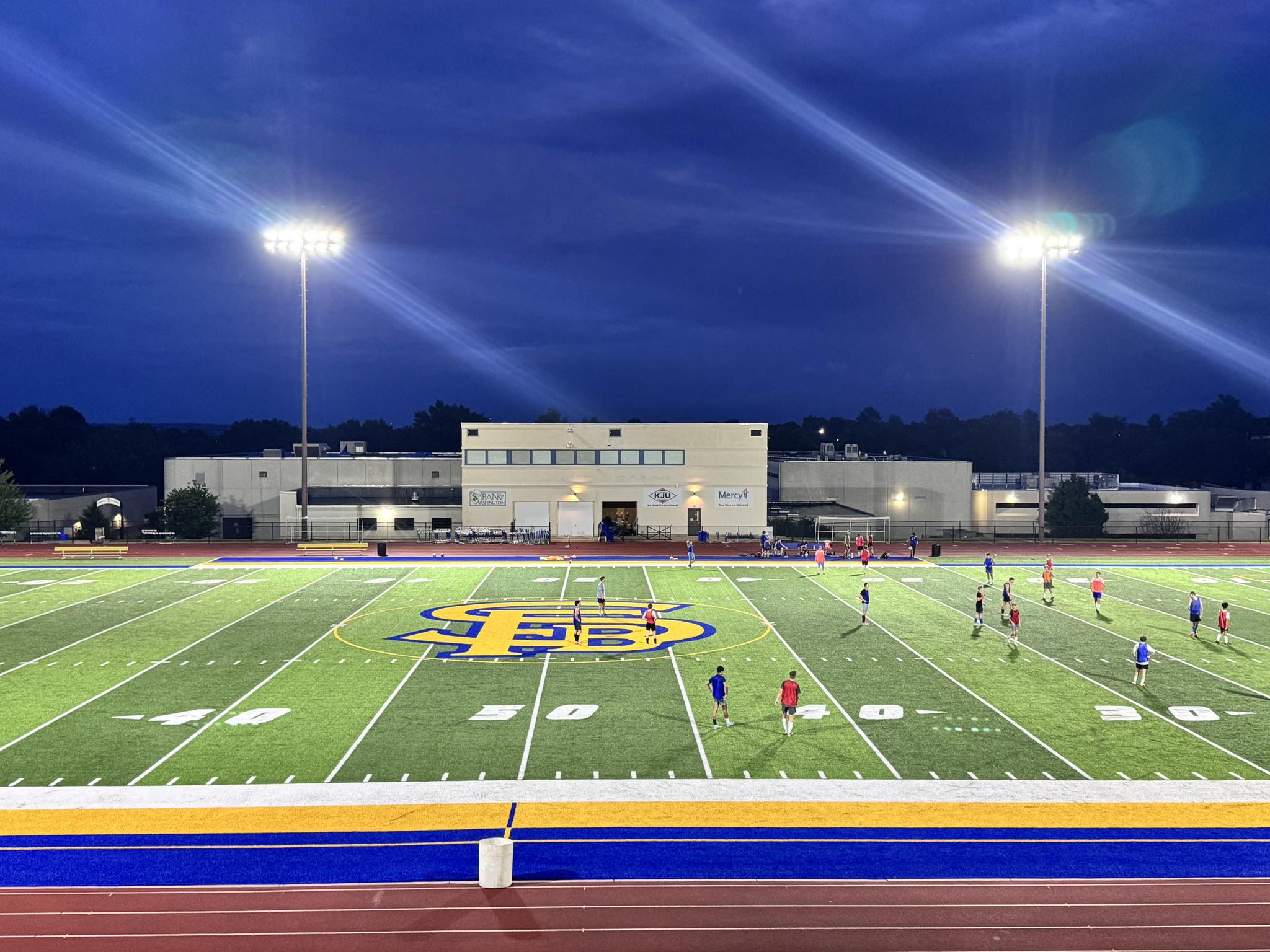
St. Francis Borgia High School Football and Soccer Field With Our LED Lighting Solution Installed
Featured Lighting Plan for St. Francis Borgia High School
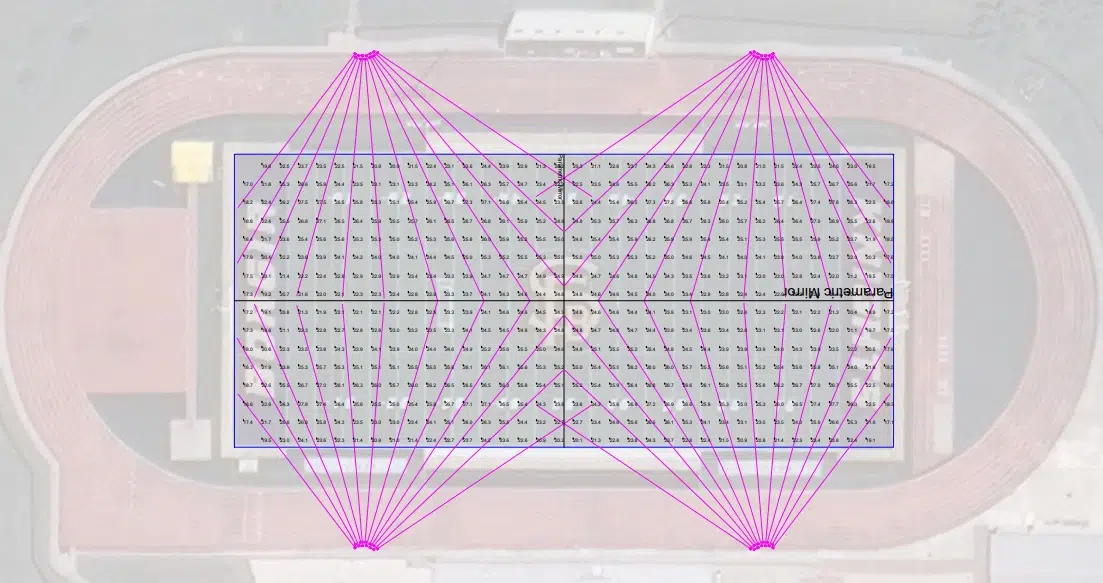
Lighting Plan Metrics
- Mounting Height (Feet): 60 ft
- Average Foot Candles (fc) Achieved: 34 fc
- Uniformity (Max/Min): 1.61
- Product(s) Used: MLLG-LED-HPSL-600-57-60-[V]
Why a Sports Field Lighting Plan Helps
A sports field lighting plan helps show how the selected fixtures, pole locations, mounting heights, optics, and aiming angles will perform on the actual field. This is especially important for baseball, softball, football, soccer, and multi-use fields because each sport has different dimensions, sightlines, and field-use patterns.
| Lighting Plan Review | Why It Matters |
|---|---|
| Fixture placement | Shows proposed fixture locations and whether existing poles may be suitable for the intended layout. |
| Calculated light levels | Estimates average, minimum, and maximum illuminance across the field using fixture-specific photometric data. |
| Uniformity | Helps identify bright spots, dark spots, and areas where ball tracking or player visibility may be affected. |
| Beam angle and aiming | Helps determine whether narrow, medium, or wide optics are needed for pole height and field size. |
| Glare and spill light | Helps review light toward players, spectators, nearby homes, roads, parking areas, and neighboring properties. |
| Electrical planning | Helps estimate fixture count, load, controls, and whether existing electrical infrastructure needs review. |
Request a sports field lighting plan
Sports Field Lighting by Field Type
Outdoor sports fields share many lighting concerns, including player visibility, ball tracking, pole layout, fixture aiming, glare control, and spill-light management. The details change by sport because each field has a different shape, play pattern, and sightline.
| Field Type | Lighting Priorities |
|---|---|
| Baseball field lighting | Infield and outfield balance, batter and pitcher visibility, pole placement, ball tracking, glare control, and spectator viewing. |
| Softball field lighting | Field size, outfield depth, infield coverage, recreational or competitive play, and pole layout for smaller field dimensions. |
| Football field lighting | Field-wide uniformity, sidelines, end zones, school fields, practice fields, and spectator or camera visibility. |
| Soccer field lighting | Large rectangular field coverage, player sightlines from many angles, uniformity, glare control, and spill-light management. |
| Multi-use field lighting | Flexible layouts for schools, parks, recreation complexes, and facilities that host more than one sport on the same field. |
| Practice field lighting | Right-sized light levels for drills, team training, youth programs, and partial-field use without automatically designing to competition-level requirements. |
Practice Field Lighting for Schools, Parks, and Community Programs
Practice fields usually do not need the same light levels, spectator coverage, or operating cost as game fields. The goal is to provide even, usable visibility for drills, player movement, coaches, and ball tracking without over-lighting the property. The appropriate target depends on the sport, age group, training speed, field size, and whether the entire field or only selected zones are used.
| Practice Field Consideration | Selection Guidance |
|---|---|
| Target light level | Set a target based on the sport, age group, training intensity, field area in use, and any school, league, or facility requirements. A photometric plan can compare the target with calculated average and minimum light levels. |
| Pole height | Select mounting height based on field dimensions, pole locations, setbacks, fixture optics, aiming, glare control, and maintenance access rather than a fixed height rule. |
| Uniformity | Do not evaluate a practice field by average foot-candles alone. Dark zones can interfere with drills, player movement, and ball tracking even when the average appears acceptable. |
| Operating zones | Separate controls can support half-field drills, position groups, warm-up areas, maintenance, and full-field practice without running every fixture. |
| Future field use | Confirm whether the field may later host games or additional sports. Planning pole positions and electrical capacity early can help avoid a more extensive redesign. |
| Nearby properties | Practice fields often operate on weeknights near homes, roads, or other facilities. Review fixture aiming, shields, operating schedules, and local spill-light limits. |
A photometric plan should confirm pole locations, mounting heights, fixture quantities, optics, aiming, average and minimum light levels, uniformity, glare, and spill light. Lower wattage or fewer fixtures do not automatically create a good practice-field layout.
How to Choose LED Sports Field Lighting
Start with the field type and level of play. Then confirm pole layout, mounting height, fixture output, optics, electrical service, controls, and whether the field has nearby homes, roads, parking areas, or spectators.
| Selection Factor | What to Confirm |
|---|---|
| Sport and field size | Confirm whether the field is baseball, softball, football, soccer, multi-use, practice-only, recreational, school, club, or competitive. |
| Existing poles | Review pole height, condition, crossarms, mounting points, pole spacing, and whether the proposed loading and layout are supported by manufacturer data and, where required, qualified engineering review. |
| New pole locations | For new installations, coordinate pole locations around field dimensions, setbacks, aiming angles, play area, site constraints, and applicable structural and electrical requirements. |
| Fixture optics | Beam angle and aiming should match the pole height and throw distance. Wrong optics can create hot spots, dark zones, or glare. |
| Controls | Confirm whether the field needs separate zones for practice, games, maintenance, partial field use, or event scheduling. |
| Electrical service | Confirm voltage, phase, circuit capacity, surge protection, inrush current, controls wiring, and installation requirements with a qualified electrician. |
| Glare and light spill | Review player sightlines, spectators, roads, neighboring properties, homes, and any local lighting restrictions. |
Retrofit vs. New Sports Field Lighting Installation
Some sports field projects replace older metal halide or HID fixtures on existing poles. Others start with no lighting and require a new pole and electrical layout. The right approach depends on the field, budget, infrastructure, and performance needs.
| Project Type | What to Review |
|---|---|
| LED retrofit on existing poles | Review existing pole heights, fixture count, mounting hardware, wiring, electrical capacity, current light levels, and whether the existing layout provides acceptable coverage. |
| New sports field lighting installation | Review field dimensions, pole locations, setbacks, electrical service, trenching, controls, aiming, neighbor impact, and long-term maintenance access. |
| Multi-field or multi-sport complex | Review field grouping, controls by zone, shared poles, schedule flexibility, parking-area impact, pedestrian areas, and spill-light control. |
When an Existing-Pole Retrofit May Not Be the Best Choice
An LED retrofit can be a practical option when existing poles, wiring, and mounting locations support the desired lighting layout. However, replacing fixtures alone may not solve limitations created by pole placement, mounting height, structural loading, electrical capacity, or glare toward players and neighboring properties.
| Buyer Decision | When to Consider a New Layout or Additional Work |
|---|---|
| Coverage is limited by pole locations | Consider new poles, revised mounting locations, or a different optical layout when existing poles cannot adequately cover the field, sidelines, end zones, infield, or outfield. |
| Existing poles are too short or poorly positioned | A higher-output fixture cannot always compensate for low mounting height or unfavorable aiming geometry. A photometric plan can compare retrofit options with a revised pole layout. |
| Structural loading changes | New fixtures, brackets, bullhorns, wind area, mounting offsets, and fixture quantities can change loading. Confirm pole, foundation, and mounting suitability with the pole manufacturer and qualified project professionals where required. |
| Electrical infrastructure is outdated | Review circuits, voltage, controls, surge protection, wiring condition, and available capacity before selecting fixtures or assuming a direct replacement is possible. |
| Glare or spill-light complaints exist | Use fixture-specific optics, shielding where appropriate, aiming, and controls to address the actual issue. More wattage alone can increase unwanted light. |
| Future use is changing | If a practice field may become a game field, or a single-sport field may become multi-use, consider a scalable layout and electrical capacity during the current project. |
Important LED Sports Field Lighting Features
- Optical control: Different beam angles and aiming options help place light across the field instead of wasting it outside the play area.
- Glare management: Shields, aiming, pole placement, and fixture selection can help reduce glare toward players, spectators, neighbors, and drivers.
- Instant-on operation: LED fixtures reach usable output quickly compared with HID systems that require warm-up time.
- Controls compatibility: Some systems support dimming, zoning, scheduling, remote controls, or practice/game settings.
- Surge protection: Outdoor pole-mounted sports lighting should be reviewed for surge protection because fields can be exposed to lightning-related and switching transients. Confirm the fixture's tested surge rating and any project-specific surge protection requirements. ANSI C136.2 provides transient-immunity test methods and performance requirements for roadway and area lighting equipment, but it should not be interpreted as requiring a universal 20kV/20kA minimum for every sports field fixture.
- Weather rating: Select fixtures listed for wet-location exposure and verify the manufacturer’s temperature range, enclosure rating, materials, seals, and corrosion-resistance information for the actual environment. An IP rating addresses solids and water ingress; it does not by itself establish corrosion resistance or suitability for every outdoor condition.
- Maintenance access: High-mounted fixtures should be selected with long-term service access and aiming adjustment in mind.
Sports Field Lighting Certifications, Rebates, and Warranty Support
Available LED sports field lighting products may carry a safety listing or certification from a nationally recognized testing laboratory, such as UL, ETL, or CSA, depending on the model and intended installation. Some models may be DLC or DLC Premium listed and may qualify for utility rebate programs where available. DLC qualification is a performance program and does not replace an electrical safety listing. Rebate requirements vary by utility, region, installation, and product listing, so confirm eligibility on the selected product specification before ordering.
Warranty coverage varies by product, with many models offering a 5-year warranty unless otherwise specified. Confirm the exact warranty, certifications, DLC status, voltage, controls compatibility, mounting method, environmental rating, surge protection, and fixture suitability for the field layout and surrounding conditions before purchase.
This Content on Sports field lighting guidance, footcandle guidance and application considerations, and fixture selection content Was Professionally Reviewed By:

Jamie Popp, Professional Electrical Engineer (PE)
Multi-State Licensed Professional Engineer
Master of Science in Engineering
Master of Science in Project Management
Jamie has spent over 15 years working directly with industrial energy systems and facility operations. In his engineering design work, he focuses on comprehensive lighting designs, complex power distribution engineering, technical hazardous area classifications, and design-level construction support.
He applies these specialized design skills across demanding environments, including petrochemical, nuclear, mining, pulp and paper, and manufacturing facilities.
This content was reviewed for technical accuracy, engineering relevance, real-world application, and clarity for the stated lighting topic.
LED Sports Field Lighting FAQs
How Should I Choose LED Sports Field Lighting?
Choose LED sports field lighting by confirming the field type and level of play, then reviewing pole layout, mounting height, fixture output, optics, electrical service, controls, and surrounding areas such as homes, roads, parking areas, and spectator locations.
Why Is A Sports Field Lighting Plan Important?
A sports field lighting plan shows how selected fixtures, pole locations, mounting heights, optics, and aiming angles will perform on the actual field. It can calculate average, minimum, and maximum light levels, review uniformity, and help identify glare, spill light, fixture placement, and electrical planning needs.
Can Existing Sports Field Poles Be Used For An LED Retrofit?
Existing poles may be reused when their heights, condition, crossarms, mounting points, spacing, wiring, electrical capacity, and current layout support acceptable field coverage. A lighting plan can show whether existing poles can be reused and where fixtures should be located.
What Should Be Considered When Lighting A Practice Field?
Practice field lighting should be selected around the sport, age group, training speed, field size, and whether the entire field or selected zones are used. Practice fields usually do not need the same light levels, spectator coverage, or operating cost as game fields, and dark zones should be reviewed alongside average foot-candles.
What Light Levels Are Used For Practice Fields?
Casual and youth training may begin around 10-20 foot-candles, structured school and community practices commonly begin around 20-30 foot-candles, and full-speed team practice may require 30-50 foot-candles. These ranges are early planning guidance, and final light levels and uniformity should be verified with a sports field lighting plan.
How Do Optics And Aiming Affect Sports Field Lighting?
Beam angle and aiming should match pole height and throw distance to place light across the field. Wrong optics can create hot spots, dark zones, or glare, while a lighting plan can help determine whether narrow, medium, or wide optics are needed for the pole height and field size.
What Should Be Reviewed Before Ordering LED Sports Field Fixtures?
Before ordering, confirm the selected product specification for wattage, lumen output, optics, beam angle, voltage, surge protection, mounting hardware, controls, environmental rating, certifications, and warranty coverage. Also confirm that the fixture is right for the field layout and surrounding conditions.
Are LED Sports Field Lighting Fixtures Eligible For Utility Rebates?
Many LED sports field lighting models are DLC or DLC Premium listed for utility rebate support where available. Rebate requirements vary by utility, region, and product listing, so eligibility should be confirmed on the selected product specification before ordering.