LED Mining Lighting
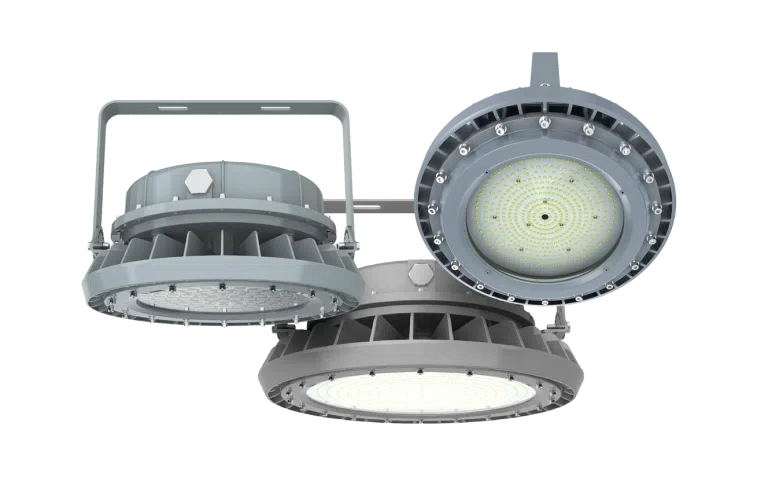
- Explosion-proof and hazardous-location options available for classified areas
- Sealed, impact-resistant, and high-temperature models for harsh conditions
- Product specialists help match fixtures to mine area requirements


Get Your Custom Lighting Plan With Product Recommendations
- Tell us where you're installing mining lights for open pits and tunnels, and a lighting specialist can help you decide which fixtures to use, how many you need and where to place them.


Our Mining Lights for Open Pits and Tunnels include LED flood lights, tunnel lights, linear fixtures, explosion-proof lights, and vapor tight fixtures for mining operations. Available models vary by fixture type, voltage, output, optics, controls, mounting method, and environmental rating. These mining lights are used in open-pit surface mines, loading and haulage zones, haul roads, maintenance yards, temporary work areas, access tunnels, conveyor galleries, utility corridors, and confined work areas.
LED Mining Lighting for Underground, Surface, Processing, and Support Areas
LED mining lighting is used in underground mining areas, surface mines, access tunnels, loading and haulage zones, processing plants, conveyor areas, maintenance bays, storage areas, break rooms, offices, and other mine support spaces. Mining environments can expose fixtures to dust, moisture, vibration, impact, high temperatures, heavy equipment movement, confined spaces, combustible dust, methane, gases, or other classified hazards. Start by identifying the mine area and its documented classification: underground, surface, tunnel, processing, haulage, maintenance, or support space. Then match the fixture to the task, mounting height, environmental exposure, electrical system, required rating, and site safety requirements. A standard industrial fixture should not be assumed suitable for underground mines, coal mines, combustible-dust areas, methane-risk areas, blasting areas, processing plants, or any classified location.
Selection and Installation Note: Product specifications, wattage, lumen output, optics, color temperature, voltage, dimming, controls, mounting method, hazardous-location rating, MSHA permissibility or other mine-specific approval requirements, IP rating, IK rating, operating temperature, certifications, and warranty coverage vary by model. Confirm the selected product specification before ordering. For underground mines, surface mines, coal mines, metal and nonmetal mines, classified locations, combustible-dust areas, methane-risk areas, blasting areas, washdown areas, high-temperature areas, or safety-critical mining spaces, verify requirements with the mine safety team, project specifier, site electrical team, local inspector, applicable MSHA requirements, and a licensed electrical professional.
Critical Safety Considerations for Mining Lighting
Mining lighting is not only a brightness decision. The wrong fixture in the wrong area can create serious safety, ignition, maintenance, visibility, or compliance problems. Before selecting fixtures, confirm the area classification, required listing, environmental exposure, and installation method.
| Safety Factor | What to Confirm |
|---|---|
| MSHA requirements | Confirm which MSHA rules apply to the mine type, work area, equipment, and lighting system. Do not assume a fixture is permissible or suitable for an MSHA-regulated application unless the selected product documentation and installation meet the applicable requirement. |
| Hazardous-location classification | Confirm whether the documented area classification involves flammable gases or vapors, combustible dust, ignitible fibers or flyings, or other explosion hazards. Match fixtures to the required Class, Division or Zone, Group, temperature code, and ambient rating where applicable. |
| Specialized equipment needs | Underground coal, methane-risk areas, combustible-dust areas, and other classified spaces may require specialized fixtures or permissible equipment. Confirm required approvals before ordering. |
| IP rating and moisture exposure | Wet, damp, washdown, or high-dust areas may require sealed fixtures. IP ratings address solids and water ingress: IP65 is dust-tight and protected against water jets, while IP66 is dust-tight and protected against powerful water jets. Confirm the exact rating, gasket design, cable entry, cleaning exposure, and manufacturer documentation by model. |
| Impact and vibration | Heavy equipment, blasting vibration, conveyor movement, and accidental contact can damage standard fixtures. Review IK rating where published, mounting security, lens material, housing construction, and manufacturer vibration information. |
| Temperature limits | Confirm ambient temperature, fixture operating range, hazardous-location temperature code where applicable, and whether the selected model is suitable for high-heat or confined areas. |
| Emergency operation | Confirm emergency lighting needs, backup power, egress routes, refuge areas, and site procedures before selecting fixtures. |
| Maintenance access | Review whether fixtures can be safely accessed for inspection, cleaning, repair, or replacement without disrupting critical mine operations. |
Common LED Fixtures Used in Mining Operations
Mining operations may use hazardous-location luminaires, vapor-tight fixtures, high bay lights, flood lights, area lights, tunnel lights, wall packs, panels, or linear fixtures depending on the mine area. Fixture selection should begin with safety classification and environmental exposure before considering wattage or fixture style.
| Fixture Type | Where It May Fit |
|---|---|
| Hazardous-location LED lights | Used where the area classification requires a listed fixture for flammable gases, vapors, combustible dust, or other classified hazards. Confirm the exact Class, Division or Zone, Group, temperature rating, and ambient rating before ordering. |
| LED mine lights | Used in underground or surface mining areas when the fixture is properly rated for the application, environment, installation, and required approvals. |
| LED vapor tight lights | Useful in damp, dusty, or wet support areas where sealed construction is needed, provided the area is not classified beyond the fixture's documented rating. |
| LED high bay lights | Used in maintenance shops, processing buildings, storage buildings, and high-ceiling support spaces when the environment and classification allow. |
| LED flood lights | Used in surface loading areas, haul roads, laydown yards, maintenance yards, and temporary work areas when glare, mounting height, photometric distribution, and environmental rating are properly reviewed. |
| LED tunnel or linear fixtures | Used in access tunnels, conveyor galleries, utility corridors, and confined work areas when mounting, clearance, protection, and classification requirements are met. |
How to Choose LED Mining Lights
Mining lighting should be specified from the hazard outward. Start with the mine type and documented area classification, then review visibility, task, fixture rating, mounting, and maintenance requirements.
| Selection Factor | What to Confirm |
|---|---|
| Mine type | Confirm whether the project involves underground coal, surface coal, metal/nonmetal, quarry, aggregate, processing, maintenance, storage, or support areas. Requirements can vary by mine type and work activity. |
| Area classification | Determine whether the area is ordinary, wet/dusty, combustible dust, methane-risk, Class I, Class II, Class III, Division-rated, Zone-rated, or otherwise classified. Select fixtures only after the classification is known. |
| Task visibility | Drilling, blasting support, inspection, maintenance, loading, haulage, conveyor work, and storage areas may require different illuminance levels and fixture layouts. Use fixture-specific photometric data to evaluate light distribution, glare, shadows, and light levels at the work surface. |
| Fixture rating | Confirm hazardous-location listing where required, MSHA permissibility or other mine-specific approval requirements where applicable, electrical safety listing, IP rating, IK rating where published, operating temperature, and temperature code before ordering. |
| Mounting and protection | Review mounting height, clearance, equipment movement, impact exposure, vibration, guards, brackets, and cable/conduit protection. |
| Moisture, dust, and washdown | Confirm actual exposure and whether the application requires a wet-location rating, sealed construction, or a specific IP rating. IP65, IP66, IP67, IP68, and IP69K describe different water-ingress test conditions and are not interchangeable; IP ratings do not establish hazardous-location, chemical-resistance, or corrosion-resistance suitability. |
| Temperature and ventilation | Confirm ambient temperature, heat buildup, fixture thermal limits, high-temperature requirements, and hazardous-location temperature code where applicable. |
| Voltage and electrical service | Confirm available voltage, phase, wiring method, grounding, circuit protection, emergency power, and site electrical standards before selecting fixtures. |
| Controls | Dimming, sensors, switching zones, or remote controls may be useful in some areas, but they must be compatible with fixture ratings, site safety procedures, and hazardous-location requirements. |
Recommended Foot-Candles for Mining Lighting
Mining light levels vary by task, mine type, equipment movement, ceiling height, dust, surface reflectance, visibility needs, emergency requirements, and site safety procedures. The ranges below are general planning values only. Final requirements should be confirmed against mine safety requirements, site procedures, applicable MSHA rules, hazardous-location classification, and selected fixture photometrics and specifications.
Mining Lighting by Area
Underground, surface, processing, maintenance, and support areas have different risks. Do not use one fixture type across the entire operation unless every area has been reviewed for classification, exposure, task, and installation requirements.
| Mining Area | Lighting Priorities |
|---|---|
| Underground primary mining areas | Confirm MSHA requirements, methane or dust risk, permissible-equipment needs where applicable, impact, vibration, moisture, and emergency procedures. |
| Drilling and blasting areas | Review task visibility, temporary or fixed fixture needs, safety procedures, classification, impact, vibration, and restricted access. |
| Transport and access tunnels | Support equipment movement, personnel access, clearances, emergency routes, shadows, moisture, and fixture protection. |
| Loading and haulage areas | Review glare, operator visibility, pedestrian movement, dust, equipment paths, pole or structure mounting, and surface work requirements. |
| Processing, crushing, and conveyor areas | Confirm combustible-dust risk, vibration, impact, cleaning exposure, task visibility, maintenance access, and equipment clearance. |
| Maintenance bays and repair shops | Support detailed repair work, inspections, tools, lifts, equipment movement, oils, fuels, solvents, and any classified-area requirements. |
| Storage and laydown areas | Provide practical visibility for material handling, vehicle movement, security, and outdoor weather exposure. |
| Break rooms, offices, and support spaces | Use standard commercial or industrial fixtures only where the area is not classified and the room conditions allow. |
Explosion-Proof, MSHA, and Hazardous-Location Review
Mining environments can include methane, combustible coal dust, combustible metal dust, flammable gases, vapors, heat, and heavy dust accumulation. These conditions can require specialized fixtures and installation methods. The required rating depends on the exact documented site classification and hazard. Do not assume that a fixture is explosion-proof, hazardous-location listed, permissible, or suitable for a classified mining area unless the selected product documentation confirms the required rating for that area. Explosionproof construction is one protection method; it is not universally required for every hazardous location. Where applicable, review the requirements for Class I Division 1 lighting, Class I Division 2 lighting, Class II Division 1 lighting, or Class II Division 2 lighting. The mine safety team and qualified electrical professionals should verify the classification and installation requirements before fixtures are ordered or installed.
When an LED Mining Lighting Upgrade Makes Sense
An LED upgrade can be a practical choice when an existing lighting system has frequent lamp or ballast maintenance, long operating hours, poor visibility, inconsistent lighting, or fixtures that are not suited to current environmental conditions. The replacement fixture must still match the documented area classification, mine requirements, electrical system, mounting method, and environmental exposure.
- Improve visibility where it is needed: Properly selected LED fixtures and photometric layouts can improve light distribution for equipment movement, access tunnels, processing areas, maintenance work, and surface operations.
- Reduce energy use: LED fixtures may use less energy than older HID or fluorescent systems. Actual savings depend on fixture wattage, operating hours, controls, utility rates, and existing conditions.
- Reduce routine relamping: LED luminaires do not use replaceable HID or fluorescent lamps and ballasts, which may reduce routine maintenance work in difficult-to-access areas. Driver and fixture service requirements still vary by model and application.
- Support immediate operation: LED fixtures generally reach full output quickly, which can be useful where frequent switching or immediate illumination is needed.
- Select rugged construction where needed: Selected models may offer impact resistance, sealed housings, vibration-resistant construction, corrosion-resistant materials or finishes, and high-temperature capability. Verify the exact product specification for the mine environment.
- Use compatible controls where appropriate: Some models support dimming, sensors, or switching zones. Controls must be compatible with the fixture, electrical system, site procedures, and hazardous-location requirements where applicable.
Information to Prepare for a Mining Lighting Project
Providing complete application information early can help identify appropriate fixtures and produce a more useful lighting layout. LED Lighting Supply can review product specifications and prepare photometric plans using the project information supplied; mine classification, electrical-code compliance, and structural suitability remain the responsibility of the qualified project professionals and authorities.
- Area details: Identify each lighting area, such as a haul road, tunnel, conveyor gallery, crusher, maintenance bay, processing building, or surface yard. Include dimensions, ceiling or mounting heights, obstructions, and equipment travel paths.
- Documented classifications: Provide the established hazardous-location classification, if any, including the Class, Division or Zone, Group, temperature code, ambient temperature, and any MSHA permissibility or mine-specific requirements.
- Existing lighting information: Note fixture type, quantity, mounting locations, wattage, voltage, operating schedule, controls, and the lighting concerns being addressed, such as poor visibility, glare, frequent maintenance, or inadequate coverage.
- Environmental exposure: Describe moisture, dust, washdown, corrosive materials, vibration, impact risk, heat, and outdoor weather exposure. Photographs of the installation area and existing fixtures can help identify mounting and protection needs.
- Electrical and mounting information: Confirm available voltage, wiring method, circuit limitations, mounting surface or pole details, junction-box requirements, and whether emergency power or controls are required.
- Lighting goals: Identify the work tasks, target light levels where specified, operating hours, glare concerns, maintenance-access limitations, and whether a fixture-by-fixture replacement or a new photometric layout is needed.
Mining Lighting Certifications and Warranty Support
LED mining-lighting products may carry electrical safety listings, hazardous-location listings, environmental ratings, or other certifications depending on the model. Verify the selected product's listing and marking for the specific installation. UL and ETL are examples of U.S. Nationally Recognized Testing Laboratory certification paths; DLC qualification, where available, is an efficiency and performance program rather than an electrical safety certification. Warranty coverage varies by product. Before ordering, confirm the selected product's hazardous-location rating, MSHA permissibility or other mine-specific approval requirements where applicable, voltage, controls compatibility, mounting method, environmental rating, operating temperature, impact and vibration suitability, moisture and dust exposure, warranty terms, and suitability for the mining area and site conditions. Contact us about LED mining lighting, and our Product Specialists can help review mine type, established area classification, fixture rating, environmental exposure, mounting height, voltage, controls, photometric information, and product specifications..
LED Mining Lighting FAQs
How Should I Choose LED Mining Lighting For A Specific Mine Area?
Choose LED mining lighting by first confirming the mine type and documented area classification, then reviewing the task, fixture rating, mounting, environmental exposure, electrical system, and site safety requirements. Do not select fixture style or wattage before classification and exposure requirements are known.
Can Standard Industrial Fixtures Be Used In Mining Areas?
Standard industrial fixtures should not be assumed suitable for underground mines, coal mines, combustible-dust areas, methane-risk areas, blasting areas, processing plants, or classified locations. The selected fixture must match the documented area classification, mine requirements, installation method, and environmental exposure.
What Should Be Verified For Classified Mining Areas?
For a classified mining area, verify the documented hazard classification and the fixture's required Class, Division or Zone, Group, temperature code, and ambient rating where applicable. Do not assume a fixture is explosion-proof, hazardous-location listed, permissible, or suitable unless selected product documentation confirms the required rating.
How Should Moisture, Dust, And Washdown Exposure Affect Fixture Selection?
Moisture, dust, and washdown exposure should be matched to the actual application and required wet-location rating, sealed construction, or specific IP rating. IP65, IP66, IP67, IP68, and IP69K describe different water-ingress test conditions and are not interchangeable, and an IP rating does not establish hazardous-location, chemical-resistance, or corrosion-resistance suitability.
What Should Be Considered When Planning Mining Light Levels?
Mining light-level planning should consider the task, mine type, equipment movement, ceiling height, dust, surface reflectance, visibility needs, emergency requirements, and site safety procedures. Use fixture-specific photometric data to evaluate light distribution, glare, shadows, and light levels at the work surface.
When Are Different LED Fixture Types Used In Mining Operations?
Fixture type depends on the mine area, safety classification, and environmental exposure. Hazardous-location luminaires may be used where a listed fixture is required, while vapor-tight fixtures, high bays, flood lights, tunnel or linear fixtures, and LED mine lights may fit specific areas when their ratings and installation requirements are met.
What Should Be Reviewed Before Replacing Existing Mining Lighting With LED Fixtures?
Before an LED mining lighting upgrade, confirm the replacement fixture matches the documented area classification, mine requirements, electrical system, mounting method, and environmental exposure. Also verify product specifications for applicable ratings, voltage, controls compatibility, operating temperature, impact and vibration suitability, warranty terms, and suitability for the mining area.
Can LED Mining Lighting Reduce Routine Maintenance?
LED luminaires do not use replaceable HID or fluorescent lamps and ballasts, which may reduce routine maintenance work in difficult-to-access areas. Driver and fixture service requirements still vary by model and application