School Gym and Classroom Ceiling Fans
- Options for classrooms, gyms, cafeterias, and common areas
- Variable-speed and control options available for select models
- Layout support available based on room and airflow goals



Our School Ceiling Fans include commercial ceiling fans and HVLS fans for classrooms, gymnasiums, cafeterias, and other educational spaces. Available models vary by fan diameter, speed range, mounting configuration, and controls, including wall controls, scheduling, lockable settings, remote operation, occupancy-based control, and building-management integration.
These fans are commonly used in classrooms, libraries, offices, cafeterias, common areas, gymnasiums, field houses, assembly areas, multi-purpose rooms, and testing spaces.
-
 Starting At $5,085.97
-
Starting At $6,831.67


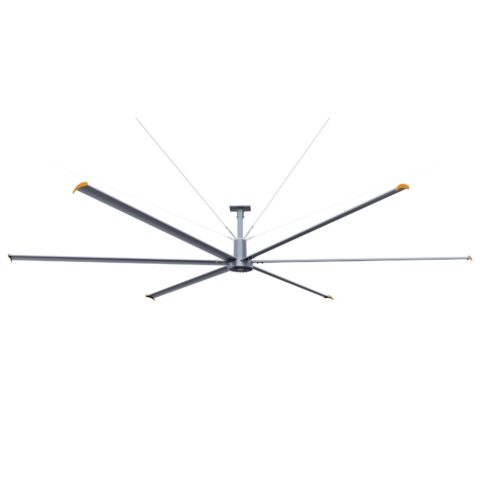
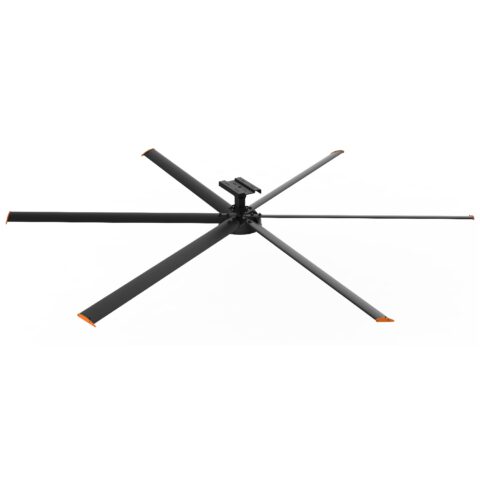


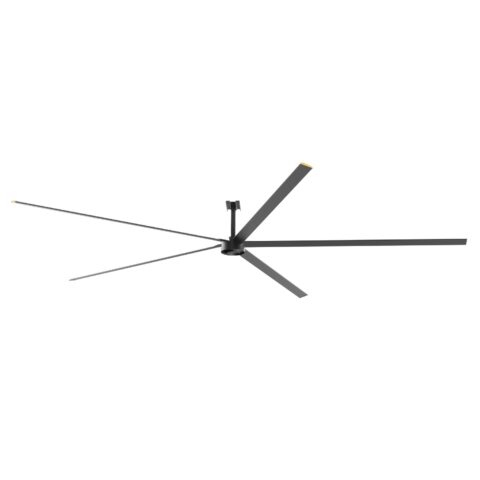
School ceiling fans provide additional air movement across classrooms, libraries, cafeterias, offices, common areas, gymnasiums, field houses, and other educational spaces where the room layout, ceiling height, mounting structure, and building systems allow proper installation. Commercial ceiling fans may be appropriate for classrooms and standard rooms, while HVLS fans may be better suited for gymnasiums, assembly areas, and other large, high-ceiling spaces that require broader air movement.
Start by matching the fan type to the space, then confirm room dimensions, ceiling height, desk or seating layout, occupied zones, mounting structure, sound requirements, controls, electrical service, environmental conditions, and existing HVAC and ventilation systems.
Selection Note: School ceiling fans move and mix indoor air. They do not independently provide outdoor-air ventilation, remove carbon dioxide or airborne contaminants, control humidity, lower the actual air temperature, or replace required HVAC, filtration, exhaust, dehumidification, or indoor-air-quality systems.
How to Select a Ceiling Fan for a School
| Selection Factor | What to Confirm |
|---|---|
| Room dimensions | Measure the room length, width, clear ceiling height, room shape, occupied areas, and available mounting locations. |
| Classroom or facility layout | Map desks, tables, seating, teacher work areas, circulation paths, bookshelves, partitions, stages, serving areas, and other fixed features. |
| Airflow objective | Determine whether the goal is general circulation, added air movement in an occupied zone, or low-speed heating-season air mixing. |
| Fan diameter and airflow | Use model-specific airflow data, fan diameter, speed range, and mounting guidance rather than selecting by square footage, occupancy, or ceiling height alone. |
| Occupied areas | Consider where students, teachers, staff, and visitors remain seated or standing for extended periods. |
| Draft sensitivity | Evaluate whether direct airflow could be distracting or uncomfortable over desks, reading areas, testing locations, stages, or cafeteria seating. |
| Sound requirements | Use published model-specific sound information for classrooms, libraries, testing rooms, offices, auditoriums, and other instruction-sensitive spaces. |
| Overhead clearances | Account for lights, sprinklers, projectors, speakers, cameras, acoustic panels, basketball goals, scoreboards, curtains, nets, and other suspended equipment. |
| HVAC and ventilation | Review supply diffusers, return grilles, thermostats, outdoor-air ventilation, filtration, exhaust points, and existing air-distribution patterns. |
| Controls and access | Determine whether controls should be wall-mounted, scheduled, zoned, lockable, tamper-resistant, or integrated with a building-management system. |
| Mounting structure | Verify that the fan-rated box, bracket, beam, joist, truss, or other support is suitable for the selected fan and mounting method. |
| Electrical service | Confirm voltage, phase, current draw, circuit requirements, wiring, disconnects, controller compatibility, and any integrated light-kit load. |
| Maintenance access | Plan how blades, motors, guards, controls, fasteners, restraints, and mounting components will be cleaned, inspected, and serviced. |
| Product documentation | Verify airflow data, safety listing, approved mounting range, environmental rating, controls, installation requirements, cleaning instructions, and warranty. |
School Ceiling Fans Compared With Other Air Movement Options
| Air Movement Option | Typical Educational Use |
|---|---|
| Commercial Ceiling Fans | Classrooms, libraries, offices, cafeterias, common areas, and other spaces with moderate ceiling heights and suitable support. |
| HVLS Fans | Gymnasiums, field houses, large cafeterias, assembly spaces, and other high-ceiling areas where broad, low-speed air movement is needed. |
| Wall-Mounted Fans | Fixed directional airflow in maintenance areas, shops, service spaces, loading areas, or locations where ceiling mounting is impractical. |
| Drum Fans | Temporary airflow during maintenance, events, renovations, seasonal use, or changing activity layouts. |
| HVAC and Ventilation Systems | Outdoor-air ventilation, filtration, humidity control, heating, and cooling when properly designed for the building and occupancy. |
Many educational facilities use more than one air movement option. Commercial ceiling fans may serve classrooms and standard rooms, while HVLS fans may provide broader circulation in gymnasiums or assembly areas. HVAC and ventilation systems handle actual outdoor-air delivery, filtration, heating, cooling, and humidity control.
Classrooms, Libraries, and Testing Areas
Classroom fan placement should reflect where students and teachers spend most of the day. Desks, teaching stations, whiteboards, projection screens, bookshelves, storage, and circulation paths can all affect how air moves through the room.
Airflow that feels comfortable while standing may become distracting when directed continuously at seated students or teachers. Fan location, diameter, mounting height, speed range, and control settings should support gentle circulation without creating persistent drafts.
Libraries, testing rooms, special-education spaces, and other concentration-sensitive areas may require lower sound levels and more precise speed control. Published sound data should be reviewed for the exact fan and expected operating speed.
Gymnasiums, Cafeterias, and Common Areas
Large educational spaces require additional clearance and layout review. In gymnasiums, fan placement should account for basketball goals, scoreboards, volleyball systems, divider curtains, nets, lights, sprinklers, speakers, cameras, bleachers, and other equipment in every operating position.
Cafeterias and multi-purpose rooms may have changing seating arrangements, serving areas, stages, and event setups. Separate control zones or variable-speed operation may help match airflow to different occupancy levels and room uses.
Larger fan diameter does not automatically mean better performance. The selected fan must fit the structure, maintain required clearances, and provide useful air movement at occupied level without disturbing paper products, decorations, stage materials, or food-service operations.
Sound, Teaching Conditions, and Controls
Sound is especially important in educational spaces because teachers and students rely on clear speech, classroom audio, video instruction, testing, and assistive listening systems.
Fan sound varies by motor type, operating speed, blade balance, mounting, vibration, ceiling construction, and room acoustics. Do not assume every commercial fan is quiet enough for every classroom or library.
Controls should be easy for authorized staff to use while limiting unintended adjustment. Depending on the model and facility, useful options may include variable speed, wall controls, scheduling, lockable settings, remote operation, occupancy-based control, or building-management integration.
HVAC, Ventilation, and Indoor Air Quality
Fan placement should be coordinated with HVAC supply diffusers, return grilles, thermostats, outdoor-air ventilation, filtration, exhaust, heating, cooling, and dehumidification systems.
Ceiling fans do not independently remove carbon dioxide, odors, moisture, dust, or airborne contaminants. Ventilation and indoor-air-quality concerns should be addressed through the appropriate outdoor-air, filtration, source-control, cleaning, HVAC maintenance, and humidity-management measures.
Air circulation should not be presented as a substitute for required classroom ventilation. Poorly planned fan placement may also disrupt intended HVAC airflow or move air from one occupied zone into another.
Warm-Weather and Heating-Season Operation
During warm conditions, air movement across occupied areas may improve perceived comfort when environmental conditions are appropriate. Actual results depend on fan speed, mounting height, room temperature, humidity, clothing, activity level, room layout, and whether airflow reaches the occupant.
A ceiling fan does not lower the actual air temperature by itself and should not be treated as an air-conditioning or ventilation system.
During the heating season, low-speed operation may help redistribute warm air that collects near higher ceilings. Reversing capability and seasonal settings vary by model, so follow the selected manufacturer’s instructions.
Potential energy savings depend on the building, climate, HVAC system, thermostat strategy, occupancy, controls, operating hours, and utility costs. Savings should not be based on a universal percentage.
Mounting, Electrical, and Maintenance Requirements
School ceiling fans should be installed using manufacturer-approved mounting hardware and suitable fan-rated support. A standard lighting junction box should not be assumed capable of supporting a ceiling fan.
Before installation, confirm the mounting structure, attachment method, fan weight, operating loads, restraints, blade clearances, voltage, phase, current draw, circuit capacity, wiring, disconnects, controls, and any light-kit requirements.
Fan placement should allow safe access for cleaning, inspection, tightening, and service. Maintenance planning should consider class schedules, lift access, protection of furniture and equipment, and temporary closure of the work area.
Installation and maintenance should be completed by qualified personnel according to the selected fan’s instructions and applicable electrical, structural, fire-protection, accessibility, and building requirements.
School Ceiling Fan Layout Support
LED Lighting Supply can help develop a preliminary fan layout using the room dimensions, clear ceiling height, desk and seating layout, occupied areas, teaching locations, overhead equipment, HVAC supplies and returns, mounting structure, electrical service, controls, and airflow goals.
You can also use our Ceiling Fan Count Calculator and Thermal Comfort Calculator for initial planning. Calculator results do not account for every classroom layout, seated occupant, overhead obstruction, HVAC condition, sound requirement, control restriction, or mounting limitation.
Layouts and calculator results are preliminary. Final fan type, size, quantity, placement, mounting, electrical requirements, sound suitability, HVAC coordination, fire-protection coordination, and code compliance should be confirmed using the selected products and final field conditions.
Certifications, Environmental Ratings, and Warranty
Safety listings, voltage options, controls, maintenance requirements, environmental ratings, and warranties vary by fan model. Depending on the selected product, electrical safety documentation may include a UL, ETL, MET, CSA, or other recognized listing.
Electrical safety listings, damp-location ratings, ingress ratings, environmental approvals, and warranty coverage address different product characteristics and should be reviewed separately.
Before ordering, confirm the selected fan’s airflow data, mounting range, electrical specifications, controls, sound information, approved operating environment, cleaning requirements, and warranty terms.
Need Help Selecting School Ceiling Fans?
Contact LED Lighting Supply and provide the room dimensions, ceiling height, photographs, desk or seating layout, teaching areas, occupied zones, overhead obstructions, HVAC details, mounting structure, electrical service, sound requirements, controls, and airflow goals when available.
Our Product Specialists can help compare commercial ceiling fans, HVLS fans, mounting options, controls, and preliminary placement options. Final structural support, electrical installation, HVAC and ventilation requirements, accessibility, fire-protection coordination, and code compliance should be confirmed by the appropriate structural, electrical, mechanical, accessibility, fire-protection, or code professionals when required.
School Gym and Classroom Ceiling Fans FAQs
Are HVLS Fans Suitable for School Gymnasiums?
HVLS fans may be better suited for gymnasiums, field houses, assembly areas, and other large, high-ceiling spaces that require broader air movement. The selected fan must still fit the structure, maintain required clearances, and provide useful air movement at occupied level.
What Should Be Reviewed Before Placing Fans in a School Gymnasium?
Gymnasium fan placement should account for basketball goals, scoreboards, volleyball systems, divider curtains, nets, lights, sprinklers, speakers, cameras, bleachers, and other equipment in every operating position. Room dimensions, clear ceiling height, occupied areas, mounting locations, HVAC equipment, and mounting structure should also be reviewed.
How Should I Choose the Right Fan Size and Airflow for a Gym?
Choose fan diameter and airflow using model-specific airflow data, fan diameter, speed range, and mounting guidance rather than square footage, occupancy, or ceiling height alone. Larger fan diameter does not automatically mean better performance.
Can School Gym Ceiling Fans Replace Ventilation or Air Conditioning?
No. School ceiling fans move and mix indoor air, but they do not independently provide outdoor-air ventilation, remove carbon dioxide or airborne contaminants, control humidity, lower actual air temperature, or replace HVAC, filtration, exhaust, dehumidification, or indoor-air-quality systems.
How Should Gym Ceiling Fans Be Coordinated With HVAC Systems?
Fan placement should be coordinated with HVAC supply diffusers, return grilles, thermostats, outdoor-air ventilation, filtration, exhaust, heating, cooling, and dehumidification systems. Poorly planned fan placement may disrupt intended HVAC airflow or move air from one occupied zone into another.
What Control Options May Be Useful for School Gym Fans?
Depending on the model and facility, useful fan controls may include variable speed, wall controls, scheduling, lockable settings, remote operation, occupancy-based control, or building-management integration. Separate control zones or variable-speed operation may help match airflow to different occupancy levels and room uses.
What Must Be Confirmed Before Installing a School Gym Ceiling Fan?
Before installation, confirm the mounting structure, attachment method, fan weight, operating loads, restraints, blade clearances, voltage, phase, current draw, circuit capacity, wiring, disconnects, controls, and any light-kit requirements. School ceiling fans should be installed using manufacturer-approved mounting hardware and suitable fan-rated support.
Can LED Lighting Supply Help Plan a School Gym Fan Layout?
LED Lighting Supply can help develop a preliminary fan layout using room dimensions, clear ceiling height, occupied areas, overhead equipment, HVAC supplies and returns, mounting structure, electrical service, controls, and airflow goals. Layouts and calculator results are preliminary, and final fan type, size, quantity, placement, mounting, electrical requirements, sound suitability, HVAC coordination, fire-protection coordination, and code compliance should be confirmed using selected products and final field conditions.