LED Warehouse Aisle Lighting
- Linear fixtures available for narrow aisle beam control
- Motion sensor options for intermittent aisle occupancy
- Photometric planning available for rack aisle layouts


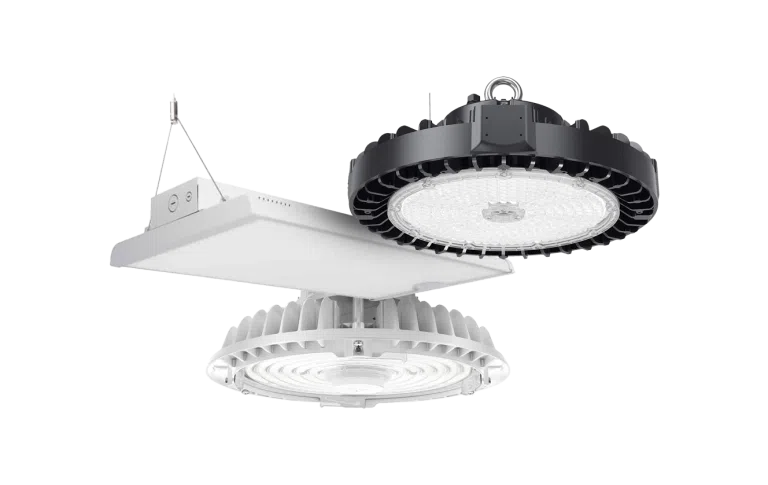
Our LED Warehouse Aisle Lighting for Racks and Narrow Aisles includes linear LED warehouse lights with aisle-oriented optics for rack storage layouts. Available fixtures may vary by beam distribution, output, controls, and chain, cable, pendant, or surface mounting.
These fixtures are used in pallet rack aisles, picking and order-fulfillment aisles, distribution centers, high-rack warehouses, and retail and bulk-storage warehouses.


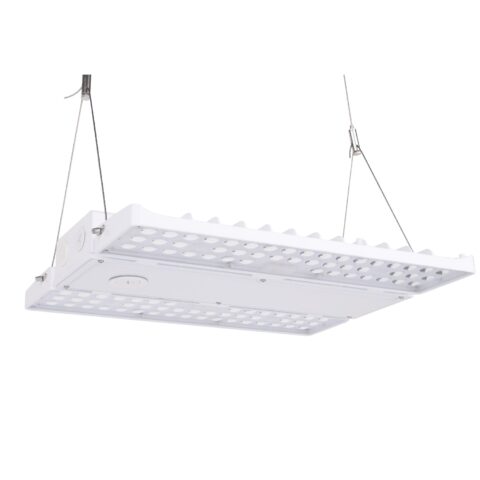


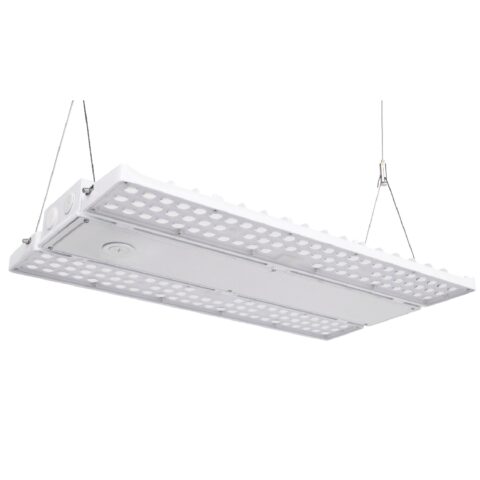
Warehouse Aisle and Rack Lighting
Warehouse aisle and rack lighting is designed for long, narrow storage aisles where light needs to reach the floor, rack faces, labels, products, and picking areas between rows of shelving or pallet racking.
These spaces often require a different lighting approach than open warehouse areas. Broad-distribution high bays can waste light on the tops of racks or create uneven illumination inside aisles. Aisle lighting should be selected around aisle width, rack height, mounting height, fixture spacing, beam distribution, target light levels, and the amount of vertical illumination needed on stored products and labels.
For open warehouse floors, receiving areas, and general high-bay applications, see our LED warehouse lighting options.
Aisle Lighting vs. Open-Area Warehouse Lighting
Open warehouse areas typically need broad, downward illumination across a large floor area. Rack aisles are different because shelving blocks light and creates a narrow corridor where the beam needs to remain concentrated within the aisle.
Linear LED warehouse lights are often a strong fit for rack aisles because their longer fixture shape can align naturally with rows and rectangular spaces. Depending on the fixture and layout, dedicated aisle optics may provide better control than a standard wide-distribution high bay.
UFO warehouse lights are often better suited to open storage, receiving areas, manufacturing floors, and other spaces where broad downward coverage is required rather than concentrated aisle illumination.
Where Warehouse Aisle Lighting Is Used
- Pallet rack aisles: Lighting for high-rack storage areas where fixtures must direct light between rows rather than across the tops of shelving.
- Picking and order-fulfillment aisles: Consistent lighting can help workers identify labels, products, shelf locations, and inventory throughout the rack height.
- Distribution centers: Long storage rows and frequent forklift traffic benefit from planned fixture spacing and controlled beam distribution.
- High-rack warehouses: Taller racks and greater mounting heights may require tighter optics and photometric verification to maintain useful light at the floor and rack faces.
- Retail and bulk-storage warehouses: Aisle lighting can provide more uniform illumination through shelving layouts where broad open-area fixtures are not ideal.
What Matters Most in Warehouse Aisle Lighting
| Selection Factor | What to Review |
|---|---|
| Aisle width | Narrow and wide aisles require different beam distributions and fixture spacing. The optic should concentrate light within the working aisle instead of sending excessive light onto rack tops. |
| Rack height | Taller racks can block light and increase the importance of vertical illumination on shelf faces, labels, and products. |
| Mounting height | Higher mounting positions generally require more controlled optics and sufficient lumen output to deliver useful light to the floor and lower rack levels. |
| Beam distribution | Aisle-oriented optics or narrower distributions can help direct more light down the length of the aisle and reduce wasted light above the racks. |
| Fixture spacing | Spacing should provide consistent illumination without alternating bright and dark areas along the aisle. |
| Vertical illumination | Rack aisles often need useful light on vertical surfaces so workers can see labels, inventory, shelving, and product faces. |
| Glare | Fixture output, optics, mounting height, and placement should be reviewed to reduce glare for employees and forklift operators looking down the aisle. |
| Controls | Motion sensors and dimming can be useful in aisles that are occupied intermittently, provided the fixture and sensor are compatible with mounting height and aisle geometry. |
Rack Height, Aisle Width, and Fixture Placement
Rack geometry has a major effect on lighting performance. Tall racks can block light from adjacent fixtures, while narrow aisles can make overly wide beam patterns inefficient. Fixtures should generally be positioned to place useful light within the aisle instead of across rack tops or neighboring rows.
The correct spacing depends on fixture output, optics, mounting height, aisle width, rack height, reflectance, and the required light level. Existing fixture locations should not automatically be reused when upgrading from fluorescent or HID lighting because the LED distribution may be different.
Vertical Light on Rack Faces
Average floor foot-candles do not tell the whole story in a warehouse aisle. Workers may also need to read labels, locate products, inspect stored materials, or identify shelf positions on vertical rack faces.
For this reason, aisle lighting should be evaluated for both floor-level illumination and how well light reaches the vertical surfaces within the rack system. Fixture optics, placement, spacing, and mounting height all affect the result.
Motion Sensors and Aisle Controls
Warehouse aisles are often occupied intermittently, which can make lighting controls useful for reducing unnecessary operating time. LED high bays with motion sensors may allow fixtures to dim or switch when an aisle is unoccupied and return to the required light level when activity is detected.
Sensor selection should account for mounting height, aisle length, rack obstructions, forklift movement, pedestrian traffic, detection pattern, timeout settings, and the fixture's control compatibility.
Cold Storage, Dust, and Other Warehouse Conditions
Aisle and rack lighting must also be suitable for the operating environment. Standard fixtures may be appropriate for dry, conditioned warehouse spaces, while specialty products may be needed where temperature, moisture, dust, or washdown exposure is present.
For refrigerated or freezer facilities, review cold storage warehouse lighting and confirm the exact fixture's operating-temperature range. Wet, dusty, or washdown areas may require sealed or IP-rated fixtures suitable for those conditions.
Standard warehouse aisle lights are not a substitute for properly rated hazardous-location lighting where the area has been classified because of flammable gases, vapors, combustible dusts, or other hazards.
Voltage, Mounting, and Electrical Requirements
Before ordering, confirm the facility voltage, mounting method, fixture location, controls, and available electrical infrastructure. Many warehouse fixtures support 120-277V operation, while some industrial facilities require 277-480V high bay lighting.
Linear fixtures may use chain, cable, pendant, or surface mounting depending on the model. The mounting method should keep the fixture aligned with the aisle and provide the required clearance from racks, equipment, and material-handling systems.
Photometric Planning for Rack Aisles
Rack layouts can make fixture selection more difficult because shelving height, aisle width, obstructions, and mounting position all affect how light reaches the working area. A photometric plan can help confirm fixture quantity, spacing, beam distribution, expected foot-candles, uniformity, and coverage along rack faces before fixtures are ordered.
LED Lighting Supply can provide a warehouse lighting design for new layouts, retrofits, high-rack storage, unusual aisle widths, and projects where fixture placement or light levels need to be confirmed.
Safety and Performance Certifications
Listings, controls, and environmental ratings are model-specific. Depending on the fixture, warehouse aisle lights may carry UL, ETL, CSA, DLC, DLC Premium, or other applicable certifications or qualifications. Review the exact product specification for voltage, dimming, sensor compatibility, mounting, operating-temperature range, environmental ratings, and certifications before ordering.
Warranty and Warranty Support
Most LED warehouse and high bay fixtures include a 5-year warranty unless otherwise specified, with warranty support based in the USA. Confirm the exact fixture's lumen output, optics, voltage, controls, mounting method, environmental ratings, certifications, and warranty terms before purchase.
LED Warehouse Aisle Lighting FAQs
How Does Warehouse Aisle Lighting Differ From Open-Area Warehouse Lighting?
Warehouse aisle lighting is selected to keep light concentrated within narrow rack aisles, while open-area warehouse lighting typically provides broad downward illumination across a large floor area. Shelving can block light and create narrow corridors, so aisle width, rack height, beam distribution, spacing, and vertical illumination should be considered.
Are Linear LED Fixtures A Good Fit For Rack Aisles?
Linear LED warehouse lights are often a strong fit for rack aisles because their longer fixture shape can align naturally with rows and rectangular spaces. Depending on the fixture and layout, dedicated aisle optics may provide better control than a standard wide-distribution high bay.
What Should Be Considered When Choosing Fixture Spacing For Warehouse Aisles?
Fixture spacing should be based on fixture output, optics, mounting height, aisle width, rack height, reflectance, and the required light level. The spacing should provide consistent illumination without alternating bright and dark areas along the aisle.
Why Is Vertical Illumination Important In Rack Aisles?
Vertical illumination is important because workers may need to read labels, locate products, inspect stored materials, and identify shelf positions on rack faces. Aisle lighting should be evaluated for both floor-level illumination and how well light reaches vertical surfaces within the rack system.
Can Existing Fluorescent Or HID Fixture Locations Be Reused For LED Aisle Lighting?
Existing fixture locations should not automatically be reused when upgrading from fluorescent or HID lighting because the LED distribution may be different. Fixture placement should position useful light within the aisle instead of across rack tops or neighboring rows.
When Are Motion Sensors Useful For Warehouse Aisle Lighting?
Motion sensors can be useful in warehouse aisles that are occupied intermittently because compatible fixtures may dim or switch when an aisle is unoccupied and return to the required light level when activity is detected. Sensor selection should account for mounting height, aisle length, rack obstructions, forklift movement, pedestrian traffic, detection pattern, timeout settings, and fixture control compatibility.
When Should A Photometric Plan Be Used For Rack Aisle Lighting?
A photometric plan can help confirm fixture quantity, spacing, beam distribution, expected foot-candles, uniformity, and coverage along rack faces before fixtures are ordered. It can be useful for new layouts, retrofits, high-rack storage, unusual aisle widths, and projects where fixture placement or light levels need confirmation.
What Should Be Confirmed Before Ordering Warehouse Aisle Lights?
Before ordering, confirm the facility voltage, mounting method, fixture location, controls, available electrical infrastructure, and the exact fixture's lumen output, optics, environmental ratings, certifications, and warranty terms. Many warehouse fixtures support 120-277V operation, while some industrial facilities require 277-480V high bay lighting.