Explosion-Proof Emergency Exit Lights
- Designed for hazardous locations with flammable gases or combustible dusts
- Options for exit signs, emergency heads, or combination units
- Selection support for Class, Division, and Group requirements available


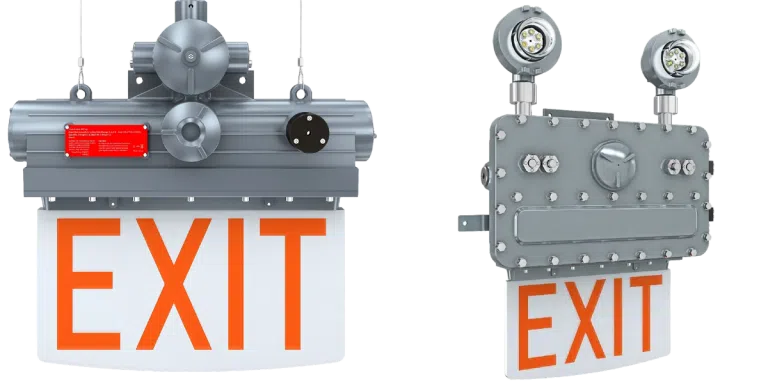

Our Explosion-Proof Emergency Exit Lights for Hazardous Locations include illuminated exit signs, emergency light heads, and combination units for classified industrial spaces.
Available fixtures vary by hazardous-area classification, voltage, mounting method, battery operation, emergency output, and testing features. These emergency fixtures are commonly used in chemical plants, refineries, paint and finishing areas, fuel-handling facilities, grain-processing operations, wastewater plants, and other classified industrial locations.
-
 Starting At $1,224.00

-
Starting At $1,867.40
-
Starting At $2,048.00


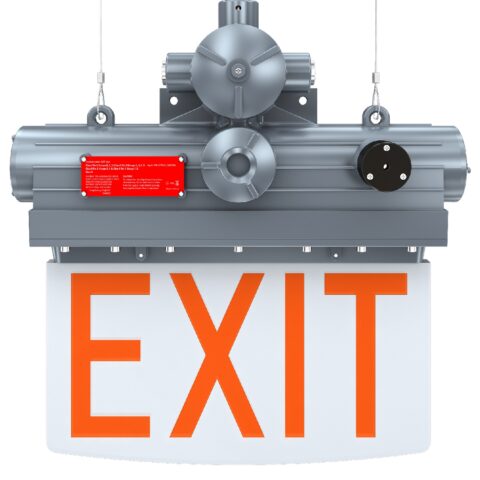

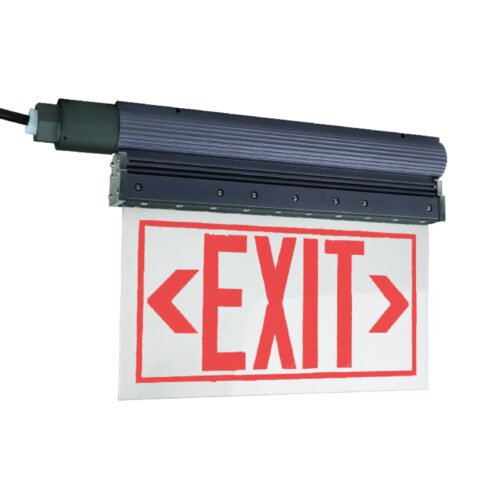

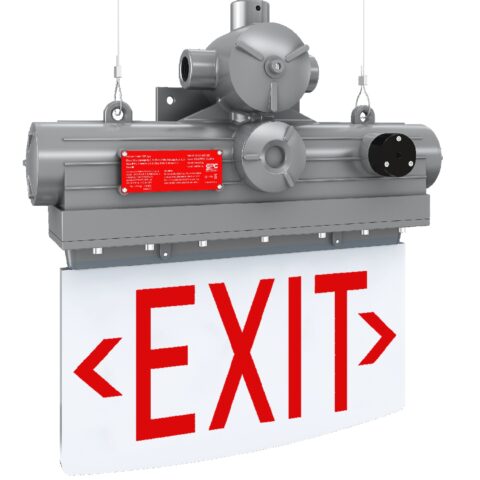
Explosion-Proof Emergency Exit Lights
Explosion-proof emergency exit lights provide exit identification or emergency illumination in hazardous classified locations where flammable gases, vapors, combustible dusts, fibers, or flyings may be present. They are commonly used in chemical plants, refineries, paint and finishing areas, fuel-handling facilities, grain-processing operations, wastewater plants, and other classified industrial spaces. The fixture must match the exact hazardous-area requirements for its installation location.
Before ordering, confirm the required Class, Division, Group, T-rating, ambient temperature range, voltage, mounting method, and environmental ratings. For areas classified as Class I or Class II, review compatible Class I Division 1 lighting, Class I Division 2 lighting, Class II Division 1 lighting, or Class II Division 2 lighting as specified for the exact installation area.
What to Confirm Before Ordering
Selection starts with the hazardous-area classification and required fixture function. Once those are established, confirm the electrical, mounting, environmental, emergency-runtime, and testing requirements for the exact installation.
- Hazardous classification: Match the fixture to the required Class, Division, Group, and T-rating.
- Fixture function: Determine whether the project requires an illuminated exit sign, emergency light heads, or a combination unit.
- Emergency runtime and output: Confirm the rated battery duration and emergency lumen output.
- Voltage: Match the fixture input range to the building circuit, including 480-volt explosion-proof lighting where applicable.
- Mounting and visibility: Verify wall, ceiling, pendant, or end mounting and confirm the exit legend can be seen from the required approach.
- Environmental exposure: Review wet-location, corrosion, washdown, dust, temperature, and impact requirements.
- Testing: Confirm manual test, self-test, diagnostic, battery-status, and maintenance requirements.
Emergency fixture placement should be based on the designated egress path, mounting height, obstructions, required visibility, and emergency light levels. Do not assume that one fixture will provide sufficient coverage based only on its battery wattage or normal operating output.
How Emergency Operation Works
During normal operation, the fixture receives building power while its internal battery remains charged. When normal power fails, the emergency system automatically switches to battery operation so the exit legend remains visible or the emergency heads provide reduced illumination along the egress path. Emergency lighting is not intended to maintain normal facility brightness. Battery-powered output is designed to support safe movement toward designated exits for the required operating period. Many code applications require at least 90 minutes of emergency operation, but the final runtime, illumination level, and placement must be confirmed for the building and jurisdiction.
Certifications, Installation, and Warranty
Confirm that the exact fixture carries the required hazardous-location listing and emergency-lighting certification, such as UL 924, where applicable. A product approved for emergency lighting is not automatically approved for a hazardous location, and an explosion-proof fixture is not automatically approved as emergency equipment. The complete installation - including conduit, fittings, junction boxes and lighting controls, seals, switches, grounding, bonding, and emergency-circuit connections - must be suitable for the classified area.
Installation and required testing should be completed by a qualified electrician experienced with hazardous locations and reviewed against applicable life-safety codes, project documents, and authority-having-jurisdiction requirements. Warranty coverage varies by model, battery, operating conditions, classification, and installation method. Confirm the exact product warranty, battery warranty, replacement requirements, and testing schedule before ordering.
Need help selecting a fixture? Provide the hazardous-area classification, required fixture function, input voltage, mounting location, environmental conditions, and emergency-lighting requirements. LED Lighting Supply's Product Specialists can help identify compatible products for review by your project professional.
Explosion-Proof Emergency Exit Lights FAQs
What Must Be Confirmed Before Ordering Explosion-Proof Emergency Exit Lights?
Confirm the exact hazardous-area Class, Division, Group, T-rating, ambient temperature range, voltage, mounting method, and environmental ratings for the installation location. Also confirm the required fixture function, emergency runtime and output, visibility, and testing requirements.
Do Explosion-Proof Emergency Exit Lights Provide Normal Facility Lighting During A Power Failure?
No. When normal power fails, the emergency system automatically switches to battery operation so the exit legend remains visible or emergency heads provide reduced illumination along the egress path.
How Should I Choose Between An Exit Sign, Emergency Light Heads, Or A Combination Unit?
Choose the fixture function based on whether the project requires an illuminated exit sign, emergency light heads, or a combination unit. The selected fixture must also match the exact hazardous-area requirements of the installation location.
How Long Do Explosion-Proof Emergency Exit Lights Operate On Battery Power?
Emergency runtime must be confirmed by the fixture's rated battery duration. Many code applications require at least 90 minutes of emergency operation, but final runtime, illumination level, and placement must be confirmed for the building and jurisdiction.
How Should Emergency Exit Light Placement Be Determined?
Emergency fixture placement should be based on the designated egress path, mounting height, obstructions, required visibility, and emergency light levels. Do not assume one fixture provides sufficient coverage based only on battery wattage or normal operating output.
Does An Emergency-Lighting Approval Also Approve A Fixture For Hazardous Locations?
No. A product approved for emergency lighting is not automatically approved for a hazardous location, and an explosion-proof fixture is not automatically approved as emergency equipment. Confirm that the exact fixture carries the required hazardous-location listing and emergency-lighting certification, such as UL 924 where applicable.
What Installation Components Must Be Suitable For The Classified Area?
The complete installation, including conduit, fittings, junction boxes, lighting controls, seals, switches, grounding, bonding, and emergency-circuit connections, must be suitable for the classified area. Installation and required testing should be completed by a qualified electrician experienced with hazardous locations and reviewed against applicable life-safety codes, project documents, and authority-having-jurisdiction requirements.
What Warranty Details Should Be Confirmed Before Ordering?
Confirm the exact product warranty, battery warranty, replacement requirements, and testing schedule before ordering. Warranty coverage varies by model, battery, operating conditions, classification, and installation method.