LED Gas Station Lighting
- Fixture options for canopies, parking lots, and store interiors
- DLC-listed models available for utility rebate eligibility
- Product specialists help match fixtures to each site area


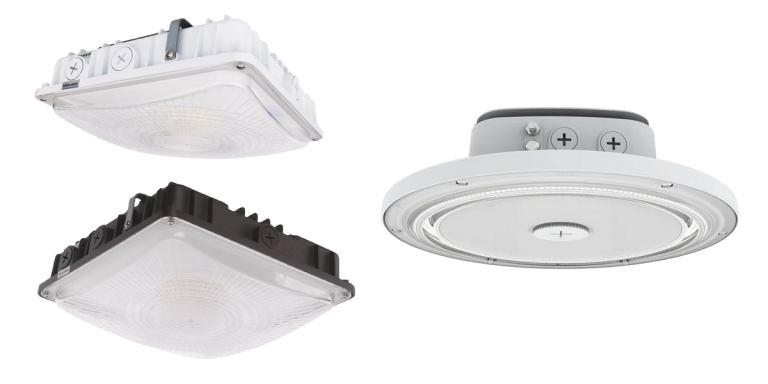
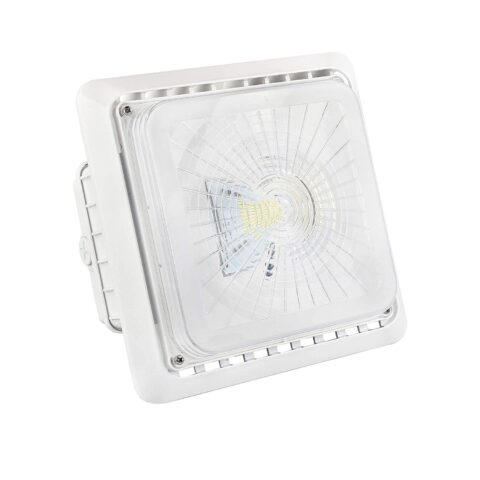
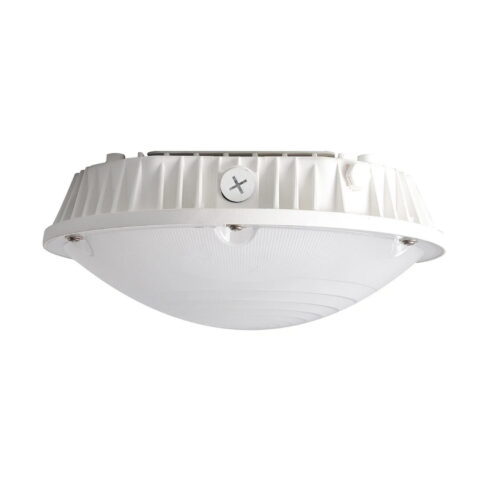
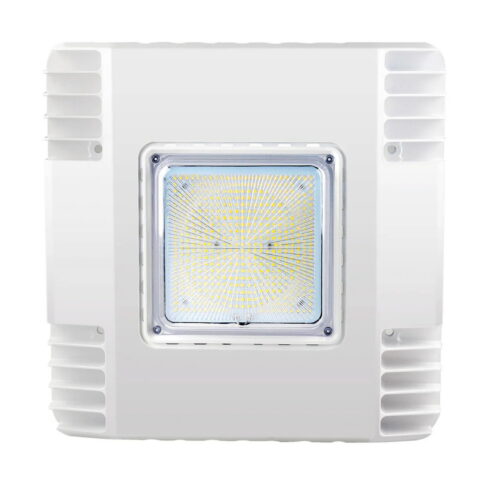
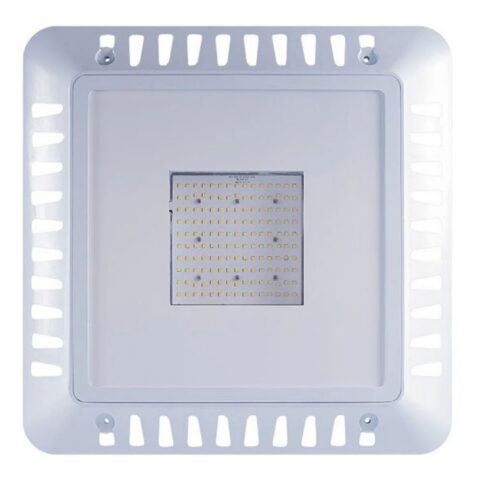
Our Gas Station Lighting includes canopy lights, parking lot lights, wall packs, flood lights, interior panels and troffers, and vapor tight fixtures for fuel retail sites. Canopy fixtures are available in recessed and surface-mounted configurations. Available products vary by wattage, lumen output, optics, color temperature, voltage, dimming, controls, and mounting method.
These fixtures are used at fuel pumps, parking areas, entrances, drive lanes, walkways, storefronts, service zones, car wash areas, convenience stores, cashier areas, aisles, restrooms, and back-of-house rooms.
-
 Starting At $167.31

-
Starting At $216.00
-
Starting At $230.00
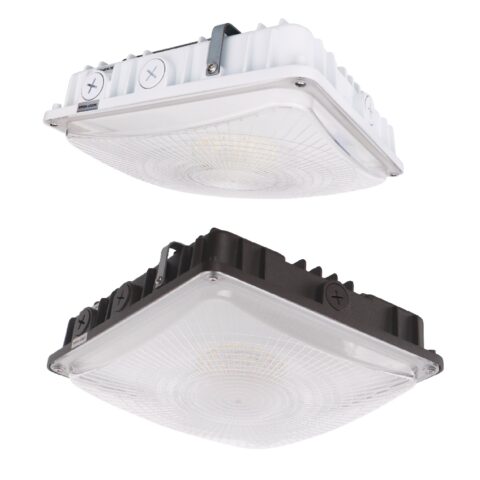


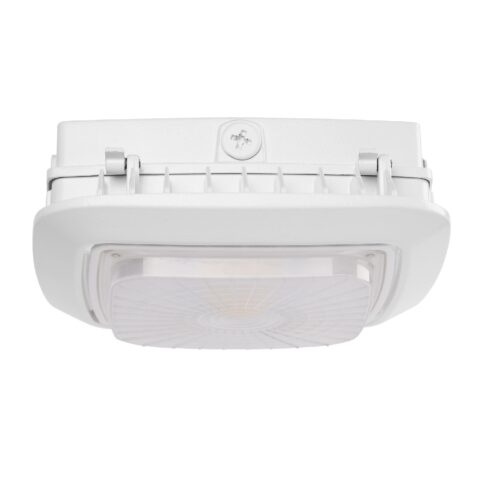
LED Gas Station Lighting for Fuel Stations, Parking Areas, and Convenience Stores
LED gas station lighting includes the exterior and interior fixtures used around a fuel retail site. A complete gas station lighting setup may include canopy lights over fuel pumps, parking lot lights for vehicle areas, wall packs for entrances and walkways, flood lights for service zones or signs, and interior lights for the convenience store.
Start by identifying each area of the property, including fuel islands, parking areas, storefronts, service zones, car wash areas, walkways, and interior store spaces. Then match the fixture type, mounting method, output, optics, voltage, environmental rating, controls, and any hazardous-location requirements to that area.
If the project is replacing fixtures under the fuel pump canopy, do not select the fixture only by canopy opening, wattage, or light output. Defined areas around fuel dispensers, fill points, vents, containment, pits, and related fuel-handling equipment may be Class I hazardous locations. Confirm whether the exact fixture mounting position falls inside or outside a classified boundary before selecting a standard canopy fixture. The required classification and boundary should come from the applicable electrical code, facility documents, project design, and authority having jurisdiction.
The right gas station lighting layout should support visibility, customer comfort, security camera performance, fixture placement, color temperature consistency, controls, and long operating hours while also matching electrical and hazardous-location requirements where applicable.
Selection and Installation Note: Product specifications, wattage, lumen output, optics, beam angle, color temperature, voltage, dimming, controls, mounting method, environmental rating, hazardous-location rating, certifications, and warranty coverage vary by model. Confirm the selected product specification before ordering. For fuel islands and areas near dispensers, vents, fill points, containment, pits, or other fuel-handling equipment, confirm the documented hazardous-area classification and boundary before selecting lighting. For gas station lighting, fuel island lighting, parking areas, exterior building lighting, electrical upgrades, code-sensitive applications, or safety-critical spaces, verify requirements with your local inspector, facility team, project specifier, or a licensed electrical professional.
Common LED Fixtures Used at Gas Stations
Gas stations use different lighting types across the site. The fixture used over the fuel pumps is not always the right fixture for the parking lot, storefront, car wash, service area, or store interior. Fuel-island fixtures also require an additional review because portions of the dispensing area may be classified for flammable vapors.
| Fixture Type | Where It Is Used |
|---|---|
| Gas station canopy lights | Used under fuel pump canopies to provide direct light over pumps, transaction areas, and vehicle fueling spaces. Canopy fixtures may be surface-mounted or recessed depending on the canopy structure. Confirm whether the exact fixture location is outside applicable Class I classified boundaries or whether hazardous-location-rated equipment is required. |
| Parking lot lights | Used around parking areas, entrances, drive lanes, and vehicle circulation zones to support visibility and customer navigation. Fixtures near fuel-handling equipment should still be checked against the site's classified-area boundaries. |
| Wall packs | Used on building exteriors, entrances, walkways, side doors, service doors, ATM areas, and perimeter walls. Wall-mounted fixtures should be evaluated separately if they are near fuel vents, dispensing equipment, or other classified areas. |
| Flood lights | Used for signs, service areas, loading zones, car wash approaches, dumpsters, or other areas needing directional light. Do not assume a standard flood light is acceptable if its mounting location falls within a hazardous classified area. |
| Interior LED panels or troffers | Used inside convenience stores, cashier areas, aisles, offices, restrooms, and back-of-house rooms where the location is not classified as hazardous. |
| Vapor tight lights | Used in car wash areas, utility rooms, damp spaces, or locations where moisture and dust protection are important. Vapor-tight construction does not by itself establish suitability for a hazardous classified location. |
Fuel Islands and Hazardous Classified Locations
Fuel-dispensing areas require additional electrical review because gasoline and other flammable fuels can release ignitable vapors. NEC Article 514 establishes classified areas around specific parts of motor-fuel dispensing facilities, including dispensers, containment or pits, fill connections, vents, pumps, and other fuel-handling equipment.
The classified area is not determined simply by whether a fixture is under the canopy. Classification depends on the fixture's actual position relative to the applicable dispenser, release source, containment, vent, fill point, or other fuel-handling equipment.
| Fueling Area | What to Confirm Before Selecting Lighting |
|---|---|
| Fuel dispenser | Confirm the Class I classified boundaries around and within the dispenser and determine whether the proposed luminaire is inside or outside those boundaries. |
| Dispenser containment or pits | Below-grade or contained spaces associated with dispensing equipment can carry more restrictive classifications. Do not install ordinary electrical equipment in these areas unless permitted for the classification. |
| Fill connections | Tank fill points can create classified areas around the connection. Confirm the applicable boundary before installing nearby wall, pole, canopy, or flood lighting. |
| Tank vents | Vent outlets can create classified areas around the point where vapors are discharged. Check fixture location, wiring, controls, sensors, and other electrical equipment against the required boundary. |
| Remote pumps and fuel-handling equipment | Separate classified boundaries may apply around pumps and other equipment that handles flammable liquids. |
| Canopy above the fuel island | A canopy fixture is not automatically hazardous-location equipment simply because it is above a dispenser, but its exact mounting location must be checked against the applicable classified boundary before a standard fixture is used. |
Important: Do not infer that the entire gas station or entire canopy is automatically Class I Division 1 or Division 2. Conversely, do not assume that all canopy-mounted equipment is outside the classified area. Use the project's electrical drawings, hazardous-area classification, applicable code provisions, and AHJ requirements to determine the classification at the exact fixture location.
How to Choose Gas Station Lighting
Gas station lighting should be selected by area and function. Fuel pump lighting, parking lot lighting, exterior wall lighting, and convenience store lighting all serve different purposes. Matching the fixture type to the area helps improve visibility without over-lighting the site.
| Selection Factor | What to Confirm |
|---|---|
| Site area | Identify whether the fixture is for the fuel canopy, parking lot, storefront, walkway, car wash, service area, sign, or interior store space. |
| Hazardous-location boundary | For fuel islands and areas near dispensers, fill points, vents, containment, pits, remote pumps, or other fuel-handling equipment, determine whether the exact fixture location falls within a Class I hazardous classified area. |
| Fixture type | Select canopy lights, pole lights, wall packs, flood lights, vapor tight fixtures, hazardous-location fixtures, or interior panels based on the installed location and applicable classification. |
| Lumen output and wattage | Choose output based on mounting height, fixture spacing, surface reflectance, area size, and operating hours. Avoid selecting by wattage alone. |
| Color temperature | 4000K is common for canopy and customer-facing areas. 5000K may be used for parking or security-focused areas, but the best choice depends on site appearance and local requirements. |
| Controls | Photocells, timers, dimming, or occupancy-based controls can reduce energy use during low-traffic periods while keeping required areas illuminated. Controls located within classified areas must also be suitable for the location. |
| Voltage | Confirm whether the site uses 120V, 208V, 240V, 277V, or another voltage before selecting fixtures. |
| Environmental rating | Outdoor fixtures should be rated for wet or damp locations as required. Car wash, canopy, and exterior service areas may require additional moisture protection. Wet-location or IP ratings do not replace hazardous-location approval where a classified area exists. |
| Security camera visibility | Review light placement, glare, contrast, and color rendering so cameras can capture usable footage without overexposure or dark spots. |
Recommended Foot-Candles for Gas Station Areas
Gas station light levels vary by area. Fuel pump areas, store interiors, walkways, parking areas, car wash spaces, and perimeter zones each have different visibility needs. The values below are general planning ranges and should be confirmed against local requirements, project specifications, fixture layout, and the selected products.
Foot-candle recommendations address lighting performance only. They do not determine whether a fixture is suitable for a hazardous classified location.
Gas Station Canopy Lighting Considerations
Fuel canopy lights are a major part of gas station lighting, but they should be selected specifically for the canopy structure and the electrical classification of the mounting location. Canopy fixture size, mounting type, spacing, lumen output, optics, voltage, environmental rating, and hazardous-location requirements can all affect the final selection.
For pump areas, uniform light is important because customers need to see fuel pumps, card readers, hoses, vehicles, and surrounding pedestrian areas. Recessed canopy fixtures and surface-mounted canopy fixtures may both be used depending on the existing canopy design.
Before replacing a canopy fixture near a dispenser, confirm whether its exact location falls inside a classified area. A standard UL- or ETL-listed canopy light is not automatically acceptable within a Class I classified location simply because it is wet-location rated or mounted overhead. If the fixture is within a classified boundary, equipment suitable for that specific Class, Division or Zone, Group, and temperature requirement may be necessary.
Standard Canopy Fixtures vs Hazardous-Location Fixtures
Standard canopy fixtures and hazardous-location fixtures serve different purposes. A fixture can be well sealed against moisture and still be unsuitable for an area where flammable fuel vapors may be present.
| Fixture Requirement | What It Means |
|---|---|
| Wet-location or IP rating | Addresses environmental exposure such as rain, moisture, or water ingress. It does not establish approval for flammable-vapor hazardous locations. |
| Vapor-tight construction | Helps resist moisture, dust, and contaminants but does not automatically make the fixture explosionproof or suitable for Class I locations. |
| Class I hazardous-location rating | Identifies equipment evaluated for specified flammable-gas or vapor locations. The exact Class, Division or Zone, Group, temperature marking, and other listing conditions must match the project requirements. |
| Standard canopy fixture | May be appropriate where the mounting location is outside the classified boundary and the fixture meets the environmental, electrical, and project requirements. |
Parking Lot and Perimeter Lighting
Parking lot and perimeter lighting helps customers enter, park, walk, and exit the site. Pole-mounted area lights are commonly used for parking spaces, drive lanes, and vehicle circulation. Wall packs may be used along the building perimeter, near entrances, and around service doors.
Fixture output should be balanced with glare control. Too little light can create dark areas, while too much light can create glare, spill light, and an uncomfortable customer experience. Mounting height, parking lot light poles, pole spacing, optics, and neighboring properties should be reviewed before ordering.
Where parking or perimeter fixtures are installed close to fuel dispensers, tank vents, fill connections, pumps, or other fuel-handling equipment, confirm that their electrical components and wiring remain outside any applicable classified boundary unless specifically approved for that location.
Convenience Store Interior Lighting
Gas station interior lighting should support merchandise visibility, checkout areas, aisles, coolers, restrooms, and back-of-house areas. LED panels and troffers, strip lights, and other interior fixtures may be used depending on ceiling type and layout.
Color temperature and glare matter inside the store. A clean, bright interior can improve visibility for customers and staff, but the lighting should still feel comfortable and consistent throughout the space. Review additional convenience store lighting considerations when planning customer-facing and back-of-house areas.
Car Wash and Service Area Lighting
Car wash and service areas often require fixtures that can handle moisture, dust, and frequent exposure to changing environmental conditions. vapor tight fixtures, wet-location rated fixtures, wall packs, or flood lights may be used depending on the area.
Before selecting fixtures, confirm moisture exposure, mounting location, wash bay layout, wiring method, and whether fixtures are installed inside the wash bay, near the entrance, near the exit, or in a nearby service area. Review LED car wash lighting for more application-specific guidance.
If the car wash or service area is near fuel-handling equipment, separately confirm whether hazardous-location boundaries extend into the proposed fixture location. Moisture protection and hazardous-location suitability are different requirements.
Site-Wide Gas Station Lighting Considerations
- Coordinate fixture appearance: Matching fixture styles and color temperatures across canopies, parking areas, storefronts, and walkways can help create a more consistent site appearance.
- Plan for operating schedules: Canopy, storefront, parking, and perimeter areas may have different operating hours and lighting needs. Compatible photocells, timers, dimming, or other controls can support the intended schedule.
- Balance visibility and glare: Fixture optics, mounting height, aiming, and placement affect illuminance, glare, spill light, customer comfort, and camera performance.
- Review camera views: Coordinate lighting with camera locations to limit severe contrast, direct glare, dark spots, and overexposed views.
- Maintain access for service: Confirm fixture dimensions, mounting method, wiring access, canopy openings, and service access before replacing existing equipment.
- Evaluate each area separately: A fuel canopy, car wash, parking lot, storefront, and interior store space can have different environmental, electrical, lighting, and hazardous-location requirements.
Gas Station Lighting Certifications, Rebates, and Warranty Support
Selected LED gas station lights from LED Lighting Supply carry a safety listing from a recognized testing organization, such as UL, ETL, or CSA, depending on product. Selected models may also be DLC or DLC Premium listed for utility rebate programs where available. DLC qualification is not an electrical safety certification. Rebate requirements vary by utility, region, product, and program rules, so confirm eligibility using the selected product specification and utility program requirements before ordering.
A general UL, ETL, or CSA safety listing does not automatically establish hazardous-location suitability. Where a fixture is installed within a classified fuel-dispensing area, verify that the exact product carries the hazardous-location approval required for that location, including the applicable Class, Division or Zone, Group, temperature marking, ambient rating, and any installation restrictions.
Warranty coverage varies by product and manufacturer. Before purchase, confirm certifications, hazardous-location rating where applicable, DLC status, warranty terms, voltage, controls compatibility, mounting method, environmental rating, and whether the fixture is right for the site layout and surrounding conditions.
Need Help Choosing Gas Station Lighting?
Contact us about LED gas station lighting, and our Product Specialists can help review fixture types, canopy lighting, parking lot lighting, wall packs, car wash lighting, interior store lighting, color temperature, controls, voltage, environmental ratings, and product specifications.
For fuel-island installations, provide the documented hazardous-area classification or project information identifying the fixture location relative to dispensers, vents, fill connections, containment, pits, pumps, and other fuel-handling equipment. LED Lighting Supply can help match fixture options to an established classification, but the hazardous-area boundary itself should be determined by the project engineer, qualified electrical professional, facility team, or authority having jurisdiction.
LED Gas Station Lighting FAQs
Here is the FAQ Content:
How Should I Select Lighting For Different Areas Of A Gas Station?
Select fixtures by site area and function, since fuel canopies, parking lots, storefronts, walkways, car washes, service areas, signs, and interior store spaces have different lighting needs. A complete setup may include canopy lights, parking lot lights, wall packs, flood lights, vapor tight fixtures, and interior fixtures.
What Should I Confirm Before Choosing Gas Station Canopy Lights?
Confirm canopy fixture size, mounting type, spacing, lumen output, optics, voltage, and canopy construction before selecting canopy lights. Recessed and surface-mounted canopy fixtures may both be used depending on the existing canopy design.
How Should I Choose Lumen Output And Wattage For Gas Station Lighting?
Choose lumen output and wattage based on mounting height, fixture spacing, surface reflectance, area size, and operating hours rather than wattage alone. Wattage does not confirm brightness, distribution, glare, or coverage.
What Color Temperature Is Common For Gas Station Lighting?
4000K is common for gas station canopies and customer-facing areas, while 5000K may be used for parking or security-focused areas. The best choice depends on site appearance and local requirements, and matching color temperature across the site can create a more consistent appearance.
How Can Controls Be Used With Gas Station Lighting?
Photocells, timers, dimming, and occupancy-based controls can reduce energy use during low-traffic periods while keeping required areas illuminated. Controls compatibility may vary by fixture and site needs.
What Should Be Reviewed For Parking Lot And Perimeter Lighting?
Review mounting height, pole spacing, optics, glare control, and neighboring properties before ordering parking lot and perimeter fixtures. Too little light can create dark areas, while too much light can create glare, spill light, and an uncomfortable customer experience.
What Should Be Confirmed For Car Wash And Service Area Lighting?
Confirm moisture exposure, mounting location, wash bay layout, wiring method, and whether fixtures will be installed inside the wash bay, near an entrance or exit, or in a nearby service area. Vapor tight fixtures, wet-location rated fixtures, wall packs, or flood lights may be used depending on the area.
What Product Details Should Be Verified Before Ordering LED Gas Station Lights?
Confirm the selected product's specifications, including voltage, mounting method, environmental rating, controls compatibility, certifications, warranty coverage, and suitability for the site layout and surrounding conditions. Product specifications and available features vary by model.