Pharmaceutical Lighting and Cleanroom Lighting
- NSF-listed and cleanable fixture options for qualifying areas
- Washdown, vapor tight, and cleanroom-style models available
- Application support for room-specific fixture selection


Get Your Custom Lighting Plan With Product Recommendations
- Tell us about the pharmaceutical facility or cleanroom you're lighting, and a product specialist can help you decide which fixtures to use, how many you need, and where to place them.


Our Pharmaceutical Lighting and Cleanroom Lighting include cleanroom-style fixtures, vapor tight lights, LED panels, high bays, and task lights for pharmaceutical facility areas. Available models vary by cleanability, washdown suitability, lens material, color temperature, CRI, mounting method, dimming, occupancy sensors, scheduling, and emergency options. Surface, pendant, suspended, recessed, and cleanroom-style mounting configurations are available. These products are used in production areas, packaging rooms, clean or controlled spaces, inspection stations, laboratories, washdown areas, storage rooms, corridors, offices, and support spaces.
LED Pharmaceutical Facility Lighting for Production, Packaging, Labs, Cleanrooms, and Support Areas
LED pharmaceutical facility lighting is used in production areas, packaging rooms, cleanrooms and controlled spaces, inspection stations, laboratories, washdown areas, storage rooms, corridors, offices, and support spaces. These areas do not all require the same fixture type. Some rooms may need cleanable, sealed, cleanroom-compatible, or washdown-rated fixtures, while others may use standard commercial or industrial lighting when sanitation, cleanroom, or environmental requirements do not apply. Start by classifying the room and its facility requirements, including whether it is a cleanroom or controlled space, washdown area, inspection station, laboratory, or general support area. Then confirm the required light level, cleaning procedure, ceiling and mounting method, sanitation or environmental rating, visual task, and facility standard. A fixture that works well in a warehouse or office may not be suitable for a washdown room, controlled manufacturing area, cleanroom, or inspection station.
Selection and Installation Note: Product specifications, wattage, lumen output, optics, color temperature, CRI, voltage, dimming, controls, mounting method, NSF listing, cleanability, IP rating, washdown rating, lens material, certifications, and warranty coverage vary by model. Confirm the selected product specification before ordering. For pharmaceutical production, packaging, cleanrooms, controlled environments, laboratories, washdown rooms, or inspection-sensitive areas, verify requirements with the facility quality team, validation team, project specifier, local inspector, and a licensed electrical professional.
How to Choose Pharmaceutical Facility Lighting
The right fixture depends on what happens in the room. Start with the facility requirement, then confirm light level, mounting, controls, environmental rating, and, where applicable, the fixture's interface with the cleanroom ceiling system.
| Selection Factor | What to Confirm |
|---|---|
| Room classification and use | Confirm whether the area is production, packaging, lab, storage, corridor, office, cleanroom, controlled space, washdown, or general support space. |
| Cleanability | Review fixture shape, exposed fasteners, lens material, gasket design, mounting clearance, and whether the fixture can be cleaned according to facility procedures. |
| Cleanroom ceiling interface | For cleanrooms and controlled spaces, confirm the required recessed, flush, gasketed, sealed, or other ceiling-interface design; plenum access; and approved installation method for the ceiling system. |
| NSF or sanitation listing | Confirm whether the selected model is listed for the required use when an NSF or other sanitation listing is specified. Do not assume an IP-rated or vapor-tight fixture is NSF listed. |
| Washdown exposure | Confirm whether the fixture may be exposed to moisture, spray, high-pressure washdown, cleaning chemicals, or routine sanitation. |
| Color temperature and CRI | 4000K and 5000K are common options. Inspection and quality-control areas may need higher CRI or a specific color temperature based on facility standards. |
| Mounting method | Confirm whether surface, pendant, suspended, recessed, or cleanroom-style mounting is acceptable for the room, ceiling system, and cleaning procedure. |
| Controls | Dimming, occupancy sensors, and scheduling may be useful in offices, corridors, storage, and support spaces. Confirm compatibility with production, validation, and safety requirements. |
| Emergency operation | Confirm whether emergency battery backup, generator-backed circuits, or separate egress lighting is required. |
Cleanroom Lighting Considerations
Cleanroom lighting must be selected as part of the room's documented design and contamination-control approach. ISO 14644 cleanroom classification is based on airborne particle concentration under defined conditions; it is not a fixture certification. Likewise, a fixture described as cleanroom-style does not by itself establish cleanroom compliance, GMP compliance, or successful room validation. Confirm the cleanroom classification, room pressure relationship, ceiling system, cleaning and disinfection process, maintenance procedure, and project specification before selecting fixtures. The facility team and qualified project professionals should determine the room requirements; LED Lighting Supply can help compare published fixture dimensions, mounting options, materials, ratings, and photometric data to those established requirements.
| Cleanroom Consideration | What to Review |
|---|---|
| Documented room requirements | Confirm the applicable facility specification, cleanroom classification, pharmaceutical quality requirements, and any owner or validation-team requirements for lighting. |
| Ceiling integration | Verify that the fixture flange, frame, gasket, trim, mounting hardware, and installation method are compatible with the cleanroom ceiling grid, gypsum ceiling, panel system, or other ceiling construction. |
| Seal integrity | Where required, use the specified gasketed or sealed installation detail to help maintain the ceiling boundary. The installer and project team must confirm sealing materials and methods are compatible with the ceiling system and facility procedures. |
| Surface design | Review smoothness, crevices, exposed fasteners, lens retention, edges, and other details that can affect cleaning and particle accumulation. |
| Materials and chemical compatibility | Verify lens, gasket, housing, coating, and hardware compatibility with approved cleaners, disinfectants, vaporized agents, and other expected exposures. An IP rating does not establish chemical resistance. |
| Maintenance access | Determine whether service will occur from above the ceiling, below the ceiling, or during planned shutdowns. Confirm that driver or fixture replacement procedures fit the room's contamination-control and requalification process. |
| Airflow and room layout | Coordinate fixture locations with HEPA/ULPA filters, returns, diffusers, equipment, and airflow patterns. Fixture placement should be reviewed within the room design rather than selected from a universal layout rule. |
Recommended Foot-Candles for Pharmaceutical Facility Lighting
Pharmaceutical facility light levels vary by task and room type. Use the ranges below as general planning guidance only. Final requirements should be confirmed against facility standards, quality procedures, inspection requirements, and selected fixture photometric data. Foot-candles describe illuminance at a surface; fixture lumens alone do not determine the light level delivered to the task.
| Area | General Planning Range |
|---|---|
| Warehouse and bulk storage areas | 20-30 foot-candles |
| General production and packaging areas | 30-50 foot-candles |
| Inspection and quality-control stations | 50-100 foot-candles |
| Laboratories and sample review areas | 50-100 foot-candles |
| Corridors and support areas | 10-30 foot-candles |
| Offices and administrative areas | 30-50 foot-candles |
Where NSF, Washdown, Cleanable, or Cleanroom-Compatible Fixtures May Be Needed
Some pharmaceutical spaces require fixtures that are easy to clean, sealed against dust or moisture, suitable for washdown exposure, or compatible with a controlled-environment ceiling system. NSF, IP, washdown, and cleanroom-related requirements are not interchangeable, so confirm the exact requirement before selecting fixtures.
| Area or Condition | What to Review |
|---|---|
| Cleanrooms and controlled spaces | Review the room specification, ceiling interface, sealing detail, cleanability, lens material, gasket design, maintenance access, and compatibility with cleaning and contamination-control procedures. |
| Controlled production areas | Review cleanability, lens material, fixture shape, mounting method, sanitation procedures, and whether NSF or another specific listing is required. |
| Packaging areas | Confirm light level, glare, inspection tasks, label review, color quality, cleanability, and whether the area has washdown or sanitation requirements. |
| Washdown rooms | Confirm IP rating, washdown method, cleaning chemicals, lens material, gasket design, and whether IP69K or another rating is required. IP65 is dust-tight and protected against water jets; IP66 is dust-tight and protected against powerful water jets. Select the rating based on the actual exposure. |
| Laboratories | Review task lighting, CRI, color temperature, glare, chemical exposure, ceiling type, and cleaning procedures. |
| Offices and corridors | These spaces may not need washdown, NSF-listed, or cleanroom-compatible fixtures unless the facility standard requires them. |
Fixture Types Used in Pharmaceutical Facilities
| Fixture Type | Where It May Fit |
|---|---|
| NSF or food-safe LED fixtures | Used where cleanability, sanitation, splash-zone suitability, or washdown resistance is required by the facility or project specification. |
| Vapor-tight LED fixtures | Used in damp, humid, dusty, or washdown-adjacent areas when the fixture rating matches the exposure. Vapor-tight construction does not automatically make a fixture suitable for a cleanroom or hazardous location. |
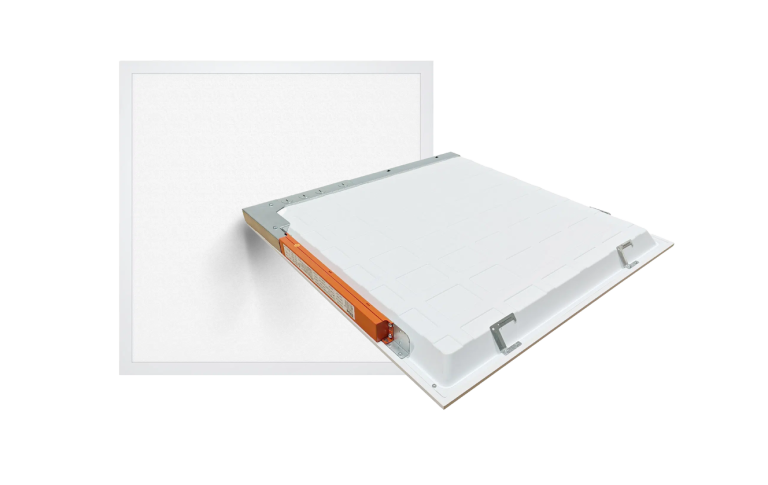
| LED panels | Used in offices, corridors, administrative areas, and compatible grid-ceiling support spaces. Confirm the panel and mounting system are suitable before using them in a controlled environment. |
| Cleanroom-style fixtures | Used where the project requires smooth, cleanable, sealed, recessed, flush, or controlled-environment fixture designs. Confirm the ceiling interface, installation detail, and room-specific requirements. |
| LED high bays | Used in warehouse and storage spaces with high ceilings when no washdown, cleanroom, or sanitation-specific fixture is required. |
| Task lights | Used at inspection benches, sample review stations, microscope-adjacent areas, and detailed work zones where overhead light alone is not enough. |
Color Temperature and Visual Inspection
Color temperature should match the task and facility preference. 4000K is often selected for general work areas. 5000K provides a cooler white appearance and may be preferred in inspection, packaging, labeling, and quality-control areas. Color temperature does not determine brightness or CRI. Confirm CRI, glare, color temperature, and task-surface illuminance requirements before ordering fixtures for inspection-sensitive spaces.
Common Pharmaceutical and Cleanroom Lighting Mistakes
- Calling every fixture pharmaceutical grade or cleanroom rated: The correct fixture depends on the room, cleaning procedure, ceiling system, listing, and facility requirements.
- Assuming a cleanroom-style fixture makes the room compliant: Cleanroom classification and validation depend on the complete room design, installation, operation, and documented procedures - not on a lighting fixture alone.
- Ignoring the ceiling interface: A fixture may need a specific recessed, flush, gasketed, or sealed installation detail to suit the controlled environment.
- Assuming NSF is always required: Some production or washdown areas may require NSF-listed or cleanable fixtures, while offices and storage may not.
- Using IP rating as a substitute for NSF or cleanroom suitability: IP ratings describe protection against solid-object and water ingress. They do not confirm NSF listing, chemical resistance, cleanability, or cleanroom compatibility.
- Ignoring lens and gasket materials: Materials should match cleaning chemicals, impact risk, heat, and facility requirements.
- Overlooking maintenance procedures: Fixture servicing should be coordinated with the room's access limitations, cleaning requirements, and applicable change-control or requalification procedures.
- Using one color temperature everywhere: Inspection areas, offices, corridors, labs, and storage rooms may need different lighting conditions.
- Making compliance claims from fixture selection alone: Lighting supports facility requirements, but the facility team must confirm validation, sanitation, cleanroom, and compliance needs.
When an LED Lighting Upgrade May Be a Good Fit
An LED upgrade may be worth evaluating when existing fluorescent, HID, or aging LED fixtures no longer provide the required light levels, color quality, reliability, cleanability, or control capability. The decision should account for the room's environmental and quality requirements, not only fixture purchase price or wattage.
- Frequent lamp or ballast service: Replacing older fluorescent or HID fixtures with LED luminaires can reduce routine lamp and ballast replacement, which may be especially valuable where access requires shutdowns, cleaning, or controlled-area procedures.
- Insufficient task visibility: A photometric layout can help determine whether replacement fixtures can provide appropriate task-surface illuminance and distribution for production, packaging, inspection, laboratory, or storage work.
- Changing room use or sanitation procedures: A facility may need to replace fixtures when a space is converted to a controlled area, washdown area, inspection station, or other use with different cleanability or environmental requirements.
- Need for controls: Selected LED fixtures may support dimming, occupancy sensing, scheduling, or building automation where those controls are compatible with production, validation, safety, and facility requirements.
- Energy-reduction objective: LED fixtures can use less energy than older lighting systems, but projected savings should be based on the selected fixture wattage, operating schedule, controls strategy, utility rate, and existing equipment.
- Planned maintenance or ceiling work: Lighting replacement can be coordinated with ceiling-system work, cleanroom renovation, electrical upgrades, or planned shutdowns to reduce disruption.
Certifications, Rebates, and Warranty Support
LED pharmaceutical facility lighting options from LED Lighting Supply may carry safety listings from recognized testing organizations such as UL, ETL, or CSA, depending on the product and application. Selected models may be DLC or DLC Premium listed for utility rebate programs where applicable. DLC qualification is an efficiency and performance program, not an electrical safety certification. Warranty coverage varies by product; many models include a 5-year warranty, but confirm the selected product documentation. Before ordering, confirm the selected product's certifications, NSF status where required, cleanability, cleanroom ceiling compatibility, IP rating, lens and gasket materials, voltage, wattage, lumen output, color temperature, CRI, controls compatibility, mounting method, and suitability for the room and facility requirements. Contact us about pharmaceutical facility lighting, and our Product Specialists can help review room type, cleanability, cleanroom fixture features, NSF listing, IP rating, washdown exposure, light level, controls, and published product specifications.
Pharmaceutical Lighting and Cleanroom Lighting FAQs
How Should Pharmaceutical Facility Lighting Be Selected?
Pharmaceutical facility lighting should be selected by room type, cleaning procedure, ceiling type, sanitation requirement, visual task, and facility standard. Confirm the required light level, mounting method, controls, and environmental rating for the room.
What Light Levels Should Be Planned For Pharmaceutical Facility Areas?
General planning ranges are 20-30 foot-candles for warehouse and bulk storage, 30-50 for general production and packaging, 50-100 for inspection stations and laboratories, 10-30 for corridors and support areas, and 30-50 for offices. Final requirements should be confirmed against facility standards, quality procedures, inspection requirements, and selected fixture specifications.
When May Cleanable Or Washdown-Rated Fixtures Be Needed?
Cleanable or washdown-rated fixtures may be needed in spaces with sanitation procedures, moisture, spray, high-pressure washdown, cleaning chemicals, or controlled-environment requirements. Washdown rooms should be reviewed for IP rating, washdown method, cleaning chemicals, lens material, gasket design, and any required rating.
Can An IP-Rated Fixture Be Assumed To Be NSF Listed?
No. IP ratings describe water and dust ingress protection, but they do not confirm NSF listing or cleanability requirements.
What Should Be Considered For Inspection And Quality-Control Lighting?
Inspection and quality-control areas should be reviewed for light level, glare, inspection tasks, label review, color quality, cleanability, CRI, and color temperature. Inspection-sensitive spaces should have CRI, glare, and color temperature requirements confirmed before ordering.
Which Fixture Types May Fit Different Pharmaceutical Facility Spaces?
Pharmaceutical facilities may use NSF or food-safe fixtures, vapor tight fixtures, LED panels, cleanroom-style fixtures, LED high bays, and task lights depending on room requirements. Task lights are used in detailed work zones where overhead light alone is not enough, while high bays are used in high-ceiling warehouse and storage spaces when sanitation-specific fixtures are not required.
What Should Be Confirmed Before Ordering Pharmaceutical Lighting?
Confirm the selected product's certifications, NSF status, cleanability, IP rating, lens material, voltage, wattage, lumen output, color temperature, CRI, controls compatibility, mounting method, and fit for the room and facility requirements. Product specifications and ratings vary by model.