


LED Walk-In Cooler Lighting
- Cold-rated options available for cooler and freezer environments
- NSF-listed and vapor-tight fixture options for food storage
- Selection support for temperature rating, mounting, and controls


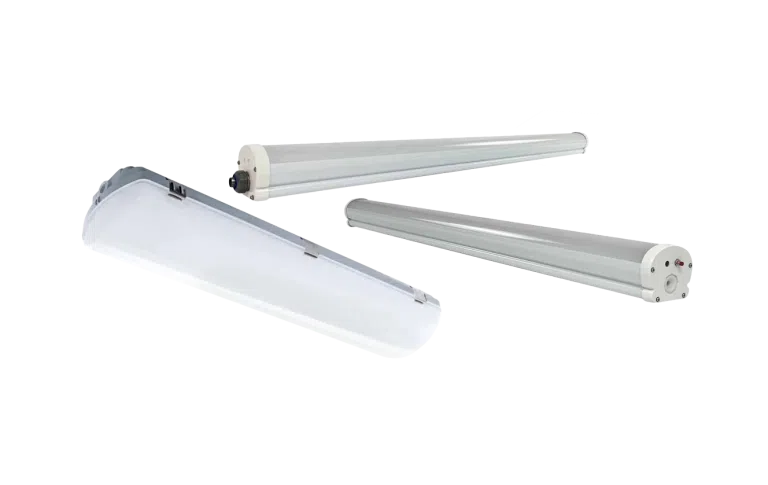

Our LED Walk-In Cooler Lights include food-grade, vapor-tight, freezer-rated, and sealed linear fixtures for refrigerated spaces. Available models vary by low-temperature rating, voltage, mounting method, and controls such as occupancy sensors, door switches, dimming, and timers.
These fixtures are commonly used in walk-in coolers, walk-in freezers, refrigerated storage rooms, grocery coolers, restaurant cold rooms, food-service storage areas, freezer aisles, and back-of-house cold rooms.




What Are Walk-In LED Cooler Lights?
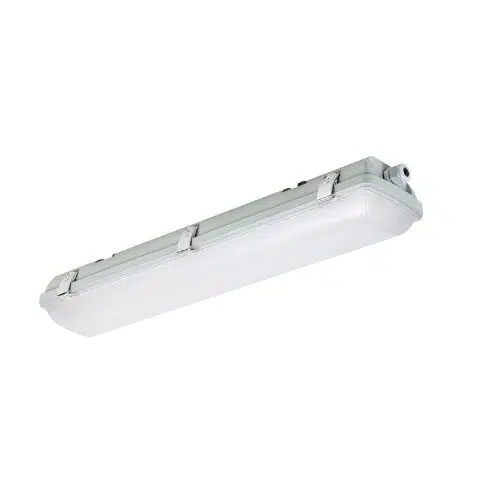
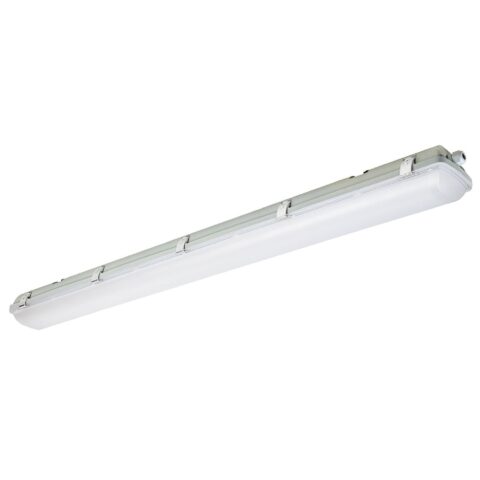
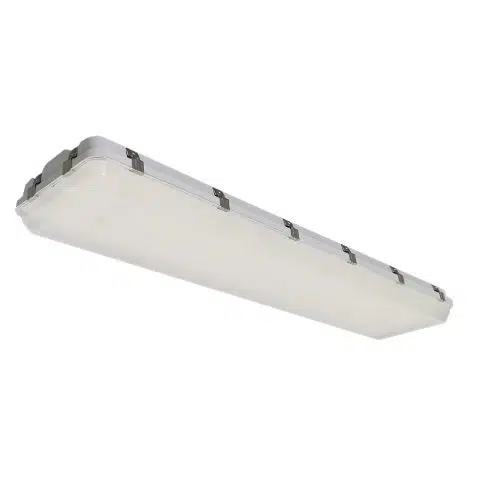
Walk-in LED cooler lights are commercial lighting fixtures selected for refrigerated storage rooms, walk-in coolers, walk-in freezers, grocery coolers, restaurant cold rooms, and food-service storage areas. Suitable fixtures may provide low-temperature operation, moisture-resistant or sealed construction, product visibility, and cleanability where required.
Common options include LED NSF food-grade lights, LED vapor-tight lights, freezer-rated LED fixtures, and sealed linear fixtures. Selection depends on the minimum operating temperature, ceiling height, shelving layout, condensation and washdown exposure, food-handling requirements, controls, and applicable health and electrical requirements.
LED walk-in cooler lighting can replace older fluorescent or HID fixtures when the selected fixture, voltage, temperature rating, mounting method, controls, and wiring conditions are compatible. Confirm the fixture's published minimum operating temperature, electrical ratings, environmental rating, mounting details, and any required food-equipment or sanitation certification before ordering.
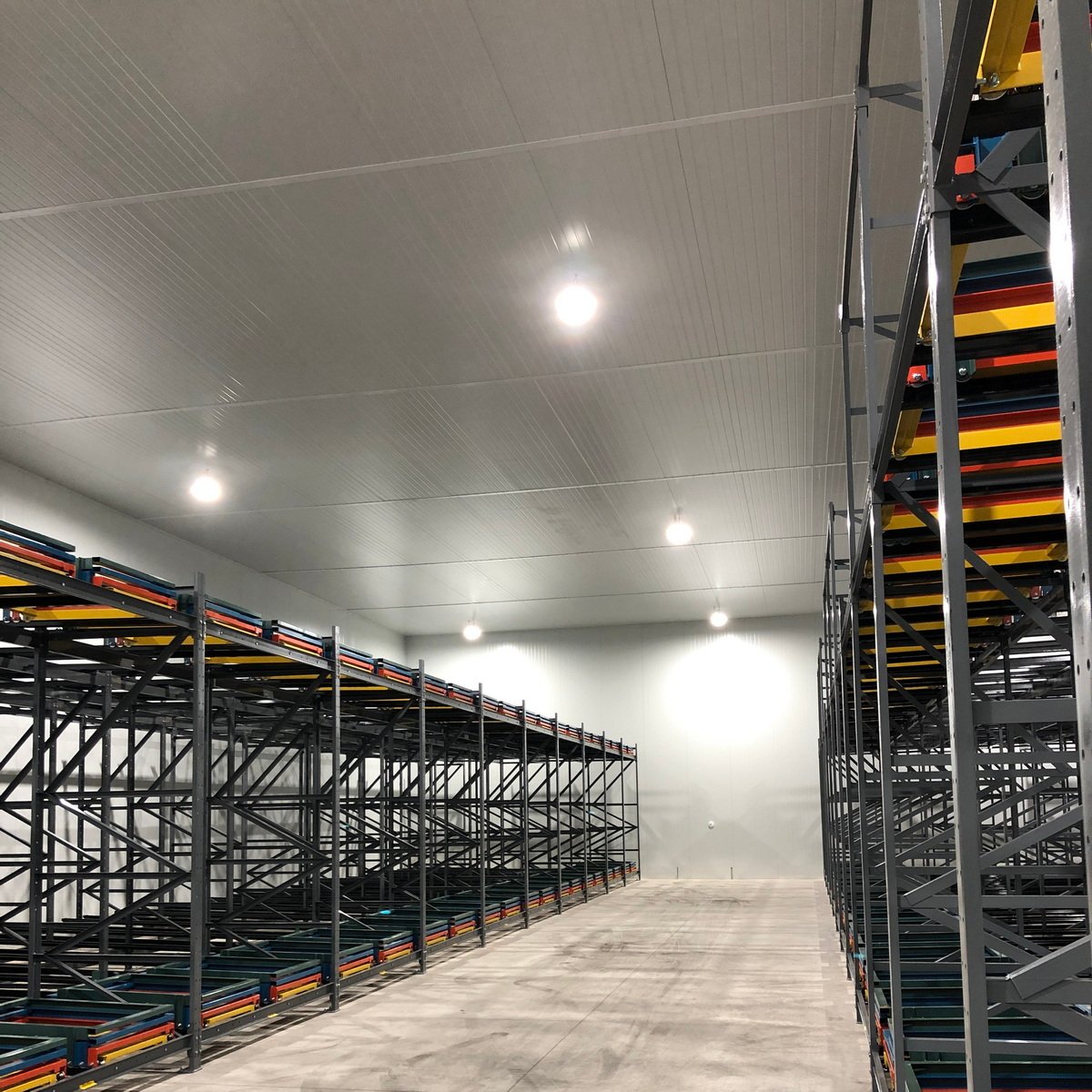
Case Study: Installation of new LED Lighting for Old Souls Farm in Saint Paris, OH
|
After: 150 Watt High Output UFO High Bay | 22500 Lumens |
 |
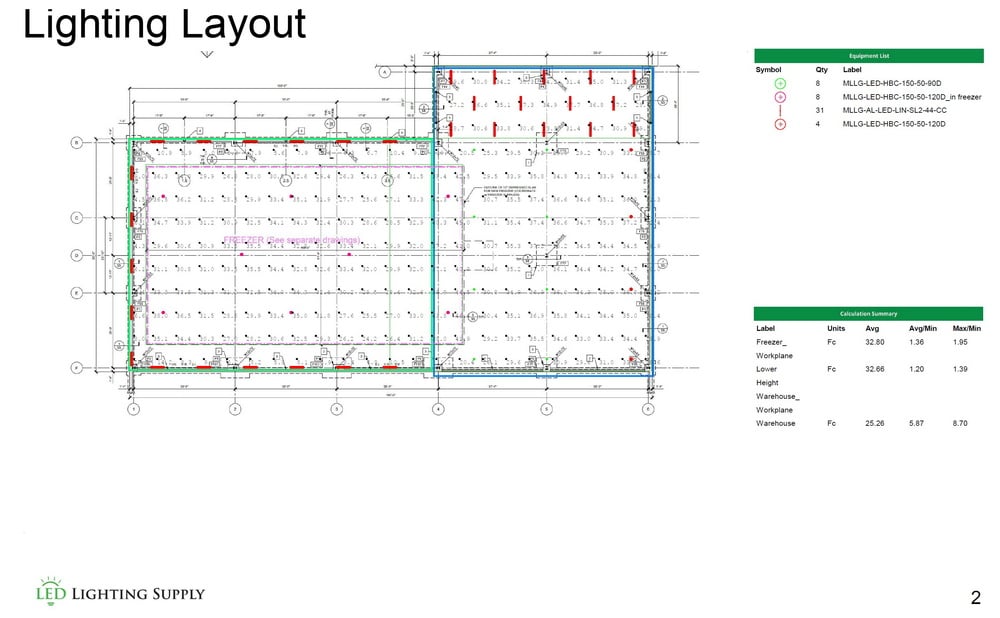
Lighting Plan We Created for the Customer
|
Lighting Plan |
Heat Map |
 |
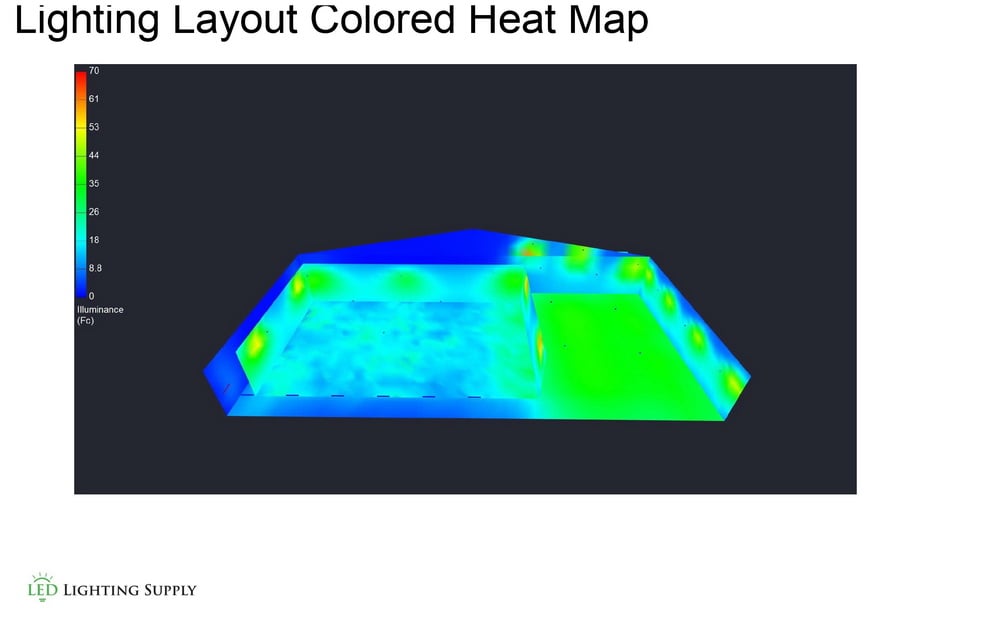 |
Warehouse / Cold Storage Lighting Installation Plan Metrics
- Mounting height: 23 to 32 ft
- Fixture Used: MLLG-LED-HBC-200-5-120: 100 / 120 / 150 / 200 Watt Adjustable LED UFO High Bay | 15000 to 30000 Lumens
- FC achieved: 25.26 FC average
- Uniformity (Avg/Min): 1.36
Selection and Installation Note: Review the selected fixture's specification sheet for its temperature range, voltage, lumen output, dimensions, lens, mounting method, controls compatibility, environmental rating, certifications, and warranty terms. Wet-location and IP ratings address water and dust ingress; they do not independently establish freezer suitability, food-sanitation suitability, chemical resistance, or compliance with local requirements. For food-handling, freezer, or code-sensitive applications, confirm project requirements with the facility team, project specifier, local health authority, inspector, or licensed electrical professional.
How to Choose Walk-In Cooler Lighting
| Selection Factor | What to Confirm |
|---|---|
| Minimum temperature | Confirm that the fixture, driver, and any controls are rated for the lowest expected cooler or freezer temperature. |
| Food handling requirements | Confirm whether an NSF-certified fixture or other sanitation-related documentation is required by the facility, project specification, or health authority. |
| Moisture and condensation | Review the applicable wet-location or IP rating, gasketed construction, condensation, defrost cycles, door activity, and any washdown exposure. |
| Shelving layout | Confirm fixture placement around shelving, aisles, racks, and product storage so shadows do not make labels or inventory difficult to see. |
| Fixture mounting | Review ceiling height, surface or pendant mounting, junction box locations, and service access. |
| Controls | Confirm compatibility with occupancy sensors, door switches, dimming, or timers where needed. |
| Emergency operation | Confirm whether emergency lighting or battery backup is required by the facility or local code. |
Recommended Foot-Candles for Walk-In Coolers
Walk-in cooler lighting levels vary by cooler size, shelving layout, ceiling height, product visibility needs, food-handling activity, door activity, and local requirements. Use the widget below for early planning. Final fixture count and placement should be confirmed using the specific room layout and fixture photometric data.
NSF Food-Grade Lights vs. Vapor-Tight Cooler Lights
Select fixtures with appropriate NSF certification or sanitation documentation when required for food handling, cleanability, or inspection criteria. Vapor-tight fixtures can be suitable for general refrigerated storage with moisture exposure, but vapor-tight construction does not by itself provide NSF certification or establish suitability for food-contact or sanitation requirements. For freezer rooms, confirm the published low-temperature rating of the complete fixture, driver, and controls.
| Fixture Type | Best Fit |
|---|---|
| NSF food-grade LED fixtures | Food handling, food prep, commercial kitchens, grocery coolers, restaurant cold rooms, and areas where applicable sanitation or cleanability requirements call for NSF-certified equipment. |
| LED vapor-tight fixtures | General cooler storage, damp storage rooms, back-of-house cold rooms, and refrigerated storage areas where the fixture's environmental rating matches the exposure and NSF certification is not required. |
| Freezer-rated LED fixtures | Walk-in freezers and low-temperature rooms where the fixture, driver, and controls are rated for the expected minimum temperature. |
Benefits of LED Walk-In Cooler Lighting
- Cold-temperature performance: Properly selected LED cooler lights can operate in refrigerated or freezer environments when rated for the expected temperature range.
- Improved product visibility: Appropriate light levels and fixture distribution can improve visibility for labels, shelving, inventory checks, food storage, and staff movement.
- Energy efficiency: LED fixtures can reduce energy use compared with older fluorescent or HID systems, depending on wattage, operating hours, controls, and existing conditions.
- Reduced maintenance: LED fixtures can reduce routine lamp, tube, and ballast replacement compared with older systems.
- Instant-on operation: LEDs generally reach usable output quickly, which can be useful in cooler and freezer spaces where staff may enter for short periods.
- Controls options: Compatible models may support occupancy sensors, door switches, dimming, or timers.
- Sealed fixture options: Sealed, vapor-tight, and food-grade fixture options are available for applications requiring appropriate moisture protection, cleanability, or low-temperature performance.

Installation and Voltage Compatibility
Walk-in cooler lighting is commonly installed with surface-mounted, pendant-mounted, or sealed linear fixtures depending on the ceiling type and existing wiring. Commercial fixtures may be offered in different input-voltage ranges, including 120-277V or 277-480V on selected models. Confirm the selected fixture's input-voltage range and branch-circuit compatibility before ordering.
Existing fluorescent cooler lights may require review of fixture size, wiring, mounting holes, junction box locations, lens clearance, and controls before replacement. In freezer applications, confirm that the complete LED fixture assembly, including its driver and any controls, is rated for the expected low-temperature conditions.
Common Walk-In Cooler Lighting Mistakes
- Using fixtures below their temperature rating: Freezers and low-temperature coolers need fixtures, drivers, and controls rated for the expected minimum temperature.
- Assuming vapor-tight means food-grade: Vapor-tight construction does not replace NSF certification or other sanitation documentation where required. Confirm requirements with the facility team or local health authority.
- Ignoring condensation and defrost cycles: Frequent door openings, temperature swings, and defrost cycles can create moisture exposure that affects fixture selection.
- Blocking airflow or equipment access: Keep fixtures clear of evaporator coils, fans, air curtains, and service access areas.
- Setting motion sensor delays too short: Staff working in cold rooms or freezers may need longer sensor delays to avoid lights turning off during active work.
- Creating shadows behind shelving: Fixture placement should account for racks, product stacks, aisle width, and label visibility.
- Using controls not rated for the environment: Dimmable or sensor-controlled fixtures should have compatible drivers and controls rated for the cooler or freezer environment.
Walk-In Cooler Lighting Certifications and Warranty Support
Certification, DLC qualification, and warranty coverage are product-specific. Selected products may carry a safety certification from a Nationally Recognized Testing Laboratory, such as UL, ETL, or CSA, and selected models may be DLC or DLC Premium qualified. DLC qualification concerns energy-efficiency and performance criteria; it is not an electrical safety certification.
Utility rebate eligibility depends on the utility program, region, installation, and the selected product's current listing. Review the product specification sheet and warranty documentation before purchase to confirm safety certification, DLC status where relevant, voltage, controls compatibility, mounting method, environmental ratings, and warranty terms for the intended cooler or freezer application.
LED Walk-In Cooler Lighting FAQs
How Do I Choose Between NSF Food-Grade, Vapor-Tight, And Freezer-Rated Fixtures?
Choose NSF food-grade fixtures for food handling, food prep, grocery coolers, restaurant cold rooms, and areas with cleanability or sanitation requirements; choose vapor-tight fixtures for general cooler storage and refrigerated areas where NSF listing is not required. Select freezer-rated fixtures for low-temperature rooms where the fixture and driver must operate at the expected minimum temperature.
What Should Be Confirmed Before Ordering Walk-In Cooler Lighting?
Confirm the selected fixture's minimum operating temperature, wet-location rating, IP rating, NSF listing where needed, voltage, driver rating, mounting method, and product specification before ordering. Specifications, controls, environmental ratings, certifications, and warranty coverage vary by model.
Can LED Walk-In Cooler Lights Replace Existing Fluorescent Or HID Fixtures?
LED walk-in cooler lighting can replace older fluorescent or HID fixtures when the selected fixture, voltage, temperature rating, mounting method, controls, and wiring conditions are compatible. Existing fluorescent installations may require review of fixture size, wiring, mounting holes, junction box locations, lens clearance, and controls before replacement.
How Should Fixture Count And Placement Be Planned For A Walk-In Cooler?
Final fixture count and placement should be confirmed for the specific cooler, freezer, or refrigerated room. Cooler size, shelving layout, ceiling height, product visibility needs, food handling activity, door activity, and local requirements can affect lighting levels, while spacing should account for shelving, aisles, racks, product storage, and label visibility.
Are Controls Available For Walk-In Cooler LED Lighting?
Many LED cooler fixtures can support occupancy sensors, door switches, dimming, or timers depending on the model. Confirm controls compatibility, and confirm that drivers and controls are rated for the cooler or freezer environment when using dimmable or sensor-controlled fixtures.
What Moisture-Related Conditions Should Affect Fixture Selection?
Fixture selection should account for wet-location rating, IP rating, gasketed construction, condensation, defrost cycles, and door activity. Frequent door openings, temperature swings, and defrost cycles can create moisture exposure that affects fixture selection.
What Voltage And Mounting Details Should Be Reviewed?
Confirm the required voltage and mounting method for the selected fixture before ordering. Walk-in cooler lighting may use surface-mounted, pendant-mounted, or sealed linear fixtures depending on ceiling type and existing wiring, and voltage range varies by model.
What Certifications And Warranty Support Are Available?
LED walk-in cooler lights from LED Lighting Supply carry a safety listing such as UL, ETL, or CSA depending on product, and many models are DLC or DLC Premium listed for utility rebate support where available. Most include a 5-year warranty unless otherwise specified, with USA-based warranty support.
