Commercial LED Flush Mount Ceiling Lights
- Low-profile design helps preserve headroom in limited-ceiling spaces
- Color temperature and dimming options available on select models
- Product selection support for fixture size, output, and mounting


Get Your Custom Lighting Plan With Product Recommendations
- Fixture placement and spacing planned around room size, ceiling height, and target light levels
- Lumen output, color temperature, and dimming compatibility matched to room function and ceiling conditions
- LED fixtures can reduce energy use and eliminate routine lamp and ballast replacement


Our Commercial Flush Mounted Ceiling Lights include low-profile round, square, and slim LED fixtures for surface-mounted ceiling installations. Available models vary by fixture size, lumen output, color temperature, dimming capability, voltage, and junction box mounting requirements.
These fixtures are commonly used in offices, hallways, corridors, classrooms, institutional spaces, retail rooms, storage rooms, utility areas, and other low-ceiling commercial and facility spaces.


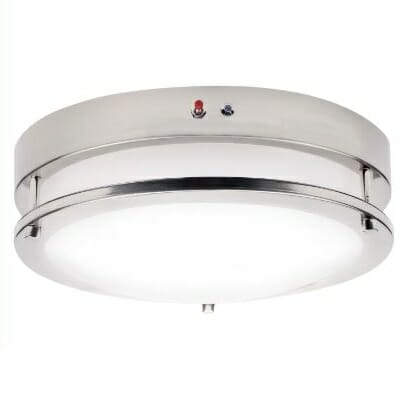


LED Flush Mount Ceiling Lights for Commercial and Facility Spaces
LED flush mount ceiling lights are low-profile commercial ceiling lighting fixtures that mount directly to the ceiling surface. They are useful in offices, hallways, classrooms, storage rooms, retail spaces, utility areas, and other locations where a recessed fixture is not practical or where ceiling height is limited.
Start by confirming the ceiling conditions, including ceiling height, mounting surface, and voltage. Then select lumen output, color temperature, dimming needs, fixture size, and appearance based on the room size and how the space is used. The detailed selection guidance below explains what to confirm before ordering.
Selection and Installation Note: Product specifications, fixture size, wattage, lumen output, beam spread, color temperature, voltage, dimming, mounting method, certifications, and warranty coverage vary by model. Confirm the selected product specification before ordering. For flush mount ceiling lights, electrical upgrades, code-sensitive applications, or safety-critical spaces, verify requirements with your local inspector, facility team, project specifier, or a licensed electrical professional.
Where Flush Mount LED Ceiling Lights Are Used
| Application | Why Flush Mount Fixtures Work |
|---|---|
| Hallways and corridors | Low-profile fixtures provide general overhead lighting without hanging below the ceiling or reducing usable headroom. |
| Offices and administrative areas | Flush mount fixtures can provide clean, comfortable illumination where recessed fixtures or suspended fixtures are not preferred. Explore additional LED office lighting options for complete workspace projects. |
| Classrooms and institutional spaces | Surface-mounted ceiling lights can support general illumination in rooms with limited ceiling cavity space. Fixture selection should account for the broader requirements of the school lighting project. |
| Retail and customer-facing rooms | Round or low-profile fixtures can create a finished appearance while supporting general visibility. |
| Storage and utility rooms | Flush mount LED fixtures can replace older incandescent or fluorescent fixtures in compact back-of-house spaces. |
| Low-ceiling areas | The surface-mounted design helps maintain clearance where hanging fixtures are not practical. |
Benefits of LED Flush Mount Ceiling Lights
- Low-profile design: Flush-mount fixtures attach close to the ceiling, helping preserve headroom in rooms with lower ceilings.
- Clean appearance: Round, square, or slim fixtures can create a finished look in commercial and facility spaces.
- Energy efficiency: LED fixtures often reduce energy use compared with incandescent or fluorescent fixtures, with actual savings depending on wattage, operating hours, controls, and utility rates.
- Reduced routine maintenance: Integrated LED fixtures generally do not require routine lamp or ballast replacement, although drivers and other components may require service over time.
- Instant-on operation: LED ceiling lights typically reach full output without the warm-up time associated with some older lighting technologies.
- Color temperature options: Many models are available in warm white, neutral white, daylight, or selectable color temperature options.
- Dimming options: Some flush mount fixtures support dimming, depending on the model and compatible control system.
- Flexible installation: Many fixtures are designed for standard junction box mounting, but installation requirements vary by model.
How to Choose Flush Mount LED Ceiling Fixtures
Flush mount ceiling lights should be selected around the room and the ceiling, not just by fixture size. A small hallway, a classroom, a retail room, and a utility space may each need a different fixture style, lumen output, color temperature, and control option.
| Selection Factor | What to Confirm |
|---|---|
| Fixture size | Confirm the fixture diameter or dimensions fit the ceiling area and provide the desired appearance. |
| Lumen output | Select output based on the room size, ceiling height, surface colors, and how the space is used. For larger rooms or projects with defined illuminance targets, use fixture-specific photometric data to evaluate delivered light at the task or floor plane. |
| Color temperature | Warm white may work well in hospitality or customer-facing areas, while neutral or daylight options may be preferred for offices, utility rooms, or workspaces. Common choices are 3000K, 4000K, and 5000K. Color temperature describes the apparent warm or cool appearance of white light; it does not indicate brightness or color-rendering performance. |
| Dimming and controls | Confirm whether the fixture supports dimming and whether it is compatible with the existing dimmer or control system. |
| Mounting method | Verify junction box compatibility, ceiling type, mounting hardware, fixture weight, and installation requirements. |
| Environmental rating | Confirm whether the fixture is listed for the required dry, damp, or wet location. An IP rating addresses ingress protection and does not by itself establish suitability for corrosive, chemical, or hazardous locations. |
| Voltage | Confirm the fixture input voltage matches the building electrical system before ordering. |
Flush Mount vs. Recessed Ceiling Lights
Flush mount fixtures attach to the ceiling surface, while recessed LED ceiling lights install into a ceiling cavity. Flush mount LED ceiling lights can be a better choice when there is not enough ceiling depth for recessed fixtures, when a simple surface-mounted installation is preferred, or when the building layout makes recessed installation difficult.
Recessed fixtures may still be a good fit for certain finished interiors, but they require ceiling space, cutouts, and compatible installation conditions. Confirm the ceiling type and installation method before choosing between flush mount and recessed lighting.
Common Flush Mount Ceiling Light Mistakes
- Replacing a fixture without comparing actual output and distribution: A new LED fixture with lower wattage is not automatically an equivalent replacement. Compare published lumens, fixture distribution, mounting height, and the number and location of fixtures in the space.
- Overlooking ceiling obstructions and layout: Sprinkler heads, HVAC grilles, ceiling access panels, signage, cameras, and structural members can affect fixture placement, appearance, access, and installation. Coordinate the layout before ordering multiple fixtures.
- Failing to confirm service and replacement strategy: Many low-profile fixtures use integrated LEDs. Review the warranty, driver accessibility where applicable, and whether matching replacements are likely to be needed for a phased facility project.
- Assuming existing controls will work: A dimmable fixture may still be incompatible with an installed phase-cut dimmer, occupancy sensor, relay, or lighting-control system. Confirm the fixture's published control compatibility.
- Using the wrong location listing: Damp and wet locations are different conditions. A bathroom or humid indoor area may require a damp-location fixture, while an exposed exterior location may require a wet-location listing. Confirm the actual exposure and applicable code requirements.
- Ignoring visual consistency during phased upgrades: Before replacing only part of an area, compare the new fixture's diameter, finish, lens appearance, CCT, and light distribution with remaining fixtures to avoid an uneven appearance.
Flush Mount Lighting Certifications and Warranty Support
Available safety listings and qualifications vary by product. Selected LED flush mount ceiling lights may carry a UL, ETL, CSA, or other applicable Nationally Recognized Testing Laboratory safety certification; verify the exact product listing and location marking for the installation. DLC qualification, where available, is an energy-efficiency and performance program and is not an electrical safety certification. Utility rebate eligibility depends on the specific product and local program requirements.
Warranty terms also vary by model. Review the selected product's published warranty period, coverage, and claim process before ordering. LED Lighting Supply can help review available product specifications and warranty information.
Before ordering, confirm the selected fixture’s certifications, voltage, dimming compatibility, mounting method, environmental rating, and whether it fits the room and ceiling layout.
Need Help Choosing Flush Mount Ceiling Lights?
Contact us about LED flush mount ceiling lights, and our Product Specialists can help review fixture size, lumen output, color temperature, dimming, mounting method, voltage, ceiling type, and published product specifications.
Commercial LED Flush Mount Ceiling Lights FAQs
When Should I Choose Flush Mount Ceiling Lights Instead Of Recessed Fixtures?
Choose flush mount ceiling lights when ceiling depth is insufficient for recessed fixtures, a surface-mounted installation is preferred, or the building layout makes recessed installation difficult. Recessed fixtures require ceiling space, cutouts, and compatible installation conditions.
How Should I Select Lumen Output For A Flush Mount Ceiling Light?
Select lumen output based on room size, ceiling height, surface colors, and how the space is used. For larger rooms or projects with defined illuminance targets, use fixture-specific photometric data to evaluate delivered light at the task or floor plane.
What Should I Confirm Before Ordering Flush Mount Ceiling Lights?
Confirm the selected fixture's certifications, voltage, dimming compatibility, mounting method, environmental rating, and fit with the room and ceiling layout before ordering. Fixture size, wattage, lumen output, beam spread, color temperature, and warranty coverage vary by model.
How Do I Choose A Color Temperature For A Commercial Space?
Warm white may work well in hospitality or customer-facing areas, while neutral or daylight options may be preferred for offices, utility rooms, or workspaces. Common choices are 3000K, 4000K, and 5000K, and color temperature describes the apparent warm or cool appearance of white light rather than brightness or color-rendering performance.
Can Flush Mount Ceiling Lights Work With Existing Dimmers Or Controls?
Some flush mount fixtures support dimming, depending on the model and compatible control system. Confirm that the fixture supports dimming and is compatible with the existing dimmer, occupancy sensor, relay, or lighting-control system.
What Should I Check For Flush Mount Fixture Mounting?
Verify junction box compatibility, ceiling type, mounting hardware, fixture weight, and installation requirements for the selected model. Many fixtures are designed for standard junction box mounting, but installation requirements vary by model.
How Do I Avoid Problems When Replacing Existing Ceiling Fixtures?
Compare published lumens, fixture distribution, mounting height, and the number and location of fixtures instead of assuming a lower-wattage LED fixture is an equivalent replacement. Also coordinate fixture placement around obstructions such as sprinkler heads, HVAC grilles, access panels, signage, cameras, and structural members before ordering multiple fixtures.
How Do I Confirm A Flush Mount Light Is Suitable For The Location?
Confirm whether the selected fixture is listed for the required dry, damp, or wet location and verify the exact product listing and location marking for the installation. An IP rating addresses ingress protection but does not by itself establish suitability for corrosive, chemical, or hazardous locations.