LED Commercial Kitchen Lighting
- NSF-rated and vapor tight options for food-safe areas
- High-temperature fixtures available for cooking line locations
- Cooler-rated options for walk-in and cold storage areas


Get Your Custom Lighting Plan With Product Recommendations
- Layout designed around prep, cooking, wash-down, and storage zones with appropriate foot-candle targets
- Fixture selection matched to NSF, high-temperature, vapor tight, or cooler-rated needs by area
- LED options can help reduce energy use and extend maintenance intervals in demanding kitchen environments


Our Commercial Kitchen Lighting and Food Service Facilities products include vapor tight, high-temperature, linear, cooler and freezer-rated, and task lighting fixtures. Available models vary by fixture type, color temperature, dimming, sensor compatibility, and mounting method.
These fixtures are commonly used in food prep areas, cooking lines, dishwashing zones, dry storage rooms, pantry spaces, serving and plating areas, walk-in coolers, freezers, handwashing stations, and back-of-house corridors.
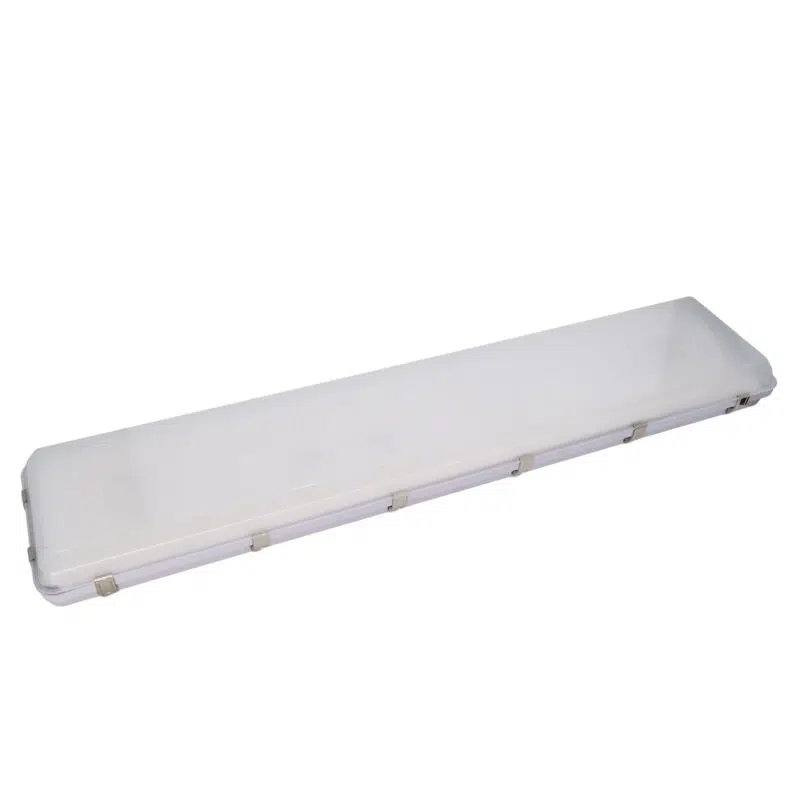


LED Commercial Kitchen Lighting for Food Prep, Cooking, Cleaning, and Storage Areas
LED commercial kitchen lighting needs to support food preparation, cooking, cleaning, storage, sanitation, and staff movement in a demanding environment. Kitchens may include food prep tables, cooking lines, dishwashing areas, walk-in coolers, dry storage, serving windows, handwashing stations, and back-of-house circulation areas. Each zone can require a different fixture type and light level.
Choose commercial kitchen lighting by first identifying the kitchen zone, then evaluating its exposure to moisture, grease, heat, cleaning, or cold temperatures. Match the fixture to applicable cleanability requirements, visibility needs, ceiling height, color rendering, glare control, and local health or electrical requirements. In many commercial kitchens, vapor tight fixtures, NSF-rated food-grade LED lights, high-temperature fixtures, cooler-rated, or linear LED fixtures may be used depending on the area.
Selection and Installation Note: Product specifications, wattage, lumen output, beam angle, color temperature, voltage, dimming, controls, wet-location rating, IP rating, NSF certification, ambient temperature rating, fixture housing, certifications, and warranty coverage vary by model. Confirm the selected product specification before ordering. For commercial kitchens, food preparation areas, cooking lines, wash-down spaces, coolers, freezers, electrical upgrades, code-sensitive applications, or safety-critical spaces, verify requirements with your local inspector, facility team, project specifier, or a licensed electrical professional.
Lighting Different Commercial Kitchen Areas
Commercial kitchens usually need more than one lighting approach. Food prep areas need clear, even visibility. Cooking lines may need fixtures that can tolerate heat and grease exposure. Dishwashing areas need sealed fixtures for moisture. Storage and cooler areas need dependable light for product handling and safe movement.
| Kitchen Area | Fixture Selection Guidance |
|---|---|
| Food preparation areas | NSF-certified, vapor tight, or linear fixtures may be used where cleanability, visibility, and project food-area requirements matter. |
| Cooking and equipment lines | High-temperature, NSF-certified, or vapor tight fixtures may be appropriate near ovens, fryers, ranges, and hoods, depending on ambient temperature and exposure. |
| Dishwashing and cleaning areas | Sealed vapor tight or wash-down-suitable fixtures may be needed where moisture, spray, and cleaning activity are present. |
| Serving, plating, and pass areas | Higher visibility and good color rendering may help with order accuracy, food appearance, and presentation. |
| Dry storage and pantry areas | Linear, vapor tight, or low bay fixtures can support shelf reading, stocking, and safe movement. |
| Walk-in coolers and freezers | Fixtures should be suitable for the expected low temperatures, dampness, condensation, and mounting conditions. |
| Handwashing and sanitation stations | Lighting should support visibility around sinks, cleaning tasks, and sanitation areas. |
Recommended Foot-Candles for Commercial Kitchen Lighting
Commercial kitchen light levels vary by task. Food prep, cooking, serving, and inspection areas usually need more light than storage or circulation areas. Use these ranges as a planning starting point, then confirm the fixture type, mounting height, cleanability, temperature exposure, and local requirements for each area.
Best LED Fixtures for Commercial Kitchens
Fixture choice should start with the kitchen zone. A dry pantry, a fryer line, a dishwashing area, and a walk-in freezer should not automatically use the same fixture. The selected product should match the environmental conditions and task requirements.
| Fixture Type | Best Used For |
|---|---|
| NSF-certified LED fixtures | Food preparation, serving, and other areas where the project, operator, or authority requires NSF-certified equipment or cleanable construction. |
| LED vapor tight fixtures | Dishwashing, damp areas, cleaning zones, and locations exposed to moisture or spray when the fixture’s listing and enclosure rating match the exposure. |
| High-temperature LED fixtures | Cooking lines, ovens, fryers, hoods, and other areas where ambient temperature may exceed the rating of standard LED products. |
| LED linear fixtures | Prep rooms, storage areas, pantry spaces, and back-of-house corridors. |
| Cooler and freezer-rated fixtures | Walk-in coolers and freezers and cold-storage rooms where low temperature and condensation may be present. |
| Task lighting | Prep counters, inspection points, plating areas, and other locations where detailed visibility is needed. |
NSF, Cleanability, and Food-Safe Areas
Commercial kitchen lighting should be easy to clean and suitable for the area where it is installed. NSF-certified food-grade fixtures may be specified or preferred above food preparation, processing, packaging, serving, or sanitation areas based on the project requirements, operator standards, or applicable health authority guidance.
Confirm whether the selected fixture has smooth cleanable surfaces, appropriate lens material, sealed construction, and the applicable NSF certification for the intended location. Do not assume every vapor tight or high bay fixture is NSF-certified.
Moisture, Grease, and Wash-Down Exposure
Kitchens can expose fixtures to steam, grease, humidity, spray, and cleaning chemicals. Dishwashing areas, cleaning stations, and some prep areas may need sealed vapor tight fixtures or wash-down-suitable fixtures. Cooking lines may need fixtures that resist grease buildup and tolerate higher ambient temperatures.
Before ordering, review the fixture’s wet-location listing, enclosure rating, seals, lens material, housing construction, cleaning practices, and whether fixtures will be mounted near hoods, fryers, ovens, dish machines, or sinks. An IP rating addresses ingress protection against solids and water under defined test conditions; it does not by itself establish chemical resistance, grease resistance, wash-down suitability, or compliance with wet-location requirements.
High-Temperature Kitchen Areas
Fixtures near ovens, fryers, ranges, steam equipment, and exhaust hoods may be exposed to higher ambient temperatures than standard commercial lighting. High-temperature LED fixtures may be needed when the installed location exceeds the fixture rating of standard LED products.
Confirm the expected ambient temperature at the fixture location, not just the room temperature. Heat can collect near ceilings, hoods, and equipment lines. Verify the selected product’s operating temperature range before ordering.
Color Temperature and Food Appearance
Commercial kitchens often use 4000K lighting because it provides a neutral white appearance for food preparation and back-of-house work. Some task areas may use 5000K where a cooler white appearance is preferred. Customer-facing or open-kitchen areas may use warmer lighting depending on the desired atmosphere.
Color temperature describes the apparent warmness or coolness of white light, not brightness. Color rendering can matter for food appearance, inspection, and presentation. Confirm CRI, color temperature, lumen output, and selectable CCT options on the selected fixture specification before ordering.
Controls for Commercial Kitchen Lighting
Controls can help reduce energy use in storage rooms, back-of-house areas, restrooms, and other intermittently occupied spaces. In production and prep areas, controls should be selected carefully so they do not interrupt staff visibility during active kitchen work.
Before ordering, confirm voltage, dimming type, occupancy sensor compatibility, control wiring, environmental suitability, and whether each area should be switched separately. Not every fixture supports every sensor, dimmer, or control package.
Certifications, Rebates, and Warranty Support
Available commercial kitchen lighting models may carry a safety certification from a Nationally Recognized Testing Laboratory, such as UL, ETL, or CSA, depending on the product and application. Selected models may be DLC or DLC Premium qualified where utility rebate programs apply. Warranty terms vary by product, with many fixtures offering a 5-year warranty unless otherwise specified.
DLC qualification is an efficiency and performance program, not an electrical safety certification. Before ordering, confirm the selected product’s certifications, DLC status, voltage, controls compatibility, wash-down suitability, NSF certification, wet-location rating, high-temperature suitability, mounting method, environmental exposure, warranty terms, and suitability for the kitchen area and local requirements.
Contact us about LED commercial kitchen lighting, and our Product Specialists can help review food prep areas, cooking lines, dishwashing zones, storage areas, coolers, freezers, ceiling height, fixture type, IP rating, NSF needs, temperature exposure, color temperature, controls, and product specifications.
LED Commercial Kitchen Lighting FAQs
How Should I Choose Fixture Types For Different Commercial Kitchen Areas?
Choose fixtures by matching the product to the kitchen zone, environmental conditions, and task requirements. Dry pantries, fryer lines, dishwashing areas, and walk-in freezers should not automatically use the same fixture type.
When May NSF-Rated Fixtures Be Needed In A Commercial Kitchen?
NSF-rated fixtures may be required or preferred above food preparation, processing, packaging, serving, or sanitation areas depending on local requirements and project scope. Confirm the selected fixture has the required NSF listing for its intended location, because not every vapor tight or high bay fixture is NSF-rated.
What Lighting Should Be Considered For Dishwashing And Cleaning Areas?
Dishwashing and cleaning areas may need sealed vapor tight, wash-down-suitable, or NSF-rated fixtures where moisture, spray, and cleaning activity are present. Review wet-location rating, IP rating, fixture seals, lens material, housing construction, and cleaning practices before ordering.
How Should Lighting Be Selected Near Ovens, Fryers, And Hoods?
Fixtures near ovens, fryers, ranges, steam equipment, and exhaust hoods may need high-temperature fixtures when the installed location exceeds the rating of standard LED products. Confirm the expected ambient temperature at the fixture location and verify the selected product's operating temperature range before ordering.
What Should I Look For In Walk-In Cooler And Freezer Lighting?
Walk-in coolers and freezers need fixtures suitable for cold, damp, and condensation-prone environments. Cooler and freezer-rated fixtures are used for walk-in coolers, freezers, and cold storage rooms where low temperature and condensation may be present.
How Should Controls Be Planned For Commercial Kitchen Lighting?
Controls can help reduce energy use in storage rooms, back-of-house areas, restrooms, and other intermittently occupied spaces, while production and prep-area controls should be selected carefully to avoid interrupting staff visibility during active work. Confirm voltage, dimming type, occupancy sensor compatibility, control wiring, wet-location suitability, and whether areas should be switched separately.
Which Color Temperature Should Be Used For Commercial Kitchen Lighting?
Commercial kitchens often use 4000K lighting for food preparation and back-of-house work, while some task areas may use 5000K where a brighter appearance is preferred. Customer-facing or open kitchen areas may use warmer lighting depending on the desired atmosphere, and CRI, color temperature, and selectable CCT options should be confirmed on the selected fixture specification.