LED Lights for Grocery Stores and Supermarkets
- Fixture options for aisles, coolers, food areas, and exteriors
- Higher CRI options available to support fresh food presentation
- Product specialists help match fixtures to store departments


Get Your Custom Lighting Plan With Product Recommendations
- Layout Designed for Aisle Visibility, Shelf Coverage, and Department-Specific Light Levels
- Fixture Selection Matched to Sales Floor, Cooler, Food-Service, and Exterior Applications
- LED Fixtures Can Reduce Energy Use and Relamping Compared With Legacy Fluorescent or HID


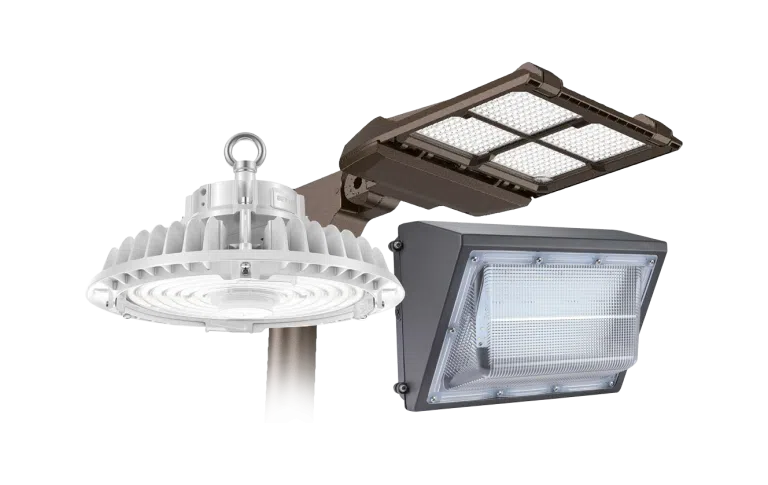
Our LED Lights for Grocery Stores and Supermarkets include high bays, linear fixtures, LED panels, strip fixtures, vapor tight lights, parking lot lights, and wall packs. Available models include cooler-rated and refrigerated case lighting, food-service fixtures, and interior and exterior configurations with dimming, sensors, photocells, and other controls depending on the product. These fixtures are commonly used in grocery aisles, produce departments, checkout lanes, deli and bakery areas, butcher and seafood displays, refrigerated cases, walk-in coolers, stockrooms, loading docks, parking lots, entrances, and building exteriors.
LED Supermarket Lighting for Grocery Stores, Aisles, Fresh Food, Coolers, and Exterior Areas
LED supermarket lighting is used in grocery aisles, produce departments, checkout lanes, deli areas, bakeries, butcher counters, seafood displays, refrigerated cases, frozen food sections, floral departments, stockrooms, offices, employee areas, loading docks, parking lots, and building exteriors. Each area has different lighting needs based on merchandising, customer comfort, task visibility, food presentation, fixture cleanability, controls, and operating hours. Start by identifying the store area and ceiling or mounting conditions, then match the fixture type to the application. Confirm the required light level, product visibility and color quality, moisture or low-temperature exposure, food-service suitability, controls, and exterior distribution where applicable. Supermarket lighting should not be selected by wattage alone: a grocery aisle, walk-in cooler, checkout lane, deli counter, parking lot, and back stockroom may all require different fixture types, color quality, light levels, environmental ratings, and controls.
Selection and Installation Note: Product specifications, wattage, lumen output, optics, color temperature, voltage, dimming, controls, mounting method, food-service suitability, NSF rating, wet-location rating, IP rating, certifications, and warranty coverage vary by model. Confirm the selected product specification before ordering. For grocery stores, supermarkets, refrigerated cases, walk-in coolers, food prep areas, kitchens, loading docks, parking lots, electrical upgrades, or code-sensitive areas, verify requirements with the facility team, project specifier, local inspector, refrigeration contractor where applicable, or a licensed electrical professional.
How to Choose LED Supermarket Lighting
Supermarket lighting should support both the shopping experience and operations. Customer-facing departments often need better vertical visibility and color quality, while back-of-house areas may prioritize durability, controls, and maintenance.
| Selection Factor | What to Confirm |
|---|---|
| Store area | Confirm whether the fixture is for sales aisles, produce, checkout, deli, bakery, butcher, seafood, refrigerated cases, stockrooms, offices, restrooms, loading docks, or exterior areas. |
| Ceiling height | Higher open ceilings may use UFO or linear high bays. Lower ceilings and grid ceilings may use panels, linear fixtures, or low-profile fixtures. |
| Product visibility | Produce, floral, bakery, deli, butcher, and seafood areas may need better color quality and controlled light to support product appearance. |
| Color temperature | 4000K and 5000K are common choices for grocery stores. Confirm department preference, customer comfort, product appearance, and available CCT by model. |
| Color rendering | Higher CRI may help with fresh food appearance, labels, displays, and customer-facing departments. Confirm CRI on the selected product specification. |
| Cooler and freezer compatibility | Confirm low-temperature operation, sealed construction, IP rating, condensation exposure, defrost cycles, controls, and refrigeration equipment compatibility. |
| Food-service suitability | Deli, bakery, butcher, seafood, and prep areas may need NSF-rated or cleanable fixtures. Confirm sanitation, lens, gasket, and fixture material requirements. |
| Dimming and controls | Occupancy sensors, daylight harvesting, dimming, schedules, photocells, and exterior controls may reduce unnecessary operating time when compatible with fixture drivers and store operations. |
| Exterior lighting | Parking lots, entrances, wall-mounted fixtures, receiving areas, and loading docks need appropriate distribution, glare control, photocells, and local code review. |
Recommended Foot-Candles for Supermarket Lighting
Supermarket light levels vary by department, product type, ceiling height, aisle width, shelf height, checkout activity, food-service requirements, refrigeration, exterior conditions, and controls. The ranges below are general planning values. Final fixture quantity, mounting locations, and optics should be based on fixture-specific photometric data and the project layout.

Common LED Fixtures Used in Supermarkets and Grocery Stores
Most grocery stores use a mix of high bays, linear fixtures, LED panels, cooler lights, vapor tight fixtures, parking lot lights, wall packs, and exterior fixtures. The best fixture type depends on the store area, ceiling height, merchandising goals, moisture exposure, cleaning needs, and whether the space is customer-facing or back-of-house.
| Fixture Type | Where It Fits Best |
|---|---|
| UFO LED high bay lights | Useful in open sales floors, taller grocery aisles, and stores where a clean fixture appearance and broad distribution are desired. |
| Linear LED high bays | Useful for systematic aisle layouts, long rows, warehouse-style grocery stores, and areas where linear distribution matches shelf runs. |
| LED panel lights | Common in drop ceilings, offices, restrooms, employee areas, entry areas, and smaller retail sections. |
| Linear strip fixtures | Useful for stockrooms, storage, back-of-house areas, narrow aisles, and utility spaces. |
| LED vapor tight lights | Useful in walk-in coolers, freezers, damp areas, receiving areas, washdown-adjacent spaces, and back-of-house locations where sealed construction is needed. |
| NSF-rated fixtures | Useful in deli, bakery, butcher, seafood, prep, and food-service areas when sanitation, cleanability, or food-safe fixture construction is required. |
| LED parking lot lights | Used for customer parking, cart areas, drive lanes, and exterior site visibility. |
| LED wall packs | Used on building exteriors, rear entrances, service doors, perimeter areas, and loading zones. |
Supermarket Lighting by Department
Different supermarket departments need different light levels, fixture types, and visual priorities. The goal is not to make every space equally bright. The goal is to match the lighting to the customer task, product type, employee work, and fixture environment.
| Department | Lighting Priorities |
|---|---|
| General grocery aisles | Even shelf visibility, comfortable navigation, good vertical light on products, and low glare for customers. |
| Produce and floral | Higher color quality, product appearance, comfortable brightness, and controlled heat output near sensitive products. |
| Checkout counters | Task visibility for scanning, payment, bagging, customer interaction, and screen readability. |
| Deli, bakery, butcher, and seafood | Food presentation, cleanability, task visibility, color rendering, sanitation requirements, and fixture suitability for food-service areas. |
| Frozen and refrigerated cases | Low-temperature operation, moisture control, condensation resistance, sealed construction, and visibility through case doors. |
| Stockrooms and storage | Practical visibility for inventory, carts, pallets, stocking, racking, occupancy sensors, and employee safety. |
| Loading docks and receiving | Visibility for trucks, doors, pallets, forklifts, after-hours receiving, wall packs, dock lights, and wet-location exposure. |
| Parking lots and exterior areas | Customer parking, carts, entrances, perimeter visibility, glare control, photocells, and light trespass review. |
Cooler, Freezer, and Refrigerated Case Lighting
Walk-in cooler lighting, freezer lighting, and refrigerated case lighting need fixtures selected for cold temperatures, condensation, moisture, and frequent door activity. Standard interior fixtures should not be assumed suitable for refrigerated or freezer spaces. Vapor tight fixtures, cooler-rated fixtures, or refrigerated case lights may be appropriate depending on the application. Confirm low-temperature operation, lens material, driver location, fixture mounting, controls, maintenance access, and exposure to condensation or washdown before ordering. An IP rating addresses protection against specified dust and water-ingress conditions; it does not by itself confirm low-temperature operation, corrosion resistance, sanitation suitability, or compatibility with refrigeration conditions.
Exterior Lighting for Supermarkets and Grocery Stores
Supermarket exterior lighting may include parking lot lights, building-mounted wall packs, entrance lighting, loading dock lights, and perimeter lighting. Exterior fixture selection should consider pole height, light distribution, glare, light trespass, photocells, operating hours, nearby properties, and local requirements. Confirm that any selected parking lot light poles are appropriate for the fixtures, mounting configuration, site conditions, and project requirements. 
Benefits of LED Lighting in Grocery Stores
- Potential energy reduction: LED upgrades can reduce lighting energy use compared with older fluorescent, HID, or halogen systems. Actual savings depend on the existing system, fixture wattage, operating hours, controls, electric rates, and installation.
- Longer service intervals: LED luminaires can reduce routine lamp and fluorescent-tube replacement compared with many legacy systems. Driver, sensor, and fixture maintenance requirements still depend on the product and operating environment.
- Instant starting and frequent switching: Many LED fixtures provide immediate light output and can be suitable for scheduled or sensor-controlled operation when the driver and controls are compatible.
- Lower fixture heat in many upgrades: LED fixtures often use less input power than the systems they replace, which may reduce lighting-related heat in conditioned spaces. Actual HVAC effects depend on the complete building and refrigeration design.
- Improved control options: Compatible LED systems can support dimming, occupancy sensing, daylight response, scheduling, photocells, and networked controls where those strategies fit store operations.
Common Supermarket Lighting Mistakes
- Using one fixture type everywhere: Grocery aisles, produce, checkout, delis, coolers, stockrooms, loading docks, and parking lots have different lighting needs.
- Choosing by wattage alone: Wattage does not confirm light output, distribution, color rendering, glare, fixture spacing, or department suitability.
- Ignoring color quality in fresh food areas: Produce, floral, meat, seafood, bakery, and deli displays may need better color quality than general storage areas.
- Using standard fixtures in coolers or freezers: Cold and damp spaces require fixtures rated for the expected low temperature, condensation, and moisture exposure.
- Overlooking NSF or cleanability needs: Food prep, deli, bakery, butcher, seafood, and kitchen areas may require sanitary or food-service-suitable fixtures.
- Creating glare at checkout or displays: Poor fixture placement can create screen glare, harsh reflections, or uncomfortable customer-facing light.
- Forgetting controls by area: Stockrooms, restrooms, offices, and exterior areas may benefit from controls, while customer-facing departments may need more careful control strategies.
Supermarket Lighting Certifications and Warranty Support
Selected LED supermarket lights from LED Lighting Supply carry a safety certification or listing from a Nationally Recognized Testing Laboratory, such as UL, ETL, or CSA, depending on product and application. Selected models may also be DLC or DLC Premium listed for utility rebate programs where available. DLC qualification is an efficiency and performance designation, not an electrical-safety certification. Rebate requirements vary by utility, region, installation type, and product listing, so confirm eligibility on the selected product specification before ordering. Warranty coverage varies by product, with many LED supermarket lighting models offering a 5-year warranty unless otherwise specified. Before purchase, review the selected product specification to confirm certifications, DLC status, voltage, controls compatibility, mounting method, refrigerated-space suitability, wet-location rating, NSF rating where required, operating temperature, and warranty terms. Contact us about LED supermarket lighting, and our Product Specialists can help review store area, ceiling height, fixture type, light level, color temperature, CRI, cooler/freezer requirements, food-service suitability, exterior lighting, controls, and published product specifications.
LED Lights for Grocery Stores and Supermarkets FAQs
How Should Grocery Store Lighting Be Selected?
Grocery store lighting should be selected by store area, ceiling height, merchandising goals, moisture exposure, cleaning needs, controls, and whether the space is customer-facing or back-of-house. Wattage alone does not confirm light output, distribution, color rendering, glare, fixture spacing, or department suitability.
Which Fixture Types Fit Different Supermarket Areas?
Supermarkets commonly use high bays, linear fixtures, LED panels, cooler lights, vapor tight fixtures, parking lot lights, wall packs, and other exterior fixtures. UFO high bays are useful in open sales floors and taller aisles, while linear high bays are useful for systematic aisle layouts and long rows; panels are common in drop ceilings, offices, restrooms, employee areas, entry areas, and smaller retail sections.
What Should Be Considered For Produce, Floral, And Fresh Food Lighting?
Produce, floral, bakery, deli, butcher, and seafood areas may need better color quality and controlled light to support product appearance. Food-service areas may also need NSF-rated or cleanable fixtures, with sanitation, lens, gasket, and fixture material requirements confirmed for the selected product.
How Do I Choose Lighting For Walk-In Coolers, Freezers, And Refrigerated Cases?
Walk-in coolers, freezers, and refrigerated cases need fixtures selected for cold temperatures, condensation, moisture, and frequent door activity. Confirm low-temperature operation, sealed construction, IP rating, lens material, driver location, mounting, controls, maintenance access, and refrigeration equipment compatibility before ordering.
What Controls Can Be Used In Supermarket Lighting?
Some supermarket fixtures support dimming, occupancy sensors, daylight harvesting, photocells, and scheduling, depending on driver and control compatibility. Controls may reduce waste when compatible with fixture drivers and store operations.
What Should Be Reviewed For Supermarket Exterior Lighting?
Supermarket exterior lighting selection should consider pole height, light distribution, glare, light trespass, photocells, operating hours, nearby properties, and local requirements. Parking lot light poles should also be confirmed as appropriate for the fixtures, mounting configuration, site conditions, and project requirements.
Are LED Supermarket Lights Listed For Safety Or Utility Rebates?
LED supermarket lights from LED Lighting Supply carry a safety listing such as UL, ETL, or CSA, depending on product. Many models are DLC or DLC Premium listed for utility rebate support where available, but eligibility varies by utility, region, and product listing.
What Warranty Is Included With LED Supermarket Lights?
Most LED supermarket lights include a 5-year warranty unless otherwise specified, with USA-based warranty support. Confirm warranty coverage on the selected product specification before purchase.