LED High Bay Lights
- UFO and linear styles suit different ceiling heights and layouts
- Wattage and color temperature selectable options available on select models
- Free photometric plans help evaluate spacing and light levels
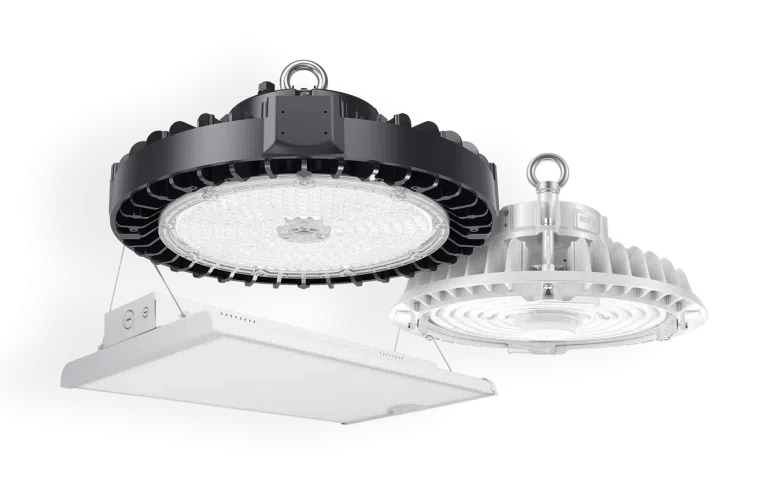


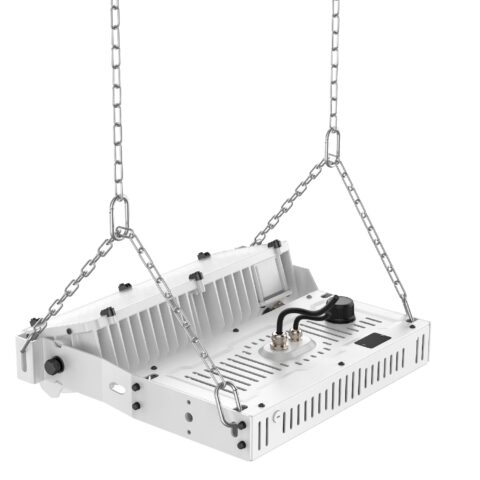
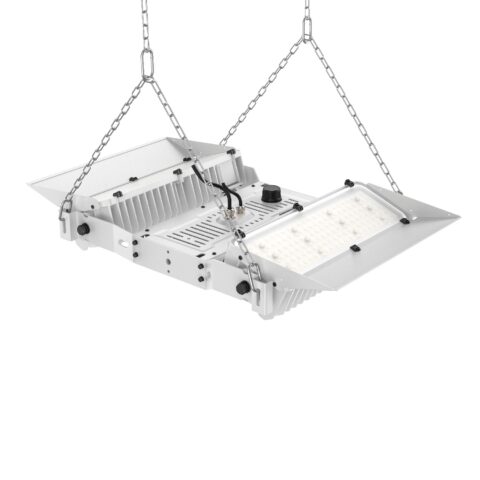
Our High Bay LED Lights include UFO and linear fixtures for large indoor spaces with high ceilings. Available models vary by wattage, lumen output, 120-277V or 277-480V configurations, selectable 3000K, 4000K, or 5000K color temperatures, and 60-degree, 90-degree, or 120-degree optics. Options include dimming, motion sensors, photocells, emergency battery backup, and eye hook, pendant, surface, chain, or cable suspension mounting.
These fixtures are commonly used in warehouses, factories, gyms, aircraft hangars, distribution centers, high-rack storage areas, production lines, assembly areas, aisles, and rectangular work zones.



What Are LED High Bay Lights?
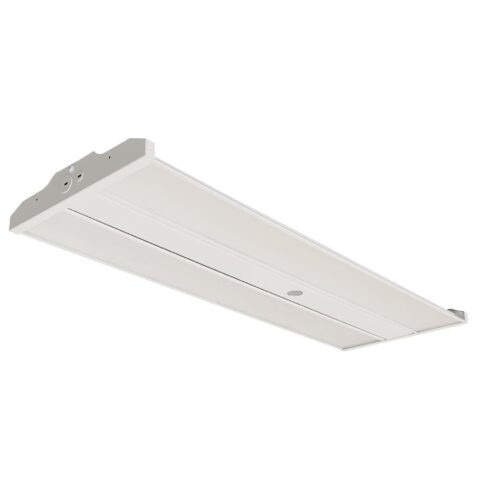
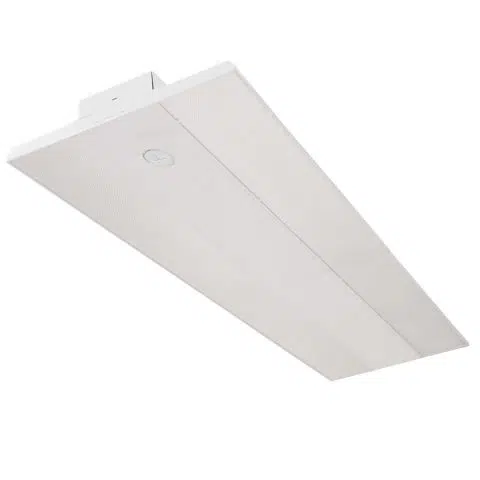
Commercial LED high bay fixtures are designed for large indoor spaces with high ceilings, commonly 20 feet or higher. They provide high lumen output with engineered optics for bright, even illumination in warehouses, factories, gyms, aircraft hangars, distribution centers, and other high-ceiling facilities.
Choosing Fixtures for Commercial and Industrial Spaces
Choose LED high bay lights by first confirming ceiling height, target foot-candle levels, fixture spacing, voltage, mounting method, and any environmental or emergency-lighting requirements. Next, select the fixture style that fits the layout: UFO fixtures are suited to broad, open areas, while linear fixtures fit aisles, rows, or rectangular work zones. Finally, match lumen output, beam pattern, controls, and mounting method to those project conditions before ordering.
Drawing from 15+ years of experience in commercial and industrial lighting, LED Lighting Supply’s Product Specialists help customers select suitable products for large indoor facilities. The U.S. Department of Energy reports that LED technology can significantly reduce energy use compared with traditional lighting in many commercial and industrial applications. Actual savings depend on the existing system, operating hours, controls, fixture efficiency, and project conditions. Need help choosing? Read our Buyers Guide to LED High Bays for foot-candle targets, lumen planning, optics, and fixture selection. Use the selector above to narrow products by fixture style, wattage, lumen output, voltage, color temperature, controls, and mounting options.
Selection and Installation Note: Product specifications, ratings, controls, certifications, and warranty coverage vary by model. Confirm the selected product specification before ordering. For code-sensitive, electrical, emergency, hazardous-location, or safety-critical applications, verify requirements with your local inspector or a licensed electrical professional.
Choosing by Fixture Type and Existing Lighting
Most projects begin with two practical questions: which fixture style fits the layout, and what type of existing light is being replaced. UFO and linear models can both meet commercial and industrial foot-candle targets, but they distribute light differently and suit different spaces.
| Fixture Type | Best Fit |
|---|---|
| UFO LED High Bay Lights | Best for open areas, strong downward throw, gyms, aircraft hangars, distribution centers, general warehouse lighting, and many metal halide replacement projects. UFO fixtures use a compact round housing and are often a straightforward replacement for round or pendant-mounted HID fixtures. |
| Linear LED High Bay Lights | Best for aisles, rows, high-rack storage, production lines, assembly areas, and rectangular work zones. Linear fixtures spread light across a longer body, which can improve uniformity when replacing fluorescent strips or older linear systems, including T5 high bay replacements. |
| Mixed Fixture Layouts | Some facilities use UFO fixtures in broad open areas and linear models over aisles, racks, rows, or production spaces. A photometric plan can confirm quantity, spacing, optics, and expected light levels before a large order is placed. |
Upgrading from HID or fluorescent lighting can improve efficiency, light quality, startup time, and maintenance cycles. Results vary by operating hours, existing equipment, control strategy, and facility conditions.
Recommended Foot-Candle Levels by Application
Use the tool below to find general starting foot-candle ranges by application. Light-level targets should reflect the work task, facility standards, OSHA requirements where applicable, and lighting guidance such as ANSI/IES RP-7 for industrial environments. Final fixture selection and placement should be verified with a photometric plan, especially for large facilities, racking layouts, code-sensitive areas, or safety-critical applications.
Step 1: Find Your Foot-Candle Levels
Step 2: Estimate Fixture Count and Spacing
LED High Bay Lighting Layout Estimator
Use this estimator to calculate approximate fixture count, spacing, and average foot-candles for warehouses, shops, gyms, industrial spaces, and commercial interiors using LED high bay fixtures. Enter your room dimensions, mounting height, target foot-candles, light loss factor, and room/layout condition to generate a preliminary lighting layout. When IES photometry is available, workplane height and room reflectance controls are shown.
Project Inputs
Estimated Results
Estimated average foot-candles are preliminary and should be verified with a lighting plan for project-critical applications.
Room / Layout Condition: This field is used only when usable IES photometry is not available. In fallback mode, it acts as a simplified room utilization factor for reflectance, fixture distribution, racking, obstructions, and how much fixture light reaches the work area. Open / light-colored spaces use 0.90, typical warehouses or shops use 0.75, racked or obstructed spaces use 0.60, and dark or complex spaces use 0.45. When IES photometry is active, this field is hidden and the estimator uses the selected workplane height, LLF, and simplified reflectance adjustment instead.
Photometry / Simulation Note: When usable IES photometry is available for the selected fixture, this estimator uses the fixture’s IES candela data, selected workplane height, light loss factor, and simplified reflectance adjustment to estimate fixture count, average foot-candles, and visual light distribution. The reflectance adjustment is a conservative approximation and is not a full zonal-cavity, radiosity, or professional photometric room calculation. When IES photometry is not available, the estimator uses a simulated beam model based on lumens, mounting height, room/layout condition, light loss factor, and beam angle.
Preliminary Estimate Only: This estimator is intended for simple square or rectangular spaces and should be used as a planning aid, not a final photometric lighting plan. Actual light levels may vary based on fixture optics, selected IES file, mounting conditions, workplane height, ceiling height, surface reflectance, obstructions, controls, voltage, installation conditions, and site-specific requirements. Project-critical applications should be verified with a formal lighting plan.
This estimate is a starting point. Warehouses, industrial facilities, hazardous locations, sports areas, schools, healthcare spaces, public areas, and code-sensitive projects may require a reviewed lighting layout before purchase or installation.
Use the estimate as a planning starting point rather than a final layout. Racking, reflective surfaces, obstructions, mounting height, beam angle, and the required work-plane light level can change fixture quantity and spacing.
Voltage, Controls, Optics, and Adjustable Output
Lighting for high-ceiling spaces must be matched to the building’s electrical service, control strategy, mounting conditions, and potential layout changes. Adjustable products can provide additional flexibility when configured in accordance with the manufacturer’s instructions.
| Option | What to Confirm |
|---|---|
| CCT Selectable | Some models allow 3000K, 4000K, or 5000K selection with an onboard switch. A 5000K setting is common for metal halide replacement, while 4000K may be preferred when replacing fluorescent fixtures or when a slightly warmer commercial appearance is desired. |
| Wattage Selectable | Wattage-adjustable fixtures allow light output to be fine-tuned when configured according to the manufacturer’s instructions. This can be useful when existing light levels are uncertain or when the space may change over time. |
| Optics | Common optic options include 60-degree, 90-degree, and 120-degree distributions, depending on the fixture. Narrower optics are often used at greater mounting heights or where more concentrated light is needed, while wider optics may suit lower mounting heights or broader coverage. Confirm performance through photometric data rather than beam angle alone. |
| Voltage | Confirm whether the project requires 120-277V, 277-480V, or another voltage before ordering. Explore available 480-volt LED high bay lights, and always verify voltage on the selected product specification. |
| Dimming and Sensors | 0-10V or 1-10V dimming, motion sensors, and photocell options may be available depending on the model. Confirm compatibility with the fixture, control layout, and operating schedule. |
| Emergency Backup | Emergency battery backup can support egress and emergency illumination requirements when properly specified. Separate emergency circuits, controls, testing equipment, or local life-safety requirements may also apply. |
| Mounting Styles | Eye hook, pendant, surface, chain, and cable suspension options may be available depending on fixture type. Confirm the mounting method and available structure before ordering, especially when replacing existing equipment. |
Gymnasiums and sports facilities need even distribution for athletic activities. Some LED gymnasium light models have an IK08 mechanical-impact rating; however, IK08 alone does not establish ball-strike protection or compliance with a ball-impact standard. Where ball impact is a project requirement, confirm the manufacturer’s documented ball-impact testing or approval for the selected fixture and the applicable facility requirement. Aircraft hangars require strong, even illumination for detailed maintenance and inspection work. Selected LED aircraft hangar light models are available for these demanding spaces. OSHA standards include minimum illumination requirements for certain work areas and egress conditions. Emergency lighting may also involve NFPA 101, local life-safety codes, occupancy requirements, emergency circuits, and inspection requirements, so confirm the final design with a licensed professional when required.
Certifications, Rebates, and Warranty Support
LED Lighting Supply offers products with safety listings such as UL, ETL, or CSA, depending on the model. Many fixtures are DLC or DLC Premium listed for utility rebate support where available. Rebate requirements vary by utility, region, and product listing, so confirm eligibility on the selected product specification before ordering. Most models include a 5-year warranty unless otherwise specified, with USA-based warranty support. Before purchase, review the selected product specification to confirm certifications, DLC status, voltage, dimming, controls, mounting method, emergency backup options, environmental ratings, and suitability for the space.
Project Case Studies
Real project examples show how these fixtures perform in warehouses, gyms, arenas, hangars, and other large spaces. Review the installations below to compare project conditions, fixture choices, replacement scenarios, layouts, and application-specific results.
Match Point Pickleball Club UFO High Bay Lighting Case Study
The Backstory of Our Relationship With Match Point Pickleball Club
Bill Taylor spent 10 years as a professional pickleball player before he became a facility builder. That background shaped every decision behind Match Point Pickleball Club. As Head Pro and Founder, he set out to build the world's largest indoor pickleball facility. This project was a new construction build across a 125,000-square-foot space in Columbus, Ohio. Today, Match Point ranks Number 7 on the Top 100 Pickleball Clubs in the US, the highest-ranked club in Ohio, with a perfect 5.0 out of 5 rating. The facility has 38 championship-level courts, 5 golf simulators, and table tennis all under one roof.
Bill reached out to LED Lighting Supply for guidance on lighting the new courts. He sought support from various suppliers before connecting with LED Lighting Supply. The alternative companies offered to run a full photometric plan at a premium price. We custom-tailored a lighting plan at no cost with product recommendations and responsive support before Bill committed to purchasing the lights from our company.
Bill had already seen what happens when lighting gets treated as an afterthought for indoor pickleball. "I built another club that didn't do the lighting really well," Bill said. "It was a contention spot for the players, for the tournaments, even though that club is at the so-called competitive minimum. As we dealt with the older players, I mean, it was difficult to follow the ball."
That experience became the standard Match Point was built against.
The Challenge of Lighting a Tournament-Grade Pickleball Facility
The lighting solution needed to support the tournament, broadcast-level pickleball play that Match Point wanted to host. Bill needed a partner that could offer professional support on indoor pickleball lighting.
Potential Risks of Inconsistent Court Lighting
- Under-lit courts slow player reaction time, affecting how well someone tracks a fast-moving ball
- Uneven contrast makes it harder to follow play, an issue for older or highly competitive players
- A facility with only a few well-lit courts creates friction among members competing for the best amenities
- Falling short of broadcast-ready light levels would put Professional Pickleball Association (PPA) and televised tournament play out of reach
- Courts lit to the bare minimum tend to generate ongoing member complaints rather than a one-time fix
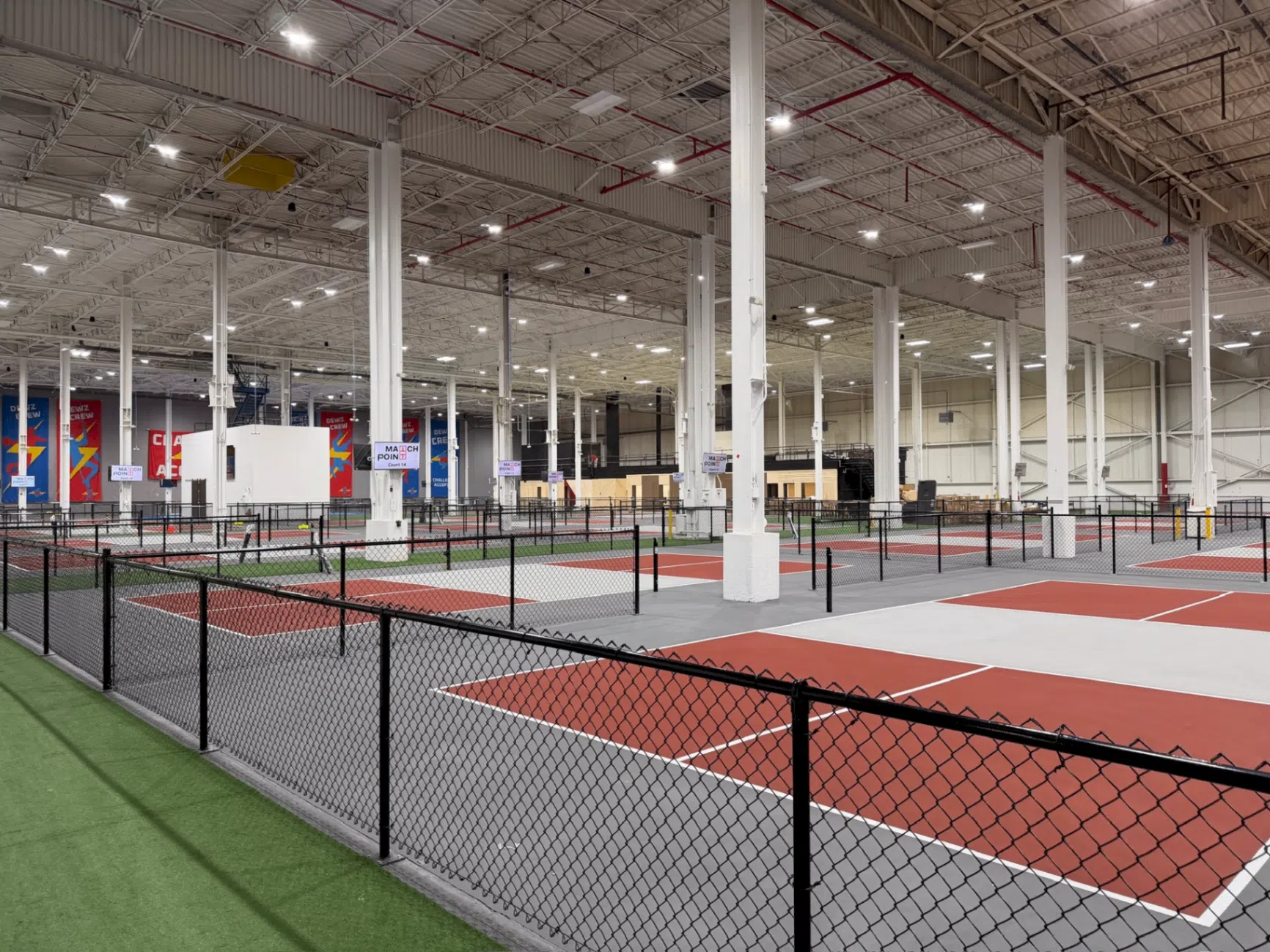
Completed Match Point Pickleball Club Courts with Our LED Lighting Solution Installed
Lighting Plan We Created for Match Point
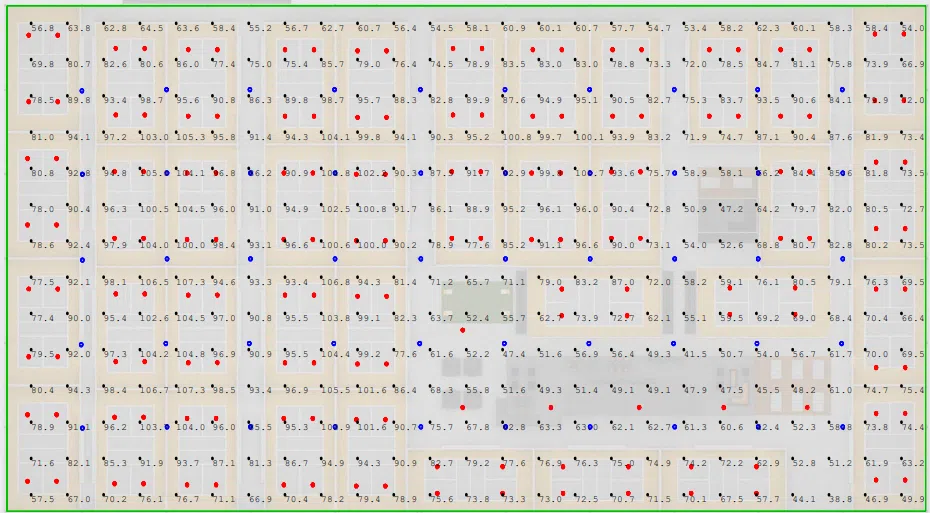
Lighting Plan Metrics
- Mounting Height: 35 feet (ft)
- Average Foot Candles (fc): 98 fc
- Maximum Foot Candles: 134 fc
- Uniformity (Max/Min fc): 2.76
- Product(s) Used: LLS-X-HB9-320A-CC-[C]
Orange County Sheriff’s Office UFO High Bay and Tube Lighting Case Study
The Backstory of Our Relationship With the Orange County Sheriff's Office
The Orange County Sheriff's Office contacted LED Lighting Supply seeking guidance on selecting the proper LED lighting type for an aircraft hangar storage area.
The Chief Tactical Flight Officer required consultative support on replacing a combination of 13 existing metal halide and fluorescent light fixtures with an updated LED system. The aircraft hangar struggled to achieve consistent illumination levels with the legacy lights in place.
The Challenge of the Aircraft Hangar Lighting at Orange County Sheriff's Office
Flight crews and aircraft mechanics were working under dim lighting conditions across a 75-by-100-foot bay at a 30-foot mounting height. The layout consisted of metal halide fixtures hung overhead, with fluorescent tube fixtures encompassing the perimeter. The aging light system no longer served the operation, and the facility needed a supplier with expertise who could recommend the proper lighting solution for precision work.
Operations in the hangar include inspecting airframes, servicing components, and completing daily maintenance duties. Uneven or dim light in this environment makes detail harder to see. This makes it complicated for the crew to spot a fluid leak, crack, or loose fastener during an inspection.
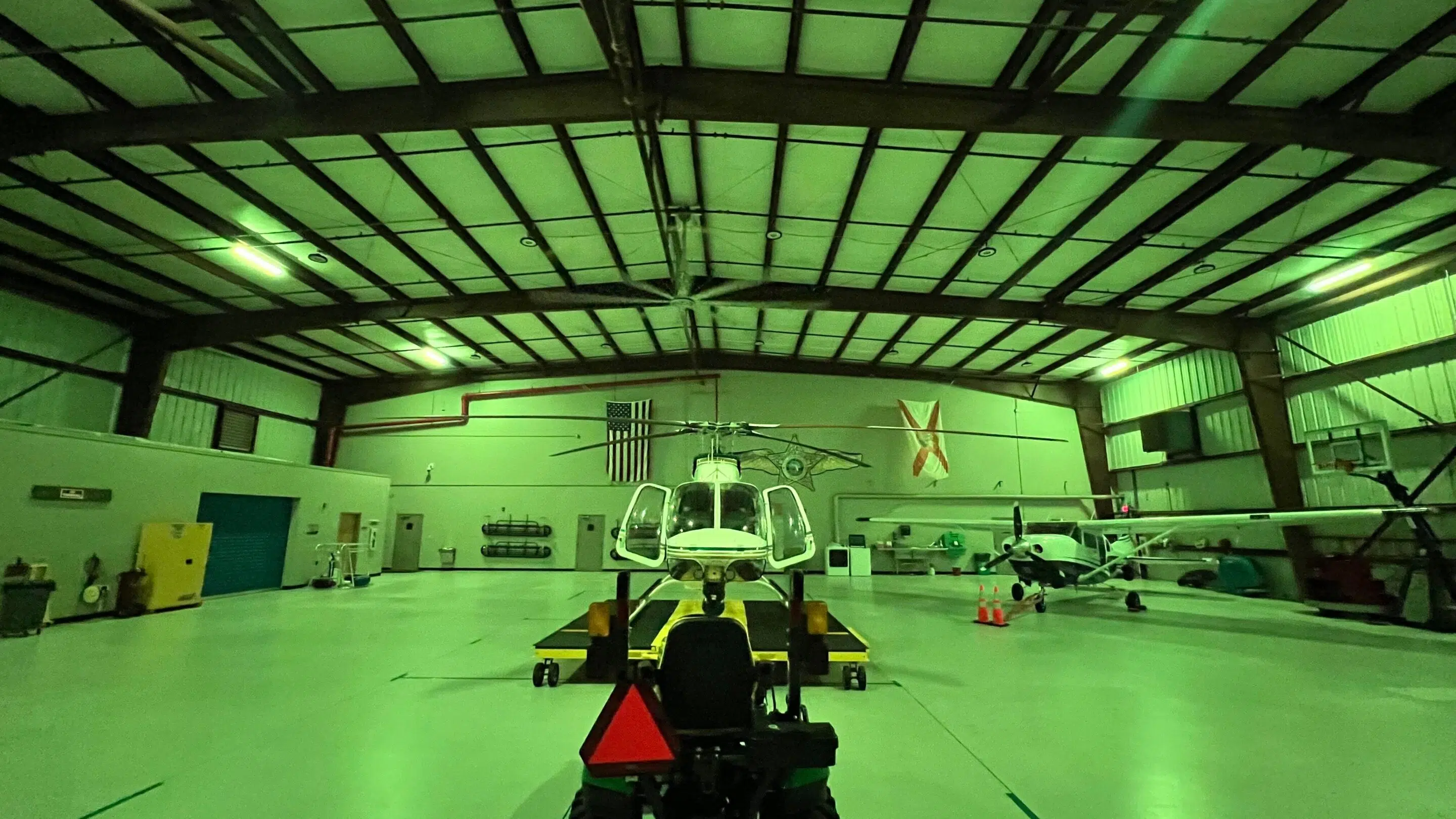
The hangar supports night operations, forcing the crews to preserve their night vision when moving between the lit bay and the flight line. The new lighting solution needed to account for a night mode feature, not just more uniform lighting during the day.
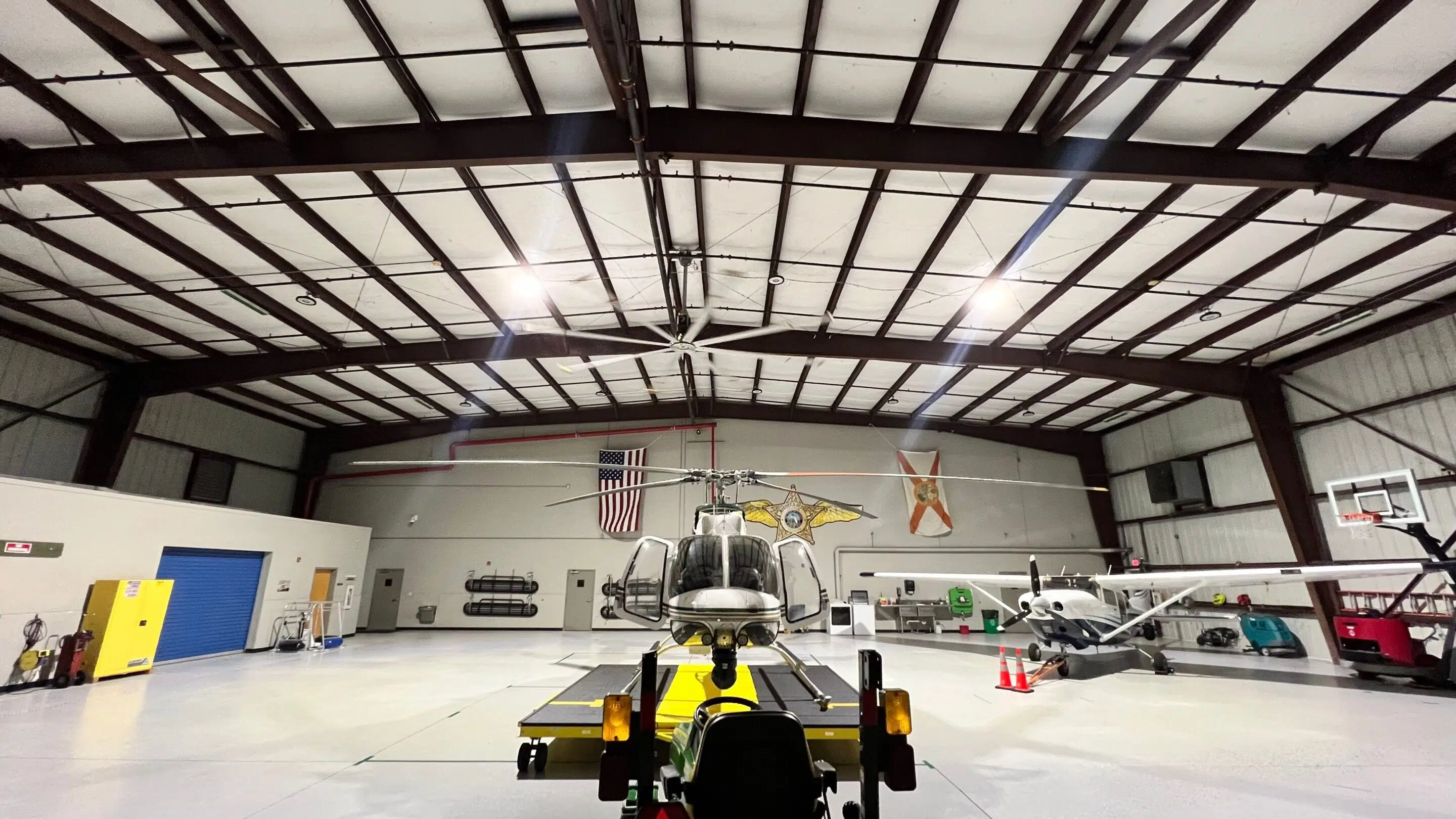
Daytime Operation With Our LED Solution Installed
Night-Vision Simulation With Our LED Solution and Green Film
Lighting plan metrics:
- Product(s) Used: MLLG-LED-HBHO-240-5-120 MLLG-LS-LED-T8HO-4-24A-CC-30P
Case Study: Conversion of (72) T5 6 tube fixtures to LED Lighting Supply 200 Watt LED UFO Fixtures (one-for-one replacement) in Williston, ND
|
Before: T5 54W HO Fluorescent Fixtures |
After: 200 W LED UFO Fixtures |
 |
 |
Lighting Plan We Created for the Customer
|
Lighting Plan |
Heat Map |
 |
 |
LED High Bays Warehouse Installation Lighting Plan Metrics
- Mounting height: 20 ft
- Fixture Used: MLLG-LED-HBC-200-5-120: 100 / 120 / 150 / 200 Watt Adjustable LED UFO High Bay | 15000 to 30000 Lumens | 5000K | 100-277V | White Housing
- FC achieved: 60.33 FC average
- Uniformity (Avg/Min): 1.42
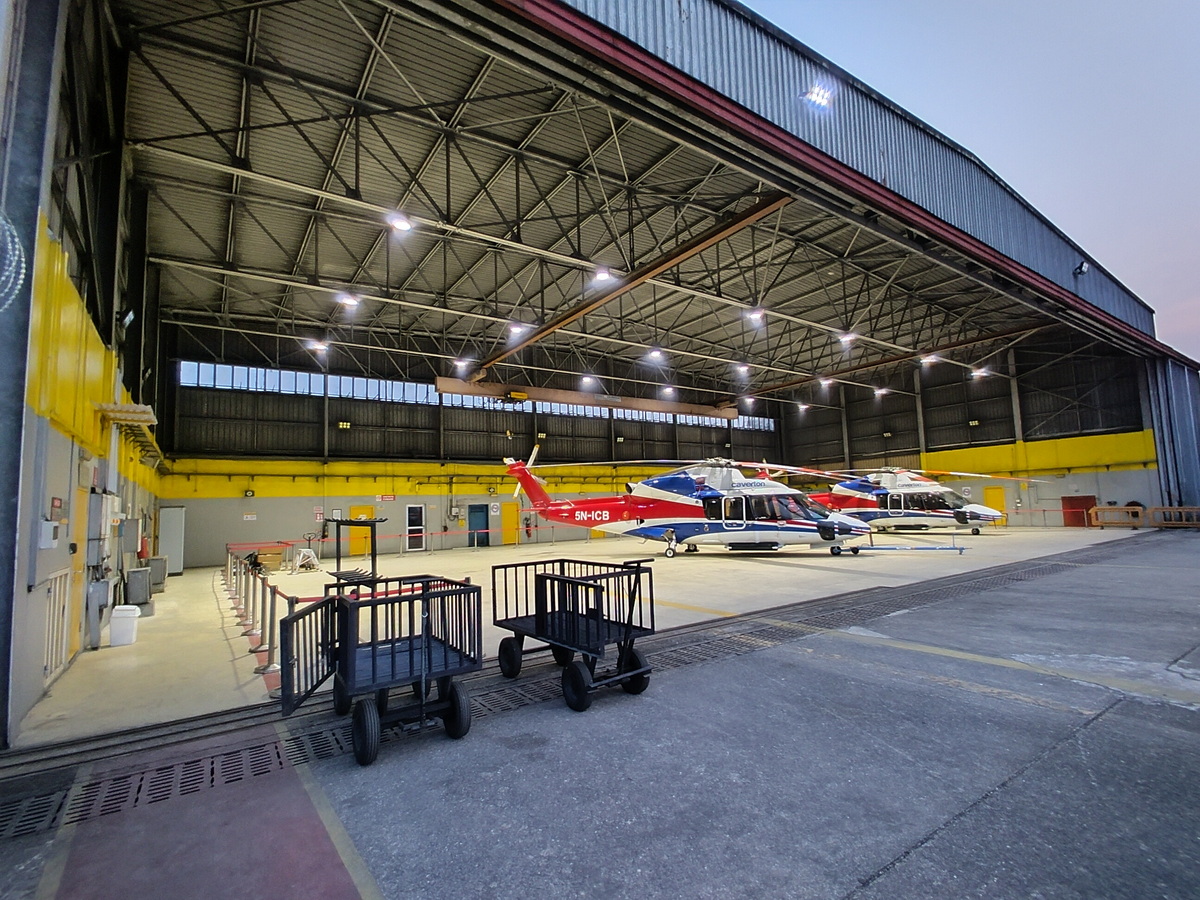
Case Study: Replacement of 1500 Watt Metal Halide Lighting with 480 Watt LED UFO High Bays in Lagos, Nigeria
| After: 480 Watt LED UFO High Bay Light | 76800 Lumens |
 |
Lighting Plan We Created for the Customer
|
Lighting Plan |
Heat Map |
 |
 |
Aircraft Hangar Lighting Installation Plan Metrics
- Mounting height: 35 ft ft
- Fixtures Used: MLLG-LED-HB5-480-5-60: 480 Watt LED UFO High Bay | 76800 Lumens | 5000K | 100-277V
- FC achieved: 167 FC average
- Uniformity (Avg/Min): 1.51
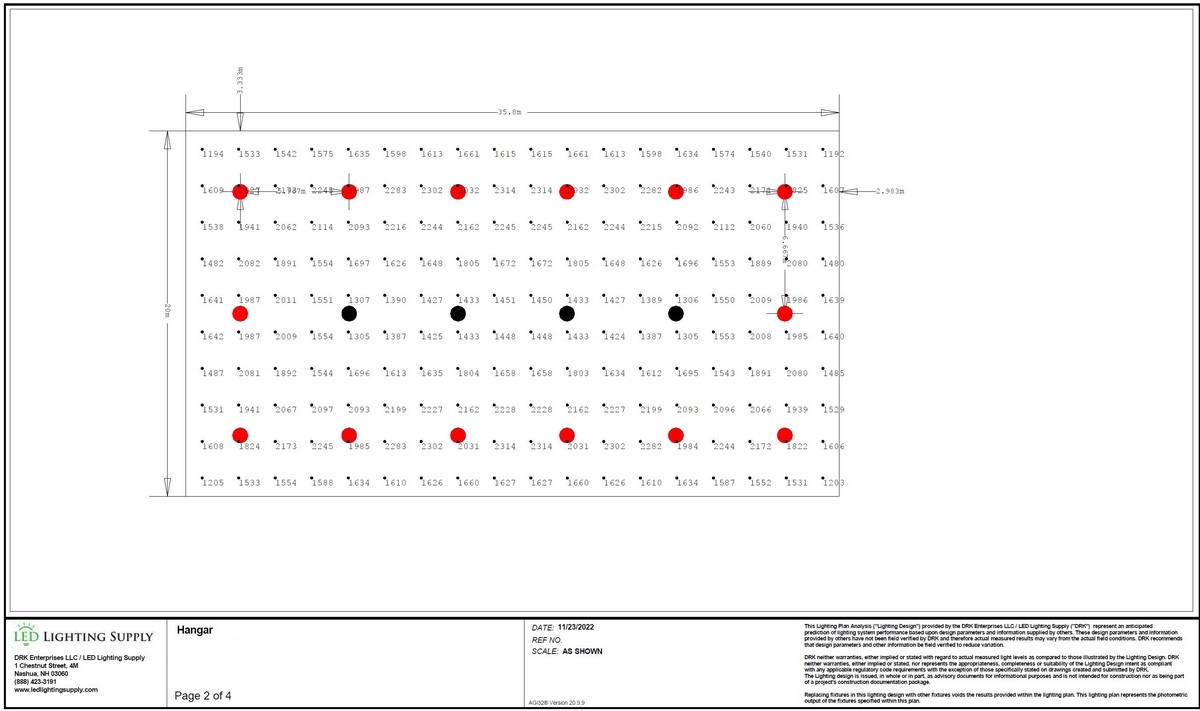
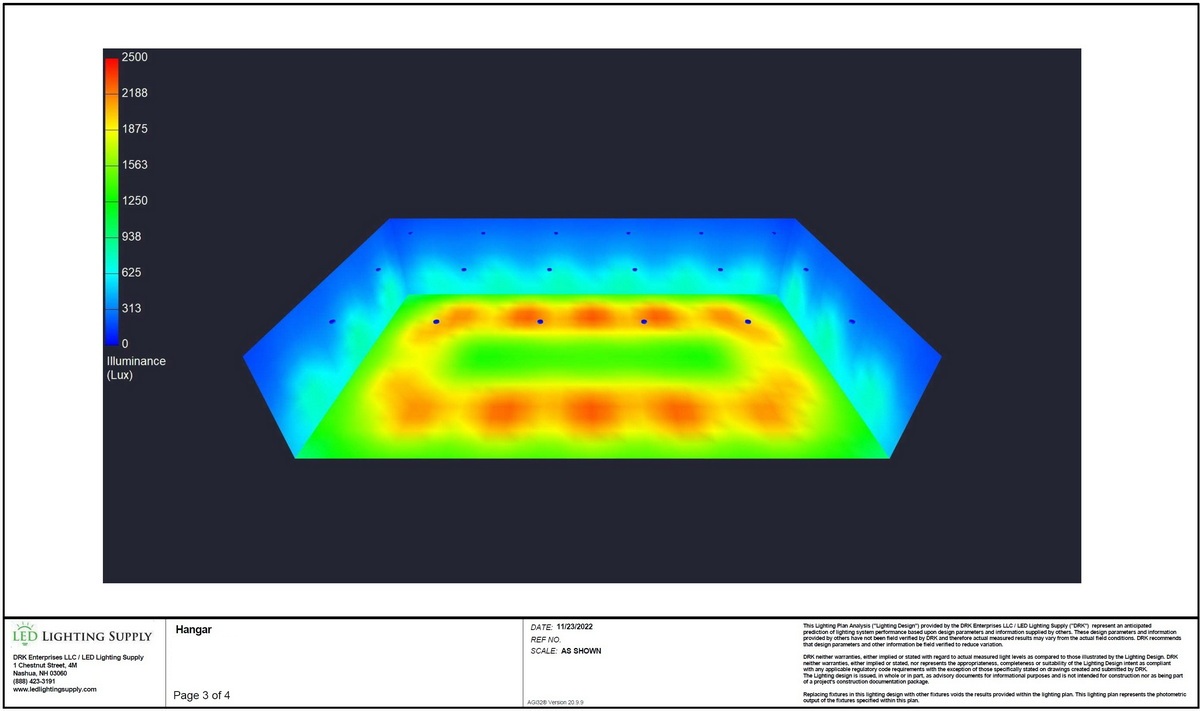
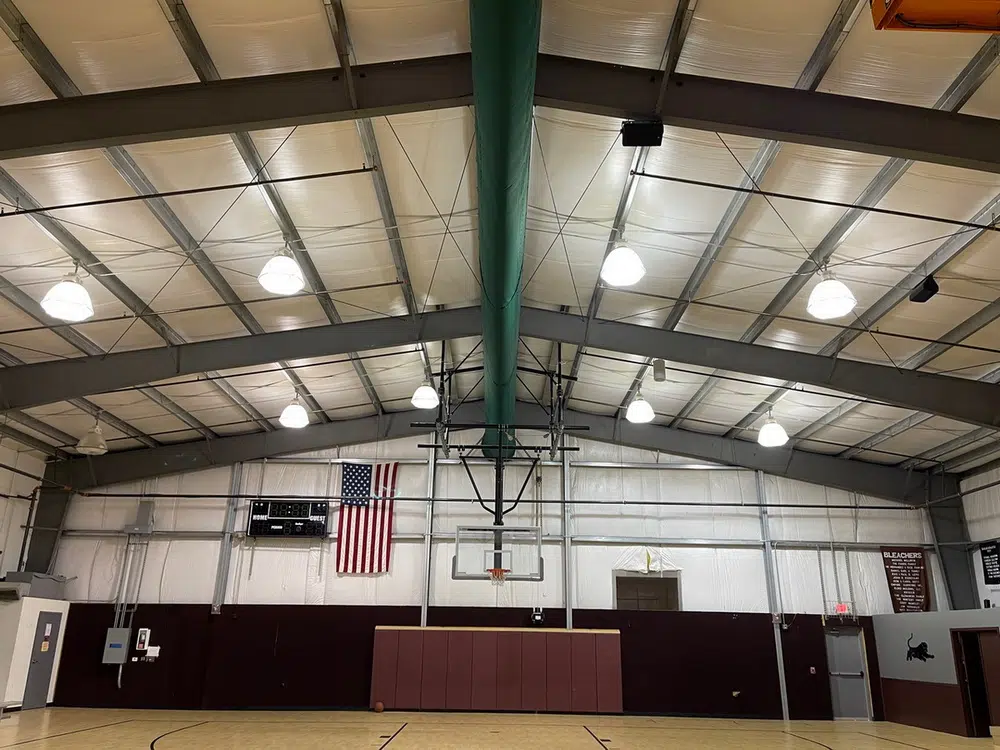
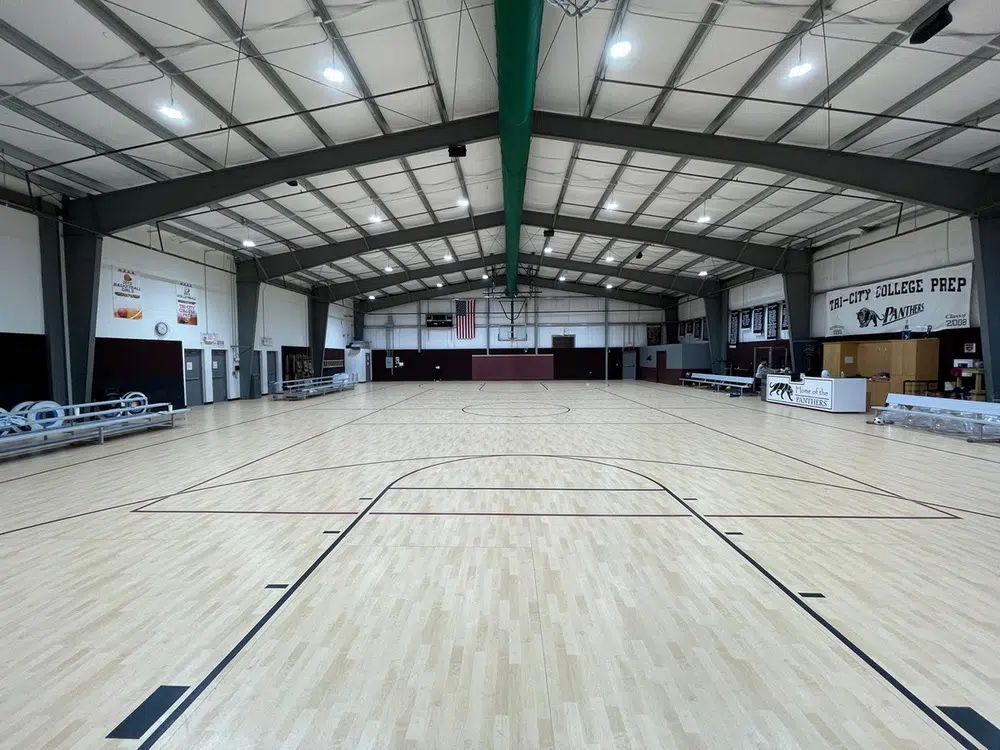
Case Study: Conversion of 400 Watt metal halide lighting to LED Lighting Supply 160 Watt LED UFO High Bay at Tri-City College Prep in Prescott, AZ
|
Before: 400 Watt Metal Halide High Bays |
After: 160 Watt LED UFO High Bay | 26400 Lumens |
 |
 |
Lighting Plan We Created for the Customer
|
Lighting Plan |
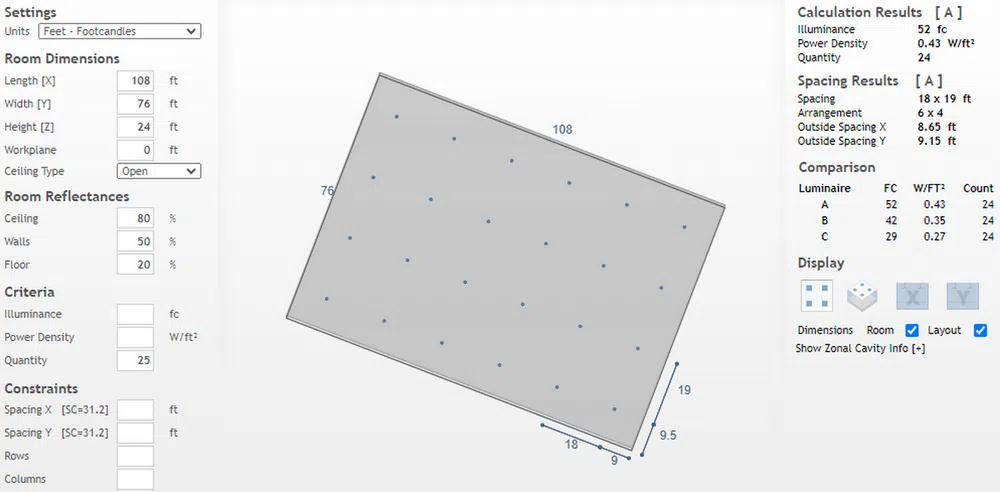 |
Gymnasium Lighting Installation Plan Metrics
- Mounting height: 24 ft
- Fixture Used: LLS-HB-200A-CC-[C]: 120 / 160 / 200 Watt Adjustable UFO High Bay | 19800 to 33000 Lumens | 4000K / 5000K | 100-277V | White or Black Housing
- FC achieved: 52 FC
- Uniformity (Avg/Min): 2.25
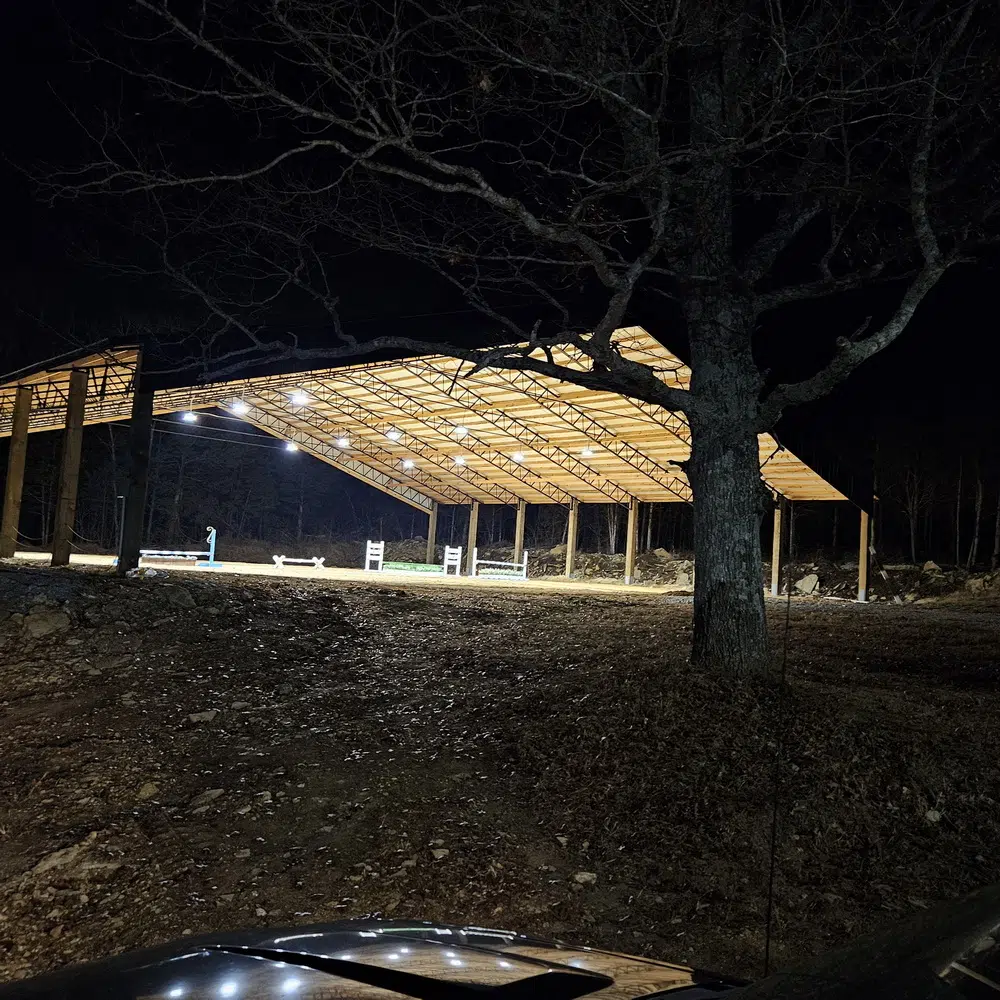
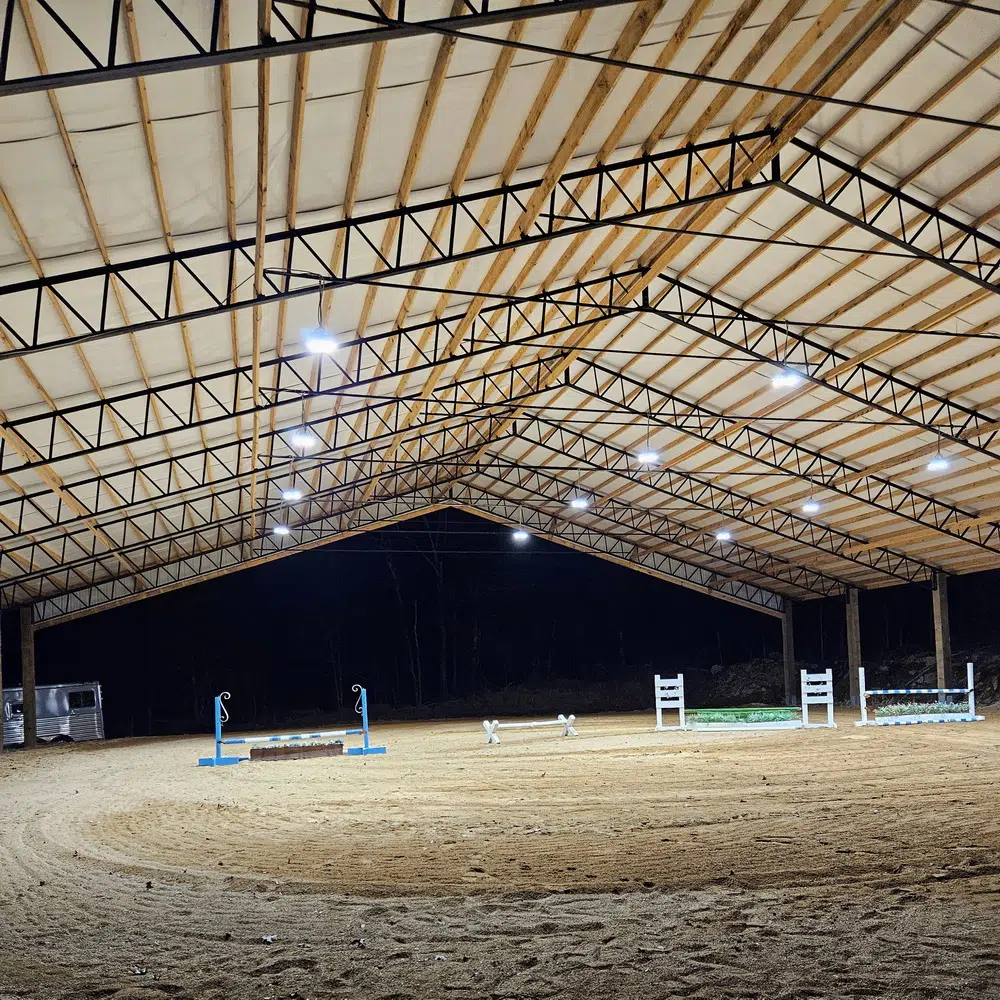
Case Study: Creekside Stables Outdoor Covered Arena using LED Lighting Supply 200 Watt LED UFO High Bay Lights in Franklin, TN
|
After: 200 Watt LED UFO High Bay | 30000 Lumens |
After: 200 Watt LED UFO High Bay | 30000 Lumens |
 |
 |
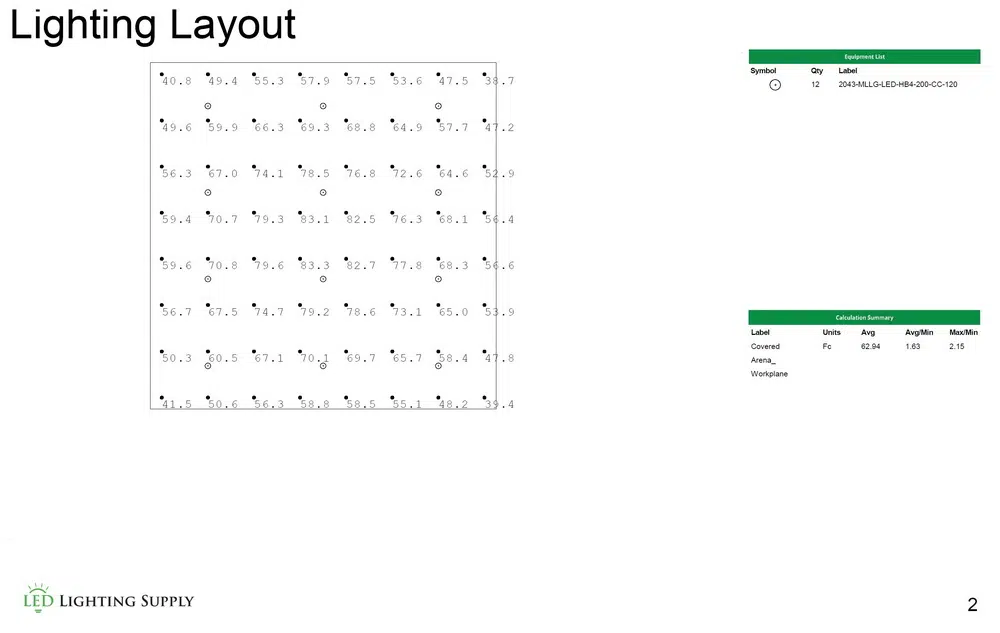
Lighting Plan We Created for the Customer
|
Lighting Plan |
Heat Map |
 |
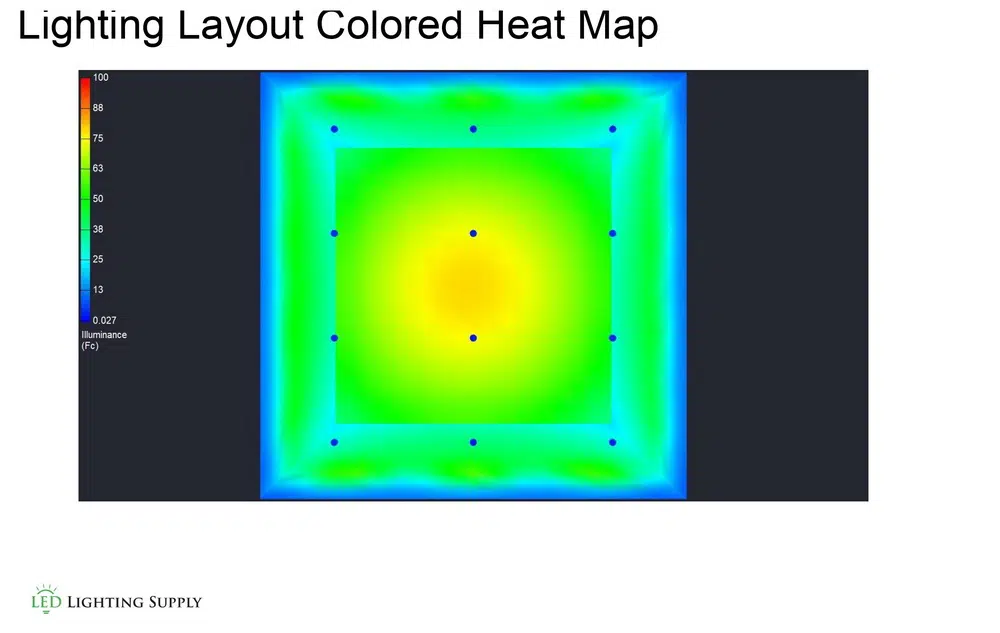 |
Covered Riding Arena Lighting Installation Plan Metrics
- Mounting height: 40 ft
- Fixture Used: (12) MLLG-LED-HB4-200-[Color]-[Beam]: 200 Watt White LED UFO High Bay | 25000 lumens | Replaces 400 Watt Metal Halide
- FC achieved: 62.94 fc average
- Uniformity (Avg/Min): 1.63
Request a free custom lighting plan and let our Product Specialists help match the optics, output, spacing, and configuration to your application. A plan is especially useful for high-rack aisles, mixed-use facilities, unusual mounting heights, renovations with fixed fixture locations, or projects with defined light-level and uniformity requirements.
Common Selection Mistakes and How to Avoid Them
Projects can run into problems when fixtures are selected without confirming ceiling height, lumen output, optics, controls, emergency requirements, or environmental conditions. Based on years of commercial and industrial lighting experience, these are some of the issues that most frequently affect performance, project cost, and long-term reliability.
| Common Mistake | How to Avoid It |
|---|---|
| Using the wrong lumen package | Match lumen output to ceiling height, beam angle, fixture spacing, and target foot-candles. Using an unsuitable lumen package can result in insufficient light levels or glare. Verify larger projects, racking layouts, or safety-critical areas with a photometric plan. |
| Assuming every fixture qualifies for rebates | Confirm DLC or DLC Premium listing when utility rebates are expected. Some programs require DLC qualification, often DLC Premium, but requirements vary. Always verify the rebate rules and match the fixture’s listing to the application. |
| Overlooking emergency battery backup | Some facilities require emergency illumination along egress paths. Confirm requirements with your licensed professional and local inspector, and verify fixture compatibility before ordering. |
| Installing motion sensors without commissioning | Set occupancy-sensor timeout values and detection coverage to match the space. Production zones often need longer delays than storage areas, and final settings can be adjusted during commissioning. |
| Ignoring ambient temperature requirements | Check operating-temperature ratings before selecting products for unconditioned warehouses, foundries, cold storage facilities, high-heat spaces, or cold environments. For damp or wet environments, consider appropriately rated wet-location LED high bay lights. Using equipment outside its approved range or environmental rating can shorten service life. |
This Content on high bay lighting guidance, ufo and linear installation considerations, and fixture selection content Was Professionally Reviewed By:

Jamie Popp, Professional Electrical Engineer (PE)
Multi-State Licensed Professional Engineer
Master of Science in Engineering
Master of Science in Project Management
Jamie has spent over 15 years working directly with industrial energy systems and facility operations. In his engineering design work, he focuses on comprehensive lighting designs, complex power distribution engineering, technical hazardous area classifications, and design-level construction support.
He applies these specialized design skills across demanding environments, including petrochemical, nuclear, mining, pulp and paper, and manufacturing facilities.
This content was reviewed for technical accuracy, engineering relevance, real-world application, and clarity for the stated lighting topic.
LED High Bay Lights FAQs
How Do I Choose Between UFO And Linear LED High Bay Lights?
Choose UFO fixtures for broad open areas and linear fixtures for aisles, rows, high-rack storage, production lines, assembly areas, and rectangular work zones. UFO and linear models can both meet commercial and industrial foot-candle targets, but they distribute light differently and suit different layouts.
What Should I Confirm Before Ordering LED High Bay Lights?
Confirm ceiling height, target foot-candle levels, fixture spacing, voltage, mounting method, and any environmental or emergency-lighting requirements before ordering. Also match lumen output, beam pattern, controls, and mounting method to the project conditions.
How Should I Estimate Fixture Quantity And Spacing?
Use an estimate as a planning starting point, then verify the final layout with a photometric plan when appropriate. Racking, reflective surfaces, obstructions, mounting height, beam angle, and required work-plane light levels can change fixture quantity and spacing.
How Do Optics Affect LED High Bay Fixture Selection?
Available optics can include 60-degree, 90-degree, and 120-degree distributions, depending on the fixture. Narrower optics are often used at greater mounting heights or where more concentrated light is needed, while wider optics may suit lower mounting heights or broader coverage; confirm performance through photometric data rather than beam angle alone.
Can LED High Bay Lights Be Adjusted After Installation?
Some wattage-selectable fixtures allow light output to be fine-tuned after installation, which can be useful when existing light levels are uncertain or the space may change over time. Some models also allow 3000K, 4000K, or 5000K color temperature selection with an onboard switch.
What Controls Are Available For LED High Bay Lights?
0-10V or 1-10V dimming, motion sensors, and photocell options may be available depending on the model. Confirm compatibility with the selected fixture, control layout, and operating schedule.
What Should Be Verified When Replacing Existing High Bay Lighting?
When replacing existing lighting, confirm the fixture style, voltage, mounting method, controls, and selected product specifications. UFO fixtures are often a straightforward replacement for round or pendant-mounted HID fixtures, while linear fixtures can improve uniformity when replacing fluorescent strips or older linear systems.
How Can I Confirm Rebate Eligibility And Warranty Coverage?
Confirm DLC or DLC Premium listing and utility rebate rules on the selected product specification before ordering, because eligibility varies by utility, region, and product listing. Most models include a 5-year warranty unless otherwise specified.