


LED High Bay Lights with Battery Backup
- Integral and external emergency backup options for compatible high bays
- Select models include 25-watt or 40-watt emergency drivers
- Product specialists help match EMB to fixture compatibility requirements


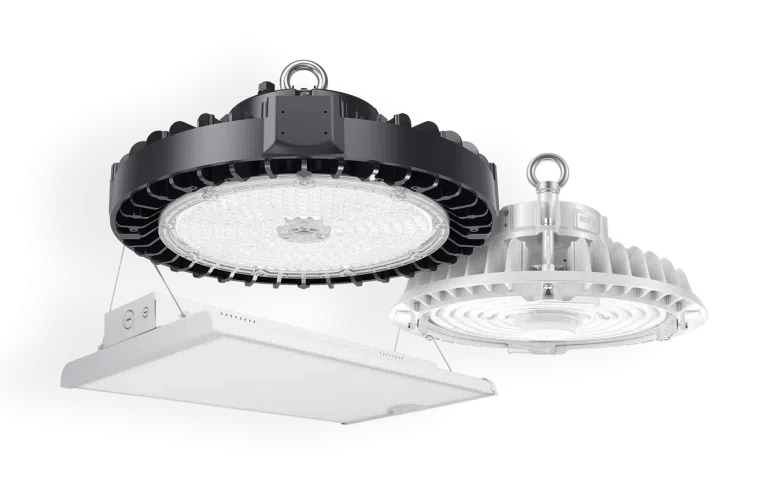

Our Emergency LED High Bay Lights with Battery Backup include linear high bays with integral emergency drivers and UFO high bays compatible with external emergency battery backup modules. External UFO emergency driver options include select 25-watt and 40-watt models, with compatible 0-10V and 1-10V dimmable fixtures available.
These high bays are used in warehouses, factories, gymnasiums, hangars, and other high-ceiling facilities to provide reduced emergency lighting along designated aisles, walkways, and exit routes.




How Emergency Battery Backup High Bays Work
LED high bay lights with emergency battery backup use an emergency backup module (EMB) to provide reduced lighting when normal power fails. When selecting a system, confirm the documented emergency output and runtime, match the EMB to the fixture and installation requirements, and plan coverage around the required egress paths. During normal operation, the high bay runs at its specified wattage and lumen output while the emergency battery remains charged. When the EMB detects a loss of normal power, it automatically switches the fixture to battery operation. The high bay will not operate at full brightness during an outage. The EMB supplies a lower emergency output designed to provide essential visibility along designated aisles, walkways, and exit routes. This reduced output helps conserve battery capacity so emergency lighting can remain available for the required operating period.
Integral and External EMB Options
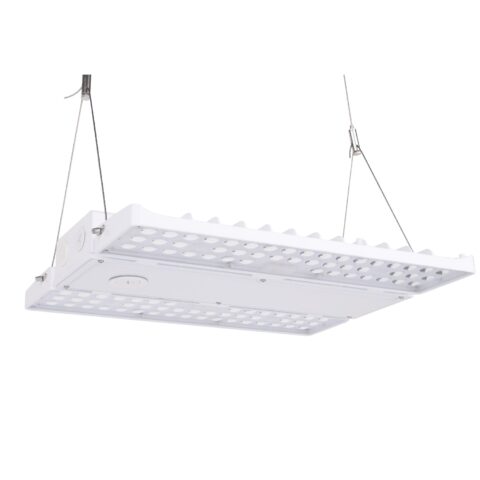
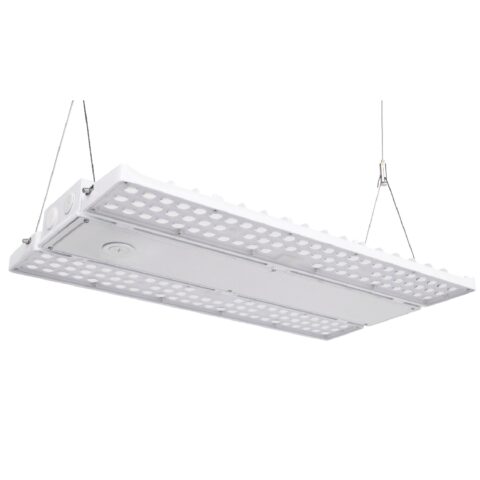
Some linear high bays are available with an emergency driver installed within or alongside the fixture. UFO high bays typically have limited internal space, so a compatible external emergency battery backup can be mounted near the fixture. Our external UFO EMB options include select 25-watt and 40-watt emergency drivers. Compatibility depends on the high bay's wattage, driver, input voltage, dimming method, and wiring configuration. Select external units require a compatible 0-10V or 1-10V dimmable UFO high bay, so the fixture and EMB should be matched before ordering. The emergency driver's wattage describes the power available during an outage. It does not indicate the normal wattage of the high bay. For example, a 40-watt EMB may be compatible with a much higher-wattage fixture but will operate that fixture at reduced emergency output when normal power is lost. 
What to Confirm Before Ordering
- Emergency output: Review the EMB's emergency wattage and documented lumen output.
- Runtime: Confirm the required emergency operating period and the selected unit's rated duration.
- Fixture compatibility: Match the EMB to the high bay's driver type, normal wattage, voltage, and dimming method.
- Mounting: Confirm whether the emergency driver is integral or requires an accessible external mounting location.
- Environmental rating: Verify temperature, wet-location, and ingress-protection ratings for the installation area.
- Testing: Determine whether manual, self-test, or diagnostic functions are required and establish a testing and maintenance schedule.
Emergency backup is normally installed on selected fixtures positioned to illuminate required egress paths rather than on every high bay in the building. Fixture location, mounting height, emergency output, spacing, obstructions, and the path occupants must follow all affect the resulting light levels. An EMB should not be assumed to provide adequate emergency illumination based only on its wattage or runtime. For warehouses, factories, gymnasiums, hangars, and other high-ceiling facilities, an emergency photometric plan can help determine which fixtures need backup and whether the reduced output provides the required coverage.
Certifications, Installation, and Warranty
Confirm that the selected emergency driver carries the required safety listing, such as UL 924, and verify that the complete fixture and EMB combination is permitted for the application. Product voltage, emergency output, recharge time, environmental rating, testing features, and warranty vary by model. Emergency lighting is a life-safety system. Final placement and performance requirements depend on the building occupancy, egress layout, applicable codes, and local authority having jurisdiction. EMB wiring and installation should be completed by a licensed electrical professional according to the manufacturer's instructions. Most products include a 5-year warranty unless otherwise specified. Need help selecting an EMB? Provide the high bay model, normal fixture wattage, input voltage, mounting height, ceiling layout, and required emergency coverage. LED Lighting Supply's Product Specialists can help identify compatible integral or external emergency backup options.
LED High Bay Lights with Battery Backup FAQs
How Do LED High Bay Lights With Battery Backup Operate During A Power Outage?
LED high bay lights with battery backup automatically switch to reduced battery-powered lighting when the emergency backup module detects a loss of normal power. They do not operate at full brightness during an outage; the lower emergency output is designed to provide essential visibility along designated aisles, walkways, and exit routes.
Should I Select An Emergency Backup High Bay Based On Normal Fixture Lumens?
No. Select the emergency backup system using its documented emergency wattage or emergency lumen output, not the high bay's normal lumen rating, because emergency operation provides only a portion of normal output.
What Is The Difference Between Integral And External Emergency Battery Backup?
Some linear high bays are available with an emergency driver installed within or alongside the fixture, while UFO high bays may use a compatible external emergency battery backup mounted near the fixture. External mounting requires an accessible location for the emergency driver.
What Must Be Matched When Choosing An External Emergency Driver For A UFO High Bay?
The emergency driver must be matched to the high bay's wattage, driver, input voltage, dimming method, and wiring configuration. Select external units require a compatible 0-10V or 1-10V dimmable UFO high bay.
Does Emergency Driver Wattage Indicate The Normal Wattage Of The High Bay?
No. Emergency driver wattage describes the power available during an outage, not the normal wattage of the high bay. A 40-watt emergency backup module may be compatible with a much higher-wattage fixture but will operate it at reduced emergency output when normal power is lost.
Do All High Bay Fixtures Need Emergency Battery Backup?
Emergency backup is normally installed on selected fixtures positioned to illuminate required egress paths rather than on every high bay in the building. Fixture location, mounting height, emergency output, spacing, obstructions, and occupant travel paths affect the resulting light levels.
How Can I Determine Which High Bays Need Emergency Backup?
An emergency photometric plan can help determine which fixtures need backup and whether reduced emergency output provides the required coverage in high-ceiling facilities. An emergency backup module should not be assumed to provide adequate emergency illumination based only on its wattage or runtime.
What Should Be Confirmed Before Ordering An Emergency Backup Module?
Confirm the emergency output, required operating period, fixture compatibility, mounting arrangement, environmental rating, and required testing functions. Also confirm that the selected emergency driver carries the required safety listing and that the complete fixture and EMB combination is permitted for the application.
