LED Basketball Court Lighting
- Indoor and outdoor fixture options for varied court layouts
- Lighting plans available to evaluate coverage and uniformity
- DLC-listed options may qualify for utility rebates


Get Your Custom Lighting Plan With Product Recommendations
- Fixture placement and aiming designed around court dimensions, mounting height, and player glare control
- Fixture count, optics, and beam distribution matched to target foot-candles and court uniformity
- LED fixtures can help reduce energy use and extend maintenance intervals compared with legacy lighting


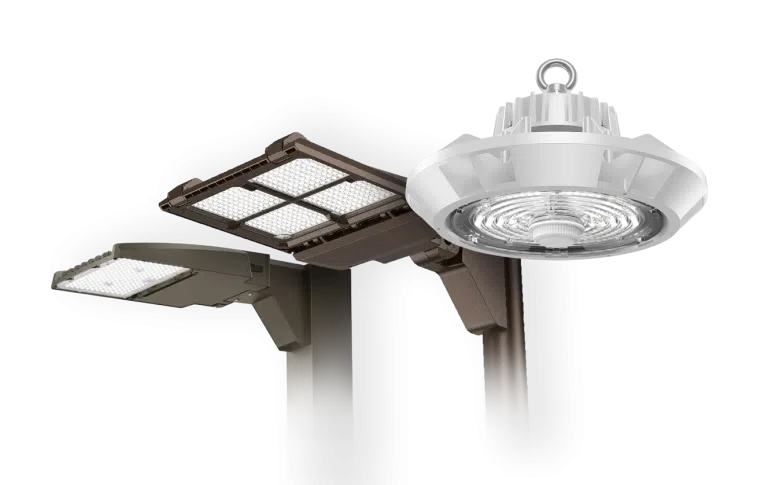
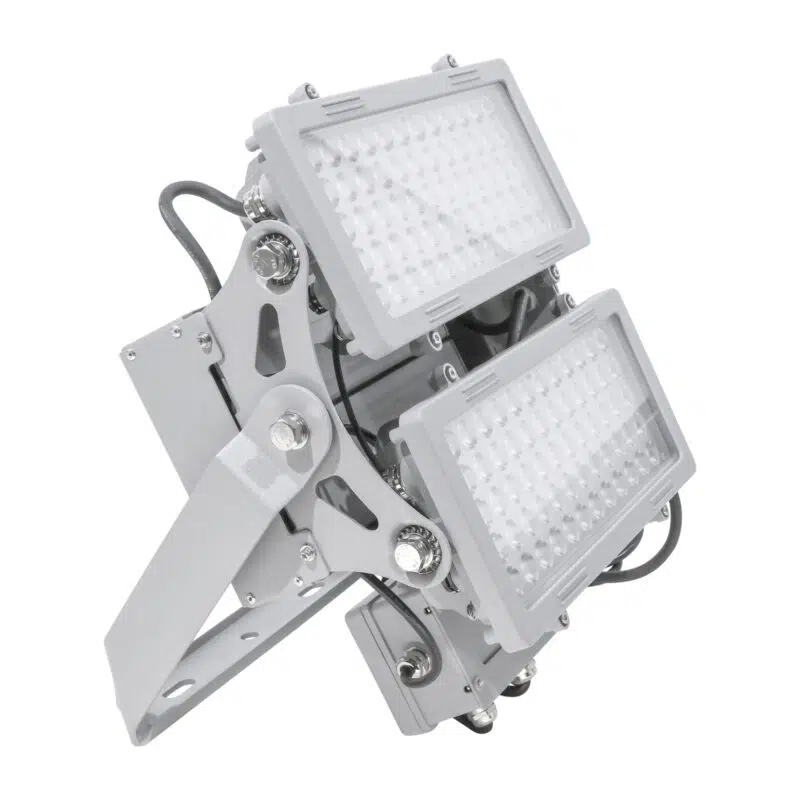
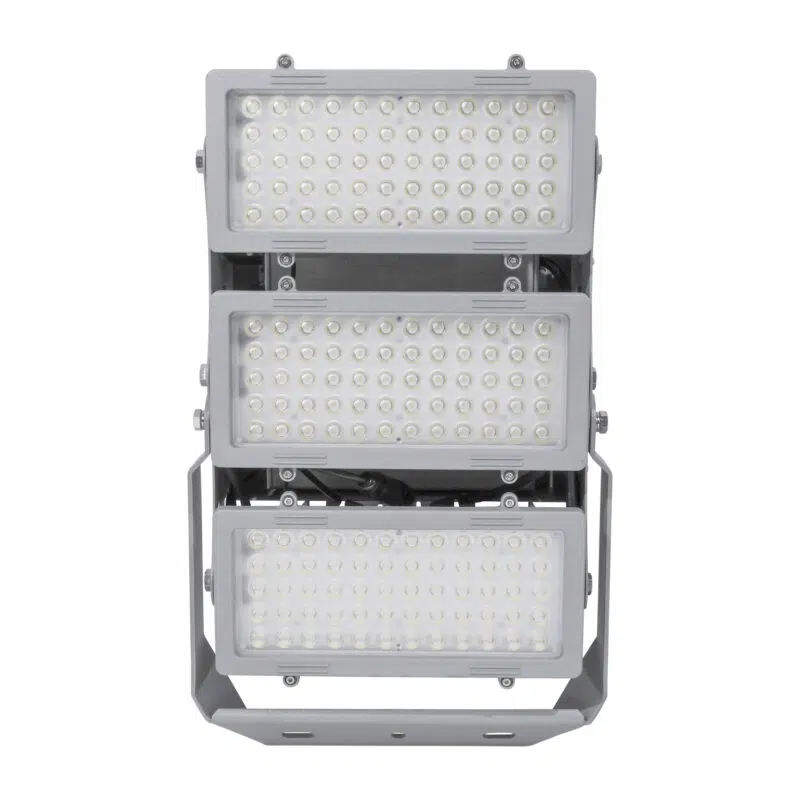
Our Basketball Court Lights include LED high bays, linear high bays, sports court lights, shoebox area lights, flood lights, and impact-resistant fixtures or guards for indoor and outdoor courts. Available models vary by ceiling or pole mounting, optics, color temperature, dimming, sensors, and control options.
These fixtures are commonly used in indoor gyms, school courts, multipurpose facilities, outdoor recreational courts, park courts, backyard courts, competitive courts, public recreation areas, and multi-sport court layouts.
-
 Starting At $309.00


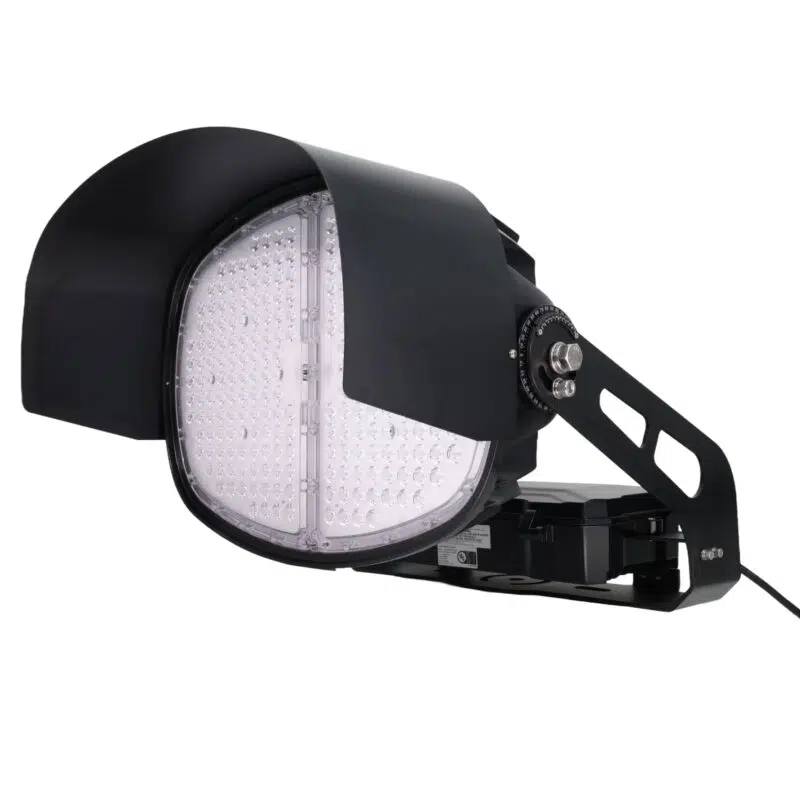


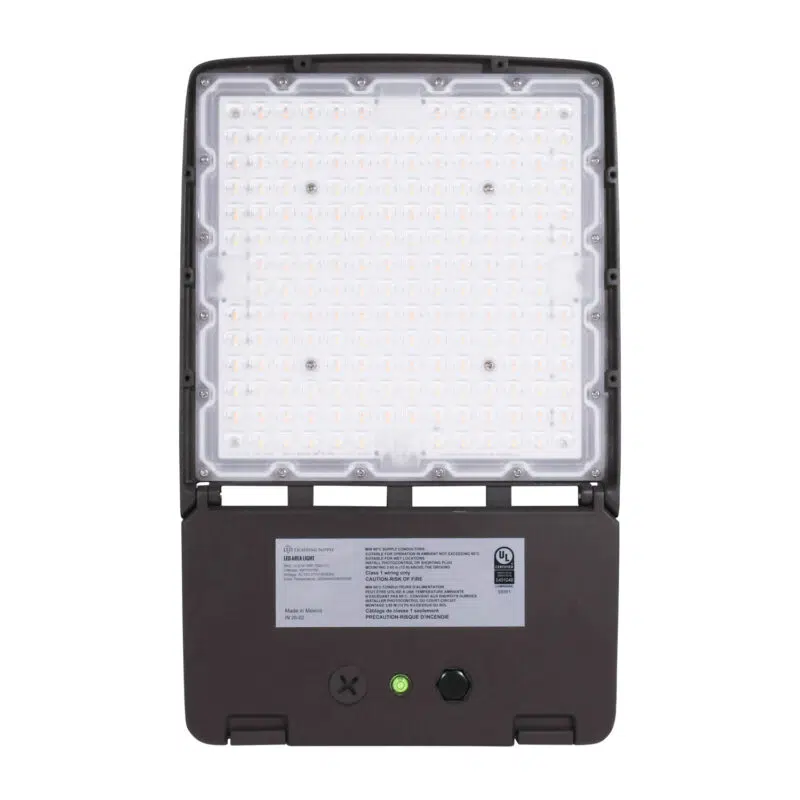

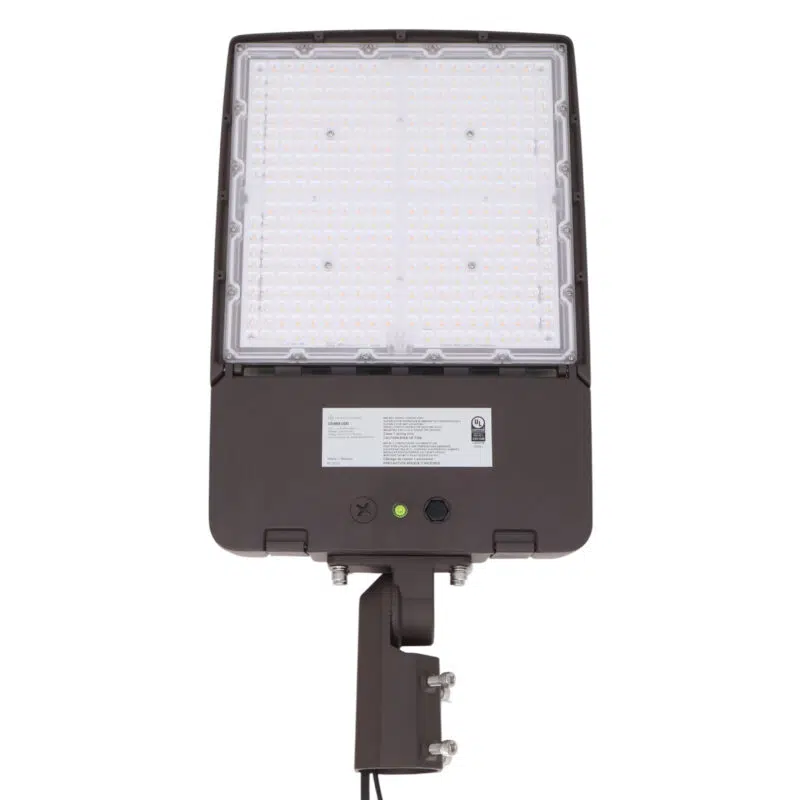


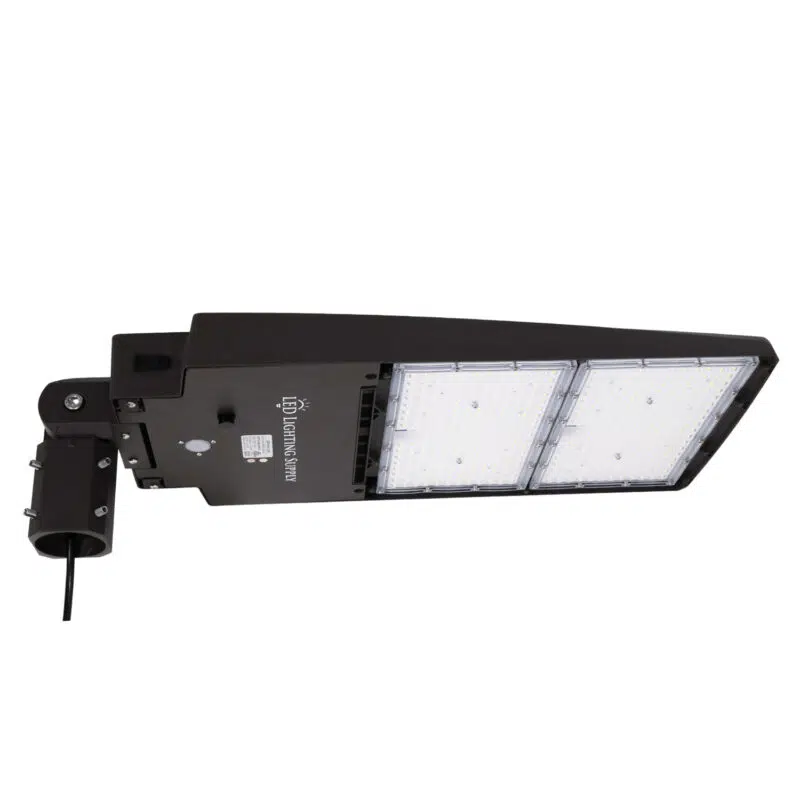
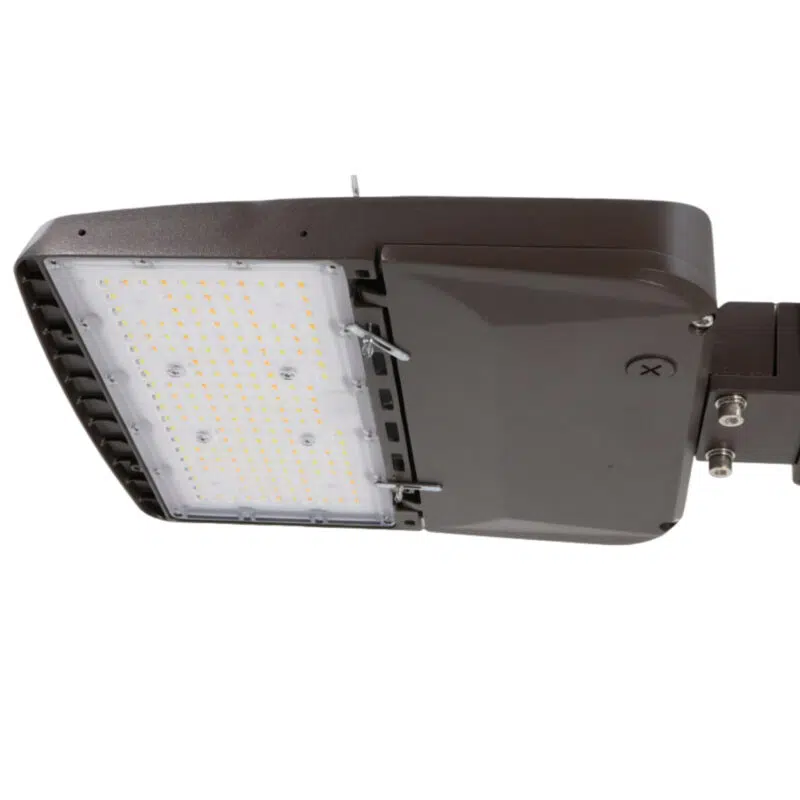
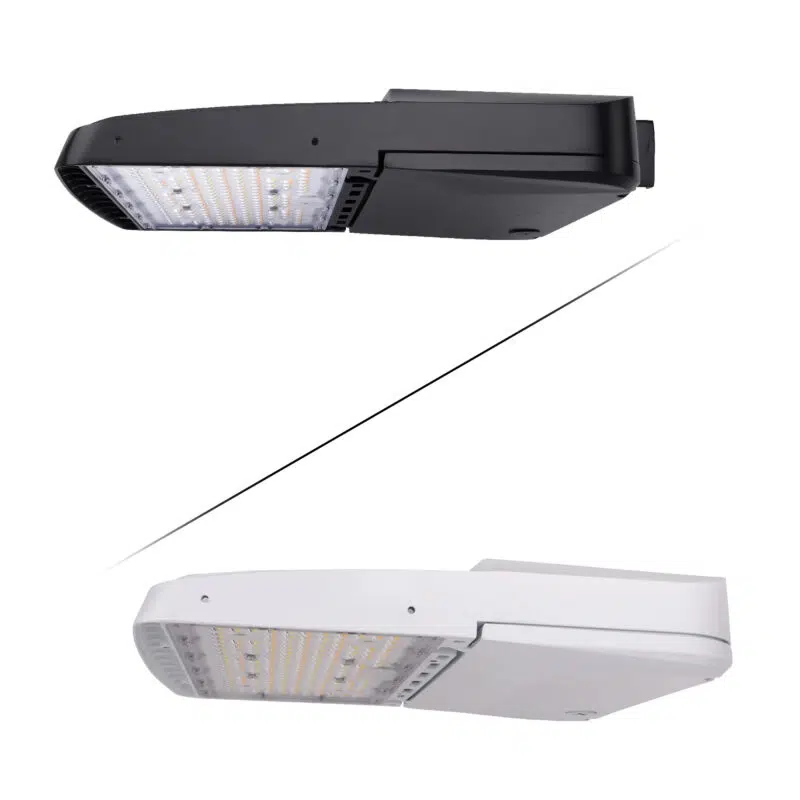

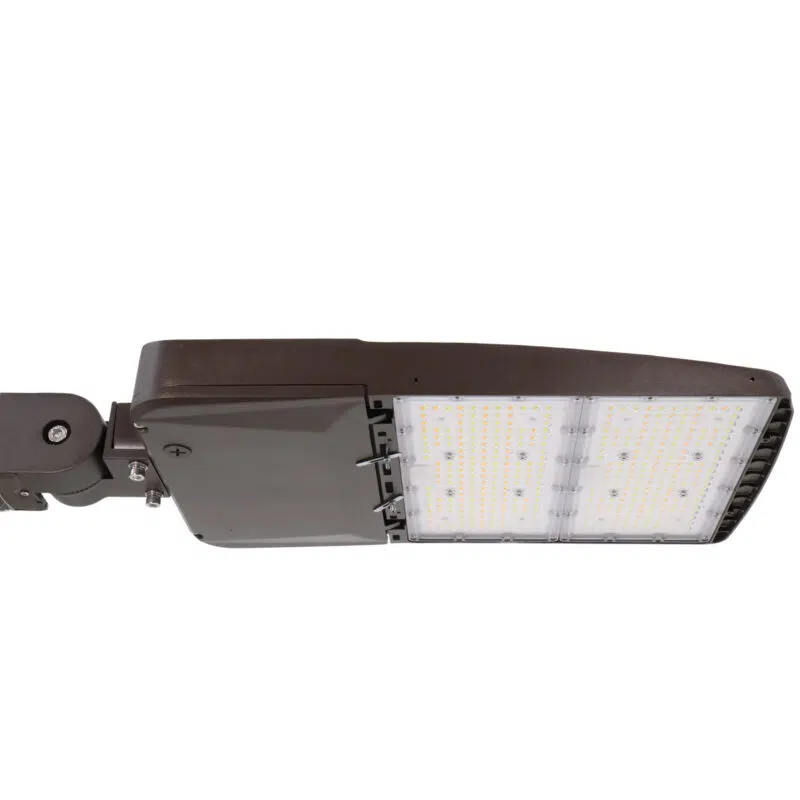


LED Basketball Court Lighting for Indoor and Outdoor Courts
LED basketball court lighting is used to improve visibility, ball tracking, player safety, and court usability after dark or inside gyms and sports facilities. Start by determining whether the court is indoor or outdoor, its size and level of play, and the available pole or ceiling layout. Then select fixtures, mounting heights, optics, and controls that support target foot-candles, uniformity, glare control, and spill-light limits. Basketball courts may be indoors, outdoors, full court, half court, recreational, school-level, competitive, or part of a multi-sport court layout. Each setup requires a different fixture approach.
Indoor basketball courts usually use ceiling-mounted high bays, linear high bays, or sports-rated fixtures, depending on ceiling height and court layout. Outdoor basketball courts typically use pole-mounted LED sports court lights, shoebox area lights, or flood lights placed around the court perimeter. The right fixture depends on court size, mounting height, pole or ceiling layout, target foot-candles, uniformity, glare control, color temperature, controls, and spill-light limits.
Selection and Installation Note: Product specifications, wattage, lumen output, optics, color temperature, voltage, dimming, controls, pole mounting, ceiling mounting, fixture protection, certifications, and warranty coverage vary by model. Confirm the selected product specification before ordering. For basketball courts, sports facilities, poles, electrical upgrades, public recreation areas, school facilities, code-sensitive applications, or safety-critical spaces, verify requirements with your local inspector, facility team, project specifier, or a licensed electrical professional.
Indoor vs Outdoor Basketball Court Lighting
Indoor and outdoor basketball courts use different fixture layouts. Indoor courts usually need overhead lighting that clears the playing area and avoids glare when players look upward. Outdoor courts need perimeter lighting that reaches across the playing surface without excessive spill light into nearby properties.
| Court Type | Fixture Guidance |
|---|---|
| Indoor recreational courts | LED high bays, UFO high bays, or linear high bays may be used depending on ceiling height, beam spread, and ball-impact exposure. |
| Indoor school courts | High bays or sports-rated fixtures should provide even light for practices, PE classes, games, and multipurpose gym use. |
| Indoor competitive courts | Higher maintained light levels, better uniformity, reduced glare, and stronger color rendering may be needed. |
| Outdoor backyard or recreational courts | LED shoebox area lights, flood lights, or sports court lights can provide practical visibility for evening play. |
| Outdoor competitive courts | Pole-mounted sports fixtures with controlled optics can improve uniformity, ball visibility, and glare control. |
| Multi-sport courts | Fixture layout should account for basketball, along with tennis, pickleball, volleyball, or other court markings. |
Recommended Foot-Candles for Basketball Court Lighting
Basketball court light levels depend on whether the court is indoors or outdoors and whether it is used for recreational, school, competitive, or higher-level play. Use these ranges as a planning starting point. Final fixture selection should also consider uniformity, glare, mounting height, pole placement, ceiling layout, color temperature, and spill light.
Step 1: Find your foot candle levels
Step 2: Estimate your fixture count and space
Shoebox Lighting Layout Estimator
Use this estimator to calculate approximate fixture count, pole placement, spacing, and average foot-candles for parking lots, exterior areas, and outdoor sport court applications using LED shoebox fixtures. Enter the area size, mounting height, target foot-candles, light loss factor, and outdoor light use factor to generate a preliminary layout.
Project Inputs
Estimated Results
Estimated average foot-candles are preliminary. The visual heat map is normalized to the estimated average and is intended to show approximate coverage behavior, not a verified lighting plan.
Parking Lot / Exterior Area Mode: Fixtures are placed on poles along the longest edges of the area. Edge fixtures are modeled as level / down-facing shoebox fixtures with the optic directed inward. For wider parking areas, a center row can be added.
Sport Court Mode: Poles are placed on the long edges of the court. Fixtures are modeled as level / down-facing and directed toward court coverage zones instead of being tilted toward one center point.
Photometry / Simulation Note: When usable IES photometry is available for the selected fixture, this estimator uses the fixture’s IES candela data to improve the visual ground-level light distribution. When IES photometry is not available, the estimator uses a simulated Type 3 or Type 5 optic model based on lumens, mounting height, outdoor light use factor, light loss factor, and fixture direction.
Outdoor Light Use Factor: Suggested starting points: open rectangular paved area 0.60–0.70, typical parking lot 0.45–0.60, areas with setbacks or edge losses 0.35–0.50, complex outdoor sites 0.25–0.40.
Preliminary Estimate Only: This estimator is intended for simple rectangular outdoor areas. Actual light levels may vary based on fixture optics, pole setbacks, mounting height, fixture orientation, distribution type, surface reflectance, obstructions, voltage, installation conditions, spill light requirements, and site-specific requirements.
This estimate is a starting point. Parking lots, roadways, sport courts, public areas, campuses, vehicle areas, and code-sensitive exterior projects should be reviewed with a lighting plan before purchase or installation.
Best LED Fixtures for Basketball Courts
Fixture choice should start with the court environment. An indoor gym with a 28-foot ceiling needs a different solution than an outdoor half court behind a recreation center. The fixture also needs to support the level of play and the expected hours of use.
| Fixture Type | Best Used For |
|---|---|
| LED UFO high bays | Indoor basketball courts with higher ceilings, where compact overhead fixtures can provide broad court coverage. |
| LED linear high bays | Indoor gyms, school courts, and multipurpose spaces where rows of light can support even illumination. |
| LED sports court lights | Outdoor courts or higher-level sports facilities where optics, aiming, and uniformity are important. |
| LED shoebox area lights | Outdoor recreational courts, park courts, and perimeter pole-mounted layouts. |
| LED flood lights | Outdoor courts where adjustable aiming is needed, especially for smaller or irregular layouts. |
| Impact-resistant fixtures or guards | Indoor courts where fixtures may be exposed to basketball contact or gym activity. |
Outdoor Basketball Court Lighting Layout
Outdoor basketball courts usually use pole-mounted fixtures placed outside the playing area. Full courts may use a four-pole, six-pole, or eight-pole arrangement depending on court size, target light levels, fixture output, mounting height, and spill-light limits. Half courts may need fewer fixtures, but the layout still needs to control glare and shadows.
Basketball court light pole height, fixture aiming, optical distribution, and setback distance all affect the final result. A fixture that is too low or aimed too aggressively can create glare for players and neighbors. A fixture placed too far from the court may miss target light levels or create uneven coverage.
Indoor Basketball Court Lighting Layout
Indoor basketball courts usually use ceiling-mounted fixtures arranged above or around the court. The layout should avoid placing excessive glare directly in a player’s line of sight during shots, rebounds, and fast movement. High bays, linear high bays, or sports-rated fixtures may be used depending on ceiling height and facility design.
For school gyms and multipurpose facilities, confirm whether the space is also used for volleyball, assemblies, PE classes, events, or community activities. Controls, dimming, fixture protection, and emergency lighting requirements may be different for multipurpose spaces than for a dedicated basketball-only court.
Basketball Court Lighting Plans and Uniformity
A basketball court lighting plan helps confirm fixture count, mounting height, aiming, optics, and estimated light levels before products are ordered. This is especially useful for outdoor courts, competitive courts, public recreation areas, and indoor gyms with taller ceilings.
Request a basketball court lighting plan to review target light levels, fixture placement, mounting height, beam spread, and uniformity for your court dimensions.
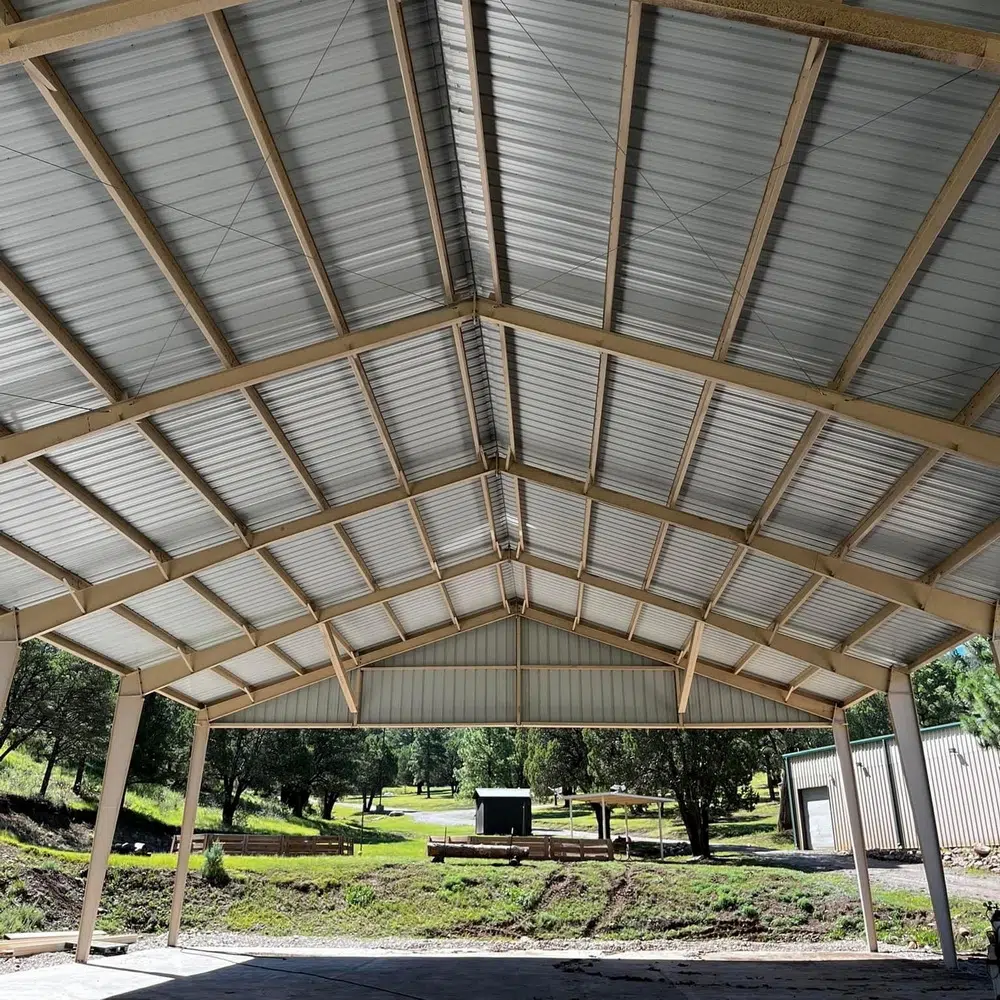
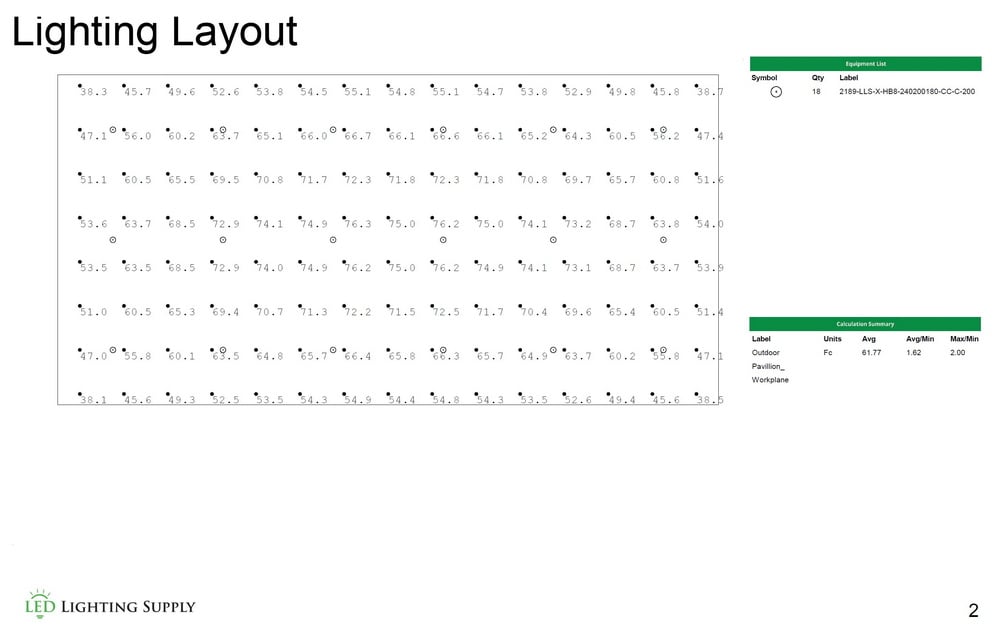
Case Study: Adding 200 Watt LED UFO and 63 Watt Flood Lights to an Outdoor Sports Pavillion in Ruidoso Downs, NM
|
Before: No lights were installed |
After: 180 / 200 / 240 Watt Adjustable LED UFO High Bay |
 |
 |
Lighting Plan We Created for the Customer
|
Lighting Plan |
Heat Map |
 |
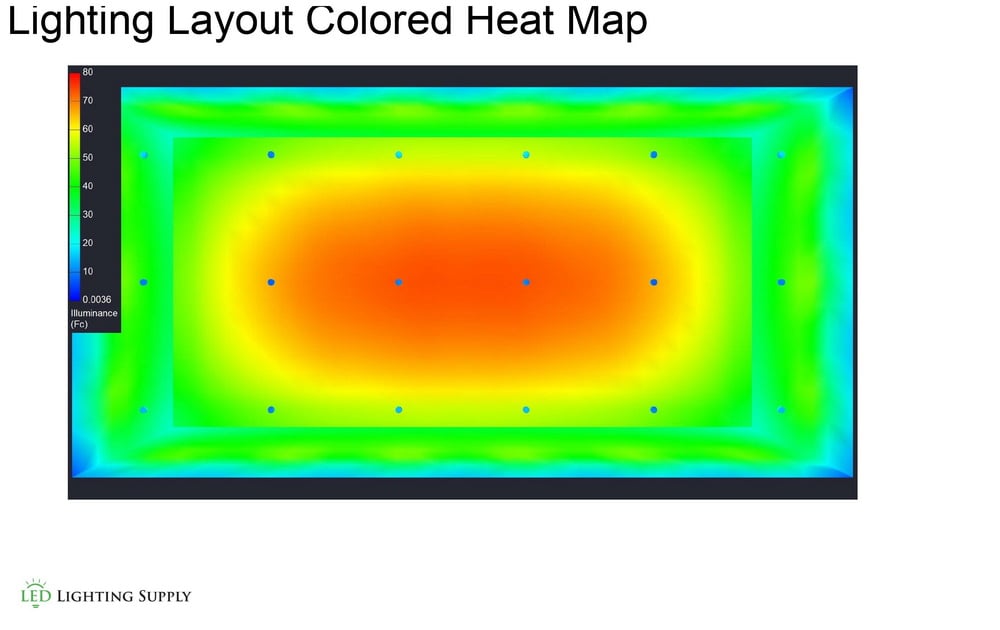 |
Outdoor Camp Pavillion Installation Plan Metrics
- Mounting height: 28 ft
- Fixture Used: LLS-X-HB8-240/200/180-CC]: 180 / 200 / 240 Watt Adjustable LED UFO High Bay | 27000 to 36000 Lumens | 4000K / 5000K Adjustable | 100-277V
- FC achieved: 61.77 FC
- Uniformity (Avg/Min): 1.62
Color Temperature and Ball Visibility
Basketball court lighting often uses 4000K or 5000K, depending on the facility. 4000K provides a neutral commercial appearance and may be preferred for indoor gyms or multipurpose spaces. 5000K creates a brighter, daylight-like appearance that may help with outdoor court visibility and ball tracking.
Color temperature should be consistent across the court. Mixing CCTs can make the playing surface look uneven and may affect visibility. Confirm the selected fixture’s available color temperature, CRI, and selectable CCT options before ordering.
Glare, Spill Light, and Neighboring Properties
Glare control is important for basketball because players often look upward during shots, rebounds, and passes. Poorly aimed fixtures can make the court uncomfortable even if the average light level is high enough.
Outdoor courts should also consider spill light into nearby homes, roads, parking areas, and neighboring properties. Controlled optics, proper pole height, careful aiming, shields, and a lighting plan can help reduce unwanted light while keeping the court playable.
Controls for Basketball Court Lighting
Controls can help reduce energy use and make the court easier to operate. Indoor courts may use switching zones, dimming, occupancy sensors, or building-control systems. Outdoor courts may use photocells, timers, manual switches, contactors, or scheduled controls depending on the site.
Before ordering, confirm voltage, dimming type, sensor compatibility, control wiring, and how the control will be operated. Not every fixture supports every control system.
Basketball Court Lighting Certifications and Warranty Support
LED basketball court lights from LED Lighting Supply carry a safety listing such as UL, ETL, or CSA, depending on product. Many models are DLC or DLC Premium listed for utility rebate support where available. Rebate requirements vary by utility, region, and product listing, so confirm eligibility on the selected product specification before ordering.
Most LED basketball court lights include a 5-year warranty unless otherwise specified, with USA-based warranty support. Before purchase, confirm certifications, DLC status, voltage, dimming compatibility, controls, mounting method, impact exposure, and whether the fixture is right for the court layout and surrounding conditions.
Common Basketball Court Lighting Mistakes
- Choosing fixtures by wattage alone: Court visibility depends on optics, mounting height, aiming, fixture spacing, and uniformity.
- Ignoring glare: Players look upward often, so poorly aimed fixtures can make the court uncomfortable.
- Using parking lot layouts for sports courts: Basketball courts need controlled court coverage, not just general area lighting.
- Underestimating pole height: Low poles can create glare, shadows, and uneven coverage on outdoor courts.
- Forgetting spill light: Outdoor court fixtures can affect nearby homes, roads, parking lots, and neighboring properties.
- Not protecting indoor fixtures: Gym fixtures may need guards or impact-resistant construction, depending on location.
- Mixing color temperatures: Different CCTs across the court can make the playing surface look uneven.
- Skipping a lighting plan: A plan helps confirm fixture count, aiming, pole placement, and estimated light levels before ordering.
Request a basketball court lighting plan, and our Product Specialists can help review court dimensions, indoor or outdoor layout, pole or ceiling height, fixture type, optics, target foot-candles, glare control, spill light, controls, and product specifications.
LED Basketball Court Lighting FAQs
How Do I Choose Between Indoor And Outdoor Basketball Court Fixtures?
Indoor courts usually use ceiling-mounted high bays, linear high bays, or sports-rated fixtures, while outdoor courts typically use pole-mounted sports court lights, shoebox area lights, or flood lights around the court perimeter. Fixture selection should also consider court size, mounting layout, target foot-candles, uniformity, glare control, controls, and spill-light limits.
What Should An Outdoor Basketball Court Lighting Layout Consider?
An outdoor basketball court lighting layout should consider pole height, fixture aiming, optical distribution, setback distance, target light levels, and spill-light limits. Full courts may use four-pole, six-pole, or eight-pole arrangements depending on these project factors, while half courts may need fewer fixtures.
Why Should I Request A Basketball Court Lighting Plan?
A basketball court lighting plan helps confirm fixture count, mounting height, aiming, optics, and estimated light levels before products are ordered. It is especially useful for outdoor courts, competitive courts, public recreation areas, and indoor gyms with taller ceilings.
How Can Basketball Court Lighting Reduce Glare And Spill Light?
Controlled optics, proper pole height, careful aiming, shields, and a lighting plan can help reduce unwanted light while keeping an outdoor court playable. Glare control is important because players often look upward during shots, rebounds, and passes, and outdoor spill light can affect nearby homes, roads, parking areas, and neighboring properties.
What Color Temperature Should I Choose For Basketball Court Lighting?
Basketball court lighting often uses 4000K or 5000K depending on the facility. The page describes 4000K as a neutral commercial appearance that may be preferred for indoor gyms or multipurpose spaces, while 5000K creates a brighter, daylight-like appearance that may help with outdoor court visibility and ball tracking.
What Controls Can Be Used For Basketball Court Lighting?
Indoor basketball courts may use switching zones, dimming, occupancy sensors, or building-control systems, while outdoor courts may use photocells, timers, manual switches, contactors, or scheduled controls depending on the site. Confirm voltage, dimming type, sensor compatibility, control wiring, and operating method before ordering because not every fixture supports every control system.
What Should I Confirm Before Ordering Basketball Court Lights?
Confirm the selected product specification for wattage, lumen output, optics, color temperature, voltage, dimming, controls, mounting, fixture protection, certifications, and warranty coverage because these details vary by model. Also confirm the fixture is right for the court layout, impact exposure, and surrounding conditions.
Are LED Basketball Court Lights Eligible For Utility Rebates?
Many LED basketball court light models are DLC or DLC Premium listed for utility rebate support where available. Rebate requirements vary by utility, region, and product listing, so confirm eligibility on the selected product specification before ordering.