Commercial LED Flood Lights
- Directional lighting for security, signs, yards, and building exteriors
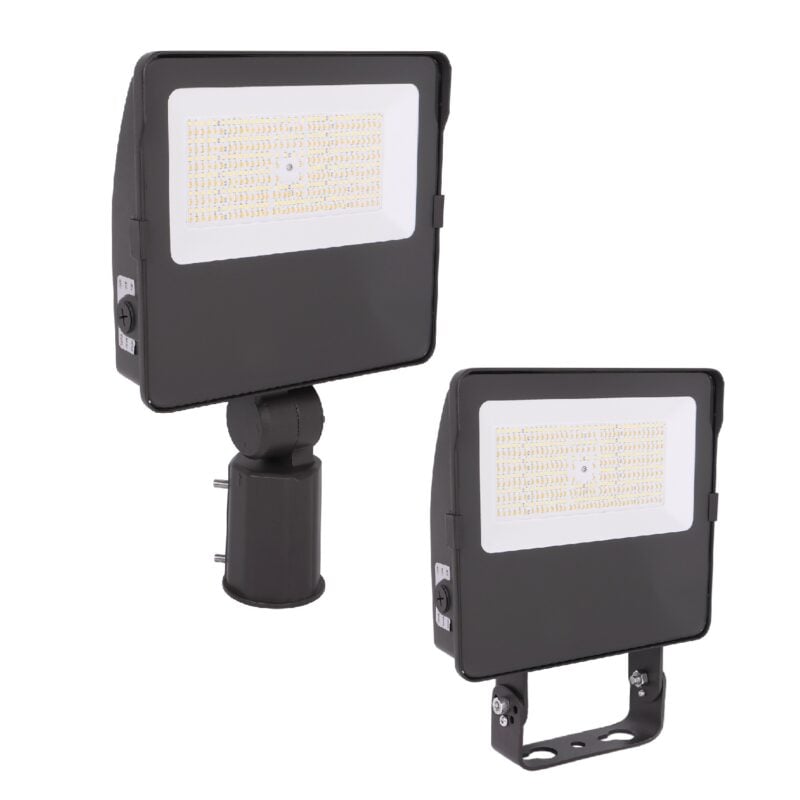
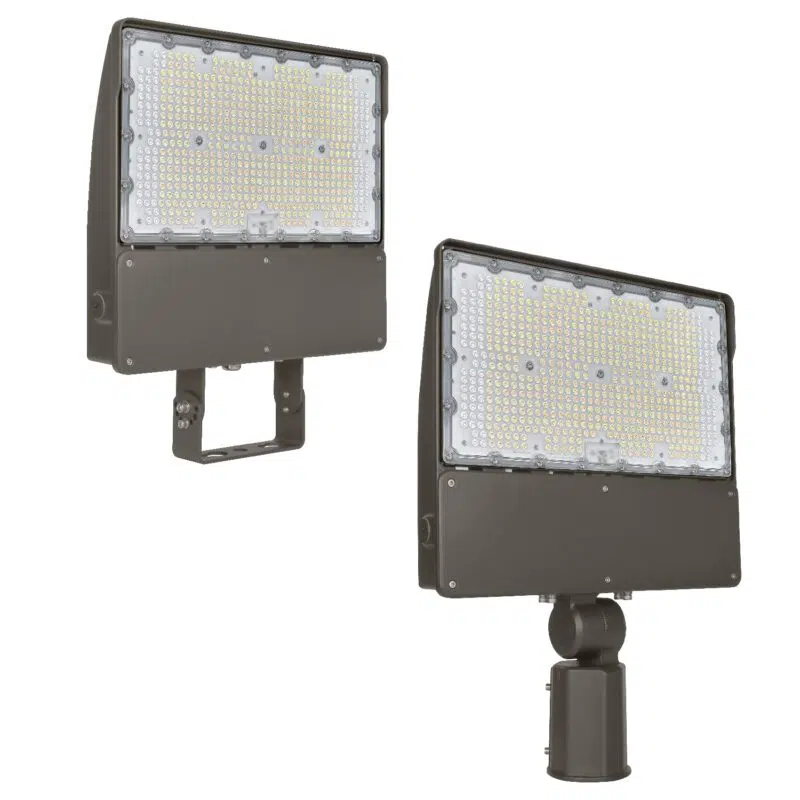
- Yoke, knuckle, and slipfitter mounting options available
- Application support for beam angle and fixture selection


Get Your Custom Lighting Plan With Product Recommendations
- Fixture placement, aiming, and beam angle matched to mounting height and target area for directional coverage
- Lumen output and optics selected for throw distance, uniformity, and glare control across the coverage zone
- LED flood lights can reduce energy use and maintenance compared with metal halide or HID fixtures


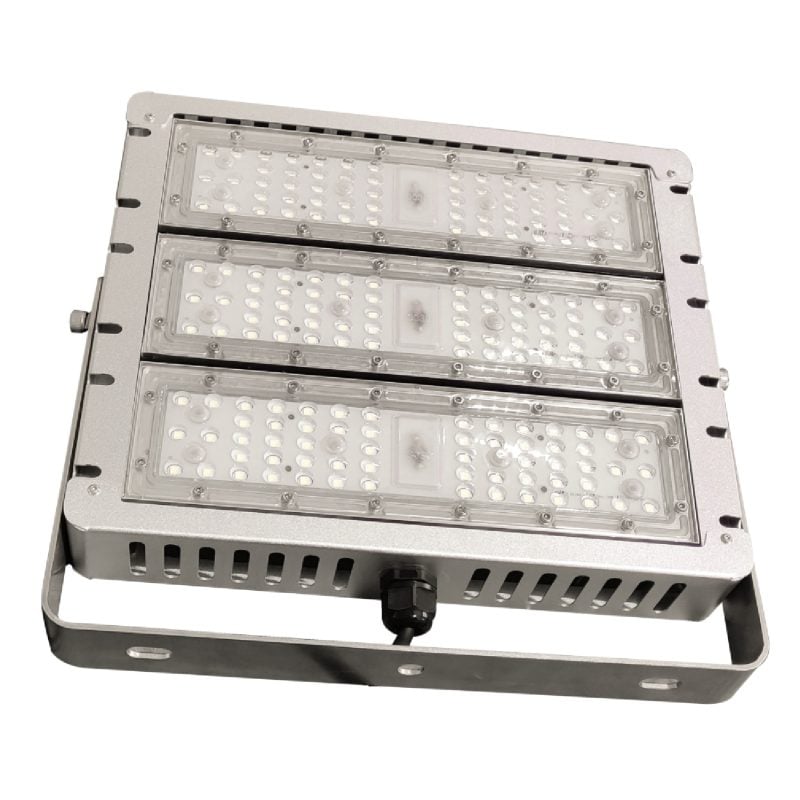
Our Commercial LED Flood Lights include directional outdoor fixtures with yoke, knuckle, and slipfitter mounting options. Available models vary by lumen output, beam angle, voltage configuration, and controls including photocells, motion sensors, timers, and 0-10V dimming.
These fixtures are commonly used for building exteriors, security areas, signs, flagpoles, loading docks, truck yards, outdoor storage areas, construction sites, sports courts, ports, rail yards, docks, and equipment areas.
-
 Starting At $201.92
-
Starting At $71.43




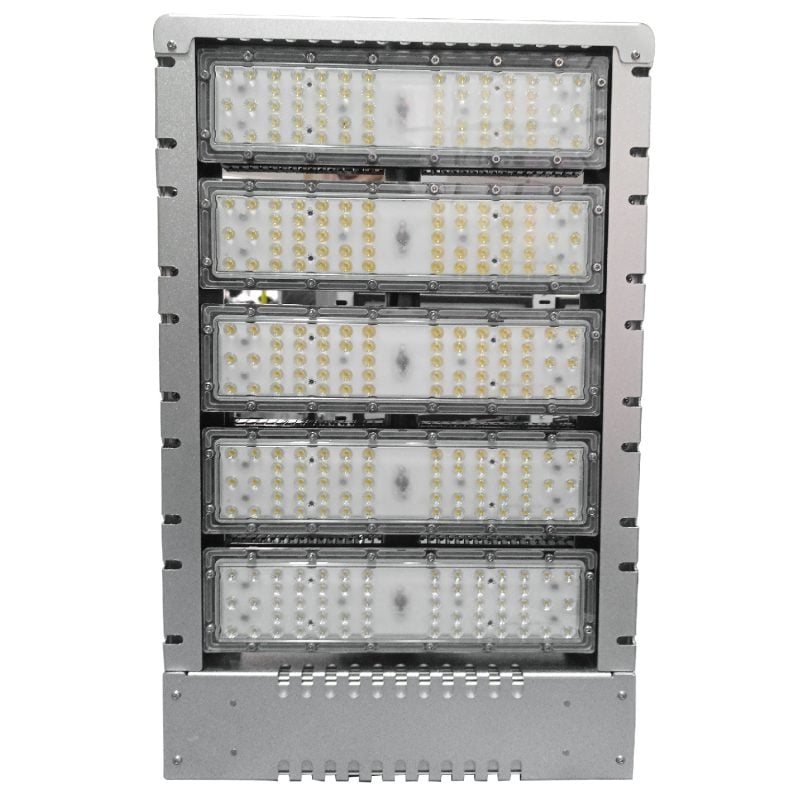
What Are Commercial LED Flood Lights?
Commercial LED flood lights are directional outdoor fixtures used to illuminate security areas, signs, building exteriors, yards, loading docks, sports courts, equipment storage areas, flagpoles, marine sites, and other targeted outdoor spaces. They are designed to aim light toward a specific area rather than spread light evenly in every direction.
Unlike LED parking lot lights or shoebox lights, flood lights are selected around mounting style, beam angle, lumen output, aiming, voltage, fixture location, and environmental exposure. The right fixture depends on how far the light needs to throw, how wide the target area is, how high the fixture is mounted, and whether glare or light spill must be controlled.
Many flood light projects involve replacing older metal halide, HID, or halogen fixtures. LED flood lights can provide instant-on operation, lower energy use, reduced maintenance, better optical control, and more consistent light output over time when properly specified.
Selection and Installation Note: Product specifications, ratings, controls, certifications, and warranty coverage vary by model. Confirm the selected product specification before ordering. For code-sensitive, electrical, outdoor, marine, pole-mounted, dark-sky, high-output, or safety-critical applications, verify requirements with your local inspector or a licensed electrical professional.
Common Applications for Commercial LED Flood Lights
Commercial LED flood lights are used where directional outdoor lighting is needed for a defined target area rather than broad, uniform site coverage. The right fixture depends on mounting height, distance to the target, beam angle, lumen output, voltage, aiming, and environmental exposure.
- Building exteriors and security lighting: Flood lights can illuminate entrances, perimeter areas, loading zones, service areas, equipment yards, and other locations where adjustable directional light is needed.
- Signs, flags, and architectural features: Narrower or more controlled beam patterns can be used to illuminate signs, flagpoles, monuments, facades, and other defined targets while limiting spill light.
- Yards, storage areas, and industrial sites: Higher-output flood lights are commonly used around truck yards, outdoor storage areas, construction sites, ports, rail yards, manufacturing facilities, and equipment areas.
- Sports and recreational areas: Courts, arenas, training areas, and smaller athletic fields may use flood lights where adjustable aiming and controlled beam distribution are required.
- Marine and corrosive environments: Docks, marinas, shipyards, wastewater facilities, coastal sites, and similar applications may require marine or corrosion-resistant LED flood lights with suitable coatings, hardware, and environmental ratings.
- High-voltage industrial applications: Facilities operating higher-voltage lighting circuits may require 480 Volt LED flood lights or fixtures with 277-480V drivers.
For larger yards, tall mounting heights, sports areas, ports, long-throw applications, or projects with strict glare and spill-light requirements, use a photometric plan to confirm fixture quantity, aiming, beam angle, light levels, and uniformity before ordering.
When LED Flood Lights Are the Right Fit
LED flood lights are a good fit when a project needs adjustable, directional outdoor lighting. They are not always the best choice for broad parking lot layouts, full-cutoff requirements, hazardous locations, or applications where fixture aiming cannot be controlled.
| Use LED Flood Lights When | Do Not Use Standard Flood Lights When |
|---|---|
| You need directional outdoor lighting for security areas, signs, yards, sports courts, loading docks, buildings, flagpoles, or targeted coverage. | The project requires broad parking lot coverage with IES Type 1-5 distributions. Use LED parking lot lights instead. |
| Adjustable aiming is required using yoke mount, knuckle mount, or slipfitter mount fixtures. | The area has an established hazardous-location classification. Select lighting specifically listed for the documented Class, Division or Zone, Group, temperature code, ambient temperature, and installation requirements. Hazardous-location flood lights may be appropriate when their listing matches the classified area. |
| You are replacing metal halide, HID, or halogen flood lights and want lower energy use, instant-on performance, and reduced maintenance. | Local dark-sky or light-pollution rules require full cutoff fixtures that a standard adjustable flood light cannot satisfy. |
| Beam control matters for long throw, signs, flagpoles, billboards, sports courts, building facades, or light-spill reduction. | Fixture aiming cannot be controlled, because poor aiming can create glare, uneven illumination, wasted light, or neighbor complaints. |
| The outdoor environment is demanding and may require wet-location ratings, corrosion resistance, marine-grade coatings, impact resistance, or vibration resistance. | The fixture will be installed in a coastal, marine, wastewater, or corrosive environment without confirming coating, hardware, seals, and manufacturer environmental-suitability documentation. |
Choosing LED Flood Lights by Application, Mounting, Beam Angle, Lumens, Voltage, and Environment
Choose commercial LED flood lights in this order: define the application and target area; match mounting height and fixture distance to the beam angle and lumen output; then confirm mounting style, voltage, controls, glare and spill-light concerns, and environmental conditions. Flood lights should not be selected by wattage alone.
A photometric plan is recommended for large yards, sports areas, tall poles, ports, truck yards, construction sites, marine sites, and any project where fixture count, beam angle, aiming, uniformity, or light spill must be confirmed before ordering. For many commercial flood light projects, a medium beam is a common starting point, but the best optic depends on mounting height, fixture distance, and the target area.
Planning Checklist
| Planning Factor | What to Confirm |
|---|---|
| Application | Security lighting, signage, building exterior, yard lighting, sports courts, loading docks, ports, truck yards, construction sites, marine lighting, and flag lighting all require different light levels and beam angles. |
| Mounting style | Yoke mount flood lights work well for larger adjustable fixtures. Knuckle mount flood lights are common for smaller exterior applications. Slipfitter flood lights are used for pole-mounted fixtures on tenons. |
| Mounting height and distance | Higher mounting heights and longer throw distances usually require narrower beam angles. Lower mounting heights often require wider beams or lower lumen output to reduce glare. |
| Lumen output | Use lumens, mounting height, coverage area, and photometric performance instead of wattage alone. LED light is directional, so fixture optics matter as much as output. |
| Beam angle and optics | Narrow beams are used for long throw and targeted lighting. Wider beams are used for general coverage at lower mounting heights. The wrong optic can create hot spots, dark areas, glare, or spill light. NEMA beam classifications are approximate field-angle categories; confirm the actual fixture IES photometric file and beam distribution for the selected model.
|
| Voltage | Confirm 100-277V, 277-480V, or 480V requirements before ordering, especially when replacing metal halide fixtures in industrial facilities, utilities, ports, or rail yards. |
| Controls | Photocells, motion sensors, timers, and 0-10V dimming may be used when compatible with the selected fixture and wiring layout. |
| Environment | Confirm wet-location rating, IP rating, corrosion resistance, vibration exposure, impact rating, marine-grade coating, and hardware requirements for coastal, marine, wastewater, or corrosive industrial locations. IP ratings address solids and water ingress only; they do not by themselves establish corrosion resistance, chemical resistance, or hazardous-location suitability. |
| Glare and light trespass | Review fixture aiming, beam spread, shielding, setbacks, dark-sky requirements, neighboring properties, roads, and security camera needs before installation. |
Recommended Foot-Candles for LED Flood Lighting
Use the tool below for general starting foot-candle ranges by flood light application. It includes security lighting, building exteriors, signs, small parking areas, loading docks, truck yards, outdoor storage yards, construction sites, recreational courts, horse arenas, ports, rail yards, marine areas, and flagpoles.
Foot-candle guidance helps with light-level planning, but it does not determine fixture count, beam angle, aiming, mounting height, voltage, glare control, light trespass, dark-sky compliance, or installation requirements. For larger projects, request a flood lighting plan before ordering.
LED Flood Lights Compared with Shoebox Lights, Wall Packs, Stadium Lights, and Metal Halide
LED flood lights are often compared with shoebox lights, wall packs, stadium lights, sports field lights, and metal halide flood lights. The right choice depends on whether the project needs adjustable directional aiming, broad area coverage, wall-mounted perimeter lighting, long-throw sports lighting, or HID replacement.
| Lighting Type | Best Used For |
|---|---|
| LED Flood Light | Adjustable directional lighting for security areas, signs, building exteriors, yards, sports courts, flagpoles, docks, and targeted outdoor illumination. |
| LED Shoebox Light | Broad, uniform pole-mounted lighting for parking lots, roadways, campuses, and large open outdoor areas where area-light distributions are needed. |
| LED Wall Pack | Building-mounted perimeter lighting for entrances, loading docks, walkways, service areas, and exterior wall security lighting. |
| LED Sports Field or Stadium Light | High-output sports lighting for athletic fields, tall poles, long throw distances, higher light levels, and planned uniformity. |
| Metal Halide Flood Light | Older HID flood lighting with warm-up time, lamp replacement, ballast maintenance, higher energy use, and lumen depreciation over time. |
Flood Lighting Project Examples
Completed flood lighting projects help show how mounting height, fixture output, beam angle, aiming, and site conditions affect visibility. These examples also reinforce why larger flood light projects should be reviewed with a photometric plan before fixtures are ordered.

Flag lit with two of our 600 Watt LED Stadium Lights | 90000 Lumens.

Outdoor rodeo arena converted from metal halide to our 200 Watt LED Area Flood Light | 28000 Lumens.

Portal tower lights converted from metal halide to 200 Watt LED Area Flood Lights | 28000 Lumens.
Outdoor Lighting Certifications, Rebates, and Warranty Support
Selected LED outdoor flood lights from LED Lighting Supply carry a safety certification or listing from an organization such as UL, ETL, or CSA, depending on product and application. UL, ETL, and CSA markings should be verified on the exact product documentation for the intended installation.
Many eligible models are DLC or DLC Premium listed and may qualify for utility rebates where available. DLC qualification is a performance and efficiency program, not an electrical safety certification. Confirm current rebate eligibility and program requirements with the utility before purchase.
Warranty coverage varies by product; many LED flood lights include a 5-year warranty unless otherwise specified, with USA-based warranty support. Before purchase, confirm warranty terms, voltage, controls compatibility, mounting method, wet-location or environmental rating, surge protection, and whether the fixture is suitable for the target area, mounting location, and spill-light concerns.
Flood Light Commissioning and Maintenance Checks
After installation, commissioning helps confirm that the lighting performs as intended and that fixture aiming, controls, and wiring work together properly. Periodic inspection is especially valuable for high-output, coastal, industrial, pole-mounted, or vibration-prone installations.
- Confirm aiming after dark: Verify that light reaches the intended target without excessive glare, light trespass, reflections into security cameras, or illumination beyond the property boundary.
- Check mounting hardware: Inspect yokes, slipfitters, knuckles, bolts, tenons, and brackets for secure attachment. Pole and structure capacity should be evaluated using applicable manufacturer data and project engineering requirements.
- Test controls: Verify photocells, sensors, timers, dimming controls, and building-automation connections operate according to the intended schedule and control settings.
- Inspect seals and wiring: Check wiring entries, gaskets, lenses, and conduit connections for damage, water intrusion, or loose connections. Follow the manufacturer installation instructions and applicable electrical requirements.
- Maintain the optical surface: Dirt, salt deposits, insects, and other debris can reduce delivered light and alter distribution. Clean lenses using the manufacturer-recommended method and schedule.
- Inspect corrosion-prone locations: In coastal, marine, wastewater, or chemical-exposure environments, periodically inspect housings, finishes, mounting hardware, seals, and cable entries for corrosion or degradation.
- Review lighting performance after site changes: New buildings, parked equipment, landscaping, signs, cameras, or property uses can change shadows, glare, and security needs. Re-aim or reassess the layout when the site changes.
Request a flood lighting plan, and our Product Specialists can help review fixture count, mounting height, beam angle, light levels, glare control, voltage, controls, environmental conditions, and product specifications for your LED flood lighting project.
This Content on LED flood lighting guidance, fixture selection, lumen output, beam angles and optics, mounting and aiming, glare and spill-light control, environmental ratings, application suitability, and photometric planning Was Professionally Reviewed By:

Jamie Popp, Professional Electrical Engineer (PE)
Multi-State Licensed Professional Engineer
Master of Science in Engineering
Master of Science in Project Management
Jamie has spent over 15 years working directly with industrial energy systems and facility operations. In his engineering design work, he focuses on comprehensive lighting designs, complex power distribution engineering, technical hazardous area classifications, and design-level construction support.
He applies these specialized design skills across demanding environments, including petrochemical, nuclear, mining, pulp and paper, and manufacturing facilities.
This content was reviewed for technical accuracy, engineering relevance, real-world application, and clarity for the stated lighting topic.
Commercial LED Flood Lights FAQs
When Are Commercial LED Flood Lights The Right Choice?
Commercial LED flood lights are a good fit when a project needs adjustable, directional outdoor lighting for targeted areas such as security zones, signs, yards, sports courts, loading docks, buildings, or flagpoles. They are selected based on mounting style, beam angle, lumen output, aiming, voltage, fixture location, and environmental exposure.
When Should I Use Parking Lot Lights Instead Of Flood Lights?
Use LED parking lot lights instead of standard flood lights when the project requires broad parking lot coverage with IES Type 1-5 distributions. Flood lights are intended for directional lighting of defined target areas rather than broad, uniform site coverage.
How Should I Choose A Flood Light Beam Angle?
Choose the beam angle based on mounting height, fixture distance, and the target area. Higher mounting heights and longer throw distances usually require narrower beam angles, while lower mounting heights often require wider beams or lower lumen output to reduce glare.
How Should I Select Flood Light Output?
Select flood light output using lumens, mounting height, coverage area, and photometric performance rather than wattage alone. Fixture optics matter as much as output because LED light is directional.
Which Flood Light Mounting Style Should I Choose?
Select the mounting style based on the installation location and fixture size. Yoke mounts work well for larger adjustable fixtures, knuckle mounts are common for smaller exterior applications, and slipfitter mounts are used for pole-mounted fixtures on tenons.
When Is A Photometric Plan Recommended For A Flood Lighting Project?
A photometric plan is recommended for large yards, sports areas, tall poles, ports, truck yards, construction sites, marine sites, and projects where fixture quantity, aiming, beam angle, light levels, uniformity, or light spill must be confirmed before ordering. A plan can confirm fixture quantity, aiming, beam angle, light levels, and uniformity.
What Should Be Confirmed For Flood Lights In Marine Or Corrosive Environments?
Confirm wet-location rating, IP rating, corrosion resistance, vibration exposure, impact rating, marine-grade coating, and hardware requirements for coastal, marine, wastewater, or corrosive industrial locations. Marine or corrosion-resistant flood lights may be required with suitable coatings, hardware, and environmental ratings.
What Should I Verify Before Ordering Commercial LED Flood Lights?
Before ordering, confirm the selected product specification, including voltage, controls compatibility, mounting method, wet-location or environmental rating, surge protection, rebate eligibility, and suitability for the target area, mounting location, and spill-light concerns. Product specifications, ratings, controls, certifications, and warranty coverage vary by model.