Long-Throw LED Flood Lights
- Narrow, medium, and asymmetric optic options available
- Marine-grade and corrosion-resistant models for harsh environments
- Photometric plans help evaluate coverage, aiming, and foot-candles


Get Your Custom Lighting Plan With Product Recommendations
- Fixture placement and aiming designed around mounting height and long-throw beam distribution for distant coverage
- Optics and lumen output matched to tall-pole applications with appropriate beam angles for security visibility
- LED options can reduce energy use and extend maintenance intervals compared with legacy HID flood lighting


Our Long-Throw LED Flood Lights include directional fixtures with narrow, medium-narrow, medium, and asymmetric optics for distant-area illumination. Available models may include 120-277V or 277-480V drivers, with yoke, trunnion, and slip-fitter mounting options.
These fixtures are commonly used in industrial and heavy-equipment yards, ports, docks, shipyards, container terminals, rail yards, storage areas, security perimeters, towers, flagpoles, signs, arenas, horse facilities, and distant work zones.
-
 Starting At $697.50
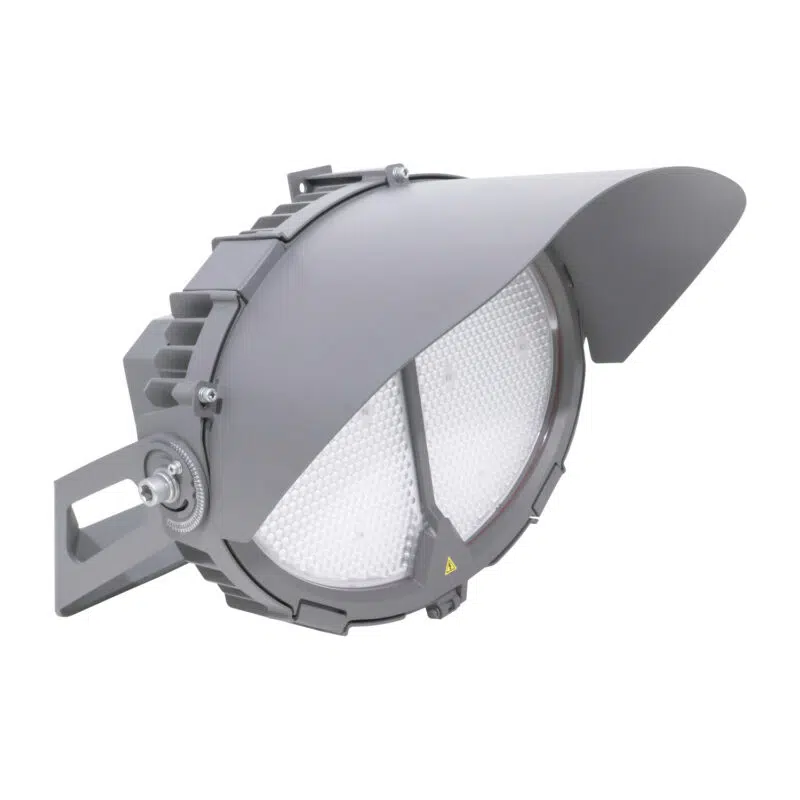


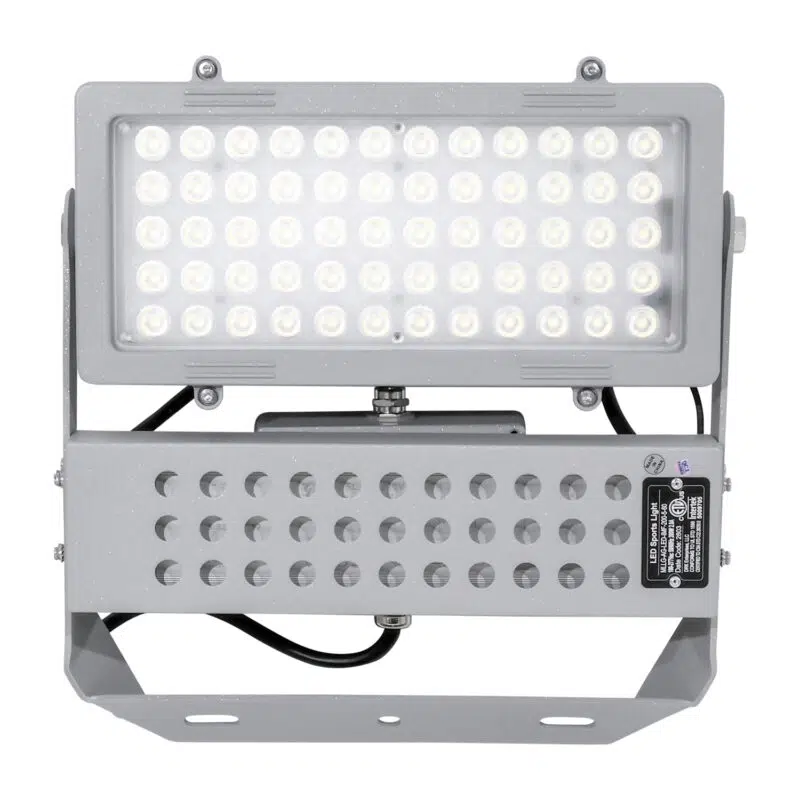

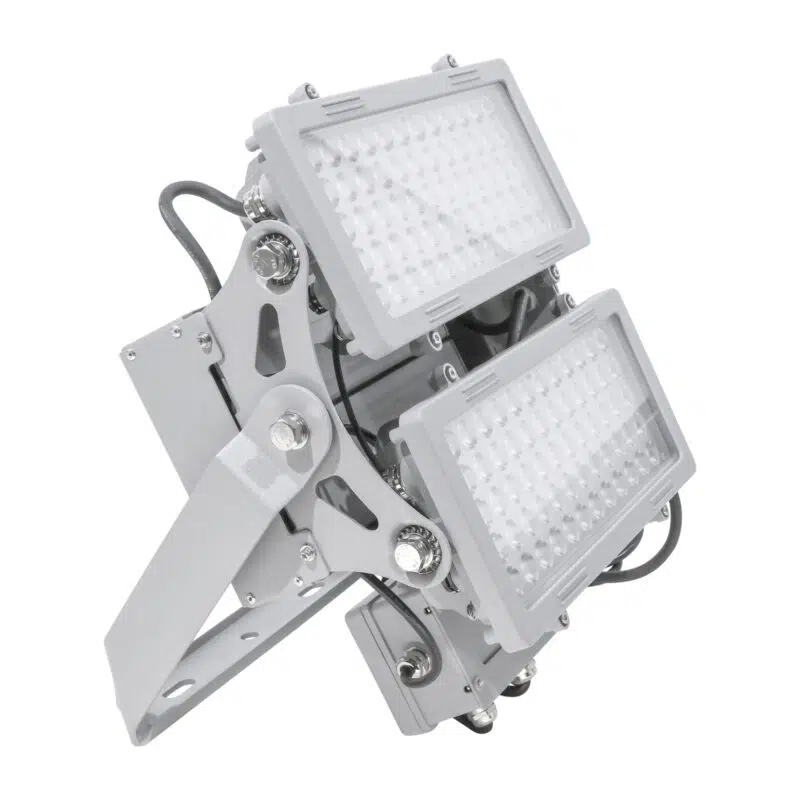
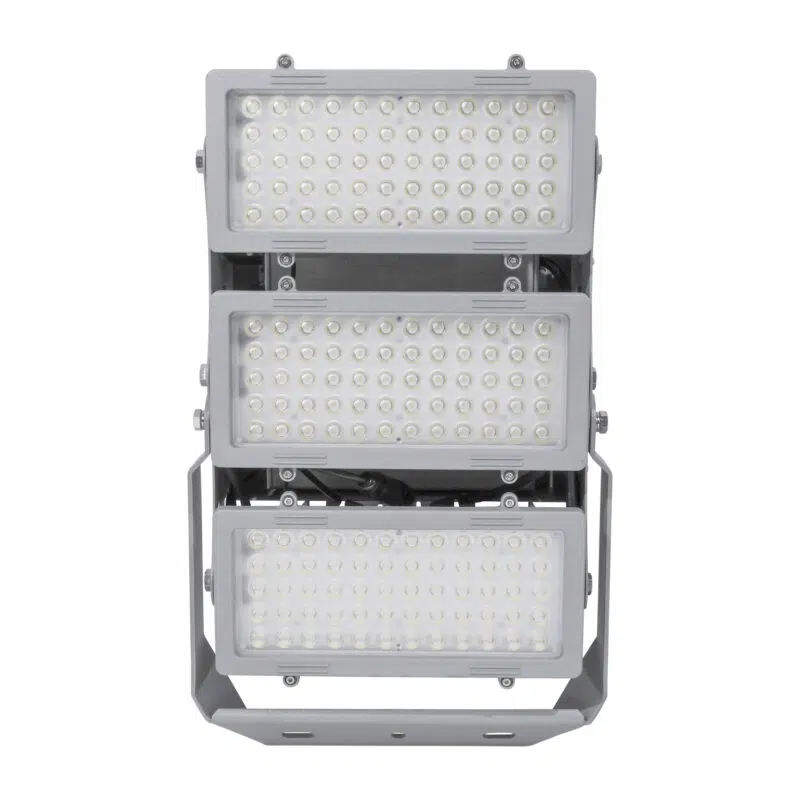

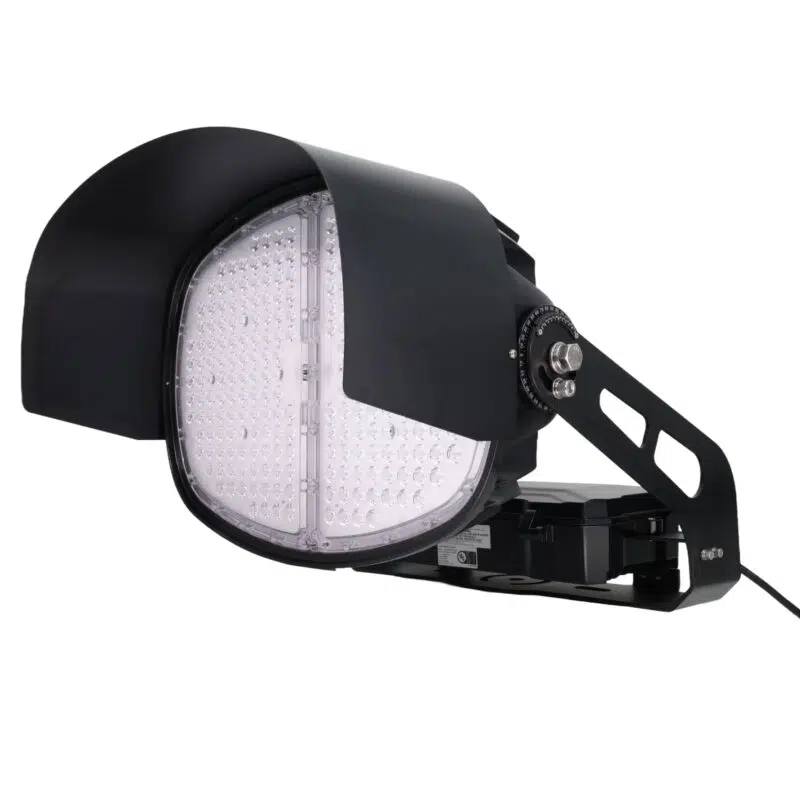

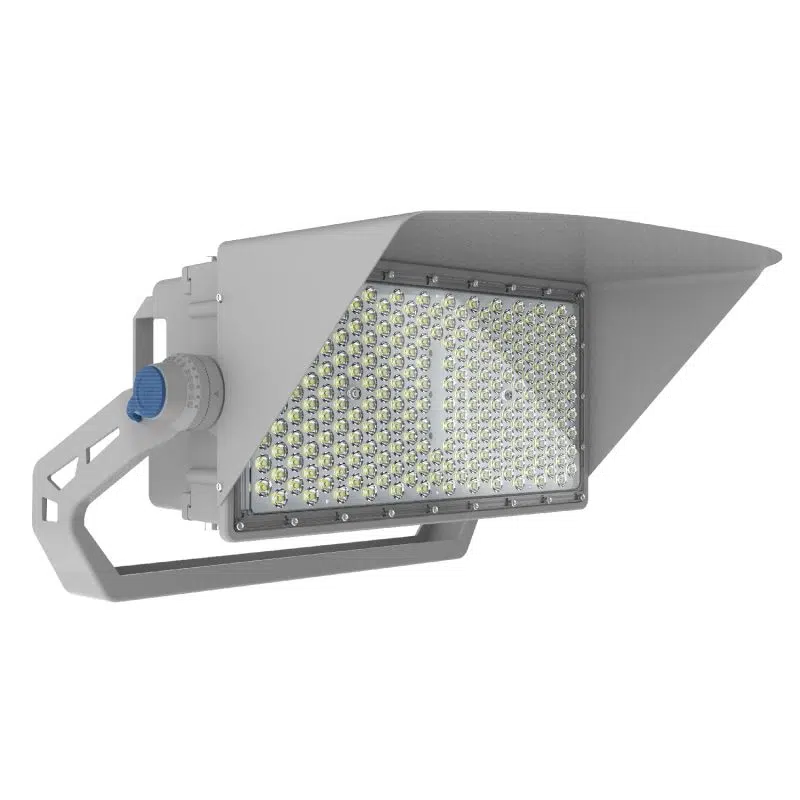

Long-Throw LED Flood Lights
Long-throw LED flood lights use controlled optics to direct illumination from tall poles, towers, buildings, and remote mounting positions toward distant target areas. They are commonly used for industrial yards, ports, rail facilities, equipment storage areas, security perimeters, flagpoles, towers, arenas, and other locations where fixtures cannot be mounted close to the area being illuminated.
A long-throw flood light is not defined by wattage or lumen output alone. The fixture must combine enough output with the correct optic to maintain useful light levels across the required distance.
Start by measuring mounting height, fixture setback, and target dimensions, then select the optic and output needed for the required light levels. Confirm mounting, voltage, environmental conditions, glare and spill-light concerns, and whether a photometric plan is needed before ordering.
Choosing the Right Long-Throw Optic
The optic determines how tightly the fixture controls the beam as light travels away from the mounting location. Available distributions vary by model and may include narrow, medium-narrow, medium, or asymmetric options.
- Narrow optics: Concentrate light for distant targets, tall poles, towers, flagpoles, and precise illumination.
- Medium-narrow optics: Provide controlled throw with broader coverage for industrial yards, loading areas, and large work zones.
- Medium optics: Balance distance and coverage when the target area is larger or closer to the fixture.
- Asymmetric optics: Direct more light forward or toward one side for property boundaries, docks, building edges, and perimeter mounting positions.
An optic that is too narrow can create bright hot spots and dark areas around the target. An optic that is too wide may lose useful intensity before reaching the area and can increase glare, uplight, and spill beyond the property.
What Determines Throw Distance?
Useful throw distance depends on the complete lighting layout, including:
- Lumen output: Longer distances and higher mounting positions may require higher-output industrial flood lights.
- Beam distribution: Narrower optics concentrate more of the available light within a smaller target area.
- Mounting height: Taller mounting can increase coverage but also increases the distance from the fixture to the target.
- Fixture setback: The horizontal distance between the mounting location and target affects optic selection and aiming.
- Aiming angle: Excessive tilt can increase glare and uplight while reducing useful illumination on the target.
- Required light levels: Security perimeters, equipment yards, signs, flags, and active work areas may require different foot-candle levels.
- Environmental conditions: Fog, dust, salt spray, airborne contaminants, and reflective surfaces may affect visibility and fixture selection.
Do not estimate long-throw performance from wattage or lumens alone. Photometric files and a lighting plan provide a more reliable way to evaluate beam coverage, fixture quantity, aiming, and expected foot-candle levels.
Common Long-Throw Applications
- Industrial and heavy-equipment yards
- Ports, docks, shipyards, and container terminals
- Rail yards and transportation facilities
- Large storage and material-handling areas
- Remote security and perimeter targets
- Towers, flagpoles, signs, and tall structures
- Arenas and horse facilities, and large recreational areas
- Building-mounted lighting aimed toward distant work zones
Long-throw flood lights are directional fixtures. Broad parking lots requiring uniform Type III or Type V distributions may be better served by LED parking lot lights or shoebox lights. Athletic fields with strict uniformity, glare, and aiming requirements may require dedicated sports-lighting fixtures.
Mounting and Aiming
Yoke and trunnion mounts are commonly used for long-throw flood lights because they allow secure, adjustable aiming from poles, crossarms, walls, towers, and structural supports. Slip-fitter options may also be available for compatible pole tenons.
Before ordering, confirm fixture weight, mounting hardware, wind exposure, available aiming range, structural capacity, and service access. The fixture should be aimed toward the target without relying on excessive upward tilt.
Aiming should also account for nearby roads, neighboring properties, workers, security cameras, water surfaces, and local glare or light-trespass requirements.
Voltage and Environmental Options
Long-throw LED flood lights may be available with 120-277V or 277-480V drivers, depending on the model. Verify the actual circuit voltage and confirm that surge protection, controls, wiring, and accessories are compatible with the selected fixture. Projects operating at higher voltage can review available 480-volt LED flood lights.
Marine-grade LED flood lights or corrosion-resistant models may be appropriate for ports, coastal sites, docks, shipyards, wastewater facilities, and corrosive industrial environments. Confirm the coating, hardware, IP rating, corrosion class, operating-temperature range, and warranty terms for the exact fixture.
What to Confirm Before Ordering
- Mounting height and setback: Measure both the vertical and horizontal distance to the target.
- Target dimensions: Identify the length, width, and shape of the area that needs illumination.
- Optic: Select narrow, medium-narrow, medium, or asymmetric distribution based on distance and coverage.
- Lumen output: Match output to the target light levels and optic rather than wattage alone.
- Mounting method: Confirm compatibility with the pole, wall, crossarm, tower, trunnion, yoke, or slip fitter.
- Voltage: Verify whether the project requires 120-277V or 277-480V operation.
- Environment: Review moisture, salt, corrosion, dust, vibration, temperature, and wind exposure.
- Glare and spill light: Consider property lines, roads, neighboring buildings, workers, and nearby residences.
Photometric Planning, Certifications, and Warranty
A photometric plan is recommended for long-throw applications because small changes in optics, mounting height, setback, and aiming can significantly affect final coverage. The plan can help verify fixture count, optic selection, aiming angles, expected foot-candle levels, uniformity, glare, and spill light before installation.
Confirm the selected fixture's safety listing, voltage, optic options, mounting method, environmental ratings, surge protection, controls compatibility, and DLC or DLC Premium status where utility rebates are expected. Most LED Lighting Supply flood lights include a 5-year warranty unless otherwise specified.
Need help selecting a long-throw flood light? Provide the mounting height, horizontal distance to the target, target dimensions, desired light levels, voltage, mounting method, and environmental conditions. LED Lighting Supply's Product Specialists can help identify suitable output and optic options and determine whether a photometric plan is recommended.
Long-Throw LED Flood Lights FAQs
How Should I Choose The Right Optic For A Long-Throw LED Flood Light?
Choose the optic based on the target distance, required coverage, and mounting position. Narrow optics concentrate light for distant or precise targets, while medium-narrow, medium, and asymmetric options provide different coverage patterns for larger areas, closer targets, or one-sided mounting positions.
What Factors Determine Long-Throw Flood Light Performance?
Long-throw performance depends on lumen output, beam distribution, mounting height, fixture setback, aiming angle, required light levels, and environmental conditions. Wattage or lumens alone do not provide a reliable estimate of long-throw performance.
How Can I Determine Fixture Quantity And Aiming Before Installation?
A photometric plan can help verify fixture count, optic selection, aiming angles, expected foot-candle levels, uniformity, glare, and spill light before installation. Small changes in optics, mounting height, setback, and aiming can significantly affect final coverage.
Are Long-Throw LED Flood Lights Suitable For Broad Parking Lots?
Long-throw LED flood lights are directional fixtures, while broad parking lots requiring uniform Type III or Type V distributions may be better served by LED parking lot lights or shoebox lights. Athletic fields with strict uniformity, glare, and aiming requirements may require dedicated sports-lighting fixtures.
What Should I Confirm About Mounting And Aiming?
Confirm fixture weight, mounting hardware, wind exposure, available aiming range, structural capacity, and service access before ordering. Yoke and trunnion mounts are commonly used for adjustable aiming, and slip-fitter options may be available for compatible pole tenons.
What Voltage Options May Be Available For Long-Throw LED Flood Lights?
Long-throw LED flood lights may be available with 120-277V or 277-480V drivers, depending on the model. Verify the actual circuit voltage and confirm that surge protection, controls, wiring, and accessories are compatible with the selected fixture.
When Should Environmental Conditions Affect Fixture Selection?
Environmental conditions should be reviewed when a project has moisture, salt, corrosion, dust, vibration, temperature, or wind exposure. Marine-grade or corrosion-resistant models may be appropriate for ports, coastal sites, docks, shipyards, wastewater facilities, and corrosive industrial environments.