480 Volt LED Flood Lights
- Designed for 480V industrial electrical systems
- Options for ports, utilities, and harsh environments
- Application support for fixture and beam selection


Get Your Custom Lighting Plan With Product Recommendations
- Fixture placement and aiming designed around site coverage, beam distribution, and target foot-candle levels
- Fixture count and optics matched to mounting heights with 277-480V driver options for industrial systems
- LED options can help reduce energy consumption and extend maintenance intervals compared with legacy HID


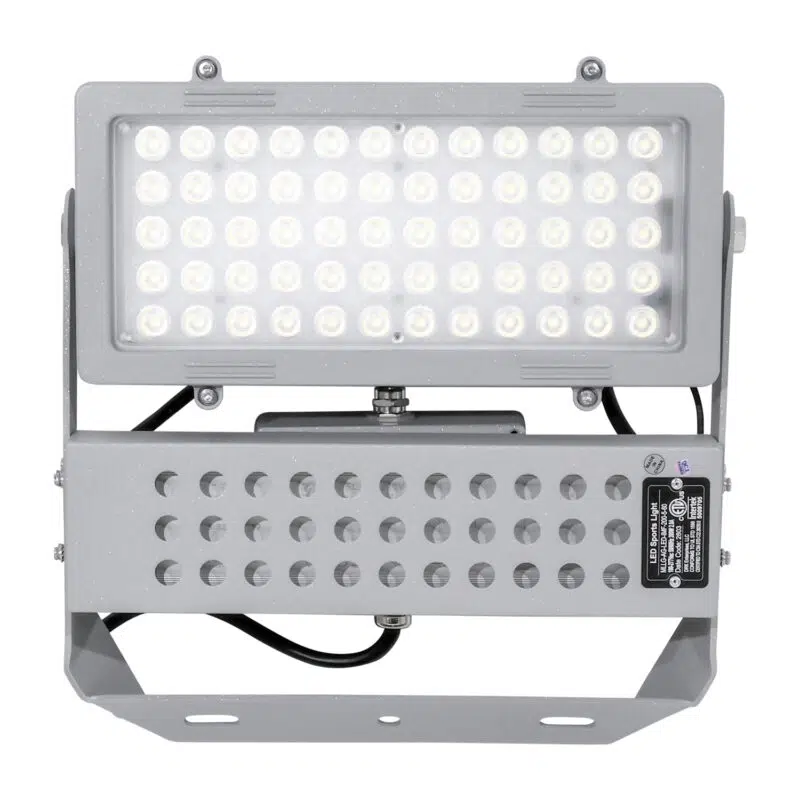
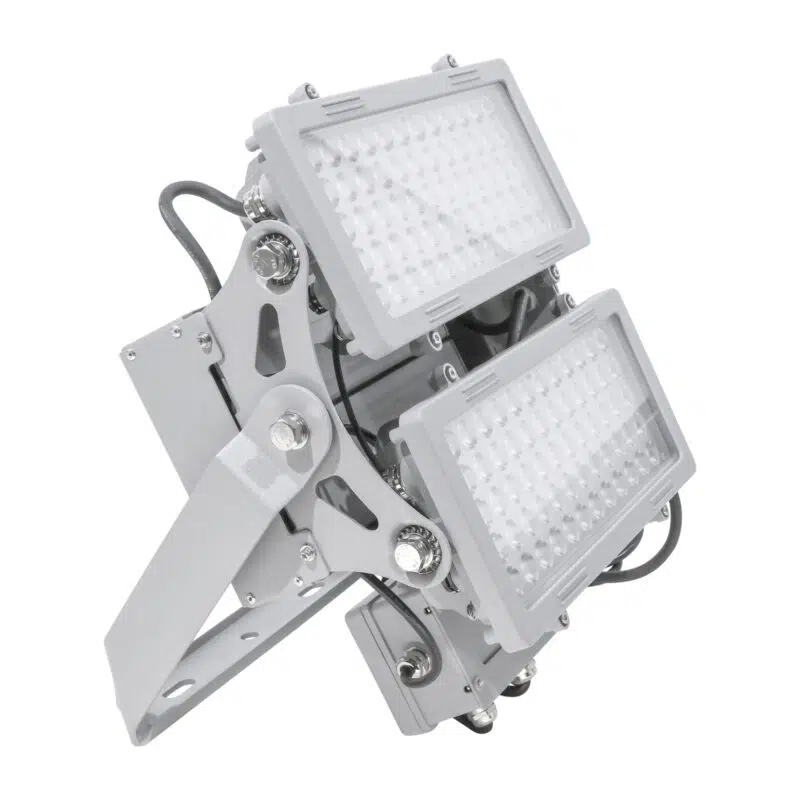
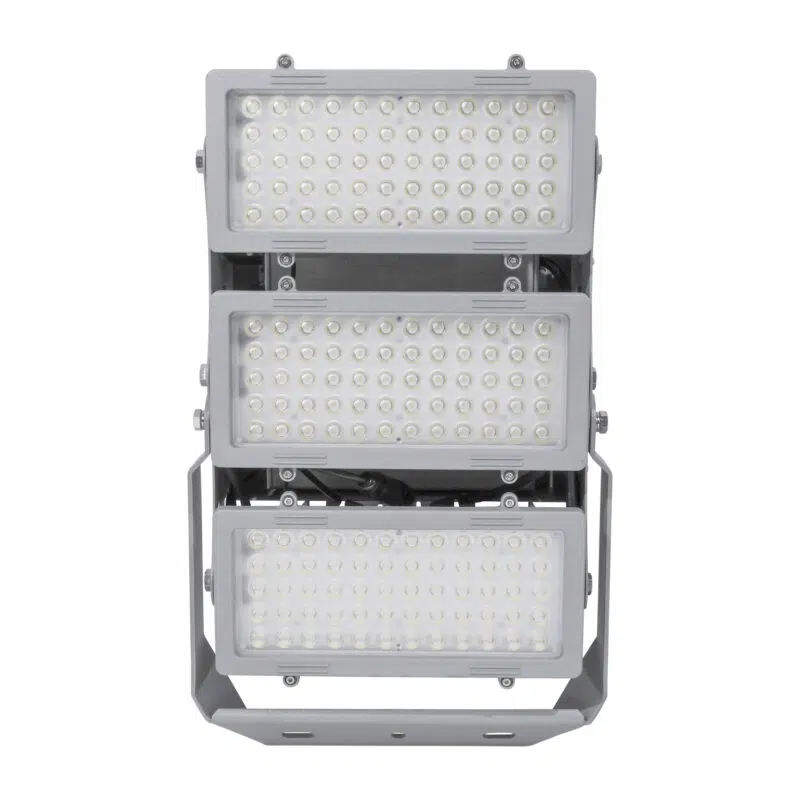
Our 480 Volt LED Flood Lights include directional outdoor fixtures for commercial and industrial sites with 480V electrical systems. Available models vary by lumen output, beam angle, aiming, mounting configuration, and controls for outdoor area lighting.
These flood lights are commonly used in industrial yards, manufacturing facilities, utility sites, ports, rail facilities, equipment areas, storage yards, loading zones, truck yards, parking areas, and perimeter locations.



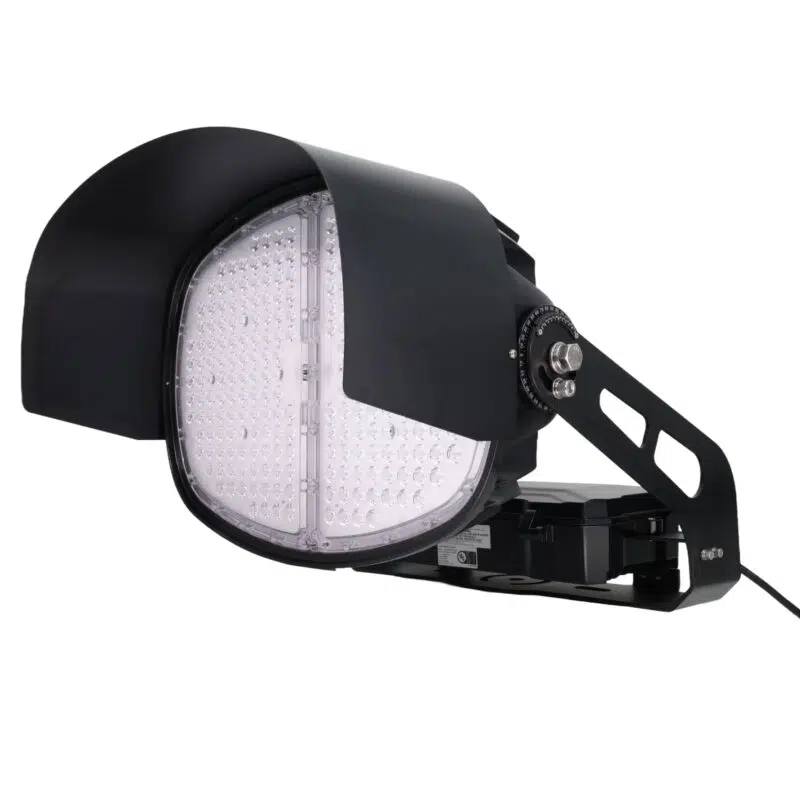


480 Volt LED Flood Lights
480 Volt LED flood lights provide directional outdoor lighting for commercial and industrial sites that use higher-voltage electrical systems. They are commonly used for yards, manufacturing facilities, utilities, ports, rail facilities, equipment areas, storage sites, and other large outdoor spaces where adjustable flood lighting is needed.
First confirm that the fixture and driver are rated for the available 480V electrical system. Then select lumen output, beam angle, mounting, and aiming based on mounting height, target distance, required light levels, environmental exposure, controls, and the amount of light required across the area.
For projects that do not specifically require higher-voltage fixtures, see our complete selection of commercial LED flood lights.
480V Does Not Determine Flood Light Output
A 480V flood light is not automatically brighter or more powerful than a lower-voltage fixture. Voltage describes the electrical supply the fixture is designed to operate from, while lumen output and optics determine how much light reaches the target area and how that light is distributed.
Two fixtures designed for 480V service can produce very different lighting results if they have different lumen packages, beam angles, mounting heights, or aiming positions. For this reason, existing metal halide wattage can be useful as a starting reference, but the replacement should ultimately be selected by lighting performance.
Where 480V Flood Lights Are Commonly Used
Higher-voltage flood lighting is typically found at larger commercial and industrial sites where the existing electrical distribution system supplies 480V power to outdoor lighting circuits.
- Industrial yards and manufacturing sites: Directional lighting for equipment areas, storage yards, loading areas, production sites, and exterior work zones.
- Ports and rail facilities: High-output flood lighting can be used around container terminals, equipment yards, loading zones, railroad yards, and other large outdoor spaces.
- Utilities and infrastructure: Power-generation sites, substations, treatment facilities, and similar properties may use higher-voltage electrical systems for exterior lighting.
- Truck and equipment yards: Adjustable flood lights can illuminate loading, staging, parking, equipment storage, and perimeter areas from poles or structures.
- Large outdoor and long-throw applications: Long-throw flood lights can be used where light must reach a defined target from taller mounting heights or greater distances.
The presence of 480V electrical service does not determine the required fixture output or beam pattern. Lighting performance should still be based on the dimensions of the area, mounting location, target distance, required light levels, and spill-light limitations.
What to Confirm Before Ordering 480 Volt Flood Lights
| Selection Factor | What to Check |
|---|---|
| Input voltage | Confirm the actual supply voltage and verify that the selected fixture and driver are rated for the electrical system being used. |
| Lumen output | Select light output according to mounting height, target area, fixture spacing, and required illumination rather than replacing an existing HID fixture by wattage alone. |
| Beam angle | Narrower optics concentrate light for longer throw distances. Wider optics distribute light across larger nearby areas. The correct beam depends on fixture position and target geometry. |
| Mounting | Match the fixture and mount to the pole, wall, crossarm, structure, or other installation point. Yoke mount flood lights provide adjustable aiming, while slipfitter flood lights are commonly used on pole tenons. |
| Environmental exposure | Confirm wet-location suitability, IP rating, corrosion resistance, temperature range, vibration exposure, and other environmental requirements for the installation. |
| Controls | Photocells, dimming, timers, sensors, and other controls must be compatible with the selected fixture, driver, voltage, and wiring configuration. |
| Glare and spill light | Review fixture aiming, beam spread, neighboring properties, roadways, security cameras, and local light-trespass or dark-sky requirements. |
Marine, Corrosive, and Harsh Outdoor Environments
Some 480V flood light projects are located at ports, wastewater facilities, coastal sites, industrial plants, and other demanding outdoor environments. In these applications, voltage compatibility alone is not enough. Confirm the fixture's coatings, housing materials, hardware, wet-location rating, IP rating, ambient-temperature range, and resistance to corrosion or vibration.
For saltwater, coastal, dock, and other corrosion-sensitive installations, see our marine and corrosion-resistant LED flood lights.
Installation and Electrical Considerations
480V flood lighting should be installed by qualified electrical professionals familiar with higher-voltage commercial and industrial systems. Confirm the branch circuit, conductors, grounding, overcurrent protection, controls, disconnects, fixture wiring, and other electrical components required for the installation.
When replacing existing HID flood lights, also review the condition of poles, crossarms, brackets, tenons, junction boxes, wiring, and mounting hardware rather than assuming the existing infrastructure is suitable for the new fixture. Review available light poles for flood lights when new pole-mounted installations are required.
Safety and Performance Certifications: Listings and ratings vary by model. Depending on the fixture, products may carry UL, ETL, CSA, DLC, or other applicable certifications or qualifications. Review the exact product specification for voltage, wet-location suitability, environmental ratings, controls, surge protection, mounting, and certification information.
Lighting Design and Warranty Support
Large yards, ports, rail facilities, industrial sites, tall poles, and long-throw applications can benefit from a lighting plan before fixtures are ordered. LED Lighting Supply can provide a flood lighting plan to evaluate fixture quantity, mounting height, beam angle, aiming, foot-candles, uniformity, and spill light.
Warranty and Warranty Support: Most commercial LED flood lights include a 5-year warranty unless otherwise specified, with warranty support based in the USA. Confirm the exact fixture's voltage range, environmental ratings, controls compatibility, mounting requirements, certifications, and warranty terms before ordering.
480 Volt LED Flood Lights FAQs
How Do I Choose The Right 480 Volt LED Flood Light?
Choose a 480 Volt LED flood light by confirming the actual supply voltage and selecting lumen output, beam angle, mounting, aiming, environmental suitability, controls compatibility, and required light levels for the area.
Does 480V Determine How Bright A Flood Light Will Be?
No. Voltage describes the electrical supply the fixture is designed to operate from, while lumen output and optics determine how much light reaches the target area and how it is distributed.
How Should I Select Lumen Output For A 480V Flood Light?
Select lumen output according to mounting height, target area, fixture spacing, and required illumination rather than replacing an existing HID fixture by wattage alone.
How Do Beam Angles Affect Flood Light Selection?
Narrower optics concentrate light for longer throw distances, while wider optics distribute light across larger nearby areas. The correct beam angle depends on fixture position and target geometry.
What Should I Verify For Outdoor Or Harsh-Environment Installations?
Confirm wet-location suitability, IP rating, corrosion resistance, temperature range, vibration exposure, coatings, housing materials, and hardware required for the installation. Voltage compatibility alone is not enough for demanding outdoor environments.
What Should Be Checked Before Replacing Existing HID Flood Lights?
Review the poles, crossarms, brackets, tenons, junction boxes, wiring, and mounting hardware rather than assuming the existing infrastructure is suitable for the new fixture. Replacement selection should ultimately be based on lighting performance.
When Is A Flood Lighting Plan Useful?
Large yards, ports, rail facilities, industrial sites, tall poles, and long-throw applications can benefit from a lighting plan before fixtures are ordered. LED Lighting Supply can provide a plan to evaluate fixture quantity, mounting height, beam angle, aiming, foot-candles, uniformity, and spill light.
What Warranty Is Available For Commercial LED Flood Lights?
Most commercial LED flood lights include a 5-year warranty unless otherwise specified. Confirm the exact fixture's warranty terms before ordering.